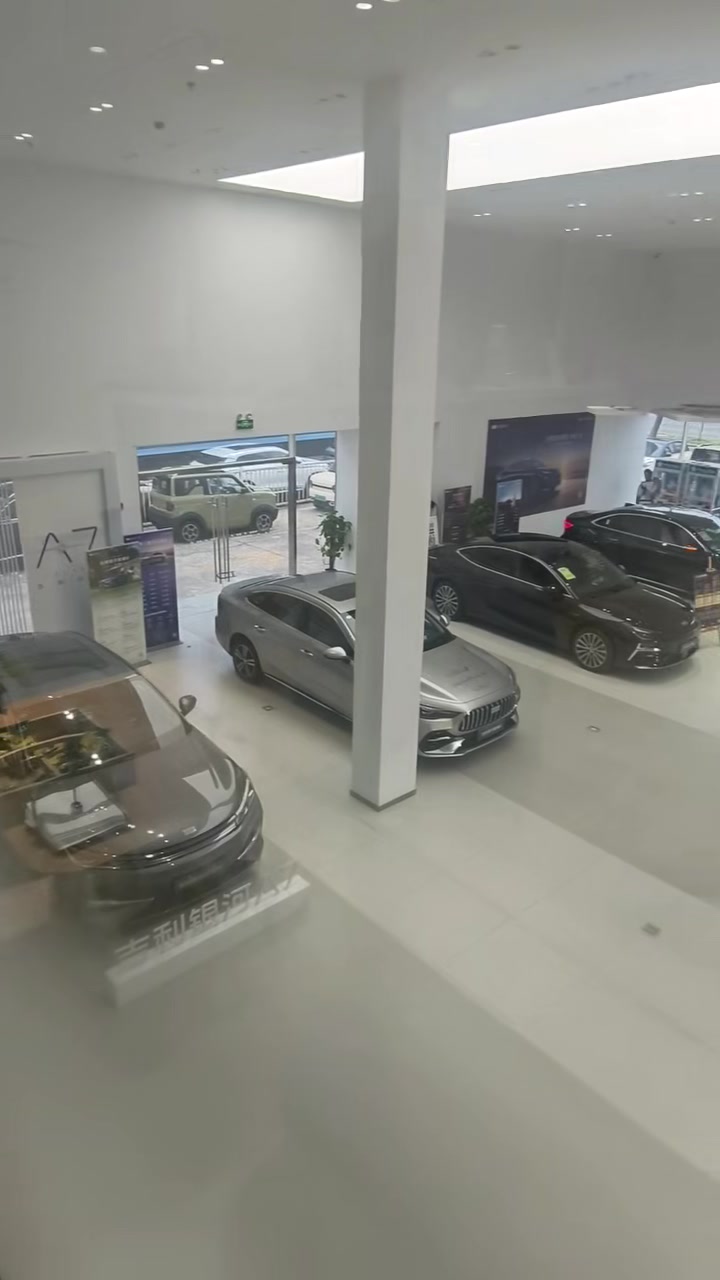
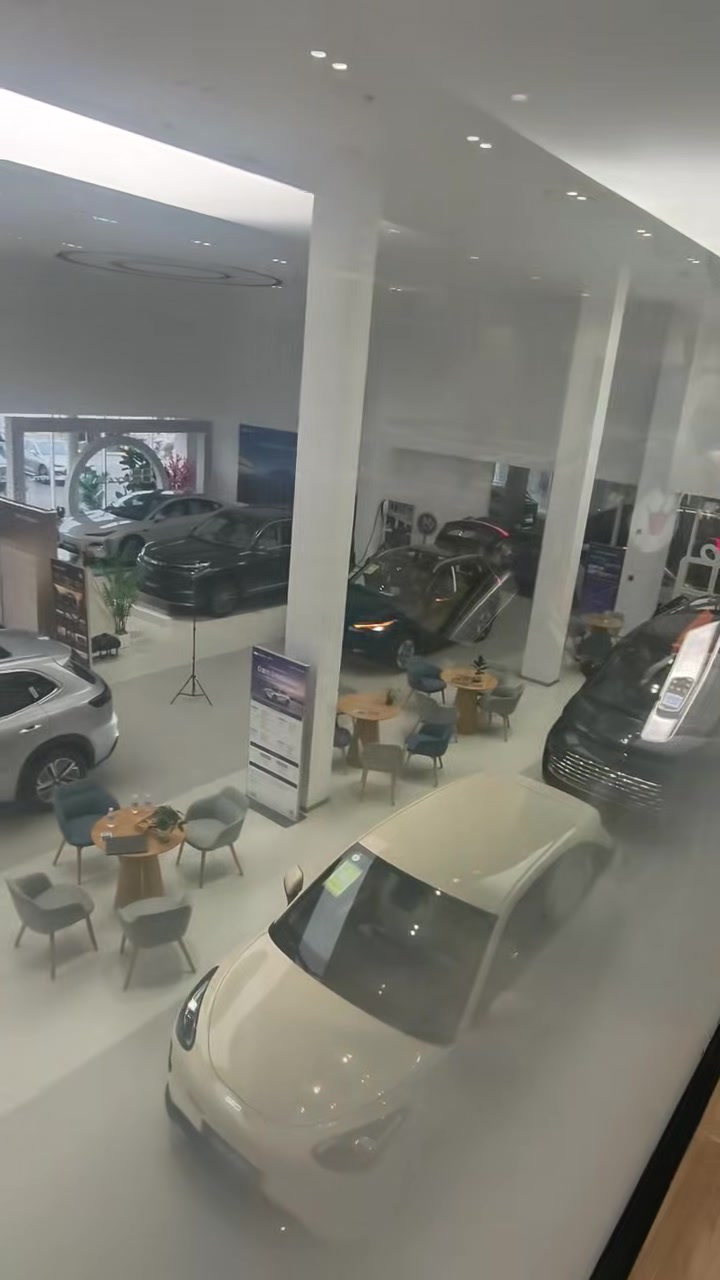
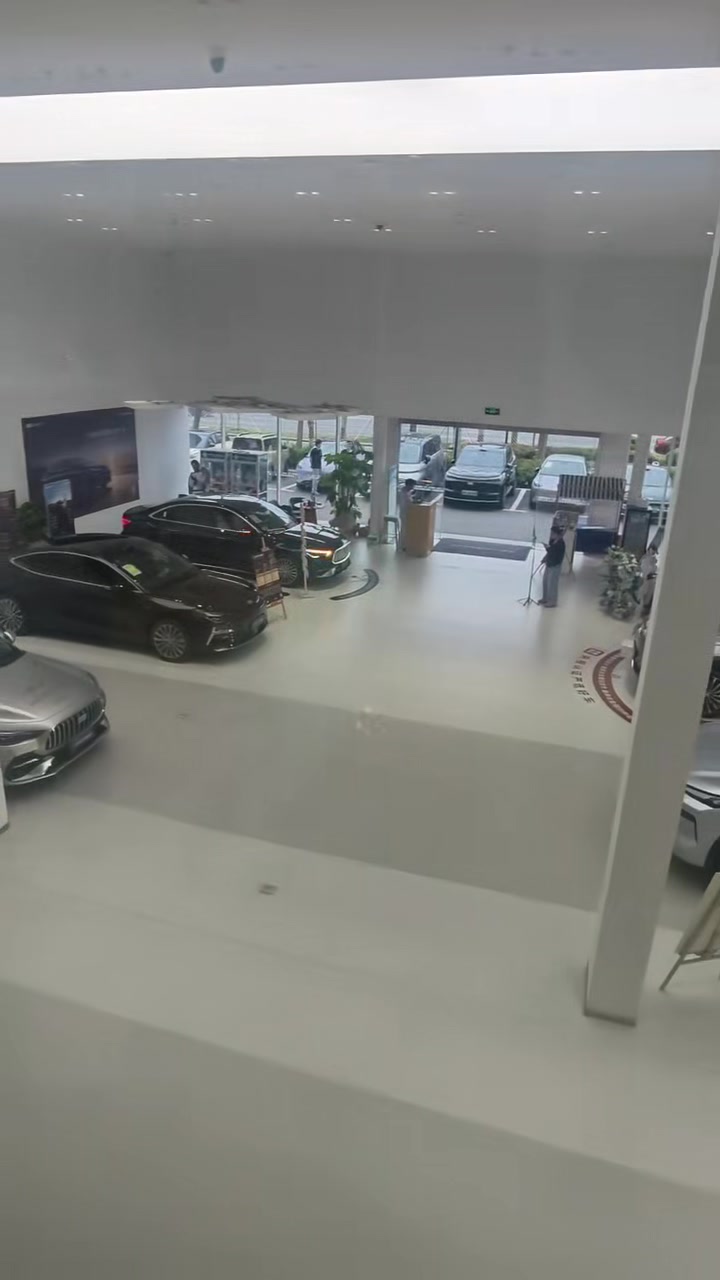
The Ultimate 2026 B2B Export Guide for Ready to ship electric cars: Pricing, Compliance & Localization

1. Executive Summary

Ready to ship electric cars export ready to ship

The 2026 model year represents a watershed moment for China’s electric vehicle export ecosystem. As global demand accelerates for immediate-delivery EV inventory—driven by supply chain bottlenecks in traditional manufacturing hubs—Chinese OEMs have pivoted from made-to-order production to substantial “ready to ship” (RTS) stockpiles. These factory-fresh units, held in bonded warehouses at Shanghai, Ningbo, and Shenzhen ports, offer foreign B2B buyers unprecedented lead-time advantages, with delivery windows compressed from 16-20 weeks to 7-14 days.

However, the RTS model introduces complex regulatory and technical challenges unique to 2026’s evolving compliance landscape. China’s revised Export Administration Regulations (EAR) for New Energy Vehicles (NEV), effective Q1 2026, now mandate pre-shipment battery passport documentation, cybersecurity compliance certification under GB/T 40855-2026, and verified software localization for target markets. Simultaneously, the EU’s Battery Regulation (EU) 2023/1542 enters full enforcement, requiring carbon footprint declarations and due diligence documentation for lithium supply chains.

This guide provides procurement officers, automotive distributors, and fleet operators with actionable intelligence on sourcing RTS EVs from Electric Auto China’s Shanghai-based inventory. We cover technical specification translation from CLTC to WLTP standards, the critical GB/T to CCS2 charging infrastructure bridge, homologation pathways for EU/UK/EFTA markets, and precise landed cost modeling inclusive of 2026’s revised tariff structures and VAT implications.

2. Deep Dive: Technical Specifications

2.1 Available Ready-to-Ship Inventory for 2026

Electric Auto China’s current RTS portfolio focuses on fourth-generation platforms optimized for export markets, featuring 800V architectures and LFP (Lithium Iron Phosphate) battery chemistries that balance thermal stability with cost efficiency.

Model Platform Battery Capacity CLTC Range Motor Power 0-100 km/h Export Voltage Compatibility Key Features
Chang’an Eado 2026 EPA1 58.1 kWh (LFP) 530 km 160 kW FWD 6.9s 400V Flyme Auto OS, 15.4″ floating display, Euro NCAP 5-star
BYD Seal U (Song Plus) e-Platform 3.0 87 kWh (Blade) 520 km 230 kW AWD 5.9s 800V CTB technology, DiLink 5.0, V2L 6.6kW
Geely Galaxy E8 SEA 76 kWh 665 km 200 kW RWD 5.9s 800V 45″ 8K screen, Snapdragon 8295, 5.5C charging
BMW iX3 (Neue Klasse) NCAR 100 kWh (est.) 644 km (WLTP proj.) 300 kW AWD 4.5s 800V 400kW DC charging, BMW OS 9.0
Xpeng G9 SEPA 98 kWh 702 km 405 kW AWD 3.9s 800V XNGP ADAS, 480kW charging, air suspension

Note: CLTC (China Light-Duty Vehicle Test Cycle) figures typically translate to 75-82% of WLTP equivalent ranges due to less aggressive highway testing protocols.

2.2 Performance Metrics: Chinese vs. International Standards

When evaluating RTS inventory, buyers must understand specification disparities. Chinese-market vehicles often display CLTC ranges that exceed real-world European driving conditions by 18-25%. For B2B procurement, we recommend applying a 0.78 correction factor for highway-dominant markets (UK, Germany) and 0.85 for mixed urban/rural environments.

Critical Technical Considerations for 2026 Models:

  • Thermal Management: Fourth-generation Chinese EVs now incorporate heat pump standardization, crucial for Nordic markets. The Chang’an Eado utilizes a PTC heater auxiliary system ensuring -30°C operability.
  • Over-the-Air (OTA) Architecture: 2026 models feature partitioned OTA systems (GB/T 40861 compliant), allowing firmware updates for infotainment while isolating safety-critical powertrain systems—a requirement for UNECE WP.29 cybersecurity regulations.
  • V2X Capabilities: Vehicle-to-Home (V2H) and Vehicle-to-Load (V2L) functionality varies by model. The BYD Seal U offers 6.6kW V2L (sufficient for camping/camping equipment), while export-oriented variants of the Silverado EV platform (manufactured in China for specific markets) deliver 10.2kW V2H capacity capable of powering residential installations for up to 21 days during grid outages.

3. The Localization Challenge: Software, UI, and Connectivity

The most significant barrier to RTS EV deployment isn’t hardware—it’s digital ecosystem incompatibility. Chinese-market vehicles ship with software stacks optimized for Baidu Maps, AutoNavi navigation, Tencent ecosystem integration, and Mandarin voice recognition (iFlytek or Baidu DuerOS).

3.1 Critical Localization Requirements

Navigation and Telematics:
Map Data: Chinese navigation systems utilize GCJ-02 coordinate encryption, which offsets GPS coordinates by 100-500 meters. Export markets require WGS-84 standard compatibility.
App Ecosystem: Flyme Auto (Chang’an), HarmonyOS (Huawei-partnered brands), and DiLink (BYD) require replacement or overlay of app stores with Google Automotive Services (GAS) or native European alternatives.
Voice AI: Mandarin-trained NLP models demonstrate >95% accuracy in Chinese but <40% accuracy for English regional accents (Scouse, Geordie, etc.).

3.2 Localization Solutions for RTS Inventory

Electric Auto China provides three-tier localization for ready-to-ship units:

Localization Level Scope Cost (USD) Lead Time Technical Approach
Basic Language pack (EN/DE/FR), metric/imperial toggle, regional radio frequencies $800-1,200 2-3 days OTA software push + dealer activation
Standard Full GMS integration, Google Maps/HERE WeGo, Spotify/Android Auto, regional eSIM provisioning $2,400-3,600 5-7 days Hardware module swap (TCU replacement) + firmware flash
Premium Complete head unit replacement, ADAS calibration for local traffic patterns, CCS2 protocol activation $4,800-7,200 10-14 days Physical infotainment swap, charging port retrofit, homologation documentation

Case Study: Chang’an Eado Export Configuration
The 2026 Chang’an Eado ships domestically with the Flyme Auto system and AutoNavi maps. For UK export, Electric Auto China performs:
1. TCU (Telematics Control Unit) replacement with Quectel AG35 module supporting European 4G/5G bands
2. Firmware reflash to support Android Auto/CarPlay (wireless)
3. Speedometer recalibration to MPH primary display
4. Removal of Mandarin voice prompts, installation of English TTS (Text-to-Speech) engine

4. Charging Compatibility: Bridging the GB/T Gap

Customized Ready to ship electric cars for international market

Chinese domestic EVs utilize GB/T charging standards (GB/T 20234.2 for AC, GB/T 20234.3 for DC), physically incompatible with European CCS2 (Combo 2) and UK Type 2 infrastructure. This represents the most critical technical hurdle for RTS EV deployment.

4.1 Physical and Protocol Differences

Standard AC Connector DC Connector Max DC Power Communication Protocol
GB/T (China) GB/T 20234.2 (7-pin) GB/T 20234.3 (9-pin) 250 kW CAN 2.0B
CCS2 (EU/UK) Type 2 (Mennekes, 7-pin) Combo 2 (9-pin DC + Type 2) 350 kW+ PLC (ISO 15118)
CHAdeMO N/A Unique 10-pin 400 kW CAN

Key Issue: Beyond physical pin configuration, Chinese vehicles use CAN bus communication for charging handshakes, while European infrastructure requires ISO 15118 Power Line Communication (PLC) for high-power charging.

4.2 Solutions for Ready-to-Ship Units

Option A: Adapter Cables (Temporary)
– Cost: $150-300 per unit
– Functionality: Allows GB/T vehicle to connect to CCS2 station
– Limitation: Restricted to 80-125kW DC (thermal limitations), no Plug & Charge capability

Option B: Hardware Retrofit (Recommended for B2B)
Charging Port Replacement: Physical installation of CCS2 inlet ($800-1,200 parts + labor)
BMS Software Update: Reprogramming Battery Management System to recognize CCS2 communication protocols ($400-600)
High-Voltage Wiring Harness: Replacement of charging harness to support higher amperage ($300-500)

Total Retrofit Cost: $1,500-2,300 per vehicle, performed at Shanghai port pre-shipment or at destination partner facilities.

Option C: Manufacturer Export Variant
Select 2026 models (BMW Neue Klasse, Mercedes CLA EV manufactured in China for export) ship with native CCS2. These command a 8-12% premium over domestic GB/T variants but eliminate retrofit requirements.

5. Homologation, Compliance & 2026 Export Regulations

China’s 2026 EV export framework introduces stringent pre-shipment verification to prevent “gray market” dumping and ensure technical compliance with destination markets.

5.1 Chinese Export Requirements (New for 2026)

  • Battery Passport: Full supply chain traceability from mining to cell production, compliant with EU Battery Regulation Article 7.
  • Cybersecurity Certificate: GB/T 40855-2026 verification of vehicle network security, encryption standards, and OTA update integrity.
  • Export License: Ministry of Commerce (MOFCOM) NEV export license, requiring proof of foreign market type approval or interim compliance declaration.

5.2 Destination Market Homologation

European Union (WVTA – Whole Vehicle Type Approval):
– Framework Regulation (EU) 2018/858 compliance
– UN ECE R10 (EMC), R94/R95 (crash safety), R100 (REESS safety)
– 2026 Update: Cybersecurity Management System (CSMS) certificate required under UN R155/R156
– Battery Regulation conformity: Carbon footprint declaration (Article 7), recycled content declaration (Article 8)

United Kingdom (GB Type Approval):
– Post-Brexit alignment with UN ECE regulations but separate approval process
– 2026-specific: UKCA marking mandatory for charging components
– Smart Charging Regulations compliance (EVSE must include pre-set charge delay functionality)

Middle East/GCC:
– GSO (Gulf Standardization Organization) conformity for extreme heat operation (50°C+ ambient testing)

5.3 Compliance Cost Structure

Market Homologation Cost Timeline Key Testing
EU (WVTA) €45,000-85,000 8-12 weeks EMC, safety, cybersecurity audit
UK (GB) £35,000-60,000 6-10 weeks Mirror EU but simplified for UN ECE alignment
Australia (ADR) AUD 65,000-90,000 10-14 weeks Local crash test witness requirements
GCC $15,000-25,000 4-6 weeks Hot climate validation

Note: Electric Auto China provides pre-homologated variants for EU/UK markets, reducing per-unit certification costs through batch approval processes.

6. Global Logistics & Supply Chain

Ready-to-ship EVs require specialized handling distinct from traditional vehicle logistics, particularly regarding battery state-of-charge (SoC) regulations and hazardous goods classification.

6.1 Shipping Methods

Roll-on/Roll-off (RoRo):
Capacity: 4,000-6,000 CEU (Car Equivalent Units) per vessel
Cost: $1,200-1,800 per vehicle (Shanghai to Rotterdam/Felixstowe)
Advantages: Drive-on/drive-off efficiency, minimal handling damage risk
Constraints: Limited to 25-30% SoC per IMDG Code (International Maritime Dangerous Goods), requiring destination charging infrastructure

Containerized (R-Rack):
Configuration: 4 EVs per 40′ High Cube container using specialized racking systems
Cost: $2,800-4,200 per container ($700-1,050 per vehicle)
Advantages: Higher SoC allowance (up to 50%), protection from elements, suitable for high-value luxury EVs (BMW Neue Klasse, Porsche Macan EV)
Disadvantages: Longer loading/unloading times, potential for condensation in humid climates

6.2 Incoterms and Risk Transfer

For B2B RTS procurement, Electric Auto China recommends:

  • FCA (Free Carrier): Buyer nominates freight forwarder at Shanghai port. Risk transfers when goods are handed to carrier.
  • CIF (Cost, Insurance, Freight): Seller arranges ocean freight to destination port. Risk transfers at port of discharge.
  • DAP (Delivered at Place): Seller assumes risk until delivery at buyer’s premises/warehouse. Includes inland transport and customs clearance support.

Insurance Considerations:
– Marine cargo insurance for EVs requires specific “Battery Clause” coverage, protecting against thermal runaway incidents during transit.
– Recommended coverage: 110% of CIF value, Institute Cargo Clauses (A) plus SRCC (Strikes, Riots, Civil Commotions).

7. Financial Breakdown: Landed Cost & Dealer Profit Margins (Case Study)

The following case study analyzes the procurement of 50 units of the 2026 Chang’an Eado for distribution in the United Kingdom, comparing RTS acquisition against traditional factory-order timelines.

7.1 Unit Economics: Chang’an Eado 2026 (Premium Trim)

Cost Component Amount (USD) Notes
EXW Shanghai $18,500 Factory gate price, RTS inventory
Localization (Standard) $2,800 GMS integration, CCS2 retrofit, English UI
Homologation (per unit) $850 Amortized batch certification cost (€42,500/50 units)
Export Documentation $150 Certificate of Origin, export license, battery passport
Port Handling (Shanghai) $180 THC, wharfage, loading
Ocean Freight (RoRo) $1,450 Shanghai to Southampton
Marine Insurance $95 0.4% of CIF value
CIF UK Value $24,025 Subtotal upon arrival
UK Import Duty $2,402 10% of CIF (UK-China trade terms post-Brexit)
VAT (20%) $5,285 20% of (CIF + Duty)
DVSA Registration $65 Vehicle approval and registration
Inland Transport $220 Southampton to Midlands distribution center
Total Landed Cost $31,997 £25,598 (at GBP/USD 1.25)

7.2 Retail Pricing Strategy

Scenario Retail Price (GBP) Gross Margin Market Position
Volume Fleet £28,500 11.2% Competitive with MG4, BYD Dolphin
Retail Premium £31,200 17.9% Positioned against VW ID.3, Renault Megane E-Tech
Luxury Spec £33,800 24.2% Added leather, upgraded audio, ADAS package

Break-Even Analysis:
At the Volume Fleet price point (£28,500), dealers require minimum 35-unit sales to recover initial homologation and tooling investments. The Retail Premium scenario offers optimal risk-adjusted returns for initial market entry.

7.3 Comparative Advantage: RTS vs. Factory Order

Metric Ready-to-Ship Factory Order (2026)
Lead Time 14-21 days 16-24 weeks
Working Capital Cycle 45 days 180+ days
Price Volatility Risk Locked at contract Exposed to lithium/LME fluctuations
Minimum Order Quantity 1 unit 100+ units
Specification Flexibility Fixed (current MY) Customizable

8. Securing After-Sales Support & Spare Parts

The Achilles’ heel of Chinese EV imports has historically been service network coverage. Electric Auto China’s 2026 export program addresses this through a three-pillar support structure.

8.1 Technical Training and Diagnostics

  • Level 1 Certification: 40-hour online modules covering high-voltage safety, basic diagnostics using OEM scan tools (Chang’an ODIS-equivalent, BYD VDS).
  • Level 2 Certification: 5-day in-person Shanghai training for master technicians, covering battery pack disassembly, BMS reprogramming, and thermal management service.
  • Remote Diagnostics: Cloud-based diagnostic portal allowing European technicians to interface with Chinese back-end servers (compliant with GDPR data processing agreements).

8.2 Spare Parts Logistics

Critical Components Strategy:
Battery Modules: 8-year warranty support with regional hub stocking in Rotterdam (EU) and Birmingham (UK). 72-hour emergency replacement commitment for fleet operators.
Power Electronics: Inverter, OBC (On-Board Charger), and DC-DC converter units stocked at 30% of import volume to ensure 48-hour availability.
Body and Trim: Containerized shipments every 45 days, utilizing predictive algorithms based on regional accident statistics and VIN tracking.

Parts Pricing Benchmark:
Chinese EV spare parts typically cost 40-60% less than equivalent European OEM parts. A Chang’an Eado headlamp assembly retails at £180 (trade) versus £450 for a VW ID.3 equivalent.

8.3 Warranty Administration

Electric Auto China provides back-to-back warranty coverage:
Vehicle: 5 years/100,000 km bumper-to-bumper (transferable to second owner)
Battery: 8 years/160,000 km, 70% SoH (State of Health) guarantee
Powertrain: 8 years/150,000 km

Claims processing utilizes blockchain-verified service records to prevent fraud and streamline reimbursement to local service partners.

9. Why Partner with Electric Auto China

As Shanghai’s premier B2B EV export consultancy, Electric Auto China bridges the gap between Chinese manufacturing efficiency and international market compliance.

Our Competitive Advantages:

Regulatory Pre-Certification: We maintain a rolling inventory of EU WVTA and UK GB-type approved vehicles, eliminating the 8-12 week homologation delay typical of direct factory procurement.

Technical Localization Hub: Our Jiading District facility performs CCS2 retrofits, software localization, and pre-delivery inspections (PDI) to European standards, ensuring vehicles arrive “retail-ready.”

Financial Structuring: We offer documentary credit (L/C) facilitation, export credit insurance partnerships with Sinosure, and flexible payment terms (30% deposit, 70% against B/L copy) to optimize buyer cash flow.

Exclusive Market Protection: Territory-exclusive distribution agreements available for qualified partners in underserved regions, with minimum volume commitments starting at 25 units quarterly.

2026 Compliance Guarantee: Every RTS vehicle ships with complete Battery Passport documentation, cybersecurity certification, and export license verification—backed by indemnification against regulatory changes during transit.

Immediate Next Steps

  1. Inventory Review: Access our real-time RTS portal showing available 2026 model year stock, VIN-specific specifications, and port location.
  2. Sample Procurement: Single-unit trial orders accepted for homologation testing and market validation.
  3. Distribution Partnership: Apply for authorized dealer status in your territory with preferential pricing and marketing support.

Contact our B2B Export Division today to secure allocation of high-demand 2026 models including the Chang’an Eado, BYD Seal U, and BMW Neue Klasse iX3. The electric mobility transition waits for no one—ensure your inventory position with factory-fresh, compliant, ready-to-ship electric vehicles from China’s most advanced manufacturing facilities.


Electric Auto China – Shanghai Headquarters
Export Compliance Division
Ready to Ship. Ready for Tomorrow.

Unlock High-Margin EV Imports with Electric Auto China

As an elite automotive supply chain partner in Shanghai, we provide end-to-end, strictly compliant export solutions tailored for international dealerships, fleet managers, and wholesale distributors.

  • 🛡️ 100% Legal & Compliant: Fully licensed exports ensuring smooth customs clearance at your destination.
  • ⚙️ Complete Localization: Professional English/Arabic/Russian OS flashing and GB/T to CCS2 charging solutions.
  • 🚢 Secure Logistics: Direct Ro-Ro and Containerized shipping with full UN38.3 battery certifications.
  • 🔧 After-Sales Support: Reliable access to OEM diagnostic tools and steady spare parts supply.

Request a Detailed FOB/CIF Quote Today:

📧 B2B Sales Email: [email protected]

💬 Direct WhatsApp: +86 159 5127 6160

Global Compliance Disclaimer: Import regulations, tariffs, and EV homologation requirements vary significantly by country. While we ensure full compliance with China’s 2026 export laws, it is the buyer’s responsibility to verify local connectivity laws, charging infrastructure compatibility, and destination customs duties.

Similar Posts