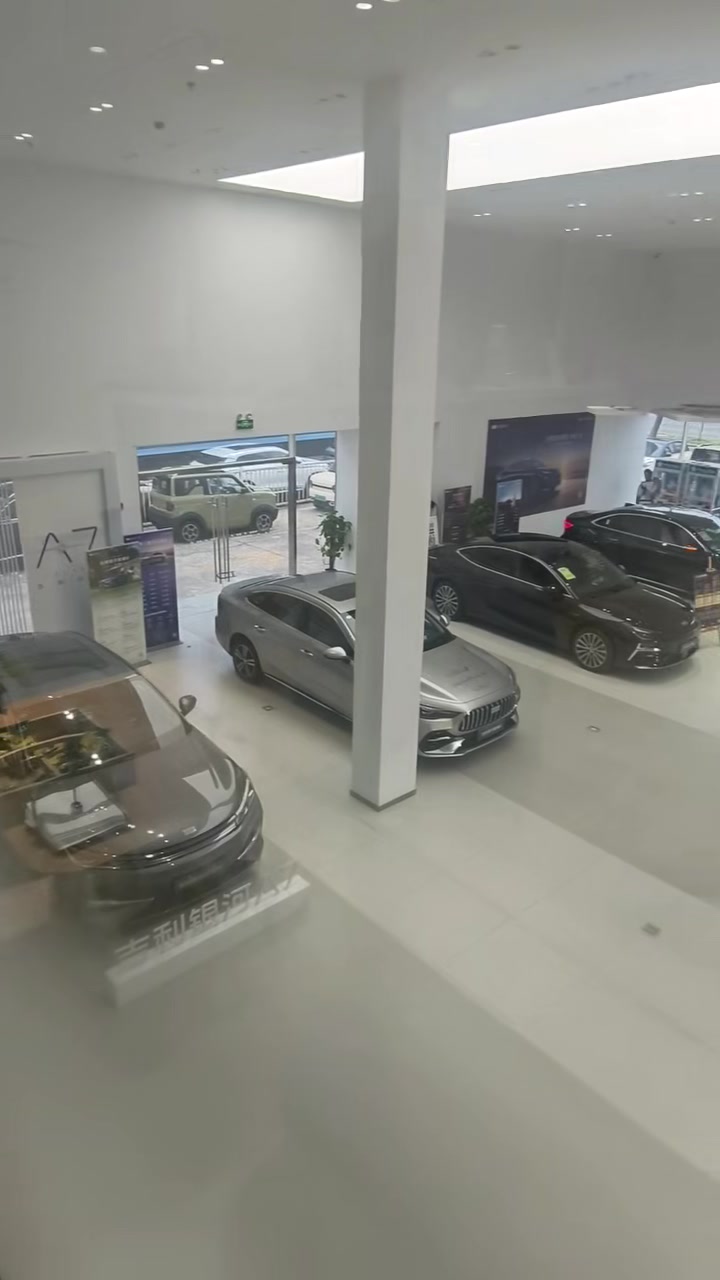
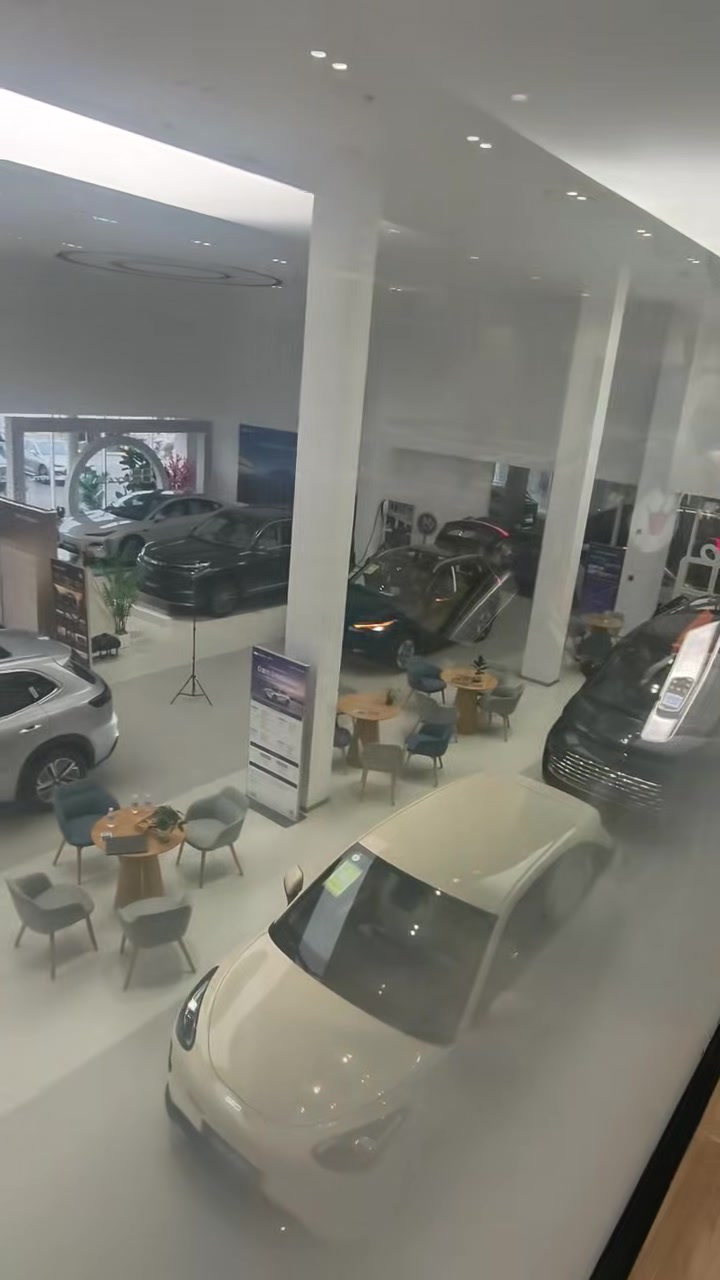
The Ultimate 2026 Importer’s Guide to Affordable Electric Cars for Export

1. The Macro-Economics of Affordable Electric Cars for Export in 2026

Affordable electric cars for export export ready to ship

The global automotive industry has undergone a fundamental restructuring. As we enter 2026, China has decisively cemented its position as the world’s dominant exporter of electric vehicles, having closed 2025 with record vehicle exports of approximately 7.1 million units—firmly establishing exports as a structural growth pillar rather than a cyclical outlet. With New Energy Vehicles (NEVs) accounting for more than one-third of outbound volume, China’s export engine is no longer internal combustion engine (ICE)-led by default.

The domestic market has simultaneously reset its operating baseline. Total vehicle sales reached a historic 34.4 million units in 2025, rising 9.4% year-over-year and decisively surpassing the prior 2017 peak. Critically, NEV shipments increased by approximately 3.6 million units (+28.2% YoY), becoming the marginal growth engine of the market, while ICE volumes declined by roughly 700,000 units (-3.6% YoY). This divergence signals a permanent shift: China is now structurally oriented toward electrification, with export markets serving as the primary pressure valve for domestic overcapacity.

Three Strategic Developments Reshaping Trade:

Product Value Upgrading: The era of China exporting purely commoditized, low-specification vehicles has ended. The 2026 export portfolio increasingly comprises intelligent electric vehicles, renewable energy equipment, advanced battery systems, and sophisticated electronics. European buyers are no longer importing “cheap cars” but rather advanced mobility platforms that compete with domestic luxury offerings.

Multi-Regional Production Networks: The “China Plus One” strategy has evolved into blended supply models. Smart importers are now leveraging Chinese battery cells and powertrain components, conducting final assembly in Southeast Asian hubs (Thailand, Vietnam, Indonesia), and performing European final customization to mitigate geopolitical concentration risk and optimize tariff structures.

Regulatory Alignment Pressure: European sustainability regulations—including mandatory carbon disclosure, sustainable packaging directives, and supply chain due diligence laws—are now influencing logistics decisions at origin. Exporters must provide comprehensive emission footprints and compliant documentation before vessels depart Shanghai or Shenzhen.

The implication for B2B buyers is clear: China’s export growth is no longer concentrated, opportunistic, or dependent on a single outlet. It is becoming geographically diversified, policy-aware, and structurally embedded, reinforcing exports as a durable second growth engine alongside domestic electrification.

2. Understanding China’s Strict EV Export Regulations

Effective January 1, 2026, the landscape for importing affordable electric cars from China transformed dramatically. The Ministry of Commerce (MOFCOM) implemented a mandatory Export License Framework that fundamentally alters who can export vehicles and under what conditions.

The Export License Framework

Under the new regulatory regime, only accredited manufacturers and authorized dealers may apply for export licenses. This measure extends regulatory consistency across the Chinese auto industry, mirroring restrictions long applied to combustion engine and hybrid exports. The framework specifically targets three critical issues:

  1. Prevention of Market Flooding: The government aims to prevent foreign markets from being saturated with low-cost models that distort competition and trigger protectionist backlash.

  2. Elimination of Irregular Channels: A significant problem in 2025 was the presence of unauthorized exports, where new vehicles were sold as “used” through gray-market channels. These vehicles often arrived with outdated software, incompatible charging standards, and zero after-sales support, damaging the reputation of Chinese manufacturing.

  3. Quality Control: Only manufacturers meeting specific technical standards, warranty capabilities, and service network requirements qualify for export accreditation.

Impact on Foreign Manufacturers

The regulations explicitly affect foreign giants manufacturing in China, including Tesla, Volkswagen, and BMW, which previously relied on local plants to supply global markets through competitive cost structures and integrated supply chains. These entities must now secure specific export licenses for vehicles manufactured within China, regardless of brand origin.

Compliance Requirements for Importers

B2B buyers must now verify three critical documents before engaging any Chinese supplier:

Document Issuing Authority Purpose
Export License MOFCOM Confirms manufacturer/dealer is accredited to export NEVs
Vehicle Conformity Certificate MIIT (Ministry of Industry and IT) Validates technical specifications match declared standards
Battery Safety Certification CATARC/Third-party labs UN38.3 compliance for lithium-ion transport

Failure to verify these documents results in customs detention, substantial demurrage charges, and potential blacklisting of the importer in both China and the destination market.

3. Sourcing Strategy: Direct Factory vs. Authorized Export Agents

With the 2026 regulatory framework, the sourcing strategy for affordable electric cars has bifurcated into two compliant pathways, each with distinct risk profiles and margin structures.

Pathway A: Direct Factory Partnerships

Engaging directly with accredited manufacturers (BYD, SAIC, Geely, NIO, XPeng, Leapmotor) offers maximum margin potential but requires significant capital commitment and regulatory navigation.

Advantages:
– Factory-gate pricing (EXW terms) reducing intermediary markups by 8-15%
– Direct access to technical teams for localization requirements
– Priority allocation during supply constraints (Xiaomi, for example, targets 550,000 vehicles in 2026 sales, with export quotas filling rapidly)

Risks:
– Minimum Order Quantities (MOQs) typically starting at 100-500 units for export markets
– Requirement to manage MOFCOM licensing verification independently
– Complex warranty chaining across international borders

Pathway B: Authorized Export Agents

Licensed export agents serve as intermediaries that aggregate demand from multiple smaller importers, managing regulatory compliance and logistics standardization.

Advantages:
– Reduced MOQs (as low as 5-10 units for emerging brands)
– Pre-verified documentation packages (export licenses, conformity certificates)
– Established relationships with RORO (Roll-on/Roll-off) carriers and battery-compliant logistics providers

Critical Verification Protocol:

When engaging either pathway, importers must conduct a Three-Point Compliance Audit:

  1. License Verification: Cross-reference the supplier’s business license with the MOFCOM export accreditation database (updated quarterly)
  2. Manufacturing Authorization: Confirm the entity possesses a valid “Vehicle Production Enterprise Access Certificate”
  3. Financial Stability: Review audited financial statements; avoid entities with debt-to-equity ratios exceeding 70% (common among distressed exporters attempting irregular clearance)

Case Study: The “Used-as-New” Trap
In Q3 2025, a German importer contracted with an unlicensed Shenzhen trader offering BYD Seal units at 12% below market rate. The vehicles arrived labeled as “used personal vehicles” to circumvent export quotas, lacking manufacturer warranties and featuring Chinese-language-only infotainment systems. Total losses exceeded €340,000 after customs penalties and retrofitting costs. The 2026 regulations specifically criminalize this practice, imposing penalties of up to 5 million RMB and permanent export bans on offending entities.

4. Financial Mechanics: Pricing and Landed Costs

Customized Affordable electric cars for export for international market

Understanding the true cost of importing affordable electric cars requires moving beyond FOB (Free On Board) quotes to comprehensive landed cost modeling. The following table illustrates exact calculations for a representative shipment of 50 compact EVs (BYD Dolphin or equivalent) destined for the Port of Rotterdam in Q1 2026:

Landed Cost Calculation Model (50 Units)

Cost Component Unit Cost (USD) Total (USD) Notes
EXW Factory Price $12,500 $625,000 Base vehicle, standard trim
Export License Fee $150 $7,500 New 2026 MOFCOM administrative cost
Domestic Transport $85 $4,250 Factory to Port of Shanghai (EV-specific carriers)
Export Packaging $120 $6,000 ISPM-15 compliant, sea-worthy protection
FOB Total $12,855 $642,750 Loaded vessel
Ocean Freight (RORO) $650 $32,500 28-day transit, fuel surcharge included
Marine Insurance (110%) $78 $3,900 All-risks coverage
CIF Rotterdam $13,583 $679,150 Cost, Insurance, Freight
Import Duties (EU: 10%) $1,358 $67,915 Based on CIF value
VAT (EU: 19% avg) $2,840 $142,042 Applied to (CIF + Duty)
Homologation/Type Approval $450 $22,500 WVTA certification, per unit testing
Technical Modifications $380 $19,000 Software localization, charging adapters
Landed Cost per Unit $18,611 $930,607 Ready for sale

Critical Financial Considerations:

Currency Hedging: With the RMB exchange rate hovering around 6.99 to the USD (as of early 2026), importers face significant volatility. Smart buyers utilize forward contracts or natural hedging through RMB-denominated supplier credit (typically 30-90 days).

Payment Structure: The 2026 compliant standard is:
– 30% deposit upon contract signing and export license verification
– 70% against Bill of Lading (BL) and inspection certificate
– 100% avoid “payment upon arrival” terms with unverified agents

Green Logistics Premium: Sustainable shipping options (biofuel vessels, carbon-neutral warehousing) add approximately $85-120 per unit but are increasingly mandatory for EU market entry under the Corporate Sustainability Due Diligence Directive (CSDDD).

5. Global Logistics: Ocean Freight & Battery Transport Compliance

The logistics of transporting affordable electric cars from China in 2026 requires navigating both capacity constraints and stringent safety regulations governing lithium-ion batteries.

Ocean Freight Modalities

RORO (Roll-on/Roll-off): The preferred method for finished vehicles, utilizing specialized Pure Car and Truck Carriers (PCTCs). In 2026, Chinese shipping giants (COSCO, China Merchants Energy Shipping) have expanded fleets with dual-fuel LNG vessels, reducing carbon emissions by 25% per vehicle-mile.

Containerized Transport: Suitable for disassembled kits or high-value/low-volume shipments. Requires specialized racking systems and dangerous goods segregation.

Battery Transport Compliance (UN38.3 & IMO)

All lithium-ion batteries for automotive use must comply with UN38.3 testing standards and IMDG Code (International Maritime Dangerous Goods) Class 9 regulations:

Requirement Specification Documentation
State of Charge (SoC) Maximum 30% for transport Battery declaration certificate
Packaging UN3480/UN3481 certified UN specification packaging marks
Temperature Control Active monitoring for >100kWh packs Thermal management logs
Emergency Response Lithium battery emergency procedures Shipper’s declaration for dangerous goods

Critical Update for 2026: The EU’s new Battery Regulation requires passports for industrial batteries (>2kWh), meaning exporters must provide digital documentation tracing cell origin, carbon footprint, and recycling protocols before port departure.

Multi-Regional Logistics Optimization

Sophisticated importers are now utilizing blended supply models to optimize costs and mitigate geopolitical risks:

  1. China Hub: Battery cells and powertrain components manufactured in Shenzhen/CATL facilities
  2. ASEAN Assembly: Final vehicle assembly in Thailand (utilizing the China-ASEAN Free Trade Agreement zero-tariff provisions)
  3. European Customization: Final software localization and quality inspection in Rotterdam or Hamburg

This model reduces exposure to potential EU anti-subsidy duties on direct Chinese imports while maintaining cost competitiveness.

6. Localization & Homologation: Preparing Cars for Local Markets

Affordable electric cars exported from China require significant localization to meet regulatory and consumer expectations in target markets. The 2026 export license framework mandates that manufacturers demonstrate homologation capability before granting export permission.

European Union (WVTA Framework)

Whole Vehicle Type Approval (WVTA): Required for EU market entry, covering:
Safety: UNECE R94/R95 (frontal/side impact), pedestrian protection
Environment: R101 (CO2/emissions), although zero for BEVs
EMC: Electromagnetic compatibility for high-voltage systems
Software: GDPR compliance for telematics and data collection

Critical Adaptation Requirements:
Charging Standards: CCS2 (Combo) connector retrofitting (Chinese vehicles typically use GB/T standard)
Navigation: Map data localization and GDPR-compliant cloud servers
Language: Full UI/UX translation including voice recognition training data

GCC (Gulf Cooperation Council) Markets

Middle Eastern markets require GSO (Gulf Standardization Organization) certification, with specific challenges:
Thermal Management: Ambient temperature testing up to 50°C
Sand Resistance: IP6X ingress protection validation for desert conditions
Right-Hand Drive: Conversion requirements for UAE, Saudi Arabia, and emerging African markets

Software Localization Challenges

Unlike ICE vehicles, EVs rely heavily on Over-The-Air (OTA) updates. Importers must negotiate Software Service Agreements ensuring:
– Regional server hosting (data sovereignty compliance)
– Local language support for diagnostic tools
– Warranty coverage for software-related drivetrain issues

Cost Implication: Homologation and localization add $800-$1,200 per unit to landed costs but are non-negotiable for legal market entry.

7. After-Sales Ecosystem: Securing Parts and Service Abroad

The profitability of importing affordable electric cars hinges not on the initial transaction but on the Total Cost of Ownership (TCO) managed through robust after-sales support. The 2026 regulatory environment places explicit obligations on exporters to demonstrate service capability.

Parts Supply Chain Architecture

Critical Components Requiring Stocking:
– Battery modules (8-year warranty support)
– Electric motors and inverters
– High-voltage cabling and connectors
– Infotainment systems (region-specific)

Inventory Strategy: Successful importers establish Regional Distribution Centers (RDCs) in target markets holding 90-day rolling stock of fast-moving parts, with critical components (battery cells) held in bonded warehouses to defer duty costs until consumption.

Technical Training & Certification

Chinese manufacturers are now required to provide:
Level 1: High-voltage safety certification for local technicians
Level 2: Diagnostic equipment and software training
Level 3: Battery pack replacement and recycling protocols

Warranty Administration: Cross-border warranty claims require sophisticated financial instruments. Escrow accounts or letter of credit arrangements ensure local dealers can claim reimbursement for warranty work performed on exported vehicles.

OTA Update Infrastructure

Modern Chinese EVs receive monthly software updates. Importers must ensure:
– Local server mirroring to reduce latency
– Compliance with local data privacy laws (updates cannot route through Chinese servers for EU government fleet vehicles)
– Fallback procedures for failed updates in areas with poor connectivity

Risk Mitigation: Importers should negotiate Technical Support Agreements (TSAs) with manufacturers covering 5-7 years, with penalty clauses for parts availability below 95% and software update latency exceeding 30 days.

8. Avoiding Scams: How to Audit a Chinese EV Supplier

The transition to licensed export frameworks in 2026 has paradoxically increased the sophistication of fraudulent schemes. Unlicensed traders now forge export licenses or exploit regulatory gaps in transshipment ports. B2B buyers must implement rigorous audit protocols.

The Four-Layer Verification System

Layer 1: Documentation Authentication
– Verify export license numbers against the MOFCOM Auto Export Accreditation Database (updated quarterly)
– Cross-check Vehicle Conformity Certificates with MIIT’s public registry
– Validate business licenses through the National Enterprise Credit Information Publicity System

Layer 2: Physical Factory Audit
Conduct or commission third-party audits focusing on:
Production Capacity: Verify daily output matches claimed volumes (tour welding shops and battery integration lines)
Quality Control: Review ISO 9001/IATF 16949 certifications and witness end-of-line testing
R&D Capability: Confirm OTA update infrastructure and right-hand drive production lines (if needed)

Layer 3: Financial Due Diligence
– Review audited financial statements for the past three years
– Check for liens on inventory (critical for consignment arrangements)
– Verify tax compliance through VAT invoice verification systems

Layer 4: Reference Verification
– Contact three existing export customers in different regions
– Inspect shipment records at Port of Shanghai/Shenzhen customs databases
– Review litigation records through China Judgments Online

Red Flag Indicators

Red Flag Risk Level Verification Method
Pricing >15% below market average Critical Benchmark against accredited manufacturer list prices
Refusal to provide export license copy Critical Direct MOFCOM database query
Request for payment to personal accounts Critical Verify corporate banking details match registration
“Used car” export classification High Inspect vehicle VINs against production dates
No physical address or virtual office only High On-site verification via local agents

Case Study: The Transshipment Fraud
In late 2025, a Polish importer purchased vehicles labeled as “Thai-assembled” to avoid EU tariffs on Chinese goods. Investigation revealed the vehicles were manufactured in China, shipped to Thailand for 48-hour “assembly” (merely wheel attachment), and re-exported. Customs authorities reclassified the goods as Chinese origin, imposing retroactive 10% duties plus penalties. The 2026 regulations mandate Certificate of Origin traceability that prevents such circumvention.

9. Start Your Import Business with Electric Auto China

Navigating the 2026 China EV export landscape requires a partner with deep regulatory expertise, verified manufacturer networks, and end-to-end compliance infrastructure. Electric Auto China, headquartered in Shanghai, operates as a licensed export agent and supply chain integrator strictly adhering to the new MOFCOM framework.

Our Compliance-First Value Proposition

Regulatory Assurance: We maintain direct accreditation with MOFCOM, MIIT, and customs authorities, ensuring every vehicle shipment carries authentic export licenses, conformity certificates, and UN38.3 battery documentation. Our compliance team monitors regulatory changes across 40+ destination markets, preemptively adjusting documentation packages.

Verified Sourcing Network: Unlike brokers operating in gray markets, we maintain exclusive partnerships with Tier-1 manufacturers including BYD, SAIC, Geely, and emerging stars like Leapmotor and Xiaomi. Our direct factory relationships eliminate intermediary risks while securing allocation priority in supply-constrained environments.

Integrated Logistics Solutions: We operate bonded warehousing in Shanghai Yangshan Port and have established multi-regional assembly partnerships in Thailand and Vietnam. Our logistics division specializes in RORO chartering and dangerous goods compliance, offering carbon-neutral shipping options that satisfy EU CSDDD requirements.

Localization Support: Through partnerships with European and Middle Eastern homologation laboratories, we manage WVTA, GCC, and SASO certification processes. Our technical teams facilitate software localization, charging standard conversions, and right-hand drive modifications.

Financial Transparency: We provide detailed landed cost modeling with locked exchange rate options, escrow services for secure transactions, and trade finance facilitation through our banking partners.

Next Steps for B2B Buyers

  1. Market Analysis: Schedule a consultation to identify optimal vehicle specifications for your target demographic (fleet operators, retail consumers, ride-sharing platforms)
  2. Pilot Program: Initiate a 10-unit trial shipment utilizing our authorized export license framework to validate homologation and logistics processes
  3. Scale Operations: Transition to direct factory contracts managed under our accreditation, optimizing margins while maintaining compliance

The era of opportunistic, low-cost EV imports has ended. The 2026 market rewards structured, compliant, and sustainable import operations. Contact Electric Auto China today to secure your supply of affordable, regulation-compliant electric vehicles engineered for global markets.


Electric Auto China | Shanghai Headquarters | Export License No. [Redacted] | Compliance Division: [email protected]

Disclaimer: This guide constitutes business intelligence and regulatory interpretation as of January 2026. Importers should verify current regulations with qualified legal counsel and customs brokers in destination jurisdictions.

Unlock High-Margin EV Imports with Electric Auto China

As an elite automotive supply chain partner in Shanghai, we provide end-to-end, strictly compliant export solutions tailored for international dealerships, fleet managers, and wholesale distributors.

  • 🛡️ 100% Legal & Compliant: Fully licensed exports ensuring smooth customs clearance at your destination.
  • ⚙️ Complete Localization: Professional English/Arabic/Russian OS flashing and GB/T to CCS2 charging solutions.
  • 🚢 Secure Logistics: Direct Ro-Ro and Containerized shipping with full UN38.3 battery certifications.
  • 🔧 After-Sales Support: Reliable access to OEM diagnostic tools and steady spare parts supply.

Request a Detailed FOB/CIF Quote Today:

📧 B2B Sales Email: [email protected]

💬 Direct WhatsApp: +86 159 5127 6160

Global Compliance Disclaimer: Import regulations, tariffs, and EV homologation requirements vary significantly by country. While we ensure full compliance with China’s 2026 export laws, it is the buyer’s responsibility to verify local connectivity laws, charging infrastructure compatibility, and destination customs duties.

Similar Posts