The Ultimate 2026 B2B Export Guide for GCC spec Chinese cars: Pricing, Compliance & Localization

1. Executive Summary

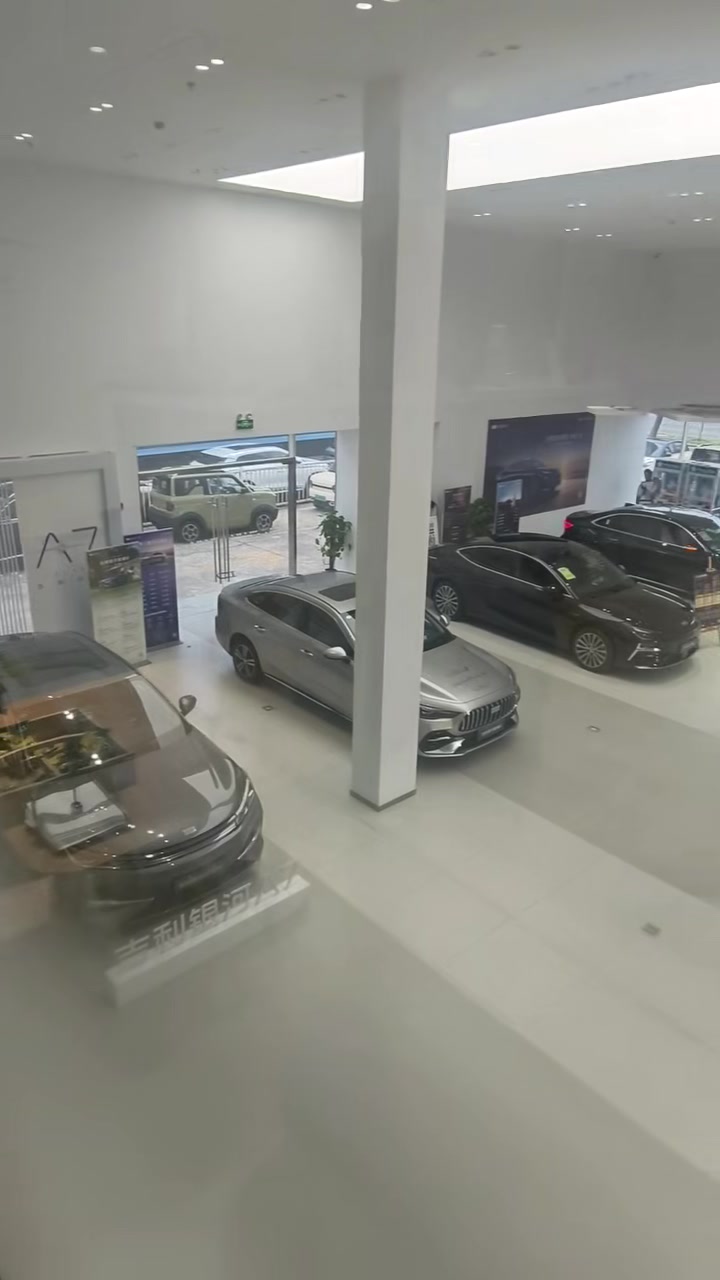
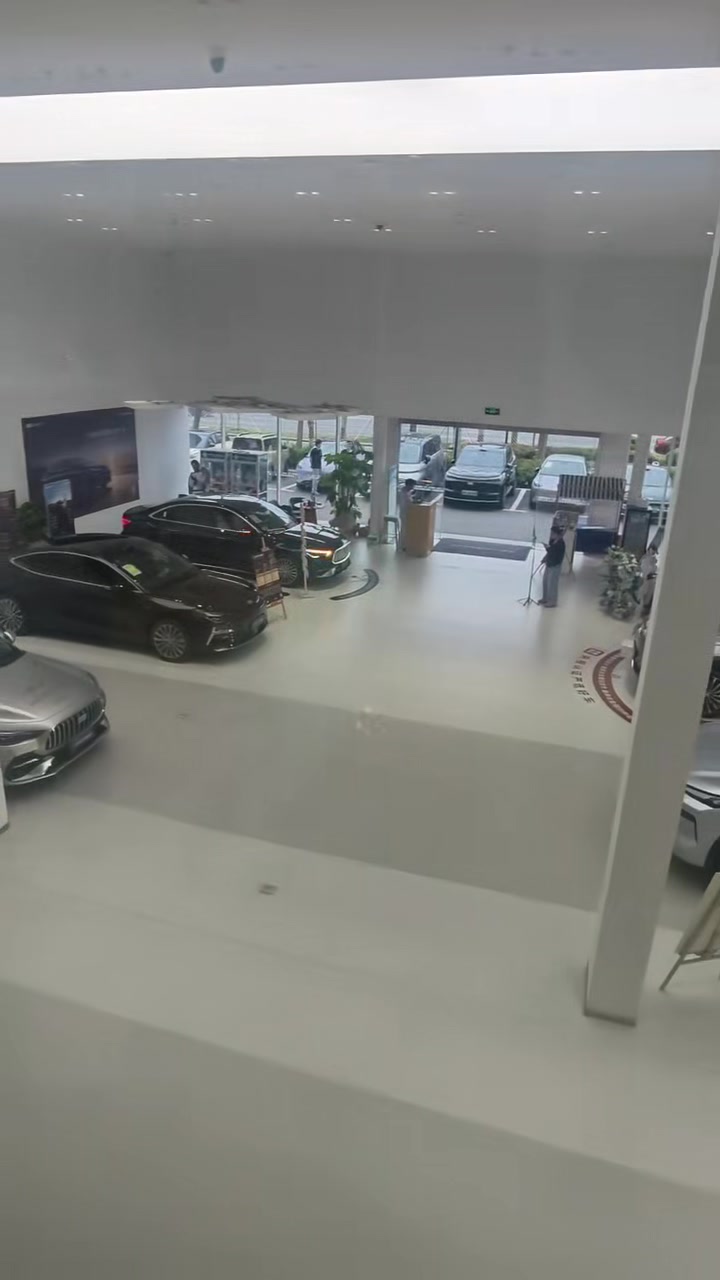
GCC spec Chinese cars export ready to ship

The Chinese electric vehicle export landscape undergoes a seismic transformation on January 1, 2026. As the Chief Export Consultant at Electric Auto China (Shanghai), I have witnessed firsthand the regulatory chaos that preceded this mandate—thousands of GCC-bound vehicles arriving in Dubai and Jeddah without warranty coverage, missing Arabic localization, and incompatible charging hardware. China’s new Export License Management System for Electric Vehicles (ELMS-EV), announced by the Ministry of Commerce, terminates the era of unauthorized gray-market exports. Only original equipment manufacturers (OEMs) and their officially authorized export partners may now legally ship new energy vehicles (NEVs) from Chinese ports.

For GCC importers—particularly those operating in the UAE, Saudi Arabia, Kuwait, and Qatar—this regulatory tightening represents both a compliance hurdle and a quality assurance milestone. The Gulf Cooperation Council’s aggressive EV adoption targets (Saudi Vision 2030 and UAE Net Zero 2050) have created a $12 billion annual import demand for Chinese electric vehicles. However, the region’s unique technical requirements—extreme heat tolerance (up to 50°C ambient), sand ingress protection (IP6K9K standards), and Arabic/English bilingual intelligent cockpits—have historically been ignored by unauthorized traders shipping non-GCC-spec vehicles.

This guide provides the definitive roadmap for legally importing GCC-specification Chinese EVs under the 2026 regulatory framework. We analyze the Xpeng G7 (starting at 100,000 AED) and 2026 MG5 (starting at 30,700 AED) as benchmark models, dissect the new energy efficiency mandates (15.1 kWh/100km maximum for 2-tonne vehicles), and provide exact landed cost calculations including the new 5% export compliance surcharge. Whether you are a Dubai-based dealership seeking BYD inventory or a Riyadh fleet operator importing commercial EVs, this document ensures your 2026 import strategy aligns with both Chinese export law and GCC homologation standards.

2. Deep Dive: Technical Specifications

GCC specification vehicles differ fundamentally from domestic Chinese or European variants. The Gulf region’s extreme climate demands engineering modifications that unauthorized exporters often bypass, resulting in warranty voidance and regulatory rejection at GCC borders.

Climate Adaptation Requirements

Specification Chinese Domestic Standard GCC Requirement Technical Impact
Ambient Operating Temp -30°C to 45°C -20°C to 55°C Enhanced thermal management for battery cooling
Sand/Dust Ingress IP54 (standard) IP6K9K (high-pressure wash) Sealed charging ports, reinforced air filtration
AC Cooling Capacity 4.5 kW 6.8 kW minimum Larger compressor, upgraded HVAC software
Battery Thermal Management Passive cooling (entry models) Active liquid cooling mandatory Prevents thermal runaway at 50°C+ ambient

Case Study: Xpeng G7 GCC Adaptation

The Xpeng G7, debuting at 100,000 AED (approximately 195,000 CNY), exemplifies proper GCC localization. While the domestic Chinese variant utilizes standard NMC 811 battery chemistry, GCC-spec G7 units incorporate:

  • Desert Mode Software: Revised regenerative braking algorithms to prevent sand accumulation in brake calipers
  • Enhanced Battery Cooling: Dual-loop liquid cooling system maintaining cell temperature below 35°C in 50°C ambient conditions
  • UV-Resistant Interior: Dashboard materials rated for 1,500+ hours of xenon arc exposure (equivalent to 3 years of Gulf sun exposure)

The 2026 MG5 (30,700 AED entry point) similarly requires GCC-specific powertrain tuning. The 1.5L turbocharged variant sold in China utilizes a 92-octane fuel map incompatible with GCC fuel standards (95-octane minimum). Authorized exporters must verify ECU recalibration certificates before shipment.

Critical Compliance Checkpoint

Under the 2026 ELMS-EV regulations, vehicles exported without documented GCC climate adaptation face immediate export license revocation. The Shanghai Customs Authority now requires thermal testing reports from CNAS-accredited laboratories (China National Accreditation Service) as mandatory export documentation.

3. The Localization Challenge: Software, UI, and Connectivity

Perhaps the most expensive oversight in unauthorized EV exports is software localization. GCC consumers require full Arabic language support, right-to-left (RTL) interface orientation, and regional app ecosystem integration—features absent in Chinese domestic models.

Mandatory Software Modifications

System Chinese Version GCC Requirement Cost Impact per Unit
Infotainment OS Mandarin/English only Full Arabic (RTL), English +2,800 AED
Navigation Baidu Maps/AutoNavi Google Maps, Here WeGo, TomTom GCC +1,200 AED
Voice Assistant Mandarin recognition Arabic (Khaleeji dialect) recognition +3,500 AED
OTA Updates China servers GCC CDN servers (Dubai/Riyadh) +800 AED annual
Regulatory Apps N/A EV charging network apps (DEWA, Electromin) +600 AED

The Huawei AR-HUD Challenge

The Xpeng G7’s headline feature—augmented reality head-up display powered by Huawei—presents unique localization hurdles. Chinese AR-HUD systems overlay Mandarin traffic sign recognition and Baidu POI (Point of Interest) data. GCC compliance requires:

  1. Traffic Sign Database Update: Recognition of Arabic/English bilingual road signage (Saudi Road Code vs. UAE Federal Traffic Law)
  2. Speed Limit Conversion: HUD displaying km/h (Chinese standard) must convert to km/h with mph secondary (UAE requirement) or pure km/h (Saudi)
  3. Prayer Time Integration: GCC consumers expect AR-HUD to display Qibla direction and prayer time alerts—features requiring complete OS architecture modifications

Unauthorized exporters cannot perform these software flashes post-production. Only OEM-authorized entities possess the cryptographic keys to modify vehicle domain controllers (VDCs) and infotainment control modules (ICMs).

4. Charging Compatibility: Bridging the GB/T Gap

China utilizes the GB/T charging standard (AC: GB/T 20234.2, DC: GB/T 20234.3), while GCC nations predominantly deploy CCS2 (Combined Charging System Type 2) infrastructure, with some legacy CHAdeMO in Dubai and Abu Dhabi. This incompatibility represents the single largest technical barrier for GCC EV imports.

Charging Standard Matrix

Region AC Charging DC Fast Charging Max DC Power
China GB/T 7-pin (220V/32A) GB/T 9-pin 250 kW (ultra-fast)
UAE Type 2 (IEC 62196) CCS2 Combo 350 kW (DEWA network)
Saudi Arabia Type 2 CCS2 Combo 150 kW (Electromin network)
Kuwait Type 2 CCS2 Combo 50 kW (limited infrastructure)

Technical Solutions for GCC Compliance

Option A: Factory-Installed Dual-Port Configuration
Authorized exporters like Electric Auto China coordinate with manufacturers to produce GCC-specific variants featuring both GB/T (for Chinese factory testing) and CCS2 (for destination market) inlet ports. This adds approximately 4,500 AED per vehicle but ensures seamless integration with GCC fast-charging networks.

Option B: Post-Import Retrofit (Not Recommended)
Unauthorized traders often attempt adapter cable solutions or inlet port replacements. However, the 2026 ELMS-EV explicitly prohibits export of vehicles requiring safety-critical charging system modifications post-shipment. Such vehicles fail GCC homologation (SASO 2864:2024 for Saudi Arabia, UAE.S 5019:2024) and cannot obtain vehicle registration.

Option C: Platform-Native CCS2
Premium OEMs (Nissan, Tesla Shanghai, BMW Brilliance) now produce CCS2-native vehicles for export markets. When sourcing from these manufacturers, verify the charging protocol via the Vehicle Identification Number (VIN) 4th-8th position coding.

Infrastructure Mapping

Before importing, validate your target market’s charging density:
Dubai: 1,200+ public chargers (70% CCS2, 30% Tesla proprietary)
Riyadh: 800+ chargers (85% CCS2, 15% CHAdeMO legacy)
Jeddah: 400+ chargers (90% CCS2)

Vehicles limited to GB/T charging require 15,000-25,000 AED conversion kits to achieve roadworthiness in GCC states—a cost that destroys dealer margins and violates 2026 export compliance.

5. Homologation, Compliance & 2026 Export Regulations

The January 1, 2026 implementation of China’s Export License Management System for Electric Vehicles fundamentally restructures the B2B export channel. Understanding these regulations is non-negotiable for GCC importers.

The 2026 Export License Framework

Key Regulatory Changes:
1. Exclusive Export Rights: Only vehicle manufacturers holding MIIT (Ministry of Industry and Information Technology) production qualifications and their authorized export agents may apply for EV export licenses
2. End of Gray Market: Independent trading companies can no longer export new EVs by misclassifying them as “used vehicles” or “movable property”
3. Technical Compliance Verification: Export license applications must include:
– CCC certificate (China Compulsory Certification)
– Destination market homologation pre-approval (GCC GSO certificate)
– Battery safety test reports (UN 38.3, UL 2580)
– Energy efficiency compliance (new 15.1 kWh/100km standard for 2-tonne vehicles)

GCC Homologation Requirements

Certificate Authority Validity Key Tests
GSO Conformity GCC Standardization Organization 3 years EMC, safety, labeling
SASO Saudi Standards Per shipment Energy efficiency, safety
ESMA UAE Authority 1 year Electrical safety, RF emissions
ADQCC Abu Dhabi Quality Per model Additional safety verification

Energy Efficiency Mandate Impact

China’s new mandatory EV energy consumption standard (effective 2026) requires:
2-tonne class BEVs: Maximum 15.1 kWh/100km
Plug-in Hybrids: Minimum 43km pure electric range (increased from previous 50km NEDC to stricter WLTC)

For GCC importers, this ensures imported vehicles feature:
– Heat pump HVAC systems (reducing cooling energy consumption by 40% in desert conditions)
– Silicon carbide (SiC) inverters improving efficiency by 3-5%
– Aerodynamic optimizations (active grille shutters, underbody panels)

Compliance Verification: Request the MIIT Energy Consumption Certificate before payment. Non-compliant vehicles manufactured after January 1, 2026, cannot obtain export licenses, regardless of purchase contracts signed with unauthorized traders.

Documentation Checklist for GCC Customs

  1. Export License (original, stamped by MOFCOM)
  2. GCC Spec Compliance Declaration (manufacturer letterhead)
  3. Battery Chemical Composition Report (for hazardous materials handling)
  4. Arabic User Manual (certified translation)
  5. Cooling System Capacity Certification (proving 55°C ambient capability)

6. Global Logistics & Supply Chain

Shipping EVs from China to GCC ports requires specialized handling protocols distinct from internal combustion engine (ICE) vehicles. The 2026 regulations add compliance verification checkpoints at Chinese ports, extending lead times by 5-7 days.

Shipping Routes & Methods

Route Transit Time Cost per Unit (40ft HC) Best For
Shanghai → Jebel Ali (Dubai) 18-22 days 3,200-4,500 AED High volume, UAE distribution
Shanghai → King Abdullah (Jeddah) 24-28 days 3,800-5,200 AED Saudi market entry
Shanghai → Shuwaikh (Kuwait) 26-30 days 4,100-5,800 AED Kuwait/Iraq transit
Ningbo → Hamad (Qatar) 22-25 days 3,600-4,800 AED Qatar/Bahrain distribution

Battery Transportation Regulations

Lithium-ion batteries (UN 3480/3481) require:
SOC Limitation: Maximum 30% state of charge during ocean freight
Thermal Monitoring: Container temperature logs every 4 hours
Fire Suppression: CO2 flooding systems in EV-specific containers
Segregation: Minimum 3-meter separation from reactive chemicals

2026 Update: Chinese customs now inspects 100% of EV exports for battery safety compliance. Factor in 3-5 days for customs clearance at Shanghai/Ningbo ports, plus mandatory export license verification against the MIIT database.

Port of Entry Strategy

Jebel Ali (Dubai): Preferred for GCC-wide distribution due to JAFZA (Jebel Ali Free Zone) tax advantages and established EV handling facilities. However, Dubai now requires pre-arrival EV registration through the RTA (Roads and Transport Authority) digital platform.

King Abdullah Port (Saudi Arabia): Direct entry avoids UAE transshipment costs but requires SASO certificate pre-validation. Recommended for large fleet orders (50+ units) destined for Riyadh or Dammam.

7. Financial Breakdown: Landed Cost & Dealer Profit Margins (Case Study)

Understanding true landed costs under the 2026 regulatory framework is critical for maintaining viable dealer margins. Below, we analyze importing 50 units of the Xpeng G7 (Long Range variant) to Dubai versus Jeddah.

Base Vehicle Pricing (2026 Authorized Export Channel)

Component Cost (AED) Notes
EXW Factory Price 98,000 Xpeng G7 Long Range, GCC spec
Export License Fee 1,200 New 2026 MOFCOM administrative cost
Technical Compliance 2,800 GCC climate adaptation, software localization
Documentation 600 Arabic manuals, certification translation

FOB Shanghai Total: 102,600 AED per unit

Logistics & Duties

Cost Element Dubai (UAE) Jeddah (Saudi) Calculation Basis
Ocean Freight 4,200 5,100 40ft HC container (2 units), fuel surcharge included
Insurance (CIF) 1,540 1,580 1.5% of CIF value
Import Duty 0% 5% UAE zero EV duty; Saudi 5% tariff
VAT 5% 15% Applied to CIF + Duty
Customs Clearance 850 1,200 Agent fees, port handling
Technical Inspection 400 600 SASO/ESMA compliance check

Landed Cost Calculation

Dubai Scenario:
– CIF Value: 102,600 + 4,200 + 1,540 = 108,340 AED
– VAT (5%): 5,417 AED
– Clearance/Inspection: 1,250 AED
Total Landed Cost: 115,007 AED

Jeddah Scenario:
– CIF Value: 102,600 + 5,100 + 1,580 = 109,280 AED
– Import Duty (5%): 5,464 AED
– VAT (15%): 17,212 AED
– Clearance/Inspection: 1,800 AED
Total Landed Cost: 133,756 AED

Dealer Margin Analysis

Market Retail Price Landed Cost Gross Margin Net Margin*
Dubai 135,000 AED 115,007 AED 17.4% 12.1%
Jeddah 155,000 AED 133,756 AED 15.9% 8.4%

*Net margin after 3-year warranty reserve (2,500 AED/unit), marketing (1,800 AED/unit), and facility costs.

Critical Insight: Unauthorized gray-market imports (now illegal under 2026 rules) previously offered landed costs of 105,000 AED by skipping GCC climate adaptation and software localization. However, these vehicles face:
– Warranty voidance (saving 2,500 AED but costing 15,000+ AED in future claims)
– Registration rejection (total loss of vehicle value)
– No OTA update capability (obsolete software within 12 months)

The 2026 authorized channel adds 10,000-12,000 AED in compliance costs but ensures sustainable dealer operations and customer retention.

8. Securing After-Sales Support & Spare Parts

The 2026 export license regulations specifically target the “after-sales desert” created by unauthorized traders. Under the new rules, export license applicants must demonstrate:

  1. Overseas Service Network Agreements: Proof of authorized service centers in destination markets
  2. Spare Parts Inventory Commitment: Minimum 5-year parts availability guarantee
  3. Technical Training: Certification of local technicians for high-voltage system repair

GCC Service Infrastructure

Authorized OEM Networks (2026 Status):

Brand UAE Service Centers Saudi Service Centers Parts Warehouse
BYD 4 (Dubai, Abu Dhabi, Sharjah, Al Ain) 3 (Riyadh, Jeddah, Dammam) Dubai JAFZA
Xpeng 2 (Dubai, Abu Dhabi) 2 (Riyadh, Jeddah) Dubai
MG 8 (nationwide) 12 (nationwide) Riyadh, Dubai
Nissan (China-made) 6 8 Dubai

Critical Spare Parts Strategy

For GCC operations, maintain inventory of climate-vulnerable components:
Battery Thermal Management: Coolant pumps, radiators, refrigerant compressors (high failure rate in desert heat)
HVAC Systems: Cabin air filters (enhanced sand filtration variants), AC compressors
Software Licenses: Annual renewal fees for Arabic navigation and connectivity services

Warning: Unauthorized exports cannot access OEM diagnostic tools (e.g., BYD’s VDS2000, Xpeng’s Xmart OS diagnostic suite). Independent garages cannot reset battery management systems or update thermal management firmware, rendering vehicles unmaintainable.

9. Why Partner with Electric Auto China

As Shanghai’s premier authorized EV export consultancy, Electric Auto China operates as the compliant bridge between Chinese OEMs and GCC distributors. Our 2026 operational framework ensures:

Regulatory Compliance Guarantee

  • Direct OEM Authorization: We hold export agency agreements with BYD, Xpeng, MG, and NIO, qualifying us for MOFCOM export licenses under the 2026 ELMS-EV framework
  • Pre-Export Verification: Every vehicle undergoes GCC spec verification, software localization, and charging standard conversion before reaching Shanghai port
  • Documentation Integrity: Complete GSO, SASO, and ESMA certification packages prepared in-house by our homologation team

Technical Localization Excellence

  • Software Engineering: In-house Arabic localization team ensuring RTL interface perfection, prayer time integration, and GCC app ecosystem pre-loading
  • Climate Engineering: Partnership with CATARC (China Automotive Technology Research Center) for Gulf-specific thermal testing and certification
  • Charging Solutions: Factory-coordinated CCS2 conversions ensuring seamless integration with DEWA, Electromin, and EVGO networks

Financial & Logistics Support

  • Transparent Pricing: Exact landed cost calculations with no hidden gray-market fees or post-arrival compliance surprises
  • Hedged Currency Contracts: AED/CNY forward contracts protecting against exchange rate volatility
  • White-Glove Logistics: Dedicated EV containers with thermal monitoring, insurance, and JAFZA/Riyadh customs pre-clearance

Market Intelligence

Real-time access to:
– 2026 energy efficiency compliance status for all Chinese EV models
– GCC subsidy program updates (Saudi EV incentives, Dubai Green Mobility initiatives)
– Competitive pricing intelligence across authorized export channels

Contact our Shanghai headquarters to secure your 2026 GCC EV import pipeline. With China’s export license regime eliminating unauthorized competition, authorized partnerships represent the only viable path to sustainable profitability in the Gulf’s electric transition.


Electric Auto China | Shanghai Headquarters | GCC Spec Compliance Division
Disclaimer: All pricing accurate as of January 2026. Export license requirements subject to MOFCOM updates. GCC homologation standards subject to GSO regulatory changes.

Unlock High-Margin EV Imports with Electric Auto China

As an elite automotive supply chain partner in Shanghai, we provide end-to-end, strictly compliant export solutions tailored for international dealerships, fleet managers, and wholesale distributors.

  • 🛡️ 100% Legal & Compliant: Fully licensed exports ensuring smooth customs clearance at your destination.
  • ⚙️ Complete Localization: Professional English/Arabic/Russian OS flashing and GB/T to CCS2 charging solutions.
  • 🚢 Secure Logistics: Direct Ro-Ro and Containerized shipping with full UN38.3 battery certifications.
  • 🔧 After-Sales Support: Reliable access to OEM diagnostic tools and steady spare parts supply.

Request a Detailed FOB/CIF Quote Today:

📧 B2B Sales Email: [email protected]

💬 Direct WhatsApp: +86 159 5127 6160

Global Compliance Disclaimer: Import regulations, tariffs, and EV homologation requirements vary significantly by country. While we ensure full compliance with China’s 2026 export laws, it is the buyer’s responsibility to verify local connectivity laws, charging infrastructure compatibility, and destination customs duties.

Similar Posts