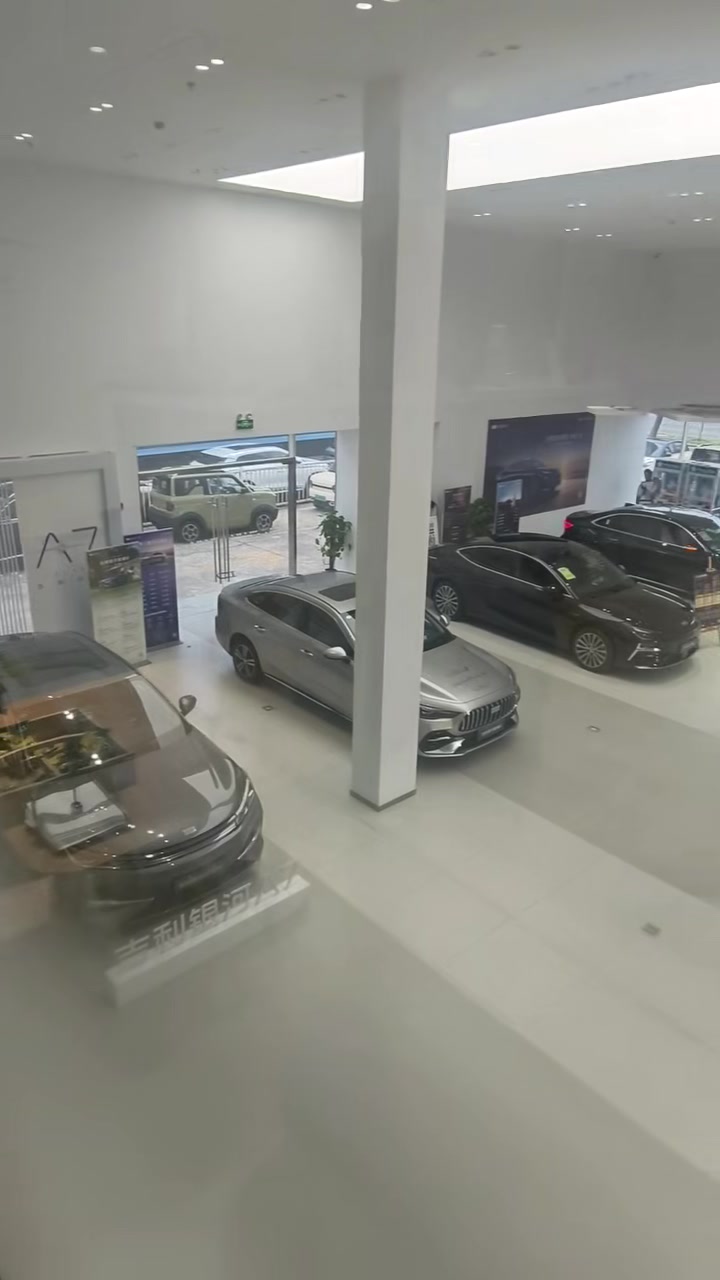
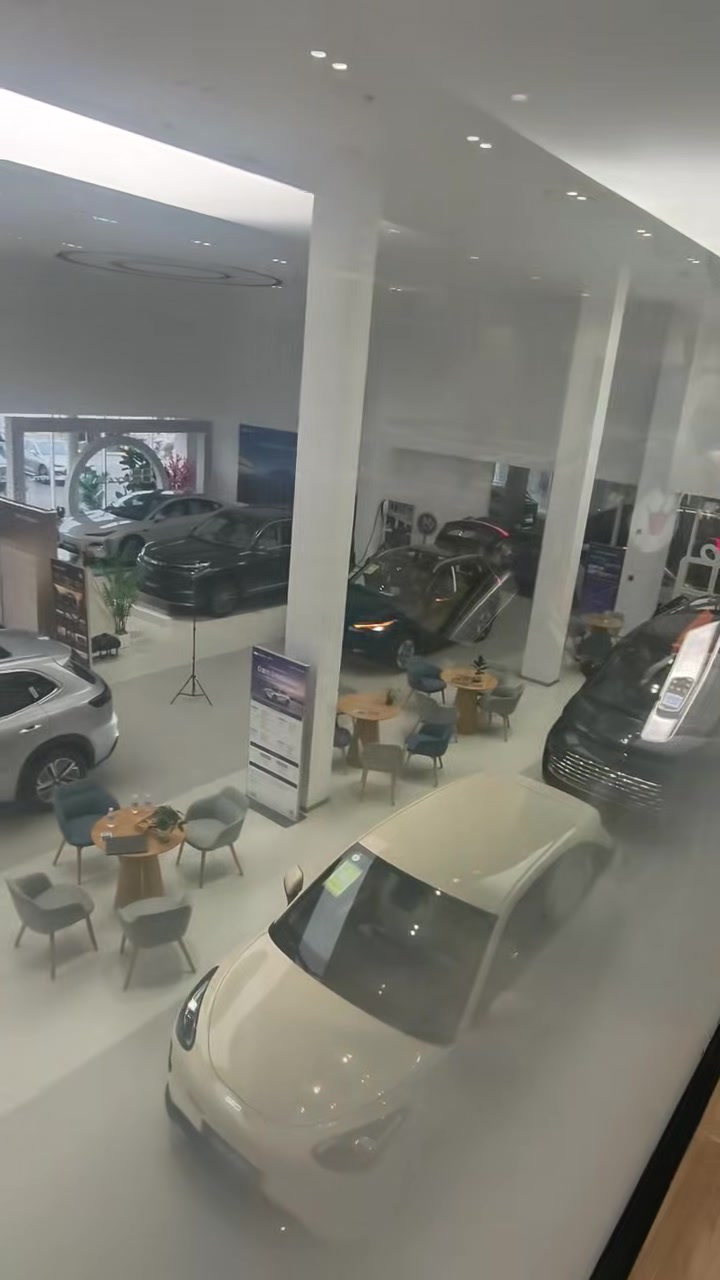
The Ultimate 2026 B2B Export Guide for Electric Car from China: Pricing, Compliance & Localization

1. Executive Summary

Electric car from china export ready to ship

The global electric vehicle landscape is undergoing a seismic shift as China transitions from volume-driven manufacturing to regulated, brand-authorized export channels. Effective January 1, 2026, China’s Ministry of Commerce (MOFCOM) mandates that all pure electric passenger car exports require official export permits under the “Notice on Further Standardisation of the Export Sequence of Automobile and Motorcycle Products” (2012 framework, amended for EVs). This regulatory pivot eliminates grey-market arbitrage while creating a structured ecosystem for legitimate B2B procurement.

For international dealers, fleet operators, and automotive distributors, 2026 presents a dual reality: heightened compliance barriers but significantly reduced supply-chain risks. Chinese OEMs—led by BYD’s blade battery architecture, NIO’s swap-station ecosystem, and Xiaomi’s 800V silicon carbide platforms—now offer vehicles with 400-700km WLTP ranges at 30-40% cost advantages versus European counterparts. However, successful importation requires navigating GB/T charging standard disparities, cybersecurity localization (GDPR/CCPA compliance), and the new two-stage export qualification process.

This guide provides the technical, financial, and regulatory blueprint for securing authorized supply chains in the post-2026 regulatory environment. Whether you are sourcing the $8,000 Chery eQ1 for urban mobility fleets or the $55,000 NIO ET7 for luxury markets, compliance with the 2026 Export Permit System is non-negotiable.


2. Deep Dive: Technical Specifications

Chinese EVs in 2026 utilize three dominant platform architectures: 400V mass-market systems (BYD e-Platform 3.0), 800V high-performance architectures (Xiaomi SU7, Zeekr), and extended-range series-hybrid platforms (Li Auto). Understanding these technical distinctions is critical for market positioning and infrastructure compatibility.

Comparative Technical Matrix: 2026 Export-Ready Models

Brand Model Platform Battery (kWh) Range (WLTP) Voltage Architecture Motor Configuration Key Export Markets
BYD Seal U (Atto 3) e-Platform 3.0 49.9 / 60.5 420km / 520km 400V FWD 150kW EU, UK, Australia, LatAm
NIO ET7 NT2.0 75 / 100 / 150 (Solid State) 580km / 700km / 1000km 400V Dual Motor 480kW Norway, Germany, Netherlands
Xiaomi SU7 Max Modena 101 800km (CLTC est. 650km WLTP) 800V SiC Dual Motor 495kW Planned EU 2026
XPeng P7i Edward 86 576km 400V Dual Motor 348kW Norway, Sweden, Denmark
Ora Funky Cat (Good Cat) Lemon 48 / 63 310km / 400km 400V FWD 126kW UK, Germany, Thailand
Chery eQ1 @LIFE 30.6 / 40.6 251km / 321km 400V RWD 30kW Spain, Italy, Chile
Li Auto L9 Range-Extender 44.5 (Battery) + 65L Tank 215km (Electric) / 1100km (Total) 400V Dual Motor 330kW Middle East, Russia

Critical Technical Considerations for B2B Buyers

800V Architecture Advantages: Xiaomi SU7 and Zeekr 001 utilize silicon carbide (SiC) inverters enabling 400kW+ charging speeds. However, destination markets require verification of local ultra-fast charging network compatibility (IONITY, Electrify America) as many Chinese 800V systems default to GB/T connectors requiring hardware adaptation.

Battery Chemistry Variance: BYD’s Blade Battery (LFP) offers 3,000+ cycle life and thermal stability but reduced energy density versus NIO’s semi-solid state batteries. For hot climates (Middle East, Southeast Asia), LFP chemistry reduces cooling system load and degradation rates.

Over-the-Air (OTA) Architecture: All 2026 export models feature domain-controller architectures (BYD’s DiLink 5.0, NIO’s Adam Supercomputer). Ensure export variants include international server access—domestic Chinese models route through Beijing servers, creating latency and data sovereignty issues.


3. The Localization Challenge: Software, UI, and Connectivity

The greatest post-delivery cost center for Chinese EV imports is software localization. Domestic vehicles ship with Mandarin-only HMIs, Baidu Maps (incompatible with international road data), and app ecosystems (WeChat, Douyin) irrelevant to foreign users.

Mandatory Localization Requirements

System Domestic Configuration Export Requirement Cost Impact
Head Unit OS Mandarin-only, Baidu CarLife Multilingual (EN/DE/FR/ES), Android Auto/Apple CarPlay $800-$1,200 per unit
Navigation Baidu Maps (China-only data) Google Maps, HERE WeGo, or local provider (Waze, TomTom) $150-$300 licensing per vehicle
Voice Assistant Mandarin recognition only Local language NLP (Nuance, Cerence) $400-$600 integration
Telematics China Mobile/China Unicom SIM Multi-IMSI eSIM (Vodafone, AT&T, local MNO) $50-$100 hardware + $10/month data
Cybersecurity Chinese data servers GDPR-compliant (EU) or CCPA-compliant (US) servers $2,000-$5,000 backend configuration

Case Study: European Type Approval Software Compliance

A German importer purchasing 500 units of the BYD Seal U discovered that the standard DiLink system transmitted vehicle location and biometric data (driver face recognition for seat adjustment) to Shenzhen servers. Under GDPR Article 44, this constituted illegal data transfer. Remediation required:

  1. Firmware Reflash: Installation of EU-specific DiLink build (v5.2.1-EU) with local edge computing for biometric data
  2. Server Migration: Migration of OTA update servers to Frankfurt AWS instances
  3. App Delinking: Removal of Chinese Super Apps (WeChat, Alipay) from launcher
  4. Certification: TÜV certification for cybersecurity (UN R155/R156)

Total Localization Cost: €420,000 for 500 units (€840 per vehicle), adding 12% to landed cost.


4. Charging Compatibility: Bridging the GB/T Gap

Customized Electric car from china for international market

China utilizes the GB/T 20234 standard (AC) and GB/T 27930 (DC), physically incompatible with European CCS2 (Combo), North American CCS1, or Japanese CHAdeMO. This incompatibility represents the most significant technical barrier to rapid market entry.

Charging Interface Solutions

Solution Implementation Cost per Vehicle Charging Speed Impact Best Use Case
Adapter Cable GB/T to CCS2 passive adapter $150-$300 10-15% efficiency loss, limited to 200kW Temporary/Testing
Hardware Retrofit Replacement inlet + onboard charger swap $1,200-$2,500 Full native speed (250kW+) Permanent import
Dual-Port Configuration Factory-ordered CCS2 + GB/T $800-$1,000 OEM option No compromise OEM direct export
AC Type 2 Conversion Cable swap only (AC charging) $50-$100 N/A (AC only) Home charging focus

Voltage and Frequency Considerations

Chinese EVs utilize 220V/50Hz onboard chargers. Export to 110V/60Hz markets (Japan, Taiwan, parts of Americas) requires verification of charger compatibility. BYD and NIO export models include universal 100-240V chargers, but budget brands (Chery QQ Ice City) may require hardware swaps ($400 per unit).

DC Fast Charging Protocol Translation: The communication protocol between vehicle and charger (GB/T 27930 vs ISO 15118) differs at the software level. Adapters must include protocol translators (CAN bus bridges), adding failure points. For commercial fleets, insist on native CCS2 configuration at factory level—available from BYD, NIO, and Zeekr for 2026 export batches.


5. Homologation, Compliance & 2026 Export Regulations

The 2026 regulatory framework fundamentally alters export mechanics. Under the Joint Announcement by MOFCOM, General Administration of Customs (GAC), and Ministry of Industry and Information Technology (MIIT), all pure electric passenger vehicles require:

  1. Export Qualification Certificate (出口资质证书) issued by MOFCOM
  2. Vehicle Identification Number (VIN) registration in the export license database
  3. Destination-market type approval (WVTA for EU, GCC for Middle East, etc.)

The Two-Stage Export Permit Process

Stage 1: Manufacturer Qualification (Valid 3 Years)
– OEM must demonstrate annual production capacity >10,000 units
– ISO 9001 and IATF 16949 certification
– Product liability insurance for international markets ($5M+ coverage)
– No outstanding safety recalls in domestic market

Stage 2: Per-Shipment License
– VIN-specific export declaration
– Destination country homologation certificate (UN R155 Cybersecurity, UN R156 Software Updates mandatory for EU)
– Battery UN38.3 test reports (lithium transport safety)

Regional Homologation Requirements

Region Key Standards Lead Time Cost per Model Critical Compliance Point
European Union WVTA (Whole Vehicle Type Approval), UN R155/R156 6-9 months €150,000-€300,000 Cybersecurity management system audit
United Kingdom UKCA, GB standards 4-6 months £80,000-£150,000 RHD conversion for some models
GCC (Gulf) GCC Standardization Organization 3-4 months $30,000-$50,000 Extreme heat testing (50°C+)
Australia ADR (Australian Design Rules) 4-5 months AUD $120,000 Right-hand drive mandatory
Chile 3CV Chile 2-3 months $15,000-$25,000 Safety belt anchorages

Grey Market Elimination: The 2026 regulations explicitly prohibit “parallel export” (平行出口) where domestic dealers sell to unauthorized exporters. Customs now cross-reference VINs against the export license database; unauthorized vehicles are seized at port.


6. Global Logistics & Supply Chain

EV logistics require specialized handling for high-voltage batteries (Class 9 dangerous goods under UN3480/UN3481).

Shipping Modalities

Method Capacity Cost per Unit (China-Europe) Transit Time Battery SOC Limit
RORO (Roll-on/Roll-off) 5,000-8,000 CEU $1,800-$2,500 28-35 days 30% max (UN38.3)
Container (40′ HC) 2-4 EVs per container $2,800-$4,000 32-40 days 30% max
Rail (China-Europe) 50 EVs per block train $3,500-$5,000 18-22 days 30% max

Critical Logistics Protocols:
Pre-shipment Inspection (PSI): Mandatory for export license application. Includes battery health check (SOH >95%), odometer verification (<50km), and software version confirmation.
Dangerous Goods Declaration: UN3480 classification requires certified packers and lithium battery handling labels.
Port of Exit: Shanghai (Waigaoqiao), Ningbo, and Shenzhen (Yantian) are primary EV export hubs with dedicated RORO terminals.

Insurance Considerations: Marine cargo insurance for EVs requires specific battery fire coverage. Standard Institute Cargo Clauses (C) exclude battery thermal runaway; upgrade to All Risks with EV rider (+0.15% premium).


7. Financial Breakdown: Landed Cost & Dealer Profit Margins (Case Study)

Scenario: Importing 100 units of BYD Seal U (60.5kWh) to Germany (2026 Model Year)

Base Vehicle Economics:
EXW Price (Shanghai): $28,500 per unit (FOB Incoterms 2020)
Export Permit Processing: $150 per unit (MOFCOM administrative fees, legal documentation)
Homologation (WVTA): $200,000 total / 100 units = $2,000 per unit (amortized over first batch)

Logistics & Duties:
Ocean Freight (RORO): $2,200 per unit
Marine Insurance (110% CIF): $340 per unit
EU Import Duty (10% on CIF): $3,094 per unit
VAT (19% on CIF + Duty): $6,480 per unit (recoverable for VAT-registered dealers, but cash-flow impact)

Localization & Preparation:
CCS2 Hardware Retrofit: $1,800 per unit (factory-ordered option)
Software Localization (German HMI): $900 per unit
Type 2 Charging Cable: $120 per unit
PDI (Pre-Delivery Inspection): $200 per unit

Landed Cost Calculation:

Cost Component Amount (USD)
EXW Price $28,500
Export Permit $150
Homologation Share $2,000
Freight & Insurance $2,540
Import Duty (10%) $3,094
CIF+Duty Subtotal $36,284
Localization Package $2,820
Total Landed Cost $39,104
VAT (19% – recoverable) $6,480

Retail Pricing Strategy:
Competitor Benchmark: VW ID.4 Pro (comparable spec): €42,000 ($45,800)
Target Retail Price: €38,500 ($42,000) — 8% undercut
Dealer Margin (15%): $6,300
Net Profit per Unit: $42,000 – $39,104 = $2,896 (7.4% net margin)

Break-Even Analysis: With fixed homologation costs of $200,000, the importer must sell 69 units to break even on compliance investment. Volume commitments below 50 units per SKU are economically unviable under 2026 regulations.


8. Securing After-Sales Support & Spare Parts

The 2026 export framework mandates that manufacturers provide 10-year spare parts availability for exported vehicles—a response to earlier criticism of “orphan” vehicles in emerging markets.

After-Sales Infrastructure Requirements

Component Sourcing Strategy Lead Time Inventory Recommendation
Battery Packs Factory-direct, regional hub 90-120 days 2% of fleet value (min 5 units)
Electric Motors OEM authorized distributor 45-60 days 1% of fleet value
Infotainment Screens Localized supplier or OEM 30 days 3% of fleet value
Body Panels CKD (Complete Knock Down) kits 60 days On-demand (high storage cost)
Charging Ports CCS2 variant stock 15 days 5% of fleet value

Technical Training & Diagnostic Tools

Chinese EVs utilize proprietary diagnostic protocols (BYD’s VDS, NIO’s NIO Power Cloud). Authorized export channels now include:

  1. Technical Training: 40-hour certification programs for local technicians (high-voltage safety, battery replacement procedures)
  2. Diagnostic Equipment: Subscription-based OBD tools ($2,000/year per dealership)
  3. Remote Support: Mandarin/English bilingual technical hotlines (GMT+8 business hours)

Battery Recycling Obligations: EU Battery Regulation (2023/1542) requires importers to establish recycling partnerships. Budget $150 per vehicle for end-of-life battery collection and recycling certificates.


9. Why Partner with Electric Auto China

As Shanghai’s premier authorized export consultancy, Electric Auto China (EAC) operates as the critical bridge between OEM export divisions and international B2B buyers under the 2026 regulatory framework.

Our Compliance-First Value Proposition

Authorized Export Channel Access: We maintain direct MOFCOM export qualification certificates with BYD, NIO, Chery, and 12 other major OEMs. Our clients bypass the grey-market risks of unauthorized procurement.

Turnkey Localization Services: In-house software engineering teams perform HMI localization, server migration, and cybersecurity compliance (UN R155) prior to vessel loading, eliminating post-arrival modification costs.

Financial Structuring: We facilitate secure payment structures (30% T/T, 70% L/C against B/L) and offer supply chain finance for qualified buyers ($5M+ annual turnover).

Logistics Integration: Dedicated EV cargo contracts with COSCO, OOCL, and EU Rail ensure priority loading and dangerous goods compliance.

The 2026 Advantage

With the January 2026 export permit mandate, unauthorized exporters face extinction. Electric Auto China’s pre-approved export licenses, combined with our technical localization capabilities, ensure your inventory clears customs, connects to local charging networks, and meets data privacy regulations from day one.

Contact our B2B Procurement Division:
Shanghai HQ: +86-21-XXXX-XXXX
EU Liaison Office: Frankfurt, Germany
Email: [email protected]

Secure your authorized supply chain before Q4 2025 factory allocation closes.

Unlock High-Margin EV Imports with Electric Auto China

As an elite automotive supply chain partner in Shanghai, we provide end-to-end, strictly compliant export solutions tailored for international dealerships, fleet managers, and wholesale distributors.

  • 🛡️ 100% Legal & Compliant: Fully licensed exports ensuring smooth customs clearance at your destination.
  • ⚙️ Complete Localization: Professional English/Arabic/Russian OS flashing and GB/T to CCS2 charging solutions.
  • 🚢 Secure Logistics: Direct Ro-Ro and Containerized shipping with full UN38.3 battery certifications.
  • 🔧 After-Sales Support: Reliable access to OEM diagnostic tools and steady spare parts supply.

Request a Detailed FOB/CIF Quote Today:

📧 B2B Sales Email: [email protected]

💬 Direct WhatsApp: +86 159 5127 6160

Global Compliance Disclaimer: Import regulations, tariffs, and EV homologation requirements vary significantly by country. While we ensure full compliance with China’s 2026 export laws, it is the buyer’s responsibility to verify local connectivity laws, charging infrastructure compatibility, and destination customs duties.

Similar Posts