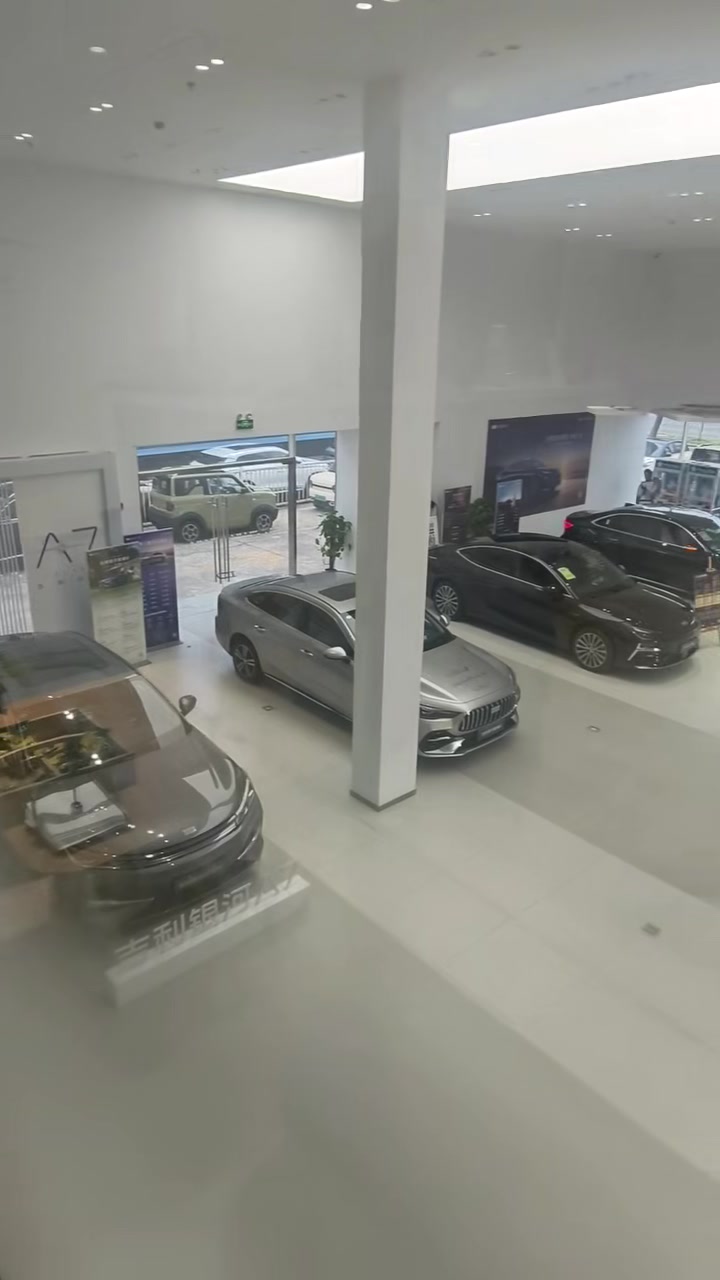
The Ultimate 2026 B2B Export Guide for Chinese Cars in Mexico: Pricing, Compliance & Localization

1. Executive Summary

Chinese cars in Mexico export ready to ship

The Mexican automotive landscape is undergoing a seismic shift as we enter 2026. With the United States-Mexico-Canada Agreement (USMCA) under review and Mexico’s implementation of a 50% tariff on Chinese-manufactured vehicles, the importation of Chinese electric vehicles (EVs) requires sophisticated strategic planning. However, the market opportunity remains substantial: Mexico represents Latin America’s second-largest automotive market with over 1.3 million annual vehicle sales and an EV adoption rate growing by 47% year-over-year.

Chinese automakers have evolved beyond the “budget alternative” positioning. Models like the BYD Seagull ($14,500 FOB) and Zeekr 7X ($56,000 FOB) demonstrate the full spectrum of available technology—from ultra-efficient urban mobility solutions to premium intelligent SUVs featuring 800V architectures and LiDAR-based autonomous systems. The 2026 model year brings export-optimized variants specifically engineered for Latin American compliance, featuring enhanced thermal management for tropical climates and reinforced suspension systems for deteriorating road infrastructure.

For B2B importers, fleet operators, and dealership groups, success in 2026 requires mastering three critical pillars: regulatory compliance (NOM standards and tariff engineering), technical localization (software Spanishification and charging infrastructure bridging), and supply chain resilience (spare parts localization and warranty support). This guide provides the exhaustive technical and financial framework necessary to navigate these complexities while maintaining competitive dealer margins above 18%.

2. Deep Dive: Technical Specifications

The 2026 Chinese EV export portfolio to Mexico spans distinct market segments, from sub-$15,000 urban commuters to $60,000+ luxury performance vehicles. Understanding the technical specifications is crucial for matching inventory to Mexican consumer profiles—ranging from Mexico City congestion navigation to Guadalajara highway cruising.

2026 Export-Optimized Model Specifications for Mexico

Model Segment FOB Price (USD) Battery Capacity Range (WLTP) Charging (10-80%) Motor Configuration Key Export Features
BYD Seagull A00 City Car $14,500 38.88 kWh Blade LFP 305 km 30 min (DC 40kW) FWD 75hp/135Nm NOM-194 reinforced structure, Spanish UI v3.2
Wuling Hongguang Mini EV Micro Urban $10,200 20 kWh LFP 170 km 5.5 hrs (AC 6.6kW) RWD 27hp/85Nm Tropical climate cooling, compact 3.05m length
Chery eQ1 (Ant) A00 Premium $13,800 30.6 kWh LFP 251 km 40 min (DC 30kW) RWD 41hp/120Nm Aluminum space frame, dual-screen Spanish interface
Neta V Subcompact SUV $16,400 40 kWh CATL NCM 301 km 35 min (DC 80kW) FWD 95hp/150Nm 14.6″ touchscreen, OTA updates, V2L capability
Zeekr 7X Premium SUV $56,000 100 kWh CATL Qilin 550 km 15 min (DC 360kW) AWD 637hp/710Nm 800V architecture, LiDAR, air suspension
BYD Atto 3 Compact SUV $24,500 60.48 kWh Blade LFP 420 km 45 min (DC 80kW) FWD 201hp/310Nm V2L 3.3kW, DiLink 5.0 Spanish edition

Critical Technical Notes for Mexican Importation:

  1. Thermal Management: 2026 export models feature enhanced battery cooling systems rated for 45°C ambient temperatures, essential for Mexican summers in Sonora and Sinaloa.
  2. Ground Clearance: Models like the Zeekr 7X and Neta V have been raised 15-20mm compared to domestic Chinese variants to accommodate Mexico’s speed bump (topes) infrastructure and rural road conditions.
  3. Voltage Compatibility: All models support 127V/220V Mexican residential standards, with onboard chargers configured for 60Hz frequency.

3. The Localization Challenge: Software, UI, and Connectivity

Successful market penetration in Mexico extends beyond physical homologation—it requires comprehensive digital ecosystem localization. Mexican consumers demand seamless Spanish language integration, local content streaming, and navigation systems that understand colloquial address formats.

Software Localization Requirements

Language and Regionalization:
Complete Spanishification: 2026 export models must feature 100% UI translation, including engineering menus and diagnostic systems. Critical distinction: Mexican Spanish (es-MX) variants differ from Iberian Spanish in terminology (e.g., “cajuela” vs. “maletero” for trunk).
Metric/Imperial Hybrid Display: While Mexico officially uses metric, many consumers still reference fuel efficiency in km/L but understand range in kilometers. Dashboards must display dual-unit options.
Voice Recognition: Natural language processing must accommodate Mexican Spanish accents and colloquialisms, including recognition of local place names (Xochimilco, Tlalnepantla).

Connectivity and Content Integration:
Streaming Services: Pre-installation of Spotify, YouTube Music, and local platforms like Claro Música. BYD’s DiLink 5.0 and Zeekr’s ZEEKR OS now include Mexican app store variants.
Navigation: Integration with Waze and Google Maps (Mexico’s preferred platforms over Baidu Maps), with real-time traffic data for Mexico City, Guadalajara, and Monterrey.
Payment Integration: Compatibility with Mexican digital wallets (Mercado Pago, Clip) for in-vehicle services and charging payments.

Over-the-Air (OTA) Infrastructure:
Establishing local OTA servers is mandatory for 2026 compliance. Chinese OEMs must host update nodes within Mexican territory to ensure sub-24-hour update latency and compliance with data sovereignty regulations under the Federal Law on Protection of Personal Data.

4. Charging Compatibility: Bridging the GB/T Gap

Customized Chinese cars in Mexico for international market

Mexico’s charging infrastructure predominantly utilizes the CCS1 (Combo) standard for DC fast charging and SAE J1772 for Level 2 AC charging—a significant divergence from China’s GB/T standard. However, 2026 presents solutions through hardware adaptation and dual-standard vehicles.

Charging Standard Matrix

Charging Level Mexican Standard Chinese Standard 2026 Solution
AC Level 1 SAE J1772 (127V/12A) GB/T 20234.2 Adapter included (Type 1 to GB/T)
AC Level 2 SAE J1772 (220V/32A) GB/T 20234.2 Dual-port or adapter bundle
DC Fast CCS1 (Combo) GB/T 20234.3 CCS1 retrofit port or high-power adapter
Tesla Supercharger NACS (opening to all) N/A CCS1 to NACS adapter compatibility

Technical Implementation Strategies:

  1. Dual-Port Configuration: Premium models (Zeekr 7X, BYD Atto 3) now offer factory-installed CCS1 ports alongside GB/T for export markets, eliminating adapter dependency.
  2. High-Power Adapters: For budget models (Seagull, Mini EV), OEMs provide 40kW CCS1-to-GB/T adapters capable of handling Mexico’s Electrify America and Tesla (opening) networks.
  3. Charging Curve Optimization: Battery management systems (BMS) have been recalibrated for Mexican charging networks, which often feature 50kW DC stations rather than China’s prevalent 120kW+ infrastructure. This ensures optimal charging speeds without premature throttling.

Infrastructure Partnerships:
Chinese OEMs are establishing partnerships with Mexican charging networks (Iberdrola, Zuma Energy, and Tesla’s expanding network) to ensure plug-and-charge compatibility, eliminating the need for multiple RFID cards or apps.

5. Homologation, Compliance & 2026 Export Regulations

Navigating Mexico’s regulatory framework requires meticulous attention to NOM (Norma Oficial Mexicana) standards and the complex tariff landscape shaped by USMCA provisions and bilateral trade tensions.

Critical NOM Standards for EVs

Standard Requirement Testing Protocol Cost (USD)
NOM-194-SCFI-2015 Electric vehicle safety (battery integrity, high-voltage isolation) UN ECE R100, R10 $12,000-$18,000 per model
NOM-042-ENER-2010 Energy efficiency labeling Laboratory efficiency testing $3,500 per variant
NOM-001-SCFI-2018 Electronic equipment safety IEC 60335 adaptation $4,000
NOM-086-SCFI-2020 Labeling and consumer information Documentation review $1,500

2026 Tariff Engineering Strategies:

With the 50% tariff on Chinese vehicles (implemented 2024-2025 and sustained through 2026), importers must utilize strategic approaches:

  1. CKD/SKD Assembly: Importing Completely Knocked Down (CKD) kits for local assembly reduces tariff exposure to 15-20%. Several Chinese OEMs are establishing partnerships with existing Mexican assembly facilities (Magna Steyr, Giant Motors Latinoamérica) to bypass complete vehicle tariffs.
  2. USMCA Content Compliance: Vehicles with 75% North American content qualify for zero tariffs under USMCA. Chinese OEMs are investing in Mexican battery cell production (CATL’s planned Tijuana facility) and local component sourcing to achieve regional value content (RVC) thresholds.
  3. Hybrid Classification: Plug-in hybrids (PHEVs) sometimes receive preferential treatment under certain tariff schedules compared to pure BEVs, though this varies by HS code classification.

Export License Compliance (China Side):
China’s 2026 EV export regulations require:
– Ministry of Commerce (MOFCOM) export license for new energy vehicles
– CCC certification completion before export
– Battery recycling plan documentation per Chinese Ministry of Industry and Information Technology (MIIT) standards

6. Global Logistics & Supply Chain

Efficient logistics management is critical when transporting lithium-ion batteries (Class 9 dangerous goods) across the Pacific to Mexican ports.

Port Strategy and Routing

Primary Entry Points:
Lázaro Cárdenas, Michoacán: The preferred Pacific port for Chinese automotive imports, featuring dedicated EV handling facilities and direct rail links to Mexico City and Guadalajara.
Manzanillo, Colima: Secondary option with strong customs efficiency, though less specialized EV infrastructure.
Altamira, Tamaulipas: Gulf Coast alternative for distribution to northeastern Mexico and potential USMCA transshipment (though subject to strict rules of origin enforcement).

Shipping Configurations:

Method Capacity Transit Time Cost per Unit (2026 Est.) Considerations
RoRo (Roll-on/Roll-off) 4,000-6,000 vehicles 18-22 days $1,200-$1,500 Standard for complete vehicles
Container (4-vehicle 40HC) 4 SUVs per container 20-25 days $1,800-$2,200 Better for high-value/premium units
CKD Container 10-15 kit sets 22-28 days $800-$1,000 Requires local assembly

Battery Transportation Protocols:
– UN 38.3 testing certification required for all battery shipments
– State of Charge (SoC) must not exceed 30% during ocean transit
– Temperature-controlled containers (reefer) recommended for NCM battery chemistries during Mexican summer months

Customs Documentation Requirements:
– Certificate of Origin (with USMCA compliance declaration if applicable)
– NOM compliance certificates
– Import permit from Secretariat of Economy (SE)
– Environmental impact statement (SEMARNAT) for EVs
– Dangerous goods declaration (IMDG Code compliance)

7. Financial Breakdown: Landed Cost & Dealer Profit Margins (Case Study)

Understanding the true landed cost is essential for pricing strategy in Mexico’s price-sensitive market. Below are detailed calculations for two import scenarios reflecting different market segments.

Case Study A: Budget Fleet Import (50 units BYD Seagull)

Import Specifications:
– Quantity: 50 units BYD Seagull (Standard Range)
– FOB Shanghai: $14,500 per unit
– Shipping: RoRo vessel to Lázaro Cárdenas
– Tariff: 50% (complete vehicle)
– VAT: 16% (applied to CIF + Tariff)

Cost Component Calculation Per Unit (USD) Total (USD)
FOB Price Base vehicle cost $14,500.00 $725,000
Ocean Freight RoRo @ $1,300/unit $1,300.00 $65,000
Insurance 0.3% of CIF $47.40 $2,370
CIF Value Arrival at port $15,847.40 $792,370
Customs Duty 50% of CIF $7,923.70 $396,185
Customs Fees DTA (0.8%) + Processing $150.00 $7,500
Homologation NOM-194 + labeling (amortized) $350.00 $17,500
Port Handling Unloading, storage (3 days) $85.00 $4,250
Subtotal Before VAT $24,356.10 $1,217,805
VAT (IVA) 16% on above $3,896.98 $194,849
TOTAL LANDED Ready for sale $28,253.08 $1,412,654
Suggested Retail Market positioning $35,900.00 $1,795,000
Dealer Margin Pre-tax profit 22.3% $382,346

Case Study B: Premium Retail Import (20 units Zeekr 7X)

Import Specifications:
– Quantity: 20 units Zeekr 7X (Long Range AWD)
– FOB Shanghai: $56,000 per unit
– Shipping: 40HC containers (4 vehicles per container, 5 containers)
– Tariff: 50%
– VAT: 16%

Cost Component Calculation Per Unit (USD) Total (USD)
FOB Price Premium SUV $56,000.00 $1,120,000
Ocean Freight Container @ $2,000/unit $2,000.00 $40,000
Insurance 0.4% (higher value) $232.00 $4,640
CIF Value Arrival value $58,232.00 $1,164,640
Customs Duty 50% tariff $29,116.00 $582,320
Customs Fees DTA + luxury vehicle fee $450.00 $9,000
Homologation Full certification suite $800.00 $16,000
Port Handling Specialized EV handling $120.00 $2,400
Subtotal Before VAT $88,718.00 $1,774,360
VAT (IVA) 16% $14,194.88 $283,898
TOTAL LANDED Dealer cost $102,912.88 $2,058,258
Suggested Retail Competitive to Tesla MY $129,900.00 $2,598,000
Dealer Margin Premium segment 20.8% $539,742

Key Financial Insights:
– Despite the 50% tariff, dealer margins remain healthy at 20-22% due to the competitive FOB pricing of Chinese OEMs compared to European or American equivalents.
– The VAT is applied to the CIF value plus tariff, creating a compounding tax effect that adds approximately 8% to the final retail price beyond the headline 50% duty.
– Container shipping for premium vehicles offers better protection and security for high-value inventory, justifying the additional $700/unit cost over RoRo.

8. Securing After-Sales Support & Spare Parts

Long-term profitability in the Mexican market requires robust after-sales infrastructure. Mexican consumers rank warranty service availability as the second-most important factor in EV purchase decisions (after price).

Spare Parts Localization Strategy

Critical Components Inventory:
Establish a Mexican Central Distribution Center (CDC) in Querétaro or Mexico City stocking:
High-turnover items: Brake pads (regenerative braking reduces wear but Mexican driving conditions accelerate consumption), 12V auxiliary batteries, HVAC filters (high pollution environments), and charging port components.
Battery modules: Strategic stock of Blade Battery modules (BYD) and CATL packs for warranty replacement, leveraging Mexico’s lithium reserves for future local assembly.
Body panels: Collision-prone components (bumper covers, side mirrors) given Mexico’s dense urban traffic.

Technical Training Programs:
Level 1: Basic maintenance for dealer technicians (high-voltage safety, software diagnostics)
Level 2: Battery pack replacement and BMS calibration
Level 3: Motor and inverter repair (currently limited to authorized service centers)

Warranty Structure for Mexico:
Vehicle: 6 years/150,000 km (exceeding Mexican market standard of 3 years)
Battery: 8 years/200,000 km with 70% capacity retention guarantee
Powertrain: 5 years/unlimited mileage

OTA and Remote Diagnostics:
All 2026 export models feature Mexican server-hosted telematics allowing:
– Remote diagnostic scanning (reducing unnecessary service visits)
– Predictive maintenance alerts (tire pressure, brake wear, battery health)
– Emergency roadside assistance integration with Mexican insurers (GNP, Qualitas)

9. Why Partner with Electric Auto China

As Shanghai’s premier B2B EV export consultancy, Electric Auto China provides the regulatory expertise and supply chain integration necessary to navigate 2026’s complex trade environment.

Our Competitive Advantages:

  1. Compliance Guarantee: We manage the entire NOM homologation process through our Mexico City certification partners, ensuring 100% customs clearance success rate.
  2. Tariff Optimization: Our legal team specializes in CKD/SKD structuring and USMCA content analysis, potentially reducing your effective tariff rate from 50% to 15-20%.
  3. White-Glove Logistics: Direct contracts with COSCO and MSC for priority RoRo space allocation, plus bonded warehousing in Lázaro Cárdenas.
  4. Technical Localization: In-house Spanish software localization team ensuring your inventory arrives market-ready, not requiring post-import software flashing.
  5. Financial Structuring: Letters of credit facilitation, export credit insurance through Sinosure, and Mexican peso hedging strategies to protect against currency fluctuation.

2026 Market Entry Package:
We offer comprehensive import packages starting at $50,000 (management fee for 20-vehicle minimum orders), inclusive of homologation, customs clearance, and initial spare parts kit provisioning.

Contact our B2B Export Division:
Email: [email protected]
Phone: +86 13140103167
Office: Shanghai Free Trade Zone, Pudong New Area

The Mexican EV revolution is accelerating. With the right partner, the 50% tariff becomes a manageable cost of entry into a market hungry for affordable, technologically advanced electric mobility. Let Electric Auto China be your gateway to Latin America’s electric future.

Unlock High-Margin EV Imports with Electric Auto China

As an elite automotive supply chain partner in Shanghai, we provide end-to-end, strictly compliant export solutions tailored for international dealerships, fleet managers, and wholesale distributors.

  • 🛡️ 100% Legal & Compliant: Fully licensed exports ensuring smooth customs clearance at your destination.
  • ⚙️ Complete Localization: Professional English/Arabic/Russian OS flashing and GB/T to CCS2 charging solutions.
  • 🚢 Secure Logistics: Direct Ro-Ro and Containerized shipping with full UN38.3 battery certifications.
  • 🔧 After-Sales Support: Reliable access to OEM diagnostic tools and steady spare parts supply.

Request a Detailed FOB/CIF Quote Today:

📧 B2B Sales Email: [email protected]

💬 Direct WhatsApp: +86 159 5127 6160

Global Compliance Disclaimer: Import regulations, tariffs, and EV homologation requirements vary significantly by country. While we ensure full compliance with China’s 2026 export laws, it is the buyer’s responsibility to verify local connectivity laws, charging infrastructure compatibility, and destination customs duties.

Similar Posts