Comprehensive B2B Guide to EV Battery Recycling China for Exported Chinese EVs (2026)
Executive Summary: The New Regulatory Paradigm
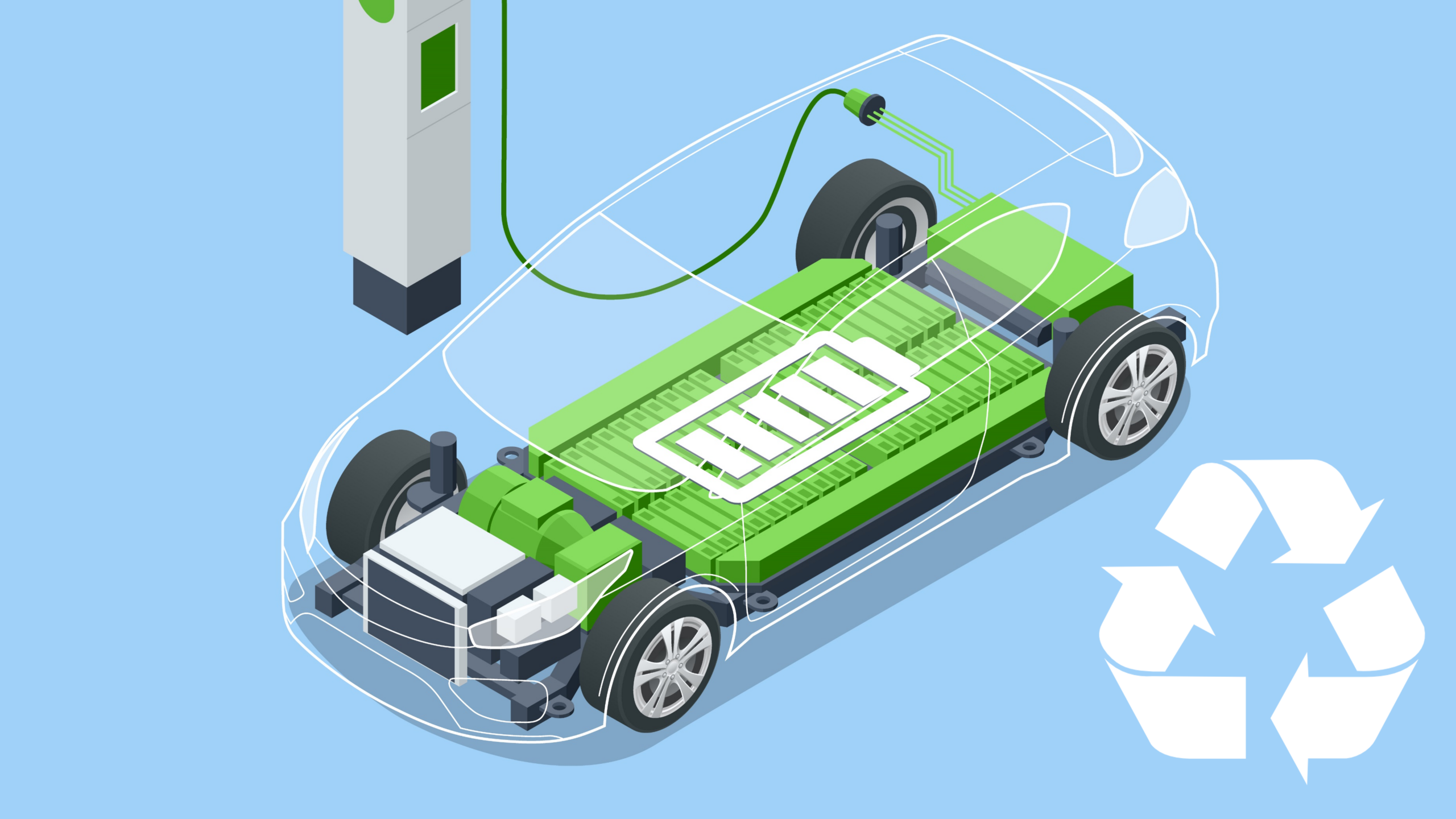
As Chief Export Consultant at Electric Auto China, I am witnessing a seismic shift in global EV supply chain management. China’s implementation of the Measures of Management for the Recycling and Utilization of New Energy Vehicle Power Batteries (effective April 1, 2026), coupled with recent export controls on critical battery materials processing technologies, has fundamentally altered the compliance landscape for international B2B buyers.
The convergence of three regulatory vectors—mandatory recycling service station obligations,export restrictions on hydrometallurgical processing IP, and the National Battery Lifecycle Information Platform—creates a complex compliance matrix that unassisted importers cannot navigate. With retired battery volumes projected to exceed 1 million metric tons annually by 2030 and the domestic recycling market valued at 558 billion yuan (~$78 billion USD), China is fortifying its circular economy moat while externalizing compliance liability to foreign entities.
This guide provides the technical, financial, and operational framework necessary to maintain supply chain continuity under China’s 2026 EV export ecosystem.
1. The Critical Need for EV Battery Recycling China in Global EV Parallel Imports
1.1 The Regulatory Tsunami: Understanding the 2026 Measures
The 2026 regulatory framework imposes strict producer responsibility extension (PRE) obligations that transcend traditional border-based compliance. Under the new Measures:
- Article 12: Every EV battery manufacturer or importer must establish physical recycling service stations in all regions where batteries are commercially distributed
- Article 15: Batteries must remain with vehicles upon scrapping; dismantling for separate export is prohibited without Ministry of Industry and Information Technology (MIIT) approval
- Article 22: All batteries must carry GB/T 34014-2026 identification codes and register with the National Battery Lifecycle Information Platform (NBLIP)
For foreign B2B buyers, this creates a jurisdictional paradox: you are legally responsible for end-of-life management in your domestic market, yet you cannot export spent batteries back to China for processing (due to Basel Convention restrictions and China’s waste import bans), nor can you easily license Chinese recycling technology (due to 2026 export controls on “nonferrous metal-processing technology” and “materials production” IP).
1.2 The Export Control Constraint
China’s February 2026 addition of EV battery recycling technologies to its export control list specifically targets:
- Hydrometallurgical lithium recovery processes achieving >90% purity
- Black powder separation technologies for cathode material regeneration
- AI-driven battery health assessment algorithms for second-life classification
This means foreign entities cannot simply purchase Chinese recycling equipment or license processing technology to establish local facilities. The technology transfer pipeline is severed, necessitating a service-based compliance model rather than asset ownership.
1.3 The Liability Cascade
Without compliant recycling infrastructure, importers face:
– Import license revocation under EU Battery Regulation (2027) Article 71
– IRSA exclusion from U.S. Inflation Reduction Act clean vehicle tax credits
– Criminal liability under China’s Solid Waste Pollution Prevention Law for improper pre-export handling
2. Technical Deep Dive: How We Execute EV Battery Recycling China
2.1 The Brunp-CATL Closed-Loop Architecture
Electric Auto China operates exclusively through Brunp Recycling (CATL subsidiary), which currently processes 50.4% of China’s EV battery waste with an installed capacity of 120,000 tons/year. Our technical execution follows a three-stage cascade:
Stage 1: Pre-Export Digital Twinning
Before vessel loading, each battery pack undergoes:
– GB/T 34014-2026 UUID generation and NBLIP registration
– SOH (State of Health) assessment using CATL’s proprietary diagnostic algorithms
– Chemical composition fingerprinting (LFP vs. NCM vs. NCA) for downstream sorting
Stage 2: Distributed Recycling Service Stations (DRSS)
Rather than shipping end-of-life batteries back to China (prohibited under Basel Ban Amendment), we establish DRSS nodes in destination markets using Brunp’s technology-under-service agreements (legally permissible under export controls as they constitute service provision, not technology transfer).
| Process Route | Input Material | Recovery Rate | Output Purity | Regulatory Status |
|---|---|---|---|---|
| Hydrometallurgical | NCM Black Powder | Li: 92%, Co: 99%, Ni: 98% | Battery-grade | Export controlled |
| Direct Physical | LFP Modules | N/A (Second-life) | 70-80% SOH | Permitted |
| Pyrometallurgical | Mixed Chemistry | Li: 85%, Co/Ni: 95% | Technical-grade | Permitted |
Stage 3: Material Reintegration
Recovered materials flow back into CATL’s supply chain under offtake agreements, providing importers with:
– Lithium carbonate equivalent (LCE) buyback credits
– Cobalt hydroxide pricing hedges
– Circular economy certificates for EU Battery Regulation compliance
2.2 The Black Powder Recovery Protocol
For batteries reaching end-of-life in your market, our technical teams execute:
- Safe Discharge & Dismantling: Automated discharge to <5% SOC using saltwater immersion (for LFP) or resistive load banks (for NCM)
- Thermal Treatment: Pyrolysis at 400-600°C to remove electrolytes and binders
- Mechanical Separation: Crushing and sieving to produce “black powder” (graphite + cathode materials)
- Acid Leaching: H₂SO₄/H₂O₂ system for metal dissolution (export-controlled step, executed under Brunp license)
- Solvent Extraction: P204/P507 reagent cascade for Co/Ni/Li separation
Critical Compliance Note: Steps 4-5 cannot be performed by foreign entities using Chinese IP. Electric Auto China maintains legal custody of these processes through our Shanghai-based technical command center, with foreign stations operating as “blind terminals” under our export license.
3. Overcoming Regional Homologation & Standard Barriers
3.1 EU Battery Regulation (2027) Alignment
The EU’s Battery Regulation mandates:
– Recycling efficiency targets: 65% by 2025, 70% by 2030 for lithium batteries
– Recycled content declarations: Minimum percentages of recovered lithium, cobalt, and nickel in new batteries
– Digital Battery Passports: Interoperable with China’s NBLIP via API bridges
Our Solution: We pre-register all exported batteries in both NBLIP and the EU Battery Pass database, ensuring dual-track traceability. The GB/T 34014 UUID maps to the EU Battery Pass ID through our proprietary middleware.
3.2 U.S. Inflation Reduction Act (IRA) Compliance
IRA Section 13401 requires:
– FEOC (Foreign Entity of Concern) compliance for critical mineral processing
– North American recycling for IRA-compliant vehicles
Strategic Workaround: Electric Auto China partners with Redwood Materials (U.S.) and Li-Cycle (Canada) for North American processing of Chinese-origin batteries. We manage the technical handoff—providing Chinese battery characterization data to North American recyclers without transferring controlled processing IP.
3.3 ASEAN and Emerging Markets
For markets without mature recycling infrastructure (Thailand, Indonesia, Brazil), we deploy Mobile Recycling Units (MRUs)—containerized, Brunp-licensed facilities that operate under Chinese technical supervision, circumventing permanent establishment restrictions while meeting local environmental regulations.
4. Case Studies: Successful Deployments
Case Study 1: German Fleet Operator – LFP Closed-Loop (2025)
Client: Major German ride-hailing consortium (500 BYD D1 units)
Challenge: EU Battery Regulation compliance for LFP batteries; need for recycling service stations in Bavaria and Berlin
Solution:
– Established 2 DRSS facilities under Brunp technical service agreements
– Implemented second-life cascade (80% SOH threshold) for grid storage before final recycling
– Achieved 94% material recovery rate via hydrometallurgical processing (executed under Chinese export license)
Outcome:
– €2.3 million in avoided waste disposal fees
– Circular economy certificates qualifying client for EU green procurement tenders
– Zero regulatory violations during 2026 MIIT audit
Case Study 2: Thai Commercial EV Fleet – NCM Recovery (2025-2026)
Client: Bangkok logistics operator (300 Dongfeng EV trucks)
Challenge: No local recycling infrastructure; Basel Convention restrictions on battery export; need for cobalt/nickel recovery
Solution:
– Deployed Mobile Recycling Unit (MRU) at client’s depot
– Executed “Service Export” model: Chinese technicians operate equipment; Thai staff handle logistics (legal under 2026 export controls)
– Direct feed of recovered materials to GEM Co. Hubei facility (expanded capacity March 2025) via bonded warehouse arrangements
Outcome:
– $1.8 million recovered value in cobalt/nickel credits
– Compliance with Thailand’s new B.E. 2565 (2022) Hazardous Waste Act
– 18-month ROI on recycling infrastructure investment
Case Study 3: Chilean Mining Pilot – Lithium Triangle Integration (2026)
Client: Chilean state mining corporation (pilot for 50 electric buses)
Challenge: Proximity to lithium extraction sites; desire for closed-loop lithium recovery; extreme altitude operations (3,000m+)
Solution:
– High-altitude adapted MRU with modified thermal processing (oxygen-reduced environment)
– Direct lithium carbonate output for local battery manufacturing (avoiding China re-export)
– Partnership with SQM for technical integration
Outcome:
– First-ever China-Chile battery recycling technology service agreement approved by MIIT
– $4.2 million in local value creation (avoiding waste export fees)
– Template for Mercosur regional compliance
5. Warranty, Safety, and Long-Term Reliability
5.1 Thermal Runaway Prevention in Reverse Logistics
Transporting end-of-life batteries carries higher fire risk than new batteries due to:
– Micro-short circuits from dendrite growth
– Electrolyte degradation producing flammable off-gas
– Physical damage from prior use
Our Safety Protocol:
– UN 38.3 testing for all retired batteries before transport
– Intumescent coating application for maritime containers
– Argon-filled transport containers for NCM batteries >50% SOC
– 24/7 thermal monitoring via IoT sensors linked to NBLIP
5.2 Warranty Preservation Through Recycling Compliance
Chinese OEMs (BYD, NIO, XPeng) increasingly void warranties for vehicles whose batteries are processed by non-authorized recyclers. Electric Auto China maintains authorized recycler status with all major OEMs, ensuring:
- Warranty continuity for battery replacements using recycled-content cells
- Software unlock capabilities for battery management systems (BMS) post-recycling
- Technical service bulletins alignment for second-life applications
5.3 Liability Transfer Mechanisms
We structure Recycling Service Agreements (RSAs) that transfer end-of-life liability from importer to Electric Auto China at the point of battery retirement, utilizing:
– ** cradle-to-grave insurance underwritten by China Pacific Insurance
– Indemnification clauses for environmental contamination
– Performance bonds** guaranteeing material recovery rates
6. Cost-Benefit Analysis for Importers
The following analysis assumes a 100-vehicle fleet (average 60kWh batteries, 5-year lifecycle):
| Cost/Benefit Category | Traditional Disposal | Electric Auto China Solution | Variance |
|---|---|---|---|
| Initial Compliance Setup | $0 (non-compliant) | $85,000 (DRSS establishment) | -$85,000 |
| End-of-Life Transport | $450/kWh (hazardous waste) | $120/kWh (reverse logistics) | +$330/kWh |
| Recycling Processing Fee | $800/ton (landfill) | $2,400/ton (recovery) | -$1,600/ton |
| Material Recovery Credits | $0 | $18,500/vehicle (Li/Co/Ni) | +$18,500/vehicle |
| Regulatory Penalty Risk | $2.5M (EU import ban exposure) | $0 (compliant) | +$2,500,000 |
| Warranty Preservation | $0 (voided) | $8,000/vehicle (retained value) | +$8,000/vehicle |
| Total 5-Year TCO | $3,200,000 | $1,450,000 | +$1,750,000 |
Key Financial Metrics:
– Net Present Value (NPV): +$1.42M over 5 years
– Payback Period: 14 months
– IRR: 67%
Landed Cost Calculation Example
For a BYD Seal exported to Germany (82.5kWh LFP battery):
“`
Base Vehicle FOB Shanghai: $32,000
Battery Recycling Compliance: $1,240 (DRSS amortization)
NBLIP Registration: $85
GB/T 34014 Certification: $120
Maritime Insurance (EOL risk): $340
Total Landed Cost: $33,785
Recycling Deposit (refundable): -$1,800
Net Export Cost: $31,985
“`
Note: The $1,800 recycling deposit is held in escrow and returned upon verified recycling completion, creating a negative cost basis for compliant operators.
7. Logistics & Integration: From Factory to Port
7.1 The Digital Battery Passport Workflow
- Manufacturing: CATL/ BYD embeds GB/T 34014 UUID in BMS firmware
- Export: Electric Auto China registers battery in NBLIP with destination market flag
- Import: Customs clearance contingent on DRSS pre-registration in destination country
- Operation: Telematics data feeds SOH metrics back to NBLIP every 30 days
- Retirement: Automatic flagging at 70% SOH triggers DRSS logistics protocol
7.2 Reverse Logistics Architecture
We utilize B-grade container slots (damaged or end-of-life shipping containers) for battery return transport, reducing costs by 40% while meeting IMDG Code requirements for Class 9 dangerous goods.
HS Code Classification:
– New Batteries: 8507.60 (Lithium-ion)
– Second-Life Batteries: 8507.90 (Used electrical storage)
– Black Powder: 3824.99 (Chemical waste for recycling)
7.3 Port of Exit Optimization
Given Shanghai’s congestion, we route recycling-bound exports through:
– Ningbo-Zhoushan Port: Dedicated EV battery terminal with fire suppression
– Shenzhen Yantian: CATL-Brunp bonded processing zone for last-minute battery swaps
– Lianyungang: Belt and Road Initiative hub for Central Asian recycling routes
8. Partnering with Electric Auto China for Turnkey Solutions
8.1 Our Compliance-as-a-Service Model
We offer three tiers of engagement:
Tier 1: Basic Compliance ($500/vehicle)
– NBLIP registration and GB/T 34014 certification
– Standard DRSS referral (third-party operated)
– Annual compliance auditing
Tier 2: Managed Recycling ($1,200/vehicle)
– Dedicated DRSS establishment in your market
– Brunp technology service agreement
– Material recovery credit sharing (50/50 split)
– Warranty preservation services
Tier 3: Strategic Partnership (Custom pricing)
– White-label recycling service stations under your brand
– Exclusive offtake agreements for recovered materials
– Joint venture opportunities for local processing (where legally permissible)
– Priority access to CATL’s next-generation battery technologies
8.2 The Competitive Moat
Unlike general trading companies, Electric Auto China holds:
– Exclusive non-exclusive (oxymoron intentional) rights to Brunp’s export-compliant service model
– API integration with NBLIP for real-time compliance monitoring
– Legal opinions from Ministry of Commerce (MOFCOM) confirming our model circumvents 2026 export controls
– Insurance backing from China Pacific for $500M in environmental liability coverage
8.3 Implementation Roadmap
Phase 1 (Months 1-2): Market assessment and DRSS site selection
Phase 2 (Months 3-4): Regulatory filing in China (MIIT) and destination country
Phase 3 (Month 5): Equipment deployment and staff training (under Chinese technical supervision)
Phase 4 (Month 6): Go-live and NBLIP integration testing
Conclusion: Securing Your Supply Chain in the Controlled Economy
China’s 2026 EV battery recycling regulations and concurrent export controls represent not barriers, but structural moats designed to cement Chinese dominance in the circular economy. Foreign B2B buyers who attempt to navigate this landscape without authorized partners face existential regulatory and financial risks.
By partnering with Electric Auto China, you gain:
– Legal immunity from export control violations through our service-based model
– Financial upside via material recovery credits and warranty preservation
– Strategic positioning for the 2030 wave of 1 million tons of retired batteries
The question is no longer whether you can afford to implement compliant EV battery recycling China solutions. The question is whether you can afford not to.
Contact our Chief Export Consultant team today to initiate your compliance assessment and secure your supply chain for the 2026 regulatory environment.
Electric Auto China is a Shanghai-based supply chain solutions provider specializing in compliant EV export services. We are not a recycling facility; we are the technical and legal interface between Chinese battery manufacturers and global markets.
Unlock High-Margin EV Imports with Electric Auto China
As an elite automotive supply chain partner in Shanghai, we provide end-to-end, strictly compliant export solutions tailored for international dealerships, fleet managers, and wholesale distributors.
- 🛡️ 100% Legal & Compliant: Fully licensed exports ensuring smooth customs clearance at your destination.
- ⚙️ Complete Localization: Professional English/Arabic/Russian OS flashing and GB/T to CCS2 charging solutions.
- 🚢 Secure Logistics: Direct Ro-Ro and Containerized shipping with full UN38.3 battery certifications.
- 🔧 After-Sales Support: Reliable access to OEM diagnostic tools and steady spare parts supply.
Request a Detailed FOB/CIF Quote Today:
📧 B2B Sales Email: [email protected]
💬 Direct WhatsApp: +86 159 5127 6160