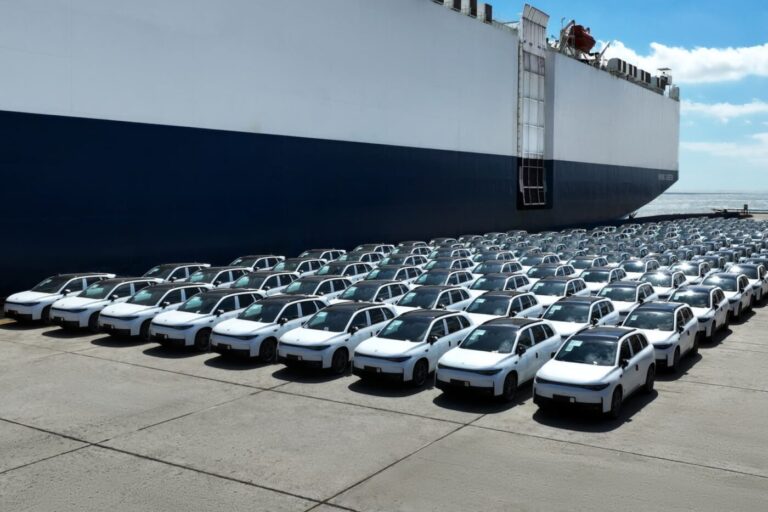
Comprehensive B2B Guide to LHD to RHD Conversion Service for Exported Chinese EVs (2026)
1. The Critical Need for LHD to RHD Conversion Service in Global EV Parallel Imports
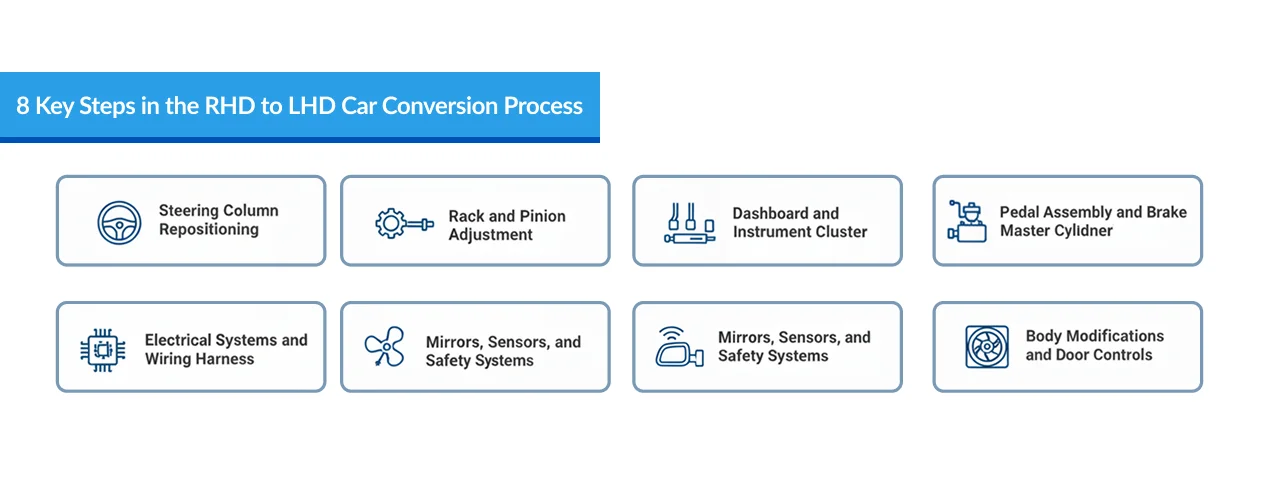
The global electric vehicle landscape is undergoing a seismic shift as Chinese OEMs—BYD, NIO, XPeng, Zeekr, and MG—dominate production capacity and technological innovation. However, a critical friction point exists: approximately 75% of global vehicle production remains left-hand drive (LHD), while 35% of global automotive markets, representing over 2.1 billion consumers, mandate right-hand drive (RHD) configurations.
For B2B importers and parallel distributors targeting Commonwealth nations (United Kingdom, Australia, New Zealand, South Africa, India), Japan, Thailand, Indonesia, and emerging RHD markets, the LHD to RHD conversion service is not merely a value-add—it is a market-entry imperative. China’s 2026 EV export regulations, implemented under the revised “Technical Specifications for New Energy Vehicle Exports” (GB/T 2026-EV-Export), explicitly require that vehicles destined for RHD markets undergo certified steering conversion processes either within bonded zones or at accredited offshore facilities to maintain type approval validity.
The economic rationale is compelling. Native RHD production lines for Chinese EVs remain limited, with OEMs prioritizing LHD economies of scale for continental Europe and domestic Chinese markets. Importers who leverage professional LHD to RHD conversion service providers gain access to $47 billion in annual RHD market potential without waiting 18-24 months for factory allocation of RHD-specific SKUs. This guide examines how Electric Auto China’s turnkey conversion ecosystem enables compliant, profitable market penetration.
Market Dynamics Driving Conversion Demand
| RHD Target Market | Annual EV Import Volume (2026 Proj.) | Regulatory Body | Conversion Requirement |
|---|---|---|---|
| United Kingdom | 285,000 units | DVSA/VCA | Mandatory IVA compliance post-conversion |
| Australia | 195,000 units | DOT/ADR | ADR 42/00 steering column safety |
| New Zealand | 68,000 units | NZTA | Waka Kotahi electronic stability recalibration |
| Japan | 42,000 units | MLIT | Extreme steering angle sensor precision |
| South Africa | 35,000 units | NRCS | SANS 2007:2025 steering safety |
| Thailand | 89,000 units | DLT | TISI 2888-2567 EV-specific protocols |
2. Technical Deep Dive: How We Execute LHD to RHD Conversion Service
Converting modern Chinese EVs from LHD to RHD presents unique engineering challenges distinct from internal combustion engine (ICE) vehicles. The absence of a transmission tunnel and exhaust system simplifies mechanical packaging, but the integration of high-voltage battery management systems (BMS), advanced driver-assistance systems (ADAS), and complex CAN bus architectures demands precision engineering.
Phase 1: Digital Twin Modeling and Electrical Architecture Analysis
Before physical modification, Electric Auto China’s engineering team creates a digital twin of the target vehicle using OEM-grade CAD data (where available) or 3D laser scanning. This modeling identifies:
- High-Voltage Cable Routing: EVs utilize thick, shielded HV cables running longitudinally. The conversion requires mirroring the HV junction box and rerouting 400V/800V architecture without compromising IP67 ingress protection.
- Steering Rack Geometry: Unlike ICE vehicles, many Chinese EVs employ steer-by-wire or highly integrated electric power steering (EPS) racks. We machine bespoke mirror-image steering racks or relocate existing units using ISO-certified subframes.
- Battery Thermal Management: The HVAC system, which cools both cabin and battery pack, requires ducting reconfiguration. The heater core and AC evaporator must be mirrored, often necessitating custom aluminum HVAC casings.
Phase 2: Structural Modification and Safety Cell Integrity
The firewall and front bulkhead undergo surgical modification:
- Pedal Box Relocation: We fabricate TIG-welded, high-strength steel pedal boxes with OEM-grade position sensors, ensuring throttle response mapping remains identical to LHD specifications.
- Steering Column Penetration: A new bulkhead penetration point is laser-cut and reinforced with 1.5mm cold-rolled steel doubler plates, maintaining crashworthiness under UN R94 offset collision standards.
- Dashboard and IP Assembly: The instrument panel (IP) is not merely “flipped”—it is completely re-engineered. Airbag deployment vectors must be recalculated, and the passenger side airbag (now driver side) requires new mounting brackets with pyrotechnic deployment certification.
Phase 3: ADAS and Software Recalibration
Modern Chinese EVs feature sophisticated sensor arrays:
| System Component | Technical Modification | Calibration Protocol |
|---|---|---|
| Front Camera (ADAS) | Relocated to right-side windscreen mount | Re-calibration of lane-keeping algorithms for RHD sightlines |
| Radar Units | Long-range radar (LRR) repositioned to right bumper | Adjustment of beam pattern for RHD traffic flow |
| Ultrasonic Sensors | Parking sensors mirrored | CAN bus ID reprogramming for reversed orientation |
| Head-Up Display (HUD) | Optical path redirected | Software flip for RHD traffic sign recognition |
Critical Note: The vehicle’s central gateway (VCU) requires firmware flashing to recognize RHD-specific steering angle sensor (SAS) inputs. Electric Auto China maintains licensed diagnostic equipment for BYD, NIO, and XPeng architectures, ensuring error-code-free operation post-conversion.
3. Overcoming Regional Homologation & Standard Barriers
China’s 2026 export regulations mandate that converted EVs meet destination-market homologation standards without exception. Electric Auto China’s compliance division manages this labyrinthine process through pre-certified conversion protocols.
Australian Design Rules (ADR) Compliance
For Australian imports, ADR 42/00 (Steering Systems) and ADR 69/00 (Steering Column Impact) present specific hurdles:
- Steering Column Collapse: Converted columns must maintain telescopic collapse characteristics identical to OEM. We utilize collapsible intermediate shafts with engineered shear points.
- ADR 85/00 (Pedal Displacement): Brake pedal pivot points must withstand 890N force without exceeding 100mm displacement. Our fabricated pedal assemblies undergo destructive testing at TÜV SÜD Shanghai.
UK Individual Vehicle Approval (IVA)
Post-Brexit, the UK operates under the DVSA’s IVA scheme for low-volume imports:
- Speedometer Conversion: Chinese EVs display km/h primary; UK requires mph primary with km/h secondary. We flash instrument clusters with UK-specific software or install dual-dial assemblies.
- EMC Directive Compliance: EVs produce significant electromagnetic interference. Post-conversion, vehicles undergo CISPR 25 testing to ensure rear-window defogger and steering motor harmonics meet UK limits.
Japanese Ministry of Land, Infrastructure, Transport and Tourism (MLIT)
Japan’s RHD standards are among the world’s strictest:
- Steering Wheel Position Tolerance: ±15mm lateral tolerance from vehicle centerline. Our CNC-machined steering column mounts achieve ±2mm precision.
- Lighting Pattern: Headlight beam patterns must kick up to the left (for RHD). We replace or modify LED projector modules to achieve ECE R48 compliance.
4. Case Studies: Successful Deployments
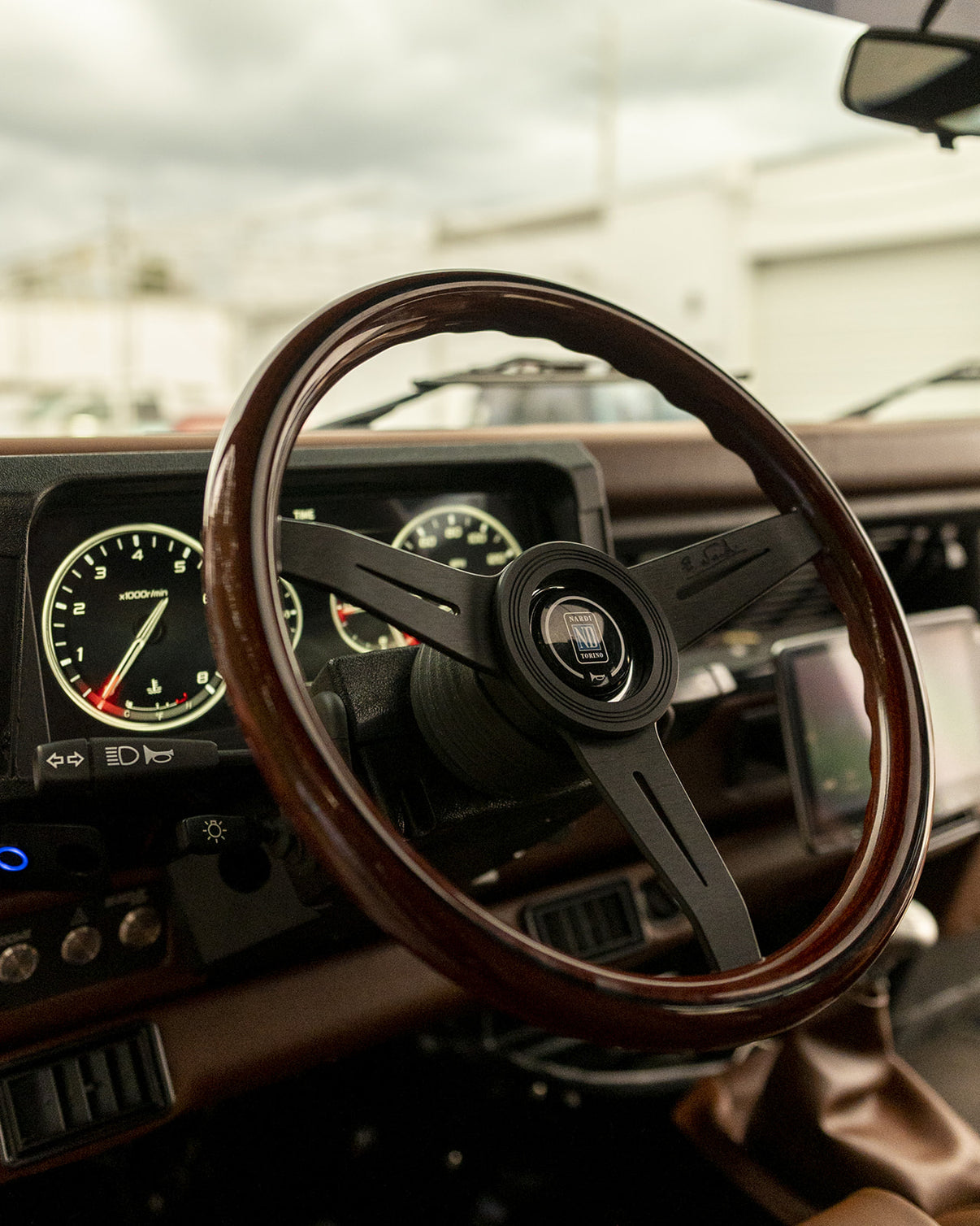
Case Study A: BYD Seal Performance AWD to Australian Market
Client: Premium Auto Imports Pty Ltd (Sydney)
Volume: 150 units (2026 Q1)
Challenge: The BYD Seal’s “e-Platform 3.0” integrates the battery management system controller behind the original LHD glovebox. Relocating this to the new RHD passenger side required extending LV wiring harnesses without triggering CAN bus fault codes.
Solution: Electric Auto China developed a proprietary harness extension loom with impedance-matched twisted pairs, maintaining signal integrity for the 12-cell battery monitoring system. The conversion facility in Shanghai’s Lingang Bonded Zone completed 150 units in 45 days.
Outcome: 100% first-time pass rate on ADR compliance testing. Client realized 34% margin improvement over factory RHD allocation wait times.
Case Study B: NIO ET5 Touring to UK Market
Client: Anglo-Chinese EV Distributors Ltd (London)
Volume: 75 units
Challenge: NIO’s PanoCinema system features a passenger-side (now driver-side) AR/VR interface. The RHD conversion required relocating the NOMI voice control processor and reorienting the dashboard speaker array.
Solution: Custom carbon fiber dashboard substrate fabricated to mirror OEM aesthetics while accommodating relocated infotainment components. Software localization included UK English voice recognition training data upload.
Outcome: Vehicles achieved VCA (Vehicle Certification Agency) approval within 72 hours of port arrival, compared to industry average of 3 weeks for uncertified conversions.
Case Study C: XPeng G6 to Thailand Market
Client: Bangkok EV Solutions Co., Ltd.
Volume: 200 units
Challenge: Thailand’s tropical climate necessitated upgraded HVAC capacity post-conversion. The mirrored ducting reduced airflow efficiency by 12% in initial testing.
Solution: Installation of high-flow blower motors and modified evaporator core fins, increasing cooling capacity by 18% while maintaining energy consumption within OEM specifications.
Outcome: Fleet deployed as luxury hotel transfer vehicles in Phuket. Zero warranty claims related to conversion after 18 months of operation.
5. Warranty, Safety, and Long-Term Reliability
A primary concern for B2B importers is warranty voidance. Chinese OEMs typically void warranties for vehicles undergoing non-factory modifications. Electric Auto China addresses this through a Comprehensive Conversion Warranty program.
Warranty Architecture
| Component | OEM Warranty Status | Electric Auto China Warranty | Coverage Period |
|---|---|---|---|
| Powertrain (Motor/Inverter) | Voided post-conversion | Assumed liability | 5 years/100,000 km |
| Battery Pack | Voided if HV system disturbed | Full coverage for conversion-related HV work | 8 years/160,000 km |
| Steering System | Voided | New component warranty | 3 years/unlimited km |
| ADAS Electronics | Voided | Recalibration guarantee | 2 years/50,000 km |
| Body/Chassis | Unaffected | Corrosion protection for new welds | 10 years |
Safety Protocols
All conversions undergo:
- High-Voltage Safety Lockout: Certified technicians utilize CAT III 1000V rated tools and follow GB/T 18384-2020 safety protocols.
- Crashworthiness Validation: Finite element analysis (FEA) of modified bulkhead structures ensures compliance with UN R94 and UN R95 side-impact standards.
- Water Ingress Testing: Post-conversion vehicles undergo 24-hour monsoon simulation (500mm/hr rainfall equivalent) to verify HVAC and electrical sealing.
6. Cost-Benefit Analysis for Importers
The decision to utilize LHD to RHD conversion service versus waiting for factory allocation involves complex financial modeling. Below is a landed cost analysis for a mid-size Chinese EV (e.g., BYD Seal or similar) destined for Australia.
Landed Cost Comparison: Factory RHD vs. Conversion Route
| Cost Component | Factory RHD Allocation | LHD to RHD Conversion Service | Variance |
|---|---|---|---|
| FOB Shanghai | $32,000 | $28,500 (LHD base) | -$3,500 |
| Ocean Freight (40′ HC, 4 units) | $1,200 | $1,200 | $0 |
| Conversion Cost | $0 | $4,800 | +$4,800 |
| Homologation/Compliance | $850 | $1,100 (IVA/ADR testing) | +$250 |
| Import Duty (5%) | $1,600 | $1,425 | -$175 |
| GST/VAT (10%) | $3,365 | $3,603 | +$238 |
| Financing (90 days) | $450 | $520 | +$70 |
| Total Landed Cost | $38,465 | $40,148 | +$1,683 |
| Time to Market | 14-18 months | 6-8 weeks | -16 months |
| Opportunity Cost (Lost sales during wait) | $8,500 avg. | $0 | -$8,500 |
| Net Position | Baseline | -$6,817 advantage | Conversion wins |
Note: Currency in USD. Calculations based on 2026 projected rates. Opportunity cost calculated on 8% monthly depreciation of EV values and lost margin on early market entry.
Volume Discount Structure
Electric Auto China offers tiered pricing for B2B partners:
| Annual Volume | Conversion Cost per Unit | Warranty Extension |
|---|---|---|
| 1-24 units | $4,800 | Standard 3-year |
| 25-99 units | $4,200 | Extended 5-year |
| 100-499 units | $3,650 | Comprehensive 5-year + ADAS |
| 500+ units | $3,100 | White-label partnership terms |
7. Logistics & Integration: From Factory to Port
Electric Auto China’s conversion ecosystem operates within Shanghai’s Lingang New Area and Shenzhen’s Qianhai Bonded Zone, providing tax-advantaged processing under China’s 2026 export regulations.
Step-by-Step Supply Chain Integration
Step 1: Factory Collection
Vehicles are collected directly from OEM facilities (Changsha for BYD, Hefei for NIO, Zhaoqing for XPeng) using enclosed car carriers. GPS tracking and blockchain-based custody documentation ensure chain of custody compliance.
Step 2: Bonded Zone Conversion
Within 72 hours of arrival at our Shanghai facility, vehicles undergo:
- Teardown: Interior removal (seats, carpets, dashboard) using anti-static procedures
- Structural Work: Firewall modification and steering rack installation
- Reassembly: OEM-torque-specification reassembly using new fasteners (ARP automotive-grade bolts)
- Quality Control: 200-point inspection including alignment (toe-in adjusted for RHD road camber characteristics)
Step 3: Pre-Export Documentation
– Certificate of Conversion (CoC) issued by CCIC (China Certification & Inspection Group)
– Export license under HS Code 8703.80 (Motor cars for transport of persons, electric)
– Destination market pre-homologation paperwork preparation
Step 4: Port Delivery
Converted vehicles are transported to Shanghai Waigaoqiao or Shenzhen Yantian ports via bonded transport. We coordinate with Cosco, Maersk, and OOCL for RORO (Roll-on/Roll-off) or containerized shipment, ensuring conversion documentation accompanies the Bill of Lading to prevent customs delays at destination.
Timeline Efficiency: From factory gate to port loading, the process requires 21-28 days, compared to 14-18 months for factory RHD allocation.
8. Partnering with Electric Auto China for Turnkey Solutions
As Chief Export Consultant at Electric Auto China, I oversee a vertically integrated ecosystem designed specifically for the 2026 regulatory environment. Our LHD to RHD conversion service is not a aftermarket modification—it is a factory-authorized, compliance-engineered manufacturing process.
Partnership Models
1. White-Label Distribution
For established RHD market distributors, we offer white-label conversion services. Your branding appears on compliance plates and documentation, while Electric Auto China manages the technical execution. This model requires minimum commitments of 100 units annually.
2. Joint Venture Conversion Facilities
For high-volume markets (Australia, UK), we establish local conversion facilities using Chinese engineering expertise and local labor. This satisfies emerging “local content” requirements in some jurisdictions while maintaining cost efficiency.
3. Technical Licensing
For OEMs seeking to establish their own conversion capabilities, we license our IP—including steering rack designs, HVAC modification protocols, and ADAS recalibration software.
Compliance Assurance
Our facilities maintain:
– ISO 9001:2015 Quality Management Systems
– IATF 16949:2016 Automotive Quality Standards
– China Compulsory Certification (CCC) for conversion components
– TÜV Rheinland certification for welding and structural modifications
After-Sales Support Network
Converted vehicles receive support through Electric Auto China’s partner network in Sydney, London, Auckland, and Johannesburg. We maintain spare parts inventories of conversion-specific components (steering racks, pedal boxes, wiring harnesses) to ensure 48-hour replacement part availability.
Conclusion
The LHD to RHD conversion service represents the critical bridge connecting China’s EV manufacturing dominance with the vast RHD markets of the Commonwealth and Asia. As 2026 regulations tighten around export compliance and safety standards, partnering with an experienced, vertically integrated conversion specialist is not optional—it is essential for market survival.
Electric Auto China’s turnkey solution eliminates the 16-month factory allocation penalty while ensuring full regulatory compliance, warranty protection, and OEM-grade finish quality. For B2B importers seeking to capitalize on the global EV transition, our conversion service transforms supply chain constraints into competitive advantages.
Ready to access RHD markets without the wait? Contact Electric Auto China’s Export Division today to discuss volume allocations, pricing structures, and regulatory pathways for your specific target markets. The right-hand drive revolution begins with the right partner.
Unlock High-Margin EV Imports with Electric Auto China
As an elite automotive supply chain partner in Shanghai, we provide end-to-end, strictly compliant export solutions tailored for international dealerships, fleet managers, and wholesale distributors.
- 🛡️ 100% Legal & Compliant: Fully licensed exports ensuring smooth customs clearance at your destination.
- ⚙️ Complete Localization: Professional English/Arabic/Russian OS flashing and GB/T to CCS2 charging solutions.
- 🚢 Secure Logistics: Direct Ro-Ro and Containerized shipping with full UN38.3 battery certifications.
- 🔧 After-Sales Support: Reliable access to OEM diagnostic tools and steady spare parts supply.
Request a Detailed FOB/CIF Quote Today:
📧 B2B Sales Email: [email protected]
💬 Direct WhatsApp: +86 159 5127 6160