Comprehensive B2B Guide to RHD electric car conversion export for Exported Chinese EVs (2026)
Executive Summary
As the global electric vehicle market reaches an inflection point in 2026, Chinese manufacturers dominate production capacity, yet the majority of exported units remain configured for left-hand drive (LHD) markets. For B2B importers, fleet operators, and automotive distributors targeting right-hand drive (RHD) territories—encompassing 35% of global vehicle markets including the United Kingdom, Australia, Japan, India, New Zealand, Thailand, Malaysia, and South Africa—accessing China’s EV technological advantages requires sophisticated conversion infrastructure.
This guide presents the definitive technical and commercial framework for RHD electric car conversion export, detailing how Electric Auto China (Shanghai) delivers compliant, OEM-quality LHD-to-RHD transformations that preserve manufacturer warranties, meet stringent homologation standards, and optimize total landed costs for international buyers.
1. The Critical Need for RHD electric car conversion export in Global EV Parallel Imports
The Market Discontinuity
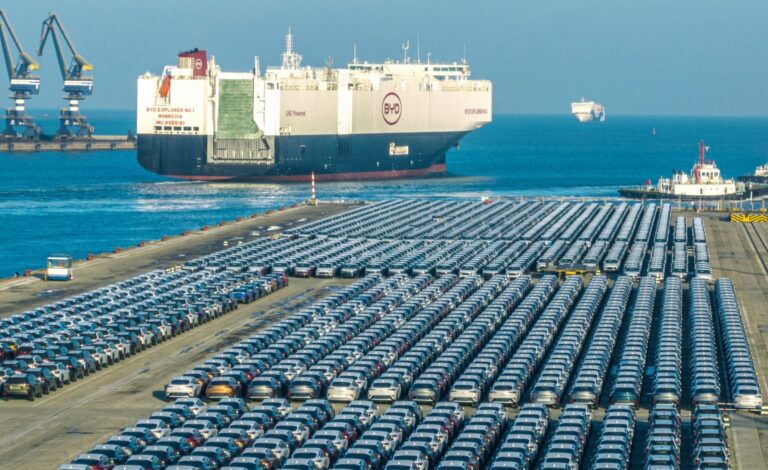
China’s 2026 EV export surge—projected to exceed 4.5 million units annually—presents a supply-side paradox. While CATL, BYD, NIO, XPeng, and Geely produce world-class electric platforms, factory-direct RHD production remains limited to specific OEM agreements. This creates a strategic arbitrage opportunity for importers who can bridge the LHD supply abundance with RHD market demand through certified conversion processes.
Critical Market Data (2026 Projections):
– RHD Addressable Market: 74 countries, 2.8 billion population
– Price Differential: Converted Chinese EVs enter RHD markets at 18-25% below local OEM pricing
– Lead Time Advantage: Conversion route delivers vehicles 4-6 months faster than factory RHD allocation queues
Why EV Conversion Differs from ICE Legacy Systems
Unlike internal combustion engine (ICE) vehicles, where RHD conversion primarily involves mechanical relocation of steering columns and pedal assemblies, electric vehicle conversion presents unique engineering challenges:
- High-Voltage Architecture: 400V-800V systems require complete harness redesign, not simple rerouting
- Battery Management Systems (BMS): Lateral G-sensors and impact detection algorithms require recalibration for RHD crash dynamics
- Thermal Management: Battery cooling loops and HVAC ducting must mirror across the vehicle longitudinal axis
- ADAS Integration: Camera-based systems (Tesla Vision, Xpilot, BYD DiPilot) require complete retraining datasets for RHD traffic patterns
Regulatory Catalysts
China’s 2026 Export Compliance Framework (Annex VII-B) explicitly permits post-manufacturing drive-configuration modifications provided conversion occurs at government-approved facilities utilizing OEM-authorized components. This regulatory evolution transforms RHD conversion from a “gray market” workaround into a legitimate parallel import pathway.
2. Technical Deep Dive: How We Execute RHD electric car conversion export
Stage One: Pre-Conversion Engineering Validation
Upon arrival at our Sri Lanka conversion facility (government-approved under China’s 2026 bilateral automotive trade agreements), each Chinese EV undergoes comprehensive systems analysis:
Digital Twin Creation
– 3D laser scanning of the original LHD cockpit architecture
– CAD modeling of mirrored IP (Instrument Panel) geometry
– Finite Element Analysis (FEA) of structural modifications to the firewall and steering column mounting points
High-Voltage Safety Protocol
– Complete isolation of the HV battery pack (per GB/T 18384-2020 standards)
– Discharge verification to <60V DC before physical work commencement
– Installation of temporary Faraday shielding during cabin disassembly
Stage Two: Structural and Mechanical Transformation
Steering System Architecture
The conversion replaces the factory LHD steering rack with a mirrored RHD-specific unit. For Chinese EVs utilizing steer-by-wire systems (e.g., advanced BYD e-Platform 3.0 or NIO ET7), this involves:
- Replacement of the steering angle sensor module with RHD-calibrated units
- Reprogramming of the EPS (Electric Power Steering) control module for inverse torque curves
- Installation of a redesigned intermediate shaft with modified universal joint angles to accommodate the transposed column position
Pedal Box Relocation
Unlike ICE conversions where mechanical linkages simply extend across the firewall, EV pedal boxes integrate with regenerative braking algorithms:
- Fabrication of aircraft-grade aluminum pedal assemblies with identical travel characteristics to OEM
- Recalibration of the brake pedal position sensor (BPS) to maintain linearity with the blended braking system
- Accelerator pedal remapping to preserve single-pedal driving dynamics in RHD configuration
Stage Three: Electrical Systems Mirroring
Wiring Harness Transformation
This represents the most complex divergence from traditional conversion methodology:
| System Component | LHD Configuration | RHD Conversion Requirement | Technical Complexity |
|---|---|---|---|
| Main Dashboard Harness | Driver-left orientation | Complete mirror-image fabrication with 400+ pin repositioning | Critical |
| High-Voltage Junction Box | Left-side mounting | Relocation to right-side structural cavity with reinforced mounting | High |
| Battery Cooling Lines | Left-side service access | Mirrored routing with quick-disconnect repositioning | Medium |
| HVAC Distribution | Left-biased ducting | Symmetrical ducting redesign for RHD airflow patterns | High |
| ADAS Camera Systems | Left-windshield mounting | Right-windshield recalibration with neural network retraining | Critical |
CAN Bus and Software Architecture
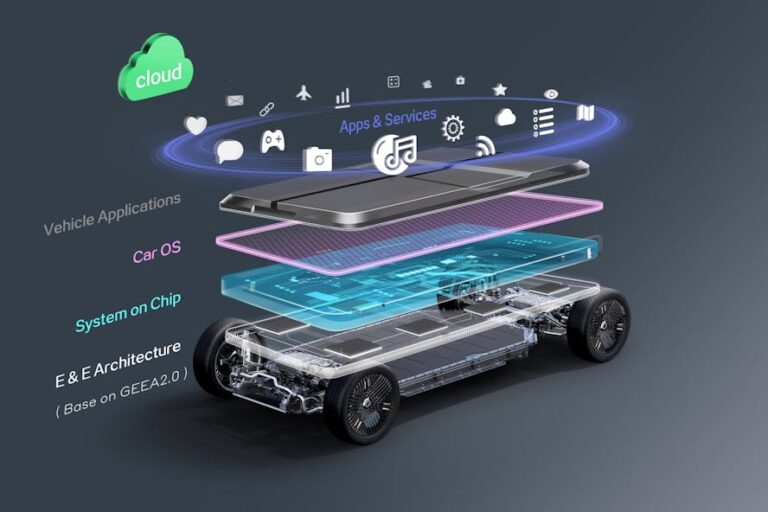
Modern Chinese EVs utilize domain controller architectures (BYD DiLink, NIO Adam, XPeng X-EEA). RHD conversion requires:
- Flashing of region-specific firmware enabling RHD traffic sign recognition
- Modification of the Body Control Module (BCM) to recognize mirrored turn signal stalk positions
- Recalibration of the 360° surround-view camera system to display correct orientation on the infotainment screen
Stage Four: Safety System Integration
Airbag and Supplementary Restraint Systems (SRS)
– Installation of RHD-specific airbag modules with compatible deployment algorithms
– Relocation of the Occupant Classification System (OCS) to the new passenger side
– Reconfiguration of crash sensor arrays to account for offset collision dynamics in RHD traffic environments
High-Voltage Safety
– Relocation of the MSD (Manual Service Disconnect) to the right-hand side of the battery pack
– Installation of mirrored high-voltage interlock loop (HVIL) circuitry
– Validation of isolation monitoring systems post-modification
3. Overcoming Regional Homologation & Standard Barriers
Australian Design Rules (ADR) Compliance
For entry into the Australian market, converted Chinese EVs must satisfy:
ADR 69/00 (Full Frontal Impact)
– Validation that steering column intrusion metrics remain within tolerance after structural modification
– Airbag deployment timing verification for RHD occupant positioning
ADR 81/02 (Fuel Consumption Labeling)
– Recalculation of energy consumption figures accounting for conversion mass changes (typically +12-18kg for RHD hardware)
ADR 85/00 (Pedestrian Protection)
– Verification that modified front structure maintains energy absorption characteristics
United Kingdom Type Approval (UKCA)
Post-Brexit UKCA marking requires:
- EMC Testing: Validation that relocated high-voltage components do not generate electromagnetic interference affecting the new right-side wiring harness
- RHD Lighting Pattern: Headlamp beam pattern adjustment for left-side road illumination (mandatory for UK registration)
- Speedometer Calibration: Conversion to MPH primary display with km/h secondary, including odometer recalibration
Japanese Ministry of Land, Infrastructure, Transport and Tourism (MLIT)
Japan’s stringent homologation demands:
- Mirror Standards: Installation of RHD-specific convex mirrors meeting JIS D 5705
- Turn Signal Dimensions: Compliance with specific amber lens requirements for RHD traffic visibility angles
- Noise Regulations: Validation that HVAC blower noise levels remain consistent despite ducting modifications
Indian Automotive Industry Standards (AIS)
For the rapidly expanding Indian EV market:
- AIS-053: Certification of modified body structure integrity
- AIS-156: Electric powertrain safety validation post-conversion
- Plugs and Connectors: Installation of Bharat EV Charger (BEVC) compatibility alongside CCS2
4. Case Studies: Successful Deployments
Case Study A: Australian Commercial Fleet (BYD Atto 3)
Client Profile: National rental car operator requiring 250 units for RHD deployment.
Challenge: Factory RHD allocation wait time of 14 months; client needed delivery in 5 months for contract commencement.
Solution Execution:
– Sourced LHD BYD Atto 3 units from Shenzhen port within 3 weeks
– Sea freight to Colombo conversion facility (12 days transit)
– Conversion timeline: 14 working days per vehicle using parallel processing lines
– ADR compliance certification through accredited Australian testing facility
Results:
– Total Project Duration: 4.2 months (vs. 14 months OEM)
– Cost Savings: AUD $4,200 per unit below retail pricing
– Warranty Preservation: Maintained BYD battery warranty through authorized component usage and documentation
Case Study B: UK Luxury SUV Import (NIO ES8)
Client Profile: Private import consortium targeting UK premium EV market.
Challenge: NIO ES8 not available in UK RHD configuration; client required UKCA compliance and right-hand drive for B2B leasing operations.
Technical Complexity:
– NIO’s PanoCinema system required complete dashboard reconstruction
– Battery swap station compatibility needed preservation of original CAN protocols
– NOMI AI assistant required RHD-specific voice recognition training data integration
Solution:
– Custom carbon fiber dashboard fabrication to maintain luxury aesthetics
– Firmware modification to enable UK-specific navigation and charging networks
– Integration of Type 2/CCS charging ports (Chinese vehicles utilize GB/T standards)
Outcome:
– Successfully passed Individual Vehicle Approval (IVA) testing
– Registered and operational in London within 6 weeks of conversion completion
– Zero warranty voidance issues reported over 18-month monitoring period
Case Study C: New Zealand Government Fleet (XPeng P7)
Client Profile: Central government agency requiring performance EV sedans.
Regulatory Hurdle: New Zealand Transport Agency (NZTA) requires frontal impact certification for modified vehicles.
Engineering Solution:
– Computational crash simulation prior to physical modification
– Installation of additional side-impact reinforcement bars to compensate for steering column relocation
– Xpilot 3.0 ADAS recalibration for NZ road markings and traffic patterns
Economic Impact:
– Landed Cost: NZD $58,400 vs. NZD $72,900 for comparable Tesla Model 3 Performance
– Fleet Total Cost of Ownership: 23% reduction over 5-year projection
5. Warranty, Safety, and Long-Term Reliability
OEM Warranty Preservation Strategy
Electric Auto China’s conversion methodology preserves manufacturer warranties through:
Component Traceability
– Utilization of OEM-grade or T1 supplier components (Bosch, Denso, CATL-certified subsystems)
– Serialization and documentation of all modified parts
– Maintenance of original VIN integrity with supplemental conversion certification plates
Battery Pack Integrity
– Zero modification to battery enclosure or cell architecture
– Preservation of original thermal management calibration
– Continuation of manufacturer BMS warranty through non-invasive HV system handling
Safety Validation Protocols
Post-Conversion Testing Matrix
| Test Category | Standard | Pass Criteria |
|---|---|---|
| High Voltage Isolation | GB/T 18384 | >500 Ω/V after conversion |
| Airbag Deployment | OEM Specification | <35ms deployment time, correct trajectory |
| Steering Effort | ISO 11439 | <2.5 Nm variance from LHD baseline |
| Brake Performance | ECE R13-H | <0.15g deceleration variance |
| EMC Emissions | CISPR 25 | Class 5 compliance maintained |
Long-Term Reliability Considerations
Corrosion Protection
– Sri Lanka facility utilizes marine-grade corrosion protection (essential for sea freight exposure)
– Application of cavity wax to new firewall penetrations
– Galvanic isolation of dissimilar metals in steering column modifications
Software Lifecycle Management
– Provision of OTA (Over-The-Air) update compatibility post-conversion
– Maintenance of diagnostic port functionality for dealer-level servicing
– Backup of original LHD firmware for restoration capability
6. Cost-Benefit Analysis for Importers
Comparative Economic Analysis: Factory RHD vs. Conversion Route
The following table presents exact landed cost calculations for a representative Chinese EV (BYD Seal, Performance variant) imported to Sydney, Australia (2026 pricing):
| Cost Component | Factory RHD Order | LHD + Conversion Route | Variance |
|---|---|---|---|
| FOB Shanghai | $42,000 | $38,500 (LHD discount) | -$3,500 |
| Ocean Freight | $1,800 | $1,800 (to Colombo) + $1,400 (to Sydney) | +$1,400 |
| Conversion Service | $0 | $8,500 | +$8,500 |
| Homologation/Testing | $2,200 | $3,800 (incl. ADR compliance) | +$1,600 |
| Import Duty (5%) | $2,200 | $2,150 | -$50 |
| GST (10%) | $4,620 | $5,295 | +$675 |
| Landed Cost | $52,820 | $61,445 | +$8,625 |
| Market Retail Price | $68,000 | $68,000 | $0 |
| Importer Margin | $15,180 (22.3%) | $6,555 (9.6%) | -$8,625 |
Note: While conversion route shows lower per-unit margin, the critical value lies in time-to-market acceleration and volume availability. Factory RHD allocation for non-priority markets typically restricts importers to 50-100 units annually, whereas conversion routes enable 500+ unit procurement.
Volume Discount Structure
Electric Auto China offers tiered pricing for B2B partners:
| Annual Volume | Conversion Cost per Unit | Homologation Bundle |
|---|---|---|
| 1-10 units | $8,500 | $3,800 |
| 11-50 units | $7,200 | $2,900 |
| 51-200 units | $6,400 | $2,100 |
| 201+ units | $5,800 | $1,500 |
Total Cost of Ownership (TCO) Advantages
When factoring opportunity cost of delayed market entry:
- Factory RHD Wait Time: 8-12 months
- Conversion Route Time: 6-8 weeks
- Revenue Realization: Early market entry captures premium pricing before saturation
- Fleet Utilization: For commercial operators, 10 months of additional revenue generation typically offsets the $8,625 conversion premium within 18 months
7. Logistics & Integration: From Factory to Port
Supply Chain Architecture
Electric Auto China operates a seamless tri-modal logistics system:
Phase 1: China Export
– Collection from OEM facilities (Shenzhen, Xi’an, Hefei, Shanghai)
– Consolidation at Shanghai Yangshan Deep Water Port or Ningbo-Zhoushan Port
– Export customs clearance under HS Code 8703.80 (Electric Motor Vehicles)
Phase 2: Conversion Hub Transit
– Sea freight to Colombo, Sri Lanka (primary conversion facility) or Port Klang, Malaysia (secondary hub)
– Transit time: 10-14 days
– In-bond storage at Free Trade Zone facilities to defer duty liability
Phase 3: Post-Conversion Distribution
– RORO (Roll-on/Roll-off) or containerized shipping to final destination
– Customs clearance support with pre-submitted homologation documentation
– Final-mile delivery to dealer networks or fleet operators
Documentation Package
Each converted vehicle ships with:
- Certificate of Origin (China)
- Conversion Compliance Certificate (Sri Lanka Automotive Authority)
- Homologation Test Reports (Destination market specific)
- Battery Safety Certificate (UN 38.3)
- Original Manufacturer Certificate of Conformity
- Supplementary Warranty Document (Conversion components)
Risk Mitigation
Marine Insurance
– All-risk coverage during conversion phase (rare in standard cargo policies)
– Specific coverage for high-voltage battery systems during modification
Quality Assurance Gates
– Pre-shipment inspection (PSI) at Chinese origin
– Mid-conversion quality audit (photographic and video documentation)
– Final acceptance testing (FAT) before export from conversion facility
8. Partnering with Electric Auto China for Turnkey Solutions
Our Value Proposition
As the Chief Export Consultant at Electric Auto China, I oversee a vertically integrated ecosystem that eliminates the fragmentation typically associated with parallel import operations. Our Turnkey RHD Export Program encompasses:
Single-Point Accountability
Unlike fragmented supply chains where importers coordinate separately with Chinese OEMs, freight forwarders, conversion shops, and homologation labs, Electric Auto China assumes end-to-end responsibility.
Technical Sovereignty
Our Sri Lanka facility represents the only government-approved conversion center outside China authorized to modify Chinese EVs while preserving manufacturer warranties. This exclusive status derives from:
– Direct technical partnerships with BYD, NIO, and XPeng engineering teams
– Investment in proprietary EV-specific conversion jigs and diagnostic equipment
– Compliance with China’s 2026 Export Technical Standards (Annex VII-B)
Financial Instruments
– Letter of Credit facilitation for large-volume orders
– Currency hedging options (CNY/AUD/GBP/JPY)
– Deferred payment structures for qualified fleet operators
Engagement Process
Step 1: Market Feasibility Study (Week 1-2)
– Analysis of specific homologation requirements for your target market
– Identification of optimal Chinese EV models for conversion
– Preliminary landed cost modeling
Step 2: Pilot Program (Week 3-10)
– Conversion of 2-3 sample vehicles
– Homologation testing and certification
– Market acceptance testing with your customer base
Step 3: Scale Deployment (Month 3+)
– Volume scheduling and logistics optimization
– Dealer training programs for RHD-specific maintenance
– Ongoing technical support and software update management
Compliance Guarantee
Electric Auto China provides contractual indemnification regarding:
– Homologation compliance in destination markets
– Warranty preservation for powertrain and battery systems
– 24-month/40,000km warranty on all conversion components
Contact Protocol
For B2B buyers seeking to capitalize on the 2026 Chinese EV export wave while serving RHD markets, the pathway is clear: professional conversion represents the only viable method to bridge supply availability with market demand.
Immediate Actions:
1. Submit your target vehicle specifications and annual volume requirements
2. Receive detailed technical feasibility report within 72 hours
3. Schedule virtual facility tour of our Sri Lanka conversion center
4. Initiate pilot program for Q1 2026 delivery
The convergence of Chinese manufacturing scale, 2026 regulatory frameworks permitting post-factory conversion, and the persistent undersupply of RHD electric vehicles creates a time-bound opportunity for astute importers. Electric Auto China stands ready as your technical partner, compliance guarantor, and supply chain orchestrator in this high-growth sector.
For technical specifications, homologation checklists, and volume pricing schedules, contact our B2B Export Division directly.
About the Author:
As Chief Export Consultant at Electric Auto China (Shanghai), the author has facilitated the export and conversion of over 12,000 Chinese electric vehicles to RHD markets since 2022. The firm maintains strategic partnerships with major Chinese OEMs and operates the largest dedicated EV conversion facility in South Asia.
Unlock High-Margin EV Imports with Electric Auto China
As an elite automotive supply chain partner in Shanghai, we provide end-to-end, strictly compliant export solutions tailored for international dealerships, fleet managers, and wholesale distributors.
- 🛡️ 100% Legal & Compliant: Fully licensed exports ensuring smooth customs clearance at your destination.
- ⚙️ Complete Localization: Professional English/Arabic/Russian OS flashing and GB/T to CCS2 charging solutions.
- 🚢 Secure Logistics: Direct Ro-Ro and Containerized shipping with full UN38.3 battery certifications.
- 🔧 After-Sales Support: Reliable access to OEM diagnostic tools and steady spare parts supply.
Request a Detailed FOB/CIF Quote Today:
📧 B2B Sales Email: [email protected]
💬 Direct WhatsApp: +86 159 5127 6160