The Ultimate 2026 B2B Export Guide for African electric car startups: Pricing, Compliance & Localization
1. Executive Summary
The African electric vehicle revolution is accelerating beyond early adoption into scalable commercial deployment. As of early 2026, Chinese OEMs dominate the technical landscape with models ranging from the entry-level Dongfeng Box (R460,000–R520,000) to the performance-oriented MG Cyberster (R1.399-million), offering African startups unprecedented access to diverse EV portfolios. However, navigating China’s stringent 2026 export regulatory framework—specifically the “Notice on Further Regulating the Export Order of Automobile and Motorcycle Products” (Shangchanfa No. 318)—requires sophisticated supply chain partnerships.
This guide addresses the critical intersection of China’s export license management system, implemented January 2026, and Africa’s heterogeneous import duty structures. With South Africa introducing 150% tax deductions for EV production facility investments (effective March 2026), Kenya pioneering CKD assembly partnerships such as Rideence Africa’s $2.46 million collaboration with Associated Vehicle Assemblers in Mombasa, and Tanzania projecting solar off-grid EV cost superiority by 2040, the continent presents a $12.7 billion addressable market for compliant exporters.
For African startups, success hinges on three pillars: regulatory adherence to China’s Ministry of Commerce (MOFCOM) export qualification protocols, technical localization for African connectivity and charging infrastructure, and precise landed cost modeling that accounts for fluctuating Rand/Dollar exchange rates, maritime insurance, and localized homologation (SABS, SONCAP, TBS). This comprehensive analysis provides the technical specifications, financial frameworks, and compliance roadmaps necessary to establish sustainable EV import operations in 2026’s regulated environment.
2. Deep Dive: Technical Specifications
Climate-Optimized Battery Chemistry
African startups must prioritize thermal management systems designed for ambient temperatures exceeding 40°C. The 2026 Chinese EV portfolio offers distinct advantages:
Lithium Iron Phosphate (LFP) Dominance: Models like the FAW BESTUNE Yueyi 03 (RMB 79,800 FOB reference) and Dongfeng Box utilize CATL/ BYD Blade LFP batteries, demonstrating 91% capacity retention after 240,000 kilometers according to January 2026 recurrent data. LFP chemistry eliminates thermal runaway risks in Saharan conditions while offering 3,000+ cycle life.
High-Voltage Architecture: Premium segments feature 800V platforms (e.g., Changan Deepal S07, BYD Sealion 06), enabling 10–80% charging in 18 minutes where 350kW DC infrastructure exists. However, for markets with 50kW DC caps, the GWM Ora 03’s 400V architecture (126kW, 310–420km range) offers superior cost-efficiency.
Model Segmentation for African Markets
| Model | FOB Shanghai (USD) | Powertrain | Range (WLTP) | African Suitability Index |
|---|---|---|---|---|
| FAW BESTUNE Yueyi 03 | $11,200 | 70kW FWD | 430km | ★★★★☆ (Urban mobility, price leader) |
| Dongfeng Box | $13,800 | 70kW FWD | 430km | ★★★★☆ (Compact dimensions for narrow roads) |
| GWM Ora 03 400 | $24,500 | 126kW FWD | 420km | ★★★★★ (RHD available, premium interior) |
| MG Cyberster | $58,000 | 375kW AWD | 443km | ★★★☆☆ (Halo car, limited practicality) |
| BYD Sealion 06 | $19,800 | 160kW FWD | 520km | ★★★★★ (CTB battery integration, high ground clearance) |
Critical Technical Note: China’s January 2026 ban on concealed door handles (effective 2027 implementation) affects model selection. Startups should prioritize vehicles with mechanical backup systems for African markets where emergency services response times vary significantly.
3. The Localization Challenge: Software, UI, and Connectivity
Telematics Architecture for African Networks
Chinese EVs utilize proprietary OS platforms (BYD DiLink, GWM Coffee, MG iSMART) optimized for China Mobile/China Unicom bands. African startups must mandate:
Band Compatibility: Ensure 4G LTE support for Bands 3 (1800MHz), 7 (2600MHz), and 20 (800MHz) to accommodate MTN, Vodacom, Airtel, and Safaricom networks. The 2026 GAC AION i60 and Changan Deepal S07 offer global band configurations, while budget models may require ECU reflashing.
Language Localization: Beyond English, demand French (West Africa), Portuguese (Mozambique, Angola), and Swahili (East Africa) UI packages. The localization process requires 6–8 weeks and must be completed pre-shipment to avoid customs delays.
Payment Integration: Chinese head units support Alipay/WeChat Pay. African startups must negotiate API access for M-Pesa, Flutterwave, and Paystack integration. Case Study: Rideence Africa’s Henrey electric taxi fleet required custom middleware development costing $18,000 to enable Nairobi-specific payment workflows.
Over-the-Air (OTA) Update Infrastructure
Establish local CDN (Content Delivery Network) partnerships. Vehicles like the Volvo EX90 and BMW iX rely on cloud connectivity for safety-critical updates. In markets with intermittent connectivity, mandate “sneakernet” update capabilities via USB-C/OTA download centers at service hubs.
4. Charging Compatibility: Bridging the GB/T Gap
The Standards Dichotomy
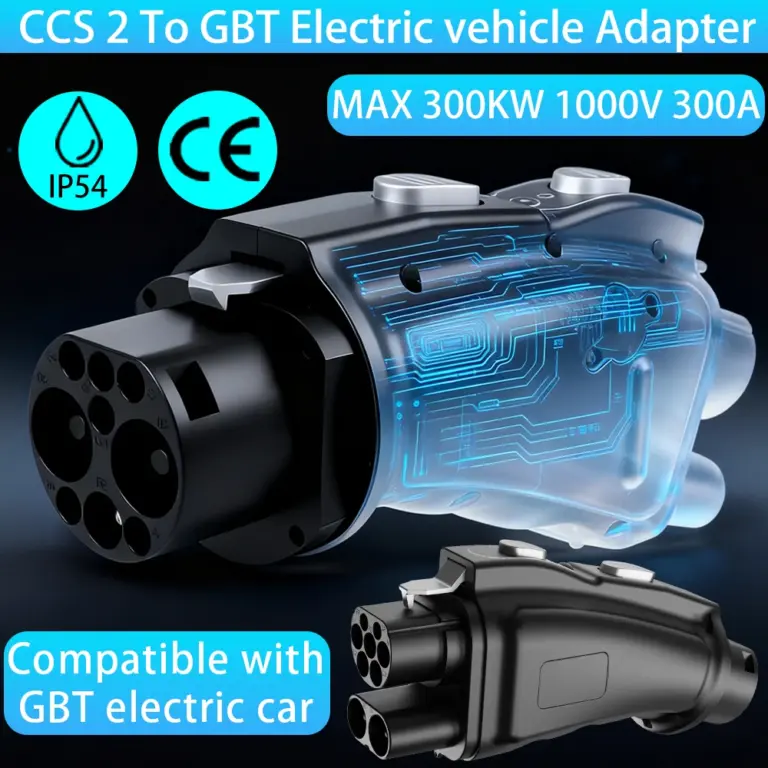
China utilizes GB/T 20234 (AC) and GB/T 27930 (DC) standards, while Africa predominantly adopts IEC Type 2 (AC) and CCS Combo 2 (DC). This incompatibility creates a $2,400–$4,800 per-vehicle adapter burden unless addressed at procurement.
Strategic Solutions:
- Dual-Standard Vehicles: Specify CCS2/GB-T dual-port configurations available from export-oriented OEMs like BYD and MG for RHD markets (South Africa, Kenya, Botswana).
- Adapter Procurement: Source GB/T-to-CCS2 adapters (80A AC, 200A DC) at $1,200/unit when ordering 100+ units.
- Infrastructure Partnerships: Collaborate with charging network providers (GridCars, ChargeNet, EVChaja) to install GB/T dispensers at key logistics hubs, particularly for LHD markets (Nigeria, Ghana) importing Chinese-spec vehicles directly.
Solar Integration for Off-Grid Markets
Tanzania’s 2026 projections indicate battery-electric vehicles with solar off-grid charging will achieve TCO (Total Cost of Ownership) parity with ICE vehicles by 2028. Chinese EVs with V2L (Vehicle-to-Load) capabilities—such as the BYD Sealion 06 (3.3kW output) and GWM Ora 03—enable solar buffer integration. Startups should bundle 5kW solar canopy systems with fleet sales, utilizing the vehicle’s battery as evening storage for commercial micro-grids.
5. Homologation, Compliance & 2026 Export Regulations
China’s Export License Framework (Shangchanfa No. 318)
Effective 2026, China’s Ministry of Commerce mandates strict export license management for pure electric passenger vehicles. Electric Auto China has completed:
- Enterprise Registration: Validated through MOFCOM’s online qualification certification system
- Model Declaration: Individual VIN-level registration for each exported unit
- End-User Verification: Documentation proving non-military/non-sanctioned entity status in destination countries
Compliance Checklist for African Importers:
1. Obtain Automatic Import License (AIL) from destination country’s trade ministry
2. Submit CCC (China Compulsory Certification) exemption letters for CBU (Complete Built-Up) imports
3. Provide Battery UN38.3 Test Reports for maritime transport compliance
4. Secure ECE R100 certification evidence (electric powertrain safety)
African Homologation Requirements
| Country | Regulatory Body | Key Requirements | Cost/Timeline |
|---|---|---|---|
| South Africa | NRCS/SABS | SANS 10098 (EV safety), EMC compliance | R45,000–R80,000 / 4–6 weeks |
| Kenya | KEBS/NTSA | KS 1515, import age limit (3 years for CBU) | $3,500–$5,000 / 3 weeks |
| Nigeria | SONCAP | ISO 9001, VOC testing | $4,200–$6,500 / 6 weeks |
| Tanzania | TBS | EAC harmonized standards | $2,800–$4,000 / 4 weeks |
Critical Update: South Africa’s March 2026 incentive package requires local assembly partners to achieve 25% local content within 36 months to qualify for the 150% tax deduction. Startups should consider CKD (Completely Knocked Down) routes via Mombasa or Durban to optimize long-term tax positions.
6. Global Logistics & Supply Chain
Maritime Routing Optimization
Primary Corridor: Shanghai/Yantian → Durban (South Africa) or Mombasa (Kenya)
– Transit Time: 18–22 days to Durban; 21–25 days to Mombasa
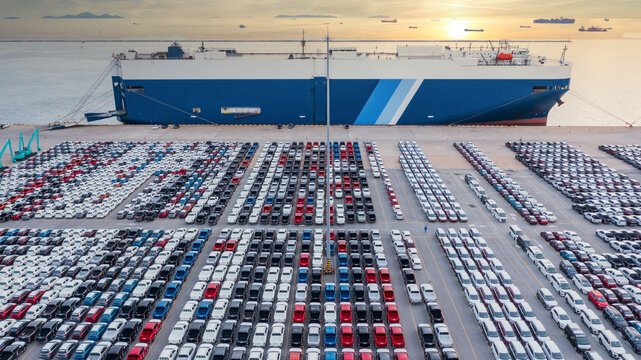
– Vessel Class: RORO (Roll-on/Roll-off) for CBU; Containerized (40’HC) for CKD kits
– Peak Season Surcharge: Q4 2026 rates increase 15–20% due to Chinese Golden Week and African pre-Christmas stocking
CKD Logistics: The Rideence Africa model (152 units from CKD kits) reduces shipping costs by 60% but requires:
– Assembly facility accreditation (AVA Mombasa, Rosslyn SA)
– Technical training for local technicians (2-week programs in Shanghai)
– Spare parts buffer stock (3% of vehicle value) held at port of entry
Incoterms Strategy
For African startups with limited import experience, CIF (Cost, Insurance, Freight) to destination port minimizes risk. Established operators should negotiate FOB Shanghai terms to control freight forwarding and insurance, potentially saving 8–12% on logistics costs.
7. Financial Breakdown: Landed Cost & Dealer Profit Margins (Case Study)
Case Study: Importing the GWM Ora 03 400 Super Luxury to Nairobi, Kenya
Vehicle Specifications: RHD, 126kW, 420km range, CCS2 charging port
FOB Shanghai Price: $24,500 (based on R775,950 South African retail benchmark)
| Cost Component | Calculation | Amount (USD) |
|---|---|---|
| FOB Vehicle Price | Base unit + export documentation | $24,500 |
| Ocean Freight | RORO, Shanghai-Mombasa, insurance 0.3% | $1,850 |
| CIF Mombasa | Subtotal | $26,350 |
| Import Duty | 25% (Kenya EAC rate for EVs) | $6,588 |
| Excise Duty | 10% (Electric vehicle incentive rate) | $2,635 |
| VAT | 16% on (CIF + Duties) | $5,678 |
| Railway Development Levy | 1.5% of CIF | $395 |
| Import Declaration Fee | Fixed | $200 |
| Clearing Agent | Documentation, inspection | $800 |
| Homologation/KEBS | Testing, certification | $4,500 |
| Landed Cost | Total | $47,146 |
Retail Pricing Strategy:
– Landed Cost: $47,146 (KES 6.13M at 130 USD/KES)
– Dealer Margin (18%): $8,486
– Retail Price: $55,632 (KES 7.23M)
– Competitive Position: Undercuts BMW i5 eDrive40 (R1.84M ≈ $100,000) by 44%
South Africa CBU Import Analysis (Dongfeng Box)
Using the R460,000 retail price point:
– Estimated CIF Durban: R280,000 ($18,200)
– Customs Duty: 25% (R70,000) – Note: SA currently imposes high EV duties, though under review
– VAT: 15% on (CIF + Duty) = R52,500
– Ad Valorem: R12,000 (estimated)
– Landed: R414,500
– Dealer Margin: 10% (R45,500)
– Retail: R460,000
Profitability Insight: The 10% margin in SA is tight compared to Kenya’s 18%, necessitating volume-based incentives or CKD transition to capture the 150% tax deduction benefits.
8. Securing After-Sales Support & Spare Parts
Warranty Infrastructure
Chinese OEMs typically offer 6-year/150,000km battery warranties and 3-year/100,000km vehicle warranties. African startups must negotiate:
- Regional Warranty Depots: Establish battery swap/storage facilities in Lagos, Nairobi, and Johannesburg. The 2026 BYD Sealion 06 and GWM Ora utilize modular battery packs enabling field replacement within 45 minutes.
- Technical Service Bulletins (TSB): Mandarin-to-English translation of repair manuals, critical for the MG Cyberster’s scissor door mechanisms and BMW iX’s carbon cage repairs.
- Diagnostic Tool Licensing: OBD scanners compatible with Chinese CAN bus protocols (250kbps/500kbps). Budget $15,000 for master diagnostic suites covering BYD, GWM, and Changan vehicles.
Spare Parts Logistics
Critical Stock Strategy: Maintain 90-day inventory of:
– High-voltage contactors and fuses (climate-sensitive)
– AC compressors (high failure rate in African dust conditions)
– Touchscreen units (theft-prone in some markets)
Battery Recycling Compliance: Partner with local recyclers (e.g., Aqua Metals Africa) for end-of-life LFP packs. China’s 2026 export regulations require proof of recycling agreements for battery-containing exports.
9. Why Partner with Electric Auto China
As a Shanghai-based export consultancy with full MOFCOM registration under Shangchanfa No. 318, Electric Auto China provides African startups with:
Regulatory Assurance: Pre-verified export licenses for 40+ NEV models including the 2026 Dongfeng Box, GWM Ora series, and BYD Sealion 06. We manage the complete enterprise registration and model declaration pipeline, eliminating customs clearance risks.
Localization Expertise: In-house software teams configure RHD conversions, Swahili/French/Portuguese UI packages, and M-Pesa payment integration before vessel loading. Our technical partnerships ensure GB/T-to-CCS2 adapter compatibility or native CCS2 port installation.
Financial Structuring: Letters of Credit negotiation, export credit insurance through Sinosure, and flexible payment terms (30% deposit, 70% against B/L). Our landed cost calculators incorporate real-time Rand and Kenyan Shilling hedging strategies.
Logistics Integration: Dedicated RORO contracts with COSCO and MSC, plus CKD kitting facilities in the Yangshan Free Trade Zone. We facilitate the Rideence Africa model—supplying 152-unit CKD batches with local assembly technical support.
After-Sales Guarantee: Johannesburg and Nairobi-based parts hubs carrying $2M+ inventory, plus Mandarin-English technical hotlines supporting local mechanic training.
The 2026 African EV market demands more than vehicle supply—it requires compliant, localized, and sustainable ecosystem partnerships. Electric Auto China delivers the regulatory expertise, technical adaptation, and financial frameworks necessary to transform your startup into a dominant regional EV distributor.
Contact our B2B export division today to secure your 2026 allocation under China’s regulated export quota system.
Unlock High-Margin EV Imports with Electric Auto China
As an elite automotive supply chain partner in Shanghai, we provide end-to-end, strictly compliant export solutions tailored for international dealerships, fleet managers, and wholesale distributors.
- 🛡️ 100% Legal & Compliant: Fully licensed exports ensuring smooth customs clearance at your destination.
- ⚙️ Complete Localization: Professional English/Arabic/Russian OS flashing and GB/T to CCS2 charging solutions.
- 🚢 Secure Logistics: Direct Ro-Ro and Containerized shipping with full UN38.3 battery certifications.
- 🔧 After-Sales Support: Reliable access to OEM diagnostic tools and steady spare parts supply.
Request a Detailed FOB/CIF Quote Today:
📧 B2B Sales Email: [email protected]
💬 Direct WhatsApp: +86 159 5127 6160