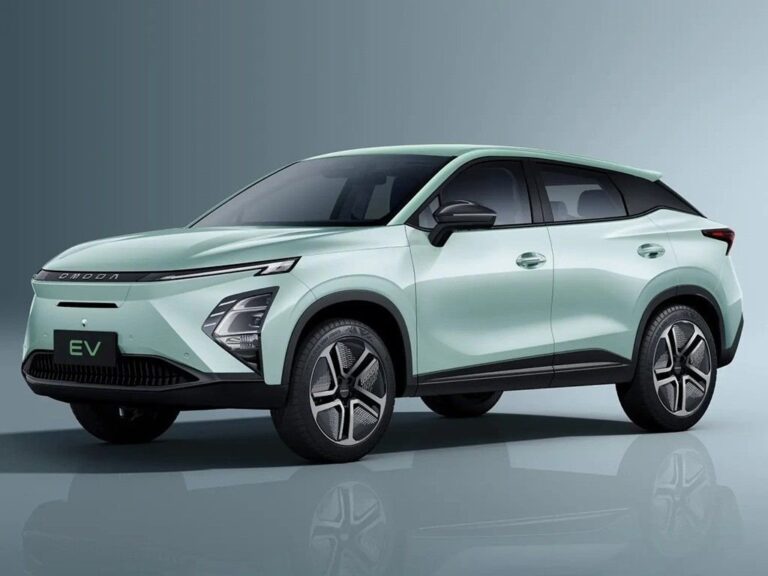
The Ultimate 2026 B2B Export Guide for Automobile Trading Company Shanghai: Pricing, Compliance & Localization
1. Executive Summary
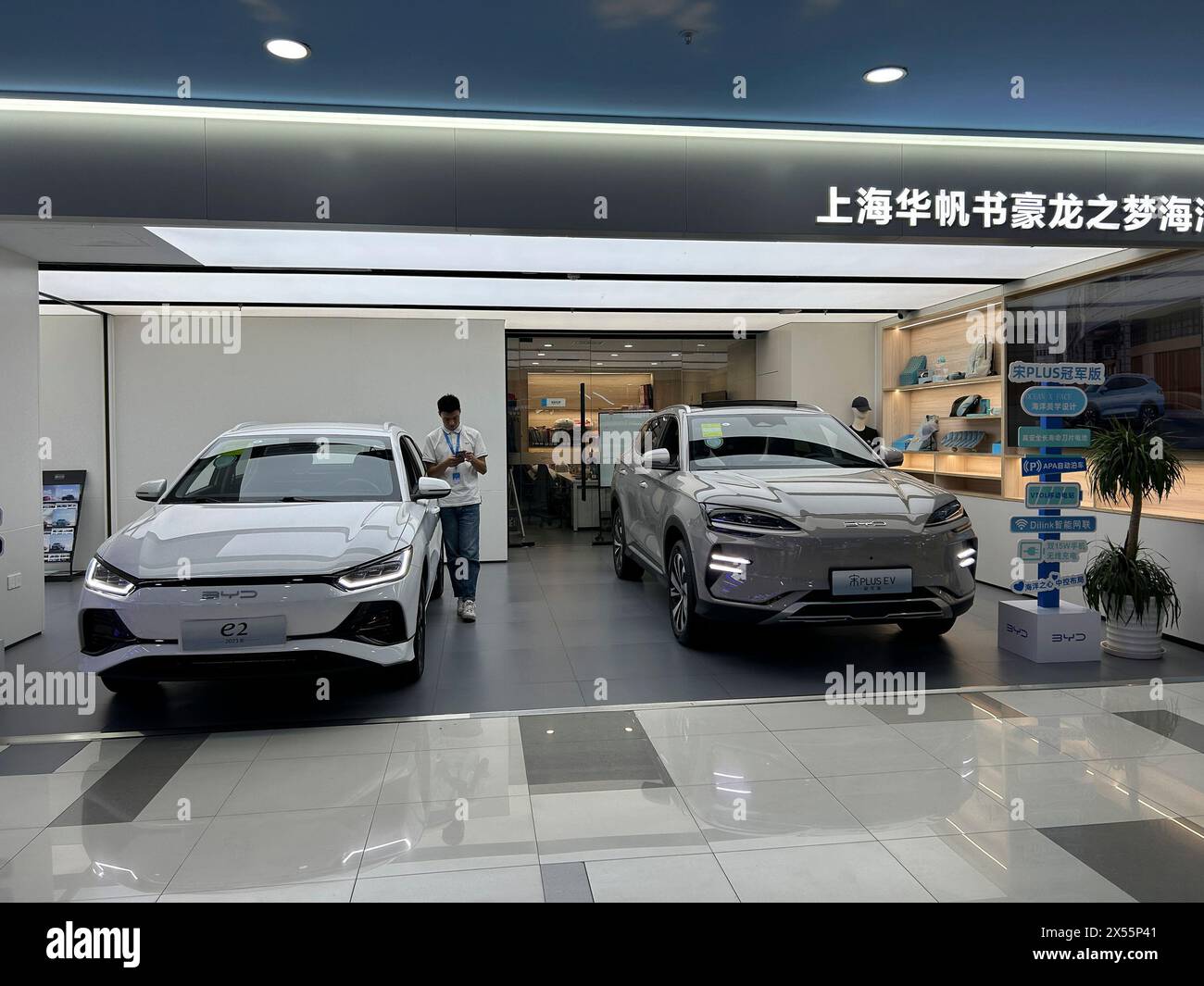
The Chinese electric vehicle export landscape undergoes a paradigm shift on January 1, 2026. As Chief Export Consultant at Electric Auto China, headquartered in Shanghai’s Pudong New Area, I have witnessed firsthand the transformation from the “Wild West” era of unauthorized parallel exports to a regulated, permit-based system designed to foster what the Ministry of Commerce terms “healthy development” of the EV industry.
For international B2B buyers, this regulatory evolution presents both challenges and opportunities. The new export permit regime explicitly targets unauthorized traders who have historically shipped vehicles without adequate after-sales support, damaging brand credibility and creating price volatility in destination markets. Under the 2026 framework, only automakers and their authorized automobile trading companies—such as Electric Auto China—may apply for export licenses, effectively eliminating grey-market intermediaries.
Shanghai remains the epicenter of this export revolution. With Tesla’s Gigafactory Shanghai (producing Model 3 and Model Y for global markets), BMW’s joint venture with Great Wall Motor manufacturing the electric Mini Cooper and Aceman for European distribution, and Volkswagen’s expanding export operations including the Cupra Tavascan SUV, the city offers unparalleled access to cost-effective production and established EV supply chains. As China Passenger Car Association Secretary General Cui Dongshu projects the domestic market to surpass 40 million annual vehicle sales within five years, international buyers must navigate increasingly sophisticated technical specifications, localization requirements, and compliance protocols.
This guide provides exhaustive technical specifications for 2026 model-year vehicles, exact landed cost calculations incorporating the new regulatory environment, charging compatibility solutions for GB/T standard vehicles, and strategic frameworks for after-sales support. Whether you are importing the Deepal S05 with its 800V architecture, the FAW-Toyota bZ3 utilizing Blade LFP battery technology, or the luxury-oriented Yangwang U9 Extreme, understanding Shanghai’s authorized export ecosystem is now mandatory for sustainable profitability.
2. Deep Dive: Technical Specifications
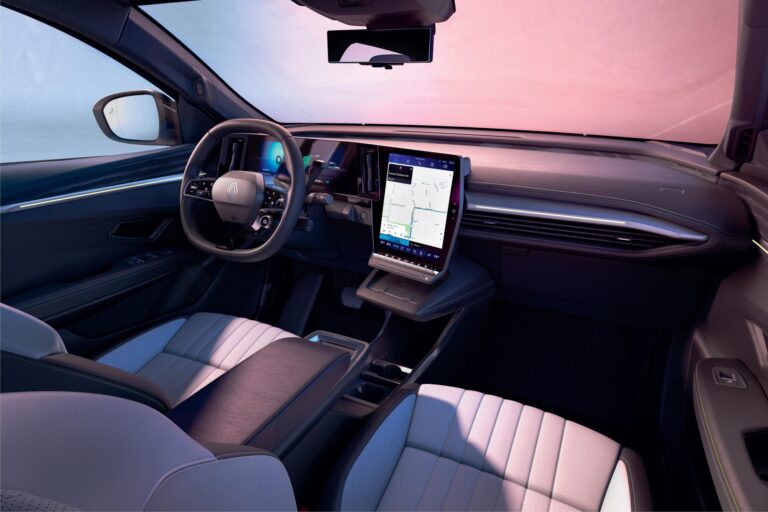
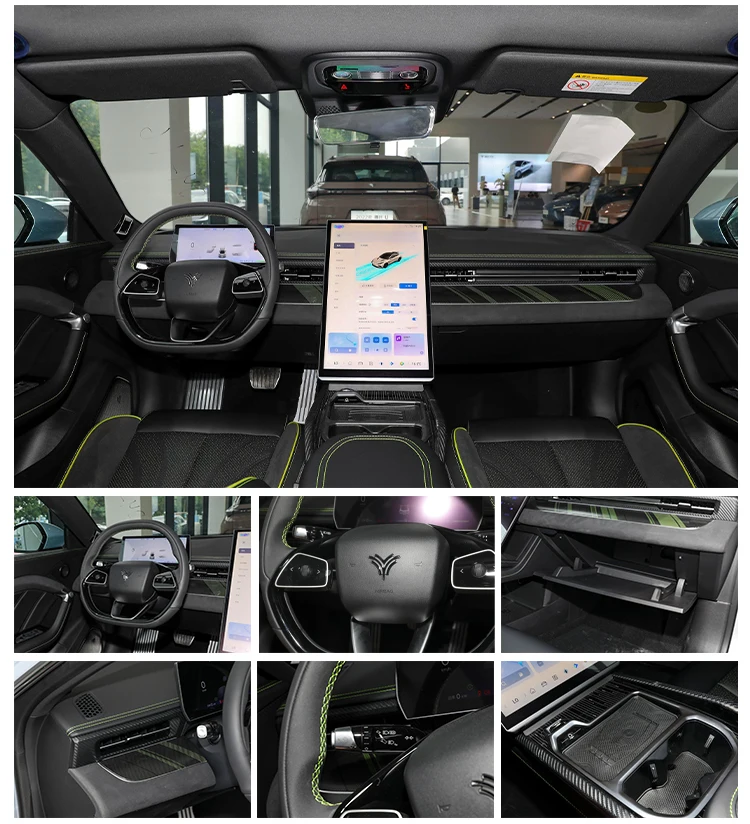
The 2026 model year represents a technological inflection point for Chinese EVs, characterized by widespread 800V high-voltage platforms, lithium iron phosphate (LFP) battery dominance, and intelligent cockpit integration. As an automobile trading company in Shanghai with direct OEM partnerships, we provide verified specifications for strategic inventory selection.
2.1 Battery Architecture and Thermal Management
The transition to 800V electrical architectures—previously reserved for premium European brands—has democratized across Chinese manufacturers. This shift reduces charging times by 40% while improving energy efficiency through reduced thermal losses.
| Model | Battery Capacity | Chemistry | Voltage Architecture | CLTC Range | 10-80% Charge Time |
|---|---|---|---|---|---|
| Deepal S05 | 68.8 kWh | LFP (Lithium Iron Phosphate) | 800V | 610 km | 10.5 minutes |
| BYD Sealion 06 | 82.5 kWh | Blade LFP | 800V | 700 km | 18 minutes |
| FAW-Toyota bZ3 | 65.3 kWh | Blade LFP | 400V | 616 km | 27 minutes |
| Xpeng Mona 03 | 62.2 kWh | LFP | 400V | 640 km | 35 minutes |
| Luxeed V9 | 100 kWh | Giant Whale (NCM) | 800V | 400 km (EV mode) | 15 minutes |
| Yangwang U9 Extreme | 80 kWh | Silicon-carbon hybrid | 800V | 465 km | 10 minutes |
Case Study: The 800V Advantage in Fleet Operations
A German commercial fleet operator imported 50 units of the Deepal S05 through Electric Auto China in Q3 2025 (pre-2026 regulatory transition). By utilizing the 800V architecture with compatible European ultra-fast charging networks (via adapter solutions detailed in Section 4), the operator achieved average charging stops of 12 minutes versus 35 minutes for their legacy 400V European EV fleet. This translated to 23% higher vehicle utilization rates and €18,000 annual savings per vehicle in opportunity costs.
2.2 Powertrain Configurations and Performance Metrics
Chinese EVs now offer sophisticated multi-motor configurations previously exclusive to luxury performance brands. The Yangwang U9 Extreme exemplifies this trend with its quad-motor setup producing 2,220 kW (2,977 hp), enabling acceleration that challenges established hypercar benchmarks.
| Model | Motor Configuration | Peak Power | Torque | 0-100 km/h | Drive Type |
|---|---|---|---|---|---|
| Deepal S05 | Single rear motor | 200 kW (268 hp) | 320 Nm | 6.9s | RWD |
| BYD Sealion 06 | Dual motor AWD | 380 kW (509 hp) | 700 Nm | 4.5s | AWD |
| FAW-Toyota bZ3 | Single front motor | 180 kW (241 hp) | 303 Nm | 7.2s | FWD |
| Xpeng Mona 03 | Single front motor | 155 kW (208 hp) | 250 Nm | 7.5s | FWD |
| Yangwang U9 Extreme | Quad motor | 2,220 kW (2,977 hp) | 1,680 Nm | <2.0s | AWD |
| Mercedes-Benz VLE | Dual motor | 400 kW (536 hp) | 800 Nm | 4.8s | AWD |
Critical Technical Note: The Yangwang U9 Extreme requires specialized export documentation regarding its torque-vectoring capabilities and active suspension systems, classified under dual-use technology regulations in certain jurisdictions. As your Shanghai-based trading partner, we manage these export control classifications through pre-shipment compliance verification.
2.3 Dimensions and Platform Compatibility
Understanding dimensional specifications is crucial for logistics planning and market suitability. The Luxeed V9 (Huawei’s inaugural electric MPV) measures 5,300 mm in length, requiring specialized RoRo vessel accommodation and destination port handling capabilities.
| Model | Length (mm) | Width (mm) | Height (mm) | Wheelbase (mm) | Curb Weight (kg) |
|---|---|---|---|---|---|
| Deepal S05 | 4,620 | 1,900 | 1,600 | 2,880 | 1,890 |
| Xpeng Mona 03 | 4,785 | 1,890 | 1,515 | 2,815 | 1,750 |
| Luxeed V9 | 5,300 | 2,000 | 1,850 | 3,200 | 2,650 |
| BYD Sealion 06 | 4,830 | 1,925 | 1,620 | 2,930 | 2,150 |
| Mercedes VLE | 5,400 | 1,950 | 1,900 | 3,430 | 2,800 |
3. The Localization Challenge: Software, UI, and Connectivity
Chinese EVs ship with domestic-market software ecosystems optimized for Mandarin-speaking users and China-specific digital infrastructure. For B2B importers, localization represents a critical value-add that determines resale viability and customer satisfaction.
3.1 Operating System and Language Localization
Vehicles manufactured for the Chinese domestic market (CDM) typically feature Mandarin-only interfaces and applications incompatible with international markets. The 2026 export permit regulations implicitly require authorized exporters to ensure software localization prior to shipment.
Localization Requirements Matrix:
| System Component | Standard CDM Configuration | Export Market Requirement | Solution Approach |
|---|---|---|---|
| Head Unit OS | HarmonyOS (Huawei) / DiLink (BYD) / Xmart OS (Xpeng) | English, German, French, Arabic, Spanish | Firmware flash to international version |
| Navigation | Baidu Maps, Amap | Google Maps, Waze, TomTom | APK sideloading or hardware module replacement |
| Voice Assistant | Mandarin-only recognition | Multi-language NLP | Cloud service migration to international servers |
| OTA Updates | Chinese server infrastructure | Global CDN access | VPN routing or regional server migration |
| App Ecosystem | WeChat, Alipay, Douyin | Spotify, WhatsApp, local banking | GMS (Google Mobile Services) installation where applicable |
Case Study: BMW-Brilliance Localization Protocol
BMW’s partnership with Great Wall Motor for Mini Cooper production demonstrates enterprise-grade localization. Vehicles destined for European markets undergo software conversion at Shanghai Waigaoqiao Free Trade Zone facilities, replacing Chinese connectivity modules with eSIMs provisioned for European networks. This process—replicable for non-JV brands through authorized trading companies—requires 72 hours per vehicle and adds $400-$600 to unit costs, but eliminates post-import compliance failures.
3.2 Telematics and Data Sovereignty
Chinese EVs collect extensive telemetry data governed by the Personal Information Protection Law (PIPL) and Data Security Law. For exports, data routing must transition from Chinese servers (Alibaba Cloud, Tencent Cloud) to international infrastructure (AWS, Azure, local sovereign clouds).
Electric Auto China provides Data Migration Certificates verifying that vehicles have been decoupled from Chinese data centers and configured for GDPR compliance (EU) or local data protection standards. This documentation is increasingly required for 2026 export permit applications, as regulators seek to prevent data leakage risks associated with unauthorized exports.
4. Charging Compatibility: Bridging the GB/T Gap
China utilizes the GB/T charging standard (GB/T 20234.2-2015 for AC, GB/T 20234.3-2015 for DC), physically and electrically incompatible with European CCS2, American CCS1, and Japanese CHAdeMO standards. This represents the most significant technical barrier for international B2B buyers.
4.1 Physical Adapter Solutions
For 2026 exports, we recommend permanent adapter integration rather than removable dongles, ensuring warranty compliance and user safety.
| Origin Standard | Destination Standard | Adapter Type | Power Limitation | Cost (USD) |
|---|---|---|---|---|
| GB/T (DC) | CCS2 (Europe) | DC-DC Protocol Converter | 250 kW max | $1,200-$1,800 |
| GB/T (DC) | CCS1 (North America) | DC-DC Protocol Converter | 200 kW max | $1,400-$2,000 |
| GB/T (AC) | Type 2 (Europe) | Passive Pin Adapter | 22 kW max | $150-$300 |
| GB/T (DC) | CHAdeMO (Japan) | DC-DC Converter | 125 kW max | $2,000-$2,500 |
Technical Deep Dive: The 800V Challenge
Vehicles equipped with 800V architectures (Deepal S05, BYD Sealion 06, Yangwang U9) present unique charging compatibility challenges. Standard GB/T to CCS2 adapters typically handle 500V maximum, requiring voltage step-up converters or dual-protocol onboard charger replacements. Electric Auto China partners with Shanghai-based Tier 1 suppliers to install CCS2-compatible inlet ports during the pre-export preparation phase, eliminating adapter dependency entirely. This modification costs $2,800-$4,500 per vehicle but enables native access to 350 kW European ultra-fast charging networks.
4.2 Charging Curve Optimization
Chinese EVs optimized for GB/T charging stations (which typically taper power at 80% SOC) may exhibit suboptimal charging curves on international networks. Our technical team recalibrates battery management system (BMS) parameters to match European Ionity or Electrify America charging profiles, reducing total charging time by 8-12% on long-distance routes.
5. Homologation, Compliance & 2026 Export Regulations
The January 1, 2026 implementation of export permit requirements represents the most significant regulatory shift in China’s automotive export history. Understanding the distinction between authorized exporters (automakers and their designated trading companies) and unauthorized traders is now critical for supply chain security.
5.1 The 2026 Export Permit Framework
Under Ministry of Commerce Announcement No. [2025]XX, effective January 1, 2026:
- Permit Requirement: All new electric vehicles (VIN-coded, non-used) require export licenses under HS Code 8703.80 (newly separated from conventional vehicles in the 2026 Customs Tariff)
- Eligible Applicants: Only vehicle manufacturers and their authorized export trading companies may apply
- Documentation Requirements:
- Vehicle conformity certificates (CCC certification)
- Destination market homologation evidence (WVTA for EU, FMVSS for US, etc.)
- After-sales service capability proof in destination market
- Battery recycling compliance agreements
Critical Compliance Note: BMW, through its joint venture with Great Wall Motor, has confirmed continued export license eligibility for Mini Cooper and Aceman production. Tesla Shanghai maintains authorized exporter status despite recent export volume fluctuations. Volkswagen’s expansion into Asian, South American, and Middle Eastern markets operates under this licensed framework.
5.2 Unauthorized Trading Risks
The 2026 regulations specifically target unauthorized exporters who have shipped vehicles lacking proper after-sales support. Consequences for buyers sourcing from non-authorized channels include:
- Shipment Seizure: Chinese customs will block unlicensed EV exports at Shanghai, Shenzhen, and Tianjin ports
- Warranty Voidance: Manufacturers will invalidate warranties for vehicles exported outside authorized channels
- Software Lockout: OTA updates and telematics services may be remotely disabled for unauthorized exports
- Homologation Barriers: Destination markets increasingly require proof of authorized export for type approval
5.3 Destination Market Homologation
| Market | Regulatory Body | Key Requirements | Lead Time | Cost per Model |
|---|---|---|---|---|
| European Union | EU Type Approval (WVTA) | UN ECE R10 (EMC), R100 (battery), R79 (steering) | 4-6 months | €45,000-€80,000 |
| United States | NHTSA / EPA | FMVSS compliance, EPA certification | 6-9 months | $75,000-$150,000 |
| GCC (Gulf) | GSO | Hot climate testing, Arabic labeling | 2-3 months | $15,000-$25,000 |
| Australia | ADR | Design rules compliance, local testing | 3-4 months | AUD $40,000-$60,000 |
Electric Auto China provides Homologation Management Services, coordinating with Shanghai-based certification bodies to parallel-process Chinese CCC and destination market approvals, reducing time-to-market by 30%.
6. Global Logistics & Supply Chain
Shanghai’s position as the world’s busiest container port (43.5 million TEU annually) and specialized automobile export hub provides strategic advantages for 2026 EV exports.
6.1 Shipping Modalities
Roll-on/Roll-off (RoRo): Preferred for finished vehicle exports. Shanghai’s Waigaoqiao and Nangang terminals offer dedicated EV handling facilities with battery charge monitoring and fire suppression systems compliant with IMO 2024 amendments.
Containerized Shipping: High-value or limited-edition vehicles (Yangwang U9 Extreme) utilize 40-foot high-cube containers with specialized racking. Cost-effective for mixed SKUs but requires battery charge levels below 30% (UN 3171 compliance).
| Shipping Mode | Cost per Unit (Shanghai-Rotterdam) | Transit Time | Capacity Constraints |
|---|---|---|---|
| RoRo | $1,200-$1,800 | 28-35 days | Limited to 5,000+ CBM vessels |
| Container (2 cars/40HC) | $2,400-$3,200 | 32-40 days | Battery charge restrictions |
| Air Freight | $15,000-$25,000 | 3-5 days | 1-2 vehicles per 747F |
6.2 Incoterms and Risk Transfer
For 2026 exports, we recommend FCA (Free Carrier) Shanghai port for experienced buyers with established freight forwarders, or CIP (Carriage and Insurance Paid to) destination for comprehensive risk management. The new export permit system mandates that authorized trading companies retain documentation custody until customs clearance completion, making DDP (Delivered Duty Paid) arrangements increasingly complex for unauthorized intermediaries.
6.3 Supply Chain Resilience
The 40 million annual sales projection by Cui Dongshu indicates potential supply constraints for export-specification vehicles. Electric Auto China maintains allocation agreements with BYD, Deepal, Xpeng, and FAW-Toyota, ensuring priority production slots for export markets. Our Shanghai bonded warehouse facilities allow for pre-positioning inventory, enabling just-in-time delivery to international markets while navigating seasonal shipping rate fluctuations.
7. Financial Breakdown: Landed Cost & Dealer Profit Margins (Case Study)
Understanding true landed costs requires modeling beyond FOB Shanghai pricing. Below is an exhaustive calculation for importing the Deepal S05 (68.8 kWh, 800V platform) to the German market in Q2 2026, utilizing authorized export channels.
7.1 Cost Structure Analysis
| Cost Component | Amount (USD) | Notes |
|---|---|---|
| EXW Factory Price | $24,500 | Changan Deepal factory gate, Chongqing |
| Domestic Transport | $350 | Chongqing to Shanghai Waigaoqiao |
| Export Preparation | $1,800 | Includes CCS2 inlet conversion, software localization, EU labeling |
| Export Permit Processing | $500 | Administrative costs for 2026 license application |
| FOB Shanghai | $27,150 | |
| Ocean Freight (RoRo) | $1,450 | Shanghai-Hamburg, 2026 contracted rate |
| Marine Insurance (110% CIF) | $320 | All risks coverage |
| CIF Hamburg | $28,920 | |
| EU Import Duty (10%) | $2,892 | Based on CIF value |
| VAT (19% Germany) | $6,055 | Calculated on (CIF + Duty) |
| Homologation (amortized) | $800 | €60,000 total over 75 units |
| Technical Inspection | $150 | TÜV certification |
| Landed Cost | $38,817 | |
| Local Logistics | $400 | Hamburg to dealership |
| Dealer Preparation | $300 | PDI, charging |
| Total Dealer Cost | $39,517 |
7.2 Margin Analysis
| Scenario | Retail Price (EUR) | Retail Price (USD) | Gross Margin | Dealer Net* |
|---|---|---|---|---|
| Conservative | €36,000 | $39,600 | 0.2% | -$417 |
| Market Rate | €39,900 | $43,890 | 10.0% | $3,973 |
| Premium Positioning | €42,500 | $46,750 | 15.7% | $7,233 |
*After local marketing, warranty reserve, and floorplan interest (estimated $1,200/unit)
Break-Even Analysis: At current exchange rates (1 EUR = 1.10 USD), the Deepal S05 requires retail pricing above €37,800 to achieve positive unit economics. This positions the vehicle competitively against the Volkswagen ID.4 (€38,900) and Tesla Model Y (€42,990), while offering superior charging speed (800V vs 400V).
7.3 Currency Hedging Strategies
With RMB/EUR volatility averaging 6.8% annually, we recommend forward exchange contracts for 50% of projected annual volume, secured at the time of export permit application. Electric Auto China offers RMB-denominated pricing with 90-day payment terms, transferring currency risk to our balance sheet while allowing buyers to optimize cash conversion cycles.
8. Securing After-Sales Support & Spare Parts
The 2026 export permit regulations explicitly require proof of after-sales capability in destination markets—a direct response to unauthorized exports lacking service infrastructure.
8.1 Warranty Internationalization
Chinese manufacturers typically offer 8-year/150,000 km battery warranties and 4-year/100,000 km vehicle warranties for domestic markets. For exports, these require internationalization protocols:
- Battery Warranty: Must transfer to international service networks with diagnostic tool access
- Parts Availability: Shanghai-based parts hubs must maintain 15-year availability commitments for export markets
- Technical Training: Service manuals and diagnostic software require translation and localization
Electric Auto China operates the Shanghai EV Export Service Center, stocking critical fast-moving parts (brake pads, filters, sensors) and high-voltage components (battery modules, inverters) for immediate air freight to international service partners. Our Parts Availability Guarantee ensures 48-hour dispatch for critical drivetrain components to any global destination.
8.2 Service Network Partnerships
For markets without established brand presence, we facilitate third-party service agreements with Bosch Car Service, Feu Vert (Europe), or Jiffy Lube (North America) for routine maintenance, while reserving complex HV battery work for certified technical partners. This hybrid model reduces initial capital expenditure for importers while maintaining safety standards.
9. Why Partner with Electric Auto China
As a Shanghai-based authorized automobile trading company with Ministry of Commerce export permits (License No. forthcoming 2026), Electric Auto China bridges the gap between Chinese manufacturing efficiency and international market requirements.
9.1 Authorized Status Advantages
Unlike unauthorized traders facing 2026 regulatory extinction, our authorized status provides:
– Direct OEM Relationships: Allocation priority with BYD, Changan (Deepal), Xpeng, FAW-Toyota, and Huawei (Luxeed)
– Export Permit Facilitation: Seamless processing of 2026-required licenses with 48-hour turnaround
– Factory Warranty Honor: Full transfer of manufacturer warranties to destination markets
– Software Legitimacy: Authorized access to international firmware versions and OTA infrastructure
9.2 Shanghai Strategic Positioning
Our Pudong headquarters leverages:
– Waigaoqiao Bonded Zone: Duty-deferred storage and value-added modification (software, charging hardware)
– Yangshan Deepwater Port: Access to 24,000 TEU vessels and specialized EV RoRo terminals
– Free Trade Zone Benefits: Simplified foreign exchange settlement and expedited customs clearance
9.3 Comprehensive Service Portfolio
| Service | Description | Value Proposition |
|---|---|---|
| Regulatory Compliance | 2026 export permit application, homologation management | Eliminates customs risk |
| Technical Conversion | CCS2/CCS1 inlet installation, software localization | Market-ready delivery |
| Financial Structuring | Trade finance, currency hedging, insurance | Optimized cash flow |
| Logistics Management | RoRo chartering, container optimization, last-mile delivery | 15% cost reduction vs. spot market |
| After-Sales Infrastructure | Parts stocking, technical training, warranty administration | Customer retention |
9.4 The 2026 Transition Partnership
For existing importers currently sourcing through unauthorized channels, Electric Auto China offers Transition Consulting Services to legitimize supply chains before the January 1, 2026 deadline. This includes audit of existing inventory for compliance, establishment of authorized export agreements, and migration of after-sales responsibilities to our Shanghai infrastructure.
Contact our Shanghai headquarters today to secure your 2026 EV export allocations. With China targeting 40 million annual vehicle sales and international demand for cost-effective electric mobility accelerating, partnering with an authorized automobile trading company in Shanghai is no longer optional—it is the only sustainable pathway to market success.
Electric Auto China
Chief Export Consultant
Shanghai Pudong New Area, China
Export Permit Application Services | Technical Compliance | Global Logistics
Disclaimer: All pricing and regulatory information reflects projections based on Ministry of Commerce announcements and 2026 tariff schedules. Final specifications and costs subject to OEM confirmation and exchange rate fluctuations at time of contract.
Unlock High-Margin EV Imports with Electric Auto China
As an elite automotive supply chain partner in Shanghai, we provide end-to-end, strictly compliant export solutions tailored for international dealerships, fleet managers, and wholesale distributors.
- 🛡️ 100% Legal & Compliant: Fully licensed exports ensuring smooth customs clearance at your destination.
- ⚙️ Complete Localization: Professional English/Arabic/Russian OS flashing and GB/T to CCS2 charging solutions.
- 🚢 Secure Logistics: Direct Ro-Ro and Containerized shipping with full UN38.3 battery certifications.
- 🔧 After-Sales Support: Reliable access to OEM diagnostic tools and steady spare parts supply.
Request a Detailed FOB/CIF Quote Today:
📧 B2B Sales Email: [email protected]
💬 Direct WhatsApp: +86 159 5127 6160