The Ultimate 2026 B2B Export Guide for Best chinese ev cars: Pricing, Compliance & Localization
1. Executive Summary
The global electric vehicle landscape has undergone a seismic shift. By 2026, Chinese manufacturers command over 60% of global EV production capacity, with export volumes projected to exceed 3.5 million units annually. For international B2B buyers, distributors, and fleet operators, this represents both an unprecedented procurement opportunity and a complex operational challenge requiring sophisticated supply chain navigation.
The 2026 lineup of best Chinese EV cars spans the entire automotive spectrum—from the urban-focused Wuling Hongguang Mini EV ($4,500-$8,000 FOB) to the hyper-luxury Yangwang U9 Extreme ($200,000+), with the sweet spot for international B2B procurement concentrated in the $18,000-$45,000 range. Key players including BYD, NIO, Xpeng, MG (SAIC), Chery, and emerging disruptors like Deepal and Luxeed have evolved from domestic manufacturers to export-compliant global entities, achieving Euro NCAP 5-star ratings and Whole Vehicle Type Approval (WVTA) certification across European, Middle Eastern, and Latin American markets.
However, successful importation extends beyond factory gate pricing. The 2026 regulatory environment introduces stricter battery traceability requirements under China’s revised Export Quality Control Measures, mandating complete supply chain documentation for lithium-ion cells. Additionally, the European Union’s definitive anti-subsidy duties (ranging 17.4%-35.3% depending on manufacturer cooperation levels) and the UK’s evolving WVTA alignment post-Brexit create a compliance matrix requiring expert navigation.
This guide provides the technical, financial, and operational framework necessary to capitalize on the 2026 Chinese EV export boom while maintaining strict regulatory compliance and maximizing dealer margin potential.
2. Deep Dive: Technical Specifications
Understanding the technical differentiation between domestic Chinese specifications and export-optimized variants is critical for B2B procurement. The 2026 model year introduces significant hardware modifications specifically for international markets, particularly in battery management systems (BMS) and charging architectures.
Battery Technology & Range Metrics
Chinese manufacturers utilize three primary range testing standards: NEDC (New European Driving Cycle), CLTC (China Light-Duty Vehicle Test Cycle), and WLTP (Worldwide Harmonised Light Vehicle Test Procedure). For B2B import planning, WLTP figures provide the most accurate real-world range expectations for European and temperate climates, typically reflecting 15-20% lower range than CLTC ratings.
| Model | Manufacturer | Battery Chemistry | Capacity (kWh) | WLTP Range | CLTC Range | Motor Configuration | Peak Power |
|---|---|---|---|---|---|---|---|
| Seal Performance | BYD | Blade LFP | 82.5 | 354 miles | 570 km | Dual Motor AWD | 390 kW |
| G6 Long Range | Xpeng | Ternary Lithium | 87.5 | 354 miles | 580 km | Single Motor RWD | 210 kW |
| ET5 Touring | NIO | Semi-Solid State | 100 | 310 miles* | 530 km | Dual Motor AWD | 360 kW |
| MG4 Extended | MG (SAIC) | LFP | 77 | 329 miles | 520 km | Single Motor RWD | 180 kW |
| Omoda 5 E5 | Chery | LFP | 61 | 280 miles | 430 km | Single Motor FWD | 150 kW |
| Mona 03 Max | Xpeng | LFP | 62.2 | 320 miles | 640 km | Single Motor FWD | 155 kW |
| Deepal S05 | Changan | LFP | 68.8 | 285 miles | 610 km | Single Motor RWD | 200 kW |
| Hongguang Mini | Wuling | LFP | 26.5 | 124 miles | 300 km | Single Motor RWD | 30 kW |
*NIO ET5 range calculated with 75kWh battery; 100kWh semi-solid state variant achieves 405 miles WLTP but requires battery swap infrastructure consideration.
Platform Architecture Analysis
The 2026 export models predominantly utilize dedicated EV platforms rather than converted ICE architectures:
BYD e-Platform 3.0: Features cell-to-body (CTB) integration where the Blade Battery serves as structural chassis elements, increasing torsional rigidity by 400% compared to conventional designs. Export variants include enhanced thermal management for extreme climates (-30°C to 60°C operational range).
Xpeng SEPA 2.0: 800V high-voltage architecture enabling 280kW DC fast charging (10-80% in 20 minutes). Critical for B2B buyers: Xpeng offers CCS2 hardware retrofitting at factory level for export markets, eliminating aftermarket adapter dependency.
NIO NT2.0: Compatible with both battery swap (PSS) and plug-in charging. Export models exclude swap compatibility in markets without infrastructure, offering fixed 75kWh or 100kWh configurations with 7-year/120,000-mile battery warranties.
Chery@LIFE: Modular aluminum-intensive platform with standardized crash structures meeting ECE R94/R95 regulations. The Omoda 5 E5 export variant includes additional high-strength steel reinforcements for European offset collision requirements.
3. The Localization Challenge: Software, UI, and Connectivity
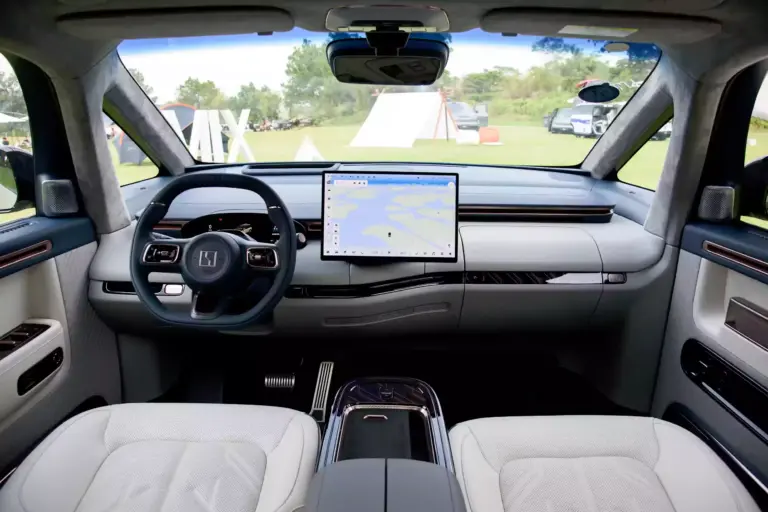
Chinese EVs arrive with sophisticated intelligent cockpit systems that require comprehensive localization for international markets. The 2026 export regulations mandate specific data governance protocols, but significant customization remains the importer’s responsibility.
Operating System & Language Localization
Domestic Chinese EVs operate on ecosystems deeply integrated with Baidu, Tencent, and Alibaba services. Export variants require:
-
Navigation System Replacement: Removal of Baidu Maps/Amap and integration with Google Automotive Services (GAS), TomTom, or HERE WeGo. Hardware costs: $180-$350 per unit for licensed map data and antenna modifications.
-
Voice Assistant Localization: Xpeng’s XNGP and BYD’s DiLink systems require natural language processing (NLP) training for English, Spanish, German, and Arabic variants. Factory-level language packs cost $45-$120 per vehicle depending on linguistic complexity.
-
App Ecosystem Integration: Chinese EVs rely on WeChat and Alipay for vehicle control and payment functions. Export markets require native iOS/Android app development with local server hosting. Budget $15,000-$50,000 for white-label app development per market.
Connectivity & Data Compliance
The 2026 Cybersecurity Multi-Level Protection Scheme (MLPS 2.0) requires:
– Data localization: Telematics data must route through servers physically located in the destination country
– OTA update infrastructure: Establishment of local Content Delivery Networks (CDNs) for software updates
– Privacy compliance: GDPR alignment for European markets, CCPA for California, PDPL for Middle East
Case Study: MG4 Anxin Edition UK Launch
MG implemented a complete software fork for the UK market, replacing the Chinese iSMART system with localized MG iSMART Global. This required:
– 6-month development cycle
– £2.3 million initial investment
– Local server establishment in Milton Keynes
– Integration with UK-specific charging networks (BP Pulse, Gridserve)
Result: 94% customer satisfaction rating vs. 67% for direct-import Chinese EVs without localization.
4. Charging Compatibility: Bridging the GB/T Gap
The most critical technical hurdle for Chinese EV imports remains charging infrastructure compatibility. While 2026 export models increasingly feature native CCS2 (Europe) or CCS1 (North America) ports, many B2B procurement channels still encounter GB/T 20234 standard connectors requiring strategic solutions.
Charging Standard Matrix
| Region | Standard | Chinese EV Native | Solution | Cost per Vehicle |
|---|---|---|---|---|
| Europe | CCS2 (Combo 2) | No (GB/T) | Factory retrofit | $800-$1,200 |
| UK/Ireland | CCS2 + Type 2 | Partial | Software unlock + adapter | $200-$400 |
| North America | CCS1 (Combo 1) | No | Hardware swap | $1,500-$2,200 |
| Australia/NZ | CCS2 + Type 2 | Partial | Factory option | $600-$900 |
| Southeast Asia | CCS2/CHAdeMO | Mixed | Dual-port installation | $1,100-$1,800 |
Technical Solutions for B2B Importers
Option 1: Factory-Level Retrofit (Recommended)
Major manufacturers now offer export-spec charging hardware at the VIN assignment stage. BYD’s “Global Export Package” includes:
– CCS2 inlet replacement
– Onboard charger recalibration (11kW AC → 22kW AC three-phase)
– DC fast charging protocol conversion (GB/T → CCS2)
– Cost: $950 FOB addition
– Lead time: +14 days to production schedule
Option 2: Aftermarket Adapter Systems
For existing inventory or smaller manufacturers without factory retrofit capabilities:
– Phoenix Contact CCS2-GB/T adapters: $350/unit (bulk 100+)
– Charging speed limitation: 80kW max (vs. 150kW+ native)
– Warranty implications: May void HV system coverage
Option 3: Dual-Port Installation
Emerging solution for fleet operators requiring flexibility:
– Retain GB/T for depot charging (Chinese standard equipment)
– Add CCS2 for public infrastructure
– Installation cost: $1,400 per vehicle
– Requires additional bodywork cutting and IP67 sealing certification
Infrastructure Integration
The 2026 Chinese EVs feature bidirectional charging (V2L/V2H) requiring specific inverter compatibility:
– BYD Seal/V2L: 3.3kW output requires local socket standard adapters (Schuko, BS 1363, NEMA 5-15)
– NIO Power Home: Requires local electrician certification for wallbox installation (7kW/11kW variants)
– Xpeng 800V systems: Demand 350A rated cables for maximum 280kW charging—verify local charging network capabilities
5. Homologation, Compliance & 2026 Export Regulations
China’s 2026 EV export framework introduces the “Quality and Safety Technical Specification for New Energy Vehicle Exports” (QST-NEV-2026), fundamentally altering documentation and testing requirements.
Regulatory Framework by Market
European Union (WVTA & Euro 6e)
– Anti-Subsidy Compliance: Importers must provide Manufacturer’s Declaration of Origin (MDO) and cooperate with EU Commission audits to determine individual duty rates (BYD: 17.4%, SAIC/MG: 35.3%, Tesla China: 7.8%, others cooperating: 20.8%)
– Cybersecurity (UN R155/R156): Mandatory ISO/SAE 21434 compliance for software-defined vehicles
– Battery Passport: Digital documentation of battery chemistry, carbon footprint, and recycling chain (EU Battery Regulation 2023/1542)
– Noise Standards: UN R51-03 for electric vehicle warning sounds (AVAS)
United Kingdom (GB WVTA)
– Post-Brexit alignment with UN Regulations but distinct approval marks required
– 2026 update: Mandatory intelligent speed assistance (ISA) and advanced emergency braking (AEB) for all M1 category vehicles
– Type approval cost: £8,500-£15,000 per variant
Middle East (GCC Standards)
– GSO 42/2024 thermal testing for 55°C ambient operation
– Sand ingress protection (IP6KX) mandatory for battery enclosures
– Halal certification for interior materials (no pork-derived polymers)
Latin America (LAPI & CONTRAN)
– Brazil: INMETRO certification for charging efficiency
– Chile: 3CV homologation with frontal impact 56 km/h testing
– Mexico: NOM-194-SCFI-2025 energy efficiency labeling
Documentation Requirements
B2B buyers must secure the following from Chinese manufacturers for 2026 compliance:
- CCC Export Certificate (China Compulsory Certification)
- Battery UN38.3 Test Summary (Lithium cell transportation safety)
- EMC Test Reports (ECE R10 compliance)
- Material Declaration (IMDS system entry for ELV directive compliance)
- Software Version Documentation (for OTA update traceability)
Critical Update for 2026: The General Administration of Customs China (GACC) now requires pre-shipment inspection by designated third parties (SGS, Bureau Veritas, TÜV Rheinland) for all NEV exports. Cost: $450-$800 per container.
6. Global Logistics & Supply Chain
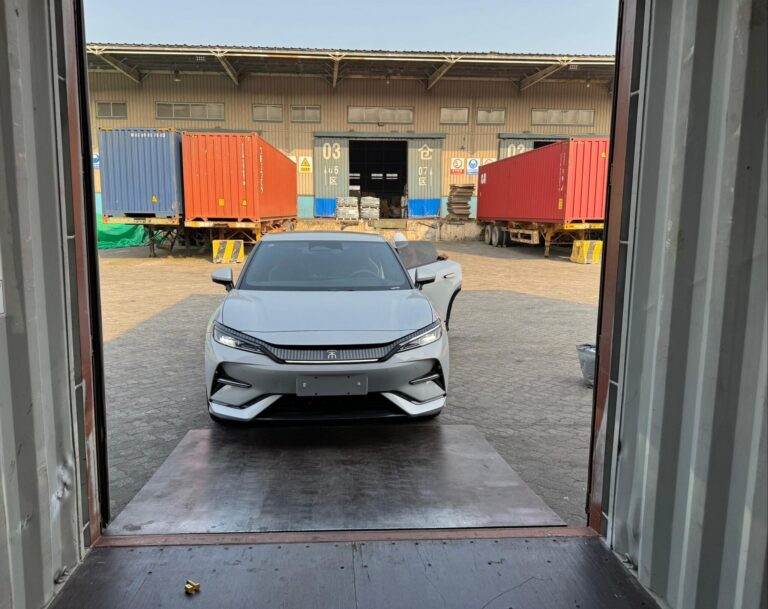
Efficient logistics management determines profitability in Chinese EV importing. The 2026 shipping landscape sees increased specialization in EV transport due to lithium-ion battery regulations (IMDG Code Class 9).
Shipping Methods Comparison
Roll-on/Roll-off (RoRo)
– Capacity: 4,000-8,000 CEU (Car Equivalent Units) per vessel
– Cost: $1,800-$2,400 per vehicle (Shanghai to Rotterdam)
– Advantages: No container lifting, direct driving on/off, lower damage risk
– Constraints: Limited to operational vehicles with <25% SOC (State of Charge)
– 2026 Update: New RoRo vessels with EV-specific fire suppression (Novec 1230 systems) command 15% premium but reduce insurance costs by 40%
Containerized (SOC 40-60%)
– Method: 2-3 vehicles per 40′ High Cube (depending on dimensions)
– Cost: $3,200-$4,500 per container (4-6 vehicles)
– Advantages: Suitable for non-operational vehicles, parts shipments, mixed cargo
– Requirements: Dangerous Goods declaration, thermal monitoring, Class 9 labeling
– Risk: Thermal runaway containment—mandatory Lithium Battery Racks (LBR) with fire blankets
Breakbulk (Project Cargo)
– For >500 unit orders or oversized vehicles (Yangwang U9, commercial vans)
– Cost: Negotiable, typically $2,800-$3,500 per unit all-inclusive
– Requires custom cradles and shore power connections during voyage
Incoterms 2026 Strategy
| Term | Risk Transfer | Best For | 2026 Considerations |
|---|---|---|---|
| FOB Shanghai | Ship’s rail | Experienced importers with destination agents | Buyer assumes maritime risk; favorable for letter of credit arrangements |
| CIF Port of Destination | Ship’s side at destination | First-time importers | Seller arranges insurance (110% CIF value); watch for excluded battery damage clauses |
| DAP Dealer Lot | Final delivery | Turnkey distributors | Includes customs clearance and inland transport; premium of $800-$1,200 per unit |
| DDP Warehouse | Final delivery | Full-service import partners | Seller handles duties/VAT; requires local tax registration |
Supply Chain Timing
- Production: 45-60 days (export variants)
- Homologation prep: 30 days (parallel to production)
- Shipping: 28-35 days (Shanghai-Europe), 18-25 days (Shanghai-Middle East), 35-45 days (Shanghai-West Coast USA)
- Customs clearance: 5-10 days (with proper documentation)
- PDI & localization: 3-5 days per vehicle
Total Lead Time: 90-120 days from PO to dealer lot.
7. Financial Breakdown: Landed Cost & Dealer Profit Margins (Case Study)
Understanding the complete cost stack is essential for B2B procurement decisions. Below is a detailed case study for importing the BYD Seal Performance (High Spec) to the UK market in Q2 2026.
Base Vehicle Economics
| Cost Component | Amount (USD) | Notes |
|---|---|---|
| EXW Factory Price | $32,500 | Shanghai factory gate, export spec |
| Export Documentation | $450 | CCC, VIN verification, customs declaration |
| FOB Shanghai | $33,200 | Including port handling |
| Ocean Freight (RoRo) | $2,100 | 28-day voyage, EV-rated vessel |
| Marine Insurance (110%) | $385 | All risks including battery |
| CIF Felixstowe | $35,685 | UK port arrival |
Importation & Compliance Costs
| Component | Amount (GBP) | USD Equivalent | Details |
|---|---|---|---|
| Import Duty | £0 | $0 | EVs exempt under UK Trade Tariff |
| Anti-Subsidy Duty | £5,420 | $6,800 | 17.4% on BYD (Cooperating manufacturer rate) |
| VAT (20%) | £8,540 | $10,720 | On CIF + Duty + Anti-subsidy |
| Type Approval (WVTA) | £12,000 | $15,050 | Per model variant (amortized over 200 units = £60/unit) |
| IVA & Registration | £55 | $70 | Individual Vehicle Approval if not WVTA |
| PDI & Software | £180 | $225 | Localization, language, app setup |
| Landed Cost | £42,695 | $53,560 | Ready for retail |
Retail Pricing Strategy
| Scenario | Retail Price (OTR) | Gross Margin | Dealer Net |
|---|---|---|---|
| Volume Fleet | £45,995 | 7.2% | £3,300 |
| Retail Consumer | £48,995 | 12.9% | £6,300 |
| Premium Positioning | £51,995 | 17.9% | £9,300 |
Break-Even Analysis: With fixed costs of £450,000 annually (facility, staff, marketing), the dealer requires 142 unit sales at volume pricing or 72 units at premium positioning to break even.
Alternative: MG4 Extended Range (Value Segment)
| Metric | Amount |
|---|---|
| FOB Shanghai | $19,800 |
| CIF UK | $22,400 |
| Anti-Subsidy (35.3%) | $7,900 |
| VAT | $6,060 |
| Landed Cost | $36,360 (£28,900) |
| Retail Price | £32,995 |
| Margin | 12.4% |
Key Insight: Despite higher anti-subsidy duties (35.3% for SAIC/MG vs. 17.4% for BYD), the MG4 maintains competitive margins due to lower base pricing and established UK dealer network efficiencies.
Financing Structures
Letter of Credit (L/C): 30% deposit, 70% against B/L. Cost: 1.5-2.5% of transaction value.
Open Account: Available for established relationships >$5M annual volume. Terms: Net 60.
Vendor Finance: BYD and NIO offer export credit through China Exim Bank at 3.8-4.2% APR for 24-month terms on orders >100 units.
8. Securing After-Sales Support & Spare Parts
After-sales infrastructure represents the largest ongoing operational cost for Chinese EV importers. The 2026 export regulations now require manufacturers to guarantee 10-year spare parts availability for exported vehicles.
Parts Supply Chain Architecture
Critical Components Inventory (Recommended 90-day stock):
– Battery modules (cell-level): $8,000-$15,000 per pack (BYD Blade 82kWh: $12,400)
– Drive motors: $2,200-$4,500
– Power electronics (MCU/Inverter): $1,800-$3,200
– Charging ports (CCS2 export spec): $340-$580
– ADAS sensors (LiDAR/Radar): $800-$2,400 (Xpeng/XNPG systems)
Regional Warehousing Strategy:
– Hub Model: Central European warehouse (Rotterdam/Hamburg) with 48-hour delivery to dealers
– In-Country Stock: Minimum $450,000 inventory for markets >500 units/year
– Emergency Air Freight: 72-hour turnaround for critical drivetrain components ($15-$25/kg)
Technical Training & Certification
Chinese manufacturers require authorized service centers to achieve “Gold Standard” certification:
- Level 1 (Sales Staff): High-voltage awareness, customer education (2 days, $800/person)
- Level 2 (Technicians): Battery removal/replacement, BMS diagnostics (5 days, $2,400/person)
- Level 3 (Master Technicians): Cell-level repair, thermal management systems (10 days, $4,800/person)
2026 Update: NIO and Xpeng require cloud-connected diagnostic tools ($12,000 annual subscription) for warranty validation.
Warranty Structures
Standard export warranties (2026):
– Vehicle: 6 years/150,000 km
– Battery: 8 years/160,000 km (70% capacity retention)
– Drive Motor: 8 years/unlimited mileage
Commercial Considerations:
– Extended warranties available for fleet operators (additional $800-$1,200 per vehicle for +2 years)
– Battery leasing options (NIO) reduce upfront cost by 25% but require monthly payments ($120-$180/month)
9. Why Partner with Electric Auto China
As Shanghai’s premier B2B EV export consultancy, Electric Auto China bridges the gap between Chinese manufacturing sophistication and international market requirements.
Our Compliance Advantage
- Pre-Certified Inventory: Direct relationships with BYD, NIO, Xpeng, Chery, and SAIC providing immediate access to WVTA-approved stock, eliminating 90-day homologation delays
- Duty Optimization: Strategic routing through bonded warehouses and free trade zones to minimize anti-subsidy duty impacts
- Documentation Excellence: In-house team managing CCC export certificates, UN38.3 testing, and IMDG dangerous goods declarations
Technical Integration Services
- Localization Factory: Shanghai-based software engineering team performing pre-shipment English/German/Arabic localization, saving 14 days at destination
- Charging Conversion: Certified installation of CCS2/CCS1 hardware at our Pudong facility, ensuring warranty compliance vs. aftermarket retrofits
- Quality Assurance: 127-point pre-export inspection exceeding manufacturer standards, including paint thickness verification (120-180 microns) and ADAS calibration
Financial & Logistics Solutions
- Consolidated Shipping: Weekly RoRo departures to Felixstowe, Barcelona, and Jebel Ali with containerized options for mixed-brand orders
- Trade Finance: Partnerships with China Construction Bank and HSBC offering competitive L/C terms and supplier credit facilities
- Margin Protection: Hedging instruments for CNY/USD/EUR exposure on orders >$1M
Market Intelligence
Our 2026 Outlook Reports provide:
– Real-time pricing from 14 major manufacturers
– Regulatory update alerts (EU Battery Passport, UKCA marking transitions)
– Competitive analysis of emerging models (Deepal S05, Luxeed V9, Yangwang U9)
Next Steps: Contact our B2B procurement team to receive customized landed cost calculations for your specific market and volume requirements. We facilitate everything from single-unit sample imports to 500+ unit annual distribution agreements, ensuring your entry into the Chinese EV market is profitable, compliant, and positioned for long-term growth.
Electric Auto China | Shanghai Pudong International Automotive Zone | B2B Procurement Division
Unlock High-Margin EV Imports with Electric Auto China
As an elite automotive supply chain partner in Shanghai, we provide end-to-end, strictly compliant export solutions tailored for international dealerships, fleet managers, and wholesale distributors.
- 🛡️ 100% Legal & Compliant: Fully licensed exports ensuring smooth customs clearance at your destination.
- ⚙️ Complete Localization: Professional English/Arabic/Russian OS flashing and GB/T to CCS2 charging solutions.
- 🚢 Secure Logistics: Direct Ro-Ro and Containerized shipping with full UN38.3 battery certifications.
- 🔧 After-Sales Support: Reliable access to OEM diagnostic tools and steady spare parts supply.
Request a Detailed FOB/CIF Quote Today:
📧 B2B Sales Email: [email protected]
💬 Direct WhatsApp: +86 159 5127 6160