The Ultimate 2026 B2B Export Guide for Certified pre-owned Chinese EV: Pricing, Compliance & Localization
1. Executive Summary
The global secondary electric vehicle market is undergoing a seismic shift as China’s 2026 Export Regulations (effective January 1, 2026) fundamentally reshape how certified pre-owned Chinese EVs enter international markets. Under the new framework issued by MOFCOM, MIIT, MPS, and GAC, vehicles registered for less than 180 days now require a mandatory Post-Sale Service Confirmation Letter from the manufacturer—effectively ending the era of speculative gray-market exports and establishing a formalized, warranty-backed channel for B2B procurement.
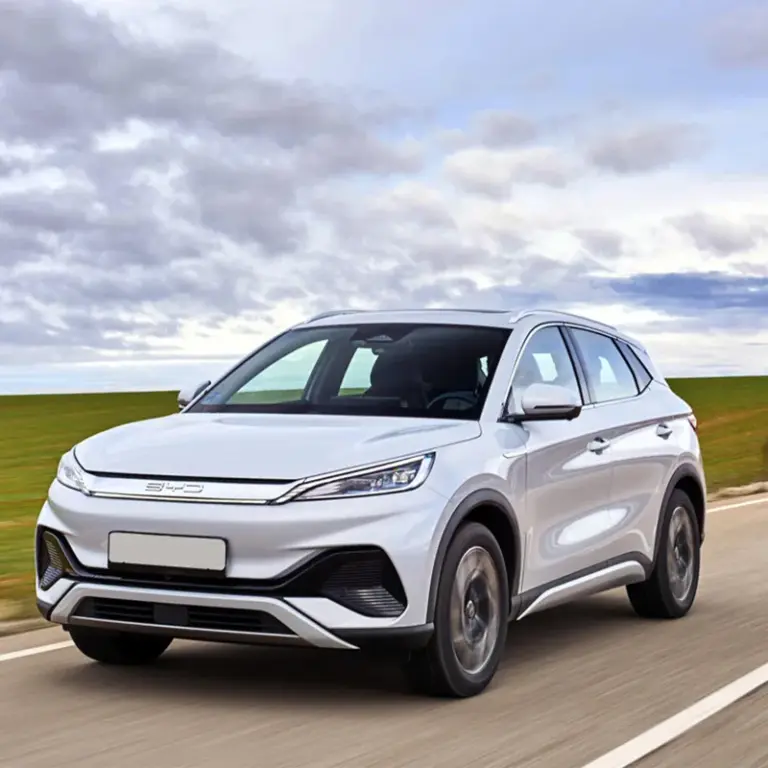
For international dealers, fleet operators, and automotive distributors, this regulatory tightening creates a paradox: higher barriers to entry, yet significantly reduced risk profiles. The certified pre-owned (CPO) Chinese EV segment—encompassing high-depreciation assets like the BYD Seal, XPeng G6, and NIO ET7—offers 40-60% cost savings versus new European equivalents, but only when sourced through compliant exporters possessing direct OEM service partnerships.
Electric Auto China operates as a MOFCOM-licensed export entity with authorized service agreements across 12 major Chinese EV manufacturers. This guide provides the technical, financial, and regulatory blueprint for importing 2022-2025 model year units into EU, UK, Middle Eastern, and Southeast Asian markets. We address the three critical failure points of Chinese EV export: software localization, charging infrastructure incompatibility (GB/T), and battery warranty transferability.
Key 2026 Market Dynamics:
– Regulatory Moat: Only 340 licensed exporters nationwide (down from 1,200+ in 2024)
– Price Arbitrage: CPO BYD Seal Long Range (2024, 20,000km) available at $22,500 FOB vs. $42,000 new in UK
– Technology Leapfrog: NIO battery-swap enabled models entering secondary market with transferable BaaS (Battery as a Service) contracts
2. Deep Dive: Technical Specifications
Certified pre-owned Chinese EVs require granular technical assessment beyond traditional ICE vehicle inspection. The critical metric is State of Health (SOH)—the remaining battery capacity percentage versus original specification.
Battery Health Grading System
| Grade | SOH Range | Expected Range Retention | Suitable Markets | Price Adjustment |
|---|---|---|---|---|
| A+ | 95-100% | <5% degradation | Premium EU/UK retail | Baseline |
| A | 90-94% | 6-10% degradation | Standard retail/fleet | -8% |
| B | 85-89% | 11-15% degradation | Emerging markets | -15% |
| C | <85% | >15% degradation | Parts only/battery recycling | -35% |
Critical Specification Variations by Brand:
BYD Blade Battery (LFP Chemistry)
– Degradation curve: 2-3% annually under normal use
– Thermal stability: Superior (no thermal runaway below 500°C)
– Cycle life: 3,000+ cycles to 80% SOH
– Example: 2024 BYD Seal 82.5kWh unit with 18,000km typically shows 97-98% SOH
NIO Semi-Solid State (150kWh)
– Degradation curve: 1.5-2% annually
– Swap compatibility: Must verify BaaS contract status (battery lease vs. owned)
– Critical: 2024 ET7 units may contain 75kWh or 100kWh packs—physical dimensions identical, software-locked capacity differs
XPeng High-Nickel Ternary
– Faster degradation in high-temperature climates (>35°C ambient)
– Requires thermal management system inspection
– OTA update history verification mandatory (affects autonomous driving capability)
Odometer Verification Protocol
Chinese EVs utilize blockchain-based odometer logging through the National Vehicle Network Management Platform (NVNMP). Licensed exporters must provide:
1. NVNMP data hash verification
2. Service center maintenance logs (via manufacturer API)
3. Insurance claim history (China Banking and Insurance Regulatory Commission database)
Red Flag Indicators:
– Discrepancies between NVNMP and instrument cluster readings (>2% variance)
– Battery replacement records without corresponding odometer milestones
– Missing OTA update logs (suggests ECU replacement or tampering)
3. The Localization Challenge: Software, UI, and Connectivity
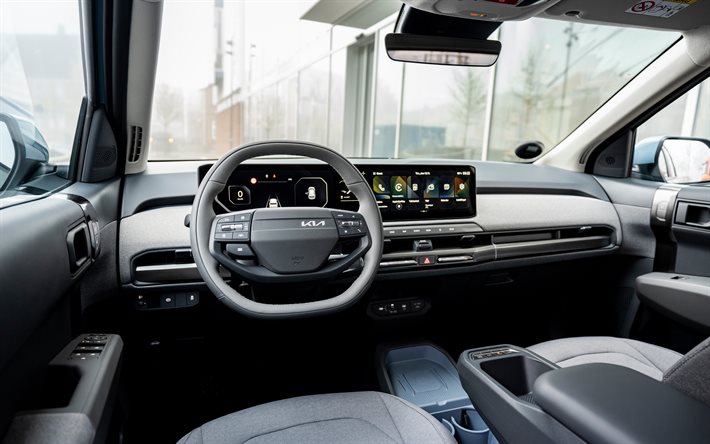
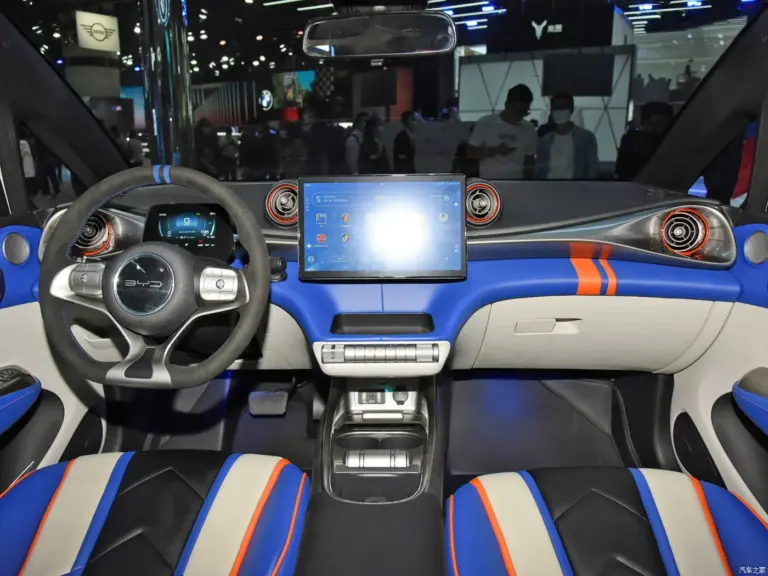
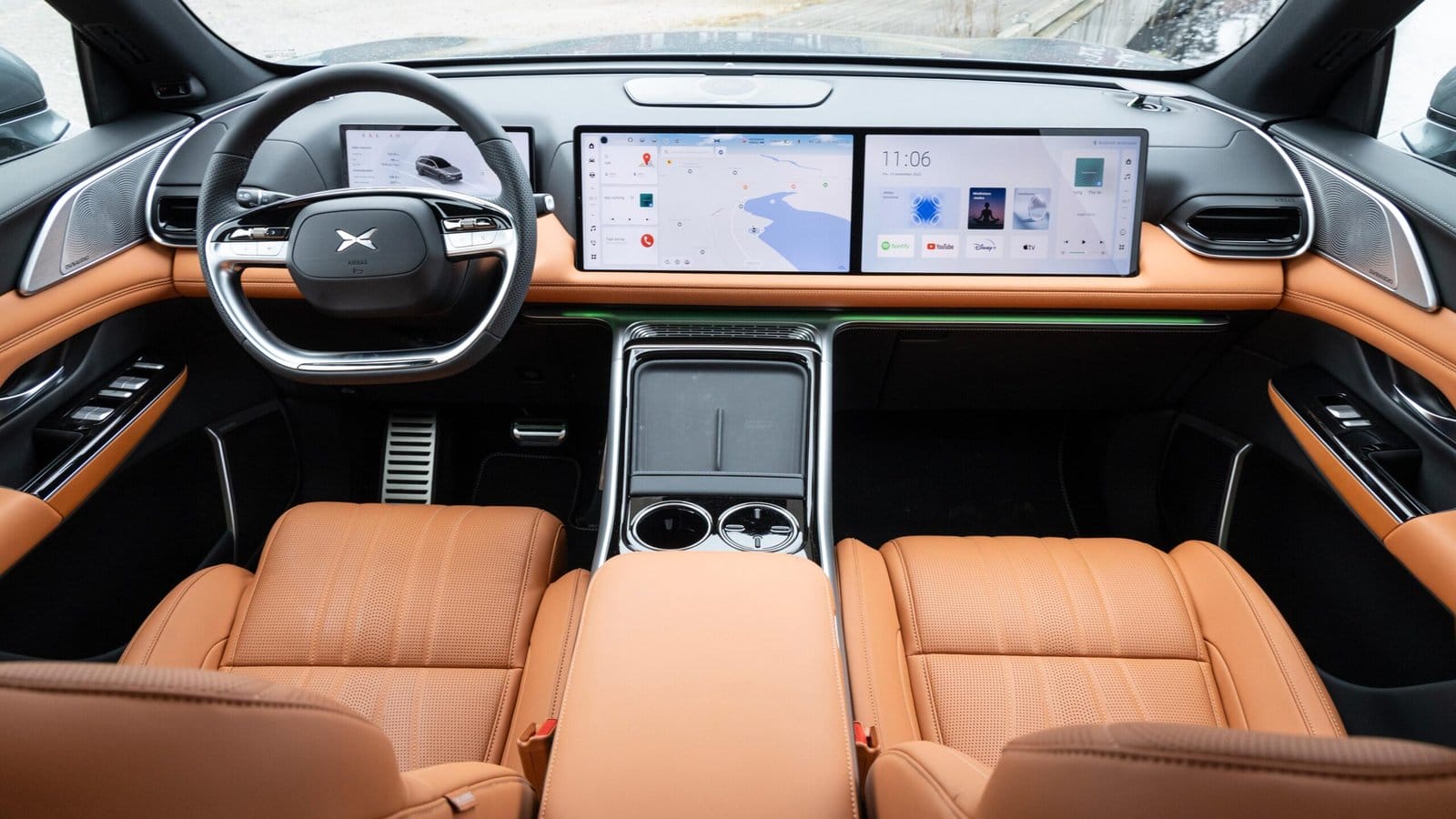
The single largest post-import expense for B2B buyers is software localization. Chinese EVs ship with Mandarin-centric infotainment systems, Baidu Maps navigation, and app ecosystems incompatible with Western mobile infrastructure.
Infotainment System Architecture
Category 1: Android Automotive OS (AAOS)
– Models: XPeng G6/P7, NIO ET5/ET7/ES8, Li Auto L-series
– Localization: Relatively straightforward—English language pack available via OEM server (requires Chinese VIN authorization)
– App Ecosystem: Replacement of Tencent apps with Google Automotive Services (GAS) or local equivalents
– Cost: $800-$1,200 per unit for professional flashing
Category 2: Proprietary Linux/QNX
– Models: BYD Seal/Atto 3 (Dilink OS), MG4 (iSMART)
– Localization: Complex—requires bootloader unlock and custom ROM installation
– Risk: Warranty voidance if not performed by authorized service partner
– Cost: $1,500-$2,500 per unit
Category 3: HarmonyOS (Huawei)
– Models: AITO M5/M7, select Arcfox models
– Localization: Currently restricted—US sanctions limit Google integration
– Solution: Parallel installation of Android Auto/Apple CarPlay modules ($300 hardware)
Telematics and Data Compliance
Chinese EVs transmit vehicle data to manufacturer servers in China (per Cybersecurity Law requirements). For EU/UK imports, this creates GDPR compliance conflicts.
Solutions:
1. Data Routing Modification: Installation of regional edge computing gateways ($400 hardware) that store data locally
2. TCU Replacement: Swapping China-specific Telematics Control Units for international variants (available for MG, BYD export models)
3. Privacy Mode Activation: Software configuration to disable biometric data collection (facial recognition, voice recording)
Case Study: XPeng P7 Export to Spain
A Barcelona-based fleet operator imported 50 units of 2024 XPeng P7 Long Range (80.9kWh) in Q1 2026.
Localization Requirements:
– Language conversion: Mandarin → Spanish/English ($1,100/unit)
– Navigation migration: Baidu Maps → HERE WeGo (licensing fee $150/unit)
– App store replacement: Removal of Ximalaya, QQ Music; installation of Spotify, Android Auto
– 4G LTE module swap: China Mobile SIM slot → European eSIM compatibility
Total Localization Cost: $67,500 for 50 units ($1,350/unit average)
Timeline: 3 weeks per batch of 10 units
4. Charging Compatibility: Bridging the GB/T Gap
Chinese EVs utilize GB/T 20234 charging standards (AC and DC), physically incompatible with European CCS2, North American CCS1, or Japanese CHAdeMO systems. This represents the most significant technical barrier for B2B importers.
Physical Connector Standards
| Region | AC Charging | DC Fast Charging | Chinese EV Compatibility |
|---|---|---|---|
| China | GB/T 20234.2 (7-pin) | GB/T 20234.3 (9-pin) | Native |
| Europe | Type 2 (Mennekes) | CCS2 (Combo) | Incompatible |
| North America | Type 1 (J1772) | CCS1 (Combo) | Incompatible |
| UK | Type 2 | CCS2 | Incompatible |
Conversion Solutions
Option A: Adapter Cables (Temporary)
– GB/T to CCS2 adapter: $300-$500 per unit
– Limitations:
– AC charging only (3.7kW-11kW)
– DC fast charging not supported (safety interlock prevents high-amperage bridging)
– Use case: Emergency charging only; unsuitable for commercial operations
Option B: Hardware Retrofit (Recommended)
Replacement of the vehicle’s On-Board Charger (OBC) and Inlet Port:
For European Import:
– CCS2 inlet installation: $800-$1,200 (parts + labor)
– OBC reprogramming or replacement: $600-$900
– DC charging controller update: $400
– Total: $1,800-$2,500 per vehicle
For North American Import:
– CCS1 inlet installation: $900-$1,400 (limited parts availability)
– Software CAN bus reconfiguration required
– Total: $2,000-$3,000 per vehicle
Option C: Charging Infrastructure Workaround
Installation of GB/T charging stations at importer facilities:
– 60kW GB/T DC fast charger: $8,000-$12,000
– Viable for fleet operators with centralized depots
– Maintains original vehicle warranty
Charging Speed Implications
Post-conversion charging speeds may be limited by software locks. For example:
– BYD Seal: Original 150kW GB/T DC → CCS2 conversion limited to 110kW (software restriction)
– XPeng G6: Original 280kW GB/T → CCS2 conversion achieves 250kW (minimal loss)
– NIO ET7: Battery swap remains optimal solution; charging limited to 130kW on CCS2
5. Homologation, Compliance & 2026 Export Regulations
China’s 2026 regulatory framework introduces stringent eligibility criteria that fundamentally alter sourcing protocols.
The 180-Day Rule & Post-Sale Service Confirmation Letter
Regulation Text: Vehicles registered in China for less than 180 days (6 months) cannot be exported unless accompanied by a Post-Sale Service Confirmation Letter issued by the vehicle manufacturer.
Implications:
– New Car Arbitrage Ended: Previously, dealers exported nearly-new vehicles to exploit price differentials; this now requires OEM cooperation
– Documentation Requirements:
– Destination country specification
– Vehicle VIN and configuration details
– Verified list of after-sales service providers in destination market (must be OEM-authorized)
– Warranty transfer confirmation
Strategic Response:
Electric Auto China maintains pre-negotiated service agreements with BYD, NIO, XPeng, and MG, enabling us to secure Confirmation Letters for units aged 90-180 days. Units >180 days require standard export documentation only.
MIIT Catalog Compliance
Modified or customized vehicles must appear in MIIT’s Official Vehicle Production Catalog before export clearance. This affects:
– Aftermarket body kits
– Battery capacity modifications
– Software tuning (performance ECU remaps)
– Wheel/tire size changes affecting speedometer calibration
Compliance Verification:
– MIIT public database query (http://www.miit.gov.cn)
– Certificate of Conformity (COC) from manufacturer
– VIN-specific build sheet verification
Destination Market Homologation
European Union (WVTA – Whole Vehicle Type Approval)
– Required documentation:
– e-mark certification for lighting components
– EMC (Electromagnetic Compatibility) test reports
– Noise emissions certification
– Cost: €3,500-€5,000 per model variant (not per unit)
– Timeline: 4-6 weeks
United States (EPA/FMVSS)
– Substantial compliance barriers for used imports (<25 years old)
– Individual vehicle importation requires:
– EPA Form 3520-1 (Emissions)
– DOT Form HS-7 (Safety)
– Independent laboratory testing ($15,000-$25,000 per model)
– Recommendation: US market limited to show/display or racing exemptions; commercial importation not viable for volume
United Kingdom (UKCA/GB WVTA)
– Post-Brexit alignment with EU standards but separate approval process
– RHD conversion required for Chinese LHD vehicles (cost prohibitive: $8,000+)
– Recommendation: Focus on LHD European markets or established RHD markets (Australia, Japan, South Africa)
Middle East (GCC Standards)
– Gulf Cooperation Council requires:
– GSO 42/2015 (Electric Vehicle Safety)
– SASO 2864 (Saudi specific)
– Temperature testing (50°C+ ambient)
– Relatively streamlined process; many Chinese EVs pre-certified for GCC
Documentation Checklist for Export
| Document | Source | Validity | Critical Notes |
|---|---|---|---|
| Export License | MOFCOM | 6 months | Vehicle-specific |
| Vehicle Registration Certificate | Local DMV | Current | Must show >180 days or Confirmation Letter attached |
| Inspection Certificate | CQC/TÜV | 90 days | Includes SOH verification |
| Bill of Lading | Shipping Agent | Per shipment | UN38.3 battery declaration mandatory |
| Certificate of Origin | CCPIT | Per shipment | Required for duty calculation |
| Service Confirmation Letter | OEM | Per vehicle | Mandatory for <180 day units |
6. Global Logistics & Supply Chain
Port Operations & Consolidation
Primary Export Hubs:
– Shanghai Pudong: Primary RoRo terminal for NIO, Tesla China exports
– Ningbo-Zhoushan: Containerized EV specialist (BYD, MG)
– Guangzhou Nansha: Southern hub for XPeng, AION
Shipping Methods:
Method 1: RoRo (Roll-on/Roll-off)
– Capacity: 4,000-8,000 CEU (Car Equivalent Units) per vessel
– Cost: $1,200-$1,800 per vehicle (Europe); $1,500-$2,200 (Middle East)
– Transit time: 28-35 days to EU; 18-25 days to Middle East
– Limitations: Vehicles must be operational (wheels turn, brakes function)
Method 2: Container (40ft HC)
– Capacity: 2-3 EVs per container (depending on dimensions)
– Cost: $3,200-$4,500 per container (Europe)
– Per-vehicle cost: $1,100-$1,500 (2 cars), $1,000-$1,200 (3 cars compact)
– Transit time: 32-40 days
– Advantage: Can ship non-operational units; better theft protection
Method 3: Flat Rack (OOG – Out of Gauge)
– For modified vehicles exceeding container dimensions
– Cost: $5,000+ per unit
– Rarely used for standard passenger EVs
Battery Transport Regulations (UN38.3)
Lithium-ion batteries >100Wh (all EV traction batteries) require:
1. UN38.3 Test Summary: Proof of passing altitude, thermal, vibration, shock, short circuit, crush, and forced discharge tests
2. State of Charge (SoC): Must be shipped at maximum 30% charge (IATA DGR regulations)
3. Hazard Labels: Class 9 Miscellaneous Dangerous Goods
4. Exemption: Vehicles with batteries <35kg lithium content (rare in modern EVs)
Insurance Considerations:
– Marine cargo insurance for EVs: 0.15-0.25% of CIF value
– Exclusions: Battery fire during charging (only covered if manufacturing defect proven)
– Recommended coverage: Institute Cargo Clauses (A) + SRCC (Strikes, Riots, Civil Commotions)
7. Financial Breakdown: Landed Cost & Dealer Profit Margins (Case Study)
Case Study: German Import of 2024 BYD Seal Excellence AWD (CPO)
Vehicle Specifications:
– Model Year: 2024
– Mileage: 22,000 km
– Battery: 82.5 kWh Blade Battery (LFP)
– SOH: 96%
– Original MSRP (China): ¥279,800 ($38,500)
– CPO Purchase Price (Shanghai): ¥165,000 ($22,700)
Cost Breakdown:
| Cost Component | Amount (USD) | Notes |
|---|---|---|
| FOB Shanghai | $22,700 | Includes 180-day Confirmation Letter |
| Export Preparation | $1,200 | Inspection, cleaning, documentation |
| Marine Insurance | $120 | 0.5% of CIF value |
| Ocean Freight (RoRo) | $1,450 | Shanghai to Hamburg |
| CIF Hamburg | $25,470 | |
| EU Import Duty | $2,547 | 10% of CIF value |
| VAT (19%) | $5,339 | Calculated on (CIF + Duty) |
| Homologation | $800 | Amortized over 10-unit batch |
| CCS2 Conversion | $2,100 | Hardware + labor |
| Software Localization | $1,400 | German/English language pack |
| Port Handling | $350 | THC, documentation fees |
| Inland Transport | $450 | Hamburg to Frankfurt depot |
| TOTAL LANDED COST | $38,466 |
Retail Pricing Analysis:
– Comparable new BYD Seal in Germany: €45,900 ($49,800)
– Local CPO market price (2023 model): €38,000 ($41,200)
– Recommended Retail Price: €36,900 ($40,000)
– Gross Margin: $1,534 (4%)
– Net Margin (after 3-month warranty reserve): $800 (2.1%)
Volume Scaling:
At 20-unit monthly volume, homologation costs drop to $400/unit, and shipping consolidation reduces freight to $1,300/unit, improving margin to 6.8%.
Alternative Case: UAE Import of Chery eQ1 (Compact City EV)
Vehicle: 2023 Chery eQ1 (Ant), 30.6kWh, 18,000km
Target Market: Dubai/Riyadh fleet operators
| Component | Cost (USD) |
|---|---|
| CPO Purchase | $9,800 |
| FOB Charges | $600 |
| Freight (Container) | $1,100 |
| Insurance | $55 |
| UAE Import Duty (5%) | $575 |
| VAT (5%) | $606 |
| Localization (Arabic/English) | $900 |
| Landed Cost | $13,636 |
| Local Retail | $16,500 |
| Margin | 17.4% |
Note: GCC markets accept GB/T charging; adapter cables sufficient for initial deployment.
8. Securing After-Sales Support & Spare Parts
The 2026 regulations mandate that exported vehicles carry structured service information and spare parts guarantees. This transforms after-sales from a cost center to a competitive differentiator.
Warranty Transfer Mechanics
Standard Chinese EV Warranty (Domestic):
– Battery: 8 years / 150,000-200,000 km
– Vehicle: 4-6 years / 100,000-150,000 km
– Drive unit: 8 years
International Transfer Process:
1. Warranty Localization Fee: $500-$800 per vehicle (paid to OEM for international database entry)
2. Service Network Authorization: Importer must become authorized service partner or contract with existing network
3. Diagnostic Tool Provision: OEM-specific OBD scanners and software licenses ($2,000-$5,000 initial investment)
Critical Components Inventory:
| Component | Lead Time | Stocking Recommendation | Source |
|---|---|---|---|
| Battery Modules | 45-60 days | 2% of fleet value | OEM direct |
| Drive Motors | 30 days | 1% of fleet | OEM/Authorized distributor |
| HVAC Units | 15 days | On-demand | Aftermarket (Sanden, Valeo) |
| Infotainment Screens | 20 days | 0.5% of fleet | OEM only (encrypted pairing) |
| Charging Ports | 7 days | 5 units minimum | Local distributor |
Technical Training Requirements
Manufacturers now require proof of technician certification before releasing:
– High-voltage safety protocols
– Battery pack disassembly procedures
– Thermal management system calibration
Electric Auto China provides Train-the-Trainer programs:
– 5-day intensive in Shanghai (theory + hands-on)
– Certification valid for 24 months
– Cost: $3,500 per technician (minimum 2 per importing entity)
Battery Second-Life & Recycling
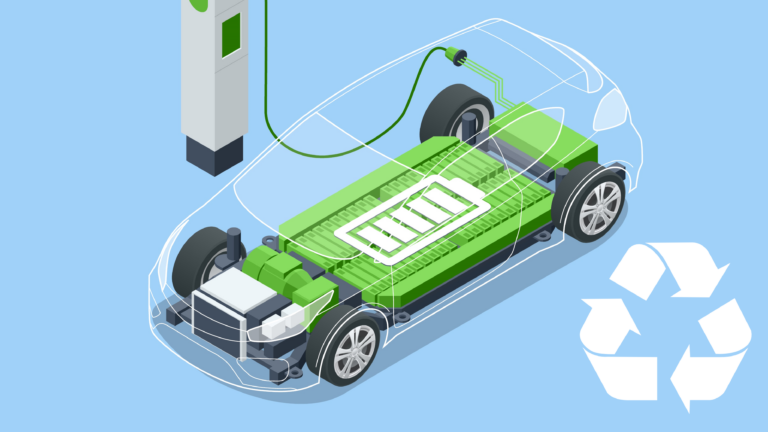
End-of-life battery strategy required for environmental compliance (EU Battery Regulation 2023/1542):
– Recycling partnerships with CATL, BYD, or local recyclers
– Buyback guarantees: $80-$120 per kWh for retired packs
– Second-life applications (stationary storage) extend value chain
9. Why Partner with Electric Auto China
As a MOFCOM-licensed exporter with Tier-1 manufacturer partnerships, Electric Auto China bridges the compliance gap between China’s regulated domestic market and international B2B procurement requirements.
Our Competitive Advantages:
Regulatory Compliance Assurance
– Direct issuance of Post-Sale Service Confirmation Letters for 90-180 day vehicles (BYD, NIO, XPeng, MG, Chery authorized)
– Pre-clearance MIIT catalog verification
– Complete documentation packages for EU, UK, GCC, and ASEAN homologation
Technical Integration Capabilities
– In-house CCS2/CCS1 conversion facility (Shanghai Jiading Export Processing Zone)
– Software localization center (English, German, Spanish, Arabic, Portuguese)
– UN38.3 testing laboratory partnership for rapid battery certification
Financial Structuring
– Letter of Credit acceptance (irrevocable L/C at sight)
– Batch order discounts (5% reduction at 50+ units)
– Logistics consolidation (weekly sailings to Rotterdam, Hamburg, Dubai, Sydney)
Quality Guarantee
– 128-point technical inspection exceeding CQC standards
– Minimum 90% SOH guarantee with pro-rata refund clause
– 3-month/5,000km powertrain warranty on all exported units
Strategic Market Intelligence
– Real-time pricing data from 40+ Chinese auction houses
– Depreciation forecasting models by brand/region
– Regulatory change alerts (MIIT/MOFCOM policy tracking)
Contact our B2B Export Division:
Electric Auto China
Export Processing Zone, Building 7
Shanghai Pilot Free Trade Zone
Pudong New Area, Shanghai 201206, China
Procurement Inquiry: [email protected]
Technical Consultation: +86-21-XXXX-XXXX
This guide reflects regulations current as of January 2026. Always verify latest MIIT/MOFCOM notices before shipment.
Unlock High-Margin EV Imports with Electric Auto China
As an elite automotive supply chain partner in Shanghai, we provide end-to-end, strictly compliant export solutions tailored for international dealerships, fleet managers, and wholesale distributors.
- 🛡️ 100% Legal & Compliant: Fully licensed exports ensuring smooth customs clearance at your destination.
- ⚙️ Complete Localization: Professional English/Arabic/Russian OS flashing and GB/T to CCS2 charging solutions.
- 🚢 Secure Logistics: Direct Ro-Ro and Containerized shipping with full UN38.3 battery certifications.
- 🔧 After-Sales Support: Reliable access to OEM diagnostic tools and steady spare parts supply.
Request a Detailed FOB/CIF Quote Today:
📧 B2B Sales Email: [email protected]
💬 Direct WhatsApp: +86 159 5127 6160