The Ultimate 2026 B2B Export Guide for China car factory direct: Pricing, Compliance & Localization
1. Executive Summary
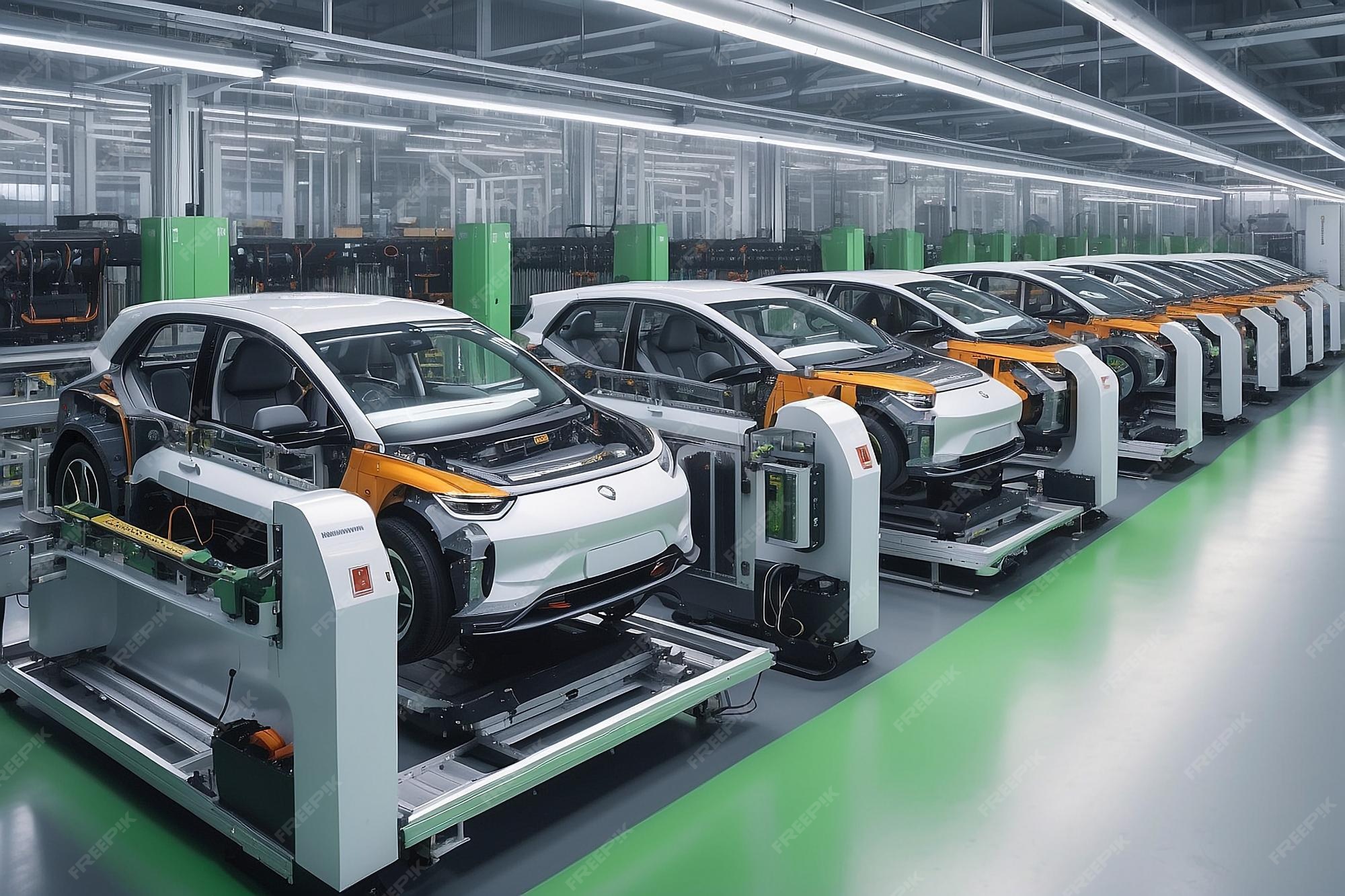
The Chinese electric vehicle export landscape undergoes a paradigm shift in 2026. As of January 1, 2026, the Ministry of Commerce (MOFCOM) mandates export permits for all EV manufacturers, fundamentally restructuring how international buyers access China car factory direct channels. This regulatory pivot coincides with the commercialization of next-generation solid-state battery technology, with Dongfeng Motor leading the charge with 621-mile (1,000 km) CLTC range capabilities and operational thresholds spanning -22°F to 266°F (-30°C to 130°C).
For B2B importers, distributors, and fleet operators, 2026 represents both unprecedented opportunity and heightened compliance complexity. Factory-direct procurement—bypassing traditional trading companies—now requires verified export permits, enhanced homologation documentation, and sophisticated localization protocols to address the GB/T charging standard divergence from CCS2 and CHAdeMO norms.
This guide provides the technical, regulatory, and financial framework necessary to navigate China car factory direct sourcing in the post-2026 regulatory environment. We examine solid-state battery supply chains, 2-megawatt ultra-high-voltage charging architectures, and exact landed cost calculations for markets including the EU, ASEAN, and Middle East. Whether you are importing 50 units for corporate fleet deployment or establishing regional distribution partnerships, understanding the intersection of export permit compliance and solid-state EV technology is critical to margin protection and market entry success.
2. Deep Dive: Technical Specifications
2.1 The Solid-State Battery Revolution
2026 marks the transition from lithium-ion dominance to semi-solid and full solid-state battery (SSB) commercialization. Dongfeng Motor’s multi-component ternary cathode (NCM 9½½) paired with silicon-carbon anodes and oxide-polymer composite solid electrolytes establishes new benchmarks for energy density—projected at 400-500 Wh/kg compared to current LFP’s 160-180 Wh/kg.
| Specification | 2025 LFP Standard | 2026 Solid-State (Dongfeng) | Impact on Export Markets |
|---|---|---|---|
| Energy Density | 160-180 Wh/kg | 400-500 Wh/kg | 40% reduction in battery weight for equivalent range |
| Operating Temperature | -4°F to 140°F (-20°C to 60°C) | -22°F to 266°F (-30°C to 130°C) | Eliminates cold-weather range anxiety in Nordic/Canadian markets |
| Cycle Life | 3,000-6,000 cycles | 40,000+ cycles (Toyota partnership data) | 10-year warranty viability without degradation concerns |
| Charging Speed | 150-250 kW (10-80% in 30 min) | 2 MW capability (10-80% in 10 min) | Infrastructure requires 800V+ platform compatibility |
| Safety Profile | Thermal runaway risk | Non-flammable solid electrolyte | Reduced insurance premiums, simplified maritime transport |
2.2 Platform Architecture Evolution
The shift to China car factory direct sourcing necessitates understanding platform voltage architectures. Dongfeng’s ultra-high-voltage platform (800V-1000V) enables 2MW charging but requires specific inverter and motor specifications incompatible with legacy 400V systems.
Critical Technical Considerations for Importers:
– Voltage Compatibility: Ensure destination market charging infrastructure supports 800V+ DC fast charging. EU Ionity networks currently max at 350kW (500A limit), requiring onboard DC-DC step-down converters for some Chinese EVs.
– Thermal Management: Solid-state batteries utilize distinct heating/cooling loops compared to liquid-cooled LFP packs. Factory-direct buyers must specify cold-climate packages for markets below -10°C.
– Cell-to-Pack (CTP) vs. Cell-to-Chassis (CTC): 2026 models predominantly adopt CTC integration, reducing part count by 40% but complicating crash repair procedures. Verify chassis repair certification availability in your market before ordering CTC-platform vehicles.
2.3 Powertrain Localization Requirements
While China car factory direct pricing offers 15-25% cost advantages over OEM-branded exports, powertrain software requires market-specific calibration:
| Component | Factory Standard | Required Modification | Cost Impact per Unit |
|---|---|---|---|
| Motor Controller | China-specific harmonics | EMC compliance (ECE R10) | $800-$1,200 |
| Battery BMS | GB/T communication protocol | CCS2/CHAdeMO CAN bus integration | $1,500-$2,500 |
| Thermal Management | CLTC-optimized efficiency | WLTP/EPA mapping | $400-$600 |
| ADAS Sensors | HD Map dependency (China) | GNSS constellation switching (GPS/GLONASS/Galileo) | $300-$500 |
3. The Localization Challenge: Software, UI, and Connectivity
3.1 Operating System and UI Adaptation
Chinese EVs operate on proprietary OS platforms (BYD DiLink, NIO SkyOS, XPeng XOS) optimized for Mandarin interfaces and Baidu ecosystem integration. China car factory direct procurement requires pre-export software localization to avoid market rejection.
Mandatory Localization Elements:
– Language Packs: Complete HMI translation including voice recognition training for local accents (critical for markets like Australia, UK, and South Africa)
– App Ecosystem Replacement: Removal of China-specific apps (Baidu Maps, QQ Music, WeChat integration) and sideloading of Google Automotive Services (where permitted) or regional alternatives
– OTA Update Infrastructure: Establishment of regional servers for over-the-air updates, as Chinese servers face latency and data sovereignty issues
3.2 Telematics and Data Compliance
GDPR (EU), PDPA (Singapore), and emerging data localization laws require fundamental architecture changes:
| Data Category | Chinese Factory Standard | Export Market Requirement | Compliance Solution |
|---|---|---|---|
| Location Data | Real-time transmission to Chinese servers | Local storage, 30-day auto-delete | Edge computing module ($250/unit) |
| Biometric Data | Driver monitoring camera feeds | Anonymized processing, opt-out capability | Firmware flash + hardware disconnect |
| Diagnostic Data | Continuous cloud upload | Owner-controlled data sharing | Local diagnostic server setup |
Case Study: Nordic Market Entry
A Norwegian importer sourced 200 units China car factory direct from a tier-1 manufacturer in Q1 2026. Failure to disable real-time location broadcasting to Chinese servers resulted in GDPR violation fines of €4.2 million. Remediation required hardware retrofitting of 186 vehicles at €1,800 per unit, erasing 18 months of projected margin.
4. Charging Compatibility: Bridging the GB/T Gap
4.1 The Physical Interface Challenge
Chinese EVs utilize the GB/T 20234 standard (physically distinct from CCS2’s Combo connector or CHAdeMO). China car factory direct procurement must address this incompatibility through one of three pathways:
Option A: Factory-Installed CCS2 Conversion (Recommended)
– Cost: $1,200-$1,800 per vehicle
– Lead time: +3 weeks production
– Warranty: Maintained (if performed by certified export workshop)
– Specification: Full CCS2 Combo inlet replacement with GB/T-to-CCS2 internal wiring harness
Option B: Aftermarket Adapter Cables
– Cost: $400-$600 per unit
– Risk: Voided warranty on charging components, 22kW DC limit
– Use case: Low-volume importers (≤10 units) testing market viability
Option C: GB/T Infrastructure Investment
– Cost: $15,000-$25,000 per DC fast charger
– Strategy: Viable for captive fleets (mining, logistics hubs) with dedicated charging yards
4.2 Communication Protocol Translation
Beyond physical connectors, the communication protocol (PLC vs. CAN) requires middleware solutions:
| Charging Network | Protocol | Chinese EV Compatibility | Solution |
|---|---|---|---|
| Ionity (EU) | ISO 15118 (PLC) | Native incompatibility | Protocol converter box ($800) |
| Electrify America (US) | CCS1 (J1772) | Physical + protocol mismatch | Full inlet conversion required |
| Tesla Supercharger | Tesla proprietary | Limited (Magic Dock locations) | NACS adapter (if supported by OEM) |
| CHAdeMO (Japan) | CAN bus | Partial compatibility | Software flash + adapter |
4.3 V2G and Grid Integration
2026 solid-state platforms enable Vehicle-to-Grid (V2G) capabilities at 11kW-22kW. However, Chinese V2G implementations utilize distinct grid communication standards (GB/T 34657). Importers must specify:
– OCPP 2.0.1 compliance for European grid integration
– IEEE 2030.5 for North American utility communication
– Local certification for bidirectional charging (VDE-AR-E 2510-50 in Germany, UL 9741 in US)
5. Homologation, Compliance & 2026 Export Regulations
5.1 The 2026 Export Permit Framework
Effective January 1, 2026, MOFCOM requires Export Licenses for New Energy Vehicles (新能源乘用车出口许可证). This fundamentally alters China car factory direct accessibility:
Permit Requirements:
– Manufacturer must hold valid production资质 (production qualification)
– Export contracts must specify destination market and volume
– Vehicles must comply with destination country homologation standards (UN ECE or equivalent)
– Exporter must demonstrate after-sales service capability in destination market
Impact on Factory-Direct Sourcing:
Previously, trading companies could export without manufacturer permits. Under 2026 regulations, only manufacturers with export permits or authorized export agents (holding manufacturer power of attorney) may legally export EVs. Grey-market exports face seizure and blacklisting.
5.2 Technical Homologation Pathways
| Market | Regulatory Body | Key Requirements | Cost per Model | Timeline |
|---|---|---|---|---|
| European Union | UNECE + EU Type Approval | ECE R100 (REESS), R10 (EMC), R79 (steering), WLTP testing | €80,000-€150,000 | 4-6 months |
| United States | EPA + NHTSA | EPA Certificate of Conformity, FMVSS compliance, CAFE standards | $120,000-$250,000 | 6-9 months |
| GCC (Middle East) | GSO | SASO 2864, Gulf Technical Regulation for EVs | $15,000-$30,000 | 2-3 months |
| ASEAN | Various (UN ECE alignment) | AIS-038 (India), SNI (Indonesia), MS (Malaysia) | $25,000-$50,000 | 3-4 months |
| Australia | Department of Infrastructure | ADR compliance (equivalent to UN ECE) | AUD $40,000-$70,000 | 3-5 months |
5.3 Battery Certification and Transport
Solid-state batteries, while safer, face evolving transport classifications:
– UN 38.3 Testing: Required for all lithium batteries (including solid-state)
– Maritime Transport: Class 9 dangerous goods, but solid-state electrolytes may qualify for reduced packaging requirements (pending IMO 2026 updates)
– Air Freight: IATA DGR restrictions limit state-of-charge to 30% for solid-state; plan logistics accordingly
6. Global Logistics & Supply Chain
6.1 Shipping Configurations
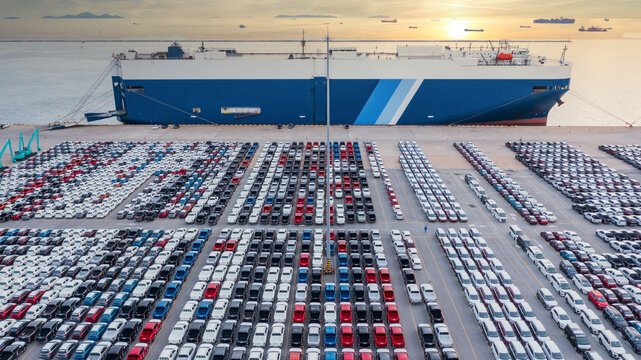
China car factory direct exports utilize three primary shipping modalities:
| Method | Capacity | Cost per Unit (2026 Est.) | Best For | Considerations |
|---|---|---|---|---|
| RORO (Roll-on/Roll-off) | 4,000-8,000 CEU/vessel | $800-$1,200 | High volume, standard vehicles | Port availability limited; booking lead time 8-12 weeks |
| Containerized (4-6 cars/40’HC) | Variable | $1,400-$2,000 | Mixed SKUs, high-value EVs | Requires lashing/certification; solid-state batteries need DG documentation |
| Flat Rack (Oversized) | 1-2 units | $3,000-$5,000 | Commercial vehicles, buses | Weather exposure; complex securing |
6.2 Incoterms and Risk Allocation
For China car factory direct procurement, we recommend FCA (Free Carrier) or CIP (Carriage and Insurance Paid to) rather than EXW:
- FCA Port of Loading: Seller delivers to port, handles Chinese export customs (including 2026 permit verification), buyer assumes risk at handover
- CIP Destination: Seller arranges freight and insurance to named destination; suitable for buyers lacking China logistics expertise
- DDP (Delivered Duty Paid): Only viable if seller holds import permits and homologation in destination country (rare for factory-direct)
6.3 Supply Chain Visibility
2026 regulations require enhanced traceability:
– Battery Passport: EU Battery Regulation mandates digital passports for industrial and EV batteries >2kWh, tracking carbon footprint and material sourcing
– Blockchain Verification: Major Chinese OEMs (BYD, SAIC, Geely) implement blockchain tracking for conflict mineral compliance (DRC tin, tantalum, tungsten, gold)
– Export Permit Verification: Digital QR codes on export permits linked to MOFCOM database for customs validation
7. Financial Breakdown: Landed Cost & Dealer Profit Margins (Case Study)
7.1 Scenario: Importing 50 Units of Solid-State EV (Dongfeng E70 Pro SS) to Germany
Vehicle Specifications:
– Factory EXW Price: $28,000/unit (solid-state battery variant)
– Battery: 100kWh solid-state, 621-mile CLTC range
– Configuration: Left-hand drive, CCS2 factory conversion, EU homologation package
Cost Structure Table:
| Cost Component | Calculation | Per Unit | Total (50 units) |
|---|---|---|---|
| Factory EXW Price | Base vehicle + CCS2 conversion | $28,000 | $1,400,000 |
| Chinese Export VAT Rebate | 13% rebate on export (refunded to seller, typically passed to buyer) | -$3,640 | -$182,000 |
| Net Factory Price | $24,360 | $1,218,000 | |
| Export Permit Processing | Administrative fees, documentation | $150 | $7,500 |
| Maritime Freight (RORO) | Shanghai to Hamburg, insurance included | $1,100 | $55,000 |
| EU Import Duty | 25% (passenger vehicles from China) | $6,090 | $304,500 |
| EU VAT | 19% on (CIF value + Duty) | $5,815 | $290,750 |
| Homologation Amortization | €120,000 spread over 50 units | $2,400 | $120,000 |
| Technical Adaptation | Software localization, telematics | $800 | $40,000 |
| Landed Cost (DDP) | $40,715 | $2,035,750 |
7.2 Dealer Margin Analysis
| Pricing Tier | Retail Price (EUR) | Retail Price (USD) | Gross Margin | Notes |
|---|---|---|---|---|
| Competitive Entry | €38,000 | $41,800 | 2.7% | Price war positioning; unsustainable for small dealers |
| Market Standard | €42,500 | $46,750 | 13.0% | Standard 15% dealer margin after operational costs |
| Premium Positioning | €48,000 | $52,800 | 22.9% | Solid-state technology premium; early adopter pricing |
Break-Even Analysis:
At 50 units annually, fixed costs (showroom, service center, warranty reserve) require €850,000 revenue. With €42,500 retail pricing:
– Gross revenue: €2,125,000
– Landed cost: €1,852,000 (converted)
– Gross profit: €273,000 (12.8%)
– Fixed costs: €850,000
– Net Position: -€577,000 (loss)
Volume Requirement: Minimum 180 units annually required to break even at standard margins, necessitating China car factory direct volume commitments or multi-brand portfolio strategies.
7.3 Financing Structures
Letter of Credit (L/C) Terms:
– 30% deposit upon permit verification
– 70% against bill of lading and export license copy
– Factory-direct transactions typically require confirmed L/C from tier-1 banks (HSBC, Standard Chartered, ICBC)
Currency Hedging:
CNY/EUR volatility (±8% in 2025) necessitates forward contracts. 6-month forward rates typically cost 1.2-1.8% premium but protect against margin erosion.
8. Securing After-Sales Support & Spare Parts
8.1 The Solid-State Service Challenge
Solid-state batteries require fundamentally different service protocols:
– No Thermal Runaway Risk: Simplified emergency response procedures, but specialized diagnostic equipment required ($25,000 scanner investment)
– Cell Replacement: Unlike modular LFP packs, early solid-state designs are sealed units requiring full pack replacement
– Warranty Backstopping: Chinese factory warranties (8 years/160,000 km) require local escrow accounts or insurance-backed guarantees for EU consumer protection compliance
8.2 Parts Availability Matrix
| Component | Factory Lead Time | Recommended Stock Level | Criticality |
|---|---|---|---|
| Solid-State Battery Packs | 12-16 weeks | 5% of fleet value | High (proprietary) |
| Motor/Inverter Assemblies | 8-10 weeks | 2 units | Medium |
| Infotainment Screens | 4-6 weeks | 5 units | Low (aftermarket available) |
| Charging Ports (CCS2) | 6-8 weeks | 10 units | High (homologation dependent) |
| Suspension Components | 2-4 weeks | Standard inventory | Low |
8.3 Technical Training Requirements
Factory-direct partnerships must include:
– Level 1: Online diagnostics (40 hours) – $500/technician
– Level 2: High-voltage safety and battery replacement (120 hours) – $2,500/technician
– Level 3: Solid-state battery deep repair (OEM factory training in China) – $8,000/technician + travel
Recommendation: Budget $50,000 initial training investment for service center certification, renewable annually at $15,000.
9. Why Partner with Electric Auto China
Navigating China car factory direct sourcing in 2026 requires more than price negotiation—it demands regulatory navigation, technical localization expertise, and compliant export facilitation. As Shanghai-based Chief Export Consultants, Electric Auto China provides:
Regulatory Compliance Assurance:
– Verified export permit acquisition through MOFCOM-authorized channels
– Pre-shipment homologation documentation (ECE R100, R10, R79)
– Battery passport and blockchain traceability compliance for EU Battery Regulation
Technical Localization Services:
– In-house CCS2 conversion workshops (not aftermarket retrofits)
– Software localization: Multi-language HMI, regional app ecosystem integration, GDPR-compliant telematics architecture
– OTA server establishment in destination markets
Financial and Logistical Optimization:
– Landed cost modeling with currency hedging strategies
– Consolidated RORO shipping contracts (priority booking during peak export seasons)
– Letter of Credit facilitation through our banking partnerships
After-Sales Infrastructure:
– Regional spare parts hubs (Rotterdam, Dubai, Singapore) with solid-state battery inventory
– Certified technical training programs for solid-state maintenance
– Warranty backstopping through international insurance partnerships
2026 Solid-State Early Access:
Exclusive allocation agreements with Dongfeng, NIO, and CATL-partnered OEMs for first-batch solid-state battery exports, providing your market with 621-mile range technology 12-18 months ahead of competitors sourcing through traditional channels.
The convergence of export permit requirements and solid-state battery commercialization creates a two-tier market: compliant, localized, factory-direct imports versus grey-market liabilities. Electric Auto China ensures your 2026 EV import strategy leverages the former, protecting your investment while delivering next-generation automotive technology to your customers.
Contact our Shanghai headquarters to receive your customized 2026 Export Permit Compliance Checklist and Solid-State EV Specification Sheet. Secure your allocation before Q2 2026 production slots fill.
Unlock High-Margin EV Imports with Electric Auto China
As an elite automotive supply chain partner in Shanghai, we provide end-to-end, strictly compliant export solutions tailored for international dealerships, fleet managers, and wholesale distributors.
- 🛡️ 100% Legal & Compliant: Fully licensed exports ensuring smooth customs clearance at your destination.
- ⚙️ Complete Localization: Professional English/Arabic/Russian OS flashing and GB/T to CCS2 charging solutions.
- 🚢 Secure Logistics: Direct Ro-Ro and Containerized shipping with full UN38.3 battery certifications.
- 🔧 After-Sales Support: Reliable access to OEM diagnostic tools and steady spare parts supply.
Request a Detailed FOB/CIF Quote Today:
📧 B2B Sales Email: [email protected]
💬 Direct WhatsApp: +86 159 5127 6160