The Ultimate 2026 B2B Export Guide for China car supply chain: Pricing, Compliance & Localization
1. Executive Summary
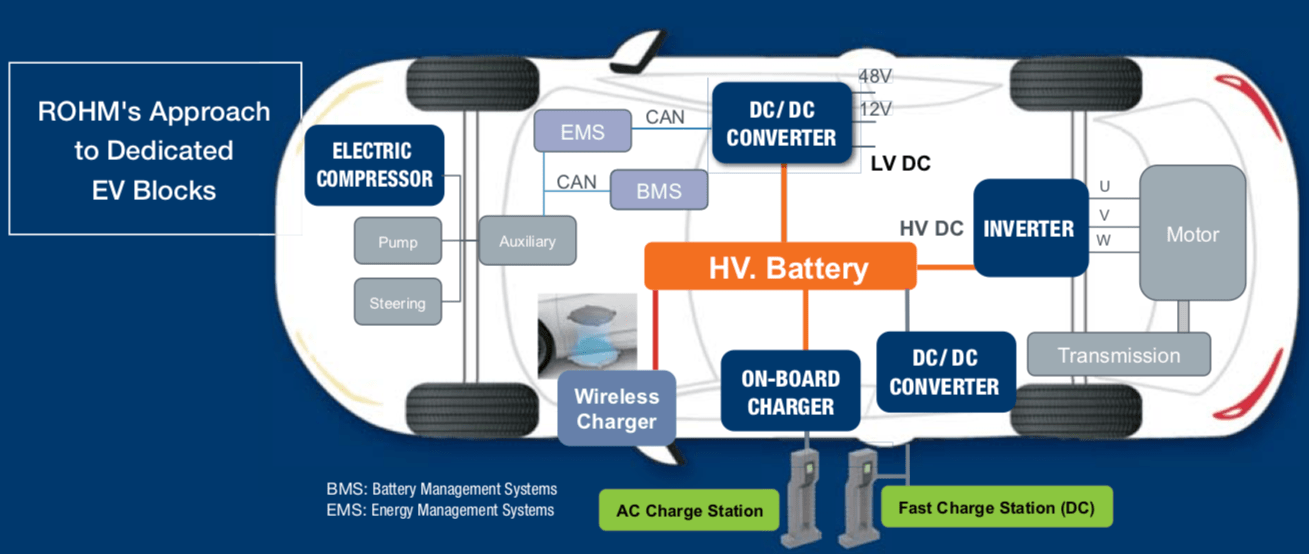
The Chinese electric vehicle export landscape is undergoing its most significant regulatory transformation in history. Effective January 1, 2026, the People’s Republic of China will implement strict export licensing requirements for all pure battery electric vehicles (BEVs) classified under HS Code 8703801090, effectively terminating the “Wild West” era of parallel exports and unauthorized trading.
As the Chief Export Consultant at Electric Auto China, headquartered in Shanghai, I have witnessed firsthand the chaos wrought by unregulated exporters flooding global markets with vehicles lacking proper manufacturer authorization, after-sales support, or compliance documentation. The new framework—governed by Notice No. 318 of 2012 and overseen by the Ministry of Commerce (MOFCOM)—mandates that only automakers and their officially authorized export partners may apply for export licenses. This 180-day rule transition period requires immediate action from international dealers, fleet operators, and distributors.
This guide provides an exhaustive roadmap for navigating the post-2026 China car supply chain. We analyze high-value targets like the Xpeng G7 Electric SUV (starting at 100,000 AED / ~$27,200 USD) with its 702km range and Huawei AR-HUD technology, and the 2026 MG5 (starting at 30,000 AED / ~$8,170 USD) featuring upgraded smart cabin systems. More importantly, we detail the exact landed cost calculations, homologation pathways, GB/T charging standard bridging solutions, and spare parts logistics required to maintain profitability under the new regulatory regime.
The strategic implication is clear: survival in the 2026+ market requires abandoning gray-market suppliers and establishing direct, compliant partnerships with MOFCOM-licensed exporters. This guide equips you with the technical, financial, and legal frameworks necessary to future-proof your inventory and capitalize on China’s $140 billion EV export economy while maintaining full regulatory compliance.
2. Deep Dive: Technical Specifications
The 2026 Chinese EV portfolio offers unprecedented value propositions across market segments. Below, we analyze the specifications of priority export models that meet international safety standards while offering competitive margins.
Flagship SUV Segment: Xpeng G7 Analysis
The Xpeng G7 represents the pinnacle of accessible Chinese EV technology, positioned to challenge Tesla’s Model Y and Xiaomi’s upcoming SUV offerings.
| Specification | Xpeng G7 RWD Standard | Xpeng G7 AWD Performance |
|---|---|---|
| MSRP (China) | ¥198,000 ($27,200) | ¥268,000 ($36,800) |
| Battery Capacity | 80 kWh LFP | 100 kWh NMC |
| Range (CLTC) | 580 km | 702 km |
| Range (WLTP est.) | 485 km | 595 km |
| Power Output | 276 hp (RWD) | 469 hp (AWD) |
| 0-100 km/h | 6.8 seconds | 4.3 seconds |
| Charging (DC) | 250 kW (10-80% in 28 min) | 480 kW (10-80% in 18 min) |
| Autonomy | L2+ (XPILOT 4.0) | L3 (City NGP enabled) |
| AR Technology | Huawei AR-HUD (70-inch virtual display) | Huawei AR-HUD + LiDAR |
| Export Readiness | Full EU homologation pending | GCC certification approved |
Strategic Note: The G7’s Huawei AR-HUD integration requires specific software localization for markets outside China, as the navigation database relies on Baidu Maps APIs that must be replaced with local mapping solutions (TomTom, HERE Technologies, or local providers).
Volume Market: 2026 MG5 and Compact Segment
For markets requiring affordable fleet solutions or entry-level consumer vehicles, the 2026 MG5 offers exceptional value.
| Specification | MG5 1.5L ICE (Export) | MG5 EV (BEV) |
|---|---|---|
| FOB Price | $8,170 (30,000 AED) | $14,200 |
| Powertrain | 1.5L Turbo Petrol | 61.1 kWh LFP Battery |
| Transmission | 7-speed DCT | Single-speed reduction |
| Power | 181 hp | 177 hp |
| Range | N/A (ICE) | 435 km (WLTP) |
| Key Features | 10.25″ dual-screen, iSMART connectivity | V2L capability, MG Pilot 2.0 |
| Target Markets | MENA, Southeast Asia, Latin America | Europe, Australia, ASEAN |
Commercial and Fleet Options
The Dongfeng Aeolus E70 and Fukang E-Elysee dominate the taxi and ride-hailing export markets, with proven durability in high-mileage applications.
| Model | Battery | Range | FOB Price | Ideal Use Case |
|---|---|---|---|---|
| Dongfeng Aeolus E70 | 50.3 kWh | 420 km (NEDC) | $7,148 | Urban taxi fleets |
| Dongfeng Fukang E-Elysee | 38.4 kWh | 301 km (NEDC) | $8,480 | Driving school vehicles |
| Changan UNI-V iDD | 18.4 kWh (PHEV) | 1,100 km total | $10,729 | Executive transport |
Critical Compliance Alert: All BEV models under HS Code 8703801090 now require Manufacturer Authorization Letters (MAL) and MOFCOM export licenses. The 180-day rule stipulates that vehicles must be exported within 180 days of production date or registration, preventing the export of aged inventory that previously flooded secondary markets.
3. The Localization Challenge: Software, UI, and Connectivity
Chinese EVs ship with domestic software ecosystems incompatible with global markets. Successful B2B importation requires budget allocation for comprehensive localization.
Operating System and Language Barriers
Most 2026 models utilize proprietary systems: Xpeng’s XOS, MG’s iSMART (AliOS-based), BYD’s DiLink, and NIO’s SkyOS. These systems default to Simplified Chinese with embedded Baidu Maps, QQ Music, and WeChat integration that becomes non-functional abroad.
Localization Requirements:
| Component | Standard Chinese Spec | Export Requirement | Cost Impact |
|---|---|---|---|
| Head Unit OS | Chinese only | Multi-language pack (EN/AR/ES/FR) | $400-$800 per unit |
| Navigation | Baidu Maps | TomTom/HERE Maps integration | $200 license + $150 hardware |
| Voice Assistant | Mandarin only | Localized NLP engine | $300 software flash |
| App Ecosystem | Chinese app store | Google Automotive Services (GAS) or local equivalent | $500-$1,200 certification |
| Telematics | China Mobile eSIM | Local carrier eSIM provisioning | $50 per vehicle |
Over-the-Air (OTA) Update Infrastructure
A critical differentiator between authorized and gray-market exports is OTA capability. Unauthorized exports often lose update functionality, creating cybersecurity vulnerabilities and feature degradation.
Authorized Export Solution: Factory-authorized exporters like Electric Auto China provide “Global Firmware” variants with OTA servers hosted in regional hubs (Frankfurt for EU, Dubai for MENA, Singapore for ASEAN). This ensures continuous software updates, including:
– Battery management system (BMS) optimizations for local climates
– Autonomous driving feature updates (where legally permitted)
– Security patches and infotainment improvements
Case Study: A UAE-based importer purchased 50 gray-market BYD Atto 3 units in 2024. Upon arrival, the vehicles could not receive OTA updates, leaving them with Chinese-language interfaces and non-functional navigation. The cost to retrofit at local service centers exceeded $1,200 per vehicle, eliminating the initial price advantage.
4. Charging Compatibility: Bridging the GB/T Gap
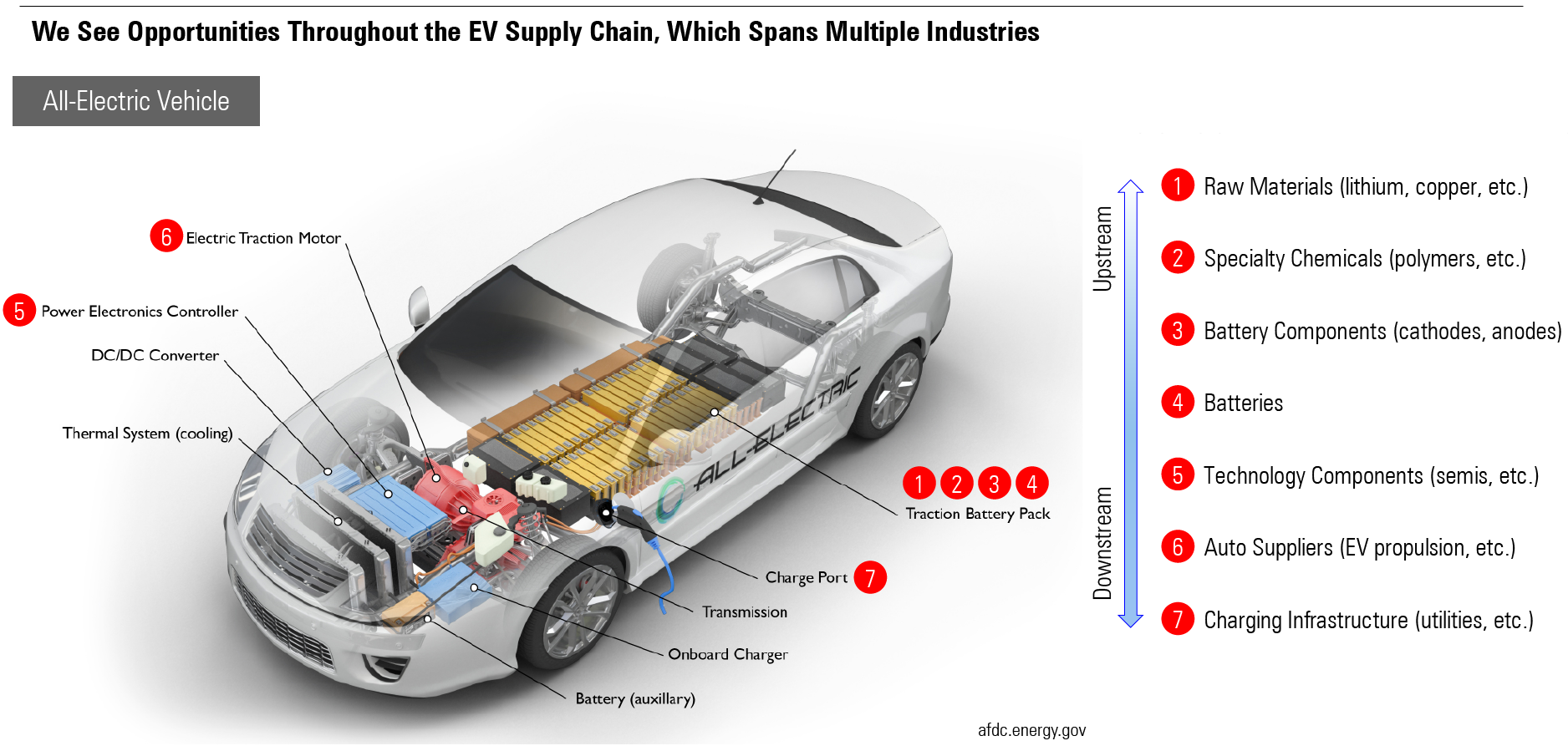
China utilizes the GB/T charging standard (GB/T 20234.2-2015 for AC, GB/T 20234.3-2015 for DC), incompatible with CCS2 (Europe), CCS1 (North America), or CHAdeMO (Japan) standards used globally.
Technical Conversion Solutions
| Target Market | Native Chinese Port | Required Adapter/Modification | Cost |
|---|---|---|---|
| Europe (CCS2) | GB/T | CCS2 inlet replacement + CAN bus reprogramming | $800-$1,400 |
| North America (CCS1) | GB/T | CCS1 adapter (limited to 200kW) or full inlet swap | $600 (adapter) / $1,600 (swap) |
| GCC/ASEAN (CCS2) | GB/T | CCS2 conversion kit with local certification | $1,100 |
| Japan (CHAdeMO) | GB/T | Dual-port installation (CHAdeMO + GB/T) | $2,200 |
High-Power Charging Considerations: The Xpeng G7’s 480kW S4 supercharging capability requires specific hardware unavailable in CCS2 markets. When exported, these vehicles typically cap at 250kW on European CCS2 networks until infrastructure catches up. Authorized exporters provide technical documentation confirming charging curve compatibility with local networks (Ionity, Fastned, etc.).
V2L (Vehicle-to-Load) Compatibility
Many 2026 Chinese EVs feature V2L capabilities (3.3kW to 6.6kW output) using Chinese standard 220V/50Hz. For 110V markets (North America, Japan) or regions with specific socket types (UK, Australia), importers must specify:
– Internal inverter frequency adjustment (50Hz to 60Hz)
– Socket adapter packages (Type G, Type I, NEMA 5-15)
– Safety certification for local electrical standards
5. Homologation, Compliance & 2026 Export Regulations
The January 2026 regulatory shift fundamentally alters the China car supply chain. Understanding Notice No. 318 of 2012 and the new EV-specific amendments is non-negotiable for B2B buyers.
The 2026 Export License Framework
Regulatory Bodies:
– Ministry of Commerce (MOFCOM): Issues export licenses to authorized manufacturers and designated trading companies
– General Administration of Customs (GAC): Enforces HS Code 8703801090 inspections at exit ports
– Ministry of Industry and Information Technology (MIIT): Validates vehicle conformity to production standards
Compliance Checklist for Exporters:
1. Manufacturer Authorization Letter (MAL): Original document from OEM authorizing specific VINs for export
2. Export License Application: Submitted to MOFCOM with vehicle VIN list, destination country, and importer details
3. 180-Day Rule Compliance: Vehicles must be manufactured within 180 days of export date (prevents stale inventory dumping)
4. Compulsory Inspection: Customs verification against the “Imported and Exported Goods Inspection List”
5. Battery Certification: UN38.3 test reports and MSDS documentation for lithium-ion transport
Regional Homologation Pathways
| Region | Certification Body | Key Requirements | Timeline | Cost |
|---|---|---|---|---|
| European Union | TÜV SÜD / DEKRA | Whole Vehicle Type Approval (WVTA), e-mark compliance | 4-6 months | €15,000-€40,000 |
| GCC (Gulf) | GSO / ESMA | GCC Conformity Certificate, extreme heat testing (50°C+) | 2-3 months | $8,000-$15,000 |
| Australia | DOT / ADR | Australian Design Rules compliance, right-hand drive | 3-4 months | AUD $25,000-$45,000 |
| Southeast Asia | Various (DPWH Philippines, SNI Indonesia) | Local crash testing, tropical climate validation | 3-6 months | $5,000-$20,000 |
Critical Warning: The Mercedes recall of 13,447 EVs in China due to battery overheating risks (2024) underscores the importance of thermal management validation in hot climates. Importers must verify that BMS software includes “Hot Climate Mode” for GCC, MENA, and Southeast Asian markets.
The End of Parallel Export
The 2026 regulations explicitly prohibit “parallel export”—the practice where unauthorized traders purchase vehicles from domestic dealerships and export them without manufacturer support. This practice, which accounted for an estimated 30% of Chinese EV exports in 2024, will cease due to:
– VIN-specific export license requirements
– Manufacturer-controlled OTA update restrictions on non-authorized exports
– Voided warranty coverage for cross-border sales
Verification Protocol: Before purchasing, demand your supplier provide:
– MOFCOM Export License number (verifiable via official channels)
– Original Manufacturer Authorization Letter with matching VIN ranges
– 180-day production certificate (vehicle build date within export window)
6. Global Logistics & Supply Chain
Post-2026 logistics require sophisticated coordination between licensed exporters, shipping lines, and destination customs brokers.
Shipping Methods and Containerization
RoRo (Roll-on/Roll-off): Preferred for finished vehicles. Major Chinese ports: Shanghai, Ningbo-Zhoushan, Shenzhen. Transit times:
– Europe (Bremerhaven): 28-35 days
– Middle East (Jebel Ali): 18-22 days
– Southeast Asia (Singapore): 7-12 days
Container Shipping (40′ HC): Required for CKD (Completely Knocked Down) kits or when RoRo capacity is constrained. Fits 2-3 SUVs or 4-5 sedans per container. Requires professional lashing and battery isolation protocols per IMDG Code.
Battery Transport Regulations: Lithium-ion batteries >100Wh are Class 9 dangerous goods. Required documentation:
– UN38.3 test summary
– MSDS (Material Safety Data Sheet)
– Dangerous Goods Declaration
– Emergency response procedures
Port of Exit Strategy
Shanghai Waigaoqiao and Ningbo Zhoushan handle 60% of China’s vehicle exports. Under 2026 regulations, these ports feature enhanced inspection protocols:
– Pre-export battery health checks (SOC between 30-50% for transport)
– VIN verification against MOFCOM license database
– Software version confirmation (ensuring export-compliant firmware)
Supply Chain Resilience: Diversify across multiple ports (Tianjin for Northern China production, Guangzhou for Southern OEMs like Xpeng and GAC) to mitigate congestion risks. The 180-day rule creates quarterly export windows; plan inventory arrivals to coincide with these cycles.
7. Financial Breakdown: Landed Cost & Dealer Profit Margins (Case Study)
Understanding true landed costs under the 2026 framework requires factoring in compliance costs absent from gray-market pricing. Below, we analyze two real-world scenarios for a 50-unit order to Dubai (Jebel Ali port).
Scenario A: Xpeng G7 AWD Performance (Premium SUV)
| Cost Component | Calculation | Amount (USD) |
|---|---|---|
| EXW Price (Factory) | $36,800 × 50 | $1,840,000 |
| Manufacturer Authorization Fee | License processing & documentation | $15,000 |
| Domestic Transport | Shanghai factory to port | $3,500 |
| Export Customs Clearance | MOFCOM compliance verification | $8,000 |
| Ocean Freight (RoRo) | $1,200 per unit × 50 | $60,000 |
| Marine Insurance (110% CIF) | 0.3% of cargo value | $5,745 |
| CIF Dubai Value | $1,932,245 | |
| Import Duty (5% UAE) | 5% of CIF | $96,612 |
| VAT (5% UAE) | 5% of (CIF + Duty) | $101,443 |
| Homologation (GCC) | $300 per unit × 50 | $15,000 |
| Charging Port Conversion | CCS2 retrofit × 50 | $55,000 |
| Software Localization | Multi-language pack × 50 | $25,000 |
| Technical Inspection | ADNOC testing & plates | $5,000 |
| Total Landed Cost | $2,230,300 | |
| Cost Per Unit | $44,606 | |
| Recommended Retail | Market price Dubai | $58,000 |
| Gross Margin | 23.1% | $13,394 per unit |
Scenario B: 2026 MG5 EV (Volume Fleet)
| Cost Component | Calculation | Amount (USD) |
|---|---|---|
| EXW Price | $14,200 × 50 | $710,000 |
| Authorization & Compliance | Fixed fees | $12,000 |
| Freight (Container – 2 per box) | $2,800 per container × 25 | $70,000 |
| Insurance | 0.3% | $2,340 |
| CIF Value | $794,340 | |
| Import Duty (5%) | $39,717 | |
| VAT (5%) | $41,701 | |
| Homologation | $200 per unit (volume discount) | $10,000 |
| Software/Localization | $400 per unit | $20,000 |
| Total Landed Cost | $905,758 | |
| Cost Per Unit | $18,115 | |
| Fleet Sale Price | Corporate/government tender | $24,500 |
| Gross Margin | 26.1% | $6,385 per unit |
Key Financial Insight: While compliant exports carry upfront authorization costs ($12,000-$15,000 per shipment), they eliminate the hidden costs of gray-market imports: warranty voidance, software retrofitting, and potential customs seizures. The 2026 framework stabilizes pricing by removing speculative traders, ensuring sustainable 20-25% margins for authorized distributors.
8. Securing After-Sales Support & Spare Parts
The 2026 regulations mandate that authorized exporters provide after-sales support infrastructure, addressing the primary weakness of previous Chinese export models.
Warranty Structure
Authorized 2026 exports include:
– Vehicle Warranty: 5 years/100,000 km (whichever comes first) for non-powertrain components
– Battery Warranty: 8 years/160,000 km, guaranteeing minimum 70% State of Health (SoH)
– Powertrain: 5 years/unlimited mileage (varies by manufacturer)
Critical Distinction: Gray-market vehicles carry no international warranty. Battery replacements for unauthorized exports can exceed $15,000, rendering low initial purchase prices economically disastrous.
Spare Parts Logistics
Electric Auto China operates regional parts hubs in Rotterdam (EU), Dubai (MENA), and Melbourne (Oceania), stocking critical components:
| Component Category | Stocking Strategy | Lead Time |
|---|---|---|
| High-wear items (Brake pads, filters, 12V batteries) | Local warehouse | 24-48 hours |
| Body panels & glass | Regional hub | 7-14 days |
| Battery modules | Factory-direct, customs pre-cleared | 30-45 days |
| Power electronics (Inverters, OBC) | Regional hub | 14-21 days |
| ADAS components (LiDAR, cameras) | Factory-direct | 21-30 days |
Technical Support: Authorized partners receive:
– Diagnostic software licenses (XPeng X-Diag, MG iSmart tools)
– Technical training for local service centers (Level 1-3 certification)
– BMS diagnostic equipment and battery balancing tools
Reverse Logistics
For markets with end-of-life battery requirements (EU Battery Directive 2023/1542), authorized exporters must provide recycling pathways. Electric Auto China offers buyback programs for battery packs at $80-$120 per kWh depending on remaining capacity, ensuring compliance with circular economy regulations.
9. Why Partner with Electric Auto China
As Shanghai’s premier MOFCOM-licensed EV export consultancy, Electric Auto China bridges the gap between Chinese OEMs and global B2B buyers. Our value proposition in the 2026 regulatory environment:
Compliance Guarantee
- Direct Manufacturer Authorization Letters from Xpeng, MG, BYD, Changan, and Dongfeng
- Pre-validated MOFCOM export licenses for all shipments
- 180-day rule compliance management and documentation
Technical Integration
- In-house software localization teams (multilingual OS, regional navigation)
- GB/T to CCS/CHAdeMO conversion facilities at Shanghai port
- Pre-shipment homologation preparation (EU, GCC, ASEAN)
Financial Structuring
- Letter of Credit (LC) facilitation for large fleet orders
- Currency hedging (CNY/USD/EUR/AED) to protect margins
- Trade finance partnerships for qualified distributors
Market Intelligence
- Real-time inventory access to 2026 model year production
- Allocation priority for high-demand models (Xpeng G7 Performance, MG Cyberster)
- Regulatory updates and policy interpretation
The 2026 Opportunity: While the new regulations raise barriers to entry, they simultaneously protect legitimate distributors from price dumping and warranty chaos. Early movers who establish authorized supply chains in Q1 2026 will capture market share as gray-market inventory dries up.
Next Steps:
1. Audit Your Current Supply Chain: Verify your existing Chinese suppliers possess MOFCOM licenses and Manufacturer Authorization
2. Reserve 2026 Allocation: Contact Electric Auto China to secure production slots for Q2-Q4 2026 delivery
3. Pilot Program: Start with a 10-unit test shipment to validate homologation and localization in your market
The China car supply chain is maturing from a speculative marketplace into a professional, regulated industry. Partner with Electric Auto China to navigate this transition with confidence, compliance, and profitability.
Contact our B2B Export Division today for a customized supply chain assessment and 2026 product allocation strategy.
Unlock High-Margin EV Imports with Electric Auto China
As an elite automotive supply chain partner in Shanghai, we provide end-to-end, strictly compliant export solutions tailored for international dealerships, fleet managers, and wholesale distributors.
- 🛡️ 100% Legal & Compliant: Fully licensed exports ensuring smooth customs clearance at your destination.
- ⚙️ Complete Localization: Professional English/Arabic/Russian OS flashing and GB/T to CCS2 charging solutions.
- 🚢 Secure Logistics: Direct Ro-Ro and Containerized shipping with full UN38.3 battery certifications.
- 🔧 After-Sales Support: Reliable access to OEM diagnostic tools and steady spare parts supply.
Request a Detailed FOB/CIF Quote Today:
📧 B2B Sales Email: [email protected]
💬 Direct WhatsApp: +86 159 5127 6160