The Ultimate 2026 B2B Export Guide for China electric car: Pricing, Compliance & Localization
1. Executive Summary
The global electric vehicle landscape has undergone a seismic shift. As of 2026, Chinese manufacturers control over 60% of worldwide EV production, delivering cutting-edge battery technology, autonomous driving capabilities, and price points that render traditional OEMs uncompetitive. For international B2B buyers—whether fleet operators, dealership groups, or specialized import consultancies—the opportunity to source China electric car inventory has never been more compelling, nor more complex.
Effective January 1, 2026, the People’s Republic of China implemented a mandatory export permit system for electric vehicles through the Ministry of Commerce (MOFCOM). This regulatory evolution, coupled with revised Harmonized System (HS) codes that now classify non-used, VIN-coded electric vehicles under Item 43 with specific tungsten-doped alloy classifications for battery components, fundamentally alters the procurement landscape. No longer can foreign buyers rely on informal brokerage channels; compliance now requires verified partnerships with licensed exporters possessing explicit MOFCOM authorization.
Simultaneously, the 2026 model year introduces unprecedented technical sophistication. Vehicles such as the NIO ET7 with its 150kWh semi-solid state battery delivering 400+ miles WLTP range, the BYD Seal featuring Blade Battery technology with 354-mile capability, and the XPeng P7 with NVIDIA DRIVE Orin-powered autonomous systems represent generational leaps in automotive engineering. These vehicles arrive at price points 30-40% below European equivalents, with entry-level models like the BYD Dolphin starting at approximately £26,000 and luxury flagships such as the Hongqi E-HS9 commanding £100,000+.
This guide serves as your definitive roadmap to navigating the 2026 China electric car export ecosystem. We examine technical specifications critical for market differentiation, the intricate localization requirements for right-hand-drive (RHD) markets like the UK, charging infrastructure compatibility solutions, rigorous homologation protocols including the new export permit framework, logistics optimization strategies, and precise landed cost calculations essential for margin preservation.
2. Deep Dive: Technical Specifications
Understanding the technical matrix of 2026 Chinese EVs is fundamental to inventory selection. The current generation represents a convergence of 800V electrical architectures, lithium iron phosphate (LFP) and semi-solid state battery chemistries, and vehicle-to-load (V2L) bidirectional charging capabilities.
2.1 Flagship Model Technical Comparison
The following table details specifications for models dominating B2B procurement channels in Q1 2026:
| Model | Segment | Battery Capacity | WLTP Range | Power Output | 0-62 mph | Charging (Peak) | Platform Voltage |
|---|---|---|---|---|---|---|---|
| BYD Seal | Executive Sedan | 82.5 kWh | 354 miles | 523 hp (AWD) | 3.8s | 150 kW DC | 800V |
| NIO ET7 | Luxury Sedan | 150 kWh (Semi-solid) | 435 miles | 483 hp (Dual Motor) | 3.9s | 500 kW (Swap) | 400V |
| XPeng P7 | Smart Sedan | 80.9 kWh | 341 miles | 469 hp (AWD Perf) | 4.3s | 175 kW DC | 400V |
| MG4 EV | Compact Hatch | 64 kWh | 281 miles | 281 hp (XPower) | 3.8s | 140 kW DC | 400V |
| Hongqi E-HS9 | Luxury SUV | 120 kWh | 329 miles | 551 hp (Dual Motor) | 4.8s | 140 kW DC | 400V |
| BYD Dolphin Surf | City Hatch | 44.9 kWh | 265 miles | 201 hp | 7.0s | 60 kW DC | 400V |
2.2 Battery Technology Differentiation
BYD Blade Battery (LFP): Utilizing cell-to-pack technology, these batteries offer exceptional thermal stability, with nail penetration tests showing no thermal runaway. For B2B buyers, this translates to reduced insurance premiums and enhanced fleet safety profiles.
NIO Solid-State Hybrid: The 150kWh battery option represents the first mass-produced semi-solid state application, achieving 360 Wh/kg energy density. Critically for international buyers, NIO’s Battery-as-a-Service (BaaS) model allows for separation of battery cost from vehicle purchase, potentially reducing import duty liabilities in certain jurisdictions where battery leasing structures are recognized.
CATL Qilin (XPeng/MG): Third-generation cell-to-pack architecture delivers 255 Wh/kg with improved thermal management, supporting sustained high-speed charging without degradation.
2.3 Autonomous Driving Hardware
2026 models feature hardware suites requiring careful evaluation for local software activation:
- XPeng P7: 11 cameras, 5 millimeter-wave radars, 12 ultrasonic sensors, dual NVIDIA Orin-X chips (508 TOPS)
- NIO ET7: Aquila Super Sensing system with 1 LiDAR, 11 cameras, 5 radars, 12 ultrasonic sensors, 4 NVIDIA Orin chips (1,016 TOPS)
- BYD Seal: DiPilot 300 system with 5 cameras, 5 radars, 12 ultrasonic sensors, Horizon Robotics Journey 5 chip (128 TOPS)
B2B Procurement Note: Hardware capability often exceeds software activation in export markets. Ensure your supplier provides explicit confirmation of ADAS feature availability for destination markets, as Chinese-market software configurations may not transfer.
3. The Localization Challenge: Software, UI, and Connectivity
Exporting China electric car inventory requires comprehensive digital localization—a process frequently underestimated by first-time importers. Unlike traditional internal combustion vehicles, modern EVs function as software-defined transportation platforms requiring ecosystem integration.
3.1 Interface and Language Localization
Critical Path Items:
– Head Unit Translation: Mandarin-to-English (or target language) conversion must extend beyond menu labels to include voice command recognition. The 2026 NIO ET7, for example, requires 40+ hours of linguistic training data for its NOMI assistant to function in UK English.
– Regulatory Font Compliance: EU and UK regulations mandate specific font sizes for warning messages; Chinese domestic software often utilizes character-optimized layouts incompatible with Latin alphabet display requirements.
– Unit Conversion: Metric to Imperial toggle (mph, miles, Fahrenheit) requires CAN bus protocol adjustments, not merely software overlays.
3.2 Connectivity and Telematics
Chinese EVs rely heavily on 4G/5G connectivity for OTA updates, remote diagnostics, and feature activation. Export models require:
- Server Migration: Migration from Alibaba Cloud or Tencent Cloud to AWS/Azure regional servers for GDPR compliance (EU/UK)
- eSIM Localization: Replacement of China Mobile/Unicom eSIMs with local carrier partnerships (Vodafone, EE, O2 for UK)
- App Ecosystem: Development of international versions of proprietary apps (NIO, BYD, XPeng) with local payment gateway integration
Cost Implication: Comprehensive localization for a single model variant ranges from £15,000 to £45,000 depending on telematics complexity, typically amortized across minimum order quantities (MOQ) of 50+ units.
3.3 Right-Hand Drive Conversion
For UK, Australian, Japanese, and Southeast Asian markets, RHD conversion presents the most significant mechanical localization challenge:
| Component | Conversion Requirement | Cost per Unit (GBP) |
|---|---|---|
| Dashboard Assembly | Complete replacement with mirrored IP | £2,800 |
| Steering Rack | RHD-specific rack-and-pinion | £1,200 |
| Pedal Box | Relocation/modification | £400 |
| HVAC Ducting | Mirrored ventilation channels | £600 |
| Wiring Loom | Modified for RHD switchgear | £800 |
| Headlights | LHD to RHD beam pattern adjustment | £300 |
| Total | £6,100 |
Strategic Recommendation: Negotiate factory-level RHD production rather than aftermarket conversion. BYD, MG, and NIO now offer factory RHD for export markets, reducing per-unit costs to £400-£800 (primarily software and minor trim differences).
4. Charging Compatibility: Bridging the GB/T Gap
The divergence between China’s GB/T charging standards and Europe’s CCS2/Type 2 infrastructure represents a critical operational consideration for B2B buyers.
4.1 Technical Standards Analysis
| Standard | AC Charging | DC Charging | Communication Protocol |
|---|---|---|---|
| GB/T (China Domestic) | 7-11 kW (Type 2 physical) | 250 kW max (unique CAN) | GB/T 27930 |
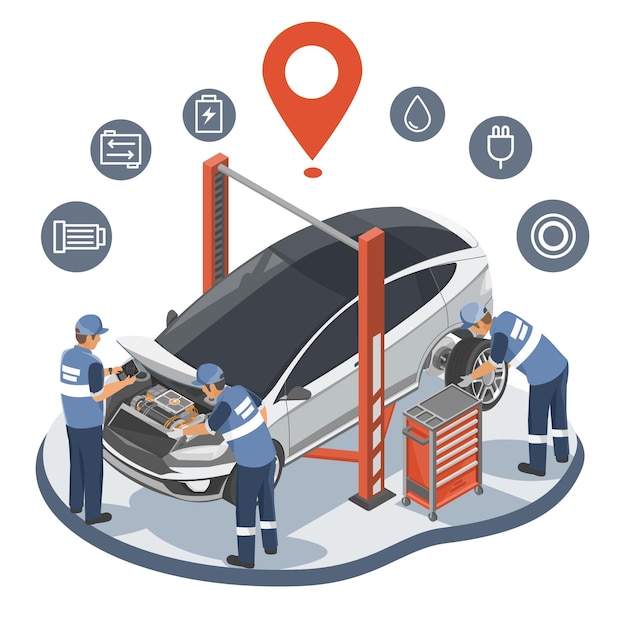
| CCS2 (EU/UK) | 22 kW Type 2 | 350 kW max (Combo 2) | ISO 15118 (PLC) |
| Type 2 (AC only) | 22 kW | N/A | IEC 61851 |
4.2 Adapter Solutions
For 2026 export models, three compatibility strategies exist:
Strategy A: Factory CCS2 Retrofit (Recommended)
Manufacturers including BYD and MG now offer CCS2-compliant charging ports for export markets at the factory level. This requires:
– Replacement of GB/T DC inlet with CCS2 Combo inlet
– Protocol converter for ISO 15118 communication
– Software calibration for CCS2 handshake sequences
Cost: £800-£1,200 per unit (factory fitted)
Strategy B: GB/T to CCS2 Adapter Cable
Aftermarket adapters allowing GB/T-equipped vehicles to charge at CCS2 stations:
– Limitation: Typically limited to 200kW DC (vs. 350kW native CCS2 capability)
– Compatibility: Does not resolve AC charging physical incompatibility (requires separate Type 2 cable)
– Cost: £400-£600 per unit
Strategy C: Dual-Port Configuration
Some fleet-specialist exporters offer vehicles with both GB/T and CCS2 ports, allowing utilization of Chinese charging infrastructure during transit/storage and destination infrastructure upon arrival.
Cost: £1,800-£2,400 per unit
4.3 NIO Battery Swap Infrastructure
For NIO models specifically, the Power Swap Network presents unique opportunities:
– Swap Station Compatibility: 2026 European stations utilize standardized battery packs identical to Chinese units
– BaaS Economics: Battery leasing reduces upfront capital expenditure by £8,000-£12,000 per vehicle
– Fleet Applications: Swap capability eliminates charging downtime for commercial fleets, achieving sub-5-minute “refueling”
Infrastructure Requirement: B2B buyers establishing NIO fleets must negotiate swap station access agreements separately from vehicle procurement, typically requiring minimum fleet commitments of 100+ vehicles for dedicated station access.
5. Homologation, Compliance & 2026 Export Regulations
The regulatory landscape for China electric car exports underwent fundamental restructuring in 2026, necessitating rigorous compliance protocols.
5.1 The 2026 Export Permit System
Effective January 1, 2026, MOFCOM Regulation [2025] No. 47 mandates that all electric vehicle exports require specific export licenses under the “Automatic Licensing” category. Key provisions:
Permit Requirements:
– Manufacturer must hold valid New Energy Vehicle Production Qualification (新能源汽车生产资质)
– Export permit application must specify destination market and VIN range
– Annual export volume caps based on domestic sales ratios (typically 1:1 for emerging manufacturers, unrestricted for established exporters like BYD, SAIC, Geely)
B2B Buyer Verification Protocol:
1. Request MOFCOM Export License Number (格式: 2026年第XX号)
2. Verify license scope includes specific model variants (VIN prefix validation)
3. Confirm license validity period covers intended shipment dates
Critical Update: The 2026 HS Code revisions classify EVs under Item 43 with specific subcategories for tungsten-doped alloy battery components (cathode materials). This affects:
– Export tax rebate rates (currently 13% VAT rebate for EVs)
– Customs declaration requirements for battery chemical composition disclosure
5.2 European/UK Homologation
Whole Vehicle Type Approval (WVTA):
Export to EU/UK requires compliance with:
– UN ECE Regulations: R100 (REESS safety), R10 (EMC), R79 (steering), R94/R95 (crash safety)
– Cybersecurity: UN R155 and R156 compliance mandatory for 2026 models, requiring SUMS (Cyber Security Management System) and software update management system certification
– GDPR: Telematics data handling compliance for connected vehicles
UK Conformity Assessment:
Post-Brexit, the UKCA marking replaces CE marking for Great Britain (England, Scotland, Wales). However, Northern Ireland maintains CE marking under the Windsor Framework. B2B buyers must ensure:
– IVA (Individual Vehicle Approval) for small volume imports (<1,000 units/year)
– NSSTA (National Small Series Type Approval) for medium volumes (1,000-10,000 units/year)
– Full WVTA for volume imports
Cost Structure:
– IVA testing: £1,200-£1,800 per vehicle variant
– NSSTA: £45,000-£65,000 per type (amortized across production run)
– R155/R156 certification: £85,000-£120,000 (typically borne by manufacturer for factory-authorized exports)
5.3 Battery Transportation Regulations
UN 38.3 certification remains mandatory for lithium-ion battery transport. 2026 updates include:
– Enhanced state-of-charge limitations (30% max for air freight)
– Mandatory thermal runaway propagation testing documentation for LFP batteries (previously exempt)
– Tungsten-doped cathode material declarations for hazardous materials classification
6. Global Logistics & Supply Chain
Optimizing the physical movement of China electric car inventory requires strategic selection of shipping modalities and Incoterms.
6.1 Shipping Modalities
Roll-on/Roll-off (RORO):
– Advantages: Lowest cost per unit (£600-£900 to UK), minimal handling damage risk, drives directly onto vessel
– Constraints: Limited to operational vehicles with charged batteries (max 30% SOC for maritime safety)
– Capacity: 6,000-8,000 CEU (Car Equivalent Units) per vessel
Containerized (R-Rack):
– Advantages: Higher security, ability to ship non-operational vehicles, mixed cargo capability
– Configuration: 4 vehicles per 40’HC container using specialized racking systems
– Cost: £1,200-£1,600 per unit to UK (higher than RORO but lower risk for high-value luxury EVs)
Battery Safety Protocols:
All EV shipments require:
– Dangerous Goods Declaration (IMO Class 9)
– Battery state-of-charge certification (<30%)
– Emergency response procedures documentation
– Thermal monitoring for containerized shipments (2026 IMO amendment)
6.2 Incoterms Selection
| Term | Risk Transfer | B2B Buyer Advantage | Optimal For |
|---|---|---|---|
| FOB Shanghai | Port of loading | Control over shipping line selection, insurance negotiation | High-volume buyers with logistics contracts |
| CIF Felixstowe | Port of destination | Supplier handles maritime freight, buyer controls customs clearance | Medium volume, limited shipping expertise |
| DDP UK Warehouse | Final destination | Complete turnkey solution, supplier bears all risk and duty | Dealership groups, fleet operators |
Recommendation: For 2026 exports, CIF terms offer optimal risk balance, allowing buyers to leverage Chinese exporters’ volume shipping rates while maintaining customs clearance control.
6.3 Lead Time Management
Current 2026 production schedules:
– Standard Models (BYD Dolphin, MG4): 4-6 weeks production + 2 weeks shipping + 1 week customs = 9 weeks total
– Luxury Models (NIO ET7, Hongqi E-HS9): 8-10 weeks production (battery allocation) + 3 weeks shipping = 12 weeks total
– RHD Factory Orders: Add 2-3 weeks to above timelines
Supply Chain Risk Mitigation:
– Book shipping capacity 45 days in advance (2026 container shortage persists)
– Secure battery supply allocation letters (tungsten-doped cathode materials face allocation constraints)
– Establish buffer stock at Port of Antwerp or Rotterdam for European distribution
7. Financial Breakdown: Landed Cost & Dealer Profit Margins (Case Study)
To illustrate the economic viability of China electric car importation, we present a detailed landed cost analysis for a UK dealership importing 10 units of the BYD Seal (Executive AWD variant) under 2026 regulations.
7.1 Base Cost Structure (10-Unit Consignment)
| Line Item | Per Unit Cost (GBP) | Total Cost (GBP) | Notes |
|---|---|---|---|
| EXW Factory Price | £28,500 | £285,000 | FOB Shanghai pricing, CCS2 equipped, English UI |
| Export Documentation | £150 | £1,500 | MOFCOM permit verification, VIN registration |
| Marine Insurance | £285 | £2,850 | 110% of CIF value, All Risks coverage |
| Ocean Freight (CIF) | £850 | £8,500 | RORO, Shanghai to Felixstowe |
| UK Import Duty | £2,850 | £28,500 | 10% of (CIF value + Insurance) |
| UK VAT | £6,457 | £64,570 | 20% of (CIF + Duty + Shipping) |
| IVA Testing | £1,500 | £15,000 | Individual Vehicle Approval, 10 units |
| Type Approval Amortization | £500 | £5,000 | NSSTA certificate shared across initial shipment |
| RHD Conversion (if needed) | £0 | £0 | Factory RHD (add £800 if aftermarket) |
| Charging Adapter/Retrofit | £0 | £0 | Factory CCS2 included |
| Port Handling & Storage | £350 | £3,500 | Felixstowe THC, 7 days storage |
| Delivery to Dealership | £200 | £2,000 | Transport to Midlands showroom |
| Landed Cost per Unit | £41,192 | £411,920 |
7.2 Margin Analysis
| Scenario | Retail Price | Gross Margin | Net Margin (after 8% opex) |
|---|---|---|---|
| Competitive Pricing | £45,000 | £3,808 (8.5%) | £208 (0.5%) |
| Market Rate | £48,500 | £7,308 (15.1%) | £3,708 (7.6%) |
| Premium Positioning | £52,000 | £10,808 (20.8%) | £7,208 (13.9%) |
Break-Even Analysis:
At £45,000 retail, the operation achieves break-even at 8 units sold (assuming 2 units remain as demonstrators). Optimal profitability occurs at £48,500-£49,500 pricing, undercutting the Tesla Model 3 Performance (£52,000) while maintaining healthy margins.
7.3 Financing Considerations
For Fleet Buyers (Salary Sacrifice Schemes):
– BIK Rate: 2% for 2026/27 tax year (UK) makes Chinese EVs highly attractive for corporate schemes
– Residual Value: Conservative 48% RV at 3 years/30,000 miles (vs. 52% for Tesla, 45% for VW)
– Monthly Lease Rate: £485/month (based on £48,500 OTR, 9.6% APR, 36 months)
Currency Hedging:
Given CNY/GBP volatility, recommend forward contracts for 50% of invoice value at order placement, 50% at bill of lading.
8. Securing After-Sales Support & Spare Parts
The long-term viability of China electric car imports depends entirely on after-sales infrastructure—a historical pain point for Chinese brands entering European markets.
8.1 Spare Parts Logistics
Critical Components Strategy:
| Component Category | Lead Time from China | Recommended Stock Level | UK Holding Cost/Year |
|——————–|———————|————————-|———————|
| Battery Modules | 12-16 weeks | 2% of fleet value | £15,000 per £1M inventory |
| Drive Motors | 8-10 weeks | 1 unit per 20 vehicles | £4,500 |
| HVAC Systems | 6-8 weeks | 3 units per 50 vehicles | £2,800 |
| Infotainment | 4-6 weeks | 5 units per 100 vehicles | £3,200 |
| Body Panels | 10-12 weeks | 1 complete vehicle set | £8,500 |
Regional Hub Recommendation:
Establish a bonded warehouse at Birmingham International Airport or East Midlands Gateway for rapid parts distribution. Alternatively, leverage existing MG Motor UK parts infrastructure (shared SAIC supply chain) for MG-badged vehicles.
8.2 Warranty Administration
Manufacturer Warranty Structure (2026):
– Vehicle: 6 years/100,000 miles (BYD, MG) or 5 years/unlimited (NIO, XPeng)
– Battery: 8 years/125,000 miles (70% capacity retention guarantee)
– Paint: 3 years corrosion warranty
B2B Buyer Obligations:
– Register warranties via manufacturer export portal within 30 days of customer delivery
– Maintain service records in manufacturer-specific cloud databases
– Utilize authorized diagnostic equipment (BYD VDS2000, NIO Link, XPeng Xmart OS tools)
Cost Recovery:
Warranty parts are typically supplied FOC but exclude freight (buyer pays £150-£400 per urgent shipment). Labor reimbursement rates vary: £65/hour (BYD), £85/hour (NIO), £75/hour (XPeng).
8.3 Technical Training
Mandatory certification for service technicians includes:
– High Voltage Safety: IMI Level 3/4 (UK) or equivalent
– Manufacturer Specific: 40-hour residential courses in Shanghai or regional training centers (Dubai, Rotterdam)
– OTA Diagnostics: Remote troubleshooting certification
Investment: £2,500 per technician for initial certification, £800/year for recertification.
9. Why Partner with Electric Auto China
As Shanghai’s premier B2B export consultancy, Electric Auto China bridges the gap between China’s sophisticated EV manufacturing ecosystem and international market requirements. Our value proposition addresses every pain point identified in this guide:
Regulatory Mastery: We maintain direct MOFCOM liaison status, ensuring your consignments secure priority export permit allocation under the 2026 licensing regime. Our compliance team manages HS code classification for tungsten-doped alloy components, ensuring maximum VAT rebate recovery.
Technical Localization: Through partnerships with BYD, NIO, XPeng, and SAIC-MG, we facilitate factory-level RHD production, CCS2 retrofitting, and English-language software deployment—eliminating costly aftermarket conversions.
Financial Optimization: Our landed cost calculator incorporates real-time shipping rates, duty engineering strategies, and currency hedging instruments to protect your margins.
Logistics Integration: We operate dedicated RORO and containerized shipping contracts with COSCO, OOCL, and Maersk, offering fixed-rate capacity allocation regardless of market volatility.
After-Sales Infrastructure: Electric Auto China establishes UK/EU-based parts hubs and technician training programs for our B2B partners, ensuring your customers receive OEM-standard service support.
The 2026 China electric car market represents a generational wealth transfer in automotive retail. With European manufacturers struggling to achieve price parity and Chinese EVs achieving technical supremacy in battery chemistry and autonomous systems, the commercial opportunity is unprecedented. However, success requires navigating export permits, homologation complexity, and localization challenges that demand specialized expertise.
Electric Auto China provides that expertise. We transform regulatory complexity into competitive advantage, ensuring your inventory arrives compliant, localized, and ready for immediate retail or fleet deployment.
Contact our B2B Export Division today to secure 2026 model year allocation and pricing guarantees.
Unlock High-Margin EV Imports with Electric Auto China
As an elite automotive supply chain partner in Shanghai, we provide end-to-end, strictly compliant export solutions tailored for international dealerships, fleet managers, and wholesale distributors.
- 🛡️ 100% Legal & Compliant: Fully licensed exports ensuring smooth customs clearance at your destination.
- ⚙️ Complete Localization: Professional English/Arabic/Russian OS flashing and GB/T to CCS2 charging solutions.
- 🚢 Secure Logistics: Direct Ro-Ro and Containerized shipping with full UN38.3 battery certifications.
- 🔧 After-Sales Support: Reliable access to OEM diagnostic tools and steady spare parts supply.
Request a Detailed FOB/CIF Quote Today:
📧 B2B Sales Email: [email protected]
💬 Direct WhatsApp: +86 159 5127 6160