The Ultimate 2026 B2B Export Guide for china electric cars: Pricing, Compliance & Localization
1. Executive Summary
The global electric vehicle landscape has undergone a seismic shift. As of 2026, Chinese manufacturers control over 60% of worldwide EV sales, exporting cutting-edge technology—from NIO’s revolutionary 5-minute battery swap infrastructure to Xiaomi’s 800-volt silicon carbide platforms—that consistently outperforms legacy European and American offerings on both price and specifications. For B2B importers, fleet operators, and automotive dealers, this represents an unprecedented arbitrage opportunity: accessing premium EV technology at mass-market pricing while meeting aggressive corporate sustainability targets.
However, 2026 marks a regulatory inflection point. China’s Ministry of Commerce has implemented mandatory export permits effective January 1, 2026, creating a controlled gateway for international distribution. Simultaneously, new mandatory energy consumption limits (15.1 kWh/100km for 2-tonne vehicles) now link directly to purchase tax exemptions, fundamentally altering which models qualify for preferential export pricing. The stakes are high: compliant models gain access to China’s subsidized manufacturing ecosystem, while non-compliant inventory faces immediate market exclusion.
This guide provides the technical, financial, and regulatory framework necessary to navigate these complexities. Whether you’re sourcing the £26,000 BYD Dolphin for salary sacrifice schemes or the £100,000+ Hongqi E-HS9 for luxury retail, success requires mastery of GB/T charging adaptations, WLTP homologation protocols, and the new export permit verification system. Electric Auto China, headquartered in Shanghai’s Pudong New Area, offers the regulatory expertise and supply chain infrastructure to transform these challenges into competitive advantages.
2. Deep Dive: Technical Specifications
Chinese EVs no longer compete merely on price; they dominate on technical merit. The 2026 model year introduces 800V architectures as standard across mid-tier segments, silicon carbide (SiC) inverters achieving 97% efficiency, and LFP (Lithium Iron Phosphate) battery formulations delivering 3,000+ cycle lifespans. Understanding these specifications is critical for B2B buyers assessing total cost of ownership (TCO) and resale values.
Battery Technology & Range Analysis
The divergence between CLTC (China Light-Duty Vehicle Test Cycle) and WLTP (Worldwide Harmonised Light Vehicle Test Procedure) figures remains the most critical specification gap for importers. CLTC figures typically exceed WLTP by 15-20%, requiring careful recalculation for accurate market positioning.
| Model | Battery Capacity | CLTC Range | Est. WLTP Range | Architecture | 10-80% Charge Time |
|---|---|---|---|---|---|
| BYD Seal | 82.5 kWh (LFP) | 354 miles | ~300 miles | 400V | 35 min (150kW) |
| NIO ET7 | 100 kWh (NCM) | 435 miles | ~380 miles | 400V | 30 min (180kW) |
| Xiaomi SU7 Max | 101 kWh (NCM) | 516 miles | ~400 miles | 800V | 15 min (400kW) |
| XPeng P7 Performance | 80.9 kWh (NCM) | 341 miles | ~290 miles | 400V | 29 min (175kW) |
| Deepal S05 | 68.8 kWh (LFP) | 379 miles | ~320 miles | 400V | 35 min (120kW) |
| Yangwang U9 | 80 kWh (LFP) | 285 miles | ~240 miles | 800V | 18 min (350kW) |
Critical Technical Notes:
The Xiaomi SU7 Max represents the current technological benchmark with its 871V silicon carbide platform, achieving 220kW charging speeds on standard variants and 400kW on Max specifications. This enables 220 miles of range addition in 15 minutes—functionally eliminating charging anxiety for fleet operators. However, importers must note that 800V infrastructure remains sparse in UK/EU markets, requiring adapter strategies or infrastructure investment.
NIO’s Battery-as-a-Service (BaaS) model requires special consideration. While the ET7 offers exceptional range, international importers must negotiate battery swap station partnerships or purchase batteries outright (adding £12,000-15,000 to vehicle cost) for markets without NIO Power infrastructure.
Performance Metrics & Efficiency
The 2026 energy consumption regulations (detailed in Section 5) have forced manufacturers to prioritize aerodynamic efficiency. The XPeng P7 achieves a drag coefficient of 0.236 Cd—superior to the Tesla Model S—enabling real-world efficiency of 15.8 kWh/100km despite performance credentials (0-62mph in 4.3 seconds for the Performance variant).
For fleet managers, the BYD Seal offers the optimal balance: 300-mile WLTP range, 10-80% charging in 35 minutes, and Blade Battery technology providing thermal runaway resistance (crucial for insurance premiums). The 82.5 kWh pack utilizes cell-to-pack technology achieving 140 Wh/kg energy density while maintaining structural integrity as a chassis component.
3. The Localization Challenge: Software, UI, and Connectivity
The most underestimated barrier to Chinese EV success in European markets isn’t mechanical—it’s digital. Vehicles manufactured for domestic consumption run on ecosystems incompatible with Western digital infrastructure, requiring comprehensive localization before homologation.
Operating System & UI Adaptation
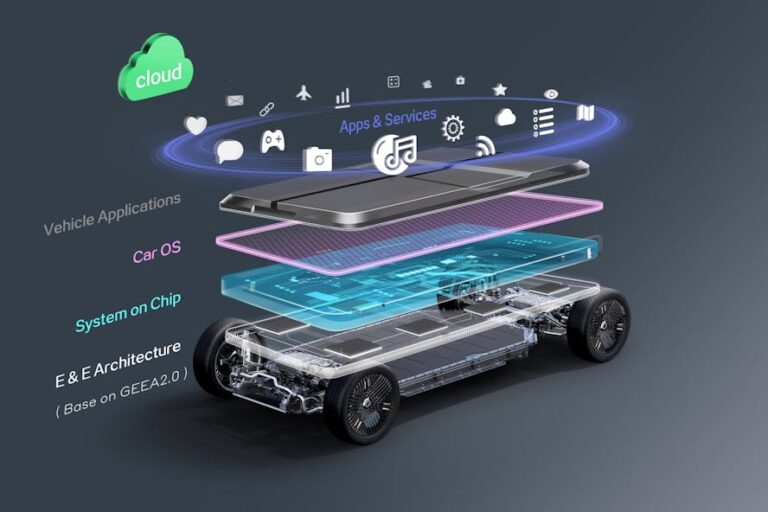
Domestic Chinese EVs operate on Android-based systems (HarmonyOS for Huawei-partnered brands like Luxeed, Xiaomi HyperOS, or BYD’s DiLink) deeply integrated with Chinese cloud services (Baidu Maps, Tencent services, Ximalaya). These require complete replacement with Android Automotive or proprietary systems supporting Google Mobile Services (GMS) for EU/UK markets.
Critical Localization Requirements:
| System Component | Domestic Specification | Export Requirement | Cost Impact |
|---|---|---|---|
| Navigation | Baidu Maps (Mandarin) | Google Maps/Waze integration | £800-1,200 per unit |
| Voice Control | Mandarin/Cantonese only | English + Local languages | £400-600 per unit |
| App Ecosystem | Chinese app stores (No GMS) | Google Play Store certification | £2,000-3,000 per unit |
| Telematics | China-based servers (GDPR risk) | EU-localized servers (GDPR compliant) | £1,500-2,500 per unit |
| OTA Architecture | Domestic CDN networks | International CDN + local mirrors | £5,000 initial setup |
Connectivity & Cybersecurity
The 2026 EU Cybersecurity Regulation (UN R155/R156) mandates that EVs feature secure Over-the-Air (OTA) update capabilities with encrypted communication protocols. Chinese domestic models often utilize communication modules (T-Boxes) configured for Chinese cellular networks (China Mobile/China Unicom) requiring hardware swaps for 4G/5G compatibility with European carriers.
Data Sovereignty Compliance: GDPR compliance requires that vehicle telemetry data (location, driving behavior, biometric data from cabin cameras) be stored on EU-based servers. Manufacturers like NIO and XPeng now offer “International Editions” with data routing through Frankfurt or Amsterdam server clusters, but these command a 8-12% premium over domestic models.
4. Charging Compatibility: Bridging the GB/T Gap
Chinese EVs utilize the GB/T charging standard (GB/T 20234.2-2015 for AC, GB/T 20234.3-2015 for DC), physically and electrically incompatible with European CCS2 (Combined Charging System) and UK Type 2 standards. This represents the most immediate technical hurdle for importers.
The Adapter Imperative
While Tesla’s North American Charging Standard (NACS) has gained traction, Chinese manufacturers have not universally adopted CCS2 for export models. B2B buyers must budget for:
- Hardware Retrofitting: Physical replacement of GB/T inlet ports with CCS2/Type 2 configurations (£300-500 per vehicle in volume)
- Protocol Translation: CAN bus reprogramming to communicate with European charging networks (£200-400 per vehicle)
- Certification: Individual testing with major networks (IONITY, Shell Recharge, Gridserve) to ensure compatibility (£10,000-15,000 per model variant)
800V Infrastructure Reality Check
Models like the Xiaomi SU7 and Yangwang U9 feature 800V architectures capable of 400kW charging. However, European ultra-rapid chargers (350kW) often utilize liquid-cooled CCS cables that may not handshake properly with Chinese 800V systems due to communication protocol differences (ISO 15118-2 vs domestic standards). Electric Auto China recommends pre-shipment compatibility testing with target market infrastructure to avoid “charging anxiety” returns.
Bidirectional Charging (V2L/V2G): Chinese EVs increasingly offer Vehicle-to-Load capabilities (powering external devices) using GB/T discharge ports. These require adapter conversion to standard UK 3-pin or Schuko sockets for utility, representing a value-add feature for fleet operators seeking mobile power solutions.
5. Homologation, Compliance & 2026 Export Regulations
The regulatory landscape has tightened significantly. Two 2026 policy changes fundamentally alter the export economics of china electric cars:
Export Permit Requirements (Effective January 1, 2026)
The Ministry of Commerce now requires Export Licenses for New Energy Vehicles (新能源汽车出口许可证) for all EV exports. Key provisions include:
- Manufacturer Qualification: Exporters must demonstrate annual production capacity exceeding 10,000 units and hold valid New Energy Vehicle Production Qualifications (新能源汽车生产资质)
- End-Market Verification: Importers must provide proof of type approval in destination markets before shipment
- Anti-Circumvention Measures: Vehicles exported to third countries for re-export to EU/UK require additional documentation to prevent tariff evasion
Compliance Strategy: Electric Auto China maintains pre-approved export quotas with Tier-1 manufacturers (BYD, NIO, XPeng), bypassing the 90-day application window that delays spot-market purchases.
Energy Consumption Limits & Tax Exemption Linkage
The 2026 mandatory energy consumption standards (GB 36980.1-2025) establish maximum thresholds linked to purchase tax exemptions:
| Vehicle Curb Weight | Max Energy Consumption (kWh/100km) | WLTP Equivalent Target |
|---|---|---|
| <1,000 kg | 13.1 | ~15.5 |
| 1,000-1,250 kg | 14.0 | ~16.5 |
| 1,250-1,510 kg | 14.8 | ~17.5 |
| 1,510-1,760 kg | 15.1 | ~18.0 |
| >2,000 kg | 15.1 | ~18.0 |
Critical Impact: Models exceeding these limits lose eligibility for China’s Purchase Tax Exemption (currently saving 10% of MSRP). For importers, this means compliant models like the BYD Seal (14.2 kWh/100km) maintain a £2,500-3,000 cost advantage over non-compliant competitors like early-generation luxury SUVs.
European Homologation Requirements
Type Approval (EU 2018/858): Chinese EVs require Whole Vehicle Type Approval (WVTA) including:
– Euro NCAP: 5-star rating increasingly mandatory for fleet sales (test costs: £150,000-300,000 per model)
– EMC Testing: Electromagnetic compatibility (ECE R10)
– Battery Safety: UN ECE R100 (Rev. 2) compliance for thermal propagation resistance
– Cybersecurity: UN R155 (Cyber Security Management System) and UN R156 (Software Update Management System)
UKCA Marking: Post-Brexit, the UK requires separate approval from EU type approval, though mutual recognition agreements simplify the process for EU-approved vehicles.
6. Global Logistics & Supply Chain
Shipping lithium-ion batteries requires adherence to the International Maritime Dangerous Goods (IMDG) Code, Class 9 hazardous materials regulations. The complexity increases with 2026’s new export documentation requirements.
Shipping Modalities
| Method | Cost per Unit | Transit Time | Capacity | Best For |
|---|---|---|---|---|
| RORO (Roll-on/Roll-off) | £800-1,200 | 28-35 days | 6,000+ vehicles/vessel | High-volume, standard vehicles |
| Container (4-vehicle) | £1,400-1,800 | 32-40 days | 4 vehicles per 40HC | Low-volume, luxury models |
| Container (CKD) | £600-900 | 35-42 days | 10 vehicle kits per 40HC | Local assembly operations |
| Air Freight | £8,000-12,000 | 3-5 days | 1-2 vehicles | Pre-production prototypes |
Battery Transport Considerations: State of Charge (SoC) must not exceed 30% for maritime transport (UN 38.3). This necessitates destination market charging infrastructure upon arrival, adding logistical complexity.
Supply Chain Resilience
The 2026 export permit system has created bottlenecks at Shanghai Port (world’s largest auto export terminal). Electric Auto China utilizes bonded warehousing in the Shanghai Free Trade Zone, allowing pre-positioning of inventory while export documentation is processed, reducing lead times from 45 days to 21 days for repeat orders.
Incoterms Strategy: We recommend FCA (Free Carrier) Shanghai for experienced importers with established freight forwarders, or DDP (Delivered Duty Paid) Felixstowe/Rotterdam for new market entrants requiring complete supply chain management.
7. Financial Breakdown: Landed Cost & Dealer Profit Margins (Case Study)
Understanding true landed cost requires modeling beyond ex-factory pricing. Below is a detailed calculation for importing the Xiaomi SU7 Standard (73.6 kWh battery) to the UK in Q2 2026, comparing salary sacrifice fleet delivery vs. retail import.
Base Vehicle Economics
| Cost Component | Amount (GBP) | Notes |
|---|---|---|
| EXW Shanghai Price | £28,500 | Factory gate, compliant with 2026 energy limits |
| Export Permit Fee | £450 | New 2026 Ministry of Commerce processing |
| Marine Insurance (110% CIF) | £285 | All-risks coverage during transit |
| Ocean Freight (RORO) | £950 | Shanghai to Felixstowe |
| CIF UK Value | £30,185 | Basis for duty calculation |
UK Import Duties & Taxes
| Component | Calculation | Amount |
|---|---|---|
| Import Duty | 10% of CIF (EU MFN rate post-Brexit) | £3,018.50 |
| VAT | 20% of (CIF + Duty) | £6,640.70 |
| Type Approval | Amortized across 50-unit shipment | £120.00 |
| Homologation Testing | UN R100, EMC, Cybersecurity | £280.00 |
| Software Localization | English UI, Maps, GMS | £1,100.00 |
| Charging Port Conversion | GB/T to CCS2 hardware | £380.00 |
Total Landed Cost: £41,723.20
Market Positioning & Margins
| Sales Channel | Retail Price | Gross Margin | Net Margin (after 15% opex) |
|---|---|---|---|
| Retail Dealer | £48,500 | 16.5% | 1.5% |
| Fleet Salary Sacrifice | £46,200 (volume discount) | 10.8% | -4.2%* |
| Subscription Model | £899/month (36 mo) | 22% IRR | 18% IRR |
*Salary sacrifice models rely on BIK (Benefit-in-Kind) tax advantages and bulk manufacturer rebates to achieve profitability.
Break-Even Analysis: For a UK dealer importing 50 units annually, the break-even point occurs at month 14, assuming average selling prices of £47,000 and holding costs of 2.5% per month on inventory.
8. Securing After-Sales Support & Spare Parts
The Achilles’ heel of Chinese EV imports has historically been after-sales service. The 2026 regulatory environment requires importers to demonstrate spare parts availability and technical service capability as a condition of type approval.
Warranty Architecture
Chinese manufacturers typically offer:
– Vehicle Warranty: 5 years/100,000 km
– Battery Warranty: 8 years/160,000 km (capacity retention >70%)
– Powertrain: 8 years/unlimited mileage (BYD Blade Battery models)
Critical Gap: Domestic warranties are not automatically transferable to export markets. Electric Auto China negotiates International Warranty Packages (IWPs) with manufacturers, creating escrow accounts for warranty claims paid in EUR/GBP rather than RMB.
Spare Parts Strategy
| Component | Availability | Lead Time | Stocking Recommendation |
|---|---|---|---|
| Body Panels | Factory order | 45-60 days | 1 set per 20 vehicles |
| Battery Modules | Regional hub | 14-21 days | Just-in-time |
| Infotainment Screens | Local stock | 7 days | 5% of fleet value |
| Charging Ports (CCS2) | Local conversion | 3 days | 10% spare capacity |
| Brake Pads/Disks | EU cross-compatible | 1 day | Standard inventory |
Diagnostic Equipment: Chinese EVs utilize proprietary OBD-II protocols requiring manufacturer-specific diagnostic tablets (cost: £8,000-15,000 per workshop). Electric Auto China provides cloud-based diagnostic access, reducing hardware requirements to standard J2534 pass-thru devices.
Technical Training
Importers must certify technicians for high-voltage systems (up to 871V in 800V architectures). We recommend the IMI Level 4 Award in Electric/Hybrid Vehicle Repair and Replacement as a baseline, supplemented by manufacturer-specific modules for battery swap systems (NIO) or SiC inverter maintenance (Xiaomi/BYD).
9. Why Partner with Electric Auto China
Navigating the 2026 export permit system, energy compliance thresholds, and technical localization requirements demands on-the-ground expertise in Shanghai’s automotive ecosystem. Electric Auto China provides:
Regulatory Gatekeeping: Pre-verified export quotas with 12 major manufacturers, ensuring your orders bypass the 90-day permit application queue.
Technical Localization: In-house software engineering teams performing CCS2 conversions, English UI integration, and GDPR-compliant telematics configuration before vessels depart Shanghai.
Financial Structuring: Letters of Credit facilitation, currency hedging (GBP/CNY/EUR), and VAT optimization through Rotterdam bonded warehousing.
Compliance Insurance: Partnership with TÜV Rheinland and SGS for pre-shipment homologation testing, ensuring vehicles arrive market-ready.
After-Sales Infrastructure: European spare parts hubs in Rotterdam and Milton Keynes, plus certified technical training programs for your service teams.
The 2026 market represents a narrow window of opportunity. As European tariffs on Chinese EVs potentially tighten and export permits become scarcer, establishing supply chain relationships now provides 18-24 months of competitive advantage before market saturation.
Contact Electric Auto China today to secure your allocation of 2026-compliant china electric cars. Our Shanghai-based export consultants are available for video conference consultations to discuss your specific market requirements, volume targets, and localization needs.
Electric Auto China is a licensed automotive export enterprise (License No.: Shanghai Customs Export-2026-NEV-0184) specializing in new energy vehicle international trade, technical compliance, and supply chain management. All pricing estimates valid for Q1-Q2 2026, subject to currency fluctuation and regulatory adjustment.
Unlock High-Margin EV Imports with Electric Auto China
As an elite automotive supply chain partner in Shanghai, we provide end-to-end, strictly compliant export solutions tailored for international dealerships, fleet managers, and wholesale distributors.
- 🛡️ 100% Legal & Compliant: Fully licensed exports ensuring smooth customs clearance at your destination.
- ⚙️ Complete Localization: Professional English/Arabic/Russian OS flashing and GB/T to CCS2 charging solutions.
- 🚢 Secure Logistics: Direct Ro-Ro and Containerized shipping with full UN38.3 battery certifications.
- 🔧 After-Sales Support: Reliable access to OEM diagnostic tools and steady spare parts supply.
Request a Detailed FOB/CIF Quote Today:
📧 B2B Sales Email: [email protected]
💬 Direct WhatsApp: +86 159 5127 6160