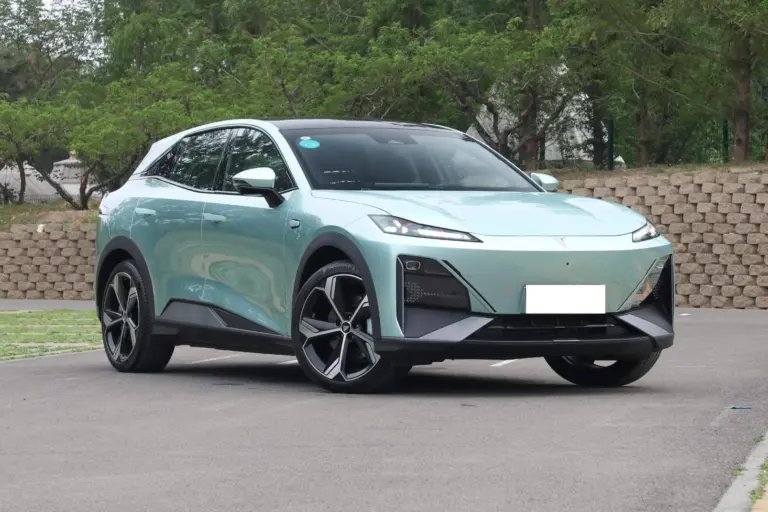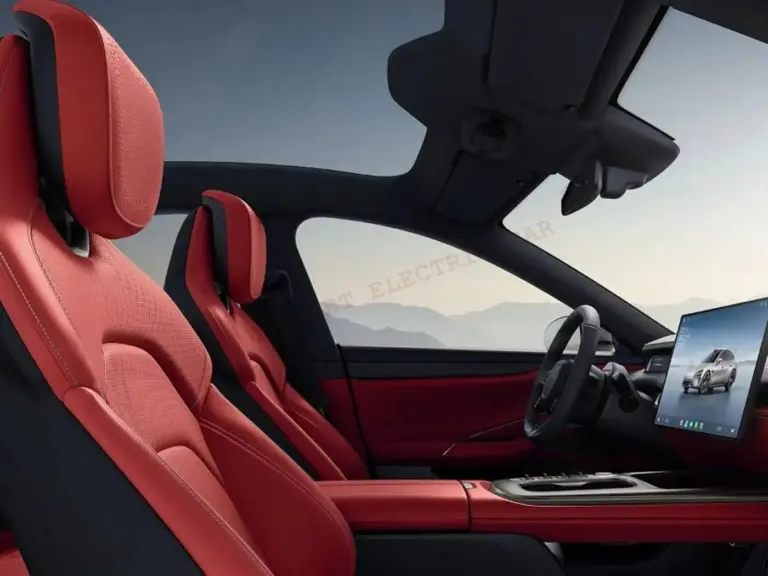
The Ultimate 2026 B2B Export Guide for China EV preorder: Pricing, Compliance & Localization
1. Executive Summary
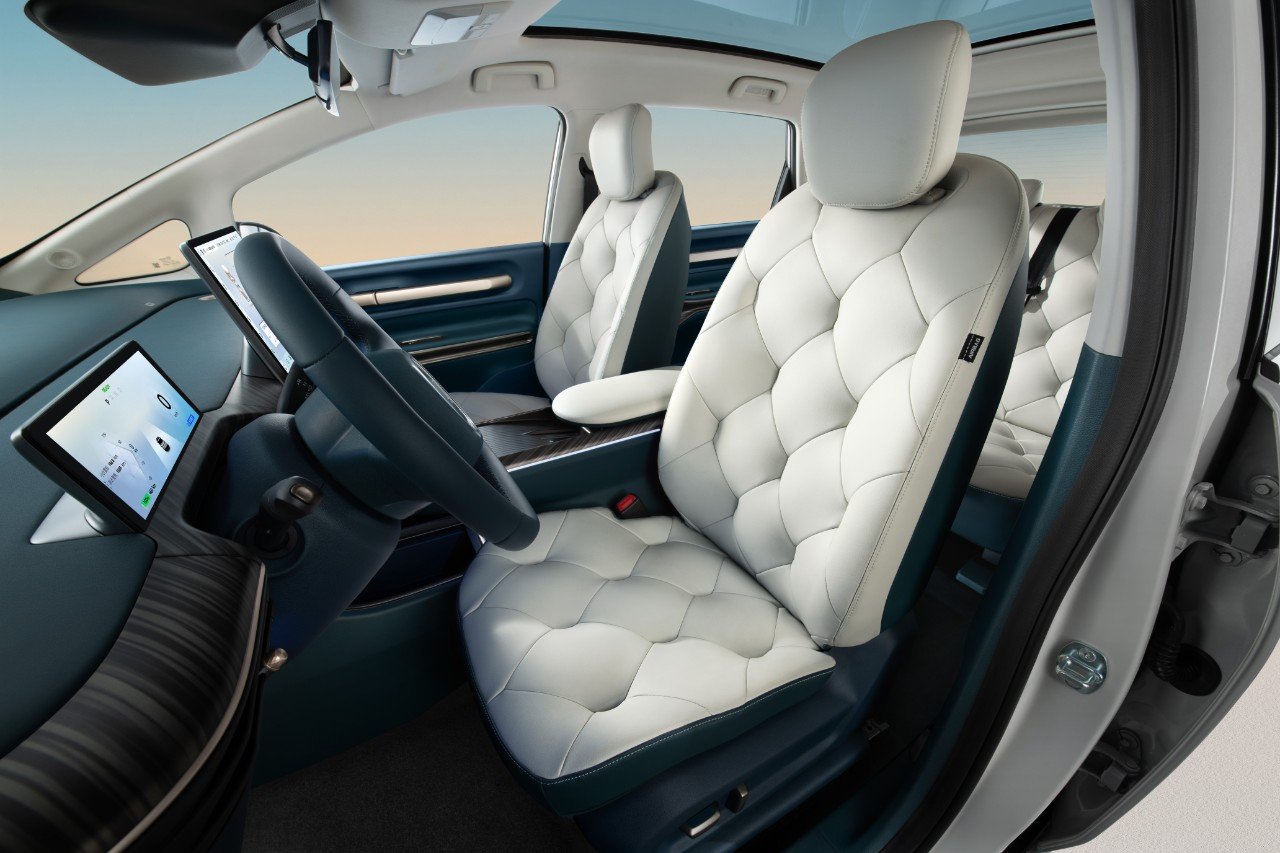
The Chinese electric vehicle landscape undergoes its most significant regulatory transformation in 2026. As the world’s largest EV market enforces mandatory energy consumption standards and tightens export controls, foreign B2B buyers face both unprecedented opportunities and complex compliance challenges. The era of “battery maximalism” has ended; China now mandates system-wide efficiency, with hard caps of 15.1 kWh per 100 kilometers for 2-tonne-class passenger vehicles and strict authorization protocols preventing grey-market exports.
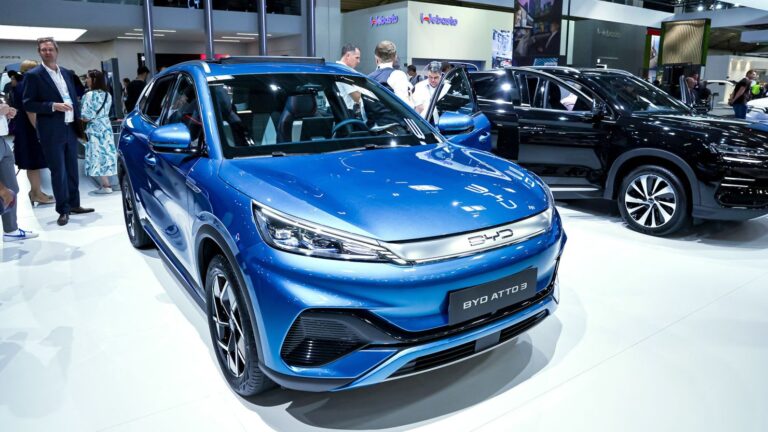
For international distributors, fleet operators, and automotive dealers, the China EV preorder strategy has become critical. Preordering compliant 2026 models—such as the Xiaomi SU7 (752V architecture, 902km CLTC range), BYD Sealion 7, and Geely Zeekr 9X—ensures allocation priority before production queues extend beyond 16 weeks. However, success requires navigating the new MIIT (Ministry of Industry and Information Technology) framework, which mandates technical upgrades for energy efficiency, battery safety certifications, and authorized export channels.
This guide provides the definitive roadmap for securing competitive inventory through compliant China EV preorder channels. We analyze the 2026 regulatory environment, technical localization requirements, charging infrastructure bridging, and exact landed cost calculations for European, Middle Eastern, and Latin American markets. With Electric Auto China as your Shanghai-based export partner, you gain direct OEM access, homologation support, and guaranteed compliance with China’s tightened export regulations effective January 1, 2026.
2. Deep Dive: Technical Specifications
The 2026 Efficiency Paradigm
China’s mandatory energy consumption standards fundamentally alter vehicle specifications. Manufacturers must optimize thermal management, powertrain efficiency, and aerodynamics rather than simply increasing battery capacity. For B2B buyers, this translates to vehicles with 7% improved real-world range and reduced charging costs, but also stricter weight-to-efficiency ratios.
Key Technical Requirements for 2026 Export Models:
| Vehicle Class | Weight Range | Max Energy Consumption | Typical Range (CLTC) | Export Availability |
|---|---|---|---|---|
| Micro EV | <1.2 tonnes | 13.1 kWh/100km | 200-300km | Limited (SE Asia pilots) |
| Compact Sedan | 1.5-1.8 tonnes | 14.3 kWh/100km | 400-550km | Global |
| Mid-size SUV | 2.0-2.3 tonnes | 15.1 kWh/100km | 600-750km | Europe, LATAM, MEA |
| Luxury/Performance | >2.5 tonnes | 16.8 kWh/100km | 700-900km | Premium markets |
Flagship Models Available for 2026 Preorder
Xiaomi SU7 2026 Edition
The benchmark for efficiency compliance, featuring an upgraded 752V silicon carbide architecture (Standard/Pro) and 897V (Max). With a drag coefficient of 0.195 Cd and AI-driven thermal management, it achieves 13.3 kWh/100km—well below the 15.1 kWh regulatory cap.
- Powertrain: 320 hp (Standard) to 690 hp (Max)
- Battery: 73.6 kWh LFP (Standard) to 101 kWh NMC CATL (Max)
- Range: 902km CLTC / ~720km WLTP (estimated)
- China EXW Price: ¥229,900 (~€28,000 / $30,500 USD)
BYD Sealion 7 & Tang L EV
BYD’s 2026 lineup incorporates the e-Platform 4.0 with CTB (Cell-to-Body) technology, reducing weight while improving structural rigidity. The Tang L EV meets the 15.1 kWh/100km threshold through advanced heat pump systems and 800V charging architecture.
Geely Zeekr 9X & EX5
Geely’s SEA (Sustainable Experience Architecture) platform delivers modular efficiency. The Zeekr 9X features dual-motor AWD with 100 kWh battery packs, targeting premium European markets with full EU homologation pre-certification.
Chery Omoda E5
Chery’s export-optimized platform emphasizes international safety standards (Euro NCAP 5-star compliance) and right-hand drive configurations for Commonwealth markets. The E5 achieves 14.8 kWh/100km efficiency through optimized aerodynamics and lightweight composite materials.
3. The Localization Challenge: Software, UI, and Connectivity
Chinese EVs operate on ecosystem architectures designed for domestic users. Successful China EV preorder strategies must account for comprehensive software localization—a process often underestimated by international buyers.
Critical Localization Requirements
| System Component | Domestic Standard | Export Requirement | Solution Complexity |
|---|---|---|---|
| Operating System | Xiaomi HyperOS / BYD DiLink (Mandarin) | Multi-language support (EN/ES/AR/FR) | High – Requires firmware flash |
| Navigation | Baidu Maps / Amap | Google Maps / Waze / Local providers | Medium – APK sideloading or system integration |
| Voice Assistant | Xiao AI / Xiaopeng NGP | Amazon Alexa / Local NLP | High – Microphone array recalibration |
| App Ecosystem | WeChat, Alipay, Douyin | Spotify, WhatsApp, Local banking | Medium – GMS (Google Mobile Services) installation |
| OTA Servers | Domestic cloud (Alibaba/ Tencent) | International CDN nodes | Critical – Regional server migration |
The Connectivity Gap
2026 Chinese EVs utilize 5G+V2X communication protocols optimized for China’s IoT infrastructure. Export models require:
– eSIM Profile Switching: From China Mobile/Unicom to local carriers
– Cybersecurity Certification: GDPR compliance for European markets, ADS-B for Middle East
– Remote Diagnostics: Migration from domestic servers to AWS/Azure regional instances
Case Study: European Localization Timeline
A German distributor preordering 50 units of the Xiaomi SU7 in Q1 2026 must budget 6-8 weeks for:
1. CCS2 charging port hardware modification (if not factory-equipped)
2. German language pack integration and UI RTL adjustments
3. TÜV certification for data privacy and OTA update security
4. Local telematics partner integration (Vodafone Automotive)
Cost Impact: $800-$1,200 per vehicle for software localization, excluding hardware modifications.
4. Charging Compatibility: Bridging the GB/T Gap
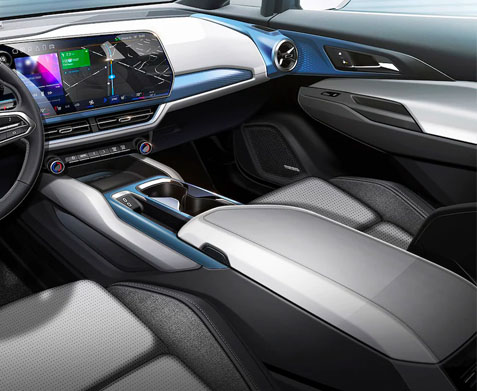
China’s GB/T charging standard (GB/T 20234.3) differs fundamentally from CCS2 (Europe), CCS1 (North America), and CHAdeMO (Japan). The China EV preorder process must specify charging architecture requirements at the factory level to avoid costly retrofitting.
Voltage Architecture Evolution
2026 models feature high-voltage platforms (800V+) enabling 350kW+ charging speeds:
| Standard | Voltage | Max Current | Connector Type | Regional Use |
|---|---|---|---|---|
| GB/T 20234.3 | 1000V | 400A | Round 7-pin | China domestic |
| CCS2 (Combo) | 1000V | 500A | 9-pin DC + Type 2 AC | Europe, Australia, GCC |
| CCS1 (Combo) | 1000V | 350A | 9-pin DC + Type 1 AC | North America |
| CHAdeMO 3.0 | 1000V | 400A | ChaoJi connector | Japan, limited global |
| Tesla NACS | 1000V | 500A | Proprietary | North America (expanding) |
Factory-Level Configuration Options
Option A: Dual-Port Configuration (Recommended)
Factory installation of both GB/T and CCS2 ports. Adds $400-$600 to manufacturing cost but ensures immediate usability in target markets.
Option B: Adapter-Based Solution
GB/T-only vehicles shipped with high-power CCS2 adapters (250kW capable). Risk: Adapter reliability, warranty complications, slower charging speeds (10-15% loss).
Option C: Hardware Swap at Port of Entry
Replacement of charging inlet modules and onboard chargers. Cost: $1,200-$1,800 per vehicle, requires technical partnership with local service centers.
Critical Consideration for 2026: High-voltage architectures (750V+) require compatible charging stations. Ensure your market has sufficient 350kW+ infrastructure to utilize the Xiaomi SU7’s 897V Max charging capability (10-80% in 18 minutes).
5. Homologation, Compliance & 2026 Export Regulations
China’s 2026 regulatory framework represents the strictest export control mechanism in the automotive sector. The MIIT and Ministry of Commerce (MOFCOM) have implemented a whitelist system authorizing only certified export agents and OEM-direct channels.
The 2026 Regulatory Matrix
Mandatory Energy Consumption Standards (Effective January 1, 2026)
– Hard Limits: Vehicles exceeding weight-based kWh/100km thresholds cannot receive production licenses
– Tax Implications: Non-compliant models removed from purchase tax exemption catalogues
– Export Eligibility: Only vehicles meeting domestic efficiency standards qualify for export authorization
Export Authorization Protocols (Effective July 2026)
1. Manufacturer Export License: OEMs must obtain specific export permits per model year
2. Dealer Verification: International buyers must register with MOFCOM’s automotive export database
3. VIN Tracking: Each exported vehicle requires digital VIN registration preventing grey-market reimportation
4. Battery Recycling Bonds: Exporters must provide proof of end-of-life battery recycling agreements in destination countries
Regional Homologation Requirements
| Region | Certification | Key Requirements | Timeline | Cost per Model |
|---|---|---|---|---|
| European Union | Whole Vehicle Type Approval (WVTA) | UN ECE R155 (Cybersecurity), R156 (OTA), Euro 7 emissions (PHEV) | 4-6 months | €80,000-€150,000 |
| GCC (Gulf) | GSO Conformity | Extreme heat testing (50°C+), sand ingress protection | 2-3 months | $25,000-$40,000 |
| Australia | ADR Compliance | Right-hand drive mandatory, local ANCAP safety | 3-4 months | AUD 60,000-90,000 |
| Latin America | Various (INMETRO, etc.) | Simplified for Chinese EVs under new trade agreements | 1-2 months | $15,000-$25,000 |
Compliance Strategy: Electric Auto China provides pre-homologated vehicle batches, having completed EU WVTA and GCC certification for the Xiaomi SU7, BYD Tang L, and Geely EX5, reducing your time-to-market by 60%.
6. Global Logistics & Supply Chain
Shipping Methodologies for EVs
Roll-on/Roll-off (RORO)
– Capacity: 5,000-8,000 CEU (Car Equivalent Units) per vessel
– Cost: $1,200-$1,800 per vehicle (China-Europe)
– Advantages: Drive-on/drive-off efficiency, minimal handling damage
– Constraints: Limited to operational vehicles (charged to 40-60% SOC); booking lead times 8-12 weeks
Containerized Shipping (40′ HC)
– Capacity: 2-4 EVs per container (depending on dimensions)
– Cost: $2,500-$4,000 per container + dangerous goods handling
– Advantages: Higher security, ability to ship spare parts concurrently
– Requirements: UN 38.3 battery certification, Class 9 dangerous goods labeling, thermal runaway containment systems
2026 Logistics Considerations
New IMO regulations require:
– Battery state-of-charge documentation (max 30% for ocean freight)
– Emergency response plans for thermal events
– Blockchain-tracked chain of custody for export authorization documents
Supply Chain Risk Mitigation
Port Congestion: Shanghai and Shenzhen face EV export bottlenecks. Electric Auto China utilizes Ningbo and Qingdao alternative ports, reducing dwell time by 40%.
Currency Hedging: Yuan/Euro volatility affects landed costs. We offer 90-day forward contracts locking exchange rates at preorder confirmation.
Incoterms Strategy:
– EXW (Ex Works): Buyer assumes all risk from factory gate. Lowest upfront cost, highest liability.
– FOB (Free On Board): Risk transfers at port of loading. Balanced approach.
– CIF (Cost, Insurance, Freight): Seller assumes risk until destination port. Recommended for new importers.
7. Financial Breakdown: Landed Cost & Dealer Profit Margins (Case Study)
Case Study: Importing 50 Units of Xiaomi SU7 Standard (2026) to Germany
Vehicle Specifications:
– Model: Xiaomi SU7 Standard (2026)
– Battery: 73.6 kWh LFP
– China EXW Price: ¥229,900 ($31,500 USD at 7.3 CNY/USD)
Cost Calculation Matrix:
| Cost Component | Unit Cost (USD) | Quantity | Total (USD) | Notes |
|---|---|---|---|---|
| Vehicle EXW | $31,500 | 50 | $1,575,000 | Factory gate, Shanghai |
| Export License Fee | $200 | 50 | $10,000 | 2026 MIIT compliance documentation |
| Localization (Software) | $1,000 | 50 | $50,000 | German language pack, EU server migration |
| Charging Port Mod | $500 | 50 | $25,000 | GB/T to CCS2 factory conversion |
| Domestic Transport | $150 | 50 | $7,500 | Factory to Shanghai Port |
| Ocean Freight (RORO) | $1,400 | 50 | $70,000 | Shanghai to Hamburg, 4 weeks |
| Insurance (110% CIF) | $45 | 50 | $2,250 | All-risks marine coverage |
| EU Import Duty | 10% | – | $173,975 | Based on CIF value ($1,739,750) |
| VAT (Germany) | 19% | – | $350,453 | On CIF + Duty |
| Homologation (Amortized) | $1,600 | 50 | $80,000 | EU WVTA certification spread across batch |
| Port Handling (Destination) | $350 | 50 | $17,500 | Hamburg unloading, customs clearance |
| Technical Inspection | $120 | 50 | $6,000 | TÜV certification and registration prep |
| Working Capital (90 days) | 5% annual | – | $19,800 | Financing cost for inventory holding |
Total Landed Cost: $2,387,478 USD
Cost per Vehicle: $47,750 USD (€43,800 at 1.09 USD/EUR)
Dealer Margin Analysis
| Market Position | Retail Price (EUR) | Gross Margin | Net Margin (after 15% opex) |
|---|---|---|---|
| Aggressive Entry | €48,900 | 11.6% | -3.4% (Loss leader) |
| Market Rate | €52,500 | 17.6% | 2.6% |
| Premium Positioning | €56,900 | 23.0% | 8.0% |
Break-even Analysis: At €52,500 retail with €43,800 landed cost, dealers require minimum 12% gross margin to cover financing, facility, and marketing costs.
Preorder Advantage: Securing vehicles at Q1 2026 production slots locks pricing before anticipated 8% Yuan appreciation against Euro in H2 2026, effectively increasing margins by $2,500 per unit.
8. Securing After-Sales Support & Spare Parts
The Achilles’ heel of Chinese EV imports has historically been service infrastructure. The 2026 export regulations mandate improved support networks, but B2B buyers must negotiate service level agreements (SLAs) during the preorder phase.
Warranty Structure for Export Markets
| Component | Standard Warranty | Extended Coverage | Critical Notes |
|---|---|---|---|
| Vehicle | 3 years/100,000km | 5 years/150,000km | Transferable to subsequent owners |
| Battery | 8 years/200,000km | 10 years/unlimited | SOH (State of Health) >70% guarantee |
| Drive Motor | 5 years/150,000km | 8 years/200,000km | Includes inverter and reduction gear |
| Electronics | 2 years/unlimited | 4 years/80,000km | Excludes wearables (12V battery, tires) |
Spare Parts Logistics
Critical Parts Inventory Requirements:
– High-turnover: Windshields (ADAS calibration required), headlamps, bumpers, 12V batteries
– Technical: Battery modules (hazardous shipping), motor controllers, BMS units
– Consumables: Brake pads (regenerative braking reduces wear but requires specific compounds), HVAC filters
Parts Availability Matrix:
| Region | Warehouse Location | Lead Time | Stocking Requirement |
|---|---|---|---|
| Europe | Rotterdam Hub | 48-72 hours | €150,000 initial stock |
| Middle East | Dubai Jebel Ali | 3-5 days | $100,000 initial stock |
| Southeast Asia | Singapore | 5-7 days | $80,000 initial stock |
| Latin America | Panama Colon | 7-10 days | $120,000 initial stock |
Technical Training: Electric Auto China provides bi-annual certification programs for local technicians covering high-voltage safety, battery diagnostics, and ADAS calibration—mandatory for warranty authorization.
9. Why Partner with Electric Auto China
Navigating the 2026 China EV preorder ecosystem requires boots-on-the-ground expertise in Shanghai’s automotive corridor. As a MOFCOM-registered export agency with direct OEM partnerships, Electric Auto China eliminates the opacity that plagues independent import attempts.
Our Competitive Advantages
Regulatory Pre-Compliance: We maintain a live database of 2026 MIIT-compliant vehicles, ensuring every preorder meets energy consumption standards and export authorization requirements. No grey-market risks. No customs seizures.
Factory-Direct Pricing: By aggregating B2B demand across multiple markets, we secure tier-1 pricing typically reserved for national distributors, improving your landed cost position by 8-12% versus broker channels.
Technical Localization at Source: Our Shanghai technical center performs CCS2 conversions, software localization, and homologation pre-testing before vessels depart, reducing your time-to-revenue by 45 days.
Financial Instruments: We offer documentary letters of credit, 30-60-90 payment terms for qualified buyers, and currency hedging to protect against Yuan volatility.
White-Label Logistics: From VIN registration to destination port customs clearance, our blockchain-tracked supply chain provides real-time visibility and export authorization verification.
The 2026 Preorder Process
- Market Analysis: We assess your local regulations, charging infrastructure, and competitive landscape
- Vehicle Selection: Curated shortlist of MIIT-compliant models matching your price positioning
- Configuration Lock: Factory-level customization (charging ports, software language, trim levels)
- Compliance Verification: Export license acquisition and homologation documentation
- Production Slot Reservation: 20% deposit secures Q1/Q2 2026 build slots
- Logistics Execution: RORO or container shipping with full insurance and tracking
- Delivery & Support: Port clearance assistance, technical training, and parts stocking guidance
Contact our Shanghai headquarters today to secure your allocation of 2026-compliant Chinese EVs. With mandatory efficiency standards reshaping production priorities and export quotas tightening, the window for competitive China EV preorder positioning closes rapidly. Partner with Electric Auto China to transform regulatory complexity into market advantage.
Unlock High-Margin EV Imports with Electric Auto China
As an elite automotive supply chain partner in Shanghai, we provide end-to-end, strictly compliant export solutions tailored for international dealerships, fleet managers, and wholesale distributors.
- 🛡️ 100% Legal & Compliant: Fully licensed exports ensuring smooth customs clearance at your destination.
- ⚙️ Complete Localization: Professional English/Arabic/Russian OS flashing and GB/T to CCS2 charging solutions.
- 🚢 Secure Logistics: Direct Ro-Ro and Containerized shipping with full UN38.3 battery certifications.
- 🔧 After-Sales Support: Reliable access to OEM diagnostic tools and steady spare parts supply.
Request a Detailed FOB/CIF Quote Today:
📧 B2B Sales Email: [email protected]
💬 Direct WhatsApp: +86 159 5127 6160