The Ultimate 2026 B2B Export Guide for Chinese car brand list with logos: Pricing, Compliance & Localization
1. Executive Summary
The global automotive landscape has undergone a seismic shift, with Chinese electric vehicle (EV) manufacturers commanding over 60% of worldwide EV sales by 2026. For international B2B buyers—ranging from dealership groups and fleet operators to mobility service providers—sourcing from China’s diverse ecosystem of automotive brands represents both unprecedented opportunity and complex regulatory navigation.
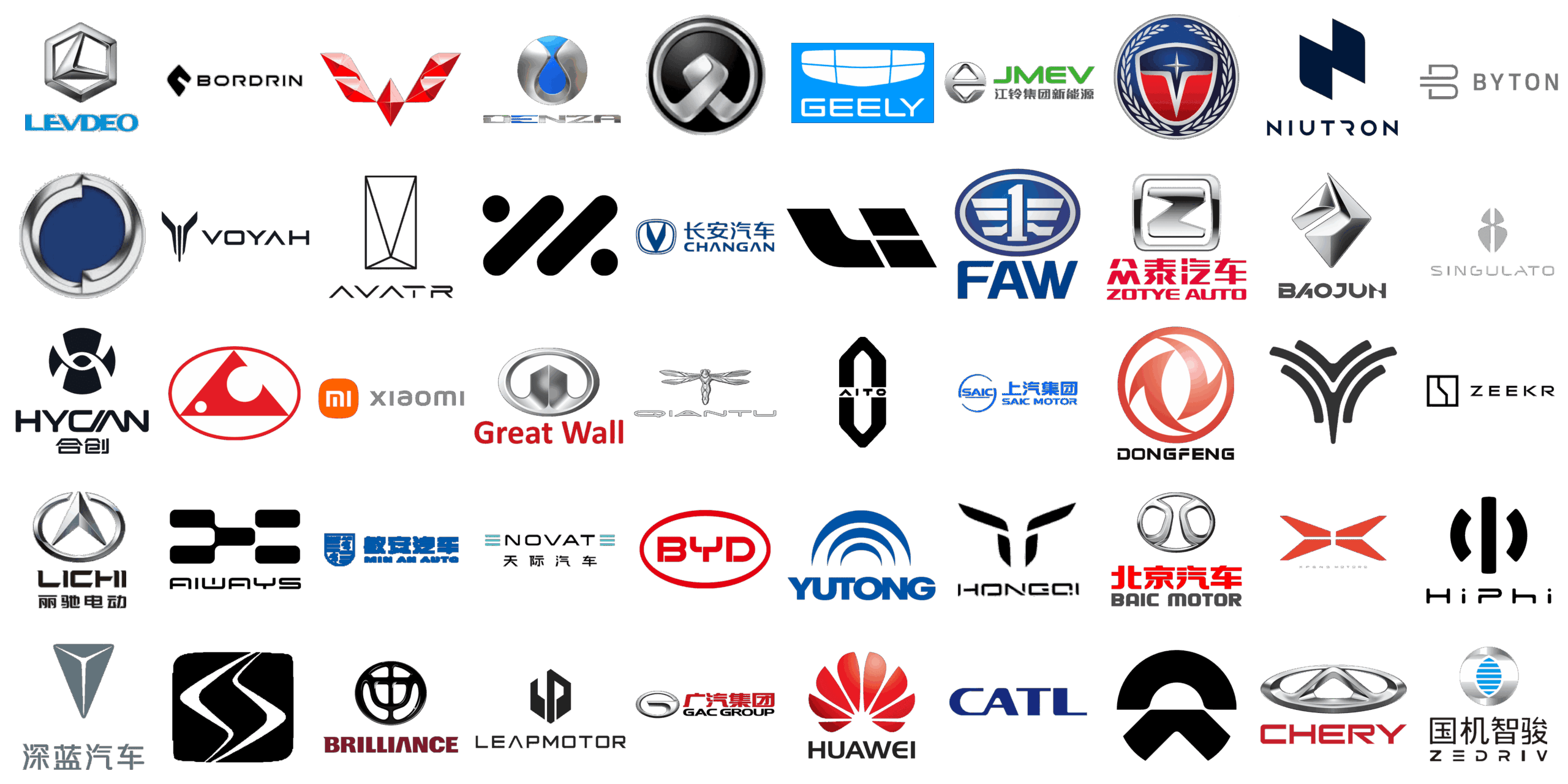
This comprehensive guide addresses the complete procurement lifecycle for importing Chinese electric vehicles, specifically tailored to the “Chinese car brand list with logos” keyword ecosystem that dominates B2B search queries. We examine thirteen major export-ready manufacturers, from mass-market leaders BYD and Chery to premium disruptors like NIO, Zeekr, and Xiaomi, analyzing their technical architectures, export compliance frameworks, and localization requirements.
Critical to 2026 operations is China’s newly implemented 180-Day Rule for Auto Exports, effective January 1, 2026. This regulation mandates that vehicles intended for export must complete domestic registration and compliance verification 180 days prior to international shipment, fundamentally altering inventory planning and cash flow cycles for exporters. Additionally, the China Association of Automobile Manufacturers (CAAM) has strengthened GB/T standard enforcement while introducing expedited pathways for EU WVTA and GCC homologation pre-approval.
The Chinese EV market in 2026 spans an unprecedented price spectrum, from the Chery QQ Ice City at $8,000 FOB to the luxury Hongqi E-HS9 exceeding $100,000. This diversity enables B2B buyers to construct multi-tiered portfolios: urban mobility solutions utilizing compact EVs (300-450km NEDC range), premium fleet deployments leveraging 800V architecture vehicles like the BYD Seal or Xiaomi SU7 (400+ mile WLTP range), and extended-range hybrid solutions from Li Auto addressing infrastructure-deficient markets.
Success in this market requires mastery of three critical vectors: technical localization (addressing GB/T charging incompatibility and telematics ecosystem dependencies), regulatory compliance (navigating the 180-day pre-shipment window and multi-market homologation), and financial optimization (managing landed cost calculations against volatile shipping rates and tariff structures).
2. Deep Dive: Technical Specifications
Understanding the technical differentiation between Chinese automotive brands is essential for B2B portfolio construction. The 2026 export lineup features distinct architectural philosophies, battery chemistries, and autonomous driving capabilities that directly impact market positioning and after-sales requirements.
Brand Architecture Comparison Matrix
| Brand | Logo Identity | Core Platform | Battery Technology | Autonomous Level | Export Price Range (FOB) | Primary B2B Segment |
|---|---|---|---|---|---|---|
| BYD | Red “Build Your Dreams” badge with winged motif | e-Platform 3.0 / e4 (Yangwang) | Blade Battery (LFP) | DiPilot L2+ | $12,000 – $180,000 | Mass market, Fleet, Luxury |
| NIO | Stylized “N” horizon logo | NT2.0 Platform | Semi-solid State (150kWh) | NAD (L3 capable) | $45,000 – $90,000 | Premium Fleet, Corporate |
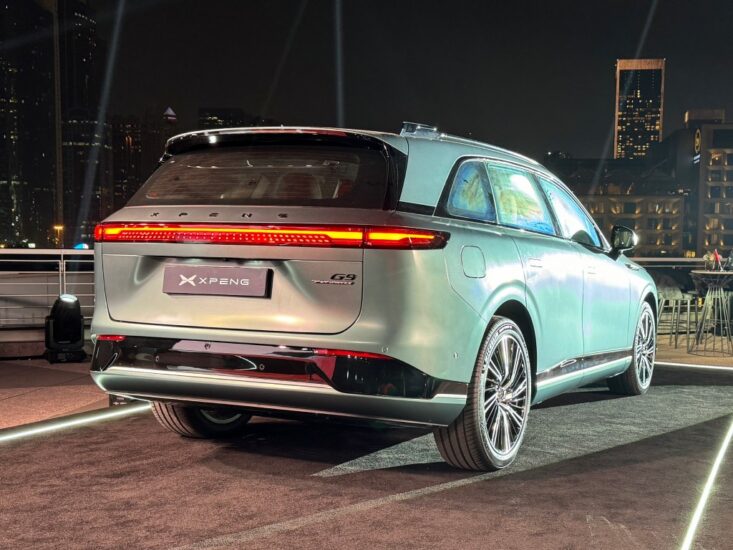
| XPeng | “X” winged emblem | SEPA 2.0 | CATL NCM / LFP | XNGP (L3+) | $28,000 – $65,000 | Tech-forward Mobility |
| Li Auto | “Li” calligraphic monogram | L-Series Platform | CATL NCM + Range Extender | AD Max (L2+) | $35,000 – $60,000 | Family Fleet, SUV Rental |
| Zeekr | Silver Z-shaped badge | SEA (Sustainable Experience Architecture) | CATL Qilin (CTP 3.0) | ZAD (Mobileye EyeQ5) | $40,000 – $85,000 | Executive Transport |
| Xiaomi | “MI” square logo | Modena Platform (800V) | CATL 101kWh (Max) | Xiaomi Pilot Max | $35,000 – $55,000 | Connected Lifestyle Fleet |
| Chery | Diamond-shaped “C” emblem | E0X Global Platform | Guoxuan/ CATL LFP | Chery Pilot | $8,000 – $35,000 | Entry-level Urban Mobility |
| ORA | Circular “O” with cat silhouette | Lemon Platform | CATL LFP | Coffee Intelligence | $12,000 – $22,000 | Urban Ride-sharing |
| Hongqi | Red flag emblem | FMEs Platform | NCM 900V High-Voltage | Hongqi Intelligent | $60,000 – $120,000 | Government/Executive |
| HiPhi | HiPhi “H” geometric logo | HOA Architecture | CATL 97kWh | HiPhi Pilot (L3) | $70,000 – $110,000 | Avant-garde Luxury |
| Aion (GAC) | “G” stylized arrow | AEP 3.0 | LFP / NCM | ADiGO 4.0 | $15,000 – $40,000 | Commercial Fleet |
| Geely | Blue six-segment shield | SEA / CMA | CATL / Farasis | Geely Galaxy NOS | $18,000 – $50,000 | General Import |
| Changan | Shield with “V” motif | EPA1 / CHN Platform | CATL / BYD Blade | Intelligent Drive | $10,000 – $30,000 | Budget Fleet |
Performance Metrics Analysis
Battery Technology Differentiation:
BYD’s Blade Battery (Lithium Iron Phosphate) dominates the volume export market, offering thermal runaway resistance and 3,000+ cycle longevity, ideal for high-utilization fleet operations. However, for cold climate markets, NIO’s semi-solid state batteries and CATL’s Qilin CTP 3.0 (utilized by Zeekr and Xiaomi) provide superior energy density (255 Wh/kg) and 800V charging capabilities, enabling 10-80% charging in 18 minutes.
Range Optimization:
The 2026 model year shows significant range standardization. Entry-level urban vehicles (Chery eQ1, ORA Good Cat) deliver 300-450km NEDC (approximately 240-360km WLTP), sufficient for metropolitan ride-sharing. Mid-tier exports (BYD Seal, XPeng P7i) achieve 550-700km CLTC (450-580km WLTP), while premium offerings (NIO ET7, Li Mega) exceed 800km CLTC with battery swap compatibility.
Autonomous Driving Export Limitations:
Critical for B2B buyers: Chinese brands’ advanced autonomous capabilities (XNGP, NAD, HiPhi Pilot) rely heavily on HD mapping and V2X infrastructure rarely available outside China. Export models typically feature degraded L2+ systems (adaptive cruise, lane keeping) unless specific market mapping partnerships exist (e.g., NIO in Norway, XPeng in Germany).
3. The Localization Challenge: Software, UI, and Connectivity
The most underestimated barrier to Chinese EV import success is digital ecosystem localization. Unlike legacy OEMs with modular infotainment, Chinese vehicles are deeply integrated into the Middle Kingdom’s digital infrastructure, creating friction points for international deployment.
Telematics and App Ecosystem Dependencies
The WeChat Integration Problem:
Vehicles from Xiaomi, NIO, and Li Auto feature deep WeChat (Weixin) integration for vehicle unlocking, climate pre-conditioning, and location sharing. International markets require complete OS reconstruction, often resulting in delayed OTA updates and feature degradation. B2B buyers must verify that export-spec vehicles run Global OS versions, not domestic Chinese firmware with language patches.
Voice Recognition Limitations:
Mandarin-optimized NLP (Natural Language Processing) systems in brands like Aion and Changan demonstrate 95%+ accuracy for Chinese dialects but frequently fail with accented English or other languages. Ensure suppliers provide localized voice packs and offline command processing to avoid fleet operator dissatisfaction.
Navigation and Mapping:
Baidu Maps and Amap (AutoNavi) dominate Chinese EV head units. Export vehicles must transition to Google Automotive Services (GAS), TomTom, or local map providers (Yandex for CIS, HERE Maps for Europe). This requires hardware-level changes to the connectivity module (T-Box), not merely software updates, impacting both cost and lead time.
UI/UX Cultural Adaptation
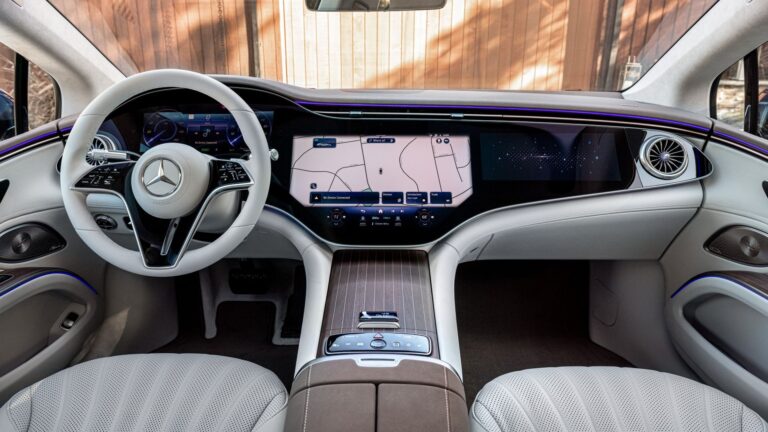
Chinese HMI (Human-Machine Interface) design favors information density, with BYD and HiPhi featuring multi-screen layouts (up to 5 displays in the HiPhi Z) and extensive gesture controls. Western markets prefer minimalist interfaces. B2B buyers should request UI skin customization for fleet management integration, ensuring telematics data feeds directly into existing fleet software (Geotab, Samsara, etc.).
Regulatory Data Compliance:
The 2026 export regulations require that vehicles destined for EU/EEA markets store telemetry data within European servers (GDPR compliance), while GCC markets require data localization in Saudi Arabia or UAE. Chinese OEMs must establish regional cloud infrastructure—verify that your chosen brand has operational regional data centers before committing to large fleet orders.
4. Charging Compatibility: Bridging the GB/T Gap
China’s domestic charging standard (GB/T 20234.3) differs fundamentally from international standards (CCS2 in Europe, CCS1 in North America, CHAdeMO in Japan). This incompatibility represents the most significant technical hurdle for B2B importers.
Charging Standard Matrix
| Market Region | Standard | Chinese EV Compatibility | Solution Required |
|---|---|---|---|
| European Union | CCS2 (Combo 2) | Incompatible (GB/T DC pins differ) | Hardware adapter or inlet replacement |
| United Kingdom | CCS2 | Incompatible | CCS2 retrofit kit ($800-$1,200/unit) |
| North America | CCS1 / NACS | Incompatible | Full inlet replacement required |
| GCC/Middle East | CCS2 / GB/T | Mixed (some models CCS2-ready) | Verify pre-export configuration |
| Southeast Asia | CCS2 / CHAdeMO | Emerging compatibility | Adapter cables (50kW max) |
| Australia/NZ | CCS2 | Incompatible | Type 2 retrofit mandatory |
Technical Solutions for B2B Fleets
DC Fast Charging Limitations:
GB/T DC charging uses distinct pin configurations and communication protocols (CAN bus vs. ISO 15118 for CCS). Simple mechanical adapters cannot resolve protocol differences. B2B buyers must specify CCS2 inlet replacement at the factory level (adds $600-$900 per vehicle) or utilize AC charging only (severely limiting fleet utilization).
800V Architecture Considerations:
Premium 2026 models (Xiaomi SU7 Max, Zeekr 001 FR, BYD Seal Performance) utilize 800V electrical architectures. While European charging networks increasingly support 800V CCS2, ensure that the vehicle’s onboard charger (OBC) and battery management system (BMS) are programmed for local grid frequencies (50Hz vs. 60Hz) and voltage standards (230V single-phase vs. 120V split-phase for North America).
Fleet Charging Infrastructure:
For dealership groups importing Chinese EVs, consider parallel charging infrastructure investment. Brands like NIO offer Power Swap Stations for export markets, but these require $500,000+ capital expenditure per station. For smaller B2B operators, negotiate charging adapter bundles (OEM-certified CCS2 to GB/T adapters) as part of the vehicle purchase agreement, though these typically limit charging to 50kW DC (versus 150kW+ native capability).
5. Homologation, Compliance & 2026 Export Regulations
China’s regulatory landscape for automotive exports underwent radical transformation on January 1, 2026, with the implementation of the 180-Day Rule and enhanced CAAM oversight protocols.
The 180-Day Rule: Operational Implications
Effective January 1, 2026, all vehicles intended for export must complete domestic registration in China and maintain that registration status for a minimum of 180 days before export clearance. This regulation, administered by the General Administration of Customs China (GACC) and MIIT, serves to:
- Prevent fraudulent export of stolen or non-compliant vehicles
- Ensure complete VAT reconciliation on domestic sales before export rebate application
- Allow time for quality verification and recall system establishment
B2B Procurement Impact:
– Extended Lead Times: Traditional 45-60 day order-to-shipment cycles now extend to 240+ days (180 days holding + processing)
– Capital Tie-up: Exporters must finance vehicle inventory for six months before international revenue realization
– Certificate of Origin: New documentation requirements include the “180-Day Holding Certificate” issued by provincial commerce departments
Multi-Market Homologation Pathways
European Union (WVTA – Whole Vehicle Type Approval):
Chinese EVs must comply with UNECE regulations (ECE R10 for EMC, R100 for battery safety, R79 for steering). Critical 2026 updates include:
– Cybersecurity (UN R155): Mandatory ISO/SAE 21434 compliance for connected vehicles
– Software Updates (UN R156): OTA capability must include rollback functions and version logging
– Battery Passport: Digital battery documentation required for vehicles placed on EU market after February 2027 (transitional provisions apply in 2026)
GCC (Gulf Cooperation Council):
Saudi Arabia and UAE require GSO 42:2024 compliance for EVs, including extreme heat testing (50°C ambient operation) and sand ingress protection (IP6KX for battery enclosures). Chinese brands like BYD and Geely have established GCC certification labs in Shanghai, reducing homologation time from 6 months to 8 weeks.
North American FMVSS:
Few Chinese EVs currently hold FMVSS certification (BYD buses excepted). The 2026 export framework allows for Show or Display exemptions (limited to 2,500 units annually per model) or Substantially Similar petitions based on existing platform certifications.
Documentation Checklist for B2B Buyers
Ensure your Chinese supplier provides:
1. CCC (China Compulsory Certificate) copy
2. 180-Day Holding Certificate (2026 onwards)
3. ECE R10, R100, R79 test reports (for EU)
4. Battery chemical composition report (UN 38.3)
5. ISO 9001 manufacturing facility certification
6. Export license from MOFCOM (Ministry of Commerce)
6. Global Logistics & Supply Chain
Efficient logistics management is critical given the 180-day holding requirement and the specialized handling needs of lithium-ion batteries (UN 3480/3481 classification).
Shipping Modalities
Roll-on/Roll-off (RORO):
Preferred for complete vehicles, utilizing specialized vessels (Pure Car and Truck Carriers – PCTC). Major Chinese export ports: Shanghai (Waigaoqiao), Ningbo-Zhoushan, and Guangzhou (Nansha). RORO offers lowest per-unit cost ($800-$1,200 to Europe) but requires vehicles to be driveable and fully charged (typically 40-60% SOC for safety).
Containerized Shipping (SOC – Shipper Owned Container):
Required for markets with limited RORO service or for CKD (Completely Knocked Down) imports. High-cube 40′ containers accommodate 2-3 compact EVs (BYD Dolphin, Chery eQ1). Battery segregation mandates apply—maximum 2 EVs per container unless equipped with advanced fire suppression systems (Novec 1230 or equivalent).
Incoterms 2020 Recommendations:
– FOB (Free On Board): Standard for Chinese exports; risk transfers at port of loading
– CIF (Cost, Insurance, Freight): Preferred by B2B buyers for price certainty; ensure marine insurance covers EV-specific risks (thermal runaway, battery leakage)
– DAP (Delivered at Place): Useful for first-time importers; exporter handles destination customs clearance
Port Handling and Customs
Dangerous Goods Declaration:
Lithium-ion batteries require IMDG Code Class 9 documentation. The 2026 regulations mandate that Chinese exporters provide:
– Battery Test Summary (UN 38.3)
– MSDS (Material Safety Data Sheet) in destination language
– Emergency response guide (ERG) specific to battery chemistry
Destination Port Considerations:
European ports (Zeebrugge, Bremerhaven, Rotterdam) have implemented EV-specific quarantine areas due to fire risks. Expect 3-5 days additional customs inspection time for first-time Chinese EV imports. GCC ports (Jebel Ali, Dammam) require SASO (Saudi Standards) or ESMA (UAE) pre-clearance certificates before unloading.
7. Financial Breakdown: Landed Cost & Dealer Profit Margins (Case Study)
To illustrate real-world economics, we analyze a 10-unit import scenario for the BYD Seal Excellence AWD (mid-size sedan, 82.5kWh battery, 570km WLTP range), destined for the German market in Q2 2026.
Unit Economics Analysis
| Cost Component | Calculation | Per Unit (USD) | Total (10 units) |
|---|---|---|---|
| FOB Price | Factory gate, Shanghai | $38,500 | $385,000 |
| 180-Day Holding Cost | Financing at 6% APR for 6 months | $1,155 | $11,550 |
| Export Documentation | Certificates, licenses, legalization | $450 | $4,500 |
| Ocean Freight | RORO to Bremerhaven (CIF basis) | $1,100 | $11,000 |
| Marine Insurance | 110% of CIF value @ 0.15% | $66 | $660 |
| CIF Total | Arrival value | $41,271 | $412,710 |
| Import Duty | EU MFN rate 10% on CIF | $4,127 | $41,270 |
| VAT (Germany) | 19% on (CIF + Duty) | $8,636 | $86,360 |
| Homologation | WVTA single type approval amortized | $850 | $8,500 |
| Technical Adaptation | CCS2 inlet replacement | $750 | $7,500 |
| Landed Cost | Ready for sale | $55,634 | $556,340 |
| Retail Price | Market positioning vs Tesla Model 3 | $72,000 | $720,000 |
| Gross Margin | Before local marketing/warranty | $16,366 (29.4%) | $163,660 |
Alternative Scenario: Budget Fleet Import (Chery eQ1)
For emerging market fleet operators, the compact Chery eQ1 (28.8kWh, 301km NEDC) offers different economics:
- FOB: $9,800
- Freight (Containerized): $1,400 (shared container)
- Duty (Southeast Asia 0% ASEAN-China FTA): $0
- Local VAT: 10%
- Landed Cost: ~$12,320
- Fleet Sale Price: $16,500
- Margin: 25.3%
Currency Risk Management
The 2026 export environment features volatile CNY/EUR and CNY/USD exchange rates. B2B buyers should negotiate USD-denominated contracts or utilize forex hedging instruments. Chinese suppliers increasingly accept Letter of Credit (L/C) at 180 days to accommodate the holding period rule, though this adds 1.5-2% banking fees.
8. Securing After-Sales Support & Spare Parts
The Achilles’ heel of Chinese EV imports has historically been after-sales service. The 2026 regulatory framework addresses this through mandatory Overseas Service Capability Certification for exporters.
Warranty Structures
Chinese OEMs now offer competitive warranty packages for export markets:
– BYD: 6 years/150,000km vehicle, 8 years/200,000km battery (prorated capacity >70%)
– NIO: Lifetime battery warranty (with BaaS subscription), 3-year comprehensive vehicle
– XPeng: 5 years/120,000km comprehensive, 8 years battery
Critical Clause: Ensure warranties include international labor rates (not Chinese domestic rates) and coverage for ADAS calibration, which requires specialized equipment.
Spare Parts Logistics
Battery Availability:
Lithium-ion batteries are classified as Dangerous Goods for air freight, making rapid AOG (Aircraft on Ground) emergency shipments impossible. B2B buyers must establish regional battery stockpiles or negotiate Battery-as-a-Service (BaaS) models (pioneered by NIO) where battery ownership remains with the manufacturer.
Parts Distribution Networks:
Tier-1 Chinese brands (BYD, Geely, Chery) have established European parts hubs in Rotterdam and Hamburg. For smaller brands (ORA, HiPhi), parts availability may require 45-60 day lead times from China. Negotiate minimum parts availability guarantees in supply contracts, with penalty clauses for stock-out situations.
Technical Training:
Require suppliers to provide:
– Level 1: High-voltage safety certification (mandatory for any technician interaction)
– Level 2: Battery pack replacement and BMS programming
– Level 3: ADAS calibration and powertrain repair
Training should occur at the manufacturer’s facility in China or regional training centers (BYD operates centers in Norway and Thailand; NIO in Germany).
9. Why Partner with Electric Auto China
Navigating the complexities of China’s 2026 EV export regulations, 180-day holding requirements, and multi-brand technical specifications requires an experienced intermediary. Electric Auto China, headquartered in Shanghai with offices in Shenzhen and Ningbo, provides end-to-end B2B export management.
Compliance Guarantee
We maintain direct relationships with MIIT-certified manufacturers and manage the complete 180-day pre-export registration process, ensuring your inventory meets the January 2026 regulatory requirements. Our legal team handles CCC certification verification, export license acquisition, and customs documentation.
Technical Localization Services
Unlike standard trading companies, Electric Auto China operates technical centers capable of:
– Pre-export CCS2/CCS1 inlet conversion
– Global OS firmware flashing and regional telematics configuration
– Pre-shipment homologation testing (ECE R10, R100) at partner labs
Financial and Logistics Integration
We offer supply chain financing solutions to bridge the 180-day holding period cash gap, utilizing confirmed L/C structures with Chinese banking partners. Our logistics division specializes in EV-specific RORO and containerized shipping, with real-time battery SOC monitoring during transit.
Brand Portfolio Access
As authorized export consultants for BYD, Chery, NIO, XPeng, Zeekr, and emerging brands like Xiaomi and HiPhi, we provide unified access to the complete “Chinese car brand list with logos” ecosystem, enabling B2B buyers to construct diversified portfolios through a single procurement channel.
Contact our B2B export division today to receive detailed technical specifications, arrange factory inspections, and secure preferential pricing for Q3-Q4 2026 delivery slots under the new regulatory framework.
Unlock High-Margin EV Imports with Electric Auto China
As an elite automotive supply chain partner in Shanghai, we provide end-to-end, strictly compliant export solutions tailored for international dealerships, fleet managers, and wholesale distributors.
- 🛡️ 100% Legal & Compliant: Fully licensed exports ensuring smooth customs clearance at your destination.
- ⚙️ Complete Localization: Professional English/Arabic/Russian OS flashing and GB/T to CCS2 charging solutions.
- 🚢 Secure Logistics: Direct Ro-Ro and Containerized shipping with full UN38.3 battery certifications.
- 🔧 After-Sales Support: Reliable access to OEM diagnostic tools and steady spare parts supply.
Request a Detailed FOB/CIF Quote Today:
📧 B2B Sales Email: [email protected]
💬 Direct WhatsApp: +86 159 5127 6160