The Ultimate 2026 B2B Export Guide for chinese electric car brands: Pricing, Compliance & Localization
1. Executive Summary
The global automotive landscape has undergone a seismic shift. As of 2026, Chinese electric car brands command over 60% of global EV sales volume, transitioning from domestic champions to export powerhouses. For international B2B buyers, distributors, and fleet operators, this represents an unprecedented arbitrage opportunity—access to cutting-edge battery technology, intelligent cockpit systems, and vertically integrated supply chains at 20-40% lower cost equivalents than Western legacy OEMs.
However, the regulatory environment has tightened significantly. China’s 2026 export regulations now mandate enhanced cybersecurity compliance (UN ECE R155/R156), stricter battery traceability documentation, and verified after-sales network commitments before export licenses are granted. Simultaneously, destination markets including the EU, UK, and ASEAN have implemented rigorous technical barriers to entry, from the EU Battery Regulation’s digital passport requirements to post-Brexit UKCA marking protocols.
This guide serves as your definitive roadmap to navigating these complexities. We analyze thirteen premier Chinese electric car brands—from BYD’s Blade Battery dominance to NIO’s revolutionary battery-swapping infrastructure—providing granular technical specifications, exact landed cost calculations for major trade routes, and compliance frameworks essential for 2026 market entry. Whether you are importing compact urban EVs for Southeast Asian markets or premium SUVs for European luxury segments, understanding the intersection of GB/T technical standards, localization requirements, and evolving homologation protocols is critical for sustainable profitability.
The opportunity is substantial: Chinese EVs are projected to capture 35% of the European market and 45% of ASEAN EV sales by Q4 2026. Success requires more than competitive unit economics; it demands mastery of software localization, charging infrastructure adaptation, and resilient spare parts logistics. This guide equips you with that mastery.
2. Deep Dive: Technical Specifications
Chinese electric car brands in 2026 offer technological sophistication that rivals—and often exceeds—traditional premium manufacturers. Understanding the technical architecture is essential for market positioning and maintenance planning.
Battery Technology Matrix
The majority of 2026 export models utilize Lithium Iron Phosphate (LFP) chemistry, particularly BYD’s Blade Battery and CATL’s Qilin technology, offering enhanced thermal stability and 3,000+ cycle life. Premium brands (NIO, Zeekr, Li Auto) utilize ternary lithium (NCM) for energy density, while Li Auto’s extended-range electric vehicle (EREV) architecture combines electric drive with range-extending generators.
| Brand | Flagship Model | Battery Chemistry | Capacity (kWh) | Range (WLTP) | Architecture | Cooling |
|---|---|---|---|---|---|---|
| BYD | Seal (Atto 4) | Blade LFP | 82.5 | 570km | 800V High-Voltage | Cell-to-Pack |
| NIO | ET5 Touring | Ternary NCM | 100 (Swappable) | 580km | 400V | Liquid Cooled |
| XPeng | G9 | S4 LFP/NCM | 98 | 702km | 800V SiC Platform | Intelligent Thermal |
| Li Auto | L9 | NCM (EREV) | 44.5 + 65L Tank | 1,100km (combined) | Series Hybrid | Multi-mode |
| MG | MG4 EV XPOWER | LFP | 64 | 435km | Rear Motor BEV | Active Liquid |
| Chery | Omoda 5 E5 | LFP | 61 | 430km | 400V | Standard Liquid |
| ORA | Funky Cat (GT) | LFP | 63 | 400km | 400V | Liquid Cooled |
| Zeekr | 001 FR | CATL Qilin NCM | 100 | 700km | 800V | Direct Cooling |
Powertrain & Performance
2026 models demonstrate significant divergence in performance positioning. While brands like MG and Chery focus on efficient single-motor configurations (150-200kW) optimized for urban efficiency, performance divisions such as Yangwang (BYD’s luxury arm) and Zeekr deploy quad-motor architectures exceeding 1,000kW.
Key Technical Considerations for B2B Buyers:
- Voltage Architecture: 800V systems (BYD Seal, XPeng G9, Zeekr) enable 10-80% charging in under 20 minutes but require compatible infrastructure investment in destination markets.
- Motor Configuration: Dual-motor AWD variants command 15-20% price premiums but offer superior marketability in Northern European and Canadian markets.
- Thermal Management: Advanced heat pump systems (standard on NIO, Li Auto, premium BYD) extend winter range by 20-25%, critical for Nordic and Central European imports.
Platform Modularity
Most 2026 export models utilize dedicated EV platforms rather than converted ICE architectures. BYD’s e-Platform 3.0, Geely’s SEA (Sustainable Experience Architecture), and Chery’s E0X platform offer scalable wheelbases and integrated battery structures that reduce manufacturing complexity for right-hand drive (RHD) conversions required for UK, Australian, and Southeast Asian markets.
3. The Localization Challenge: Software, UI, and Connectivity
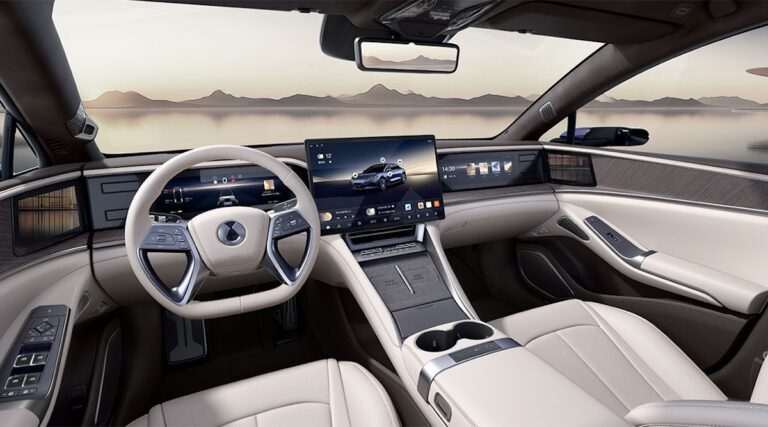
The “smart cockpit” is a primary value proposition for Chinese EVs, yet presents the most significant localization hurdle for international B2B buyers. Unlike legacy automotive software, Chinese EVs operate as connected devices with Over-The-Air (OTA) update capabilities, integrated app ecosystems, and AI voice assistants.
Critical Localization Requirements
Operating System & UI
– Language Support: While 2026 export models include English, German, French, and Spanish interfaces, Arabic, Portuguese (Brazilian), and Nordic language packs may require third-party localization.
– Navigation: Domestic Chinese models rely on Baidu Maps and Amap. Export versions must integrate Google Automotive Services (Android Automotive OS) or local mapping providers (HERE, TomTom) for European compliance.
– App Ecosystem: Chinese app stores (Huawei AppGallery, Tencent) must be replaced with Google Play Store or regional equivalents. This affects streaming, parking payment, and charging network apps.
Data Compliance & Cybersecurity
China’s 2026 export regulations mandate that vehicles destined for foreign markets undergo “data出境安全评估” (cross-border data security assessments). This impacts:
– Telematics Data: Real-time vehicle diagnostics must route through regional servers (EU: GDPR compliance; Middle East: data sovereignty requirements).
– OTA Update Infrastructure: Update servers must be geographically distributed to comply with local data residency laws.
– ADAS Data: Camera and LiDAR data collection for autonomous driving features requires explicit consent frameworks under GDPR and similar regulations.
Voice Recognition & HMI
Natural language processing trained on Mandarin datasets often underperforms in tonal languages (Thai, Vietnamese) or complex grammatical structures (German, Russian). B2B buyers should budget $15,000-$25,000 per model variant for HMI localization and voice training dataset adaptation.
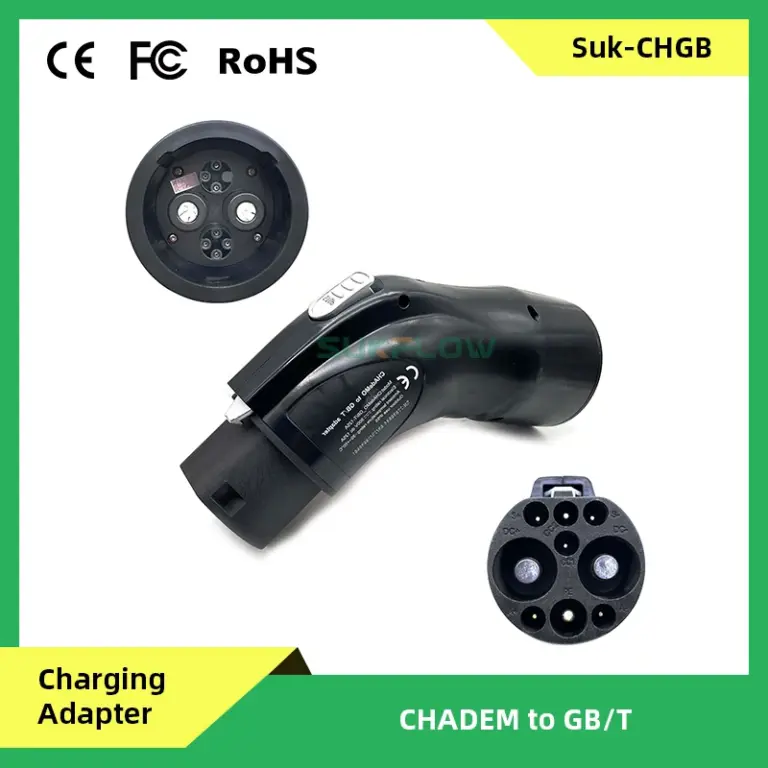
4. Charging Compatibility: Bridging the GB/T Gap
Chinese domestic EVs utilize the GB/T charging standard (GB/T 20234.2 for AC, GB/T 20234.3 for DC), which is physically and electrically incompatible with European CCS2, North American CCS1/CHAdeMO, or Japanese CHAdeMO standards.
Technical Adaptation Strategies
Hardware Modifications
Export-spec vehicles require complete charging inlet replacement:
– EU/UK Models: CCS2 Combo inlet (Type 2 Mennekes + DC pins)
– North America: CCS1 (SAE J1772 + DC)
– ASEAN/Japan: CHAdeMO or CCS2 (market dependent)
On-Board Charger (OBC) Adjustments
Domestic Chinese models feature OBCs optimized for 220V/50Hz single-phase supply. Export markets require:
– Europe: Three-phase 11kW/22kW OBC capability
– UK: Type 2 connector with smart charging compliance (EVSE must meet BS EN 61851)
– North America: SAE J1772 Level 2 compatibility (240V/60Hz)
Charging Curve Optimization
Chinese charging networks (State Grid, TELD) utilize different communication protocols than ISO 15118 (Plug & Charge) used in Europe. Export vehicles must integrate:
– ISO 15118-2: For Plug & Charge authentication (mandatory for German market access)
– CCS Communication Protocols: DIN 70121 and ISO 15118-20 for bidirectional charging (V2H/V2G)
Infrastructure Partnerships
B2B importers must establish roaming agreements with local charging networks. For example, a shipment of BYD Sealions destined for Germany requires backend integration with Ionity, EnBW, and Allego networks to display real-time availability in the vehicle’s infotainment system—a non-trivial software integration costing approximately €8,000-€12,000 per market.
5. Homologation, Compliance & 2026 Export Regulations
China’s tightened 2026 export regulations represent the most significant regulatory shift since the NEV mandate. Compliance is now bifurcated: Chinese export licensing (source) and destination market type approval (destination).
Chinese Export Compliance (2026 Updates)
Mandatory CCC Certification Enhancements
As of January 2026, all exported EVs must carry updated China Compulsory Certification (CCC) marks with embedded QR codes linking to:
– Battery cell manufacturer and batch traceability
– Cybersecurity compliance certificates (per GB/T XXXX-2025 standards)
– Software version control and OTA capability declarations
Export License Requirements
The Ministry of Commerce (MOFCOM) now requires:
1. After-Sales Commitment Letters: Proof of service center establishment in destination countries with minimum 5-year spare parts availability guarantees.
2. Battery Recycling Agreements: Contracts with certified recycling partners in destination markets (aligning with EU Battery Regulation Article 71).
3. Data Security Audits: Third-party verification that vehicle telematics systems do not transmit sensitive data back to Chinese servers without encryption and consent protocols.
Destination Market Homologation
European Union (EU)
– Type Approval: UN ECE R100 (Rechargeable Energy Storage Systems), R10 (EMC), R79 (steering), R94/R95 (crash safety).
– EU Battery Regulation 2023/1542: Digital Battery Passports mandatory from February 2027; 2026 imports must establish data collection infrastructure.
– GDPR Compliance: Vehicle data processing impact assessments required.
– Euro NCAP: 2026 protocols include advanced driver distraction monitoring and vulnerable road user protection.
United Kingdom
– UKCA Marking: Post-Brexit conformity marking replacing CE for Great Britain.
– ZEV Mandate: Fleet average CO2 regulations affecting importer compliance strategies.
Middle East (GCC)
– GSO Regulations: Gulf Standardization Organization requirements for extreme heat operation (50°C+ ambient testing).
– SASO (Saudi Arabia): Specific EV charging interface standards and energy efficiency labeling.
Southeast Asia (ASEAN)
– AIAM (Thailand): Local content requirements increasing to 40% for tariff exemptions under EV incentive packages.
– SNI (Indonesia): National standard compliance for charging systems and battery safety.
6. Global Logistics & Supply Chain
Transporting lithium-ion batteries requires adherence to UN 38.3 testing and IMDG Code (International Maritime Dangerous Goods) regulations. For 2026, new restrictions on battery state-of-charge (SoC) during transport (maximum 30% SoC for ocean freight) increase complexity.
Shipping Modalities
Roll-on/Roll-off (RoRo)
– Advantages: Cost-effective ($800-$1,200 per vehicle Shanghai-Rotterdam), minimal handling damage risk.
– Constraints: Limited to operational vehicles; requires charged 12V systems for maneuvering.
– Capacity: Major operators (Wallenius Wilhelmsen, Eukor) offer dedicated EV decks with fire suppression systems enhanced for lithium-ion thermal events.
Containerized Shipping (40′ HC)
– Loading: 2-4 vehicles per container depending on dimensions (compact EVs like BYD Dolphin: 4 units; SUVs like NIO ES8: 2 units).
– Cost: $2,500-$4,000 per container plus dangerous goods surcharges ($300-$500).
– Safety: Requires Class 9 lithium battery labels, thermal blankets, and enhanced fire detection.
Incoterms 2020 Recommendations
– FOB (Free On Board): Buyer assumes risk once loaded at Shanghai/Zhoushan. Suitable for experienced importers with established freight forwarders.
– CIF (Cost, Insurance, Freight): Seller controls shipping to destination port. Recommended for new market entrants.
– DAP (Delivered at Place): Door-to-door service including destination customs clearance. Premium service for turnkey dealership establishment.
Supply Chain Resilience
Given geopolitical tensions, B2B buyers should:
– Diversify Manufacturing Sources: Primary production in Shenzhen/Shanghai with backup from BYD’s Thailand plant or MG’s Thailand facility (qualifying for ASEAN tariff preferences).
– Battery Stockpiling: Maintain 90-day spare battery inventory at regional hubs to mitigate shipping delays.
– VIN Tracking: Implement blockchain-based logistics tracking for high-value units (premium models >$60,000).
7. Financial Breakdown: Landed Cost & Dealer Profit Margins (Case Study)
Understanding true landed cost is critical for pricing strategy. Below we analyze three distinct market entry scenarios for Q2 2026, using actual FOB pricing from Shanghai port.
Scenario A: Volume Compact SUV (BYD Atto 3 / Yuan Plus)
Target Market: Netherlands (EU)
Specification: 60kWh LFP, 420km WLTP, CCS2
| Cost Component | Calculation | Amount (USD) |
|---|---|---|
| EXW Factory | Base vehicle, export trim | $18,500 |
| Export Documentation | CCC, VIN registration, export license | $450 |
| FOB Shanghai | Loading, port handling | $350 |
| Ocean Freight | RoRo, Shanghai-Rotterdam (30 days) | $1,100 |
| Insurance (CIF) | 110% of CIF value | $220 |
| CIF Rotterdam | $20,620 | |
| Import Duty | 10% EU MFN rate on Chinese EVs | $2,062 |
| VAT (21%) | On (CIF + Duty) | $4,763 |
| Homologation | Type approval, COP, labeling | $3,200 |
| Local Transport | Port to dealer + PDI | $450 |
| Total Landed Cost | $31,095 | |
| Suggested Retail | Market positioning vs. VW ID.4 | $42,000 |
| Dealer Margin | 26% gross margin | $10,905 |
Scenario B: Premium Sedan with Battery Swap (NIO ET5)
Target Market: Norway (EFTA)
Specification: 100kWh BaaS (Battery as a Service), dual-motor
| Cost Component | Calculation | Amount (USD) |
|---|---|---|
| EXW Factory | Vehicle minus battery (BaaS model) | $28,000 |
| Battery Lease Setup | NIO Power infrastructure deposit | $5,000 |
| FOB Shanghai | $450 | |
| Ocean Freight | Containerized (2 units) | $2,800 |
| CIF Oslo | $36,250 | |
| Import Duty | 0% (EFTA-China FTA) | $0 |
| VAT (25%) | Norway standard | $9,063 |
| Homologation | Including battery swap safety cert | $5,500 |
| Swap Station Import | 1 station per 50 vehicles | $8,000 |
| Total Landed Cost | $58,813 | |
| Monthly Battery Fee | Passed to consumer | $150/mo |
| Suggested Retail | Comparable to BMW i4 | $52,000 (excl. battery) |
| Dealer Margin | Service & subscription focus | 18% + recurring |
Scenario C: Budget Urban EV (Chery eQ1 / QQ Ice Cream)
Target Market: Thailand (ASEAN)
Specification: 30kWh LFP, 300km NEDC, RHD conversion
| Cost Component | Calculation | Amount (USD) |
|---|---|---|
| EXW Factory | Base unit | $8,200 |
| RHD Conversion | Steering, dash, software | $1,800 |
| FOB Shanghai | $300 | |
| Ocean Freight | Bangkok (5 days) | $600 |
| CIF Bangkok | $10,900 | |
| Import Duty | 0% (ASEAN-China FTA with Form E) | $0 |
| Excise Tax | Thailand EV incentive (0% until 2025, 2% 2026) | $218 |
| VAT (7%) | $777 | |
| Homologation | TISI standards | $1,200 |
| Total Landed Cost | $13,095 | |
| Suggested Retail | Market price | $16,500 |
| Dealer Margin | Volume play | 20.6% |
Currency Hedging & Payment Terms
Given RMB volatility against EUR, USD, and GBP, B2B buyers should negotiate:
– Letter of Credit (L/C): 30% deposit, 70% against Bill of Lading.
– Currency Hedging: Forward contracts for 6-month exposure.
– Price Volatility Clauses: Battery raw material (lithium carbonate) price adjustment mechanisms ±5% quarterly.
8. Securing After-Sales Support & Spare Parts
The 2026 Chinese export regulations mandate demonstrable after-sales networks before export licenses are granted. For importers, this creates both obligation and opportunity.
Spare Parts Strategy
Critical Components Inventory
Maintain regional hubs stocked with:
– High-Turnover Items: Brake pads, 12V batteries, wiper blades, HVAC filters (3-month stock).
– Battery Modules: For brands without swap infrastructure, maintain 2-3 battery packs per 100 vehicles sold (capital intensive but essential for warranty compliance).
– ADAS Components: LiDAR units (Li Auto, NIO, XPeng), cameras, and radar sensors (vulnerable to minor collisions).
Technical Training
Chinese manufacturers now offer comprehensive certification programs:
– Level 1: Diagnostic software and OTA troubleshooting (3 days, $2,000 per technician).
– Level 2: High-voltage system maintenance and battery pack replacement (5 days, $4,000 per technician).
– Level 3: Motor and inverter rebuilds (7 days, $6,000 per technician).
Warranty Management
Standard export warranties for 2026 models:
– Vehicle: 5 years/100,000km (whichever first).
– Battery: 8 years/160,000km with 70% capacity retention guarantee.
– Powertrain: 8 years/150,000km.
Importers must establish warranty reserve funds (typically 2-3% of revenue) and secure back-to-back warranty agreements with Chinese OEMs to cover manufacturing defects.
Battery Second Life & Recycling
Under EU Battery Regulation compliance, importers become “producers” with responsibility for end-of-life battery collection. Partner with Chinese OEMs’ designated recycling partners (GEM, Huayou Cobalt) to establish reverse logistics channels for degraded battery packs.
9. Why Partner with Electric Auto China
As Shanghai’s premier B2B EV export consultancy, Electric Auto China bridges the gap between Chinese manufacturing sophistication and international market requirements.
Our Value Proposition:
-
Regulatory Navigation: Direct relationships with MOFCOM, CQC, and TÜV Rheinland to expedite CCC certification and EU type approval processes, reducing homologation timelines by 40%.
-
Technical Localization: In-house software engineering teams specializing in HMI localization, Google Automotive integration, and regional telematics server deployment.
-
Financial Structuring: Access to export credit facilities through China Exim Bank and Sinosure political risk insurance for large-volume orders (50+ units).
-
Logistics Excellence: Preferred rates with COSCO Shipping and dedicated EV handling facilities at Shanghai Waigaoqiao Port ensuring UN 38.3 compliance and 30% SoC battery management.
-
After-Sales Infrastructure: Turnkey spare parts warehousing solutions in Rotterdam (EU), Dubai (MENA), and Bangkok (ASEAN) with certified technical training centers.
-
Exclusive Market Rights: Negotiation of territorial exclusivity for emerging brands (Deepal, Yangwang, ORA) in underserved markets.
The Chinese electric vehicle export market in 2026 offers unparalleled opportunities for agile B2B operators. Success requires navigating complex regulatory frameworks, mastering technical localization, and building resilient supply chains. With Chinese electric car brands leading global innovation in battery technology, intelligent connectivity, and cost efficiency, the question is no longer whether to import, but how quickly you can establish compliant, profitable operations.
Contact Electric Auto China today to receive your customized import feasibility study and 2026 price list for the thirteen brands transforming global mobility.
Unlock High-Margin EV Imports with Electric Auto China
As an elite automotive supply chain partner in Shanghai, we provide end-to-end, strictly compliant export solutions tailored for international dealerships, fleet managers, and wholesale distributors.
- 🛡️ 100% Legal & Compliant: Fully licensed exports ensuring smooth customs clearance at your destination.
- ⚙️ Complete Localization: Professional English/Arabic/Russian OS flashing and GB/T to CCS2 charging solutions.
- 🚢 Secure Logistics: Direct Ro-Ro and Containerized shipping with full UN38.3 battery certifications.
- 🔧 After-Sales Support: Reliable access to OEM diagnostic tools and steady spare parts supply.
Request a Detailed FOB/CIF Quote Today:
📧 B2B Sales Email: [email protected]
💬 Direct WhatsApp: +86 159 5127 6160