The Ultimate 2026 B2B Export Guide for chinese electric car manufacturers: Pricing, Compliance & Localization
1. Executive Summary
The global electric vehicle landscape is undergoing a seismic shift as Chinese electric car manufacturers prepare for the implementation of China’s mandatory export permit system on January 1, 2026. As Chief Export Consultant at Electric Auto China, headquartered in Shanghai, I have witnessed firsthand the transformation of China’s EV sector from domestic dominance to sophisticated international expansion. With Chinese EVs commanding over 60% of global EV sales and projected to capture 30% of the European market by 2026, the opportunity for international B2B buyers has never been more compelling—nor more complex.
The 2026 regulatory framework introduces mandatory export licensing through the Ministry of Commerce (MOFCOM), fundamentally altering how BYD, NIO, Xpeng, Li Auto, Chery, and emerging players like Xiaomi and Deepal engage with foreign markets. This guide provides the technical, financial, and compliance roadmap necessary to navigate these regulations while capitalizing on FOB pricing ranging from $7,500 (Chery eQ1) to $35,000 (BYD Sealion 06), and luxury segments exceeding $100,000 (Hongqi E-HS9, Yangwang U9).
Whether you are establishing dealer networks in the UK, penetrating Latin American markets like Chile and Brazil, or expanding across Southeast Asia (Thailand, Malaysia, Indonesia), this comprehensive analysis addresses the critical success factors: 800V charging architecture compatibility, GB/T to CCS2/Type 2 conversion, software localization for GDPR compliance, and the complete landed cost calculations essential for sustainable dealer margins.
2. Deep Dive: Technical Specifications
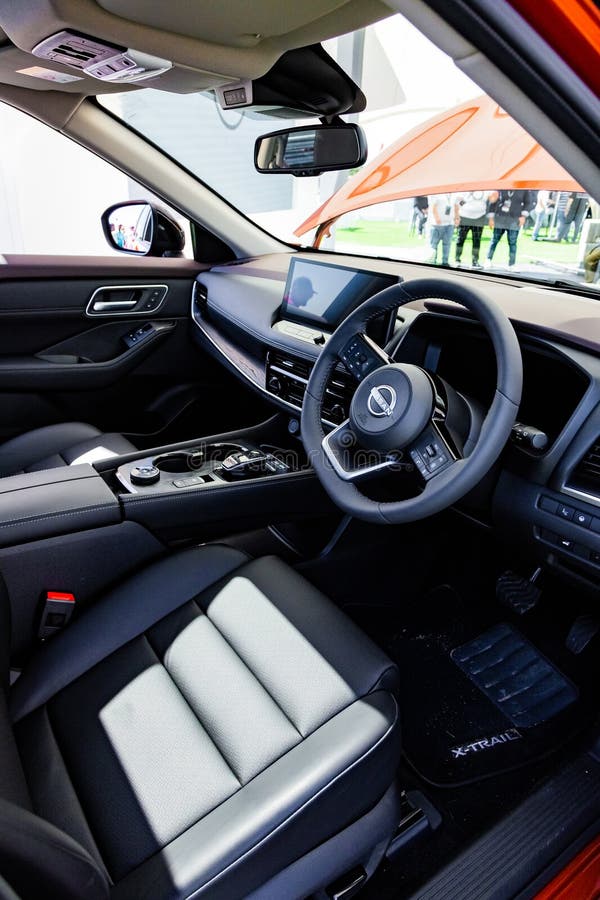
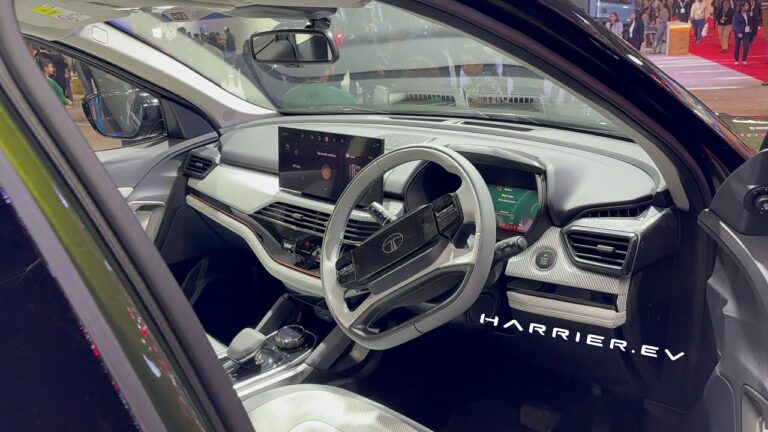
Chinese electric car manufacturers have evolved beyond “budget alternatives” to become technology leaders, particularly in battery chemistry, thermal management, and intelligent cockpit systems. Understanding these technical differentiators is crucial for B2B buyers assessing inventory mix and market positioning.
Battery Technology Matrix
The 2026 lineup showcases three distinct battery strategies:
Lithium Iron Phosphate (LFP) Dominance: BYD’s Blade Battery technology leads this category, offering superior thermal stability and cost efficiency. The BYD Seal utilizes 73.6kWh and 82.5kWh LFP packs delivering 354 miles WLTP range, while the MG4 Anxin Edition introduces liquid-solid-state hybrid technology achieving 530km CLTC (approximately 415km WLTP).
High-Nickel ternary lithium: NIO’s 150kWh semi-solid-state battery packs power the ET7 to over 400 miles WLTP range, complemented by their revolutionary battery swap infrastructure capable of 5-minute exchanges.
Extended-Range Electric Vehicles (EREV): Li Auto’s proprietary system combines 40-50kWh battery packs with range-extending 1.5T turbocharged generators, eliminating range anxiety while maintaining 180km+ pure electric daily driving.
| Manufacturer | Flagship Model | Battery Chemistry | Capacity (kWh) | Range (WLTP) | Architecture | Fast Charging |
|---|---|---|---|---|---|---|
| BYD | Seal (Performance) | Blade LFP | 82.5 | 354 miles | 400V | 150kW (10-80% in 35 min) |
| NIO | ET7 | Semi-solid-state | 150 | 406 miles | 400V | Battery Swap (5 min) + 130kW DC |
| Xpeng | Mona 03 | LFP | 62.2 | 310 miles | 400V | 120kW |
| Xiaomi | SU7 Max | CATL Qilin | 101 | ~400 miles | 800V | 400kW (220 miles in 15 min) |
| Li Auto | L9 | NMC + Range Extender | 44.5 (battery only) | 180km electric + 1100km total | 400V | 75kW |
| Chery | eQ1 | LFP | 30.6 | 250km WLTP | 300V | 40kW |
| Deepal | S05 | LFP | 68.8 | 380 miles | 400V | 120kW |
Powertrain and Performance Specifications
The 2026 Chinese EV portfolio spans from urban micro-mobility to hypercar performance:
Entry-Level Efficiency: The Chery eQ1 (Ant) and QQ Ice City utilize 30kW rear-mounted motors, targeting the $8,000-$12,000 FOB segment with top speeds of 100km/h—ideal for emerging market urban fleets.
Mid-Range Performance: The Deepal S05 features a 200kW rear motor (268hp) achieving 0-100km/h in 6.9 seconds, positioning it against European compact SUVs like the VW ID.4.
High-Performance Segment: The Yangwang U9 Extreme represents the pinnacle with quad-motor architecture delivering 2,220kW (2,977hp), targeting the ultra-luxury segment above $200,000 FOB.
Intelligent Cockpit and ADAS
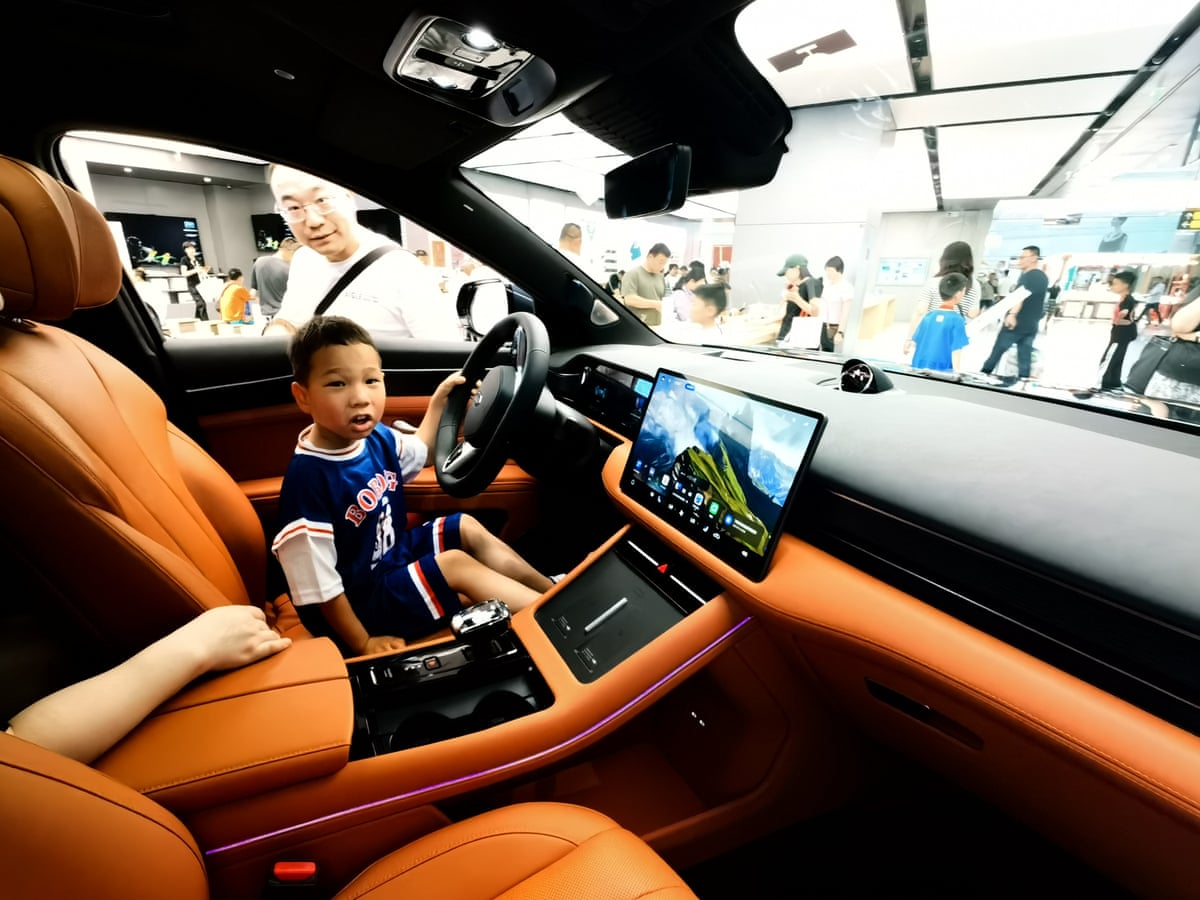
Chinese manufacturers lead in human-machine interface (HMI) integration:
- Huawei HarmonyOS: Powers the Luxeed V9 minivan and AITO models, featuring Level 3 autonomous highway piloting and 5G connectivity
- Xiaomi HyperOS: Deep integration with MIUI ecosystem, offering seamless smartphone-vehicle continuity
- Xpeng XNGP: Advanced urban autonomous driving utilizing 11 cameras, 12 ultrasonic sensors, and 2 LiDAR units (on high trims)
Critical B2B Consideration: These systems require significant localization for export markets, particularly regarding data privacy regulations and mapping services.
3. The Localization Challenge: Software, UI, and Connectivity
The most underestimated barrier to successful Chinese EV export is software localization. While hardware engineering meets or exceeds international standards, the digital ecosystem requires comprehensive retrofitting for target markets.
Language and Interface Adaptation
Domestic Chinese EVs operate primarily in Mandarin with embedded Baidu Maps, QQ Music, and WeChat integration. For export markets, manufacturers must implement:
- Complete UI Translation: Beyond simple language packs, this involves cultural adaptation of icons, color schemes, and menu hierarchies
- Voice Recognition Retraining: Mandarin-trained NLP models require redevelopment for English, Spanish, Arabic, and other target languages with local accent recognition
- Regulatory Compliance Overlays: EU markets require GDPR-compliant data handling with local server storage, while Middle Eastern markets need right-to-left (RTL) interface adaptation
Telematics and Data Sovereignty
The 2026 export regulations mandate that connected vehicles comply with destination country data protection laws. This necessitates:
- Regional Server Migration: Transitioning from Alibaba Cloud or Tencent Cloud to AWS EU, Microsoft Azure, or local data centers
- OTA Update Architecture: Establishing secure update channels that comply with UNECE WP.29 cybersecurity regulations (mandatory for European type approval)
- App Ecosystem Replacement: Substituting Chinese super-apps (WeChat, Alipay) with Google Automotive Services (GAS), Android Automotive OS, or proprietary systems like BMW’s OS 9
Case Study: European Market Entry
A 2025 pilot program by a major Chinese OEM in Norway revealed that 34% of customer service inquiries related to software localization issues, particularly around voice command failures and navigation inaccuracies. Resolution required a €2.3 million investment in local software engineering teams and third-party mapping partnerships (HERE Technologies).
Connectivity Hardware Modifications
Chinese domestic models utilize 5G bands and communication protocols optimized for China’s telecom infrastructure. Export variants require:
– 5G Band Reconfiguration: Supporting n1, n3, n7, n28, n78 bands common in Europe versus China’s n41, n79 focus
– eSIM Localization: Partnerships with Vodafone, Orange, or local MNOs for embedded connectivity
– V2X Protocol Adaptation: Transitioning from China’s C-V2X standards to European ITS-G5 or market-specific variants
4. Charging Compatibility: Bridging the GB/T Gap
Perhaps the most critical technical hurdle for international B2B buyers is the charging interface incompatibility between China’s GB/T standard and international CCS (Combined Charging System), CHAdeMO, or Type 2 standards.
The Technical Reality
Chinese EVs utilize:
– GB/T 20234.2 for AC charging (7kW-43kW)
– GB/T 20234.3 for DC fast charging (up to 250kW)
Export markets require:
– CCS2 (Europe, Middle East, Australia)
– CCS1 (North America)
– Type 2 (AC only, Europe)
– CHAdeMO (Japan, limited other markets)
Conversion Strategies
Option A: Factory-Level Retrofit (Recommended)
Leading manufacturers like BYD and NIO now offer export-spec vehicles with native CCS2 ports at the factory level. This involves:
– Complete replacement of the charging inlet and wiring harness
– ECU reprogramming for CCS communication protocols (ISO 15118)
– Cost impact: $800-$1,200 per vehicle FOB
Option B: Port Adapter Systems
For inventory already in transit or legacy stock, mechanical adapters provide interim solutions:
– GB/T to CCS2 adapters: $300-$500 per unit
– Charging speed limitations: Typically capped at 50kW DC due to communication protocol mismatches
– Warranty implications: May void manufacturer warranty if not OEM-approved
Option C: Local Assembly Integration
Some B2B partners are establishing CKD (Completely Knocked Down) facilities in target markets (Thailand, Brazil, Hungary) where charging ports are installed during final assembly, avoiding Chinese domestic specification lock-in.
Infrastructure Compatibility Matrix
| Market Region | Standard | Chinese EV Compatibility | Recommended Solution |
|---|---|---|---|
| European Union | CCS2 (Type 2 + DC) | Requires retrofit | Factory CCS2 spec |
| United Kingdom | CCS2 | Requires retrofit | Factory CCS2 spec |
| Norway/Sweden | CCS2 | Native on NIO, BYD export models | Direct compatibility |
| Middle East (UAE, Saudi) | CCS2/CHAdeMO | Mixed | Adapter or retrofit |
| Thailand/Malaysia | CCS2/Type 2 | Growing native support | Factory export spec |
| Chile/Brazil | CCS1/CCS2 | Requires planning | Market-specific order |
| Australia | CCS2 | Requires retrofit | Factory CCS2 spec |
5. Homologation, Compliance & 2026 Export Regulations
The January 1, 2026 implementation of mandatory export permits through China’s Ministry of Commerce (MOFCOM) represents the most significant regulatory shift in the industry’s history. This framework aims to ensure “healthy development” of the EV sector while aligning automotive exports with existing regulations for conventional vehicles.
The 2026 Export Permit Framework
Key Requirements:
1. Manufacturer Qualification: Exporting entities must demonstrate annual production capacity exceeding 10,000 units and hold valid New Energy Vehicle manufacturing licenses
2. Product Certification: Each exported model must obtain CCC (China Compulsory Certification) and destination market type approval (EU Whole Vehicle Type Approval, GCC certification for Gulf states, etc.)
3. After-Sales Commitment: Proof of established service networks or partnerships in destination markets, including battery recycling agreements
4. Intellectual Property Verification: Documentation confirming proprietary technology or licensed patents (critical for avoiding trade disputes)
Application Process Timeline:
– Pre-application consultation: 30 days
– Documentation review: 45-60 days
– Factory audit (if required): 30 days
– Permit issuance: Valid for 12 months with quarterly reporting requirements
Destination Market Homologation
European Union (EU) & UK:
– Whole Vehicle Type Approval (WVTA): Compliance with Regulation (EU) 2018/858
– Cybersecurity Management System (CSMS): UN R155 mandatory for all new vehicles
– Software Update Management System (SUMS): UN R156 compliance
– Battery Passport: Upcoming EU Battery Regulation requirements for carbon footprint disclosure and recycled content quotas (8% lithium recovery by 2026)
– End-of-Life Vehicles (ELV): 85% recyclability by weight
Middle East (GCC Countries):
– GSO Conformity: Gulf Standardization Organization certification
– Extreme Climate Testing: Validation for 50°C+ ambient temperatures and sand ingress protection (IP6KX)
– Halal Material Compliance: Interior materials must comply with Islamic standards (relevant for fleet sales in Saudi Arabia, UAE)
Southeast Asia:
– Thailand: TISI standards, EV incentive program compliance (requires local content ratio increasing to 40% by 2026 for tariff exemptions)
– Indonesia: SNI certification, LTKL (Battery Electric Vehicle) program requirements
– Malaysia: EEV (Energy Efficient Vehicle) status approval for import duty exemptions
Latin America:
– Chile: 3CV homologation, safety belt and airbag mandatory compliance
– Brazil: INMETRO certification, PROVEVE program for electric mobility
– Mexico: NOM standards alignment, particularly NOM-194 for electromagnetic compatibility
Battery Transportation Regulations
UN 38.3 certification remains mandatory for lithium-ion battery shipping, with 2026 updates requiring:
– State of Charge (SoC) not exceeding 30% for sea freight
– Enhanced thermal runaway propagation testing for battery packs >100kWh
– Dangerous Goods declarations for all EV shipments (UN 3171 classification)
6. Global Logistics & Supply Chain
Efficient logistics management distinguishes profitable EV import operations from margin-eroding ventures. The unique characteristics of electric vehicles—high value density, battery safety requirements, and dimensional constraints—demand specialized shipping strategies.
Shipping Modalities
Roll-on/Roll-off (RORO):
– Capacity: 3,000-7,500 vehicles per vessel
– Advantages: Lowest per-unit cost ($800-$1,200 to Europe), minimal handling damage risk, drives directly onto vessel decks
– Constraints: Limited to ports with RORO terminals (Shanghai, Ningbo, Shenzhen to Rotterdam, Zeebrugge, Barcelona)
– 2026 Consideration: Increased demand for EV-specific RORO capacity may require 60-90 day advance booking
Container Shipping (40ft High Cube):
– Capacity: 2-4 vehicles per container (depending on dimensions)
– Advantages: Flexibility for mixed cargo, access to all container ports, enhanced security
– Cost: $2,500-$4,000 per container to European ports (higher per-unit than RORO for full loads)
– Battery Considerations: Requires DG (Dangerous Goods) handling, Class 9 labeling, and potentially refrigerated containers for tropical routes
Rail Freight (China-Europe):
– Route: Chongqing/Xi’an/Duisburg corridor
– Transit Time: 18-22 days versus 35-45 days by sea
– Cost: Middle ground between air and sea freight
– Limitations: Capacity constraints, winter weather disruptions, customs complexity at Kazakhstan/EU borders
Incoterms 2020 Strategy
For B2B buyers, selecting the appropriate Incoterm significantly impacts risk and capital allocation:
FOB (Free On Board) – Recommended for Experienced Importers:
– Seller delivers to Shanghai/Ningbo port
– Buyer assumes risk and freight costs from port of loading
– Optimal for buyers with established freight forwarding relationships
CIF (Cost, Insurance, Freight):
– Seller arranges ocean freight to destination port
– Risk transfers at loading, but seller pays freight
– Suitable for buyers seeking simplified procurement
DAP (Delivered at Place):
– Seller responsible to final destination (e.g., dealer lot)
– Highest seller obligation, typically 8-12% premium over FOB
– Ideal for first-time importers or markets with complex customs procedures
Port of Entry Optimization
European Hub Strategy:
– Zeebrugge, Belgium: Primary entry for UK-bound vehicles (shortsea feeder to UK ports post-Brexit)
– Rotterdam, Netherlands: Largest EV volume capacity, direct rail connections to German industrial heartland
– Barcelona, Spain: Gateway for Southern European and Latin American transshipment
Middle East:
– Jebel Ali (Dubai): Free zone advantages, re-export hub for Africa and Levant
– King Abdullah Port (Saudi Arabia): Growing capacity for domestic distribution
Southeast Asia:
– Laem Chabang (Thailand): CKD hub for ASEAN distribution
– Port Klang (Malaysia): Gateway for Indonesian and Philippine markets
7. Financial Breakdown: Landed Cost & Dealer Profit Margins (Case Study)
Understanding the complete cost stack is essential for pricing strategy and profitability analysis. Below is a detailed case study for importing the BYD Dolphin (Standard Range) to the UK market in 2026, comparing direct import versus certified pre-owned (CPO) preparation for retail sale.
Base Vehicle Economics
FOB Shanghai Pricing (2026 Projected):
– BYD Dolphin Standard Range (44.9kWh): $26,000
– Export specification surcharge (CCS2, English UI): +$1,200
– Factory warranty extension (5-year/100,000km): +$800
– Total FOB: $28,000
Logistics and Duties
| Cost Component | Calculation | Amount (USD) |
|---|---|---|
| Ocean Freight (RORO, Shanghai to Southampton) | $1,100 per unit | $1,100 |
| Marine Insurance (110% of CIF value, 0.3%) | $28,000 × 1.1 × 0.003 | $92 |
| CIF Value | FOB + Freight + Insurance | $29,192 |
| UK Import Duty (10% on CIF for non-EU origin) | $29,192 × 0.10 | $2,919 |
| VAT (20% on CIF + Duty) | ($29,192 + $2,919) × 0.20 | $6,422 |
| Type Approval & Homologation (amortized over 500 units) | $45,000 / 500 | $90 |
| Port Handling & THC | Fixed | $350 |
| Customs Brokerage | Fixed | $200 |
| Inland Transport (Southampton to Midlands distribution) | Fixed | $180 |
| Pre-Delivery Inspection (PDI) | Fixed | $150 |
| Landed Cost (UK Warehouse) | Sum of above | $39,603 |
Note: UK-EU Trade and Cooperation Agreement rules of origin may affect duty rates for vehicles with significant EU content. Post-2026 UKCA marking requirements add approximately £75 per vehicle for compliance labeling.
Retail Pricing Strategy
Scenario A: Fleet/Wholesale Distribution
– Landed Cost: $39,603 (£31,200 at 1.27 GBP/USD)
– Wholesale Margin (8%): £2,496
– Wholesale Price: £33,696
– Fleet buyer VAT recovery: 20% reclaimable
– Net fleet cost: £28,080
Scenario B: Retail Dealer Network
– Landed Cost: £31,200
– Dealer Preparation (charging installation, software updates): £800
– Marketing & Floorplan Interest (3 months): £1,200
– Total Dealer Cost: £33,200
– Retail Price (inc. VAT): £38,995 (competitive with VW ID.3)
– Gross Margin: £5,795 (14.8%)
– Net Margin after OPEX: £2,800 (7.2%)
Volume Discount Structure
Chinese manufacturers typically offer tiered pricing for B2B commitments:
| Annual Volume | FOB Discount | Marketing Support | Priority Allocation |
|---|---|---|---|
| 10-49 units | 2% | Basic technical training | Standard |
| 50-199 units | 4% | Co-op marketing fund ($500/unit) | Priority |
| 200-499 units | 6% | Dedicated account manager, parts consignment | High priority |
| 500+ units | 8% | Joint venture assembly consideration, exclusive territory | First allocation |
Financing and Currency Risk
Payment Terms:
– Standard: 30% T/T deposit, 70% L/C at sight
– Established partners (200+ units annually): 20% deposit, 80% 90-day credit terms
– Currency hedging recommended for CNY/USD exposure on orders >$500,000
Letters of Credit Considerations:
– Ensure “soft clauses” regarding export permit verification (post-January 2026)
– Quality tolerance clauses (±2% on specifications)
– Force majeure provisions for shipping delays due to battery safety inspections
8. Securing After-Sales Support & Spare Parts
The long-term viability of Chinese EV imports depends entirely on after-sales infrastructure. The 2026 export regulations explicitly require proof of service capability as a condition of export permit issuance.
Parts Supply Chain Architecture
Critical Components Inventory Strategy:
Tier 1 – High-Failure/High-Wear Items (30-day stock):
– Brake pads and rotors (regenerative braking reduces wear but requires specific compounds)
– Windshield wipers and lighting elements (LED headlight assemblies for premium models)
– HVAC filters and cabin air quality sensors
– 12V auxiliary batteries (LiFePO4 replacement cycles)
Tier 2 – Powertrain Components (90-day stock):
– Onboard chargers (OBC) and DC-DC converters
– Battery management system (BMS) modules
– Electric motor bearings and seals
– High-voltage cabling and connectors
Tier 3 – Structural/Body (Order-on-demand):
– Battery packs (warranty items typically, but crash replacement stock for insurance partners)
– Body panels and glazing (regional warehousing recommended)
– Suspension components (heavy, low-turnover)
Parts Pricing Benchmark:
Chinese OEM parts typically trade at 40-60% of European equivalent pricing. For example:
– BYD Blade Battery module (replacement): $3,200 vs. VW ID. battery module at $7,800
– NIO battery swap station components: Proprietary, lease-only model reduces parts complexity
Technical Training and Certification
Level 1 – Sales Staff:
– High-voltage safety awareness (non-technical)
– Charging procedure training
– Infotainment system operation
– Duration: 2 days, $500 per person
Level 2 – Service Technicians:
– High-voltage system isolation and safety
– Battery pack diagnostics and cell balancing
– Motor and inverter troubleshooting
– ADAS calibration procedures
– Duration: 5 days in China or regional training center, $2,500 per person
– Certification: Manufacturer-specific, requires annual recertification
Level 3 – Master Technicians:
– Battery pack disassembly and repair (cell level)
– BMS firmware updates and programming
– Thermal management system overhaul
– Duration: 10 days, $5,000 per person, limited to 2 per dealership initially
Warranty Administration
Chinese EVs typically carry:
– Vehicle: 5 years/100,000km (whichever first)
– Battery: 8 years/160,000km (capacity retention >70%)
– Drive motor and controller: 5 years/100,000km
Claims Process:
1. Dealer diagnosis via OEM diagnostic tool (Chinese language interface requires trained technicians)
2. Photo/video documentation upload to manufacturer portal
3. Approval within 48-72 hours for standard claims
4. Parts shipment from regional hub (Shanghai, Rotterdam, Dubai) within 5-7 days
5. Labor reimbursement at market rates (varies by region, £75-120/hour in UK)
Battery Recycling and End-of-Life
The 2026 EU Battery Regulation mandates:
– Producer responsibility for battery collection and recycling
– Minimum recycled content quotas (lithium: 6%, nickel: 6%, cobalt: 16% by 2030)
– Battery passport documentation
B2B Implications:
– Importers must establish reverse logistics for end-of-life batteries
– Partnership with local recycling facilities (Li-Cycle, Redwood Materials equivalents)
– Deposit systems for battery cores ($500-$2,000 per pack depending on chemistry)
9. Why Partner with Electric Auto China
Navigating the complexities of China’s 2026 EV export landscape requires a partner with deep regulatory expertise, established manufacturer relationships, and comprehensive logistics capabilities. Electric Auto China, headquartered in Shanghai with offices in Shenzhen and Ningbo, provides the end-to-end support necessary for successful market entry.
Our Competitive Advantages
Regulatory Navigation:
– Direct liaison with MOFCOM regarding export permit applications
– Pre-verification of manufacturer export qualifications (critical post-January 2026)
– Documentation preparation for GCC, EU, UK, and ASEAN homologation
– Real-time compliance updates as regulations evolve
Manufacturer Network:
– Authorized partnerships with BYD, Chery, ORA, and Deepal for B2B export channels
– Priority allocation rights for high-demand models (BYD Seal, Xiaomi SU7)
– Direct factory relationships enabling custom specification orders (CCS2 pre-installation, right-hand drive conversion)
– Access to allocation-limited performance models (Yangwang U9, NIO ET7)
Financial and Logistical Solutions:
– Competitive FOB pricing starting at $7,500 (Chery eQ1) to $35,000+ (luxury segments)
– Flexible payment terms for established partners (L/C at 90 days for qualified buyers)
– Consolidated shipping options (RORO and container) with battery-safe handling certification
– Customs brokerage and destination port clearance management
Technical Localization:
– Software localization partnerships for EU GDPR compliance and UK market requirements
– Charging infrastructure consultation (CCS2 retrofit coordination)
– Spare parts warehousing proposals in Rotterdam, Dubai, and Bangkok
– Technical training program coordination in Shanghai or destination markets
Our Commitment to B2B Success
We understand that importing electric vehicles represents significant capital commitment and market risk. Our consultancy model focuses on:
- Market Entry Strategy: Identifying the optimal model mix for your specific territory (urban micro-mobility for Southeast Asia vs. premium sedans for European corporate fleets)
- Compliance Assurance: Guaranteeing all vehicles meet 2026 export permit requirements and destination market homologation before departure from Chinese ports
- Margin Protection: Providing transparent landed cost calculations with no hidden fees, enabling accurate retail pricing strategies
- Long-term Partnership: Supporting warranty administration, parts supply chain establishment, and ongoing regulatory compliance
Next Steps for B2B Buyers
The window for securing 2026 allocation is narrowing as manufacturers implement export permit quotas. We recommend immediate action on:
- Market Assessment: Define your target segments (fleet, retail, luxury, commercial) and volume requirements
- Regulatory Consultation: Review specific homologation requirements for your target markets (UK, EU, Middle East, Latin America, Southeast Asia)
- Financial Modeling: Utilize our landed cost calculators to project retail margins and financing requirements
- Factory Visit: Schedule inspection tours of BYD, Chery, or Deepal facilities (visa and logistics support provided)
Contact Electric Auto China today to secure your position in the fastest-growing segment of the global automotive industry. With Chinese electric car manufacturers commanding technological leadership and cost advantages, and with the 2026 regulatory framework providing clearer export pathways, the opportunity for international B2B partners has never been more compelling.
Electric Auto China
Your Gateway to the Future of Mobility
Shanghai | Shenzhen | Ningbo
Export Consultancy Division
Note: All pricing subject to 2026 MOFCOM export permit verification and manufacturer allocation availability. Technical specifications based on manufacturer pre-production data and subject to homologation requirements.
Unlock High-Margin EV Imports with Electric Auto China
As an elite automotive supply chain partner in Shanghai, we provide end-to-end, strictly compliant export solutions tailored for international dealerships, fleet managers, and wholesale distributors.
- 🛡️ 100% Legal & Compliant: Fully licensed exports ensuring smooth customs clearance at your destination.
- ⚙️ Complete Localization: Professional English/Arabic/Russian OS flashing and GB/T to CCS2 charging solutions.
- 🚢 Secure Logistics: Direct Ro-Ro and Containerized shipping with full UN38.3 battery certifications.
- 🔧 After-Sales Support: Reliable access to OEM diagnostic tools and steady spare parts supply.
Request a Detailed FOB/CIF Quote Today:
📧 B2B Sales Email: [email protected]
💬 Direct WhatsApp: +86 159 5127 6160