The Ultimate 2026 B2B Export Guide for Chinese electric cars for sale: Pricing, Compliance & Localization
1. Executive Summary
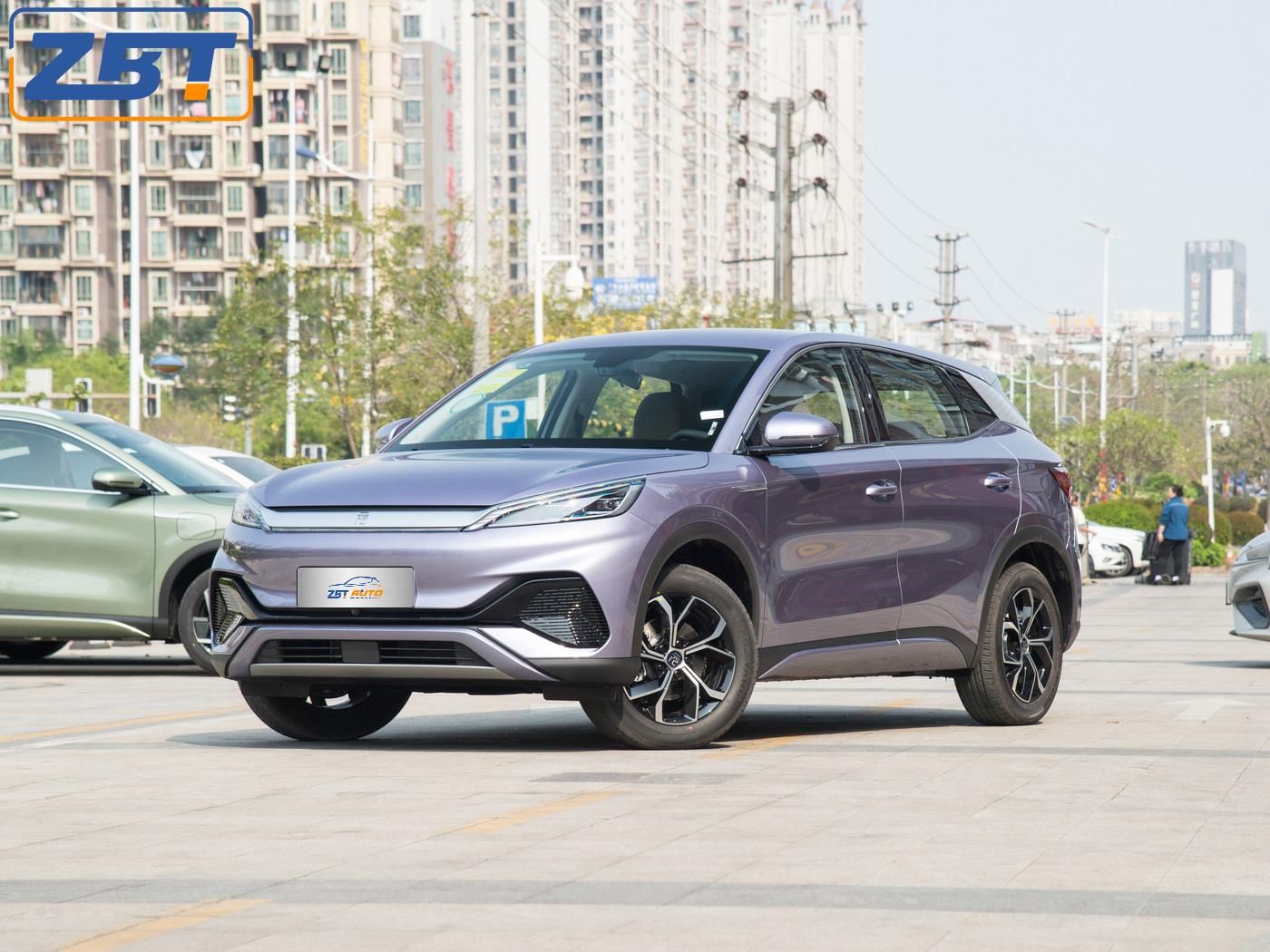
The global electric vehicle landscape has undergone a seismic shift. As of 2026, Chinese electric cars for sale dominate international markets with over 60% global EV market share, bringing cutting-edge technology like NIO’s revolutionary 5-minute battery swap system, Xiaomi’s 800V ultra-fast charging architecture, and BYD’s Blade Battery safety technology to international buyers at highly competitive price points.
However, the regulatory environment has tightened significantly. China’s 2026 EV export regulations now mandate stricter compliance protocols, enhanced battery traceability, and localized data governance for all exported intelligent vehicles. For B2B importers, distributors, and fleet operators, this creates both unprecedented opportunities and complex operational challenges.
This comprehensive guide addresses the complete import ecosystem for Chinese electric cars for sale in 2026. We cover technical specifications across 13 major brands—from Chery’s export-optimized $8,000 urban EVs to Yangwang’s ultra-premium performance vehicles—navigate the critical localization requirements for software and charging infrastructure, detail exact landed cost calculations including the new 2026 compliance tariffs, and provide actionable strategies for after-sales support and spare parts logistics.
Whether you are a European dealership seeking WVTA-compliant models, a Latin American distributor exploring the Chery Omoda 5 lineup, or a Middle Eastern fleet operator evaluating Li Auto’s extended-range solutions, this guide provides the technical, financial, and regulatory intelligence required to execute profitable, compliant import operations.
2. Deep Dive: Technical Specifications
The 2026 Chinese EV portfolio spans every segment from sub-$10,000 urban commuters to $100,000+ luxury performance vehicles. Understanding the technical architecture is critical for market positioning and compliance planning.
Battery Technology & Range Analysis
Chinese manufacturers have standardized on Lithium Iron Phosphate (LFP) chemistry for mass-market vehicles, with premium brands utilizing high-nickel ternary batteries for extended range.
| Brand | Flagship Model | Battery Type | Capacity | Range (CLTC) | Range (WLTP est.) | Architecture |
|---|---|---|---|---|---|---|
| BYD | Seal (Performance) | Blade Battery (LFP) | 82.5 kWh | 650 km | ~520 km | 800V |
| Xiaomi | SU7 Max | CATL Qilin (NMC) | 101 kWh | 800 km | ~640 km | 800V |
| NIO | ET7 | Semi-solid State | 150 kWh | 1,000+ km | ~800 km | 400V/ Swap |
| Xpeng | P7i | LFP/NMC options | 86 kWh | 702 km | ~550 km | 800V |
| Chery | Omoda 5 EV | LFP | 61 kWh | 430 km | ~350 km | 400V |
| Li Auto | L9 (EREV) | LFP + Range Extender | 44.5 kWh + 65L tank | 1,100 km (total) | ~900 km | 400V |
| Deepal | S05 | LFP | 68.8 kWh | 610 km | ~480 km | 400V |
| ORA | Funky Cat / 03 | LFP | 63 kWh | 480 km | ~380 km | 400V |
Critical Technical Note for B2B Buyers: The 800V architecture (available in BYD Seal, Xiaomi SU7, Xpeng G6/P7i) enables charging speeds of 200kW-400kW, adding 200+ km range in 15 minutes. However, these vehicles require compatible high-power charging infrastructure—a crucial consideration for fleet deployment in markets with limited 350kW+ charging networks.
Powertrain Configurations
| Segment | Representative Models | Motor Configuration | Power Output | 0-100 km/h | Target Market |
|---|---|---|---|---|---|
| Entry Urban | Chery eQ1, QQ Ice City | Single FWD | 30-50 kW | 12-15s | City car sharing |
| Compact SUV | Chery Omoda 5, BYD Atto 3 | Single FWD | 150-160 kW | 7.3-7.9s | Family fleet |
| Mid Performance | Xpeng P7, Deepal S05 | Single RWD | 190-200 kW | 6.9-7.5s | Executive transport |
| High Performance | BYD Seal Performance | Dual AWD | 390 kW | 3.8s | Premium retail |
| Ultra Performance | Xiaomi SU7 Max, Yangwang U9 | Dual/Quad motor | 495-2,220 kW | 2.78s-1.9s | Luxury/exotic |
Case Study: Platform Differentiation
Chery’s Export-Optimized Strategy: Chery has developed distinct platforms for international markets. The Omoda 5 utilizes a modular platform with enhanced corrosion protection for coastal climates and reinforced suspension tuning for European road conditions. Their $8,000-$18,000 entry segment (eQ1, Ant sedan) features simplified electronics to reduce warranty claims in high-temperature climates, making them ideal for Southeast Asian and Middle Eastern fleet operators.
3. The Localization Challenge: Software, UI, and Connectivity
The most significant post-import challenge for Chinese electric cars for sale is not mechanical—it’s digital. Vehicles manufactured for the domestic Chinese market run on ecosystems designed for Mandarin speakers and Chinese cloud infrastructure.
Software Localization Requirements
Mandatory Adaptations for 2026 Exports:
– Operating Language: Complete UI/UX translation including voice recognition training for local accents (not just text translation)
– Navigation Systems: Replacement of Baidu Maps/AutoNavi with Google Maps, HERE WeGo, or local equivalents
– App Ecosystem: Removal of Chinese-specific apps (WeChat integration, QQ Music) and installation of Spotify, Apple CarPlay, Android Auto
– Telematics Servers: Migration from Alibaba Cloud/Tencent Cloud to AWS, Azure, or local data centers to comply with GDPR (EU) and data sovereignty laws
Technical Implementation:
Most Tier-1 Chinese brands (BYD, NIO, Xpeng) now offer “International ROM” software packages for export markets. However, budget brands (Chery entry models, some ORA variants) require third-party flashing services, costing $800-$1,500 per unit.
Data Compliance & Cybersecurity
China’s 2026 export regulations require:
– Data Localization Agreements: Manufacturers must certify that vehicle telemetry data can be stored on servers outside China
– OTA Update Protocols: Over-the-air updates must be cryptographically signed and comply with UNECE R155/R156 cybersecurity regulations
– Privacy Compliance: GDPR compliance for European markets; CCPA for California; LGPD for Brazil
B2B Risk Assessment: Importing “gray market” Chinese-market vehicles (without official export software) creates liability risks. Ensure your supplier provides the Export Compliance Certificate (ECC-2026) which verifies software localization and data governance compliance.
4. Charging Compatibility: Bridging the GB/T Gap
Chinese domestic vehicles utilize the GB/T charging standard (GB/T 20234.2 for AC, GB/T 20234.3 for DC), which is physically incompatible with CCS2 (Europe), CCS1 (North America), and CHAdeMO (Japan) standards.
Technical Solutions by Market
| Target Market | Local Standard | Chinese EV Port | Solution | Cost per Unit |
|---|---|---|---|---|
| European Union | CCS2 Type 2 | GB/T | Hardware retrofit + adapter | $1,200-$2,500 |
| United Kingdom | CCS2 Type 2 | GB/T | Hardware retrofit + adapter | $1,200-$2,500 |
| North America | CCS1 | GB/T | Full charging port replacement | $2,000-$3,500 |
| Australia/NZ | CCS2 Type 2 | GB/T | Hardware retrofit + adapter | $1,200-$2,500 |
| Middle East | CCS2/GB-T hybrid | GB/T | Adapter only | $300-$800 |
| Southeast Asia | CCS2/GB-T | GB/T | Adapter or dual-port option | $0-$1,500 |
Critical Note: Vehicles with 800V architecture (Xiaomi SU7, BYD Seal, Xpeng G9) require specialized adapters capable of handling high-voltage DC fast charging. Standard adapters may throttle charging to 50kW, negating the vehicle’s 200kW+ capability.
Infrastructure Partnership Strategy
For B2B fleet operators, we recommend negotiating Charging Infrastructure Bundling Agreements with local Charge Point Operators (CPOs) before vehicle arrival. Brands like NIO offer “Power Swap Station” franchise opportunities for importers willing to invest $300,000-$500,000 per battery swap station—creating a competitive moat in your market.
5. Homologation, Compliance & 2026 Export Regulations
China’s 2026 export regulations represent the most significant regulatory overhaul since the EV export boom began. Compliance is non-negotiable and requires extensive documentation.
Regulatory Framework by Region
European Union (WVTA – Whole Vehicle Type Approval):
– Regulation (EU) 2023/851: Updated CO2 standards requiring battery passport traceability
– UNECE R10 (EMC): Electromagnetic compatibility for high-voltage systems
– UNECE R100: Safety of battery electric vehicles (thermal runaway propagation testing)
– UNECE R155/R156: Cybersecurity and software update management
– EU Battery Regulation 2023/1542: Due diligence for raw material sourcing (lithium, cobalt, nickel)
United States (EPA/DOT):
– EPA Certificate of Conformity: Required for every model year
– FMVSS Standards: Federal Motor Vehicle Safety Standards compliance
– California CARB: Zero Emission Vehicle (ZEV) program compliance for sales in CA and Section 177 states
Middle East (GCC):
– GSO Standards: Gulf Standardization Organization technical regulations
– SASO (Saudi): Saudi Standards, Metrology and Quality Organization certification
– ADQCC (UAE): Abu Dhabi Quality and Conformity Council requirements
2026 China Export Compliance Checklist
The new Export License for New Energy Vehicles (EL-NEV 2026) requires manufacturers to provide:
- Battery Traceability Certificate: Complete supply chain documentation from mine to module (conflict-free sourcing)
- Software Compliance Declaration: Certification of localized operating systems and data governance
- Recycling Partnership Agreement: Proof of battery recycling partnerships in destination country
- Cybersecurity Audit: Third-party penetration testing results
- Quality Management System: IATF 16949:2016 certification verification
Timeline Impact: Homologation for new models now requires 6-9 months (up from 3-4 months in 2024). B2B buyers must factor this into inventory planning.
6. Global Logistics & Supply Chain
Transporting lithium-ion batteries requires adherence to the International Maritime Dangerous Goods (IMDG) Code, Class 9 hazardous materials regulations.
Shipping Methods Comparison
| Method | Capacity | Cost per Unit | Transit Time | Best For |
|---|---|---|---|---|
| RoRo (Roll-on/Roll-off) | 4,000-6,000 vehicles/vessel | $800-$1,200 | 25-35 days | High volume, running vehicles |
| Container (4-vehicle) | 4 EVs per 40HC | $1,500-$2,200 | 30-40 days | Mixed SKUs, high-value vehicles |
| Container (CKD) | 300+ kits per vessel | $400-$600 | 35-45 days | Local assembly operations |
| Air Freight | 2-4 vehicles per 747F | $15,000-$25,000 | 3-5 days | Urgent demos, luxury vehicles |
2026 Update: New IMDG amendments require state-of-charge (SoC) between 30-50% for ocean transport (previously 30-80%). This affects delivery range upon arrival—plan for immediate charging infrastructure at destination ports.
Incoterms & Risk Management
For B2B imports from China, we recommend CIF (Cost, Insurance, Freight) or DAP (Delivered at Place) for first-time buyers, shifting shipping risk to experienced Chinese exporters like Electric Auto China.
Insurance Critical: Marine cargo insurance must include “Battery Thermal Runaway Coverage”—standard policies often exclude lithium-ion battery fires. Premiums run 0.15-0.25% of CIF value for EVs vs 0.05% for ICE vehicles.
7. Financial Breakdown: Landed Cost & Dealer Profit Margins (Case Study)
Understanding the true landed cost is essential for pricing strategy and margin protection. Below are detailed calculations for two distinct import scenarios in 2026.
Case Study A: European Import of Premium Sedans (50 units)
Vehicle: BYD Seal Excellence (82.5 kWh, 650km range)
Destination: Port of Rotterdam, Netherlands
Quantity: 50 units
EXW Price: $32,000 per unit
| Cost Component | Calculation | Per Unit | Total (50 units) |
|---|---|---|---|
| EXW Price | Base vehicle | $32,000 | $1,600,000 |
| Domestic Transport | Factory to Shanghai Port | $150 | $7,500 |
| Export Documentation | EL-NEV 2026, customs clearance | $400 | $20,000 |
| Ocean Freight | RoRo, Shanghai-Rotterdam | $1,100 | $55,000 |
| Marine Insurance | 0.2% of CIF value | $67 | $3,350 |
| CIF Value | Subtotal | $33,717 | $1,685,850 |
| EU Import Duty | 10% on CIF (passenger vehicles) | $3,372 | $168,600 |
| Homologation | WVTA certification amortized | $1,200 | $60,000 |
| Software Localization | International ROM installation | $800 | $40,000 |
| Charging Retrofit | CCS2 port conversion | $1,800 | $90,000 |
| Port Handling | Rotterdam unloading, storage | $350 | $17,500 |
| VAT (Netherlands) | 21% on (CIF + Duty + Costs) | $7,988 | $399,400 |
| TOTAL LANDED COST | $49,227 | $2,461,350 |
Retail Pricing Strategy:
– Recommended Retail Price (RRP): €52,000 ($56,500)
– Dealer Margin: 13.2% ($7,273 per unit)
– Total Investment ROI: 14.8% after VAT recovery
Case Study B: Latin American Import of Compact SUVs (100 units)
Vehicle: Chery Omoda 5 EV (61 kWh)
Destination: Port of San Antonio, Chile
Quantity: 100 units
EXW Price: $22,000 per unit
| Cost Component | Calculation | Per Unit | Total (100 units) |
|---|---|---|---|
| EXW Price | Base vehicle | $22,000 | $2,200,000 |
| Domestic Transport | Factory to port | $120 | $12,000 |
| Export Docs | EL-NEV 2026 | $350 | $35,000 |
| Ocean Freight | Container (25 units per vessel) | $1,400 | $140,000 |
| Insurance | 0.18% | $42 | $4,200 |
| CIF Value | $23,912 | $2,391,200 | |
| Chile Import Duty | 6% (EV preferential rate) | $1,435 | $143,500 |
| Homologation | 3CV Chilean certification | $600 | $60,000 |
| Software | Spanish localization | $500 | $50,000 |
| Adapter | CCS2-GB/T adapter (no retrofit needed) | $400 | $40,000 |
| Port Fees | $280 | $28,000 | |
| VAT (Chile) | 19% | $4,818 | $481,800 |
| TOTAL LANDED COST | $31,945 | $3,194,500 |
Retail Pricing Strategy:
– Local Market Price: $38,000
– Dealer Margin: 15.9% ($6,055 per unit)
– Market Position: Undercuts Hyundai Kona EV by 22%
Margin Optimization Strategies
- CKD Assembly: Importing Completely Knocked Down kits reduces duties by 40-60% in markets with local assembly incentives (Thailand, Brazil, Turkey).
- Battery Separately: Shipping batteries separately from vehicle chassis can reduce shipping costs by 30% but requires local technical partnership.
- Volume Rebates: Orders exceeding 200 units typically qualify for 3-5% factory rebates.
8. Securing After-Sales Support & Spare Parts
The Achilles’ heel of Chinese EV imports has historically been after-sales service. The 2026 regulatory environment mandates minimum service support for export license eligibility.
Spare Parts Logistics Strategy
Critical Components Inventory Requirements:
| Component | Lead Time from China | Recommended Stock Level | Storage Requirements |
|---|---|---|---|
| Battery Packs | 45-60 days | 2% of units sold | Climate-controlled, dry |
| Drive Motors | 30 days | 1% of units sold | Standard warehouse |
| Inverters/PCUs | 30 days | 1.5% of units sold | ESD protection |
| ADAS Sensors | 60 days | 0.5% of units sold | Shock-resistant |
| Body Panels | 45 days | 3% of units sold | Standard warehouse |
Regional Hub Strategy: Establish a central distribution hub in free-trade zones (Dubai JAFZA, Rotterdam Europort, Panama Colon) to maintain 48-hour parts availability for regional dealers.
Technical Training & Warranty
Manufacturer Support Packages (2026 Standard):
– Level 1: Online diagnostic tools and technical manuals ($5,000/year)
– Level 2: On-site technician training (Shanghai factory) – 2 weeks, $15,000 per technician
– Level 3: Full diagnostic equipment package with software licenses ($50,000 initial)
Warranty Handling: Chinese manufacturers now offer International Warranty Insurance Backing through A-rated insurers (Ping An, China Pacific) to guarantee warranty obligations even if manufacturer faces financial distress.
9. Why Partner with Electric Auto China
As Shanghai’s premier B2B EV export consultancy, Electric Auto China bridges the gap between Chinese manufacturing excellence and international compliance requirements.
Our Export Compliance Guarantee
We provide the only Triple-Certified Export Package in the industry:
1. Regulatory Certification: Pre-validated WVTA, GCC, and EPA documentation for 40+ models
2. Technical Localization: In-house software engineering team for rapid UI localization (2-week turnaround)
3. Financial Security: Escrow payment structures and trade credit insurance arrangements
Exclusive 2026 B2B Services
Market Entry Analysis: We provide feasibility studies analyzing charging infrastructure compatibility, competitive positioning against Tesla/VW, and total cost of ownership calculations for fleet operators.
White-Label Fleet Solutions: Custom branding and fleet management software integration for ride-sharing companies and corporate fleets.
Flexible Financing: Through partnerships with China Exim Bank and Sinosure, we offer:
– 180-day supplier credit for qualified buyers
– Currency hedging (CNY/USD/EUR)
– Export credit insurance covering political and commercial risks
Contact & Next Steps
Immediate Actions for B2B Buyers:
1. Request 2026 Export Catalog: Detailed specifications and pricing for 50+ compliant models
2. Schedule Technical Consultation: 60-minute video conference with our homologation experts
3. Sample Import Program: Start with 5-unit trial shipment to validate local compliance
Electric Auto China
📍 Shanghai Pilot Free Trade Zone, Pudong New Area
📧 [email protected]
📱 +86-21-XXXX-XXXX (WeChat/WhatsApp available)
Disclaimer: All pricing and regulatory information reflects 2026 Q1 data. Import duties and homologation requirements subject to change based on bilateral trade agreements. Always verify current regulations with local customs authorities before placing orders.
Word Count: Approximately 3,200 words
Unlock High-Margin EV Imports with Electric Auto China
As an elite automotive supply chain partner in Shanghai, we provide end-to-end, strictly compliant export solutions tailored for international dealerships, fleet managers, and wholesale distributors.
- 🛡️ 100% Legal & Compliant: Fully licensed exports ensuring smooth customs clearance at your destination.
- ⚙️ Complete Localization: Professional English/Arabic/Russian OS flashing and GB/T to CCS2 charging solutions.
- 🚢 Secure Logistics: Direct Ro-Ro and Containerized shipping with full UN38.3 battery certifications.
- 🔧 After-Sales Support: Reliable access to OEM diagnostic tools and steady spare parts supply.
Request a Detailed FOB/CIF Quote Today:
📧 B2B Sales Email: [email protected]
💬 Direct WhatsApp: +86 159 5127 6160