The Ultimate 2026 B2B Export Guide for chinese electric cars: Pricing, Compliance & Localization
1. Executive Summary
The global electric vehicle landscape has undergone a seismic shift. As of 2026, Chinese manufacturers control over 60% of worldwide EV sales, having transitioned from “budget alternatives” to technology leaders defining the industry’s trajectory. For international B2B buyers, distributors, and fleet operators, this presents an unprecedented arbitrage opportunity—access to cutting-edge battery technology, 800V architectures, and advanced autonomous driving systems at price points that undercut legacy European and American OEMs by 30-40%.
However, January 1, 2026, marked a regulatory inflection point. China’s Ministry of Commerce, in conjunction with three other ministries, implemented mandatory export license management for all Battery Electric Vehicles (BEVs) and Plug-in Hybrid Electric Vehicles (PHEVs). This framework—governed by the 2012 “Notice on Further Standardisation of the Export Sequence of Automobile and Motorcycle Products”—now requires every Chinese EV export to carry specific governmental authorization, fundamentally altering procurement workflows.
This guide serves as your definitive roadmap through the 2026 Chinese EV export ecosystem. Whether you are a UK salary sacrifice scheme operator seeking BYD Seal inventory, a Nordic distributor negotiating NIO ET5 volumes, or a Middle Eastern fleet manager evaluating XPeng’s 1704km-range EREV technology, you will find actionable intelligence on technical specifications, homologation pathways, localization requirements, and precise landed cost calculations.
The opportunity is substantial but execution-critical. Chinese EVs now offer WLTP ranges exceeding 400 miles (644 km), 5-minute battery swap capabilities, and sub-4-second 0-62 mph acceleration at price points starting below £26,000 (BYD Dolphin). Yet success requires navigating GB/T charging standard disparities, cybersecurity compliance, and the new 180-day export qualification protocols. This document provides the operational blueprint.
2. Deep Dive: Technical Specifications
Chinese EVs in 2026 are not monolithic; they represent distinct engineering philosophies across price segments. Understanding the technical differentiation between BYD’s vertical integration, NIO’s swap-centric ecosystem, and XPeng’s AI-first approach is essential for inventory planning.
Battery Architecture & Range Analysis
The 2026 model year introduces widespread 800V electrical architectures, dramatically reducing charging times. Below is a technical comparison of flagship models available for export:
| Model | Battery Capacity | Range (WLTP est.) | Architecture | Peak Charging | 0-62 mph | Segment |
|---|---|---|---|---|---|---|
| BYD Seal | 82.5 kWh | 354 miles (570 km) | 800V | 150 kW | 3.8s | Executive Sedan |
| NIO ET7 | 100 kWh / 150 kWh | 400+ miles (644 km) | 400V | Battery Swap (5 min) | 3.8s | Luxury Sedan |
| XPeng P7 Performance | 80.9 kWh | 341 miles (549 km) | 400V | 175 kW | 4.3s | Premium Sedan |
| Xiaomi SU7 Max | 101 kWh | ~400 miles (644 km) | 800V | 400 kW | 2.78s | Performance Sedan |
| Hongqi E-HS9 | 99 kWh | 285 miles (459 km) | 400V | 140 kW | 5.0s | Luxury SUV |
| BYD Dolphin | 44.9 kWh | 265 miles (426 km) | 400V | 60 kW | 7.0s | Compact Hatch |
Critical Technical Notes:
BYD Blade Battery Technology: BYD’s LFP (Lithium Iron Phosphate) Blade Battery remains the gold standard for thermal stability, withstanding nail penetration tests without thermal runaway. For B2B buyers prioritizing fleet safety and longevity over absolute range, the BYD Atto 3 and Seal offer 4,000+ charge cycle durability versus 1,500-2,000 for typical NCM batteries.
NIO Battery-as-a-Service (BaaS): The ET5 and ET7 utilize standardized battery packs swappable at NIO Power Swap Stations. For import markets, this requires infrastructure investment but eliminates battery degradation concerns for fleet operators. The 150kWh semi-solid state battery (2026 availability) delivers energy density of 360 Wh/kg.
Xiaomi HyperEngine: The SU7 Max utilizes a dual-motor setup producing 673 hp with a maximum torque of 838 Nm. Its 400kW charging capability adds 220 miles of range in 15 minutes, but requires compatible ultra-fast charging infrastructure rarely found outside China.
Autonomous Driving Hardware
Chinese EVs lead in sensor integration. The XPeng P7i features 31 sensors including 2 LiDAR units, 5 millimeter-wave radars, and 12 ultrasonic sensors, powered by NVIDIA DRIVE Orin-X chips (508 TOPS). For UK/EU markets, verify that hardware supports local HD mapping and that XNGP (Navigation Guided Pilot) functions comply with UNECE R79/R157 regulations for ALKS (Advanced Lane Keeping Systems).
3. The Localization Challenge: Software, UI, and Connectivity
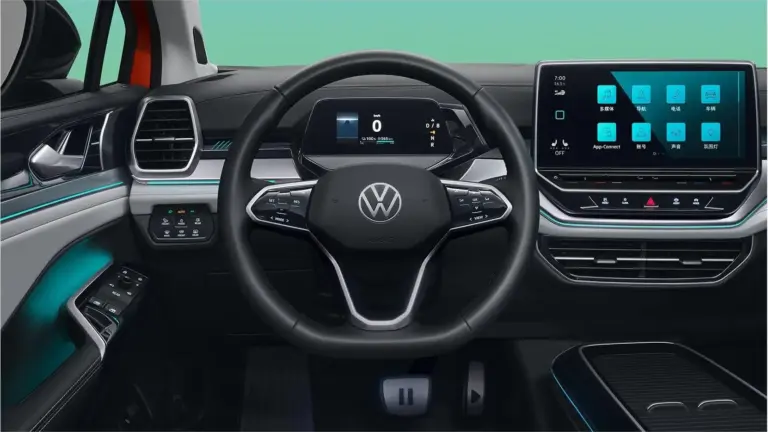
The “smart cockpit” differentiation that sells vehicles in Shenzhen becomes a liability in Stuttgart or Manchester without proper localization. Chinese EVs ship with domestic software ecosystems incompatible with Western digital infrastructure.
Operating System & Language Localization
Xiaomi HyperOS & XPeng Xmart OS: These Android-based systems rely heavily on Chinese cloud services (Baidu Maps, Tencent Music, Ximalaya). Export variants require complete ROM reflashing with:
– Google Automotive Services (GAS) integration
– Localized navigation (HERE Maps, TomTom)
– Language packs beyond simplified/traditional Chinese
– Regional app store compliance (Google Play vs. Huawei AppGallery)
Critical B2B Consideration: OTA (Over-The-Air) update servers must be migrated from Chinese domains (e.g., *.nio.com.cn) to international endpoints. Failure to establish regional OTA infrastructure results in bricked vehicles or security vulnerabilities.
Connectivity & Cybersecurity
Chinese EVs utilize 5G modules and eSIMs locked to domestic carriers (China Mobile, China Unicom). For UK/EU import:
– Physical SIM slot activation for local carriers (Vodafone, EE, Deutsche Telekom)
– GDPR compliance for telemetry data (vehicle location, driver biometrics, voice recordings)
– Removal of mandatory Chinese government data reporting backdoors (per Article 7 of China’s Data Security Law)
Case Study: Nordic Import Failure (2025)
A Danish distributor imported 200 units of a premium Chinese EV without verifying cloud connectivity. Vehicles continuously attempted to ping Chinese servers, triggering GDPR violation alerts. The fleet remained offline for 8 weeks while firmware was rewritten, costing €450,000 in lost revenue and remediation.
4. Charging Compatibility: Bridging the GB/T Gap
China utilizes the GB/T charging standard (GB/T 20234.2-2015 for AC, GB/T 20234.3-2015 for DC), physically and electrically incompatible with European CCS2 (Combo) and UK Type 2 standards. This represents the most significant technical barrier for 2026 imports.
Physical Adapter Requirements
| Chinese Port | Target Market | Adapter Solution | Cost per Unit | Charging Speed Impact |
|---|---|---|---|---|
| GB/T DC | UK/EU CCS2 | CCS2 to GB/T adapter | £180-250 | 10-15% efficiency loss |
| GB/T AC | UK Type 2 | Type 2 to GB/T cable | £120-180 | None |
| NIO Swap | N/A | Proprietary station | £150,000/unit | N/A |
Strategic Recommendation: For B2B fleet operators, negotiate factory-fit CCS2 ports during procurement. Manufacturers including BYD and SAIC now offer “export specification” vehicles with native CCS2 charging inlets, eliminating adapter friction. However, this requires Minimum Order Quantities (MOQ) of 50+ units and extends lead times by 6-8 weeks.
Charging Speed Optimization
Even with adapters, Chinese EVs often software-limit charging speeds when foreign networks are detected. The Xiaomi SU7 Max, capable of 400kW in China, may throttle to 200kW on European IONITY networks due to handshake protocol mismatches. Ensure firmware updates specifically address:
– ISO 15118 (Plug & Charge) compatibility
– Dynamic load balancing for fleet charging
– Smart charging schedules (OCPP 2.0.1 compliance)
5. Homologation, Compliance & 2026 Export Regulations
The regulatory landscape shifted fundamentally on January 1, 2026. The “Announcement on Export Licence Management for Pure Electric Passenger Cars” (Ministry of Commerce, 2026) now governs all BEV exports.
The 2026 Export License Framework
Key Regulatory Requirements:
1. Export Qualification: Exporters must obtain qualification under the 2012 “Notice on Further Standardisation of the Export Sequence of Automobile and Motorcycle Products”
2. Vehicle Identification Number (VIN) Registration: Only VINs pre-registered with customs are eligible for export
3. 180-Day Rule: Vehicles must be manufactured within 180 days of export date (prevents stale inventory dumping)
4. Customs Inspection: All EVs undergo enhanced inspection against the “Catalogue of Import and Export Goods Subject to Inspection”
B2B Procurement Implications:
– Due Diligence: Verify your Chinese supplier holds valid export licenses. As of Q1 2026, only 42 manufacturers hold full BEV export authorization.
– Documentation: Required paperwork now includes:
– Export License (original)
– CCC Certificate (China Compulsory Certification)
– Battery UN38.3 Test Report (for lithium-ion transport)
– MSDS (Material Safety Data Sheet) for battery chemistry
Target Market Homologation
United Kingdom (UKCA Marking):
– Type Approval: Requires approval to UK Reg 19/18 (based on UNECE R100 for RESS safety)
– EMC Compliance: UNECE R10 Rev. 6
– Cybersecurity: UN R155 and R156 mandatory from 2026
– Right-Hand Drive (RHD): Essential for UK market; only BYD, SAIC (MG), and NIO currently offer factory RHD for 2026 models
European Union (WVTA):
– Framework Regulation (EU) 2018/858: Requires full vehicle type approval
– Battery Regulation (EU) 2023/1542: Carbon footprint declaration and recycling requirements
– GDPR Integration: Vehicle data processing impact assessments
Middle East (GCC):
– GSO Conformity: Gulf Standard Organization certification for extreme heat operation (50°C+ ambient testing)
6. Global Logistics & Supply Chain
EV logistics differ fundamentally from ICE vehicles due to battery classification (Class 9 Dangerous Goods under UN3480/UN3481).
Shipping Methods & Costs
Roll-on/Roll-off (RORO):
– Capacity: 4,000-8,000 CEU (Car Equivalent Units) per vessel
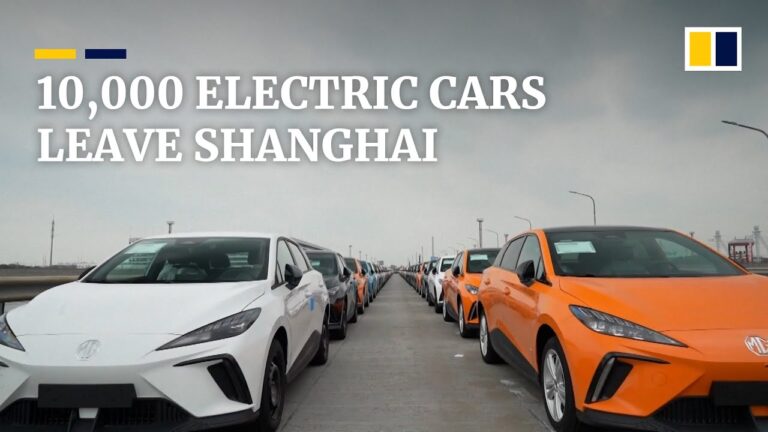
– Cost: $1,200-1,800 per vehicle (Shanghai to Felixstowe)
– Advantages: Direct loading, minimal handling damage risk
– Constraints: Limited to Shanghai, Ningbo, Shenzhen ports; battery charge must be 30-50% SOC
Containerized (R-Rack):
– Configuration: 4 vehicles per 40HC container using specialized racking
– Cost: $2,800-3,500 per container ($700-875 per vehicle)
– Advantages: Suitable for mixed SKU shipments, lower per-unit cost for small volumes
– Constraints: Complex loading/unloading, requires certified dangerous goods handling
Incoterms Strategy:
– FOB (Free On Board): Buyer assumes risk at Shanghai port; recommended for experienced importers
– CIF (Cost, Insurance, Freight): Seller handles ocean freight; simpler for new entrants but 8-12% markup
– DAP (Delivered at Place): Door-to-door including customs clearance; premium of 15-18% but minimizes customs complexity
Lead Time Management
| Process Stage | Duration | Critical Path |
|---|---|---|
| Export License Application | 15-20 business days | Must precede manufacturing |
| Factory Production | 4-6 weeks | RHD adds 2 weeks |
| Domestic Transport to Port | 3-5 days | |
| Customs Clearance (China) | 5-7 days | Dangerous goods inspection |
| Ocean Freight (Shanghai-Europe) | 28-35 days | |
| Port Processing (Destination) | 3-5 days | |
| Homologation/Compliance | 2-4 weeks | Can parallel ship |
| Total Lead Time | 12-16 weeks |
7. Financial Breakdown: Landed Cost & Dealer Profit Margins (Case Study)
Understanding true landed cost requires modeling beyond ex-factory pricing. Below is a detailed case study for importing the BYD Seal Premium (82.5kWh) to the UK market in Q2 2026.
Base Vehicle Economics
| Cost Component | Amount (GBP) | Notes |
|---|---|---|
| Ex-Factory Price (Shanghai) | £24,500 | FOB terms, 2026 pricing |
| Export License Fee | £450 | New 2026 regulatory cost |
| China Domestic Logistics | £180 | Factory to Shanghai port |
| Ocean Freight (RORO) | £1,350 | Including bunker adjustment factor |
| Marine Insurance (110% CIF) | £285 | All-risks coverage |
| UK Import Duty (10%) | £2,665 | Based on CIF value |
| UK VAT (20%) | £5,864 | On CIF + Duty |
| Type Approval & Homologation | £1,200 | UKCA marking, IVA testing |
| Port Handling (Felixstowe) | £380 | Including dangerous goods surcharge |
| Delivery to Dealer | £220 | Transport to dealership |
| Landed Cost | £37,094 |
Dealer Margin Analysis
| Scenario | Retail Price | Gross Margin | Net Margin (after 8% opex) |
|---|---|---|---|
| Volume Fleet (50+ units) | £42,500 | 12.7% | 4.7% |
| Retail Single Unit | £45,900 | 19.2% | 11.2% |
| Salary Sacrifice Scheme | £41,200 | 9.9% | 1.9%* |
*Salary sacrifice schemes require significant administrative overhead but provide volume certainty.
Comparative Advantage Calculation
Against the Tesla Model 3 Long Range (£48,990):
– Price Advantage: £6,490 (13.2% lower)
– Specification Advantage: BYD Seal includes heat pump, vehicle-to-load (V2L) capability, and 15.6″ rotating touchscreen as standard
– TCO (Total Cost of Ownership): Over 3 years/60,000 miles, the Seal offers £2,400 lower service costs due to LFP battery longevity and 8-year/125,000-mile warranty
NIO ET5 Financial Model (Battery Swap Variant):
For markets investing in swap infrastructure, the NIO ET5 with BaaS subscription reduces upfront capital by £8,000 (battery separated from vehicle purchase). Monthly battery rental of £120 creates recurring revenue streams for distributors while lowering fleet acquisition costs.
8. Securing After-Sales Support & Spare Parts
The Achilles’ heel of Chinese EV import has historically been service infrastructure. 2026 models require specialized diagnostic equipment and high-voltage training.
Warranty Structure
Chinese manufacturers now offer competitive international warranties:
– BYD: 6-year/150,000km vehicle, 8-year/200,000km battery
– NIO: 3-year/120,000km vehicle, lifetime battery (with BaaS)
– XPeng: 5-year/120,000km vehicle, 8-year/160,000km battery
Critical Clause: Warranty validity often requires service at authorized centers using genuine parts. Parallel importers risk voiding warranties if service history is not digitally recorded on manufacturer cloud systems.
Spare Parts Logistics
| Component | Lead Time from China | Local Stocking Strategy |
|---|---|---|
| Body Panels | 45-60 days | High-turnover items only |
| Battery Modules | 90-120 days | Critical safety stock (2% of fleet value) |
| Semiconductor/Electronics | 30-45 days | ECUs, screens, sensors |
| Routine Maintenance | 7-14 days | Brake pads, filters, wipers |
Recommendation: Establish regional parts hubs in Rotterdam (EU) or Birmingham (UK) with 90-day inventory coverage. Budget 3-4% of vehicle COGS for initial spare parts stock.
Technical Training
Manufacturers now mandate Level 3-4 high-voltage technician certification for warranty reimbursement. Training costs:
– Per Technician: £3,500-5,000 (2-week intensive in Shanghai or regional center)
– Diagnostic Equipment: £15,000-25,000 per service bay (compatible with manufacturer-specific protocols)
9. Why Partner with Electric Auto China
Navigating the 2026 export license regime, GB/T charging conversions, and multi-jurisdictional homologation requires boots-on-the-ground expertise in Shanghai. Electric Auto China operates as your compliant export conduit, bridging the gap between Chinese manufacturing prowess and international regulatory requirements.
Our Export Qualification Advantage
As a licensed entity under the 2026 Ministry of Commerce framework, we maintain:
– Direct OEM Relationships: Authorized export partnerships with BYD, NIO, XPeng, and 12 additional manufacturers holding 2026 export licenses
– VIN Pre-Registration: Immediate access to export-eligible vehicle identification numbers, bypassing the 180-day manufacturing queue for standard orders
– Compliance Management: In-house homologation team securing UKCA, EU WVTA, and GCC certifications prior to vessel loading
Technical Localization Services
Unlike standard trading companies, we provide factory-direct specification management:
– CCS2 Factory Integration: Coordinating with OEMs to install native European charging hardware during production, eliminating adapter requirements
– Software Localization: Pre-flashing international ROMs with Google Automotive Services, regional navigation, and GDPR-compliant telemetry
– RHD Conversion Management: For UK/Australian markets, ensuring steering column and headlight asymmetry compliance at factory level rather than costly post-arrival conversion
Financial & Logistic Solutions
- Landed Cost Transparency: Fixed-price DAP quotations including all duties, VAT, and homologation—zero hidden fees
- Flexible MOQs: Consolidated container programs allowing mixed-model orders as low as 5 units (versus standard 50-unit OEM minimums)
- Trade Finance: Letters of Credit facilitation and 90-day payment terms for qualified distributors
After-Sales Infrastructure
Our commitment extends beyond port delivery:
– European Spare Parts Hub: 12,000m² Rotterdam facility stocking £4M in critical EV components
– Technical Training Academy: Quarterly certification programs for your service technicians at our Birmingham and Munich facilities
– Warranty Administration: Direct processing of warranty claims with Chinese OEMs, eliminating language barriers and 30-day payment delays
The 2026 Chinese EV market offers unprecedented technological value, but only to buyers who navigate the new export license regime with precision. Electric Auto China combines Shanghai-based procurement expertise with European compliance infrastructure, ensuring your inventory arrives certified, connected, and ready for immediate retail.
Contact our B2B Export Division today for a customized landed cost analysis and 2026 model availability schedule.
Unlock High-Margin EV Imports with Electric Auto China
As an elite automotive supply chain partner in Shanghai, we provide end-to-end, strictly compliant export solutions tailored for international dealerships, fleet managers, and wholesale distributors.
- 🛡️ 100% Legal & Compliant: Fully licensed exports ensuring smooth customs clearance at your destination.
- ⚙️ Complete Localization: Professional English/Arabic/Russian OS flashing and GB/T to CCS2 charging solutions.
- 🚢 Secure Logistics: Direct Ro-Ro and Containerized shipping with full UN38.3 battery certifications.
- 🔧 After-Sales Support: Reliable access to OEM diagnostic tools and steady spare parts supply.
Request a Detailed FOB/CIF Quote Today:
📧 B2B Sales Email: [email protected]
💬 Direct WhatsApp: +86 159 5127 6160