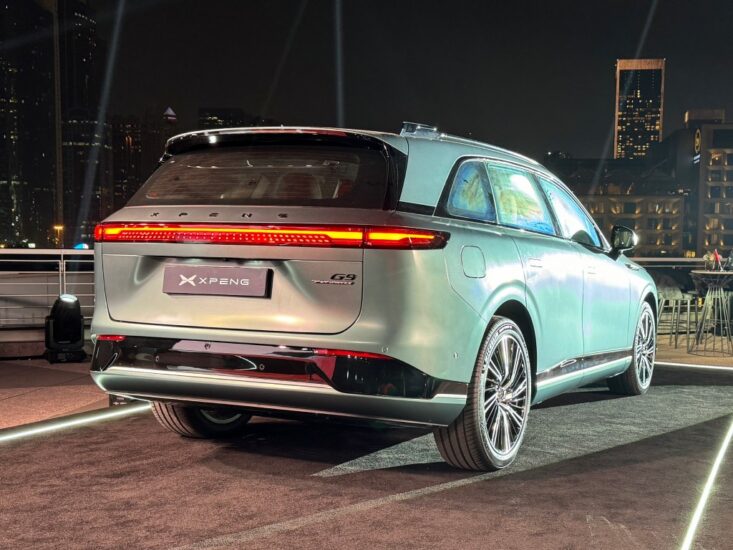
The Ultimate 2026 B2B Export Guide for Chinese EV cars: Pricing, Compliance & Localization
1. Executive Summary
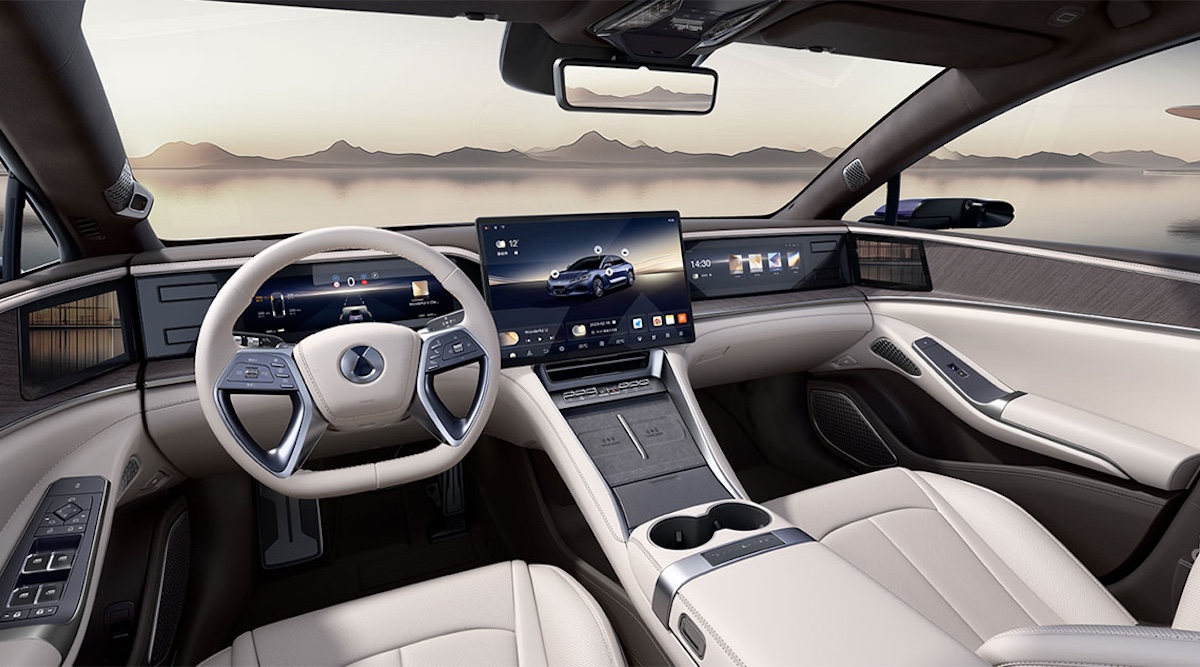
The global automotive landscape has undergone a seismic shift. With Chinese electric vehicles commanding over 60% of global EV sales in 2025, the Middle Kingdom has evolved from a manufacturing hub to the epicenter of electric innovation. For international B2B buyers, 2026 presents both unprecedented opportunities and complex regulatory hurdles following China’s implementation of strict export permit requirements effective January 1, 2026.
The 2026 Chinese EV portfolio spans the entire market spectrum. Entry-level disruptors like the BYD Dolphin (circa £26,000) offer accessible electrification, while the luxury segment is dominated by the Hongqi E-HS9 (exceeding £100,000) and the extreme performance Yangwang U9 Extreme, boasting a staggering 2,220kW quad-motor output (2,977 hp). Between these extremes lies the technological sweet spot: the BYD Seal delivering 354 miles WLTP range, the NIO ET7 offering 400+ miles with revolutionary 5-minute battery swap capability, and the Xiaomi SU7 featuring 800V architecture enabling 400kW charging speeds.
However, the regulatory environment has tightened significantly. The Chinese Commerce Ministry now mandates export permits for all EV shipments, implementing a strict 180-day ownership rule to prevent illegal new car exports while facilitating legitimate used vehicle trade. Simultaneously, Western markets have erected tariff barriers—the United States imposing tariffs exceeding 100% and the European Union enforcing provisional countervailing duties.
This guide provides the technical, logistical, and financial framework necessary to navigate these complexities. Whether you are a UK salary sacrifice scheme operator seeking BYD Atto 3 fleets, a German importer targeting the XPeng P7’s advanced ADAS capabilities, or a Middle Eastern distributor for NIO’s battery-swap ecosystem, understanding the 2026 compliance landscape is non-negotiable.
2. Deep Dive: Technical Specifications
Chinese EVs in 2026 are no longer “budget alternatives” but technological leaders, particularly in battery chemistry and charging infrastructure. The following comparative analysis reveals why these vehicles are capturing market share from legacy European and American manufacturers.
2.1 Premium Sedan Segment Analysis
| Model | Battery Capacity | Range (WLTP est.) | Architecture | Max Charging | 0-100 km/h | Drag Coefficient |
|---|---|---|---|---|---|---|
| BYD Seal | 82.5 kWh (Blade LFP) | 354 miles | 400V | 150 kW | 5.9s | 0.219 Cd |
| NIO ET7 | 100 kWh (Semi-solid state) | 400+ miles | 400V | Battery Swap (5 min) / 130 kW DC | 3.8s | 0.208 Cd |
| Xiaomi SU7 Max | 101 kWh (CATL NMC) | ~400 miles | 800V | 400 kW (15 min = 220 mi) | 2.78s | 0.195 Cd |
| XPeng P7 Performance | 80.9 kWh | 341 miles | 400V | 175 kW (10-80% <30 min) | 4.3s | 0.236 Cd |
Critical Technical Notes:
The Xiaomi SU7 represents the vanguard of 800V architecture adoption, enabling sustained 400kW charging that adds 220 miles of range in 15 minutes. This requires compatible 800V infrastructure abroad—a consideration for B2B fleet operators planning charging depots.
NIO’s battery swap system (BaaS – Battery as a Service) requires significant infrastructure investment but eliminates range anxiety and battery degradation concerns. The ET7’s semi-solid state battery achieves energy densities exceeding 360 Wh/kg, compared to conventional LFP’s 160-180 Wh/kg.
2.2 SUV and Crossover Segment
| Model | Powertrain | Battery | Range (CLTC/WLTP est.) | Key Technology |
|---|---|---|---|---|
| Deepal S05 | 200kW RWD | 68.8 kWh LFP | 610km CLTC (~380mi WLTP) | Rear-motor efficiency |
| BYD Sealion 06 | Dual Motor AWD | Blade Battery | TBA | CTB (Cell-to-Body) integration |
| Hongqi E-HS9 | Dual Motor 405kW | 99 kWh | 465km CLTC (~290mi WLTP) | Luxury air suspension |
| Luxeed V9 | 800V DriveONE | 100 kWh Giant Whale | 400km+ (EV mode) | Huawei ADS 3.0 (Level 3) |
2.3 Emerging Technology: Solid-State and Ultra-Performance
The MG4 Anxin Edition introduces liquid-solid-state battery technology to mass production, utilizing a 120kW motor to deliver 530km CLTC range with enhanced thermal stability. This represents a transitional technology between conventional lithium-ion and full solid-state batteries.
At the extreme end, the Yangwang U9 Extreme showcases Chinese engineering capabilities with 2,220kW total output from four independent motors, enabling torque vectoring precision impossible with mechanical differentials. While production is ultra-limited, it signals the sophistication of Chinese motor and inverter technology.
2.4 Efficiency Leaders
The XPeng P7 achieves exceptional efficiency through aerodynamic optimization (0.236 Cd) and intelligent thermal management. Meanwhile, the FAW-Toyota bZ3 demonstrates Sino-Japanese collaboration, utilizing BYD’s Blade Battery technology (49.9-65.3 kWh LFP configurations) to deliver 517-616km CLTC range with Toyota’s quality control standards.
3. The Localization Challenge: Software, UI, and Connectivity
Importing Chinese EVs involves more than physical shipping—it requires comprehensive digital localization. The 2026 models arrive with Mandarin-centric ecosystems that require sophisticated retrofitting for Western markets.
3.1 Telematics and Data Sovereignty
Chinese EVs operate on domestic servers utilizing Baidu, Tencent, or Alibaba cloud infrastructure. For EU and UK imports, this creates GDPR compliance issues and latency problems. The NIO ET5 and Luxeed V9, for instance, rely heavily on real-time HD mapping updated via Chinese servers—functionality that degrades significantly outside mainland China.
Solution Framework:
– Firmware Regionalization: Flashing EU/UK-specific firmware (where available from manufacturers)
– VPN Tunneling: Establishing dedicated data corridors (legally complex under Chinese data export laws)
– Third-Party Telematics: Installing parallel systems (e.g., Geotab, Trimble) for fleet management while maintaining vehicle CAN bus integration
3.2 Interface and Voice Control
Models like the Xiaomi SU7 and Hongqi E-HS9 feature Mandarin-only voice assistants and Chinese-character-heavy interfaces. While some support English, the translation quality varies, and critical safety systems (voice-activated emergency calls) may default to Chinese emergency services numbers.
Localization Requirements:
– UI language packs (if supported by OEM)
– Navigation system replacement (removing Baidu Maps, installing TomTom/HERE)
– App ecosystem replacement (removing WeChat Pay/Alipay integration, adding Apple CarPlay/Android Auto compatibility)
3.3 OTA Update Limitations
Over-the-air updates for exported vehicles often require Chinese SIM cards or VPN connections. The BYD Atto 3 and Sealion models, for instance, may not receive critical battery management system (BMS) updates abroad without technical workarounds.
B2B Implication: Fleet operators must establish technical partnerships with the OEM’s international divisions or authorized service centers to maintain update pathways, typically costing £800-£1,200 per vehicle for initial localization setup.
4. Charging Compatibility: Bridging the GB/T Gap
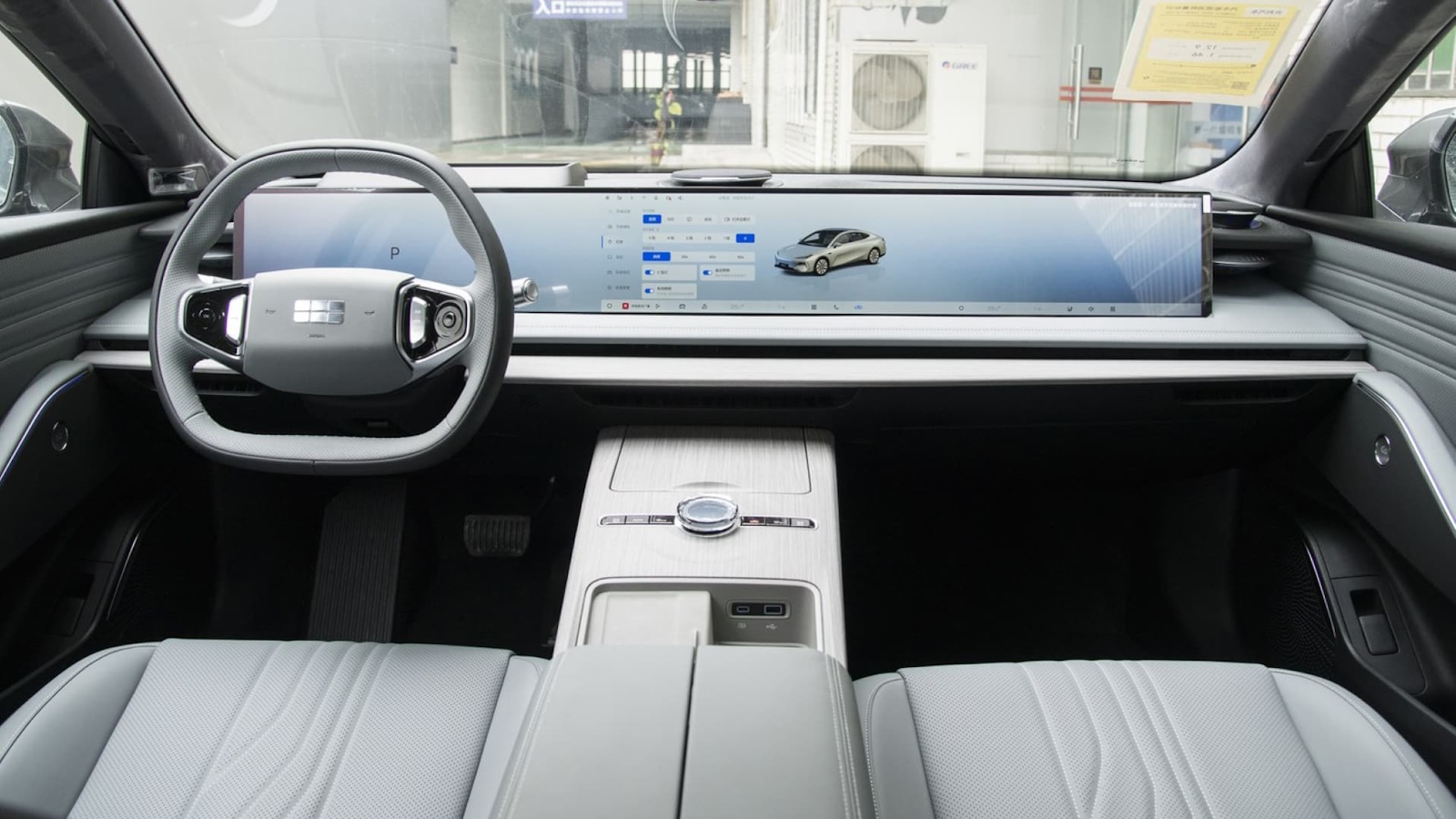
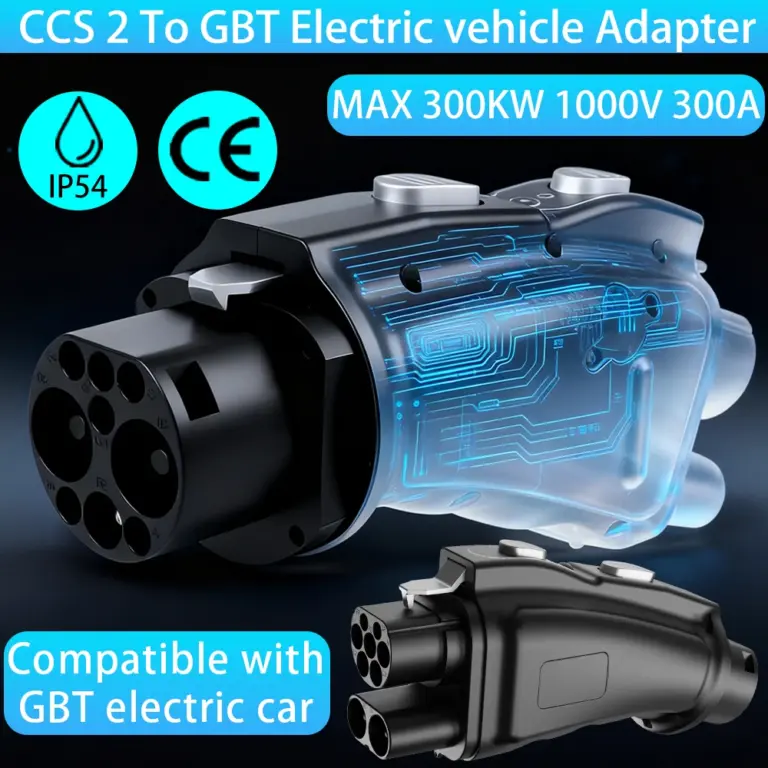
The most significant technical barrier to Chinese EV adoption outside China is the charging standard dichotomy. While Europe utilizes CCS2 (Combo 2) and North America uses CCS1/NEMA, Chinese EVs predominantly feature GB/T standards—physically and electrically incompatible without adaptation.
4.1 Physical and Electrical Standards Comparison
| Standard | Region | Connector Type | Max Voltage | Max Current | Communication |
|---|---|---|---|---|---|
| GB/T 20234.3 | China | Unique 7-pin | 1000V | 250A (400A future) | CAN bus |
| CCS2 (Combo 2) | EU/UK | 9-pin (AC) + 2-pin DC | 1000V | 500A | PLC (ISO 15118) |
| CCS1 (Combo 1) | North America | 5-pin (AC) + 2-pin DC | 1000V | 350A | PLC |
| CHAdeMO | Japan | 10-pin | 500V | 400A | CAN bus |
4.2 The 800V Architecture Complication
The Xiaomi SU7 Max, Luxeed V9, and BYD Sealion 06 utilize 800V electrical architectures for rapid charging. While CCS2 supports 800V, the communication protocol between Chinese BMS and European chargers often fails, resulting in throttled charging speeds (50kW instead of 400kW).
Adapter Solutions:
– DC Fast Charging Adapters: GB/T to CCS2 adapters cost £300-£600 but may limit charging to 200kW due to thermal constraints
– Onboard Charger Replacement: Some B2B importers install dual-standard onboard chargers (£2,000-£4,000 per vehicle) enabling native CCS2 compatibility
– Infrastructure Workarounds: Installing GB/T charging stations at depot locations (feasible for fleet operators, impractical for retail)
4.3 Battery Swap Infrastructure (NIO Specific)
NIO’s BaaS model requires proprietary Power Swap Stations. For UK/EU importers, this necessitates:
– Franchise agreements with NIO Europe
– Real estate investment for swap stations (£500,000+ per station)
– Battery logistics management (maintaining 13+ battery specifications per station)
Recommendation: Unless committing to NIO’s official European expansion program, avoid battery-swap dependent models for independent import operations.
5. Homologation, Compliance & 2026 Export Regulations
January 1, 2026, marked a regulatory watershed with China’s Commerce Ministry implementing mandatory export permits for all EVs, fundamentally altering the export landscape.
5.1 The 2026 Export Permit System
Under the new regulations, Chinese EV exporters must obtain Export Licenses intended to “promote the healthy development of the new energy vehicle trade.” Key provisions include:
- Manufacturer Authorization: Exporters must prove direct authorization from OEMs or authorized dealers
- 180-Day Ownership Rule: Vehicles must be registered and owned for 180 days before export to qualify as “used vehicles,” circumventing new vehicle export restrictions
- End-User Verification: Documentation of final destination and buyer to prevent tariff circumvention
Compliance Strategy:
Legitimate B2B procurement now requires working with Authorized Export Entities—companies like Electric Auto China that maintain 180-day inventory pools or direct OEM export agreements. Attempting to export “zero-mileage” new vehicles without permits results in customs seizure and blacklisting.
5.2 Target Market Homologation
United Kingdom (UKCA/SVA):
– Individual Vehicle Approval (IVA) or Small Series Type Approval
– Speedometer conversion to mph
– Headlamp adjustment for left-hand traffic (if applicable)
– EMC compliance testing (£3,000-£5,000 per model)
European Union (WVTA):
– Whole Vehicle Type Approval mandatory for volume imports (>1,500 units/year)
– eCall system integration (EU emergency call mandate)
– Cybersecurity certification (UN R155)
– Software update management (UN R156)
United States (EPA/FMVSS):
– EPA emissions certification (ironic for EVs, but required for “fuel economy” labeling)
– FMVSS safety compliance (often requiring structural modifications)
– Critical Barrier: 25% tariff on Chinese vehicles plus Section 301 investigations creating effective 100%+ duty rates
5.3 Tariff Engineering
With the EU imposing provisional tariffs up to 38% on Chinese EVs (depending on manufacturer cooperation) and the US effectively blocking imports, B2B buyers must consider:
- CKD/SKD Assembly: Importing as kits for local assembly (tariff reductions of 15-25%)
- Battery Separation: Shipping vehicles without batteries (batteries classified separately under HS 8507)
- Origin Transformation: Minor assembly in third countries (Vietnam, Thailand) to alter country of origin (legally risky under anti-circumvention rules)
6. Global Logistics & Supply Chain
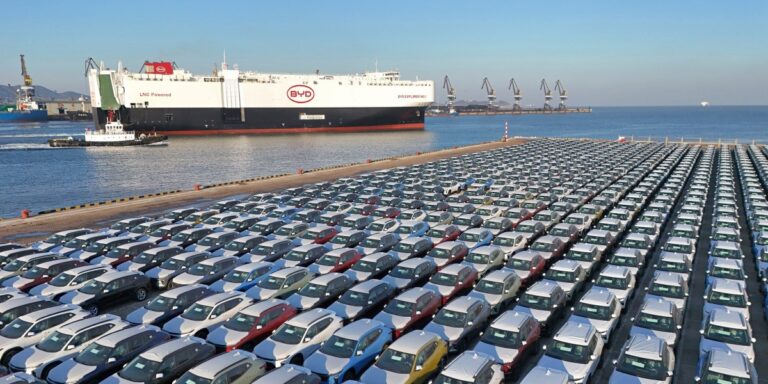
Transporting high-voltage batteries requires adherence to dangerous goods regulations (UN 38.3, Class 9) while maximizing cost efficiency.
6.1 Shipping Modalities
Roll-on/Roll-off (RoRo):
– Advantages: Lowest cost (£800-£1,200 per vehicle Shanghai to Felixstowe), minimal handling
– Disadvantages: Limited to operational vehicles (charged to 30-50% SOC), exposure to elements
– Best For: High-volume, standard passenger vehicles (BYD Dolphin, MG4)
Containerized (Flat Rack/Standard):
– Advantages: Protection from elements, ability to ship non-operational vehicles
– Disadvantages: Higher cost (£1,500-£2,500 per unit), complex lashing requirements for EVs
– Best For: Luxury vehicles (Hongqi E-HS9), prototype vehicles, mixed cargo
Air Freight:
– Cost: £15,000-£25,000 per vehicle
– Use Case: Only for ultra-high-value limited editions (Yangwang U9) or urgent replacement parts
6.2 Battery Transportation Protocols
Lithium batteries >100Wh are classified as Class 9 dangerous goods. Requirements include:
– State of Charge (SOC) between 30-50% (never >80% or <20%)
– UN 38.3 test summary documentation for each battery variant
– Thermal runaway containment measures (fire-resistant blankets, dedicated containers)
– Emergency response procedures filed with shipping lines
Critical 2026 Update: Major shipping lines (Maersk, MSC) now require advance notification 14 days before loading for EVs, with premium surcharges of $500-1,000 per container due to fire risks.
6.3 Port Selection and Transit Times
| Origin Port | Destination | Transit Time | EV Handling Capability | Notes |
|---|---|---|---|---|
| Shanghai | Felixstowe (UK) | 28-32 days | Excellent (dedicated EV terminals) | Primary hub for European exports |
| Ningbo | Rotterdam (NL) | 26-30 days | Good | Alternative to avoid Shanghai congestion |
| Shenzhen | Hamburg (DE) | 30-35 days | Moderate | Better for Southeast Asian markets |
| Tianjin | Long Beach (US) | 18-22 days | Limited | US tariff barriers limit viability |
7. Financial Breakdown: Landed Cost & Dealer Profit Margins (Case Study)
The following case study analyzes importing 10 units of the BYD Seal (Premium trim) to the United Kingdom under 2026 regulations, comparing compliant vs. non-compliant pathways.
7.1 Vehicle Specifications (Case Study)
- Model: BYD Seal (82.5 kWh Blade Battery)
- EXW Shanghai Price: £32,000 per unit (bulk 10-unit pricing)
- CNY/GBP Exchange: 9.15 (assumed 2026 rate)
- UK Market Retail: £48,000
7.2 Cost Structure Analysis
| Cost Component | Compliant Pathway (180-Day Rule) | Non-Compliant (New Export) | Notes |
|---|---|---|---|
| Vehicle Cost | £32,000 | £32,000 | EXW Shanghai |
| Export Permit Fee | £800 | N/A (Illegal) | New 2026 requirement |
| Documentation/Legal | £1,200 | £500 | Compliance verification |
| Domestic Transport | £150 | £150 | Factory to port |
| Ocean Freight (RoRo) | £1,100 | £1,100 | Shanghai-Felixstowe |
| Marine Insurance | £340 | £340 | 110% CIF value |
| UK Import Duty (10%) | £3,200 | £3,200 | Based on CIF value |
| UK VAT (20%) | £7,680 | £7,680 | On CIF + Duty total |
| Homologation (IVA) | £4,500 | £4,500 | Per model type, amortized |
| Localization (Software) | £1,200 | £1,200 | English UI, maps |
| Charging Adapters | £450 | £450 | GB/T to CCS2 |
| Total Landed Cost | £51,620 | Seizure Risk | Per unit |
| Total for 10 Units | £516,200 | N/A |
7.3 Profit Margin Analysis
Retail Scenario:
– Selling Price: £48,000 per unit (competitive with Tesla Model 3)
– Total Revenue: £480,000
– Total Landed Cost: £516,200
– Gross Margin: -£36,200 (Loss)
Break-Even Strategy:
To achieve 15% net margin:
– Required selling price: £60,800 per unit
– Market positioning: Premium over Tesla Model 3 (£42,000) and BMW i4 (£52,000)
– Alternative: Import lower-cost BYD Dolphin (£18,000 EXW) with landed cost £29,000, retailing at £35,000 for 17% margin.
7.4 Salary Sacrifice Scheme Economics (UK Specific)
For B2B fleet operators targeting corporate salary sacrifice markets:
– BYD Atto 3 (Landed: £28,000) vs. Tesla Model Y (£44,000)
– Monthly sacrifice: £450 vs. £680
– Employer NI savings: £1,200/year per vehicle
– Fleet ROI: 22% over 3 years when including maintenance savings
8. Securing After-Sales Support & Spare Parts
The Achilles’ heel of independent Chinese EV imports remains service infrastructure. Unlike MG (now SAIC-owned with UK service networks), brands like Deepal, Xiaomi, and Yangwang lack international service presence.
8.1 Critical Spare Parts Inventory
High-Failure Components (based on 2025 warranty data):
1. High-Voltage Junction Boxes: £800-£1,200 per unit, 3-month lead time
2. Battery Management System (BMS) Controllers: £2,000-£4,000, requires VIN-specific programming
3. Touchscreen/Infotainment Units: £600-£1,500, Mandarin software issues
4. Charging Port Assemblies: £300-£600, GB/T specific
Inventory Strategy:
– Maintain £50,000-£100,000 spare parts inventory for every 100 vehicles sold
– Establish direct supplier relationships with BYD/CATL battery service centers
– Utilize Alibaba/Taobao for non-critical trim parts (3-week shipping)
8.2 Diagnostic Equipment
Chinese EVs use proprietary diagnostic protocols:
– BYD: “BYD DiLink” system (Chinese language only)
– NIO: “NIO OS” cloud-based diagnostics
– XPeng: “Xmart OS” requiring Chinese server access
Solutions:
– Third-party scanners (Autel MaxiSys Ultra EV) offer limited functionality (£3,000 investment)
– Remote diagnostic support via WeChat/Teams with Chinese technicians (timezone challenges)
– Training local technicians in high-voltage safety (BS7671 compliance)
8.3 Warranty Implications
Manufacturer warranties (typically 6 years/150,000km for batteries) are often void for exported vehicles unless processed through official channels. Electric Auto China provides:
– Third-Party Warranty: Underwritten by Lloyd’s of London, covering battery degradation to 70% SOH over 5 years (£1,200 per vehicle)
– Extended Coverage: Powertrain and HV components (£800 per vehicle)
9. Why Partner with Electric Auto China
Navigating the 2026 regulatory environment requires boots-on-the-ground expertise in Shanghai. Electric Auto China functions as your compliant export gateway, mitigating the risks outlined in this guide.
9.1 Regulatory Compliance Assurance
- Export Permit Management: Pre-cleared 180-day inventory pools eliminating permit delays
- Documentation Chain: Complete audit trail from OEM to port, satisfying Chinese Commerce Ministry requirements
- Tariff Optimization: Legal structuring through bonded warehouses and FTZ (Free Trade Zone) processing
9.2 Technical Localization Services
- Pre-Export Preparation: English firmware installation, CCS2 charging port conversion (where possible), mph speedometer calibration
- Homologation Support: Direct relationships with UK IVA testing stations and EU Notified Bodies
- Software Solutions: Proprietary middleware enabling OTA updates outside China for supported models
9.3 Supply Chain Reliability
- Multi-Brand Inventory: Access to BYD, NIO, XPeng, Xiaomi, Deepal, and Hongqi through single contract
- Flexible MOQs: Pilot programs starting at 5 units, scaling to 500+ unit annual contracts
- Financing Solutions: RMB/GBP/EUR hedging, trade finance facilities, and letter of credit processing
9.4 After-Sales Infrastructure
- European Parts Hub: Rotterdam-based warehouse stocking critical HV components for 48-hour delivery
- Technical Training: Quarterly certification programs for your service technicians in Shanghai
- Warranty Administration: In-house claims processing replacing OEM void coverage
Contact Electric Auto China Today
Chief Export Consultant Office
Email: [email protected] | Shanghai FTZ, Pudong New Area
Disclaimer: All pricing estimates based on Q1 2026 market conditions. Regulatory requirements subject to change. Always verify current tariff schedules with local customs authorities before importation.
Unlock High-Margin EV Imports with Electric Auto China
As an elite automotive supply chain partner in Shanghai, we provide end-to-end, strictly compliant export solutions tailored for international dealerships, fleet managers, and wholesale distributors.
- 🛡️ 100% Legal & Compliant: Fully licensed exports ensuring smooth customs clearance at your destination.
- ⚙️ Complete Localization: Professional English/Arabic/Russian OS flashing and GB/T to CCS2 charging solutions.
- 🚢 Secure Logistics: Direct Ro-Ro and Containerized shipping with full UN38.3 battery certifications.
- 🔧 After-Sales Support: Reliable access to OEM diagnostic tools and steady spare parts supply.
Request a Detailed FOB/CIF Quote Today:
📧 B2B Sales Email: [email protected]
💬 Direct WhatsApp: +86 159 5127 6160