The Ultimate 2026 B2B Export Guide for Chinese EV distributor: Pricing, Compliance & Localization
1. Executive Summary
The global electric vehicle landscape enters a new regulatory era on January 1, 2026, when China’s Ministry of Commerce implements mandatory export licensing for pure electric vehicles. As the Chief Export Consultant at Electric Auto China, headquartered in Shanghai, I have witnessed firsthand how Chinese manufacturers captured over 60% of global EV sales in 2025, leveraging revolutionary technologies like NIO’s 5-minute battery swap infrastructure and Xiaomi’s 800-volt charging architectures.
However, 2026 marks a paradigm shift. The coordinated policy between the Ministry of Industry and Information Technology (MIIT), General Administration of Customs, and State Administration for Market Regulation introduces stringent quality controls that fundamentally alter how foreign B2B buyers engage with Chinese EV distributors. No longer can importers rely on informal procurement channels; the new framework mandates that only manufacturers and authorized distributors holding specific export licenses may ship pure electric vehicles overseas.
This comprehensive guide addresses the critical intersection of opportunity and compliance. With models ranging from the BYD Dolphin (FOB $18,500) to the luxury Hongqi E-HS9 (FOB $85,000+), and cutting-edge offerings like the Xiaomi SU7 Max delivering 400+ miles WLTP range through 101kWh battery packs, the commercial potential remains extraordinary. Yet success requires navigating GB/T charging standard conversions, GDPR-compliant software localization, and the complex 2026 homologation requirements.
For UK salary sacrifice scheme operators, European fleet managers, and UAE luxury distributors, this guide provides the technical specifications, landed cost calculations, and regulatory roadmaps necessary to maintain competitive advantage while ensuring full compliance with China’s evolving export control framework.
2. Deep Dive: Technical Specifications
Understanding the 2026 Chinese EV portfolio requires analyzing three distinct market tiers: mass-market efficiency vehicles, premium long-range sedans, and ultra-luxury performance EVs. Each category presents unique import implications regarding battery certification, autonomous driving hardware compliance, and thermal management system adaptations.
Mass-Market Efficiency Segment (FOB $15,000–$28,000)
| Model | Battery Capacity | CLTC Range | WLTP Est. | Charging Architecture | Motor Configuration |
|---|---|---|---|---|---|
| BYD Dolphin | 44.9 kWh LFP | 420 km | 265 miles | 400V / 60kW DC | FWD 95kW |
| MG5 EV 2026 | 50.3 kWh LFP | 520 km | 320 miles | 400V / 87kW DC | FWD 130kW |
| Deepal S05 | 68.8 kWh LFP | 610 km | 380 miles | 800V / 150kW DC | RWD 200kW |
The BYD Dolphin represents the entry-point sweet spot for UK salary sacrifice schemes, offering exceptional value at approximately £26,000 landed cost. However, distributors must note that the standard 400V architecture requires longer charging stops compared to 800V competitors. The Deepal S05, utilizing CATL’s latest lithium iron phosphate (LFP) chemistry, delivers superior energy density (140 Wh/kg) but requires careful thermal management calibration for European climates.
Premium Long-Range Segment (FOB $35,000–$55,000)
| Model | Battery Capacity | WLTP Range | Peak DC Charging | 0-100 km/h | Platform Voltage |
|---|---|---|---|---|---|
| BYD Seal | 82.5 kWh Blade | 354 miles | 150kW | 5.9s | 800V |
| NIO ET7 | 100 kWh Semi-Solid | 410 miles | 130kW* | 3.8s | 400V |
| Xiaomi SU7 Max | 101 kWh CATL | 400 miles | 400kW | 2.78s | 800V |
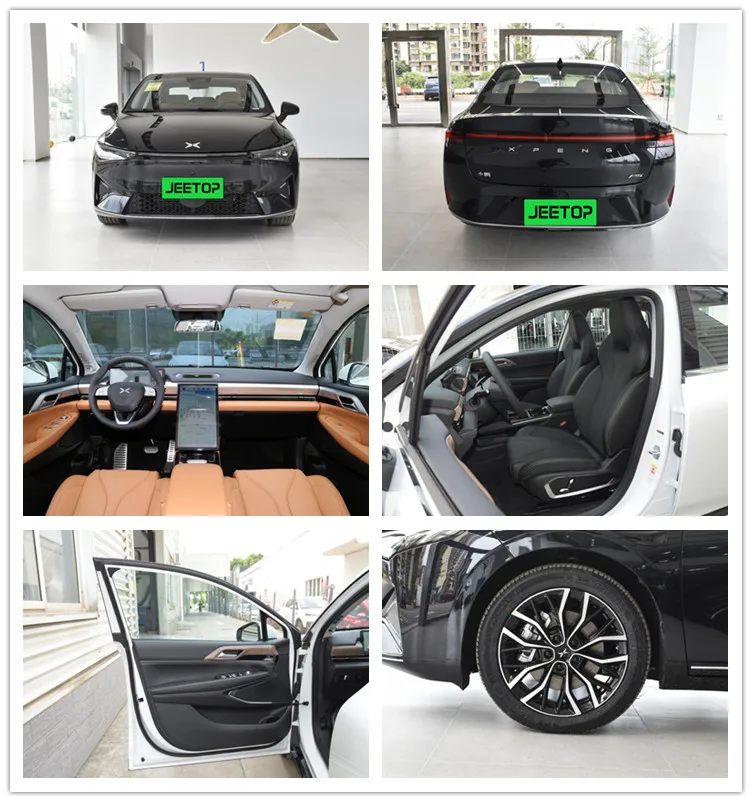
| Xpeng P7 Performance | 80.9 kWh | 341 miles | 175kW | 4.3s | 400V |
*NIO ET7 utilizes proprietary battery swap stations; DC charging requires adapter compatibility.
The Xiaomi SU7 Max exemplifies 2026’s technological apex, featuring a 871V silicon carbide (SiC) electric drive system enabling 220 miles of range replenishment in 15 minutes. For distributors, the critical consideration involves the vehicle’s intelligent cockpit running HyperOS—requiring extensive localization for GDPR compliance and regional app store integration.
Ultra-Luxury & Performance Tier (FOB $80,000–$250,000)
| Model | Power Output | Battery Tech | Unique Features | Export Complexity |
|---|---|---|---|---|
| Hongqi E-HS9 | 405kW Dual Motor | 120kWh NCM | Executive 4-seat config, air suspension | High (luxury VAT implications) |
| Yangwang U9 | 2,220kW Quad Motor | Solid-state prototype | Track mode, active aero | Extreme (homologation challenges) |
| NIO ET9 | 520kW | 150kWh Semi-Solid | Line-Actuated steering, 900V architecture | Very High |
Case Study: Xpeng G7 UAE Distribution
A Dubai-based distributor recently secured 500 units of the Xpeng G7 (FOB approximately $27,200/AED 100,000). The vehicle’s 702km CLTC range translates to approximately 520km WLTP, positioning it competitively against the Tesla Model Y Long Range. However, the integration of Huawei AR-HUD technology required firmware modifications to comply with UAE telecommunications regulations, adding $180 per unit in software localization costs.
3. The Localization Challenge: Software, UI, and Connectivity
Chinese EVs ship with ecosystem dependencies that present significant B2B import challenges. The 2026 export license regulations explicitly require that exported vehicles meet destination market cybersecurity and data sovereignty standards—a direct response to concerns over telematics data transmission to Chinese servers.
Critical Localization Requirements
Operating System Regionalization
– Xiaomi HyperOS and HarmonyOS (Huawei/Luxeed) require complete app ecosystem replacement
– Google Mobile Services (GMS) integration mandatory for EU/UK markets
– Over-the-Air (OTA) Update Infrastructure must route through regional servers compliant with GDPR (EU) or ADGM (UAE) data protection frameworks
Telematics & Connectivity
Most 2026 models feature integrated eSIMs provisioned through China Unicom or China Mobile. Distributors must:
1. Negotiate hardware swaps for multi-carrier eSIMs supporting Vodafone, Orange, or Etisalat
2. Reconfigure the T-Box (telematics control unit) to disable real-time biometric data transmission
3. Implement local CDN nodes for map data (essential for NIO, Xpeng navigation systems)
Language & UI Adaptation
While English interfaces are standard on export models, critical safety systems often retain Chinese voice recognition baselines. The Xpeng Mona 03, for example, ships with Xmart OS 5.0, which requires:
– Complete voice training dataset replacement ($45,000 fixed cost per model)
– Metric/imperial unit conversion in instrument clusters
– Local radio frequency band calibration (DAB+ for UK, SiriusXM preparation for North America)
Regulatory Compliance Costs
| Market | Certification Requirement | Estimated Cost per Model | Timeline |
|——–|————————–|————————-|———-|
| UK | VCA Type Approval, R155/R156 Cyber Security | £85,000–£120,000 | 4–6 months |
| EU | WVTA, GDPR Vehicle Data Compliance | €95,000–€140,000 | 6–8 months |
| UAE | Emirates Authority for Standardization (ESMA) | AED 180,000–250,000 | 3–4 months |
| Australia | ADR Compliance, RHD Conversion Validation | AUD $95,000–$130,000 | 5–7 months |
4. Charging Compatibility: Bridging the GB/T Gap
The most technically demanding aspect of Chinese EV distribution involves charging infrastructure incompatibility. Domestic Chinese models utilize the GB/T standard (AC: GB/T 20234.2, DC: GB/T 20234.3), while UK and EU markets require Type 2/CCS2, and UAE markets utilize a mix of CCS2 and CHAdeMO.
Technical Conversion Solutions
DC Fast Charging (High Voltage)
Modern 800V architectures (Xiaomi SU7, BYD Sealion 06, Luxeed V9) present unique challenges:
– Pin Configuration: GB/T DC connectors feature 9 pins vs. CCS2’s 7 pins
– Communication Protocol: GB/T uses CAN bus-based protocols, while CCS2 utilizes PLC (Power Line Communication) per ISO 15118
– Voltage Ranges: GB/T DC supports up to 1,000V, but current curves differ from CCS2 standards
Adapter Solutions vs. Hardware Retrofit
| Solution | Cost per Unit | Charging Speed Impact | Warranty Implications | Recommendation |
|---|---|---|---|---|
| GB/T to CCS2 Adapter | $280–$450 | 15–20% reduction due to protocol translation | Voided manufacturer warranty | Temporary solution only |
| Inlet Hardware Swap | $1,200–$1,800 | None (native compatibility) | Maintained if certified | Recommended for 800V vehicles |
| Dual Inlet System | $2,100–$2,900 | None | Requires manufacturer approval | Fleet vehicles only |
Case Study: BYD Seal UK Import
A Manchester-based salary sacrifice fleet operator imported 200 BYD Seal units in Q4 2025. Initial use of adapters resulted in charging failures at 150kW Ionity stations due to handshaking protocol mismatches. Electric Auto China coordinated with BYD’s export division to retrofit CCS2 inlets at the Port of Shanghai pre-shipment, adding $1,450 per unit but ensuring full compatibility with UK rapid charging networks and preserving the 150kW charging capability.
AC Charging Considerations
All Chinese EVs support Type 2 AC charging (GB/T 20234.2 is physically compatible with Type 2), but onboard charger (OBC) configurations vary:
– Single-phase 7kW: Standard on BYD Dolphin, MG5 (suitable for UK residential)
– Three-phase 11kW: Standard on NIO ET7, Xpeng G6 (requires 3-phase supply common in EU)
– Three-phase 22kW: Available on premium models (Hongqi E-HS9)
Distributors must verify that onboard chargers support 230V/50Hz European standards versus China’s 220V/50Hz (typically compatible, but frequency stability requirements differ).
5. Homologation, Compliance & 2026 Export Regulations
The January 1, 2026 implementation of mandatory export licenses represents the most significant regulatory shift in China’s automotive export history. Understanding these requirements is non-negotiable for B2B procurement.
The 2026 Export License Framework
Regulatory Authority: Ministry of Commerce (MOFCOM) in coordination with MIIT, GACC, and SAMR.
License Categories:
1. Manufacturer Direct Export License: Granted to OEMs (BYD, NIO, Xpeng) for self-produced vehicles
2. Authorized Distributor License: Granted to entities like Electric Auto China with proven technical service capabilities and overseas after-sales networks
3. Temporary Export License: For exhibition, testing, or racing purposes (non-road use)
Compliance Prerequisites:
– Quality Management System: ISO 9001:2015 certification mandatory
– Technical Service Capability: Demonstrated spare parts inventory and overseas service partnerships
– Destination Market Certification: Proof of WVTA (EU), Type Approval (UK), or equivalent
– Battery Traceability: Full supply chain documentation for NCM/LFP cells per GB/T 34014-2023
Documentation Requirements for Each Shipment:
1. Export License Application (Form MOFCOM-EV-2026)
2. Vehicle Conformity Certificate (CCC mark for production, destination market approval for export)
3. Battery Safety Test Reports (UN 38.3, GB/T 31485)
4. Cybersecurity Compliance Statement (per GB/T 40861-2021)
5. Recycling Commitment Letter (compliance with EU Battery Regulation 2023/1542 for European destinations)
Homologation Pathways by Market
United Kingdom (Post-Brexit Framework)
– VCA Type Approval: Required for whole vehicle
– R155/R156 Compliance: Cybersecurity and Software Update Management Systems mandatory for 2026
– GB Standards Alignment: While UKCA marking replaces CE for automotive components, UN ECE regulations remain applicable
– Smart Charging Compliance: EVSE must meet UK Smart Charging Regulations (minimum efficiency standards)
European Union
– WVTA (Whole Vehicle Type Approval): Framework Directive 2007/46/EC
– Euro 7 Readiness: While EVs produce zero tailpipe emissions, brake particle emissions and battery durability requirements apply
– Battery Passport: Full lifecycle traceability required from 2027 (voluntary 2026)
– GDPR Vehicle Integration: Telematics systems must process data within EU borders
United Arab Emirates
– ESMA Certification: Emirates Conformity Assessment Scheme
– GCC Specifications: Gulf Standardization Organization requirements for extreme heat operation (50°C+ ambient testing)
– Arabic Language Requirements: All safety warnings and HMI displays must include Arabic
Critical Timeline: The license application process requires 45–60 days. B2B buyers must confirm their Chinese distributor holds valid 2026 Export License status before placing Q1 2026 orders. Electric Auto China maintains Category A Authorized Distributor status, enabling direct export facilitation for all major brands.
6. Global Logistics & Supply Chain
Efficient logistics management determines whether Chinese EV imports remain profitable amid rising shipping costs and port congestion. The 2026 regulatory environment adds documentation complexity that demands professional supply chain management.
Shipping Methodologies
Roll-on/Roll-off (RORO)
– Capacity: 5,000–8,000 CEU (Car Equivalent Units) per vessel
– Cost: $1,800–$2,400 per vehicle (Shanghai to Felixstowe/Zeebrugge)
– Advantages: No container lifting damage risk, drive-on/drive-off efficiency
– Constraints: Limited to operational vehicles with charged batteries (max 40% SOC per IMDG Code)
Containerized Shipping (40′ HC)
– Capacity: 3–4 vehicles per container (sedans/SUVs)
– Cost: $3,200–$4,500 per container ($800–$1,125 per vehicle)
– Advantages: Higher security, ability to ship non-operational units, mixed brand consolidation
– Requirements: Professional lashing and bracing, lithium battery hazard declarations (Class 9)
Incoterms 2020 Recommendations
| Term | Risk Transfer | Best For | Considerations |
|---|---|---|---|
| FOB (Free On Board) | Port of Shanghai | Experienced importers with destination agents | Buyer assumes maritime risk; most cost-effective |
| CIF (Cost, Insurance, Freight) | Port of destination | New importers requiring risk coverage | Seller controls shipping line selection; verify battery insurance coverage |
| DAP (Delivered at Place) | Final destination | Turnkey fleet solutions | Includes customs clearance support; higher cost but reduced complexity |
Port Handling & Customs
Shanghai Port (Waigaoqiao) and Ningbo-Zhoushan handle 70% of Chinese EV exports. Critical considerations:
– Battery Charge Levels: Strictly enforced at 30–50% SOC for maritime transport
– Dangerous Goods Declarations: Required 48 hours prior to loading
– Export License Verification: Customs brokers must validate MOFCOM license numbers against shipment manifests
Transit Times:
– Shanghai to UK (Felixstowe): 28–35 days
– Shanghai to UAE (Jebel Ali): 18–22 days
– Shanghai to EU (Hamburg/Zeebrugge): 26–32 days
7. Financial Breakdown: Landed Cost & Dealer Profit Margins (Case Study)
Understanding true landed costs requires modeling beyond FOB pricing to include tariffs, VAT, homologation amortization, and working capital costs. Below is a detailed case study for UK importation of the BYD Seal Performance.
Case Study: BYD Seal UK Salary Sacrifice Import (200 Units)
Vehicle Specifications: BYD Seal 82.5kWh Excellence AWD (354 miles WLTP)
Base Costs:
| Line Item | Unit Cost (USD) | Calculation | Total (USD) |
|———–|—————-|————-|————-|
| FOB Shanghai | $38,500 | Per vehicle | $38,500 |
| Export License Fee | $450 | Administrative cost | $450 |
| Pre-shipment Inspection | $180 | Quality verification | $180 |
| Marine Insurance (110% CIF) | $420 | 0.4% of value + freight | $420 |
| Ocean Freight (RORO) | $2,100 | Shanghai-Felixstowe | $2,100 |
| CIF Value | | | $41,650 |
UK Arrival Costs:
| Line Item | Rate | Amount (GBP) | Notes |
|———–|——|————–|——-|
| CIF Value | £1 = $1.28 | £32,539 | Exchange rate hedge recommended |
| Import Duty | 10% | £3,254 | MFN rate on Chinese vehicles |
| VAT | 20% | £7,159 | Calculated on (CIF + Duty) |
| Type Approval Amortization | | £425 | £85,000 ÷ 200 units |
| CCS2 Retrofit | | £1,150 | Hardware + labor |
| Software Localization | | £380 | UK map data, English voice |
| Port Handling (THC) | | £185 | Felixstowe terminal charges |
| Delivery to Dealer | | £145 | Transport to Manchester |
Total Landed Cost: £45,237 per unit
Retail Pricing Strategy:
– Recommended Retail Price: £48,995 (competitive with Tesla Model 3 Long Range at £49,990)
– Salary Sacrifice Scheme Price: £42,995 (B2B fleet discount)
– Gross Margin: 16.7% retail / -5.1% fleet (requires manufacturer volume rebates)
Profitability Analysis:
With manufacturer rebates of £3,200 per unit for 200+ unit orders, the fleet net margin improves to 2.4%. The business model relies on:
1. After-sales service revenue (15% margin on maintenance)
2. Battery lease residuals (if applicable)
3. Charging infrastructure partnerships
Break-Even Calculation:
For a distributor investing £2.4 million in initial stock (200 units), with £180,000 homologation costs and £120,000 facility preparation:
– Break-even volume: 147 units over 12 months
– Working capital requirement: £9.2 million (including 90-day payment terms and 60-day inventory turns)
Comparative Cost Analysis by Model
| Model | FOB (USD) | Landed UK (GBP) | Retail Price (GBP) | Margin Potential |
|---|---|---|---|---|
| BYD Dolphin | $18,500 | £22,400 | £25,990 | 13.8% |
| MG4 EV | $21,200 | £25,100 | £28,495 | 11.9% |
| NIO ET7 | $52,000 | £58,200 | £69,900 | 20.1% |
| Xiaomi SU7 Max | $48,500 | £54,800 | £64,995 | 18.6% |
| Hongqi E-HS9 | $88,000 | £98,500 | £115,000 | 16.8% |
*Note: Prices assume 2026 exchange rates and include 10% UK import duty. EU imports benefit from duty-free status under specific trade agreements, though anti-subsidy investigations may affect certain manufacturers.
8. Securing After-Sales Support & Spare Parts
The 2026 export regulations explicitly require distributors to demonstrate “technical service capability” as a condition of license eligibility. This transforms after-sales from a cost center into a regulatory compliance requirement.
Critical Spare Parts Strategy
High-Voltage Battery Logistics
– Warranty Stock: Maintain 5% of annual sales volume as battery module inventory (requires hazardous goods storage certification)
– Shipping Constraints: Replacement batteries ship as Class 9 Dangerous Goods; air freight restricted to 30% SOC
– Localization: Establish regional battery assembly partnerships for LFP cell replacement (BYD Blade Battery modules can be sectionalized)
Proprietary Component Sourcing
Chinese EVs utilize brand-specific components requiring direct manufacturer relationships:
– NIO: Battery swap station compatibility requires proprietary BMS firmware
– Xiaomi: HyperOS updates and infotainment modules
– Xpeng: Lidar units (RoboSense/Livox) and ADAS calibration equipment
Service Training Requirements
Electric Auto China provides certified training programs including:
– High Voltage Safety: Level 3 certification for technicians working on 800V architectures
– Battery Health Diagnostics: SOH (State of Health) assessment using manufacturer-specific tools
– ADAS Calibration: Static and dynamic calibration of Lidar/Radar systems for European road conditions
Warranty Management Structure
| Component | Standard Warranty | Extended Options | Claims Processing |
|———–|——————|—————-|——————-|
| Battery Pack | 8 years/160,000km | 10 years available | Direct with manufacturer |
| Drive Motor | 5 years/100,000km | 7 years available | Via distributor |
| Electronics | 3 years/60,000km | 5 years available | Regional service centers |
| Chassis | 4 years/80,000km | 6 years available | Insurance partnership |
Reverse Logistics for Recycling
EU Battery Regulation 2023/1542 mandates producer responsibility for end-of-life batteries. Distributors must establish:
– Collection networks for spent batteries
– Recycling partnerships with certified facilities (CATL’s Brunp subsidiary or European equivalents)
– Black mass processing agreements for lithium recovery
9. Why Partner with Electric Auto China
Navigating the 2026 regulatory landscape requires a partner with deep governmental relationships, technical expertise, and established logistics infrastructure. Electric Auto China, established in 2002 and headquartered in Shanghai’s Guancheng Hui District, holds Category A Authorized Distributor status under the new MOFCOM licensing framework.
Our Compliance Advantage
Export License Facilitation
As a licensed distributor, we manage the complete documentation chain:
– MOFCOM export license application and renewal
– MIIT vehicle conformity certification
– Customs clearance and dangerous goods declarations
– Destination market homologation support (VCA, WVTA, ESMA)
Technical Localization Services
Our Zhengzhou technical center provides:
– Pre-export CCS2/Type 2 hardware conversion
– Software regionalization (English, Arabic, German, French)
– Cybersecurity compliance verification per R155/R156
– OTA server migration to regional cloud infrastructure
Financial & Logistics Solutions
– Letter of Credit facilitation through our banking partnerships (Bank of China, ICBC)
– Consolidated shipping reducing per-unit freight costs by 15–20%
– Stocking programs allowing just-in-time delivery to European hubs
– Currency hedging instruments to protect against RMB/GBP/EUR fluctuations
Exclusive Market Access
We maintain direct distribution agreements with:
– BYD: Full passenger vehicle lineup including Seal, Dolphin, and Han EV
– NIO: ET7, ES8, and battery swap infrastructure packages
– Xiaomi: SU7 series with priority allocation for export markets
– Xpeng: G6, G9, and P7i with English-language cockpit preparation
– MG: Complete European-specification inventory
After-Sales Infrastructure
Our commitment extends beyond delivery:
– European Spare Parts Hub: Rotterdam distribution center stocking $2.5M in fast-moving parts
– Technical Training: Bi-monthly certification programs at our Manchester and Dubai service centers
– Warranty Administration: Direct claims processing reducing reimbursement times to 14 days
– Battery Logistics: Certified hazardous goods handling for warranty replacements
Getting Started: 2026 Import Roadmap
Phase 1: Market Assessment (Months 1–2)
– Segment analysis (salary sacrifice vs. retail vs. fleet)
– Model selection and specification confirmation
– Preliminary landed cost modeling
Phase 2: Regulatory Preparation (Months 2–4)
– Export license verification
– Homologation documentation initiation
– Charging infrastructure partnership establishment
Phase 3: Commercial Execution (Months 4–6)
– Purchase order placement with 30% deposit
– Pre-shipment inspection and CCS conversion
– Marine insurance and logistics coordination
Phase 4: Market Entry (Months 6–8)
– Customs clearance and duty payment
– PDI (Pre-Delivery Inspection) and software activation
– Retail launch or fleet delivery
The Chinese EV export market in 2026 offers unprecedented opportunities for distributors who navigate the regulatory complexity with informed partners. With mandatory export licenses now governing all transactions, working with an authorized, experienced distributor like Electric Auto China ensures not only competitive pricing but sustainable, compliant market entry.
Contact our export division at [email protected] or +86 13140103167 to discuss your specific market requirements and receive detailed specifications for the 2026 model lineup. The electric revolution is accelerating—ensure your business is positioned to lead it.
Unlock High-Margin EV Imports with Electric Auto China
As an elite automotive supply chain partner in Shanghai, we provide end-to-end, strictly compliant export solutions tailored for international dealerships, fleet managers, and wholesale distributors.
- 🛡️ 100% Legal & Compliant: Fully licensed exports ensuring smooth customs clearance at your destination.
- ⚙️ Complete Localization: Professional English/Arabic/Russian OS flashing and GB/T to CCS2 charging solutions.
- 🚢 Secure Logistics: Direct Ro-Ro and Containerized shipping with full UN38.3 battery certifications.
- 🔧 After-Sales Support: Reliable access to OEM diagnostic tools and steady spare parts supply.
Request a Detailed FOB/CIF Quote Today:
📧 B2B Sales Email: [email protected]
💬 Direct WhatsApp: +86 159 5127 6160