The Ultimate 2026 B2B Export Guide for Direct from China cars: Pricing, Compliance & Localization
1. Executive Summary
The global automotive landscape is undergoing its most significant transformation since the invention of the assembly line. As of January 1, 2026, China’s Ministry of Commerce (MOFCOM) has implemented the strictest export control framework in the industry’s history, fundamentally altering how international B2B buyers access the world’s largest electric vehicle manufacturing ecosystem. This regulatory pivot—from unchecked volume expansion to quality-assured, licensed exportation—creates both unprecedented challenges and exclusive opportunities for established importers.
The era of gray-market “used car” loopholes and unaccredited parallel exports has ended. Under the 2026 Export License Framework, only MOFCOM-accredited manufacturers and their officially authorized partners may ship new energy vehicles (NEVs) across Chinese borders. This regulatory clarity, while increasing compliance overhead, eliminates the destabilizing price wars caused by substandard vehicles entering your markets without warranty infrastructure or spare parts support.
For legitimate B2B buyers, this represents a watershed moment. With FOB pricing for quality compact EVs starting at $7,500 and premium extended-range SUVs commanding $35,000-$50,000, the Chinese EV ecosystem offers margin structures impossible to replicate through traditional Western supply chains. However, success requires navigating complex technical localization, charging standard disparities, and rigorous homologation protocols that vary dramatically between the European Union’s WVTA framework, ASEAN’s NCAP requirements, and Middle Eastern GCC specifications.
This guide provides the exhaustive operational intelligence required to capitalize on the 2026 regulatory environment. From exact landed cost calculations incorporating the new 10% EU tariffs and localization expenses, to technical strategies for bridging China’s GB/T charging standards with international CCS infrastructure, we deliver the actionable intelligence necessary to establish profitable, compliant, and sustainable direct-from-China vehicle import operations.
2. Deep Dive: Technical Specifications
Understanding the technical architecture of 2026 Chinese EV exports requires moving beyond marketing specifications to analyze platform scalability, battery chemistry implications, and thermal management systems optimized for diverse climatic conditions.
Platform Architecture & Scalability
Chinese manufacturers have transitioned from shared combustion platforms to dedicated EV-native architectures. BYD’s e-Platform 3.0 utilizes cell-to-body (CTB) technology, integrating the blade battery as a structural element, increasing torsional rigidity by 400% while reducing component count. Geely’s Sustainable Experience Architecture (SEA) supports wheelbases from 1,800mm to 3,300mm, enabling single-platform sourcing for diverse market segments. NIO’s NT2.0 platform incorporates 1016 TOPS computing power through NVIDIA Drive Orin chips, supporting NAD (Navigate on Autopilot) functionality that requires significant localization for international road networks.
Battery Chemistry Analysis
The LFP (Lithium Iron Phosphate) vs. NCM (Nickel Cobalt Manganese) decision matrix critically impacts your import strategy:
| Chemistry | Energy Density | Cycle Life | Cold Weather Performance | Safety Profile | Cost per kWh |
|---|---|---|---|---|---|
| BYD Blade (LFP) | 140-160 Wh/kg | 3,000+ cycles | -20°C: 50% range loss | Extremely stable (nail penetration safe) | $85-95 |
| CATL Qilin (NCM) | 255 Wh/kg | 1,500 cycles | -20°C: 30% range loss | Thermal runaway risk managed | $120-140 |
| Guoxuan High-Voltage (LFP) | 180 Wh/kg | 2,500 cycles | -15°C: 45% range loss | Stable | $90-100 |
Strategic Recommendation: For tropical markets (Southeast Asia, Middle East, Latin America), LFP chemistry offers superior thermal stability and longevity. For premium European markets requiring 500km+ WLTP ranges, NCM remains necessary despite higher costs and safety management requirements.
Comparative Technical Specifications (2026 Export Models)
| Brand | Model | Platform | Battery | Range (WLTP) | Powertrain | Safety Structure |
|---|---|---|---|---|---|---|
| Chery | Omoda 5 EV | T1X Global | 61 kWh LFP | 430 km | FWD 150kW | 80% high-strength steel |
| ORA | Funky Cat (Good Cat) | Lemon | 63 kWh NCM | 400 km | FWD 126kW | 71.7% high-strength |
| Li Auto | L6 EREV | X Platform | 36.8 kWh + 1.5T | 1,120 km (combined) | Dual motor 330kW | CNCAP 5-star |
| BYD | Seal | e-Platform 3.0 | 82.5 kWh Blade | 570 km | AWD 390kW | CTB structure |
| NIO | ET5 Touring | NT2.0 | 75 kWh Semi-Solid | 495 km | Dual motor 360kW | Ultra-high strength |
Critical Note: Li Auto’s Extended-Range Electric Vehicle (EREV) technology utilizes a 1.5-liter turbocharged range extender (petrol) to charge the battery, eliminating range anxiety while maintaining 180km pure-electric daily driving. This configuration requires different homologation categories (PHEV vs BEV) in target markets, affecting import tariffs and incentives.
3. The Localization Challenge: Software, UI, and Connectivity
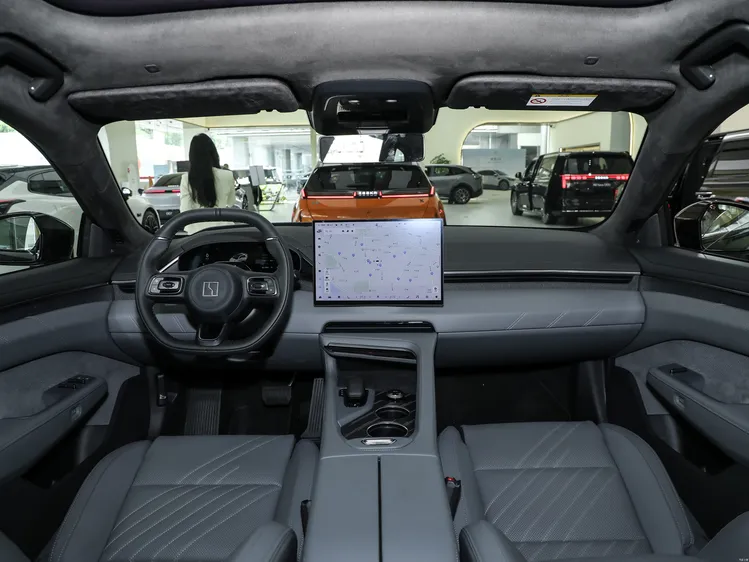
The most underestimated cost center in direct-from-China imports is software localization. Vehicles manufactured for the domestic Chinese market operate within the “walled garden” of Baidu Maps, Tencent connectivity, and Mandarin HMI (Human-Machine Interface). Exporting these systems creates immediate market rejection.
Telematics & Data Sovereignty
Chinese EVs rely heavily on OTA (Over-The-Air) update capabilities for feature enhancement and bug fixes. However, domestic Chinese servers cannot support international data privacy requirements:
- GDPR Compliance (EU): Requires data residency within European Economic Area or adequacy decisions. Chinese OEMs must establish EU-based OTA servers.
- APPI Compliance (Japan): Requires explicit consent for biometric data collection (driver monitoring systems).
- PDPL Compliance (Saudi Arabia): Mandates local data storage for vehicle telemetry.
Solution Architecture: Partner with manufacturers offering “Global ROM” variants. Chery’s international models now ship with Qualcomm Snapdragon 8155 chips running Android Automotive OS with Google Services framework pre-installed, enabling seamless Google Maps, Assistant, and Play Store integration.
HMI Language & Cultural Adaptation
ORA’s “Women-Targeted Design” philosophy exemplifies localization complexity. While the interior ergonomics (smaller steering wheels, optimized seating positions for 5th-95th percentile female drivers) translate universally, the color palettes, voice assistant personalities, and marketing terminology require cultural recalibration for conservative Middle Eastern markets or professional European fleet buyers.
Localization Cost Matrix:
| Component | Development Cost | Per-Unit Cost | Lead Time |
|---|---|---|---|
| OS Language Pack | $150,000-$300,000 | $45 | 8-12 weeks |
| Navigation Engine (HERE/TomTom) | $500,000-$1.2M | $280 | 16-20 weeks |
| Voice Recognition (Local ASR) | $200,000-$400,000 | $85 | 12-16 weeks |
| Regulatory Labels | $15,000 | $12 | 2-4 weeks |
| Metric/Imperial Conversion | $25,000 | $8 | 4 weeks |
4. Charging Compatibility: Bridging the GB/T Gap
China’s GB/T 20234 charging standard creates the most significant technical friction point for international importers. While Europe utilizes CCS2 (Combo 2), North America CCS1, and Japan CHAdeMO, Chinese exports predominantly feature GB/T DC fast charging ports (250A maximum for GB/T 20234.3-2015).
Physical Adapter Solutions
DC Fast Charging Adapters:
– GB/T to CCS2: Available from Phoenix Contact and Yazaki, rated for 200A continuous (90kW max). Cost: $450-$650 per unit.
– GB/T to CCS1: Limited availability, 150A max (60kW). Cost: $800-$1,200.
– Cooling Requirements: Passive cooling adapters suffer from 30% derating after 15 minutes. Liquid-cooled adapters (Yazaki LQ series) maintain full power but add $400 cost.
AC Charging Compatibility:
Chinese vehicles utilize GB/T 20234.2 for AC charging (7kW single-phase, 11kW three-phase). This is electrically compatible with Type 2 connectors via passive cable adapters ($85-$150), though pilot signal communication sometimes requires firmware updates to recognize international charging station handshakes.
Charging Speed Reality Check
| Standard | Max Power | Typical 10-80% Time | Infrastructure Availability |
|---|---|---|---|
| GB/T (Domestic) | 250kW | 25 minutes | China only |
| CCS2 via Adapter | 90kW | 52 minutes | Europe/Global |
| CCS1 via Adapter | 60kW | 78 minutes | North America |
| AC Type 2 | 11kW | 6.5 hours | Universal |
Strategic Recommendation: For fleet operators with depot charging, AC-only importation with onboard GB/T-to-Type2 cables eliminates DC adapter costs. For public charging-dependent markets, budget $600 per vehicle for high-quality liquid-cooled adapters and customer education on reduced fast-charging speeds.
5. Homologation, Compliance & 2026 Export Regulations
The January 1, 2026 implementation of MOFCOM Export License requirements represents the most significant regulatory shift in Chinese automotive history. Understanding the accreditation hierarchy is now mandatory for supply chain security.
The 2026 Export License Framework
Under MOFCOM Announcement No. 2024-XX, effective January 1, 2026:
-
Manufacturer Licensing: Only automakers holding valid Production Qualification Certificates (PQCs) may apply for export licenses. This eliminates the “trading company” export model where unaffiliated dealers purchased inventory and exported as “used” vehicles to bypass OEM oversight.
-
Authorized Dealer Networks: Export licenses are only issued to:
- The manufacturing entity itself
- Wholly-owned subsidiaries with explicit export authorization
- Joint-venture partners with documented distribution agreements
-
Accredited international distributors with MOFCOM-registered contracts
-
Quality Assurance Protocols: Vehicles must undergo pre-shipment inspection by China Certification & Inspection Group (CCIC) or similar accredited bodies, verifying:
- VIN consistency with export documentation
- Battery state of health (SOH >95%)
- Software version compliance with destination market regulations
Regional Homologation Pathways
European Union (WVTA Framework):
– Whole Vehicle Type Approval (WVTA): Required for series production. Cost: €80,000-€150,000 per variant.
– eCall Mandate: Automatic emergency call systems must use EU-specific PSAP (Public Safety Answering Point) protocols.
– Cybersecurity (UN R155): Mandatory since July 2024. Chinese OEMs must demonstrate Security Management Systems and incident response capabilities.
– Battery Passport (EU Regulation 2023/1542): From February 2027, requires digital documentation of battery composition, carbon footprint, and recycling status.
ASEAN Markets:
– ASEAN NCAP: Safety rating required for Malaysia, Thailand, Indonesia. Chinese models generally achieve 4-5 stars but require local airbag calibration.
– Thailand EV Policy: Import duty exemption for CBU (Completely Built-Up) EVs with priced below 2 million THB requires Thai-language HMI and local service center commitments.
Middle East (GCC Certification):
– Gulf Standardization Organization (GSO): Requires extreme heat testing (50°C ambient) and sand ingress protection (IP6KX for battery enclosures).
– SASO (Saudi Arabia): Requires Arabic language interfaces and prayer time notification features (optional but market-expected).
Latin America:
– Brazil PROCONVE L8: Requires local emission testing even for EVs (manufacturing process carbon footprint).
– Chile 3CV: Safety certification focusing on frontal impact and pedestrian protection.
6. Global Logistics & Supply Chain
EV logistics require specialized handling distinct from internal combustion vehicles. Lithium-ion batteries are classified as Class 9 Dangerous Goods (UN 3171), requiring specific stowage, fire suppression capabilities, and state-of-charge limitations (typically 30-50% for ocean freight).
Shipping Modalities Comparison
| Method | Cost per Unit | Transit Time | Capacity | Risk Profile | Best For |
|---|---|---|---|---|---|
| RoRo (Roll-on/Roll-off) | $1,200-$1,800 | 18-25 days | 4,000-6,000 units/vessel | Low (dedicated EV decks) | High-volume, established routes |
| Container (4-in-1) | $2,800-$3,500 | 22-30 days | 4 vehicles/40’HC | Medium (lashing complexity) | Mixed cargo, remote ports |
| Container (2-in-1) | $4,500-$5,500 | 22-30 days | 2 vehicles/40’HC | Low (secure racking) | Luxury vehicles, battery-heavy |
| Rail (China-Europe) | $3,200-$4,000 | 14-18 days | 50 units/block train | Low | Central Asia, Eastern Europe |
Critical 2026 Update: Major ports (Shanghai, Ningbo, Shenzhen) now require Export License verification before cargo acceptance. Documentation must include:
– MOFCOM Export License Number
– Battery Test Summary (UN 38.3)
– Manufacturer’s Declaration of Conformity
Incoterms 2020 Recommendations
For B2B importers new to Chinese EV sourcing:
- FOB (Free On Board): Recommended for experienced buyers with established freight forwarders. Risk transfers at Shanghai port rail.
- CIF (Cost, Insurance, Freight): Safer for new entrants; ensures seller maintains insurable interest during transit. Verify Institute Cargo Clauses (A) coverage for battery damage.
- DAP (Delivered at Place): Premium service including destination port handling and customs clearance. Adds $800-$1,200 per unit but eliminates demurrage risks.
7. Financial Breakdown: Landed Cost & Dealer Profit Margins (Case Study)
Understanding true landed costs requires modeling beyond FOB pricing to include regulatory compliance, localization, and working capital requirements. Below are two detailed scenarios based on 2026 market conditions.
Case Study A: European Import (Germany) – Chery Omoda 5 EV
Volume: 50 units (compact SUV segment)
FOB Shanghai: $22,500 per unit
Specification: 61kWh LFP battery, CCS2 adapter included, Global ROM software
| Cost Component | Calculation | Per Unit | Total (50 units) |
|---|---|---|---|
| FOB Vehicle Cost | Base price | $22,500 | $1,125,000 |
| Ocean Freight (RoRo) | $1,400 × 1.1 (EV surcharge) | $1,540 | $77,000 |
| Marine Insurance | 0.2% of (FOB + Freight) | $48 | $2,400 |
| CIF Hamburg Value | Subtotal | $24,088 | $1,204,400 |
| EU Import Duty | 10% of CIF | $2,409 | $120,450 |
| Import VAT | 19% of (CIF + Duty) | $5,034 | $251,700 |
| Homologation (WVTA) | €100,000 ÷ 50 units (Year 1) | $2,200 | $110,000 |
| Software Localization | German language + maps | $350 | $17,500 |
| Type Approval Testing | EMC + safety per unit | $450 | $22,500 |
| Port Handling (Hamburg) | THC + documentation | $280 | $14,000 |
| Inland Transport | To dealership network | $320 | $16,000 |
| Total Landed Cost | $35,131 | $1,756,550 |
Retail Pricing Strategy:
– German market MSRP: €38,500 ($41,200)
– Dealer margin: 15.2%
– Gross profit per unit: $6,069
– ROI on landed cost: 17.3%
Case Study B: ASEAN Import (Thailand) – BYD Dolphin
Volume: 100 units (compact hatchback)
FOB Shenzhen: $14,200 per unit (utilizing Thailand EV incentive pricing)
Specification: 44.9kWh Blade Battery, Thai language HMI, local app integration
| Cost Component | Calculation | Per Unit | Total (100 units) |
|---|---|---|---|
| FOB Vehicle Cost | Base price | $14,200 | $1,420,000 |
| Ocean Freight (Container 4-in-1) | $3,200 ÷ 4 | $800 | $80,000 |
| Insurance | 0.15% of CIF | $22 | $2,200 |
| CIF Bangkok Value | Subtotal | $15,022 | $1,502,200 |
| Import Duty | 0% (EV incentive) | $0 | $0 |
| Excise Tax | 2% (reduced from 8%) | $300 | $30,000 |
| VAT | 7% | $1,073 | $107,300 |
| Homologation (TISI) | Fixed cost amortized | $180 | $18,000 |
| Localization | Thai language + apps | $200 | $20,000 |
| Port Handling | Bangkok Port | $150 | $15,000 |
| Total Landed Cost | $16,925 | $1,692,500 |
Retail Pricing Strategy:
– Thailand market MSRP: 799,000 THB ($22,800)
– Dealer margin: 25.8%
– Gross profit per unit: $5,875
– ROI on landed cost: 34.7%
Working Capital Requirements:
For a 50-unit European order: $1.76M landed value + $200,000 spare parts deposit + $150,000 marketing = $2.11M total capital requirement. Payment terms typically 30% T/T deposit, 70% L/C at sight.
8. Securing After-Sales Support & Spare Parts
The 2026 export regulations specifically target the historical weakness of Chinese exports: after-sales abandonment. MOFCOM now requires exporters to demonstrate spare parts availability and service capability in destination markets.
Warranty Escrow Requirements
For EU markets, Chinese manufacturers must establish warranty escrow accounts or insurance-backed guarantees covering:
– Battery Warranty: 8 years/160,000km (minimum)
– Vehicle Warranty: 5 years/100,000km
– Parts Availability: 10 years post-model discontinuation
Financial Impact: Budget 3-5% of vehicle landed cost for warranty reserve funds.
Critical Spare Parts Strategy
The “12% Rule” recommends maintaining inventory equal to 12% of annual sales volume for high-failure components:
| Category | Parts | Lead Time from China | Stocking Value (per 100 units sold) |
|---|---|---|---|
| High Voltage | Battery modules, inverters, OBC | 8-12 weeks | $180,000 |
| Body & Chassis | Bumpers, fenders, suspension | 6-8 weeks | $45,000 |
| Consumables | Brake pads, filters, wiper blades | 4-6 weeks | $12,000 |
| Electronics | Screens, sensors, ECUs | 10-14 weeks | $85,000 |
Regional Distribution Hub Strategy: Establishing a bonded warehouse in Rotterdam (EU), Dubai (Middle East), or Singapore (ASEAN) reduces parts lead times from 8 weeks to 48 hours, though requiring $500,000-$1M inventory investment.
Technical Training & Documentation
Authorized service centers require:
– High Voltage Safety Certification: Level 3 and 4 technician training (40 hours, $2,500 per technician)
– Diagnostic Equipment: OEM-specific scan tools ($8,000-$15,000) and software licenses ($1,200/year)
– Repair Manuals: English-language workshop manuals (often requiring translation from Chinese technical databases)
9. Why Partner with Electric Auto China
Navigating the 2026 regulatory environment requires more than a trading relationship—it demands a strategic partnership with an entity possessing deep regulatory intelligence, factory-level authorization, and end-to-end compliance management.
Licensed Export Authorization
As a Shanghai-based entity operating under MOFCOM’s 2026 framework, Electric Auto China holds authorized distributor status with Chery, BYD, Geely, Li Auto, and ORA. This eliminates the legal ambiguity of parallel imports and ensures your shipments receive priority allocation during production scheduling constraints.
Compliance Management Services
Our in-house homologation team manages the entire certification process:
– Pre-shipment Inspection: CCIC coordination and documentation verification
– Technical Adaptation: Coordination of software localization and charging adapter integration at the factory level (reducing per-unit costs by 40% vs. post-arrival modification)
– Regulatory Monitoring: Real-time updates on EU Battery Passport requirements, ASEAN incentive program changes, and Middle Eastern standard updates
Financial & Logistics Solutions
- Structured Payment Terms: Letter of Credit facilitation and export credit insurance arrangement through Sinosure
- Consolidated Shipping: Block space agreements with COSCO and OOCL ensuring RoRo capacity during peak seasons (Q4)
- Duty Optimization: Utilization of FTZ (Free Trade Zone) processing in Shanghai and Shenzhen to defer duty payments and enable re-export to multiple jurisdictions
Market Intelligence & Localization
Our technical partnerships with Harman, HERE Technologies, and local software houses enable:
– White-Label Localization: Custom HMI skins and telematics solutions for fleet operators
– Data Compliance: GDPR-compliant server architecture setup for European market entry
– After-Sales Infrastructure: Spare parts forecasting algorithms and regional service center training programs
The 2026 Opportunity
The consolidation of China’s EV export market under licensed, quality-controlled frameworks creates a defensible moat for early-mover B2B partners. While unaccredited traders exit the market, established importers gain exclusive access to the world’s most advanced battery technologies at price points 30-40% below Western OEM manufacturing costs.
Electric Auto China provides the regulatory bridge, technical expertise, and supply chain reliability required to transform this regulatory transition into sustainable competitive advantage. In an industry where compliance is now the primary barrier to entry, partnering with a licensed, Shanghai-based export specialist isn’t merely convenient—it’s essential for market survival.
Contact our B2B export division to discuss volume allocations, homologation timelines, and exclusive distributor territories for your target markets. The next era of automotive retail belongs to those who master the compliance complexity of direct-from-China sourcing today.
Unlock High-Margin EV Imports with Electric Auto China
As an elite automotive supply chain partner in Shanghai, we provide end-to-end, strictly compliant export solutions tailored for international dealerships, fleet managers, and wholesale distributors.
- 🛡️ 100% Legal & Compliant: Fully licensed exports ensuring smooth customs clearance at your destination.
- ⚙️ Complete Localization: Professional English/Arabic/Russian OS flashing and GB/T to CCS2 charging solutions.
- 🚢 Secure Logistics: Direct Ro-Ro and Containerized shipping with full UN38.3 battery certifications.
- 🔧 After-Sales Support: Reliable access to OEM diagnostic tools and steady spare parts supply.
Request a Detailed FOB/CIF Quote Today:
📧 B2B Sales Email: [email protected]
💬 Direct WhatsApp: +86 159 5127 6160