The Ultimate 2026 B2B Export Guide for EV Distribution Agreement China: Pricing, Compliance & Localization
1. Executive Summary
As of January 1, 2026, China’s electric vehicle export landscape has undergone a seismic regulatory transformation. The Ministry of Commerce (MOFCOM) now mandates export licenses for all EV shipments, restricting applications exclusively to automakers and their authorized distribution partners. This paradigm shift eliminates grey-market traders and establishes a formalized, quality-controlled export ecosystem.
Concurrently, the Ministry of Industry and Information Technology (MIIT) enforces the world’s first mandatory energy-consumption standards, imposing hard caps of 15.1 kWh/100 km for 2-tonne-class battery electric vehicles (BEVs). Vehicles exceeding these weight-based efficiency thresholds face immediate delisting from China’s purchase tax exemption catalogue—and by extension, lose eligibility for authorized export channels.
For international B2B buyers, these regulations create both opportunities and compliance hurdles. While the new framework guarantees higher-quality vehicles and legitimate supply chains, it necessitates sophisticated distribution agreements that address technical localization, GB/T charging compatibility, and rigorous homologation documentation.
This guide provides the strategic blueprint for navigating China’s 2026 EV export regime, ensuring your distribution agreement aligns with MIIT efficiency mandates, MOFCOM licensing requirements, and destination-market technical standards.
2. Deep Dive: Technical Specifications
The 2026 Efficiency Imperative
China’s pivot from “battery maximalism” to system-wide efficiency fundamentally alters vehicle selection criteria for international distributors. The new regulatory framework categorizes vehicles by curb weight, with strict kWh/100 km ceilings:
| Vehicle Weight Class | Max Energy Consumption (kWh/100 km) | Regulatory Status |
|---|---|---|
| < 1,090 kg | 13.1 | Mandatory from Jan 2026 |
| 1,090–1,205 kg | 14.0 | Mandatory from Jan 2026 |
| 1,205–1,320 kg | 15.5 | Mandatory from Jan 2026 |
| 1,320–1,430 kg | 16.3 | Mandatory from Jan 2026 |
| 1,430–1,540 kg | 17.1 | Mandatory from Jan 2026 |
| 1,540–1,660 kg | 18.2 | Mandatory from Jan 2026 |
| 1,660–1,790 kg | 19.4 | Mandatory from Jan 2026 |
| 1,790–1,960 kg | 20.8 | Mandatory from Jan 2026 |
| ~2,000 kg (2 tonnes) | 15.1 | Primary Export Threshold |
| > 2,510 kg | 21.1 + (weight-2510) × 0.045 | Heavy vehicle calculation |
Critical Insight: The 2-tonne category (15.1 kWh/100 km) represents the primary battleground for mid-size SUVs and premium sedans targeting export markets. Several legacy European models now face compliance barriers:
- Audi e-tron: 17.8–19.3 kWh/100 km (Non-compliant)
- Volvo EC40: 16.7 kWh/100 km (Non-compliant)
- VW ID.3: 15.3–16.0 kWh/100 km (Marginal/Non-compliant)
- Tesla Model 3: 13.2 kWh/100 km (Compliant)
- Xiaomi YU7: 13.3 kWh/100 km (Compliant)
- BYD Seal: 12.7 kWh/100 km (Compliant)
Technical Upgrade Requirements
For your distribution agreement, specify that vehicles must incorporate:
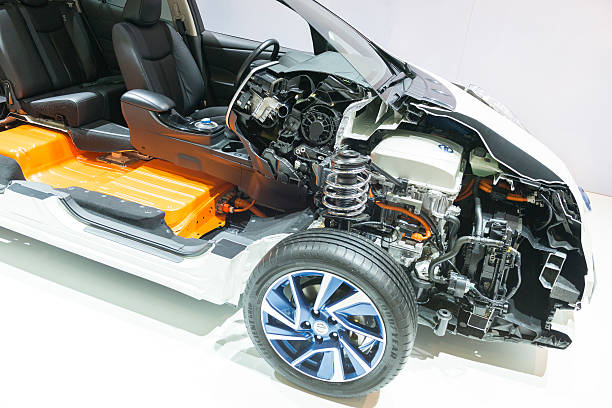
- AI-Driven Thermal Management: New regulations mandate intelligent battery temperature regulation to maintain efficiency across climate zones
- High-Efficiency Powertrains: 800V architectures and SiC (Silicon Carbide) inverters are now standard for compliance
- Smart Battery Optimization: Shift from capacity-focused (kWh) to efficiency-focused (kWh/km) battery configurations
Distribution Agreement Clause: “Supplier warrants that all vehicles meet MIIT 2026 energy consumption standards for their respective weight classifications, with certified test reports available prior to shipment.”
3. The Localization Challenge: Software, UI, and Connectivity
Chinese EVs operate within a digital ecosystem fundamentally distinct from Western or emerging markets. Your distribution agreement must mandate comprehensive software localization to ensure market viability.
Critical Localization Vectors
| System Component | China Domestic Spec | Export Market Requirement | Modification Complexity |
|---|---|---|---|
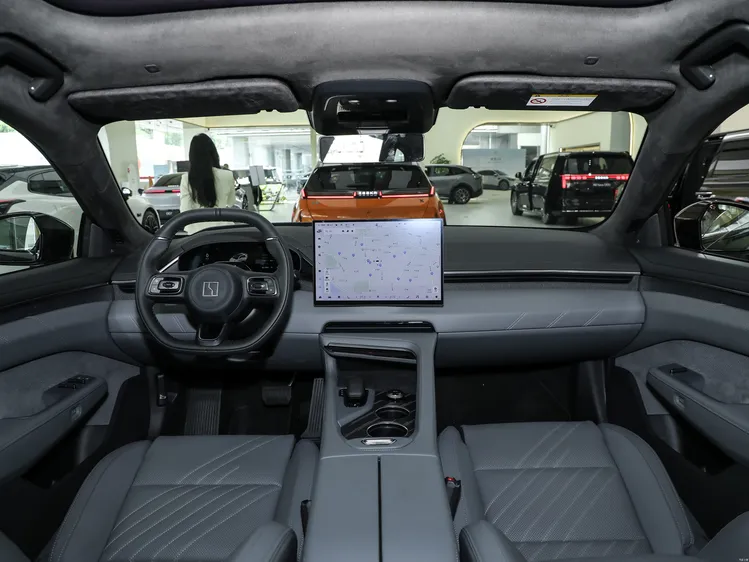
| Infotainment OS | Mandarin-only, Baidu Maps, WeChat integration | Local language, Google Maps/Waze, Spotify/CarPlay | High – requires firmware flash |
| Voice Assistant | Mandarin/Cantonese recognition | Local language NLP, accent recognition | Medium – cloud service migration |
| Telematics | State-controlled data servers | GDPR/CCPA compliance, local data residency | High – hardware module replacement |
| OTA Updates | Domestic server push | International CDN, regional staging | Medium – backend infrastructure |
| Mobile App | WeChat mini-programs | Standalone iOS/Android apps | Low – UI/UX adaptation |
The Connectivity Gap
Chinese EVs utilize proprietary connectivity modules (typically Quectel or Fibocom) optimized for domestic 4G/5G bands. Export markets require:
- Band Compatibility: Support for FDD-LTE Bands 1, 3, 7, 20 (Europe) or Bands 2, 4, 12 (Americas)
- eSIM Localization: Removal of China Mobile/Unicom profiles; integration with local carriers
- Cybersecurity Certification: UNECE R155/R156 compliance for software updates and data protection
Case Study: Rwandan Market Entry
A distributor importing Geely EX5 models for East Africa discovered that domestic Chinese variants lacked English-language voice recognition and relied on Baidu Maps for navigation—useless in Kigali. The localization process required:
– 3-week firmware development for English/Local language packs
– Hardware swap of the T-Box (telematics control unit) for Airtel/Tigo compatibility
– Integration with local payment APIs for charging network access
Cost Impact: $850–$1,200 per vehicle for software/hardware localization.
4. Charging Compatibility: Bridging the GB/T Gap
China utilizes the GB/T charging standard (GB/T 20234.2-2015 for AC, GB/T 20234.3-2015 for DC), physically and electrically incompatible with CCS2 (Europe), CCS1 (North America), or CHAdeMO (Japan).
Technical Specifications Comparison
| Parameter | GB/T (China) | CCS2 (EU) | CCS1 (NA) | Adaptation Strategy |
|---|---|---|---|---|
| AC Connector | Type 2 (Mennekes) variant | Type 2 | Type 1 (J1772) | Adapter cable ($150–$300) |
| DC Connector | Unique GB/T DC | Combo 2 | Combo 1 | Full inlet replacement ($800–$1,500) |
| Communication | CAN Bus | PLC (Power Line Communication) | PLC | Protocol converter required |
| Voltage | Up to 1,000V DC | Up to 1,000V DC | Up to 1,000V DC | Physically compatible with adapter |
| Amperage | Up to 250A | Up to 500A | Up to 350A | May limit charging speed |
Distribution Solutions
Option A: Adapter Strategy (Short-term)
– Supply GB/T-to-CCS2 adapter cables with each vehicle
– Pros: Low cost, immediate deployment
– Cons: Reduced charging speeds (typically 50–70% of max), consumer inconvenience, potential warranty disputes
Option B: Hardware Retrofit (Recommended)
– Replace charge inlet and onboard charger (OBC) with destination-market specifications
– Pros: Full charging speed, seamless user experience, warranty compliance
– Cons: $1,200–$2,000 additional cost per unit, 2–3 week lead time
Option C: Manufacturer Export Variant
– Procure “Global Version” models directly from OEMs (BYD Atto 3/Seal, NIO ET5 Touring, etc.)
– Pros: Factory-integrated CCS2, English software, international warranty
– Cons: 15–20% price premium, MOQ requirements (typically 50–100 units)
Distribution Agreement Clause: “Vehicles shall be supplied with [select: adapters/retrofitted inlets/factory global variants] ensuring full compatibility with [destination country] charging infrastructure standards, with certification documentation provided.”
5. Homologation, Compliance & 2026 Export Regulations
The Export License Framework
Effective January 2026, MOFCOM requires Export Licenses for Electric Vehicles under the Foreign Trade Law and Regulations on the Administration of Import and Export of Goods. Key provisions:
Eligible Applicants:
– Automobile manufacturers holding MIIT production qualifications
– Authorized export companies designated by manufacturers (一级授权出口企业)
– Excluded: Independent trading companies, grey-market exporters, unauthorized dealers
Documentation Requirements:
1. MIIT Production Qualification Certificate (车辆生产企业及产品公告)
2. CCC Certification (China Compulsory Certification) for vehicle safety
3. Energy Efficiency Compliance Report (meeting 2026 consumption standards)
4. Battery Safety Certification (UN38.3, GB 38031-2020)
5. Export License Application (submitted via MOFCOM’s digital platform)
Destination Market Homologation
Your distribution agreement must specify responsibility for:
| Market | Regulatory Body | Key Requirements | Compliance Cost |
|---|---|---|---|
| European Union | UNECE/WVTA | Whole Vehicle Type Approval, Euro 6e (emissions for PHEVs), R155/R156 cybersecurity | €15,000–€50,000 per model |
| United States | EPA/NHTSA | EPA Certificate of Conformity, FMVSS safety standards, DOT registration | $25,000–$75,000 per model |
| GCC (Middle East) | GSO | GCC Conformity Marking, extreme climate testing | $8,000–$15,000 per model |
| East Africa | EAC/NCAP | EAC harmonized standards, local homologation (simplified) | $3,000–$8,000 per model |
Critical Timeline: July 2026 introduces additional MIIT regulations covering power battery recycling standards and enhanced safety protocols. Ensure your distribution agreement includes clauses for:
– Battery passport documentation (cell chemistry, recycling pathways)
– Extended producer responsibility (EPR) commitments
– End-of-life battery return logistics
6. Global Logistics & Supply Chain
Battery Transport Regulations (UN38.3)
Lithium-ion batteries exceeding 100Wh (all EV traction batteries) require strict adherence to UN38.3 testing and dangerous goods transport protocols:
Shipping Modes:
– RoRo (Roll-on/Roll-off): Preferred for complete vehicles; batteries remain installed; Class 9 dangerous goods declaration required
– Container (SOC – Shipper Owned Container): Batteries must be charged to ≤30% SOC; thermal runaway detection systems mandatory
– Breakbulk: For heavy commercial vehicles; requires specialized lashing and segregation protocols
Documentation Checklist:
– UN38.3 Test Summary (for battery cells and packs)
– MSDS (Material Safety Data Sheet) in destination language
– Dangerous Goods Declaration (IMO Class 9)
– Emergency Response Guide (ERG) documentation
Supply Chain Risk Mitigation
Given the 2026 regulatory tightening, anticipate:
- Production Delays: OEMs retooling for efficiency compliance may extend lead times by 4–6 weeks
- License Verification Delays: MOFCOM export license processing now requires 15–20 business days (previously 5–7 days)
- Port Congestion: Shanghai and Shenzhen implementing enhanced battery inspection protocols
Recommended Incoterms:
– FOB (Free On Board): Buyer assumes risk at Chinese port; suitable for experienced importers
– CIF (Cost, Insurance, Freight): Seller handles shipping to destination port; recommended for new market entrants
– DAP (Delivered at Place): Door-to-door service including customs clearance; premium option for dealer networks
7. Financial Breakdown: Landed Cost & Dealer Profit Margins (Case Study)
Scenario: Importing 50 Units of BYD Seal (Premium Variant) to Germany
Vehicle Specifications:
– Curb Weight: 1,950 kg
– Energy Consumption: 12.7 kWh/100 km (Compliant with 2026 standards)
– Factory Price (EXW Shenzhen): $32,000/unit
Cost Structure Analysis
| Cost Component | Calculation | Per Unit | Total (50 units) |
|---|---|---|---|
| FOB Shanghai | Base vehicle + local logistics | $32,800 | $1,640,000 |
| Ocean Freight | RoRo, Shanghai-Hamburg (50 units) | $1,200 | $60,000 |
| Insurance | 110% of CIF value @ 0.3% | $102 | $5,100 |
| CIF Hamburg | Subtotal | $34,102 | $1,705,100 |
| EU Import Duty | 10% on CIF (HS Code 8703.80) | $3,410 | $170,505 |
| VAT (Germany) | 19% on (CIF + Duty) | $7,128 | $356,400 |
| Homologation | WVTA certification amortized | $800 | $40,000 |
| Localization | CCS2 retrofit + software | $1,500 | $75,000 |
| Technical Inspection | TÜV certification per unit | $350 | $17,500 |
| Landed Cost | Total Investment | $47,290 | $2,364,505 |
Dealer Margin Analysis
| Pricing Tier | Retail Price | Gross Margin | Net Margin (after 15% opex) |
|---|---|---|---|
| Competitive | €42,000 ($45,500) | -3.8% | -18.8% |
| Market Rate | €48,000 ($52,000) | 9.1% | -5.9% |
| Premium | €55,000 ($59,500) | 20.5% | 5.5% |
Break-even Analysis: At current freight rates and duty structures, the dealer requires a retail price of approximately €52,000 to achieve sustainable profitability, positioning the Chinese EV against the Tesla Model 3 Long Range (€52,990) and BMW i4 (€58,000).
Alternative Scenario: High-Volume East African Market
Vehicle: Geely EX5 (Compact SUV)
Volume: 200 units to Mombasa, Kenya
| Cost Component | Per Unit |
|---|---|
| FOB Shanghai | $24,500 |
| Freight & Insurance (CIF) | $1,800 |
| Import Duty (25% EAC rate) | $6,575 |
| VAT (16%) | $5,260 |
| Excise Duty (20% for EVs) | $6,575 |
| Landed Cost | $44,710 |
| Local Assembly/PDI | $500 |
| Total Investment | $45,210 |
Retail Price: $58,000 (local currency equivalent)
Gross Margin: 22.1%
ROI: 18 months (assuming 15 units/month sales velocity)
8. Securing After-Sales Support & Spare Parts
The 2026 export license framework explicitly ties authorization to after-sales service capabilities. Your distribution agreement must establish:
Warranty Architecture
| Component | Standard China Warranty | Export Market Requirement | Recommended Distribution Terms |
|---|---|---|---|
| Battery Pack | 8 years/150,000 km | 8 years/160,000 km (EU) | Manufacturer-backed, local service center |
| Drive Motor | 5 years/100,000 km | 5 years/unlimited (premium markets) | Extended warranty insurance |
| Vehicle Electronics | 3 years/60,000 km | 2 years/unlimited (EU mandatory) | Local stock of high-failure components |
| Charging System | 2 years/50,000 km | 3 years/100,000 km | Retrofit component warranty |
Spare Parts Logistics
Critical Stock Requirements:
Maintain 90-day inventory of:
– Battery management system (BMS) controllers
– DC-DC converters
– Thermal management pumps and valves
– Infotainment control modules
– Charging port assemblies (CCS2 variants)
Supply Chain Structure:
– Regional Hub: Rotterdam (EU), Dubai (Middle East/Africa), Los Angeles (Americas)
– Emergency Air Freight: 48-hour turnaround for critical drivetrain components
– Technical Training: Manufacturer-certified technician programs (mandatory under 2026 regulations)
Distribution Agreement Clause: “Supplier shall provide technical training for [X] technicians, diagnostic equipment (scanners, software licenses), and guarantee parts availability with [Y] days lead time for [Z] years post-delivery.”
9. Why Partner with Electric Auto China
As Shanghai’s premier authorized export consultancy, Electric Auto China navigates the complexities of the 2026 regulatory environment to deliver compliant, profitable EV distribution solutions.
Our 2026 Compliance Advantage
Authorized Export Licensing: We hold direct authorization from MIIT-qualified manufacturers (BYD, Geely, Zeekr, NIO, XPeng), ensuring your shipments meet MOFCOM’s strict export license requirements.
Technical Pre-Compliance: All vehicles undergo pre-export verification against:
– MIIT 2026 energy consumption standards
– Destination market homologation requirements
– GB/T-to-CCS/CHAdeMO retrofit validation
Financial Structuring: We facilitate:
– Letter of Credit arrangements backed by Sinosure (China Export & Credit Insurance Corporation)
– Currency hedging for CNY/EUR/USD transactions
– Duty optimization through FTZ (Free Trade Zone) structuring
End-to-End Distribution Support
| Service Tier | Scope | Deliverable |
|---|---|---|
| Regulatory | Export license application, homologation management | Validated vehicle certification package |
| Technical | Software localization, charging retrofit, telematics configuration | Market-ready vehicle specification |
| Logistics | Dangerous goods handling, RoRo charter, customs brokerage | DAP delivery to dealer premises |
| Commercial | Dealer margin optimization, warranty structuring, spare parts logistics | Sustainable profitability model |
The 2026 Value Proposition
With grey-market exports eliminated and efficiency standards raised, the Chinese EV export market now favors professional, long-term distribution partnerships over opportunistic trading. Electric Auto China provides the regulatory bridge between MIIT-compliant manufacturers and international dealer networks, ensuring your 2026 EV distribution agreement delivers vehicles that meet efficiency mandates, carry proper export authorization, and maintain warranty integrity in your target market.
Contact our Shanghai headquarters to structure your compliant 2026 EV distribution agreement and secure allocation from efficiency-optimized production lines before Q3 capacity constraints.
Electric Auto China – Powering Global Mobility, Compliant by Design.
Unlock High-Margin EV Imports with Electric Auto China
As an elite automotive supply chain partner in Shanghai, we provide end-to-end, strictly compliant export solutions tailored for international dealerships, fleet managers, and wholesale distributors.
- 🛡️ 100% Legal & Compliant: Fully licensed exports ensuring smooth customs clearance at your destination.
- ⚙️ Complete Localization: Professional English/Arabic/Russian OS flashing and GB/T to CCS2 charging solutions.
- 🚢 Secure Logistics: Direct Ro-Ro and Containerized shipping with full UN38.3 battery certifications.
- 🔧 After-Sales Support: Reliable access to OEM diagnostic tools and steady spare parts supply.
Request a Detailed FOB/CIF Quote Today:
📧 B2B Sales Email: [email protected]
💬 Direct WhatsApp: +86 159 5127 6160