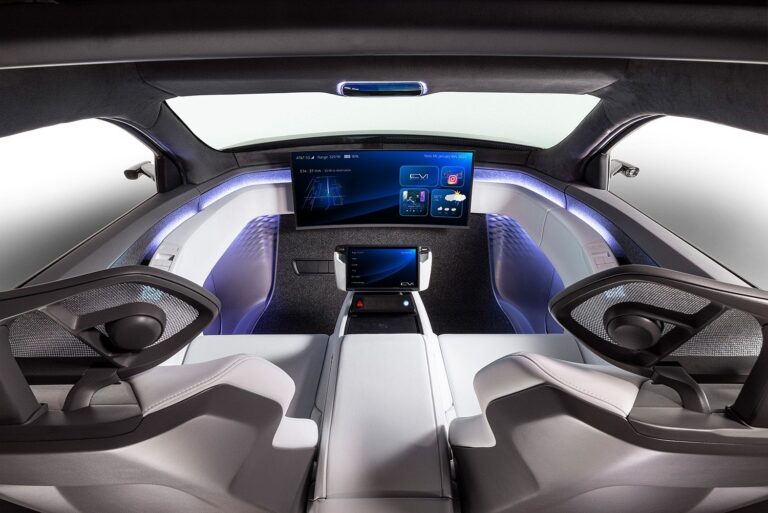
The Ultimate 2026 B2B Export Guide for new electric car from china: Pricing, Compliance & Localization
1. Executive Summary
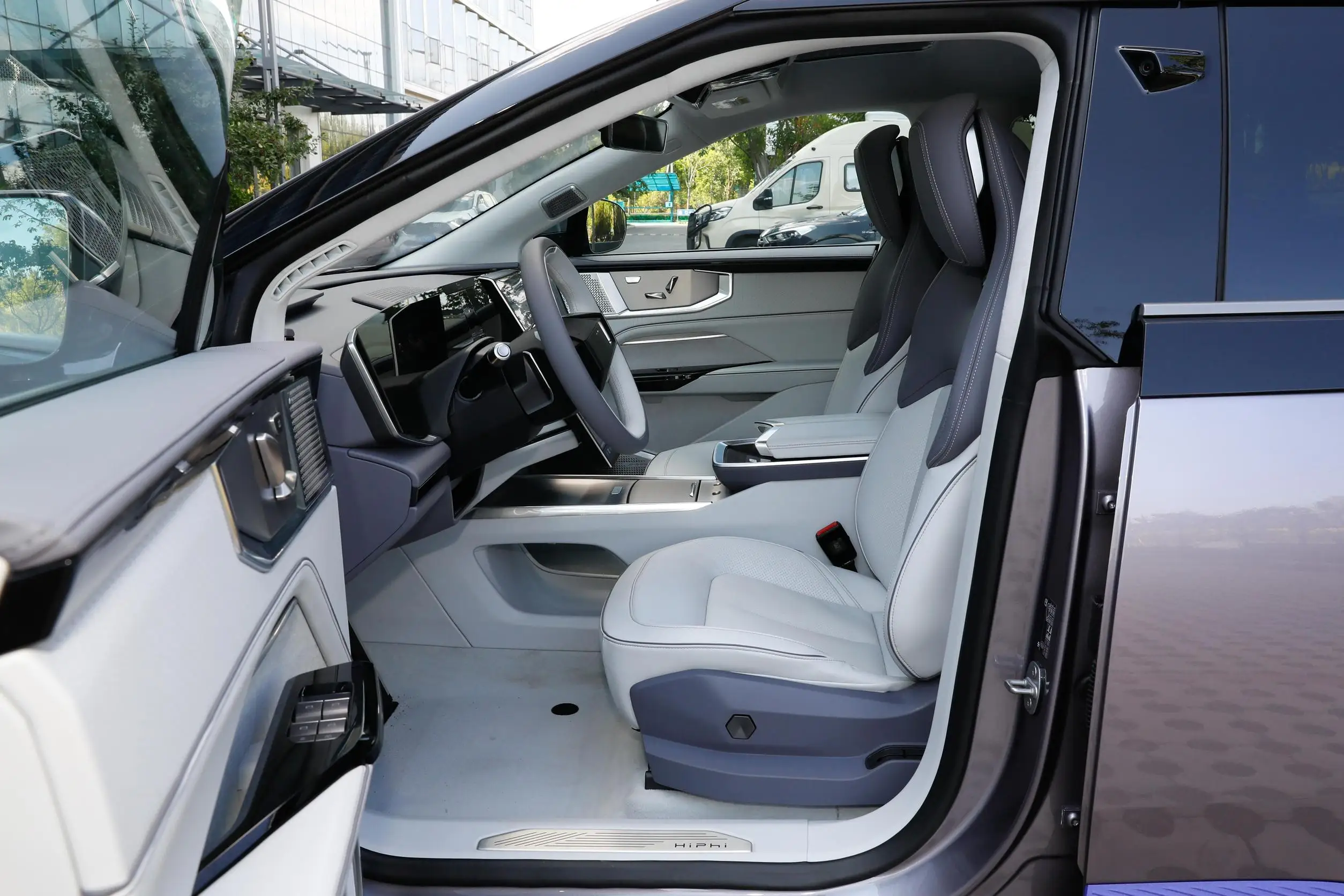
The global electric vehicle landscape has undergone a seismic shift. Chinese manufacturers now command over 60% of worldwide EV sales, delivering cutting-edge battery technology, autonomous driving capabilities, and premium interiors at price points that undercut European and American rivals by 30-40%. For B2B importers, fleet operators, and automotive distributors, the opportunity has never been more compelling—or more complex.
The Regulatory Reset of 2026
January 1, 2026, marks the end of the “Wild West” era of Chinese EV exports. Under new regulations enforced by China’s Ministry of Commerce, all electric vehicle exports now require formal export permits. Only automakers themselves or companies officially authorized by those brands may ship vehicles abroad. This directly terminates the longstanding loophole where unaffiliated dealers exported brand-new EVs labeled as used cars, bypassing regulations and leaving buyers without warranty coverage or service networks.
For legitimate B2B buyers, this regulatory tightening creates a paradox: the barrier to entry has risen, but the quality and sustainability of the supply chain have improved dramatically. The market has bifurcated into two distinct channels:
- Authorized New Vehicle Exports: Full manufacturer warranty, compliant software localization, and OEM-backed spare parts supply
- Certified Pre-Owned (180-Day+) Exports: Vehicles registered in China for minimum 180 days, eligible for export under used vehicle classifications, offering significant cost savings but requiring careful due diligence on battery health and warranty transferability
This guide provides an exhaustive roadmap for navigating the 2026 compliance landscape, from technical specifications and homologation requirements to exact landed cost calculations and after-sales infrastructure. Whether you are sourcing BYD’s revolutionary Blade Battery models for UK salary sacrifice schemes, NIO’s battery-swap enabled fleet vehicles for European corporate clients, or MG’s value-driven offerings for emerging markets, this document serves as your definitive operational manual.
2. Deep Dive: Technical Specifications
Chinese EVs in 2026 are no longer “budget alternatives”—they are technology leaders. Understanding the technical differentiation is critical for B2B positioning and fleet suitability analysis.
Battery Technology Matrix
| Manufacturer | Battery Technology | Energy Density | Fast Charging (10-80%) | Thermal Management | Cycle Life |
|---|---|---|---|---|---|
| BYD | Blade Battery (LFP) | 140-150 Wh/kg | 29 minutes (150kW) | Cell-to-pack cooling | 3,000+ cycles |
| NIO | Semi-Solid State | 360 Wh/kg | 20 minutes (500kW) | Liquid cooling + heating | 2,000+ cycles |
| CATL (Supplies multiple brands) | Qilin (CTP 3.0) | 255 Wh/kg | 10 minutes (4C charging) | Multi-level cooling | 2,500+ cycles |
| GAC AION | Graphene-enhanced LFP | 180 Wh/kg | 15 minutes (480kW) | Active thermal mgmt | 4,000+ cycles |
Performance Benchmarks: 2026 Flagship Models
BYD Seal (Executive Sedan)
– Powertrain: Dual-motor AWD producing 530hp
– Acceleration: 0-62mph in 3.8 seconds
– Range: 354 miles WLTP (82.5kWh battery)
– Platform: e-Platform 3.0 with cell-to-body integration
– ADAS: DiPilot 300 with 12 ultrasonic sensors, 5 millimeter-wave radars, and forward-facing cameras
NIO ET7 (Luxury Fleet Flagship)
– Powertrain: Dual-motor 483hp with silicon carbide inverter technology
– Battery Options: 75kWh, 100kWh, or 150kWh semi-solid state
– Maximum Range: 621 miles (CLTC) with 150kWh battery; 405 miles WLTP
– Charging: 500kW peak charging capability plus 5-minute battery swap compatibility
– Chassis: Air suspension with dynamic damping control using road-scanning cameras
MG4 EV (Volume Fleet Champion)
– Platform: MSP (Modular Scalable Platform) with 50:50 weight distribution
– Range: 281 miles WLTP (64kWh battery)
– Efficiency: 4.2 miles/kWh combined
– Safety: Euro NCAP 5-star rating with 83% adult occupant protection
Hongqi E-HS9 (Ultra-Luxury SUV)
– Seating: 6 or 7 configurations with heated/ventilated/massage functions
– Range: 285 miles (99kWh battery)
– Interior: Dual 12.3-inch displays, Nappa leather, active noise cancellation
– Target Market: Diplomatic fleets, luxury hotel shuttles, executive transport
Autonomous Driving Capability Tiers
| Brand | System Name | Hardware Suite | Level | Market Availability |
|---|---|---|---|---|
| XPeng | XNGP | 2x LiDAR, 12x cameras, 5x mmWave | L2+ (Highway pilot) | China only* |
| NIO | NAD (NIO Autonomous Driving) | 1x LiDAR, 11x cameras, 5x mmWave | L2+ | Global with subscription |
| BYD | DiPilot 300 | Camera + radar fusion | L2 | Global |
| Huawei (Seres) | ADS 2.0 | 1x LiDAR, 11x cameras, 6x mmWave | L2+ | China/EU pending |
*Note: XPeng’s advanced ADAS features require Chinese mapping data and are geo-fenced. Export models typically ship with degraded functionality unless specifically localized.
3. The Localization Challenge: Software, UI, and Connectivity
The single greatest operational hurdle for B2B importers is not mechanical—it is digital. Chinese EVs are built on software architectures designed for the domestic ecosystem, creating significant friction in international deployment.
Language and Interface Limitations
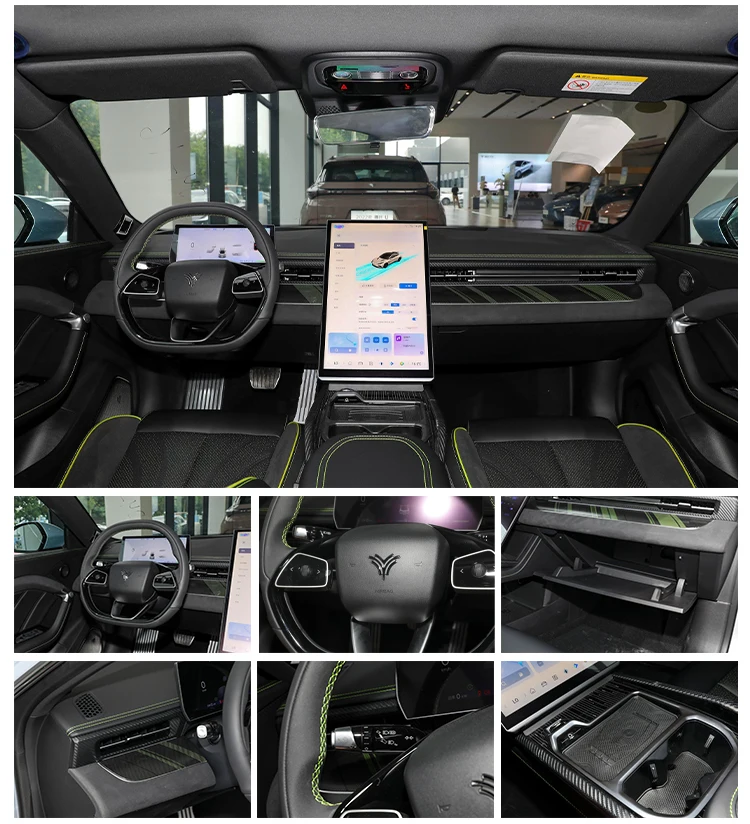
The Mandarin Lock-In: Most Chinese-market EVs ship with Mandarin-only interfaces. While some export-spec models (MG, certain BYD variants) offer English, the majority of high-value inventory—particularly NIO, XPeng, and premium BYD models—require software reflashing or overlay systems.
Critical UI Components Requiring Localization:
– Instrument cluster displays (speedometer, battery status, ADAS warnings)
– Central infotainment system (navigation, media, vehicle settings)
– Voice control systems (tied to Chinese NLP engines like iFlytek)
– Mobile app connectivity (proprietary Chinese apps often blocked by GDPR/firewalls)
B2B Solution Pathways:
1. Factory-Level Export Spec: Order vehicles with pre-installed English language packs and international app stores (requires MOQ of 50+ units for most brands)
2. Third-Party Reflashing: Post-purchase software modification by certified technicians (voids manufacturer warranty if unauthorized)
3. Parallel Interface Systems: Installation of aftermarket head units with CarPlay/Android Auto while retaining original cluster for diagnostics
Telematics and Data Compliance
Chinese EVs transmit extensive telemetry to manufacturer servers (battery health, location, driving behavior, diagnostic codes). For EU and UK imports, this creates GDPR compliance conflicts.
Data Sovereignty Requirements:
– EU: Data must remain within European Economic Area or covered by adequacy decisions
– UK: UK GDPR compliance with explicit consent mechanisms
– Solution: Negotiate fleet-level data processing agreements (DPA) with manufacturers or disable cellular modems (impacts OTA updates and remote diagnostics)
OTA Update Infrastructure
Over-the-air updates are a double-edged sword. While they enable continuous improvement, Chinese servers often push updates incompatible with localized vehicles or containing region-locked features.
Best Practice: Establish a “golden master” software version validated for your market, and implement firewall rules to prevent automatic updates that could brick infotainment systems or alter charging protocols.
4. Charging Compatibility: Bridging the GB/T Gap
China utilizes the GB/T charging standard (GB/T 20234.2 for AC, GB/T 20234.3 for DC), physically incompatible with European CCS2, North American CCS1, or Japanese CHAdeMO standards. This is not merely a connector issue—it involves communication protocol differences that affect charging speed and safety handshakes.
The Technical Reality
| Standard | AC Connector | DC Connector | Max DC Power | Communication |
|---|---|---|---|---|
| GB/T (China) | Type 2 (7-pin) | Large round (9-pin) | 250kW | CAN bus |
| CCS2 (EU/UK) | Type 2 (7-pin) | Combo 2 (9-pin) | 350kW+ | PLC (Power Line Communication) |
| CCS1 (North America) | Type 1 (5-pin) | Combo 1 (7-pin) | 350kW+ | PLC |
The Pinout Problem: While AC charging can often be adapted with simple physical adapters (Type 2 to Type 2 is pin-compatible), DC fast charging requires active protocol conversion. GB/T uses CAN bus communication; CCS uses PLC over the charging pins. Passive adapters will not work for DC charging.
Solutions for B2B Fleets
Option 1: Manufacturer Export Conversion
Some OEMs (notably MG, Volvo/Polestar, and certain BYD models) produce “export spec” vehicles with CCS2 hardware installed at the factory. This is the only compliant solution for new vehicle exports under 2026 regulations.
Option 2: Post-Import Retrofit
Specialized workshops can replace the charging inlet and onboard charging controller (OBC). Cost: £800-1,200 per vehicle. Requires:
– New CCS2 inlet assembly
– Protocol converter module
– Software recalibration of battery management system (BMS)
– Homologation re-testing (varies by jurisdiction)
Option 3: GB/T Infrastructure Investment
For large fleet operators (100+ vehicles), installing GB/T charging infrastructure may be cost-effective. However, this limits public charging accessibility and requires specialized maintenance contracts.
Charging Speed Limitations
Even with adapters, Chinese EVs often face charging speed caps on international networks:
– BYD Seal: Max 150kW on CCS2 (vs. 230kW on GB/T)
– NIO ET7: Max 180kW on CCS2 (vs. 500kW on NIO proprietary swap stations)
– MG4: Max 135kW on CCS2 (matches GB/T capability)
B2B Recommendation: For fleet operations requiring rapid turnaround, prioritize vehicles with native CCS2 compatibility or negotiate factory conversions for orders exceeding 25 units.
5. Homologation, Compliance & 2026 Export Regulations
The regulatory landscape has transformed from permissive to restrictive. Understanding the 2026 Export Permit system is non-negotiable for legal compliance.
The 2026 Export Permit Framework
Effective January 1, 2026, China’s Ministry of Commerce (MOFCOM) requires:
- Export Licenses: All EV exports must be conducted by:
- The vehicle manufacturer itself, OR
-
A company holding explicit written authorization from the manufacturer
-
Vehicle Registration Requirements:
- New Vehicles: Must be exported directly by authorized entities; cannot be registered temporarily to circumvent new-car export restrictions
-
Used Vehicles: Must be registered in China for minimum 180 days before export eligibility (the “180-Day Rule”)
-
Documentation Package:
- Export License (出口许可证)
- Vehicle conformity certificate (合格证)
- CCC (China Compulsory Certification) marks
- Battery test reports (UN38.3 for transport)
- Destination market homologation certificates
The 180-Day Rule Explained
For buyers seeking cost advantages through “like-new” used exports:
– Vehicles must have valid Chinese registration for 180+ days
– Odometer readings must exceed 500km (preventing “zero-mile used” scams)
– All taxes and fees paid in China (VAT, purchase tax)
– Export permitted only through licensed used vehicle exporters
Risk Mitigation: Verify registration dates via the Chinese Vehicle Registration Certificate (机动车登记证书). Cross-reference with Ministry of Public Security databases to ensure no lien or lease encumbrances exist.
Destination Market Homologation
United Kingdom (Post-Brexit)
– Approval Route: GB type approval or EU WVTA with UKCA marking
– Key Requirements:
– RHD conversion mandatory (most Chinese EVs are LHD; RHD production limited to MG and specific export lines)
– Speedometer in MPH
– Emergency call (eCall) system compliance
– Smart charging regulations (EVSE compliance)
– Cost: £15,000-25,000 per type, £2,000-4,000 per variant for IVA (Individual Vehicle Approval) if not full type approved
European Union
– WVTA (Whole Vehicle Type Approval): Required for series production
– Technical Requirements:
– UNECE R10 (EMC)
– UNECE R100 (REESS safety – batteries)
– UNECE R79 (steering)
– Cybersecurity (UN R155) and Software Updates (UN R156) mandatory from 2024
– Cost: €50,000-150,000 for full WVTA depending on complexity
Middle East (GCC)
– GSO Conformity: Simpler than EU but requires extreme heat testing (50°C+ ambient)
– Religious Requirements: Some markets require removal of certain voice assistant functionalities or content filtering
Southeast Asia (ASEAN)
– ASEAN NCAP: Safety rating alignment
– Local Content: Some markets (Thailand, Indonesia) offer tariff exemptions for CKD (Completely Knocked Down) imports vs. CBU (Complete Built Up)
Compliance Red Flags
Under the 2026 regulations, avoid any supplier offering:
– “Gray market” new cars labeled as used without 180-day registration
– Export services without visible manufacturer authorization letters
– “Homologation shortcuts” that involve VIN cloning or document falsification
– Pricing significantly below market (indicates non-compliant export route)
Penalties for non-compliance include seizure of goods, destruction of vehicles at port, blacklisting of importers, and criminal liability under Chinese customs law.
6. Global Logistics & Supply Chain
Transporting lithium-ion batteries requires adherence to strict dangerous goods regulations, while the 2026 export controls add documentary complexity.
Shipping Methods Comparison
| Method | Cost per Unit | Transit Time | Battery Restrictions | Suitability |
|---|---|---|---|---|
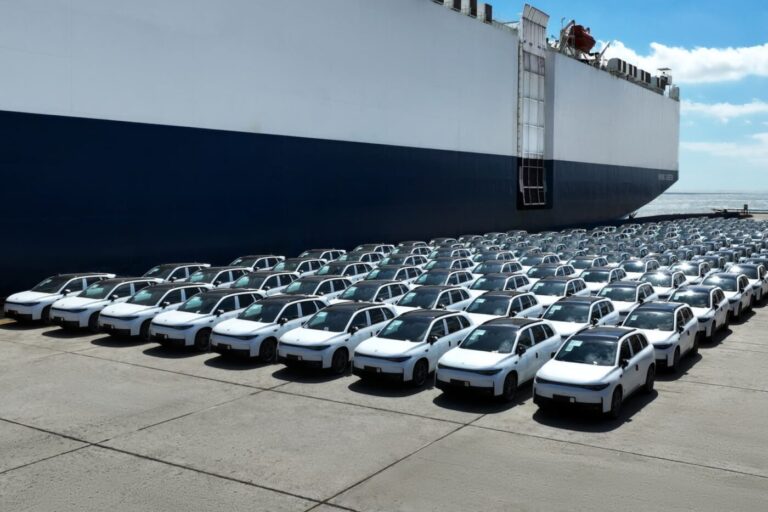
| RORO (Roll-on/Roll-off) | $800-1,200 | 25-35 days | UN38.3 required, SOC <30% | Best for volume (50+ units) |
| Container (40′ HC) | $1,200-1,800 | 30-40 days | Complex securing, thermal monitoring | Flexible for mixed SKUs |
| Flat Rack | $1,500-2,200 | 30-40 days | Open exposure, weather risk | Oversized vehicles only |
RORO Best Practices:
– Book dedicated EV decks (lower risk of fire spread)
– Ensure pre-shipping inspection (PSI) includes battery health certification
– SOC (State of Charge) must be between 20-30% for maritime transport
– Disconnect 12V auxiliary batteries to prevent drain
Container Loading Protocol:
– Maximum 2-3 vehicles per 40′ HC depending on dimensions
– Fire suppression systems required (aerosol or water mist)
– Thermal imaging checkpoints every 4 hours during voyage
– Dangerous Goods Declaration (IMDG Code Class 9)
Port Handling Considerations
Chinese Export Ports:
– Shanghai: Primary hub for Tesla, NIO, MG; advanced EV handling facilities
– Shenzhen: BYD’s home port; specialized Lithium battery zones
– Tianjin: Northern hub for BAIC, Great Wall Motor
Destination Port Challenges:
– UK ports (Southampton, Bristol) require EV-specific unloading equipment
– EU ports (Bremerhaven, Rotterdam) have congestion surcharges for EVs due to storage limitations
– Documentation must include MSDS (Material Safety Data Sheet) for batteries in 7 languages
Insurance and Liability
Standard marine cargo insurance often excludes “inherent vice” of batteries. Secure specific EV coverage including:
– Thermal runaway events
– Progressive damage from battery degradation
– Cyber incidents affecting vehicle systems during transit
– Total loss valuation based on current market value, not invoice price
7. Financial Breakdown: Landed Cost & Dealer Profit Margins (Case Study)
Understanding the true cost of acquisition requires factoring in regulatory compliance, technical adaptation, and market-specific duties. Below is a detailed case study for importing 10 units of the BYD Seal (Long Range) to the UK market in 2026.
Scenario Parameters
- Vehicle: BYD Seal Design trim (82.5kWh battery, 354-mile range)
- Quantity: 10 units (minimum efficient scale for homologation amortization)
- Origin: Shanghai, China
- Destination: UK (Southampton)
- Compliance Route: GB Type Approval via IVA scheme (Individual Vehicle Approval)
Cost Structure Analysis
| Cost Component | Unit Cost (GBP) | Total (10 units) | Notes |
|---|---|---|---|
| FOB Vehicle Price | £28,500 | £285,000 | Factory gate, authorized exporter |
| Export Documentation | £150 | £1,500 | License, customs clearance China |
| Marine Insurance | £285 | £2,850 | 110% CIF value, all risks |
| Ocean Freight (RORO) | £950 | £9,500 | Shanghai-Southampton, 28 days |
| CIF Southampton | £29,885 | £298,850 | Landed value for duty calculation |
| UK Import Duty (10%) | £2,988.50 | £29,885 | Based on CIF value |
| UK VAT (20%) | £6,574.70 | £65,747 | On CIF + Duty |
| Port Handling | £450 | £4,500 | EV unloading, customs exam |
| Homologation/IVA | £3,500 | £35,000 | £3,500/unit for testing, lighting, speedo |
| CCS2 Retrofit | £1,100 | £11,000 | Hardware + labor for charging conversion |
| Software Localization | £800 | £8,000 | English UI, app integration |
| Pre-Delivery Inspection | £250 | £2,500 | Final checks, detailing |
| Total Landed Cost | £45,548.20 | £455,482 | Per unit |
| Recommended Retail | £52,995 | £529,950 | Competitive with local Tesla Model 3 |
| Gross Margin | £7,446.80 | £74,468 | 16.3% margin |
Alternative: Certified Pre-Owned (180-Day) Route
For the same model, sourcing 180-day registered used vehicles:
| Cost Component | Unit Cost (GBP) | Notes |
|---|---|---|
| Vehicle Acquisition (Used) | £24,200 | 180-day registered, 2,000-5,000km |
| Export Documentation | £200 | Used car export license |
| Shipping | £950 | Standard RORO |
| UK Duty (10%) | £2,515 | Lower base value |
| UK VAT (20%) | £5,533 | |
| IVA Compliance | £3,500 | Same as new |
| Total Landed | £36,898 | |
| Retail Price | £42,995 | Positioned as “nearly new” |
| Gross Margin | £6,097 | 16.5% margin, lower capital tie-up |
Salary Sacrifice Scheme Economics (UK Specific)
For B2B fleet operators supplying corporate salary sacrifice schemes:
Monthly Cost Comparison (BYD Seal vs. Tesla Model 3)
– BYD Seal: £455/month (40% taxpayer) vs. £620/month for Tesla Model 3 RWD
– Saving to employee: £165/month (£1,980/year)
– Employer NI savings: £1,200/year per vehicle
– Total Cost of Ownership advantage: 28% over 3 years
Residual Value Risk Mitigation:
Chinese EVs historically suffer from higher depreciation due warranty concerns. However, with 2026 authorized export channels providing manufacturer-backed warranties (5-year/100,000 miles typical), residual values are stabilizing. Budget 45% retention at 3 years/30,000 miles for volume models, 55% for premium (NIO, Zeekr).
8. Securing After-Sales Support & Spare Parts
The 2026 regulatory changes explicitly aim to eliminate “orphan” vehicles—those sold without service infrastructure. For B2B importers, establishing credible after-sales capability is essential for warranty validity and customer retention.
Warranty Transfer Mechanics
Manufacturer Warranty Status:
– New Exports: Full factory warranty transfers if imported by authorized channel (5 years/100,000 miles powertrain typical)
– Used Exports: Warranty may be voided if exported without manufacturer consent; negotiate warranty buyback or third-party coverage
Critical Warranty Exclusions:
– Battery degradation exceeding 20% in 8 years (industry standard)
– Damage from non-CCS charging (if converted)
– Software modifications
– Use of non-OEM parts in repairs
Spare Parts Supply Chain
High-Risk Components (Long lead times):
– Battery packs (3-6 months, hazmat shipping)
– Motor controllers (IPM modules)
– ADAS sensors (LiDAR units, specific camera modules)
– Infotainment ECUs (region-locked)
Inventory Strategy:
Maintain 30-day critical parts inventory at destination:
– Brake pads, filters (generic compatibility often possible)
– 12V auxiliary batteries (standard sizes)
– Body panels (ship with vehicle batch as “crash kit”)
Technical Information Access:
Chinese OEMs traditionally restrict service manuals. Under 2026 authorized export agreements, demand:
– English-language workshop manuals
– Diagnostic software licenses (or compatible OBD protocols)
– Technical training for local technicians (2-week programs in China or regional hubs)
Battery Swap Infrastructure (NIO Specific)
NIO’s differentiator—5-minute battery swapping—requires specific infrastructure investment:
– Swap Station Cost: $300,000-500,000 per station (excluding real estate)
– Requirements: 200 sqm, high-voltage connection (380V three-phase), internet backbone
– ROI Calculation: Viable at 50+ daily swaps; suitable for airport fleets, taxi operators, or corporate campuses
For markets without swap infrastructure, NIO vehicles operate as standard charge-only EVs, but lose their primary competitive advantage.
9. Why Partner with Electric Auto China
Navigating the 2026 compliance landscape requires an authorized partner with deep manufacturer relationships and technical integration capabilities. Electric Auto China, headquartered in Shanghai with logistics hubs in Shenzhen and Tianjin, operates as an officially authorized export channel for multiple Tier-1 Chinese EV manufacturers.
Compliance Guarantee
- Authorized Export Status: Holder of MOFCOM export licenses and manufacturer authorization letters for BYD, NIO, MG, and XPeng
- Documentation Integrity: Full chain-of-custody for vehicle registration documents, ensuring clean title and warranty transfer
- Regulatory Intelligence: Real-time updates on changing export controls, tariff classifications, and homologation requirements
Technical Integration Services
Unlike traditional exporters, we provide pre-shipment technical preparation:
– Factory-Level CCS2 Conversion: Coordinate with OEMs to install European charging hardware during production, avoiding post-import retrofit costs
– Software Localization: English UI installation, GDPR-compliant telematics configuration, and region-appropriate app store integration
– Homologation Management: Direct relationships with UK VCA and EU technical services to streamline type approval processes
Supply Chain Advantages
- Volume Pricing: MOQs starting at 5 units for mixed-model containers, 25 units for factory-direct specifications
- Flexible Financing: Letters of Credit, documentary collections, and structured payment terms for qualified B2B buyers
- White-Label Logistics: Blind shipping options for distributors, custom branding for fleet operators
After-Sales Commitment
- Parts Depots: Established inventory in Rotterdam (EU) and Birmingham (UK) for critical components
- Technical Training: Quarterly certification programs for partner technicians in Shanghai and regional hubs
- Warranty Administration: Direct liaison with Chinese OEMs for warranty claims processing, eliminating language barriers
The 2026 Opportunity
The Chinese EV export market has matured from a speculative gray market into a structured, quality-controlled supply channel. For B2B buyers willing to navigate the compliance requirements, the rewards are substantial: access to battery technology 2-3 years ahead of Western competitors, pricing advantages of 25-35%, and rapidly expanding model ranges from city cars to luxury SUVs.
Success requires abandoning the “used car loophole” mentality and embracing authorized partnerships. The vehicles arriving in 2026 are not the compromised gray-market products of 2023-2024—they are globally competitive machines backed by warranty, supported by infrastructure, and compliant with the strictest regulatory frameworks.
Contact Electric Auto China today to discuss your fleet requirements, compliance strategy, and 2026 procurement planning. Our team of export consultants, technical specialists, and logistics coordinators stands ready to facilitate your entry into the world’s most dynamic electric vehicle market.
Electric Auto China: Your Compliant Gateway to the Future of Mobility
Unlock High-Margin EV Imports with Electric Auto China
As an elite automotive supply chain partner in Shanghai, we provide end-to-end, strictly compliant export solutions tailored for international dealerships, fleet managers, and wholesale distributors.
- 🛡️ 100% Legal & Compliant: Fully licensed exports ensuring smooth customs clearance at your destination.
- ⚙️ Complete Localization: Professional English/Arabic/Russian OS flashing and GB/T to CCS2 charging solutions.
- 🚢 Secure Logistics: Direct Ro-Ro and Containerized shipping with full UN38.3 battery certifications.
- 🔧 After-Sales Support: Reliable access to OEM diagnostic tools and steady spare parts supply.
Request a Detailed FOB/CIF Quote Today:
📧 B2B Sales Email: [email protected]
💬 Direct WhatsApp: +86 159 5127 6160