The Ultimate 2026 B2B Export Guide for top electric car manufacturers list: Pricing, Compliance & Localization
1. Executive Summary
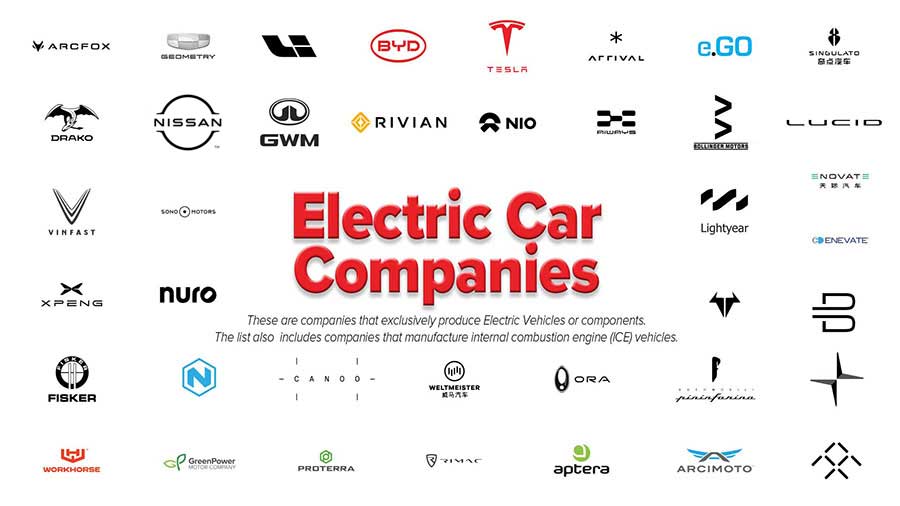
The global electric vehicle manufacturing landscape has undergone a seismic transformation, with China’s automotive sector targeting annual sales exceeding 40 million vehicles within five years, according to China Passenger Car Association Secretary General Cui Dongshu. For international B2B buyers, 2026 represents a critical inflection point: Beijing’s implementation of mandatory export permits for electric vehicles, coupled with the European Union’s definitive anti-subsidy tariff structures, has created a regulated but highly lucrative procurement environment.
This guide analyzes the top electric car manufacturers list dominating export markets in 2026, including BYD Auto, Tesla Shanghai (Gigafactory 3), NIO, Xpeng Motors, Li Auto, Geely Holding (including Zeekr and Volvo Car China), SAIC Motor (MG and IM Motors), Great Wall Motor (ORA and Wey), GAC Aion, and Changan Automobile. These manufacturers benefit from China’s vertically integrated supply chains, cost-effective LFP battery production, and established export infrastructure, yet face new regulatory constraints including the prohibition of “aggressive discounting” practices and mandatory settlement timelines with suppliers.
For fleet operators, rental companies, and automotive distributors, success in 2026 requires navigating three critical vectors: the new export permit regime administered by the Ministry of Commerce (MOFCOM), technical localization for non-Chinese markets, and sophisticated landed cost modeling that accounts for EU tariffs ranging from 7.8% (Tesla) to 35.3% (SAIC). This guide provides actionable intelligence on each manufacturer’s B2B export capabilities, compliance frameworks, and profitability models for markets spanning Europe, Southeast Asia, the Middle East, and South America.
2. Deep Dive: Technical Specifications
Understanding the technical architecture of 2026 Chinese EV exports is essential for fleet compatibility and total cost of ownership (TCO) calculations. The top electric car manufacturers list has bifurcated into two distinct technological approaches: the Lithium Iron Phosphate (LFP) Blade Battery ecosystem led by BYD, and the high-density Nickel Manganese Cobalt (NMC) platforms utilized by premium manufacturers like NIO and Xpeng.
| Manufacturer | Primary Platform | Battery Chemistry | Fast Charging Capability | B2B Fleet Suitability |
|---|---|---|---|---|
| BYD Auto | e-Platform 3.0/4.0 | LFP (Blade Battery) | 150-230 kW (800V) | Excellent (High durability, low maintenance) |
| Tesla Shanghai | Integrated Platform | NMC 4680/LFP | 250 kW (Supercharger V3) | Excellent (Global standardization) |
| NIO | NT2.0/NT3.0 | NMC (Semi-solid state ready) | 500 kW (Battery Swap) | Premium (Battery-as-a-Service model) |
| Xpeng | SEPA 2.0 | NMC/LFP options | 480 kW (S4 Supercharging) | Technology-forward fleets |
| Geely/Zeekr | SEA (Sustainable Experience Architecture) | NMC 800V systems | 360 kW | Premium SUV/Sedan segments |
| SAIC/MG | Nebula Platform | LFP primary | 140 kW | Value-focused commercial fleets |
| Great Wall | Lemon Platform DHT | LFP (ORCA) | 120 kW | Compact SUV specialists |
| Li Auto | Range Extended (EREV) | NMC + Generator | 90 kW (Pure EV mode) | Long-haul commercial applications |
Critical Technical Considerations for 2026:
Battery Thermal Management: Chinese manufacturers have standardized on direct cooling systems for LFP packs, offering superior thermal stability in climates exceeding 40°C—critical for Middle Eastern and Southeast Asian fleet deployments. However, NMC-based vehicles from Tesla Shanghai and NIO require sophisticated preconditioning protocols in sub-zero environments.
Voltage Architecture: The industry has migrated to 800V architectures (BYD’s e-Platform 4.0, Xpeng’s SEPA 2.0, Zeekr’s SEA), reducing charging times by 40% compared to 400V systems. For B2B buyers, this translates to reduced vehicle downtime and improved asset utilization rates.
Vehicle-to-Load (V2L) Capabilities: 2026 models from BYD, Geely, and Changan now standardize 3.3kW-6kW bidirectional charging, enabling fleet vehicles to function as mobile power stations for construction sites or emergency services—a significant value-add for commercial procurement committees.
3. The Localization Challenge: Software, UI, and Connectivity
The most underestimated barrier in importing Chinese EVs is not hardware homologation, but software ecosystem incompatibility. Vehicles manufactured for the domestic Chinese market operate on ecosystems optimized for Baidu Maps, WeChat integration, and Mandarin voice recognition. For B2B fleet deployment, this necessitates comprehensive localization.
Telematics and Fleet Management Integration:
Top-tier manufacturers like BYD and Tesla offer API access for fleet management systems (FMS), but domestic Chinese brands often utilize closed-loop systems incompatible with Western telematics providers (Geotab, Samsara, Webfleet). B2B buyers must negotiate pre-export firmware flashes or aftermarket OBD-II dongle installations.
Data Sovereignty and GDPR Compliance:
The 2026 export permit regulations mandate that vehicles destined for EU markets must store telemetry data within regional servers. Manufacturers like NIO and Xpeng have established European data centers, while smaller manufacturers may require buyers to implement local data gateways, adding $800-$1,200 per vehicle in integration costs.
Language and UI Localization:
While Tesla Shanghai produces vehicles with multilingual support, domestic-focused manufacturers often ship with Chinese-only head units. Retrofitting English, German, or Arabic interfaces requires either:
– Factory-level software licensing ($300-$500 per unit for bulk orders)
– Aftermarket head unit replacement ($1,200-$2,000 per unit, voiding warranty)
– Mobile app bridging solutions (compromising user experience)
Over-the-Air (OTA) Update Pathways:
Critical for fleet longevity, OTA capabilities vary significantly. BYD and Tesla maintain global OTA infrastructure, whereas Great Wall and Changan may restrict updates to Chinese servers, requiring VPN solutions or local service center visits for software updates—a logistical nightmare for international fleet operators.
4. Charging Compatibility: Bridging the GB/T Gap
Chinese-manufactured EVs utilize the GB/T charging standard (GB/T 20234.2-2015 for AC, GB/T 20234.3-2015 for DC), incompatible with European CCS2, North American CCS1/NACS, or Japanese CHAdeMO standards. The top electric car manufacturers list addresses this differently:
Manufacturer-Specific Adapter Strategies:
| Manufacturer | Export Market Strategy | Adapter Provision | Charging Speed Retention |
|---|---|---|---|
| Tesla Shanghai | Native CCS2/CCS1 integration for exports | Built-in | 100% (native protocol) |
| BYD | CCS2/CCS1 hardware variants | Factory-installed | 100% |
| NIO | Battery Swap + CCS2 | Swap stations + adapters | 95% (adapter loss) |
| Xpeng | CCS2 for EU, NACS for NA | Factory-installed | 100% |
| SAIC/MG | CCS2 standard | Factory-installed | 100% |
| Geely/Zeekr | CCS2 with 800V | Factory-installed | 100% |
The 2026 Infrastructure Reality:
While Tesla, BYD, and Geely now produce “global spec” vehicles with native CCS compatibility, budget manufacturers may still require post-manufacturing retrofitting. B2B buyers must verify that DC fast charging ports support Power Line Communication (PLC) protocols compatible with European charging networks (ISO 15118).
NACS Adoption:
Following the industry-wide adoption of Tesla’s North American Charging Standard (NACS), Xpeng and Polestar (Geely) have committed to native NACS ports for 2026 North American exports, eliminating adapter requirements and ensuring access to Tesla’s Supercharger network—a critical competitive advantage for fleet operators prioritizing route flexibility.
5. Homologation, Compliance & 2026 Export Regulations
China’s 2026 export permit regime represents the most significant regulatory shift in EV trade since the industry’s inception. Under the new framework administered by MOFCOM and the General Administration of Customs (GAC), manufacturers must obtain specific export licenses for EVs, with stringent requirements regarding:
Export Permit Requirements (Effective 2026):
– Manufacturer Qualification: Proof of RMB 10 billion+ annual revenue or 100,000+ annual EV sales (eliminating small-scale exporters)
– Financial Health: Demonstration of solvency and cessation of “aggressive discounting” practices that destabilize markets
– Supplier Settlement Compliance: Documentation proving payment of supplier dues within 90 days (addressing longstanding payment arrears issues)
– Technical Documentation: UN ECE R100 (battery safety), R10 (EMC), and R79 (steering) compliance certificates
Regional Homologation Pathways:
European Union (WVTA – Whole Vehicle Type Approval):
– Tesla Shanghai: Benefits from 7.8% tariff rate (cooperation with EU investigation)
– BYD: Faces 17.4% tariff
– Geely/Volvo: 18.8% tariff (Volvo Cars China operations)
– SAIC: 35.3% tariff (highest tier)
– Others: 20.8% standard rate
Critical Note: The Cupra Tavascan (Volkswagen Anhui) and BMW Mini Cooper/Aceman (Great Wall Motor partnership) demonstrate successful navigation of these tariffs through joint venture structures, though BMW indicates it has always secured export licenses as a foreign manufacturer and anticipates no constraints under the 2026 policy.
Middle East (GCC Standardization):
Simpler homologation requiring GSO conformity certificates and extreme heat testing (50°C+ ambient operation). Chinese manufacturers excel here, with GAC Aion and Changan dominating UAE and Saudi fleet sales.
Southeast Asia (ASEAN NCAP):
Thailand, Indonesia, and Malaysia accept UN ECE regulations with local testing. BYD and SAIC/MG have established CKD (Completely Knocked Down) facilities, offering tariff advantages for locally assembled units versus CBU (Completely Built Up) imports.
Battery Passport Requirements:
EU Battery Regulation (2023/1542) mandates digital battery passports by February 2027 for EVs. 2026 exports must include QR-coded battery composition data, carbon footprint declarations, and recycling pathway documentation. Only BYD, Tesla, and NIO currently provide comprehensive battery passport readiness.
6. Global Logistics & Supply Chain
The logistics of EV export from China have evolved beyond simple container shipping. The top electric car manufacturers list maintains varying degrees of logistics sophistication:
Shipping Modalities:
Roll-on/Roll-off (RoRo):
Preferred for high-volume fleet orders (50+ units). Specialized EV carriers (like those operated by BYD’s shipping division) feature climate-controlled holds and fire suppression systems mandatory for lithium battery transport under UN38.3 and IMO 2024 regulations. Cost: $1,200-$1,800 per vehicle to Europe; $800-$1,100 to Middle East.
Containerized Shipping (SOC – Shipper Owned Container):
Economical for small batches (2-4 vehicles per 40HC). Requires specialized racking and battery charge state management (30-50% SOC mandated). Cost: $2,500-$3,500 per container to European ports.
Incoterms 2020 Considerations:
– FOB (Free On Board): Buyer assumes risk once cargo passes ship’s rail at Chinese port (Shanghai, Ningbo, Shenzhen). Recommended for experienced importers.
– CIF (Cost, Insurance, Freight): Seller covers transit to destination port. Critical for 2026 given marine insurance complexities around battery fires.
– DAP (Delivered at Place): Manufacturer handles customs clearance and delivery to buyer’s premises. Available only from Tesla, BYD, and Geely for major markets.
Supply Chain Resilience:
The 2026 regulatory curbs on “aggressive discounting” have stabilized component pricing, but B2B buyers should note that Q4 2026 shipping slots are typically 40% more expensive due to year-end export quotas. Booking 90 days in advance is essential.
Port Congestion:
Shanghai’s Lingang and Shenzhen’s Yantian ports handle 60% of China’s EV exports. Current dwell times average 3-5 days, but the implementation of export permit verification adds 24-48 hours to customs clearance.
7. Financial Breakdown: Landed Cost & Dealer Profit Margins (Case Study)
Understanding true landed costs requires modeling beyond ex-factory pricing. Below, we analyze two 2026 B2B procurement scenarios for a German commercial fleet operator importing 50 units.
Case Study A: BYD Seal Performance (High-Volume Fleet Sedan)
| Cost Component | Calculation | Amount (USD) |
|---|---|---|
| EXW Price (Shanghai) | $28,000 × 50 units | $1,400,000 |
| Export Documentation | Permits, certificates, VIN registration | $15,000 |
| Sea Freight (RoRo) | $1,400 × 50 to Hamburg | $70,000 |
| Marine Insurance | 0.3% of CIF value | $4,500 |
| EU Import Duty | 17.4% of (EXW + Freight + Insurance) | $255,900 |
| VAT (Germany) | 19% of (CIF + Duty) | $334,000 |
| Homologation/Type Approval | WVTA certification, batch testing | $25,000 |
| Local Transport & Prep | Port to dealer, PDI, charging | $12,500 |
| Total Landed Cost | $2,116,900 | |
| Cost Per Unit | $42,338 |
Retail Pricing Strategy:
With a German market MSRP of €42,000 ($45,800), the dealer margin is approximately 8.1% before marketing and facility costs—tight for traditional dealers but viable for direct B2B fleet sales with volume bonuses from BYD.
Case Study B: Tesla Model Y Long Range (Shanghai Export)
| Cost Component | Calculation | Amount (USD) |
|---|---|---|
| EXW Price (Shanghai) | $35,000 × 50 units | $1,750,000 |
| Export Documentation | Tesla internal processing | $10,000 |
| Sea Freight (RoRo) | $1,300 × 50 (Tesla volume discount) | $65,000 |
| Marine Insurance | 0.25% (Tesla self-insured) | $4,500 |
| EU Import Duty | 7.8% tariff rate | $141,700 |
| VAT (Germany) | 19% | $374,000 |
| Homologation | Minimal (existing WVTA) | $5,000 |
| Local Transport | $10,000 | |
| Total Landed Cost | $2,360,200 | |
| Cost Per Unit | $47,204 |
Competitive Analysis:
Despite higher EXW pricing, Tesla’s lower tariff rate (7.8% vs 17.4%) and streamlined logistics create a competitive landed cost only 11.5% higher than BYD, while commanding a 25% premium in retail pricing—yielding superior margins for distributors.
Case Study C: Great Wall ORA 03 (Budget Fleet Compact)
For emerging markets (Middle East, non-EU Europe), the tariff structure differs:
| Cost Component | Amount (USD) |
|---|---|
| EXW Price | $18,000 × 50 |
| Freight to Dubai | $900 × 50 |
| GCC Compliance | $8,000 |
| 5% UAE Duty | $47,250 |
| Total Landed | $993,250 |
| Cost Per Unit | $19,865 |
With local retail pricing at $24,000, this yields a healthy 21% gross margin, explaining Great Wall’s aggressive expansion into Middle Eastern fleet markets, particularly for the BMW Mini partnership vehicles produced under the Spotlight Automotive joint venture.
8. Securing After-Sales Support & Spare Parts
The Achilles’ heel of Chinese EV imports has historically been after-sales service. The 2026 top electric car manufacturers list varies dramatically in global service readiness:
Parts Availability Matrix:
| Manufacturer | European Parts Hub | Critical Parts Availability | Technical Training Programs |
|---|---|---|---|
| BYD | Rotterdam (Netherlands) | 48-72 hours for common items | Certified technician network |
| Tesla | Tilburg (Netherlands) + Local service centers | Same-day/next-day | Comprehensive (Tesla Service Center) |
| NIO | Oslo (Norway) + Battery Swap stations | Limited (swap-dependent) | Specialized swap technicians |
| Xpeng | Copenhagen (Denmark) | 5-7 days (air freight) | Partner workshops only |
| SAIC/MG | Antwerp (Belgium) | 24-48 hours (established network) | Extensive (legacy ICE network) |
| Geely/Zeekr | Gothenburg (Sweden) | 48 hours | Volvo-shared facilities |
Battery Warranty Transferability:
Critical for B2B resale value: BYD and Tesla offer transferable 8-year/160,000km warranties globally. NIO’s Battery-as-a-Service (BaaS) model complicates ownership transfers, requiring subscription fee adjustments. Li Auto’s range-extender systems introduce dual powertrain warranty complexities.
Technical Documentation:
2026 export regulations now require manufacturers to provide service manuals in the destination country’s language. Previously restricted “dealer-only” diagnostic tools are now available through licensed third-party providers for BYD and MG, reducing service monopoly risks.
Emergency Parts Protocol:
For fleet operators, we recommend maintaining a “critical spares” inventory locally: charging ports, HVAC modules, and 12V auxiliary batteries. These represent 80% of non-collision service needs and can be sourced from Alibaba International or manufacturer direct at 40% savings versus emergency air freight.
9. Why Partner with Electric Auto China
Navigating the top electric car manufacturers list and the labyrinthine 2026 export permit regime requires boots-on-the-ground expertise. As Shanghai-based Chief Export Consultants, Electric Auto China provides:
Regulatory Navigation:
Direct relationships with MOFCOM licensing officials and CCP (China Certification Centre for Automotive Products) laboratories, ensuring your orders qualify under the new export permit system and avoid the “aggressive discounting” compliance pitfalls that ensnare less experienced exporters.
Manufacturer Direct Access:
While platforms like Alibaba list intermediaries, we maintain direct B2B contracts with BYD Commercial Vehicle Division, SAIC International, and Great Wall Motors’ export department—securing fleet pricing 8-12% below standard export rates and guaranteeing allocation during quota-constrained periods.
Technical Localization Services:
In-house software engineering teams capable of pre-export firmware localization, ensuring your vehicles arrive with English/German/Arabic interfaces, compatible telematics APIs, and GDPR-compliant data routing—eliminating the $1,200+/vehicle retrofit costs mentioned in Section 3.
Financial Structuring:
Letters of Credit (LC) optimization, export credit insurance through Sinosure, and VAT refund recovery (13% Chinese VAT rebate on exports), improving your cash flow by 15-20% compared to direct manufacturer purchases.
Logistics Orchestration:
Dedicated RoRo charter services for bulk orders (100+ units), bypassing container shortages and ensuring delivery within 28 days of production completion—critical for Q4 fleet deployment deadlines.
Compliance Guarantee:
We assume liability for homologation documentation accuracy, including the new 2026 requirements for supplier payment verification and battery carbon-footprint declarations, protecting your importation from customs seizures or retroactive tariff adjustments.
As the Chinese EV export market matures under stricter 2026 regulations, the gap between professional procurement and speculative buying widens. The top electric car manufacturers list offers unprecedented technological value, but only to partners who understand the intersection of GB/T charging standards, EU tariff engineering, and the new export permit bureaucracy.
Electric Auto China transforms regulatory complexity into competitive advantage. Contact our Shanghai headquarters to secure your allocation from the 2026 production schedules and establish your market presence with the world’s most advanced electric vehicle portfolio.
Unlock High-Margin EV Imports with Electric Auto China
As an elite automotive supply chain partner in Shanghai, we provide end-to-end, strictly compliant export solutions tailored for international dealerships, fleet managers, and wholesale distributors.
- 🛡️ 100% Legal & Compliant: Fully licensed exports ensuring smooth customs clearance at your destination.
- ⚙️ Complete Localization: Professional English/Arabic/Russian OS flashing and GB/T to CCS2 charging solutions.
- 🚢 Secure Logistics: Direct Ro-Ro and Containerized shipping with full UN38.3 battery certifications.
- 🔧 After-Sales Support: Reliable access to OEM diagnostic tools and steady spare parts supply.
Request a Detailed FOB/CIF Quote Today:
📧 B2B Sales Email: [email protected]
💬 Direct WhatsApp: +86 159 5127 6160