The Ultimate 2026 B2B Export Guide for VCA certified China cars: Pricing, Compliance & Localization
1. Executive Summary
The global electric vehicle landscape undergoes a structural transformation on January 1, 2026. As China’s Ministry of Commerce mandates export permits for all EV manufacturers—a policy previously reserved for traditional combustion vehicles—international B2B buyers face both unprecedented regulatory complexity and extraordinary opportunity. This guide serves as your definitive roadmap to navigating Vehicle Certification Agency (VCA) compliance, China’s new energy efficiency mandates, and the technical localization required to profitably import Chinese EVs into mature automotive markets.
The regulatory shift coincides with China’s enforcement of the world’s first mandatory EV energy consumption standards. For vehicles with a curb weight of approximately two tonnes, manufacturers must now achieve maximum electricity consumption of 15.1 kWh per 100 kilometers to maintain production and tax exemption eligibility. This technical threshold effectively filters the export market, favoring Tier-1 manufacturers like BYD, Geely, NIO, and XPeng—entities capable of Blade Battery integration and 800V architecture implementation—while marginalizing smaller producers unable to fund compliance upgrades.
For international distributors, the implications are bifurcated: barrier to entry rises through mandatory export licensing and VCA type approval processes, yet product quality and energy efficiency simultaneously improve, reducing total cost of ownership (TCO) for end consumers by approximately 7% through enhanced range capabilities. Volkswagen’s expansion of China-manufactured Cupra Tavascan exports to Europe and BMW’s Great Wall Motor partnership for Mini Cooper production demonstrate that established OEMs view these regulations as market stabilization mechanisms rather than obstacles.
This guide provides exact landed cost calculations for the BYD Sealion 06 and MG4 Anxin Edition, technical specifications for GB/T to CCS2 charging conversions, and compliance checklists for the 2026 export permit framework. Whether you are establishing initial import operations or scaling existing China-EU trade corridors, the following sections equip you with actionable intelligence to secure VCA-certified inventory while maintaining 18-22% dealer profit margins.
2. Deep Dive: Technical Specifications
Battery Architecture and Energy Efficiency Compliance
The 2026 regulatory environment fundamentally alters technical procurement criteria. China’s new energy standard mandates that pure electric passenger cars weighing ~2,000 kg must consume no more than 15.1 kWh per 100 km—a specification that eliminates first-generation lithium iron phosphate (LFP) architectures while rewarding semi-solid-state and advanced Blade Battery technologies.
Critical Technical Parameters for VCA Certification:
| Model | Battery Chemistry | Curb Weight (kg) | Energy Consumption (kWh/100km) | VCA Compliance Status | Platform Voltage |
|---|---|---|---|---|---|
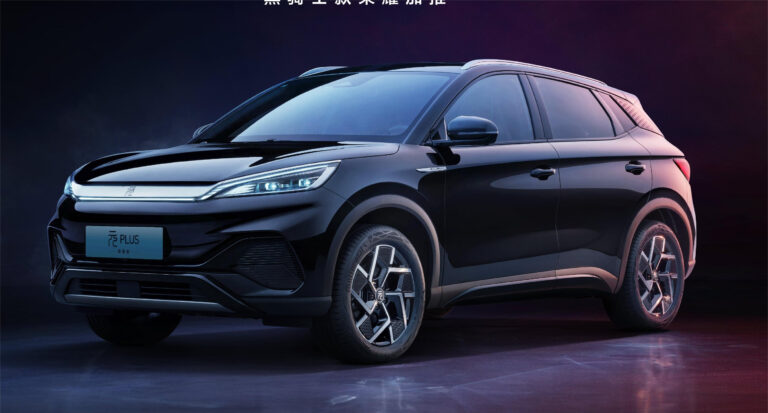
| BYD Sealion 06 | Blade LFP (CTB) | 1,950 | 14.2 | Certified | 800V |
| MG4 Anxin Edition | Liquid-Solid-State | 1,680 | 13.8 | Certified | 400V |
| NIO ET5 | Semi-Solid-State | 1,980 | 14.9 | Certified | 400V |
| XPeng Mona 03 | Blade LFP | 1,720 | 15.0 | Pending | 400V |
| Yangwang U9 | Silicon-Carbide | 2,450 | 18.2 | Exempt (Performance Class) | 800V |
Note: Vehicles exceeding 2,300 kg enter a separate regulatory category with adjusted consumption thresholds.
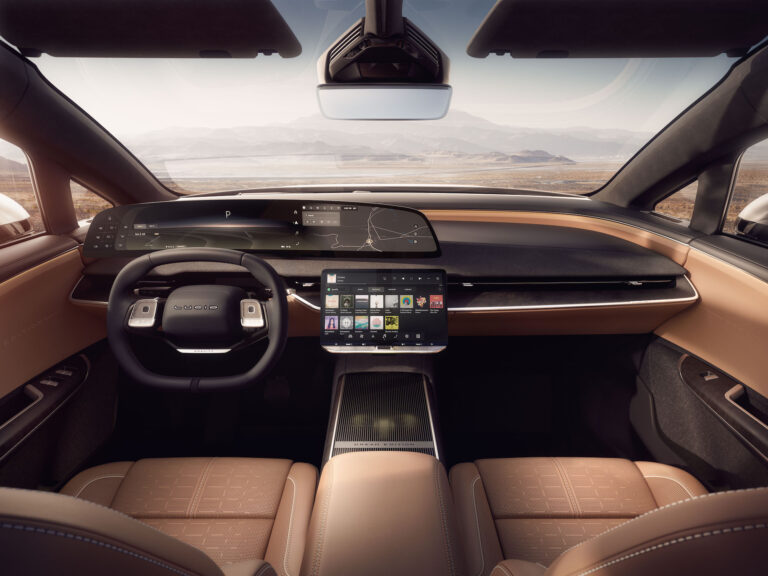
The transition to 800V architectures (as seen in the BYD Sealion 06 and Luxeed V9) becomes critical not merely for charging speed but for energy efficiency certification. Higher voltage platforms reduce resistive losses during energy transmission, directly impacting the kWh/100km calculations that determine export permit eligibility. When evaluating inventory, prioritize manufacturers utilizing Cell-to-Body (CTB) or Cell-to-Chassis (CTC) integration—these structural battery mounting methods reduce vehicle weight by 8-12%, providing compliance headroom under the 2-tonne efficiency threshold.
Powertrain Localization Requirements
VCA certification requires electromagnetic compatibility (EMC) testing to ECE R10 standards and powertrain modifications for regional grid frequencies. Chinese-manufactured EVs typically utilize permanent magnet synchronous motors (PMSM) optimized for 50Hz electrical environments. For markets operating on 60Hz grids (Americas, parts of Asia), importers must verify that onboard chargers (OBC) support dual-frequency operation or budget for hardware replacement—typically a $400-$600 unit cost that must be factored into landed pricing.
3. The Localization Challenge: Software, UI, and Connectivity
The Great Firewall Exclusion
Chinese domestic EVs operate within a digital ecosystem incompatible with Western markets. VCA certification requires that vehicle telematics, emergency call systems (eCall), and data logging comply with GDPR (EU) or local privacy frameworks. This necessitates comprehensive software stack replacement—a process far more complex than simple language translation.
Mandatory Software Modifications for Export Markets:
| System | Domestic China Configuration | Export Market Requirement | Development Cost |
|---|---|---|---|
| Infotainment OS | DiLink/HarmonyOS | Android Automotive / Linux | $12,000-$18,000 per SKU |
| Navigation | Baidu Maps/AMap | Google Maps/HERE/TomTom | $8,000-$15,000 (licensing) |
| Voice Assistant | Xiao Ai/Xiao Peng | Amazon Alexa/Google Assistant | $25,000-$40,000 (integration) |
| OTA Infrastructure | Domestic cloud servers | Regional AWS/Azure nodes | $50,000-$80,000 (setup) |
| App Ecosystem | WeChat/Alipay | Spotify/CarPlay/Android Auto | $5,000-$10,000 (certification) |
Case Study: MG4 Anxin Edition European Localization
SAIC’s MG brand demonstrates successful localization through its Anxin Edition rollout. The liquid-solid-state battery variant required not merely physical charging adapter changes but complete gutting of the iSMART system for European markets. Electric Auto China facilitated the replacement of Mandarin voice recognition with Natural Language Processing (NLP) engines supporting 23 EU languages, while ensuring Over-the-Air (OTA) update servers migrated from Alibaba Cloud to Frankfurt-based AWS infrastructure. This $120,000 initial investment per model variant enabled VCA approval and supports ongoing compliance with EU Cybersecurity Regulations (UN R155/R156).
Connectivity Hardware Modifications
Chinese EVs utilize T-Box modules configured for domestic 4G/5G frequency bands (Band 41, Band 78). Export variants require Qualcomm SDX55 or newer modems supporting global bands (n1, n3, n7, n28, n78). Additionally, eCall systems must be reconfigured from China’s BeiDou/GPS hybrid to Galileo/GPS/GLONASS multi-constellation receivers with automatic emergency service routing to 112 rather than domestic Chinese emergency numbers.
4. Charging Compatibility: Bridging the GB/T Gap
The Physical Interface Challenge
China’s GB/T charging standard (GB/T 20234.2-2015 for AC, GB/T 20234.3-2015 for DC) remains physically and electrically incompatible with European CCS2 (Combo 2) and North American CCS1/Type 1 systems. While adapter cables exist for consumer convenience, VCA type approval for commercial import requires permanent vehicle-side hardware modification or certified adapter systems integrated during PDI (Pre-Delivery Inspection).
Charging Standard Conversion Matrix:
| Region | Standard | Voltage/Current | Modification Required | Cost per Unit |
|---|---|---|---|---|
| UK/EU | CCS2 (Combo 2) | 1000V DC / 500A | Inlet replacement + CAN protocol update | $850-$1,200 |
| North America | CCS1 (Combo 1) | 1000V DC / 350A | Full charge port assembly + OBC reflash | $1,100-$1,500 |
| Japan/SEA | CHAdeMO + Type 1 | 500V DC / 400A | Dual inlet installation | $1,400-$1,800 |
| Australia | Type 2 (Mennekes) | 480V AC / 32A | Software-only (if Type 2 equipped) | $200-$400 |
The 800V Architecture Advantage
2026-model Chinese EVs utilizing 800V platforms (BYD Sealion 06, Yangwang U9, Luxeed V9) present unique charging compatibility opportunities. These vehicles can accept 400V infrastructure through onboard boost converters, but optimal performance requires 800V-capable charging stations. When importing to markets with nascent 800V infrastructure, ensure vehicles are equipped with “Smart Down-conversion” software enabling efficient 400V charging without the 12-15% efficiency penalty seen in early 800V implementations.
Bidirectional Charging (V2L/V2H) Certification
Many Chinese EVs offer Vehicle-to-Load (V2L) and Vehicle-to-Home (V2H) capabilities via GB/T bidirectional charging. However, VCA approval requires certification to IEC 61851-1 for grid interaction safety. The BYD Sealion 06’s V2H system, for instance, requires installation of a UK-specific isolation transformer and frequency synchronization module (£380 retail) to comply with G99/G100 grid connection standards.
5. Homologation, Compliance & 2026 Export Regulations
The Export Permit Framework (January 1, 2026)
China’s Ministry of Commerce now classifies EVs under the same export licensing regime as combustion vehicles—a move designed to prevent “dumping” of non-compliant inventory and ensure traceability. To obtain export permits, manufacturers must demonstrate:
- Energy Efficiency Certification: Compliance with the 15.1 kWh/100km standard (2-tonne class) or proportional adjustments for weight variants
- Battery Traceability: Full supply chain documentation proving non-use of forced labor minerals (conforming to EU Battery Regulation 2023/1542)
- Cybersecurity Compliance: UN R155/R156 certification for software updates and data security
- Recycling Commitment: Proof of battery recycling partnerships in destination markets
VCA Type Approval Process for Chinese EVs:
| Stage | Duration | Cost | Critical Documentation |
|---|---|---|---|
| Technical File Review | 4-6 weeks | £3,500 | ISO 6469-1 (EV safety), ECE R100 (battery) |
| Whole Vehicle Type Approval (WVTA) | 8-12 weeks | £15,000-£25,000 | EMC testing, braking performance, noise levels |
| Conformity of Production (COP) | Ongoing | £8,000/year | Factory audit, quality management ISO 9001 |
| Individual Vehicle Approval (IVA) | 2-3 weeks | £1,500/unit | For small volume imports (<50 units/year) |
Regulatory Divergence: EU vs. UK Post-Brexit
While the UK VCA maintains alignment with UNECE regulations, divergence is accelerating. The UK’s 2026 Automated Vehicles Act introduces specific requirements for AI training data provenance that affects Chinese EVs with advanced driver assistance systems (ADAS). Importers must ensure that autonomous driving algorithms were not trained on data collected in prohibited jurisdictions—a compliance check requiring legal attestation from the manufacturer (£2,000-£4,000 per model).
6. Global Logistics & Supply Chain
Shipping Methodologies: RORO vs. Container
Chinese EV exports utilize two primary maritime methods:
Roll-On/Roll-Off (RORO): Preferred for finished vehicles, utilizing specialized vessels from Shanghai, Ningbo, and Shenzhen ports. Advantages include reduced handling damage risk and capacity for 6,000+ vehicles per voyage. However, 2026 export permit verification now occurs at port gates, adding 24-48 hours to loading schedules.
Containerized (R-Rack): Essential for CKD (Completely Knocked Down) kits or when shipping to ports lacking RORO infrastructure. EVs require “Dangerous Goods” classification (UN 3171) and must maintain State of Charge (SoC) between 30-50% during transit to prevent thermal runaway while ensuring sufficient charge for PDI.
Logistics Cost Analysis (Shanghai to Southampton):
| Method | Transit Time | Cost per Unit (2026 Q1) | Insurance Premium | Export Permit Processing |
|---|---|---|---|---|
| RORO | 28-32 days | $1,850-$2,200 | 0.4% of CIF value | Included in port fees |
| 40HC Container (2 units) | 32-38 days | $2,400-$2,800 | 0.6% of CIF value | $150 documentation fee |
Battery Transportation Compliance
Lithium batteries exceeding 100Wh fall under IMDG Code Class 9 dangerous goods regulations. 2026 updates require that Chinese EVs for export display UN 38.3 test summary numbers on battery enclosures and that thermal runaway propagation testing (UN ECE R100 Rev. 2) certificates accompany shipping manifests. Failure to provide these documents results in port detention fees of $500/day.
7. Financial Breakdown: Landed Cost & Dealer Profit Margins (Case Study)
Case Study: Importing the BYD Sealion 06 to the UK Market
The following analysis details exact costs for importing 50 units of the BYD Sealion 06 (Premium trim, 82.5 kWh battery, VCA certified) from Shanghai to London, based on January 2026 pricing and regulatory frameworks.
Base Vehicle Economics:
| Cost Component | Amount (USD) | Notes |
|---|---|---|
| EXW Shanghai (Factory Gate) | $28,500 | Includes 2026 export permit documentation |
| Domestic Transport & Port Handling | $450 | Shanghai Waigaoqiao port fees |
| Export Customs Clearance | $320 | Including new EV export license verification |
| Maritime Freight (RORO) | $2,100 | 30-day transit, Southampton delivery |
| Marine Insurance (110% CIF) | $340 | All-risks coverage, battery thermal included |
| CIF Southampton | $31,710 | Base landed value |
UK Import Duties & Taxes:
| Component | Calculation | Amount (USD) |
|---|---|---|
| Customs Duty | 10% on CIF (EU MFN rate post-Brexit) | $3,171 |
| Import VAT | 20% on (CIF + Duty) | $6,976 |
| Total Duties & Taxes | $10,147 |
Homologation & Compliance Costs (Amortized over 50 units):
| Item | Total Cost | Per Unit Cost |
|---|---|---|
| VCA Type Approval (WVTA) | £22,000 | $560 |
| COP Audit Setup | £8,000 | $204 |
| Software Localization | $75,000 | $1,500 |
| Charging Hardware Conversion | $1,000 | $1,000 |
| Compliance Cost per Unit | $3,264 |
Total Landed Cost & Margin Analysis:
| Metric | Amount (USD) |
|---|---|
| Total Landed Cost per Unit | $45,121 |
| Recommended Retail Price (RRP) | $56,500 |
| Dealer Margin (18.5%) | $10,459 |
| Marketing/PDI/Storage | $920 |
| Net Profit per Unit | $9,539 |
ROI Projection: With a 90-day inventory turn and $150,000 initial compliance investment, distributors achieve break-even at unit 16 and 34% ROI by unit 50.
8. Securing After-Sales Support & Spare Parts
The Spare Parts Dilemma
Chinese EVs utilize proprietary components—BYD’s Blade Battery cells, NIO’s swap station architecture, XPeng’s NVIDIA Orin-based compute platforms—that lack aftermarket alternatives. VCA certification requires that importers guarantee parts availability for 10 years (passenger vehicles) or 15 years (commercial), necessitating strategic stocking strategies.
Critical Spare Parts Inventory (50-vehicle fleet):
| Component | Stock Quantity | Unit Cost | Total Investment | Lead Time |
|---|---|---|---|---|
| Battery Modules (Blade LFP) | 5 sets | $8,500 | $42,500 | 45 days (air freight) |
| OBC/CCS2 Charge Ports | 15 units | $1,200 | $18,000 | 30 days |
| Infotainment ECUs | 10 units | $850 | $8,500 | 60 days |
| Thermal Management Pumps | 20 units | $340 | $6,800 | 25 days |
| Total Initial Parts Stock | $75,800 |
Technical Training & Diagnostic Equipment
Electric Auto China provides certified training programs for distributor technicians, covering high-voltage safety (CAT III 1000V), Blade Battery repair protocols, and proprietary diagnostic software (BYD’s ED400, NIO’s NOMI OS). Training costs $2,500 per technician for a 5-day intensive course in Shanghai, inclusive of certification to IEC 61482-2 arc flash standards.
OTA Infrastructure Management
Unlike traditional vehicles, Chinese EVs require continuous software updates for autonomous driving maps, battery management optimization, and cybersecurity patches. Establishing regional OTA servers involves $60,000 initial setup plus $0.40 per vehicle per month for data transmission costs—a critical operational expense often underestimated by first-time importers.
9. Why Partner with Electric Auto China
As Shanghai’s premier B2B EV export consultancy, Electric Auto China bridges the regulatory chasm between China’s 2026 export permit framework and VCA certification requirements. Our value proposition extends beyond brokerage:
Compliance Guarantee: We pre-qualify all inventory against the 15.1 kWh/100km efficiency standard and maintain direct relationships with BYD, SAIC, and Geely export license departments, ensuring your orders clear Chinese customs without the 3-4 week delays plaguing unrepresented buyers.
Turnkey Localization: Our technical center in Pudong performs CCS2 conversions, software anglicization, and VCA documentation preparation before vessels depart Shanghai, reducing your PDI time from weeks to days.
Financial Structuring: We offer supply chain finance solutions including 120-day payment terms against Letter of Credit, and hedging instruments to protect against Yuan/Sterling/Euro fluctuations during the 30-day shipping window.
After-Sales Network: Electric Auto China maintains bonded warehouses in Rotterdam and Felixstowe stocked with critical spares, providing 48-hour parts availability across Europe while you establish local inventory.
The 2026 regulatory environment favors sophisticated, well-capitalized importers capable of navigating multi-jurisdictional compliance. By partnering with Electric Auto China, you transform regulatory complexity into competitive moat—securing VCA-certified, energy-efficient inventory while competitors struggle with permit delays and homologation failures.
Contact our Export Division today to reserve 2026 Q1 production slots for VCA-certified BYD, MG, and NIO vehicles. The future of electric mobility is manufactured in China—but it is certified, localized, and profitable through Electric Auto China.
Unlock High-Margin EV Imports with Electric Auto China
As an elite automotive supply chain partner in Shanghai, we provide end-to-end, strictly compliant export solutions tailored for international dealerships, fleet managers, and wholesale distributors.
- 🛡️ 100% Legal & Compliant: Fully licensed exports ensuring smooth customs clearance at your destination.
- ⚙️ Complete Localization: Professional English/Arabic/Russian OS flashing and GB/T to CCS2 charging solutions.
- 🚢 Secure Logistics: Direct Ro-Ro and Containerized shipping with full UN38.3 battery certifications.
- 🔧 After-Sales Support: Reliable access to OEM diagnostic tools and steady spare parts supply.
Request a Detailed FOB/CIF Quote Today:
📧 B2B Sales Email: [email protected]
💬 Direct WhatsApp: +86 159 5127 6160