The Ultimate 2026 Importer’s Guide to Best Chinese electric SUVs for export 2026
1. The Macro-Economics of Best Chinese electric SUVs for export 2026 in 2026
China’s automotive landscape has undergone a structural metamorphosis entering 2026. With total vehicle shipments reaching a record 34.4 million units in 2025—representing a 9.4% year-over-year surge—the industry has decisively surpassed its 2017 peak, establishing a new operational baseline fundamentally anchored in electrification.
The Electrification Imperative
New Energy Vehicles (NEVs) drove marginal growth in 2025, with shipments increasing by approximately 3.6 million units (+28.2% YoY) to reach 16.5 million units. Conversely, Internal Combustion Engine (ICE) volumes contracted by 700,000 units (-3.6% YoY), confirming that electrification is no longer complementary but central to market expansion. For international B2B buyers, this signals a permanent shift: China’s manufacturing capacity is now optimized for EV production, with ICE assets rapidly depreciating or converting to hybrid architectures.
Export Engine Diversification
China closed 2025 with 7.1 million vehicle exports, establishing overseas markets as a structural growth pillar rather than a cyclical outlet. Industry forecasts for 2026 project exports exceeding 8 million units, with NEVs representing more than one-third of outbound volume. Critically, this growth is geographically diversified—extending beyond traditional European strongholds into Southeast Asia, the Middle East, Latin America, and Africa—reducing dependency on single-market exposure.
Value-Upgrading Trajectory
The “New Development Landscape” (NDL) framework emphasizes product value upgrading. Chinese exports are transitioning from commoditized hardware to integrated mobility solutions encompassing renewable energy equipment, V2G (Vehicle-to-Grid) capabilities, and advanced battery ecosystems. European importers must recognize that sourcing from China in 2026 means acquiring not merely vehicles, but sophisticated energy-storage-on-wheels platforms requiring compatible infrastructure planning.
Regulatory Economics
The reinstatement of the 5% acquisition tax on NEVs (effective January 1, 2026), alongside halved subsidy ceilings (now capped at ¥15,000), has compressed domestic margins. This fiscal pressure accelerates manufacturer incentives to prioritize high-margin export markets, creating favorable pricing dynamics for foreign B2B buyers capable of navigating the new compliance architecture.
2. Understanding China’s Strict EV Export Regulations
January 1, 2026, marked a regulatory inflection point. The Ministry of Commerce (MOFCOM) implemented mandatory export licensing for all electric vehicle exports, fundamentally restructuring market access.
The Export License Framework
Under the 2026 framework, only accredited manufacturers and authorized dealers may apply for export licenses. This regulation targets the systemic issue of “gray market” exports—where new vehicles were fraudulently declared as “used” to circumvent quality controls and homologation requirements. For B2B importers, this creates a bifurcated market:
Compliant Channel: Licensed exporters provide full documentation traceability, factory warranties, and OTA (Over-The-Air) update eligibility.
Non-Compliant Channel: Unauthorized exports risk software obsolescence, voided warranties, and customs seizures at destination ports.
Tax and Subsidy Implications
The 2026 fiscal adjustments include:
– Acquisition Tax: 50% reinstatement (5% rate vs. previous 0%)
– Subsidy Cap: Reduced from ¥30,000 to ¥15,000 per unit
– PHEV Restrictions: Plug-in hybrids with <100km electric range no longer qualify for subsidies
These measures disproportionately impact low-margin exporters, effectively filtering out speculative traders and privileging established OEMs with authorized export channels.
Due Diligence Protocol
Importers must verify three critical documents:
1. MOFCOM Export License (商务部出口许可证)
2. CCC Certification (China Compulsory Certificate) with export validity
3. UN38.3 Battery Test Summary for lithium-ion transport compliance
Failure to authenticate these credentials exposes importers to catastrophic supply chain disruptions, including port-of-origin detention and destination market entry bans.
3. Sourcing Strategy: Direct Factory vs. Authorized Export Agents
The 2026 regulatory environment necessitates a strategic reassessment of sourcing modalities. Two primary pathways exist, each with distinct risk-reward profiles.
Direct OEM Partnerships
Engaging directly with Tier-1 manufacturers (BYD, NIO, XPeng, Li Auto, Geely) offers maximum control but requires substantial capital commitment and regulatory navigation.
Advantages:
– Factory-gate pricing (EXW terms)
– Direct technical integration support
– Priority allocation during supply constraints
– Custom specification flexibility (battery chemistry, infotainment localization)
Constraints:
– Minimum Order Quantities (MOQ) typically 100+ units for export markets
– Extended lead times (90-120 days) for custom configurations
– Complex documentation requirements requiring in-house Chinese regulatory expertise
Authorized Export Agents
Licensed trading companies serve as intermediaries, aggregating demand from multiple importers to meet OEM MOQ thresholds.
Advantages:
– Reduced capital exposure (MOQs of 10-20 units)
– Consolidated logistics and documentation handling
– Pre-certified homologation packages for target markets
– Multi-brand portfolio access (strategic for market testing)
Critical Selection Criteria:
When evaluating agents, verify:
– MOFCOM Accreditation Number: Cross-reference with the Ministry’s public registry
– Bonded Warehouse Access: Essential for pre-shipment inspection and customs staging
– Financial Escrow Capabilities: Protects against non-delivery risks
– After-Sales Service Agreements: Confirms spare parts availability and technical training commitments
Hybrid Models: Multi-Regional Production Networks
Emerging in 2026 are blended supply models combining Chinese manufacturing with Southeast Asian assembly hubs (Thailand, Indonesia) and European final customization. These arrangements mitigate geopolitical concentration risks while maintaining cost competitiveness. For European importers, this model offers preferential tariff treatment under EU-ASEAN trade frameworks, potentially reducing landed costs by 8-12% compared to direct China-to-EU shipments.
4. Financial Mechanics: Pricing and Landed Costs
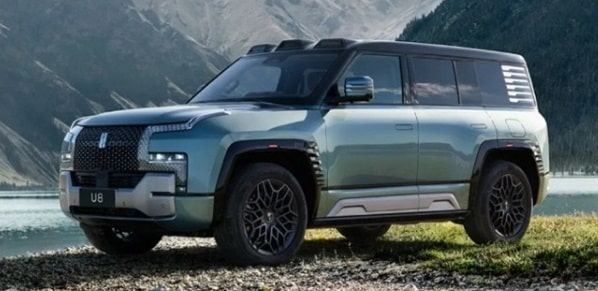
Understanding the total cost of ownership requires precise calculation beyond factory pricing. The following landed cost model reflects 2026 market conditions for a representative mid-size Chinese electric SUV (e.g., BYD Seal U, NIO ES6, or XPeng G9).
Landed Cost Calculation Matrix (EU Destination, CIF Rotterdam)
| Cost Component | Amount (USD) | Calculation Basis | Notes |
|---|---|---|---|
| EXW Factory Price | $28,000 | FOB Shanghai minus freight | Post-subsidy factory gate for volume orders (50+ units) |
| Ocean Freight (RoRo) | $1,850 | Per unit, 40ft equivalent | 2026 rates; Battery DG surcharge included |
| Marine Insurance | $450 | 110% of CIF value × 0.15% | Institute Cargo Clauses (A) |
| CIF Value | $30,300 | Sum of above | Customs valuation basis |
| Import Duty (EU) | $0 | 0% for electric vehicles | EU MFN tariff schedule 2026 |
| VAT (EU, 19-21%) | $6,363 | 21% of CIF + Duty | Varies by member state |
| Homologation & Type Approval | $2,200 | Per model variant | WVTA certification, eCall system validation |
| Port Handling & THC | $680 | Destination terminal charges | Rotterdam/Antwerp standard rates |
| Inland Distribution | $450 | To dealer premises | Bulk transport per unit |
| Total Landed Cost | $39,993 |
Pricing Strategy Implications
At a landed cost of approximately $40,000, Chinese electric SUVs offer 25-35% cost advantages against comparable European-manufactured EVs (e.g., VW ID.4, Skoda Enyaq), while delivering superior battery energy density (150-180 Wh/kg) and intelligent cockpit features.
Currency Risk Management
With RMB/USD volatility averaging 4.2% annually, importers should negotiate:
– Currency Hedging: Forward contracts for 50% of order value
– Payment Terms: 30% T/T deposit, 70% L/C at sight (Letter of Credit)
– Price Adjustment Clauses: Quarterly reviews if RMB fluctuates >3%
Financing Structures
Chinese state-backed institutions (China Exim Bank, CDB) increasingly provide vendor financing for export orders exceeding $5M aggregate value, offering 2-3 year terms at 3.5-4.2% APR—significantly below Western commercial lending rates.
5. Global Logistics: Ocean Freight & Battery Transport Compliance
The logistics of EV export have evolved from standard cargo handling to specialized dangerous goods management, governed by the International Maritime Dangerous Goods (IMDG) Code and UN38.3 testing protocols.
Battery Transport Classifications
Lithium-ion batteries exceeding 100Wh (universal in modern EVs) classify as Class 9 Dangerous Goods. 2026 compliance requires:
- UN38.3 Test Summary: Verification of crush, thermal, vibration, and altitude simulation testing
- State of Charge (SoC): Maximum 30% charge for ocean transport (IMO SP376)
- Thermal Runaway Prevention: Battery Management System (BMS) isolation certificates
- Emergency Response Documentation: Fulfilling the “EmS” (Emergency Medical Services) and MFAG (Medical First Aid Guide) requirements
Modal Options: RoRo vs. Container
Roll-on/Roll-off (RoRo):
– Capacity: 4,000-6,000 CEU (Car Equivalent Units) per vessel
– Advantages: Minimal handling damage risk, drive-on/drive-off efficiency, no lifting required
– Constraints: Limited sailing frequency on secondary routes (Africa, South America)
Containerized (Flat Rack/OOG):
– Configuration: 1-2 vehicles per 40ft High Cube (depending on dimensions)
– Advantages: Multi-modal flexibility (rail-sea intermodal via China-Europe Express), enhanced security
– Constraints: Higher per-unit cost ($2,400-$3,100), complex lashing requirements, battery segregation mandates
Green Logistics Integration
China’s dual carbon goals have transformed logistics infrastructure. By 2026, 35% of urban delivery fleets serving port operations are electric, while solar-powered bonded warehouses (particularly in Shanghai Yangshan and Shenzhen Shekou) offer carbon-neutral storage options. For European importers facing CBAM (Carbon Border Adjustment Mechanism) scrutiny, selecting green logistics corridors provides documented emission reductions for Scope 3 reporting.
Supply Chain Regionalization
The “China Plus One” strategy has catalyzed integrated regional networks. Chinese components now flow to ASEAN assembly hubs (Thailand’s Eastern Economic Corridor, Indonesia’s Batang Industrial Park) for final integration, then ship to European markets. This architecture reduces geopolitical concentration risk and may qualify for preferential rules of origin under evolving EU-ASEAN trade agreements.
6. Localization & Homologation: Preparing Cars for Local Markets
Chinese EV platforms require systematic adaptation for regulatory and consumer compatibility in target markets. Failure to address homologation during sourcing negotiations generates catastrophic post-delivery costs.
European Union (WVTA Framework)
Whole Vehicle Type Approval mandates:
– eCall System: Automatic emergency call functionality (EU 2015/758)
– Cybersecurity: UN R155/R156 compliance for software updates and data security
– Battery Passport: Digital documentation of cell chemistry, recycling pathways, and carbon footprint (EU Battery Regulation 2023/1542)
– EMC Testing: Electromagnetic compatibility validation
– Lighting: Headlamp beam pattern adaptation for right-hand traffic (where applicable)
GCC and Middle East Markets
Gulf Cooperation Council standards require:
– Thermal Stress Testing: Validation of battery cooling systems at 50°C ambient temperatures
– Sand Ingress Protection: IP6K9K sealing validation for battery enclosures
– Arabic Localization: HMI (Human-Machine Interface) language support and RTL (Right-to-Left) text rendering
Software and Connectivity Localization
Chinese EVs rely heavily on connected services (navigation, streaming, voice assistants). Export variants require:
– GMS (Google Mobile Services) integration for non-Chinese markets (replacing Baidu/AutoNavi)
– OTA Infrastructure: Regional server deployment for software updates
– Data Sovereignty Compliance: GDPR adherence for European markets, PDPL for Saudi Arabia
Right-Hand Drive (RHD) Conversion
For UK, Australian, Japanese, and Southeast Asian markets, factory-level RHD production is preferable to aftermarket conversion. Verify that the OEM offers:
– Mirror-image dashboard configurations
– Headlamp beam adjuster switches
– Windshield wiper pattern optimization for RHD seating positions
7. After-Sales Ecosystem: Securing Parts and Service Abroad
The profitability of EV import operations depends on after-sales sustainability. Chinese EVs, while mechanically simpler than ICE vehicles, require specialized diagnostic equipment and high-voltage safety training.
Critical Spare Parts Strategy
Establish inventory for:
– High-Voltage Components: Battery modules, inverters, DC-DC converters (6-8 week lead time from China)
– Consumables: Brake pads (regenerative braking reduces wear but doesn’t eliminate it), HVAC filters, wiper blades
– Software Licenses: Diagnostic tool subscriptions (often region-locked)
Technical Training Certification
Authorized export agents should provide:
– Level 3 EV Safety Certification: High-voltage system isolation and emergency response
– BMS Diagnostics: Battery health assessment and cell balancing procedures
– ADAS Calibration: Camera and LiDAR alignment following windshield replacement or collision repair
Battery Lifecycle Management
With Chinese EVs typically carrying 8-year/160,000km battery warranties, importers must establish:
– Second-Life Applications: Stationary energy storage repurposing for degraded packs
– Recycling Partnerships: Compliance with EU Battery Regulation recycling targets (65% by weight by 2026, increasing to 70% by 2030)
– Thermal Management: Coolant replacement protocols (every 4 years/60,000km for most liquid-cooled systems)
Warranty Infrastructure
Negotiate “international warranty” terms rather than “domestic Chinese warranty.” Critical distinctions include:
– Regional Service Authorization: Network of certified repair facilities in destination markets
– Parts Depots: Regional warehousing (e.g., Rotterdam for EU, Dubai for MEA) to achieve <48-hour parts availability
– Technical Hotlines: English/French/Arabic language support with 24/7 availability
8. Avoiding Scams: How to Audit a Chinese EV Supplier
The 2026 export licensing regime aims to eliminate fraudulent practices, but due diligence remains imperative. The “used car disguised as new” scam—where vehicles are briefly registered in China to capture subsidies, then exported as “pre-owned”—continues to ensnare unwary importers.
Red Flag Indicators
– Pricing Anomalies: Quotes >15% below market benchmarks for equivalent models
– Documentation Gaps: Inability to provide real-time MOFCOM license verification
– Payment Irregularities: Demands for 100% advance payment via cryptocurrency or informal channels
– Factory Evasion: Refusal to conduct video factory tours or third-party inspections
Verification Protocol
1. Business License Authentication: Verify “Business License” (营业执照) via National Enterprise Credit Information Publicity System (国家企业信用信息公示系统)
2. Export License Validation: Cross-reference the license number with MOFCOM’s published registry of accredited auto exporters
3. Factory Audit: Engage SGS, TÜV, or Bureau Veritas for pre-shipment inspection focusing on:
– VIN consistency across documentation
– Battery manufacture dates (should be within 6 months of export)
– Odometer verification (<50km for new vehicles)
4. Reference Checks: Request contact information for three existing international clients; verify operational status of their import businesses
Contractual Safeguards
– Quality Assurance Clause: Acceptance criteria including <5% battery SoH (State of Health) degradation, zero error codes, and full OTA functionality
– Penalty Structures: Liquidated damages for delayed delivery (>0.5% per week)
– Escrow Arrangements: Utilize Alibaba Trade Assurance or letter of credit mechanisms rather than direct wire transfers
Intellectual Property Verification
Ensure exported vehicles carry legitimate licensing for:
– Battery Chemistry Patents: Particularly LFP (Lithium Iron Phosphate) and NMC (Nickel Manganese Cobalt) technologies
– Software Licenses: Infotainment systems free from GPL violations that could trigger import bans
9. Start Your Import Business with Electric Auto China
As Chief Export Consultant at Electric Auto China, headquartered in Shanghai’s Lujiazui Financial District, I have guided European, Middle Eastern, and Latin American distributors through the complexities of China’s 2026 regulatory landscape. Our organization operates as a MOFCOM-licensed export agent, maintaining direct distribution agreements with Tier-1 manufacturers including BYD, NIO, XPeng, Li Auto, and Zeekr.
Our Compliance-First Approach
We navigate the post-January 2026 regulatory environment through:
– License Verification: Full MOFCOM accreditation documentation provided prior to contract execution
– Green Logistics Partnerships: Carbon-neutral shipping options via Shanghai Yangshan solar-powered terminals
– Homologation Management: In-house engineering teams managing WVTA, GCC, and ASEAN type approval processes
– Financial Structuring: Access to China Exim Bank financing for qualified buyers
Strategic Sourcing Services
– Multi-Brand Portfolios: Curated selection of 15+ certified electric SUV models ranging from compact urban crossovers (¥180,000-220,000) to full-size luxury SUVs (¥450,000+)
– Regional Customization: Factory-direct specification for RHD markets, desert climate packages, and European cybersecurity compliance
– Volume Aggregation: Combining multiple importer orders to achieve OEM direct pricing without individual MOQ requirements
End-to-End Supply Chain Solutions
Our Shanghai-based operations include:
– Bonded Warehouse Facilities: Pre-shipment inspection, quality control, and customs staging
– Technical Training Centers: Certification programs for your service technicians in high-voltage safety and BMS diagnostics
– Parts Distribution: Rotterdam and Dubai regional hubs ensuring 48-hour parts availability across Europe and MEA
2026 Market Entry Package
For new entrants to the Chinese EV import sector, we offer:
– Pilot Program: 10-unit trial orders with extended payment terms (30/60/10)
– Market Analysis: Consumer preference data and competitive positioning for your specific territory
– Regulatory Navigation: Complete documentation packages for customs clearance and type approval
The transformation of China’s automotive export sector in 2026 presents unprecedented opportunities for sophisticated B2B importers. With exports projected to exceed 8 million units and regulatory frameworks now standardizing quality and compliance, the “Wild West” era of Chinese auto export has concluded. In its place emerges a mature, structured market where licensed operators deliver world-class electric vehicles with full documentation, warranty support, and technical backing.
Success requires partnering with entities that possess deep regulatory expertise, established OEM relationships, and compliant logistics infrastructure. Electric Auto China stands ready to facilitate your market entry, ensuring that your import operations capitalize on China’s manufacturing excellence while maintaining strict adherence to the 2026 export licensing regime.
Contact our B2B Export Division today to receive detailed specifications, landed cost calculations for your target market, and MOFCOM license verification documentation.
Unlock High-Margin EV Imports with Electric Auto China
As an elite automotive supply chain partner in Shanghai, we provide end-to-end, strictly compliant export solutions tailored for international dealerships, fleet managers, and wholesale distributors.
- 🛡️ 100% Legal & Compliant: Fully licensed exports ensuring smooth customs clearance at your destination.
- ⚙️ Complete Localization: Professional English/Arabic/Russian OS flashing and GB/T to CCS2 charging solutions.
- 🚢 Secure Logistics: Direct Ro-Ro and Containerized shipping with full UN38.3 battery certifications.
- 🔧 After-Sales Support: Reliable access to OEM diagnostic tools and steady spare parts supply.
Request a Detailed FOB/CIF Quote Today:
📧 B2B Sales Email: [email protected]
💬 Direct WhatsApp: +86 159 5127 6160