The Ultimate 2026 Importer’s Guide to Bulk car export China
1. The Macro-Economics of Bulk car export China in 2026
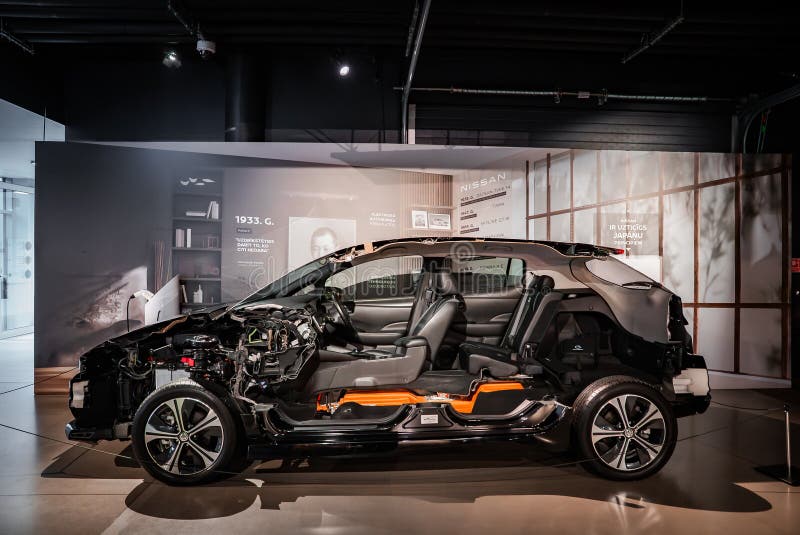
China’s automotive export landscape has undergone a structural transformation that positions bulk vehicle export not merely as a trade activity, but as a sophisticated supply chain engineering discipline. As we navigate 2026, the People’s Republic has cemented its status as the world’s dominant automotive manufacturing node, accounting for 40% of global car production and manufacturing approximately 70% of the world’s electric vehicles.
The year 2025 closed with record-breaking export figures—7.1 million vehicles—establishing exports as a durable second growth engine alongside domestic electrification. This represents a fundamental shift from cyclical overflow exports to strategic, policy-aware global expansion. For B2B importers, this means accessing not surplus inventory, but purpose-built export variants manufactured under stringent international compliance frameworks.
The Supply Chain Regionalization Imperative
The “China Plus One” strategy adopted by multinationals has paradoxically strengthened China’s position as the central node in integrated regional supply chains. Chinese logistics providers have established robust networks across Southeast Asia, creating hybrid supply chain architectures that maintain China as the manufacturing core while diversifying geopolitical risk. For bulk car exporters, this translates into multi-modal routing options: vehicles can now be shipped from Shanghai to Bangkok for ASEAN distribution, or via the China-Europe Railway Express to Budapest for EU market penetration.
Green Logistics as Competitive Differentiator
China’s dual carbon goals have transitioned green logistics from marketing concept to operational mandate. By 2026, electric vehicles constitute over 35% of urban delivery fleets, while solar-powered warehouses and carbon-neutral shipping options have become standard offerings. This sustainability infrastructure directly impacts bulk car exports through:
- Carbon-neutral ocean freight options via partnerships with Maersk ECO Delivery and COSCO Green Shipping
- Solar-powered processing centers at Shanghai Waigaoqiao and Ningbo-Zhoushan ports reducing handling emissions by 40%
- Battery recycling compliance integration within export processing zones
The “follow-the-capital” model has emerged as a dominant trend: as BYD, CATL, and Geely establish factories in Hungary, Indonesia, and Thailand, logistics demand shifts from simple freight to complex, end-to-end supply chain solutions including production-line feeding and after-sales service networks.
Market Saturation Driving Export Quality
With new energy vehicles (NEVs) capturing 59.4% of domestic sales and penetration reaching saturation points in Tier-1 cities, Chinese OEMs are exporting their most advanced models—not outdated stock. December 2025 data reveals that while internal combustion engine (ICE) shipments moderated, BEV and PHEV exports reached record levels, with plug-in hybrid exports alone tripling year-over-year.
2. Understanding China’s Strict EV Export Regulations
The 2026 regulatory environment for bulk car export China has tightened significantly, with the Ministry of Commerce (MOFCOM) and General Administration of Customs (GACC) implementing three-tier compliance verification for all NEV exports.
Mandatory Export Documentation Framework
Every bulk shipment requires:
| Document | Issuing Authority | Validity Period | Critical Compliance Points |
|---|---|---|---|
| CCC Export Certificate | CNCA | 12 months | Vehicle-specific, not brand-generic |
| Battery UN38.3 Test Summary | Certified Testing Lab | Per battery generation | Must match exact cell chemistry |
| EV Export License | MOFCOM | 6 months | VIN-specific approval required |
| Environmental Compliance Declaration | MEE | Per shipment | Carbon footprint calculation mandatory |
| Cybersecurity Data Transfer Agreement | CAC | Annual | OTA update protocols disclosed |
The 2026 Battery Transport Mandate
Lithium-ion battery exports now fall under IMDG Code Amendment 40-20 strictures, with China implementing additional national standards:
- State of Charge (SoC) Limitation: All EV batteries must be shipped at maximum 30% charge capacity
- Thermal Runaway Containment: Enhanced packaging requirements for Class 9 dangerous goods
- Blockchain Traceability: Battery passports linking to EU Battery Regulation 2027 compliance
Critical Update: As of January 2026, Chinese customs requires pre-shipment inspection by CCIC (China Certification & Inspection Group) for all NEVs, verifying that vehicle software versions match declared specifications and that no unauthorized data collection modules are present.
Anti-Dumping and Trade Defense Protocols
With the EU implementing definitive countervailing duties on Chinese BEVs and the U.S. maintaining Section 301 tariffs, bulk exporters must navigate:
- Certificate of Origin manipulation risks: Strict penalties for false declarations regarding battery cell origin
- Transshipment monitoring: Enhanced scrutiny of vehicles routed through Vietnam, Thailand, or Mexico
- Price verification: MOFCOM now requires export price benchmarking against domestic market prices to prevent dumping allegations
3. Sourcing Strategy: Direct Factory vs. Authorized Export Agents
The 2026 market presents two viable procurement pathways, each with distinct risk profiles and margin structures.
Direct Factory Engagement (Tier-1 OEMs)
Best for: Volume buyers (>500 units annually) with established homologation capabilities
| Advantage | Risk |
|---|---|
| Factory-gate pricing (5-8% margin elimination) | Minimum order quantities (MOQ) typically 100+ units per SKU |
| Direct technical specification customization | Extended lead times (90-120 days) for export variants |
| Priority allocation during supply constraints | Complex contract negotiation requiring Mandarin capabilities |
| Access to latest software iterations | Warranty liability remains with importer |
Case Study: A German fleet operator negotiated directly with BYD for 300 units of the Seal U DM-i. By accepting 90-day payment terms and handling EU homologation internally, they achieved a €2,400 per unit cost reduction compared to agent pricing. However, they incurred €180,000 in unexpected software localization costs to meet GDPR compliance.
Authorized Export Agents (Trading Companies)
Best for: SMB importers (<200 units) and multi-brand portfolio builders
| Advantage | Risk |
|---|---|
| Consolidated multi-brand sourcing | 3-7% commission markup |
| Pre-certified export documentation | Limited customization options |
| Flexible MOQs (as low as 10 units) | Potential for specification drift between orders |
| English-language contract support | Warranty chain complexity |
The Hybrid Model: Leading 2026 operators utilize “overseas warehouses + dedicated lines + local delivery” structures. Agents maintain bonded inventory in Rotterdam or Dubai, allowing for faster EU delivery and critical local returns handling—a feature European B2B clients increasingly demand.
Verification Protocols
Before engaging any supplier:
- Business License Verification: Check Unified Social Credit Code against National Enterprise Credit Information Publicity System
- Export Authorization: Verify OEM export license covers your target destination country
- Factory Audit: For direct deals, conduct ISO 9001 and IATF 16949 certification verification
- Financial Health Check: Review via Qichacha or Tianyancha for litigation history and capital verification
4. Financial Mechanics: Pricing and Landed Costs
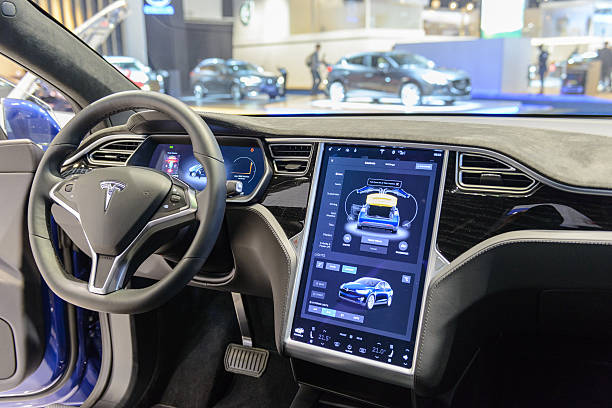
Understanding the true cost of bulk car export China requires modeling beyond FOB Shanghai pricing. The following represents exact calculations for a typical 2026 EU-bound BEV shipment.
Landed Cost Calculation Model (50-Unit Containerized Shipment)
| Cost Component | Calculation Basis | Amount (USD) | Notes |
|---|---|---|---|
| EXW Factory Price | Per unit × 50 | $1,250,000 | BYD Dolphin or equivalent C-segment BEV |
| Export Processing | Documentation, inspection | $8,500 | CCIC pre-shipment mandatory |
| Ocean Freight (40HC) | $3,200 per container × 2 | $6,400 | Shanghai-Rotterdam, carbon-neutral option |
| Marine Insurance | 110% of CIF value × 0.15% | $2,063 | ICC-A coverage |
| EU Import Duty | 10% of CIF value | $126,696 | Standard passenger vehicle rate |
| Countervailing Duty | 17.4% (BYD rate) of CIF | $220,451 | EU definitive duties as of 2026 |
| VAT (Netherlands) | 21% of (CIF + Duty) | $299,011 | Recoverable for VAT-registered entities |
| Homologation | Type approval per unit × 50 | $75,000 | RDW or KBA certification |
| Local Transport | Rotterdam to dealer network | $4,500 | Final mile distribution |
| TOTAL LANDED COST | $1,992,621 | $39,852 per unit |
Currency Risk Management
With RMB volatility against the Euro and USD intensifying, 2026 importers should utilize:
- Forward Exchange Contracts: Lock rates at 30% deposit stage
- Natural Hedging: Establish RMB revenue streams through parallel exports to China
- USD Invoicing: Many Tier-1 OEMs now accept USD to mitigate forex risk
Payment Structure Best Practices
Avoid 100% prepayment. Standard 2026 terms utilize:
- 30% T/T Advance: Upon PO confirmation and export license verification
- 70% L/C at Sight: Against BL, commercial invoice, and packing list
- 10% Retention: Released post-arrival inspection (optional for trusted partners)
Warning: Recent scams involve forged Bank of China L/C confirmations. Verify all L/C advices directly with issuing banks via SWIFT.
5. Global Logistics: Ocean Freight & Battery Transport Compliance
The logistics of bulk car export China have evolved from container stuffing to sophisticated supply chain orchestration, particularly regarding the hazardous materials protocols governing lithium-ion batteries.
Specialized Vehicle Transport Modes
Containerized Shipping (RORO-in-Container):
– Standard 40HC containers accommodate 2-4 vehicles depending on dimensions
– Lashing and securing: Must comply with IMO CSS Code (2023 edition)
– Battery disconnect: Mandatory isolation of 12V systems and high-voltage contactors
Pure Car and Truck Carriers (PCTC):
– Preferred for volumes >200 units
– Chinese operators (COSCO, Anji Logistics) now operate dedicated EV decks with thermal monitoring
– Cost efficiency: 15-20% lower per-unit cost than containers for large batches
Dangerous Goods Compliance Matrix
| Battery Type | UN Number | Packaging Group | Special Provisions |
|---|---|---|---|
| Lithium-ion (EV traction) | UN 3480 | II | SoC ≤30%, PI 965 Section IB |
| Lithium-ion (installed) | UN 3166 | N/A | Vehicle immobilization required |
| Sodium-ion (emerging) | UN 3551 | II | Exempt from SoC restrictions (2026 pilot) |
Critical Compliance: All EV shipments require Emergency Response Guidebook (ERG) 147 documentation and crew training certificates for vessel personnel.
The Green Logistics Premium
Carbon-neutral shipping options now command a 12-18% freight premium but offer:
- EU CBAM compliance: Pre-emptive carbon accounting for future border adjustments
- Marketing value: ESG reporting benefits for fleet operators
- Insurance discounts: 5% reduction in marine premiums with green shipping certificates
Route Optimization: The China-Europe Railway Express (CRE) offers 18-day transit to Duisburg for landlocked markets, though capacity constraints limit shipments to 8 vehicles per 40-foot equivalent unit (FEU).
6. Localization & Homologation: Preparing Cars for Local Markets
The “localization gap” represents the primary hurdle in 2026—not crossing the ocean, but “landing” in the destination market. European and ASEAN markets require specific technical adaptations that must be planned during the procurement phase.
EU Market Homologation Requirements
Whole Vehicle Type Approval (WVTA) under Framework Regulation (EU) 2018/858 requires:
- Environmental Performance: Euro 6d compliance for PHEVs, zero-emission certification for BEVs
- Safety Systems: eCall automatic emergency call systems (mandatory from 2025)
- Cybersecurity: UN R155 and R156 compliance for software updates and security management
- Battery Passport: Digital documentation of cell chemistry, carbon footprint, and recycling pathways
Cost Implications: Retrofitting Chinese-market vehicles for EU compliance costs $1,200-$3,500 per unit, depending on OEM export preparation levels. Factory-direct “EU-spec” variants eliminate retrofit costs but carry higher base pricing.
ASEAN and Middle East Variations
| Market | Key Requirement | Lead Time |
|---|---|---|
| Thailand | Local content certification for tariff exemptions | +30 days |
| UAE | GSO conformity (GCC Standardization Organization) | +15 days |
| Australia | ADR compliance (Australian Design Rules) | +45 days |
| Russia | EAC certification (Eurasian Conformity) | +60 days |
Software Localization
Chinese EVs require significant software adaptation:
- GDPR compliance: Data storage location (EU servers) and privacy policy updates
- Language packs: Complete UI/UX translation beyond basic English
- Mapping integration: Replacement of Baidu Maps/Baidu services with Google Maps or local alternatives
- OTA update infrastructure: Establishment of EU-based update servers to avoid cross-border data transfer restrictions
Case Study: A Polish importer purchased 100 units of a popular Chinese EV without verifying OTA capabilities. The vehicles shipped with Mandarin-only interfaces and Chinese server-dependent navigation, requiring a €45,000 software localization project post-arrival and six weeks of downtime.
7. After-Sales Ecosystem: Securing Parts and Service Abroad
The “follow-the-capital” model has transformed after-sales from an importer responsibility to a shared OEM-partner ecosystem. However, bulk importers must secure service continuity guarantees before vessel departure.
Spare Parts Supply Chain Architecture
Critical Components Strategy:
| Component Category | Sourcing Lead Time | Recommended Stock Level |
|---|---|---|
| Battery packs | 90-120 days | 2% of fleet value |
| Electric motors | 45-60 days | 1% of fleet value |
| BMS controllers | 30 days | 3% of fleet value |
| Body/chassis parts | 15-30 days | Just-in-time via air freight |
Regional Distribution Centers: Major Chinese OEMs now maintain parts hubs in:
– Rotterdam (EU coverage)
– Dubai Jebel Ali (Middle East/Africa)
– Bangkok (ASEAN)
– Melbourne (Oceania)
Technical Training and Diagnostic Tools
Bulk importers must negotiate:
- Service manual licensing: Often restricted to authorized service partners
- Diagnostic software: Proprietary tools requiring annual subscription (typically $2,000-$5,000 per bay)
- Technical training: Factory-sponsored programs for local technicians (mandatory for warranty validity)
Warranty Structuring
Chinese OEMs typically offer:
- Powertrain: 8 years/160,000 km
- Vehicle: 4 years/100,000 km
- Battery degradation: 70% capacity retention guarantee
Critical Clause: Ensure warranty coverage transfers across borders. Some manufacturers void warranties for vehicles exported outside authorized channels (parallel imports).
8. Avoiding Scams: How to Audit a Chinese EV Supplier
The surge in bulk car export China demand has attracted sophisticated fraud operations. The 2026 scam landscape involves shell companies, specification bait-and-switch, and cryptocurrency payment demands.
Red Flag Checklist
Immediate Disqualifiers:
– Requests for payment via cryptocurrency or personal bank accounts
– Prices >15% below market benchmarks (indicates VAT fraud or specification reduction)
– Refusal to provide factory tour or video verification with current date
– Business licenses showing “Trading Company” rather than “Manufacturer” for claimed factory-direct sales
Verification Protocol
Step 1: Documentation Authentication
– Verify business license via National Enterprise Credit Information Publicity System (http://www.gsxt.gov.cn)
– Check export license validity against MOFCOM database
– Confirm bank account details match registered company name exactly
Step 2: Physical Verification
– Engage third-party inspection agencies (SGS, Bureau Veritas, TÜV Rheinland China) for pre-shipment inspection
– Conduct factory audit focusing on production capacity vs. export commitments
– Verify VIN allocation against production schedules
Step 3: Transaction Security
– Utilize escrow services for initial transactions (Alibaba Trade Assurance, Letters of Credit)
– Insist on container loading supervision by independent surveyors
– Require BL (Bill of Lading) release only after payment confirmation
Case Study: A Brazilian importer lost $340,000 to a “factory representative” who provided forged BYD authorization letters. The scammer delivered 20 ICE vehicles instead of ordered BEVs, then disappeared. Recovery required 14 months of Chinese litigation.
Legal Recourse
Ensure contracts specify:
– Governing law: Typically Chinese law (PRC Contract Law) or Singapore/UK arbitration for neutrality
– Jurisdiction: Shanghai International Economic and Trade Arbitration Commission (SHIAC) recommended
– Quality bonds: 5-10% retention held for 90 days post-arrival
9. Start Your Import Business with Electric Auto China
Navigating the complexities of bulk car export China in 2026 requires more than transactional relationships—it demands strategic supply chain partnership. At Electric Auto China, we function as your Shanghai-based Chief Export Office, bridging the localization gap that derails independent importers.
Our 2026 Compliance Infrastructure
As licensed export operators under MOFCOM Category A certification, we provide:
- Regulatory Pre-Clearance: All vehicles pre-certified for EU, ASEAN, and Middle East homologation before factory departure
- Green Logistics Integration: Carbon-neutral shipping options via COSCO and Maersk partnerships, with blockchain-verified carbon credits
- Financial Structuring: RMB/USD/EUR hedging instruments and documentary credit management
- After-Sales Guarantee: Direct OEM parts allocation and technical training programs
The Electric Auto China Advantage
Unlike traditional trading companies, we operate on the “follow-the-capital” model:
- Factory Co-Location: Offices within BYD, Geely, and NIO export processing zones for real-time production monitoring
- Regional Hub Access: Priority allocation in our Rotterdam and Dubai bonded warehouses, enabling 72-hour EU delivery
- Specification Integrity: Digital twin verification ensuring delivered vehicles match ordered specifications exactly
Next Steps for Qualified Buyers
We engage exclusively with:
– Fleet operators seeking 50+ unit annual procurement
– Distributors with established homologation pathways or partnership interest
– Government entities and municipal fleet transition programs
Contact our Shanghai headquarters to schedule a virtual factory tour and receive a customized landed cost analysis for your target market. In 2026’s competitive EV landscape, the margin between success and failure lies in supply chain precision. Let Electric Auto China architect your bulk import success.
Electric Auto China | Shanghai Headquarters | Global EV Supply Chain Solutions
Licensed Export Operator | MOFCOM Category A Certified | IATF 16949 Compliant
Unlock High-Margin EV Imports with Electric Auto China
As an elite automotive supply chain partner in Shanghai, we provide end-to-end, strictly compliant export solutions tailored for international dealerships, fleet managers, and wholesale distributors.
- 🛡️ 100% Legal & Compliant: Fully licensed exports ensuring smooth customs clearance at your destination.
- ⚙️ Complete Localization: Professional English/Arabic/Russian OS flashing and GB/T to CCS2 charging solutions.
- 🚢 Secure Logistics: Direct Ro-Ro and Containerized shipping with full UN38.3 battery certifications.
- 🔧 After-Sales Support: Reliable access to OEM diagnostic tools and steady spare parts supply.
Request a Detailed FOB/CIF Quote Today:
📧 B2B Sales Email: [email protected]
💬 Direct WhatsApp: +86 159 5127 6160