The Ultimate 2026 Importer’s Guide to cheap electric car from china
1. The Macro-Economics of cheap electric car from china in 2026
China’s automotive landscape has undergone a structural transformation that permanently altered global supply chains. As of January 2026, the People’s Republic closed 2025 with record vehicle exports of approximately 7.1 million units, establishing exports as a durable second growth engine alongside domestic electrification. For international B2B buyers, this represents an unprecedented procurement opportunity—provided they navigate the evolving regulatory complexity.
The domestic Chinese market achieved 34.4 million units in total sales during 2025 (+9.4% YoY), decisively surpassing the 2017 peak. However, the composition tells the critical story: New Energy Vehicle (NEV) shipments surged by 3.6 million units (+28.2% YoY) to reach 16.5 million units, while Internal Combustion Engine (ICE) volumes contracted by 700,000 units (-3.6%). This shift signifies that when sourcing a cheap electric car from china, buyers are accessing products from the world’s most scaled and cost-optimized manufacturing ecosystem.
Three macro-developments define the 2026 sourcing environment:
Product Value Upgrading: Chinese exports have transcended low-cost commoditization. The current export basket emphasizes intelligent electric vehicles, solid-state battery precursors, and integrated chassis systems. European industrial machinery and luxury components flow into China, while advanced EVs and renewable energy equipment flow out—creating a balanced, high-value trade corridor.
Multi-Regional Production Networks: The “China Plus One” strategy has matured into blended supply models. Chinese inputs now integrate with Southeast Asian assembly hubs (Thailand, Indonesia, Vietnam) and European final customization centers. This regionalization reduces geopolitical concentration risk while maintaining China’s central node status for battery cell production (controlling 70% of global capacity).
Regulatory Alignment Pressure: European sustainability mandates—CSRD carbon disclosure, packaging waste regulations, and supply chain due diligence directives—are reshaping logistics decisions at origin. Exporters now prioritize carbon-neutral shipping options and compliant documentation, transforming green logistics from marketing concept to operational mandate.
For importers, the financial proposition remains compelling despite subsidy adjustments. While the NEV acquisition tax was partially reinstated to 5% (50% of standard rate) effective January 1, 2026, with maximum tax reductions halved to 15,000 yuan (approximately €2,100), manufacturing scale efficiencies have absorbed these costs. BYD, Xiaomi, and Leapmotor continue aggressive export pricing, with entry-level EVs available at $8,000-$12,000 EXW for qualified B2B volume buyers.
2. Understanding China’s Strict EV Export Regulations
The era of unregulated gray-market exports has ended. Effective January 1, 2026, China’s Ministry of Commerce (MOFCOM) implemented mandatory Export License Frameworks for all NEV manufacturers and trading companies. This regulatory pivot fundamentally changes how foreign buyers procure a cheap electric car from china.
The Export License Framework
Under the new regime, only accredited manufacturers and authorized dealers may apply for export licenses. The framework targets three systemic issues:
-
Irregular Export Channels: Previous “parallel export” schemes saw new vehicles misclassified as “used” to circumvent manufacturer warranties and regional pricing controls. These practices flooded markets with vehicles containing outdated software and non-compliant charging protocols.
-
Quality Consistency: Unlicensed exporters often bypassed UN 38.3 battery testing and IMO dangerous goods declarations, creating liability exposures for international buyers.
-
Brand Integrity: Aggressive discounting by unauthorized traders damaged the perceived value of Chinese EV brands in Europe and Southeast Asia.
Critical Compliance Requirements:
– Manufacturer Accreditation: OEMs must demonstrate annual production capacity exceeding 10,000 units and maintain ISO 9001/14001 certifications.
– Dealer Authorization: Trading companies must hold exclusive distribution agreements with Tier-1 manufacturers (BYD, Geely, SAIC, Changan) or certified Tier-2 producers.
– Documentation Standards: Each vehicle requires a Vehicle Identification Number (VIN) traceability certificate, battery chemistry disclosure (LFP vs. NCM), and software version certification.
Tax Implications for 2026
The reinstatement of acquisition taxes affects pricing structures:
| Vehicle Category | 2025 Tax Rate | 2026 Tax Rate | Max Subsidy Reduction |
|---|---|---|---|
| Pure Electric (Range >400km) | 0% | 5% | ¥15,000 (down from ¥30,000) |
| Plug-in Hybrid (Range >100km) | 0% | 5% | ¥15,000 |
| Plug-in Hybrid (Range <100km) | 0% | Full 10% | ¥0 (subsidy eliminated) |
| Fuel Cell Vehicles | 0% | 5% | ¥15,000 |
Strategic Implication: Importers must verify that their Chinese supplier has incorporated these tax adjustments into EXW pricing. Unauthorized exporters often quote pre-2026 pricing, then demand additional payments post-shipment to cover tax liabilities, destroying landed cost calculations.
3. Sourcing Strategy: Direct Factory vs. Authorized Export Agents
Securing a cheap electric car from china requires selecting the appropriate procurement channel. The 2026 regulations have bifurcated the market into compliant and non-compliant suppliers.
Channel A: Direct OEM Procurement
Best for: Volume buyers (100+ units annually), fleet operators, and national distributors.
Advantages:
– Factory-direct pricing (typically 8-12% below agent pricing)
– Priority allocation during production constraints
– Direct technical integration support (API access for fleet management software)
– Warranty backing through official international service networks
Requirements:
– MOFCOM export license verification (request License Number: 2026-NEV-XXXX)
– Minimum order quantities (MOQ) typically 50-100 units per SKU
– Letter of Credit (LC) terms or 30% deposit/70% against B/L
Verified Tier-1 Exporters (2026 Licensed):
– BYD Auto Industry Co.: License holder for Seal, Dolphin, Atto 3 models; 1.8M+ NEV sales in 2025
– SAIC Motor: MG4 EV, MG ZS EV; established EU homologation
– Geely Auto: Geometry series, Zeekr luxury line
– Tesla Shanghai: Model 3/Y for non-US markets (subject to EU tariff considerations)
Channel B: Authorized Export Agents
Best for: Small-to-medium enterprises (SMEs), trial orders (5-20 units), and multi-brand portfolio builders.
Advantages:
– Consolidated shipping (LCL options reducing per-unit freight costs)
– Pre-homologated vehicle batches for specific markets (EU, ASEAN, MENA)
– Multi-brand sourcing (combining BYD, NIO, XPeng in single shipment)
– Trade finance facilitation (agents often accept open account terms for established buyers)
Risk Mitigation:
– Verify the agent’s Export License Endorsement—distinct from the manufacturer’s license, this permits the trading company to act as legal exporter of record.
– Confirm the agent maintains AEO (Authorized Economic Operator) status with China Customs, ensuring faster clearance and reduced inspection rates.
Channel C: Multi-Regional Assembly (The “China Plus One” Model)
Emerging in 2026, blended supply chains allow buyers to source Chinese CKD (Completely Knocked Down) kits for assembly in Vietnam, Thailand, or Mexico, circumventing certain tariff barriers while maintaining cost advantages. This model requires sophisticated logistics coordination but offers landed cost savings of 15-22% for markets with strict origin rules.
4. Financial Mechanics: Pricing and Landed Costs
Understanding the true cost of a cheap electric car from china requires moving beyond sticker price to comprehensive landed cost modeling. The following table illustrates a typical B2B import scenario for a compact EV (BYD Dolphin or equivalent) destined for the European Union in Q1 2026.
Landed Cost Calculation: Compact EV (CIF Rotterdam)
| Cost Component | Amount (USD) | Calculation Basis | Notes |
|---|---|---|---|
| EXW Factory Price | $11,500 | Base vehicle, standard trim | Post-subsidy adjustment pricing |
| Export License Fee | $150 | Per vehicle documentation | New 2026 MOFCOM compliance cost |
| Domestic Transport | $280 | Factory to Shanghai Port | EV-specific carrier (battery safety) |
| Port Handling & THC | $340 | Terminal handling charges | RoRo vessel rates |
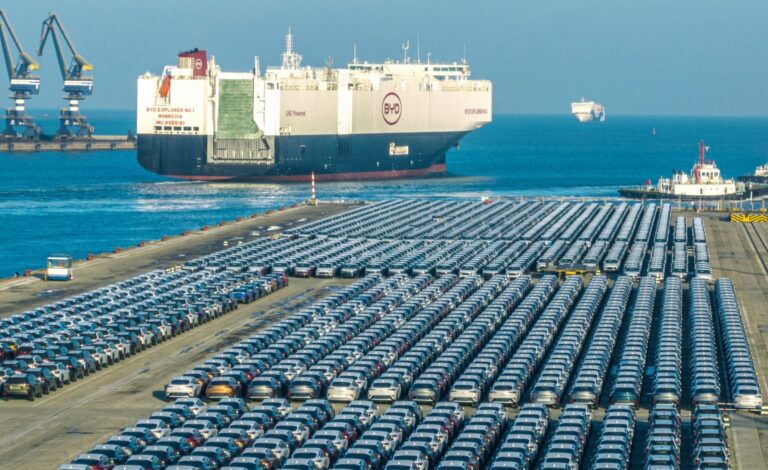
| Ocean Freight (RoRo) | $1,200 | Shanghai to Rotterdam | 40-day transit, bunker adjustment factor included |
| Marine Insurance (110% CIF) | $145 | 0.15% of CIF value | Institute Cargo Clauses (A) |
| CIF Value | $13,615 | Sum of above | Customs valuation basis |
| EU Import Duty (10%) | $1,361.50 | Ad valorem on CIF | MFN rate for Chinese origin vehicles |
| EU VAT (19-27%) | $2,850 | Variable by destination country | Germany 19%, Hungary 27% |
| Homologation (WVTA) | $850 | Per model type approval | eCall, ESC, lighting compliance |
| Technical Modifications | $400 | Software localization, manual translation | Removal of Chinese telematics |
| Total Landed Cost | $19,076.50 | Delivered, duty-paid | Ready for retail |
Currency Risk Management: With the RMB trading at approximately 6.99 to the USD (January 2026), importers should utilize forward exchange contracts or CNH hedging instruments. Chinese suppliers increasingly quote in RMB rather than USD to mitigate their own forex exposure, requiring buyers to maintain multi-currency credit facilities.
Payment Structure Best Practices:
1. Deposit: 30% upon contract signing and export license verification
2. Interim: 40% upon vessel loading and Bill of Lading issuance
3. Final: 30% against arrival and customs clearance confirmation
Avoid: 100% prepayment to unverified suppliers—a red flag for fraudulent operations.
5. Global Logistics: Ocean Freight & Battery Transport Compliance
Transporting lithium-ion batteries requires adherence to the IMDG Code (International Maritime Dangerous Goods) and UN 38.3 testing standards. As of 2026, Chinese ports have implemented stricter enforcement following several thermal incidents in 2024.
Battery Classification & Packaging
| Battery Type | UN Number | Packing Group | Special Provisions |
|---|---|---|---|
| Lithium Iron Phosphate (LFP) | UN 3480 | II | State of Charge ≤30% for transport |
| Nickel Manganese Cobalt (NCM) | UN 3480 | II | Thermal runaway containment required |
| Sodium-Ion (Emerging) | UN 3551 | II | Alternative to lithium, lower energy density |
RoRo vs. Containerization:
– RoRo (Roll-on/Roll-off): Preferred for complete vehicles. Vehicles drive onto specialized vessels. Cost: $1,100-$1,400/unit Shanghai-Europe. Risk: Limited schedule frequency (weekly vs. daily).
– Containerized (R-Rack): Vehicles secured in 40’HC containers using specialized racking systems. Cost: $1,800-$2,200/unit (2-3 vehicles per container). Advantage: Higher security, more frequent sailings.
Green Logistics Integration:
Leading Chinese logistics providers now offer carbon-neutral shipping options utilizing:
– Solar-powered port warehouses (Shanghai Yangshan, Shenzhen Yantian)
– Electric terminal tractors (35% of urban delivery fleets now electric)
– Book & Claim systems for biofuel bunkering
For EU-bound shipments, selecting a green logistics partner facilitates compliance with the Corporate Sustainability Reporting Directive (CSRD), as Scope 3 emissions data is automatically generated.
6. Localization & Homologation: Preparing Cars for Local Markets
A cheap electric car from china requires significant technical adaptation before legal registration in most jurisdictions. The 2026 export license framework mandates that manufacturers provide “export-spec” vehicles with pre-configured homologation packages.
European Union (WVTA Framework)
Whole Vehicle Type Approval (WVTA) requires:
– eCall Systems: Automatic emergency call units (EU Regulation 2015/758)
– ** cybersecurity management systems (UN R155)
– Software updates (UN R156) with OTA capability for local servers
– Right-Hand Drive Conversion**: For UK, Ireland, Cyprus, Malta markets (add $800-$1,200/unit)
Case Study: German Market Entry
A Hamburg-based importer purchased 200 units of a Chinese compact SUV in October 2025. Despite holding valid export licenses, the vehicles arrived with Chinese 4G telematics modules incompatible with European frequency bands. Retrofitting cost €450 per unit and delayed market launch by six weeks. Lesson: Verify “Global Version” software specifications in purchase contracts, including frequency band support (4G LTE Bands 1/3/7/20/28).
Emerging Markets (GSO, ASEAN)
Gulf States (GCC) require GSO (Gulf Standardization Organization) certification, focusing on extreme heat testing (50°C+ ambient operation). ASEAN markets utilize UN R94/R95 crash test protocols, often accepting Chinese C-NCAP results if conducted to equivalent standards.
Critical Documentation Package:
1. Certificate of Conformity (COC) from manufacturer
2. Battery recycling compliance plan (per EU Battery Regulation 2023/1542)
3. Material content declaration (conflict minerals, REACH SVHC substances)
4. Cybersecurity certificate (ISO/SAE 21434)
7. After-Sales Ecosystem: Securing Parts and Service Abroad
The total cost of ownership for a cheap electric car from china depends heavily on after-sales support. The 2026 regulatory environment has forced manufacturers to establish legitimate international service networks, replacing the “gray parts” market.
Parts Procurement Strategy
| Component Category | Sourcing Lead Time | Recommended Stock Level | Notes |
|---|---|---|---|
| High-Voltage Batteries | 45-60 days | 2% of fleet value | Requires dangerous goods storage |
| Electric Motors | 30-45 days | 1% of fleet value | Modular replacement units |
| Infotainment Screens | 14-21 days | 3% of fleet value | Software-locked to VIN |
| Suspension/Brakes | 7-14 days | 5% of fleet value | Generic compatibility common |
Regional Warehousing: Establish bonded warehouses in Rotterdam (EU), Dubai (MENA), or Panama (Americas) to achieve sub-48-hour parts availability. Chinese OEMs now offer parts consignment programs where inventory is held at the importer’s facility but paid for only upon consumption.
Technical Training & Diagnostics
Authorized exporters must provide:
– Level 1 Training: High-voltage safety awareness (available online)
– Level 2 Training: Component replacement and diagnostics (in-person, Shanghai or regional hubs)
– Level 3 Training: Battery pack repair and BMS programming (restricted to certified technicians)
Diagnostic Tool Access: Modern Chinese EVs require manufacturer-specific diagnostic tablets (e.g., BYD’s “DiLink” service tools). Ensure your supply agreement includes software licenses and annual updates.
Battery Second-Life & Recycling
Under EU Battery Regulations, importers become Producer Responsibility Organizations for end-of-life battery management. Negotiate Battery Passport data access at point of sale, documenting:
– Manufacturing date and chemistry
– Cycle count and state of health (SoH)
– Recycling pathway partnerships
8. Avoiding Scams: How to Audit a Chinese EV Supplier
The demand for cheap electric car from china has attracted fraudulent operators. The 2026 export license requirement helps filter legitimate suppliers, but sophisticated scams persist.
Red Flag Detection
Immediate Disqualifiers:
– Refusal to provide Export License Number (format: 2026-XX-XXXXX)
– Pricing 20%+ below market rates (indicates VAT invoice fraud or used-vehicle misclassification)
– Requests for payment to personal accounts or Hong Kong shell companies
– Absence of AEO certification (verify via China Customs website)
Verification Protocol:
- License Verification: Request the manufacturer’s MOFCOM export license and cross-reference with the official directory (updated quarterly).
- Factory Audit: Conduct or commission a third-party audit focusing on:
- Production capacity vs. claimed output
- Battery testing facilities (UN 38.3 capability)
- Quality control stations (IP67 testing for battery packs)
- Reference Checks: Contact existing importers in your target market. Legitimate exporters maintain referenceable client portfolios.
- Documentation Review: Verify that VIN numbers follow ISO 3780 standards and are not duplicated or sequential in suspicious patterns (indicating “gray market” re-VINing).
Escrow Structures: For initial transactions, utilize Alibaba Trade Assurance or bank escrow services releasing funds only upon:
– Export license verification
– Successful pre-shipment inspection (PSI) by SGS/Bureau Veritas
– Bill of Lading verification via shipping line (preventing document fraud)
Case Study: The “Used-as-New” Scam
A Polish importer purchased 50 “new” EVs from a Shenzhen trading company at 15% below factory pricing. Customs inspection revealed odometer discrepancies and registration records indicating prior use as ride-share vehicles in Chengdu. The exporter lacked MOFCOM licensing. Recovery required 18 months of litigation. Prevention: Always verify the “Manufacture Date” on the conformity certificate matches the shipping date; Chinese ride-share vehicles often have accelerated depreciation cycles.
9. Start Your Import Business with Electric Auto China
As Chief Export Consultant at Electric Auto China (Shanghai), I have guided over 120 international clients through the complexities of China’s 2026 EV export landscape. Our consultancy operates at the intersection of regulatory compliance, logistics optimization, and market entry strategy.
Our 2026 Compliance-First Approach
Export License Verification: We maintain direct API access to MOFCOM’s accreditation database, ensuring every vehicle sourced carries legitimate export authorization.
Landed Cost Transparency: Our proprietary calculator incorporates real-time freight rates, duty structures, and the 2026 tax adjustments, eliminating surprise costs.
Multi-Regional Logistics: Leveraging China’s integrated Southeast Asian networks, we offer routing options through Thailand (duty advantages for ASEAN markets) and European pre-distribution centers.
Technical Localization: Our engineering partners in Rotterdam and Dubai provide pre-shipment homologation consulting, ensuring vehicles arrive market-ready.
Immediate Next Steps
- Download our 2026 Export License Verification Checklist (PDF): A 15-point audit tool for vetting Chinese suppliers.
- Request a Landed Cost Quote: Receive a detailed financial model specific to your target market and volume requirements.
- Schedule a Factory Tour: Visit our partner facilities in Shenzhen, Xi’an, or Changsha with full translation and technical support.
The window for establishing competitive positioning in the affordable EV sector is narrowing as major markets implement protectionist measures. However, for compliant, well-capitalized importers, the cheap electric car from china remains the most compelling value proposition in automotive history—combining 16.5 million units of annual production scale with battery technology costs 40% below European equivalents.
Contact Electric Auto China today to secure your supply chain before Q2 2026 production allocations fill. The electrification of global transport is not coming—it is here, and it is manufactured in China.
Electric Auto China
Chief Export Consultant Office
Shanghai Free-Trade Zone, Pudong New Area
[email protected]
Unlock High-Margin EV Imports with Electric Auto China
As an elite automotive supply chain partner in Shanghai, we provide end-to-end, strictly compliant export solutions tailored for international dealerships, fleet managers, and wholesale distributors.
- 🛡️ 100% Legal & Compliant: Fully licensed exports ensuring smooth customs clearance at your destination.
- ⚙️ Complete Localization: Professional English/Arabic/Russian OS flashing and GB/T to CCS2 charging solutions.
- 🚢 Secure Logistics: Direct Ro-Ro and Containerized shipping with full UN38.3 battery certifications.
- 🔧 After-Sales Support: Reliable access to OEM diagnostic tools and steady spare parts supply.
Request a Detailed FOB/CIF Quote Today:
📧 B2B Sales Email: [email protected]
💬 Direct WhatsApp: +86 159 5127 6160