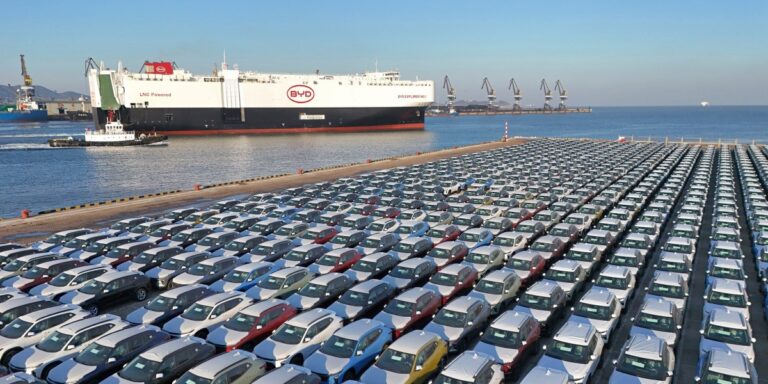
The Ultimate 2026 Importer’s Guide to China car export certificate
1. The Macro-Economics of China car export certificate in 2026
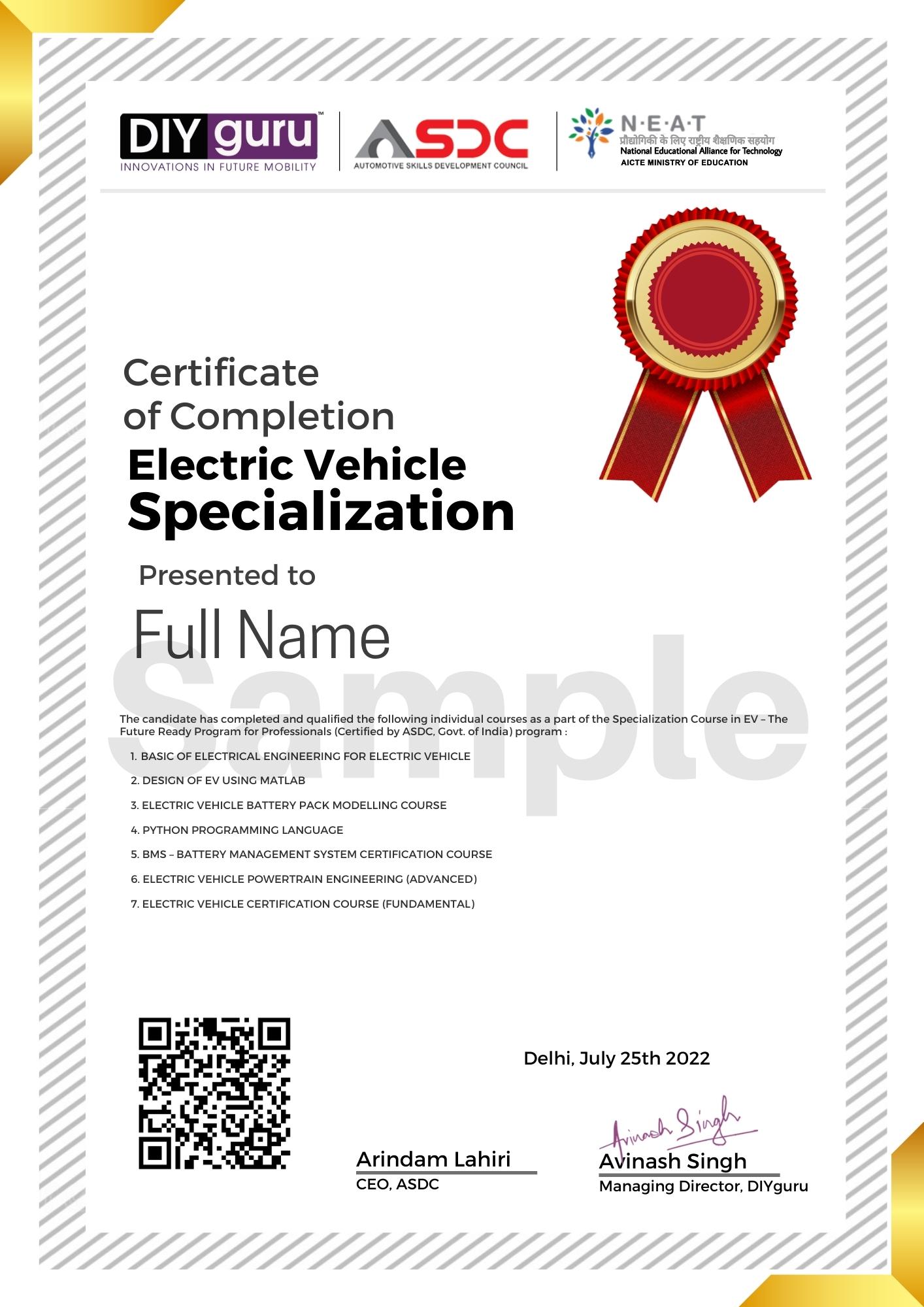
As we enter 2026, China’s logistics and supply chain infrastructure has evolved into a sophisticated ecosystem exceeding 350 trillion yuan in total value, representing a 6.5% year-on-year expansion that fundamentally reshapes global automotive trade. The issuance and verification of the China car export certificate has emerged as the critical gating mechanism within this ecosystem, reflecting three transformative macro-economic shifts: product value upgrading, multi-regional production networks, and regulatory alignment pressure.
Product Value Upgrading has redefined export dynamics. No longer concentrated in low-margin combustion engines, China’s outbound vehicle flow now prioritizes electric vehicles, renewable energy equipment, and advanced battery systems. In 2025, China recorded approximately 7.1 million vehicle exports, with New Energy Vehicles (NEVs) commanding over one-third of this volume—a structural pivot that necessitates rigorous certification protocols. The Ministry of Commerce (MOFCOM) mandates that every exported EV, plug-in hybrid, and fuel-cell vehicle carry a verifiable China car export certificate issued only to accredited manufacturers and licensed export agents, ensuring that quality standards match the sophistication of the underlying technology.
Multi-regional production networks have introduced complexity into certificate eligibility. The “China Plus One” strategy has catalyzed blended supply models where Chinese inputs undergo Southeast Asian assembly before European final customization. Despite this geographic dispersion, the origin certificate remains anchored to Chinese regulatory oversight. Exporters must now demonstrate that vehicles meet not only domestic production standards but also the carbon disclosure and supply chain due diligence requirements of destination markets—particularly the European Union’s Corporate Sustainability Due Diligence Directive (CSDDD) and Battery Regulation.
Regulatory alignment pressure manifests most acutely in the January 1, 2026, enforcement of strict export licensing. Where previously gray-market operators could exploit regulatory gaps by exporting “used” vehicles (effectively new cars with falsified documentation to circumvent quotas), the 2026 framework requires every B2B transaction to trace back to a licensed entity holding a valid China car export certificate. This certificate serves as cryptographic proof that the vehicle underwent inspection, carries legitimate software versions (not outdated regional locks), and qualifies for after-sales support in the destination jurisdiction.
The economic implications are substantial. Industry analysts project China could export 10 million electric vehicles annually by 2030, but this growth depends entirely on certificate compliance. European logistics providers now face strategic opportunities in managing the documentation chain—from carbon footprint verification at origin to compliant packaging and emission disclosures. The certificate has become both a trade enabler and a risk mitigation tool, with non-compliant shipments facing seizure at port, retroactive tariff penalties, and exclusion from warranty networks.
2. Understanding China’s Strict EV Export Regulations
Effective January 1, 2026, China’s Ministry of Commerce implemented the most significant regulatory overhaul in automotive export history. The China car export certificate is no longer a simple customs formality but a comprehensive license framework designed to professionalize the sector and eliminate irregular trade practices that damaged brand reputations in 2024-2025.
The Export License Framework
Under the 2026 regulations, only manufacturers and dealers accredited by MOFCOM may apply for export licenses. This accreditation process evaluates:
- Production Capacity Verification: Proof of annual manufacturing volume exceeding 5,000 units for passenger vehicles or 1,000 units for commercial EVs
- R&D Investment Ratios: Documentation showing minimum 3% of revenue reinvested in localization technologies and software updates
- After-Sales Infrastructure: Evidence of service partnerships or parts warehousing in target export markets
- Environmental Compliance: Carbon footprint audits of production facilities aligned with China’s dual carbon goals
The China car export certificate itself contains encrypted QR codes linking to a centralized MOFCOM database, allowing customs officials worldwide to verify authenticity in real-time. This prevents the “new-as-used” scams prevalent in 2025, where unauthorized exporters sold zero-mileage vehicles as second-hand to bypass manufacturer export restrictions.
Implications for Foreign Manufacturers
The regulations explicitly include foreign giants manufacturing within China—Tesla (Shanghai Gigafactory), Volkswagen (Anhui), BMW (Brilliance), and Mercedes-Benz (Beijing Benz). These entities must now secure the China car export certificate for every vehicle destined for European, Middle Eastern, or Southeast Asian markets, even when shipping from their Chinese production bases.
This creates a bifurcated compliance landscape:
– Direct OEM Exports: Manufacturers apply for certificates directly, leveraging established relationships with MOFCOM
– Third-Party Exports: Independent traders must source exclusively from licensed manufacturers and obtain sub-certificates proving chain-of-custody compliance
Documentation Architecture
A compliant 2026 export package requires:
- Vehicle Export License (车辆出口许可证) – The primary MOFCOM authorization
- Certificate of Origin (原产地证书) – Specifying battery cell origin for EU Battery Regulation compliance
- UN38.3 Test Summary – Mandatory for lithium-ion battery transport classification
- CCC Certification Copy – China Compulsory Certificate proving domestic roadworthiness
- Software Version Declaration – Confirming OTA update capability and regional mapping compatibility
Failure to present a valid China car export certificate at destination ports triggers immediate customs holds, with daily demurrage fees averaging $800-$1,200 per vehicle in European ports. Furthermore, the 2026 framework empowers Chinese authorities to blacklist non-compliant exporters for five years, effectively terminating their market access.
3. Sourcing Strategy: Direct Factory vs. Authorized Export Agents
Navigating the 2026 regulatory environment requires strategic decisions about sourcing channels. The China car export certificate availability differs significantly between direct manufacturer relationships and authorized export agents, each presenting distinct risk-reward profiles for B2B importers.
Direct Factory Relationships
Advantages:
– Certificate Authenticity: Direct access to the primary MOFCOM license eliminates chain-of-custody risks
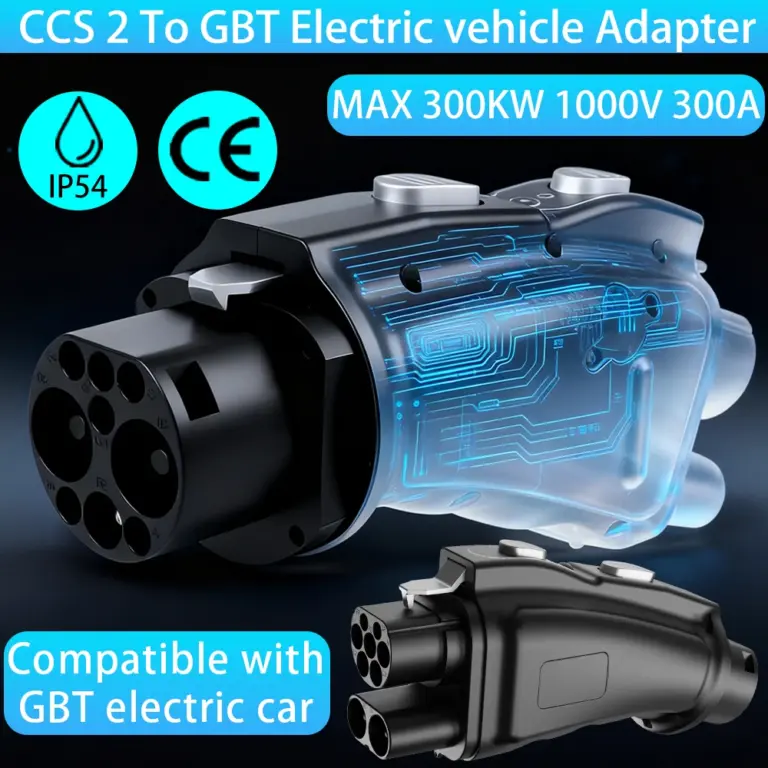
– Customization Latitude: Ability to specify battery chemistries (LFP vs. NMC), charging port configurations (CCS2 vs. GB/T), and software regionalization prior to certificate issuance
– Pricing Transparency: EXW (Ex Works) pricing without intermediary markups, typically 8-12% below agent pricing
Constraints:
– Minimum Order Quantities (MOQ): Major OEMs (BYD, NIO, XPeng) require minimum commitments of 100-500 units for export markets
– Payment Terms: Strict 30% deposit/70% L/C (Letter of Credit) structures with limited negotiation room
– Regulatory Burden: Importer assumes full responsibility for homologation and destination-market compliance
Authorized Export Agents
Licensed agents—such as Electric Auto China—hold MOFCOM accreditation to aggregate volumes from multiple manufacturers, enabling smaller B2B importers to access the China car export certificate without meeting OEM-direct MOQs.
Strategic Benefits:
– Portfolio Diversification: Single certificate procurement covering multiple brands (e.g., combining BYD commercial vehicles with Xiaomi passenger sedans)
– Regulatory Packaging: Agents pre-bundle homologation documentation, including EU type-approval pre-checks and Middle East GCC conformity assessments
– Financial Flexibility: Acceptance of escrow arrangements and staged payments tied to certificate verification milestones
Risk Mitigation:
When evaluating agents, verify their China car export certificate authorization tier:
– Tier 1 Agents: Direct MOFCOM license holders with physical inspection facilities (Shanghai, Tianjin, Shenzhen)
– Tier 2 Agents: Sub-licensees operating under Tier 1 umbrellas—acceptable but requiring additional documentation layers
– Gray Operators: Entities offering “certificate processing” without MOFCOM accreditation—high risk of document forgery and customs seizure
Decision Matrix
| Sourcing Model | MOQ | Certificate Control | Best For | Risk Level |
|---|---|---|---|---|
| Direct OEM | 100-500 units | Primary holder | Large fleet operators, distributors | Low (regulatory) / High (capital) |
| Tier 1 Agent | 10-50 units | Primary holder | Regional distributors, rental companies | Low |
| Tier 2 Agent | 1-5 units | Sub-licensee | Single-unit importers, startups | Medium |
| Gray Market | 1 unit | Forged/Invalid | None—avoid | Critical |
Case Study: Nordic Fleet Operator (2025)
A Norwegian municipal fleet operator attempted to source 50 BYD Atto 3 units through an unlicensed broker offering 15% below-market pricing. The broker provided falsified China car export certificates claiming “used vehicle” status to circumvent export licenses. Upon arrival in Oslo, Norwegian customs detected the documentation irregularity—the vehicles lacked valid MOFCOM licenses and featured software locked to the Chinese market. The entire shipment was rejected, resulting in €340,000 in losses including return freight and port fees. In 2026, this scenario is impossible with proper certificate verification via MOFCOM’s blockchain-anchored database.
4. Financial Mechanics: Pricing and Landed Costs
Understanding the true cost of acquisition requires moving beyond sticker prices to comprehensive landed cost modeling that incorporates the China car export certificate processing fees, regulatory compliance costs, and currency hedging strategies.
Pricing Structures
Chinese EV exports utilize three primary Incoterms, each affecting certificate responsibility and cost allocation:
EXW (Ex Works): Buyer assumes costs from factory gate, including certificate application fees (typically $800-$1,200 per vehicle for MOFCOM processing and documentation).
FOB (Free On Board): Seller delivers to port with certificate cleared for export; buyer assumes ocean freight and insurance. Most common for 2026 B2B transactions.
CIF (Cost, Insurance, Freight): Seller manages delivery to destination port, but buyer handles import duties and homologation. Requires sophisticated certificate localization for insurance validity.
Landed Cost Calculation Model
The following table illustrates exact landed cost calculations for a 2026 BYD Seal sedan (Long Range, 82 kWh battery) imported to Rotterdam, Netherlands:
| Cost Component | Calculation Basis | Amount (USD) | Notes |
|---|---|---|---|
| FOB Shanghai | Factory gate + margin | $32,500 | Includes basic CCS2 conversion |
| Export Certificate Fee | MOFCOM processing + agent | $950 | Mandatory for 2026 compliance |
| Ocean Freight (RoRo) | $65/CBM × 12 CBM | $780 | 2026 green logistics rates |
| Marine Insurance | 0.15% of CIF value | $52 | Institute Cargo Clauses (A) |
| EU Import Duty | 10% × (FOB + Freight + Insurance) | $3,333 | Standard passenger vehicle rate |
| VAT (Netherlands) | 21% × (CIF + Duty) | $7,518 | Recoverable for VAT-registered businesses |
| Homologation (RDW) | Type approval + CoC | $2,800 | Includes software validation |
| Battery Recycling Fee | EU Battery Regulation compliance | $450 | Pre-paid end-of-life guarantee |
| Port Handling (Rotterdam) | THC + documentation | $340 | |
| Inland Transport | To dealership | $280 | Electric truck delivery |
| TOTAL LANDED COST | $48,003 | Excluding VAT recovery |
Currency Considerations: The Yuan (CNY) exhibited 4.2% volatility against the Euro in 2025. Importers should secure forward contracts or CNY-denominated Letters of Credit to mitigate exchange risk during the 45-60 day certificate-to-delivery cycle.
Financing Structures: Chinese state-owned banks (Bank of China, ICBC) now offer export credit facilities tied to China car export certificate verification, providing 70% financing at 3.8-4.2% APR for qualified B2B buyers, contingent upon certificate authenticity checks.
5. Global Logistics: Ocean Freight & Battery Transport Compliance
The logistics of EV export have transformed from standard cargo handling to specialized dangerous goods operations requiring precise coordination with China car export certificate timelines. The 2026 regulatory environment integrates green logistics mandates with stringent battery safety protocols.
Ocean Freight Modalities
Roll-on/Roll-off (RoRo): Preferred for fully assembled vehicles, offering 25-30% lower damage rates than containerization. Major operators (Wallenius Wilhelmsen, Eukor) now require sight of the China car export certificate 72 hours prior to vessel loading to verify battery specifications against the manifest.
Containerized (R-Rack): Necessary for knocked-down kits or high-value limited editions. Requires Class 9 dangerous goods declarations and segregated stowage (separated from heat sources and living quarters).
Battery Transport Compliance
Lithium-ion batteries exceeding 100Wh (all EV traction batteries) fall under UN38.3 testing requirements and IMDG Code Class 9 classification. The China car export certificate must explicitly reference:
- UN Number: UN3480 (batteries alone) or UN3171 (vehicles with batteries installed)
- Watt-Hour Rating: Exact kWh capacity (affects stowage segregation requirements)
- State of Charge (SoC): Maximum 30% charge for ocean transport per IATA/IMDG regulations
- Thermal Runaway Protocols: Documentation of battery management system (BMS) safety certifications
Green Logistics Integration: China’s dual carbon goals have mandated that 35% of port drayage operations utilize electric trucks by 2026. This affects certificate processing timelines—shipments originating from inland factories must now include carbon footprint disclosures within the China car export certificate documentation package to qualify for preferential EU CBAM (Carbon Border Adjustment Mechanism) calculations.
Multi-Regional Routing: The “China Plus One” strategy has popularized transshipment through Southeast Asian hubs (Laem Chabang, Port Klang). However, the China car export certificate remains valid only if the vehicle undergoes no further assembly or modification in the transshipment port. Any value-add operations trigger certificate invalidation and require re-certification under local ASEAN regulations.
6. Localization & Homologation: Preparing Cars for Local Markets
The China car export certificate represents only the departure authorization; destination-market entry requires comprehensive localization strategies that align Chinese manufacturing specifications with regional regulatory frameworks.
European Union Compliance
Type Approval (WVTA): Vehicles must undergo Whole Vehicle Type Approval under EU 2018/858, including:
– EMC Testing: Electromagnetic compatibility validation for charging systems
– Cybersecurity (UN R155/R156): Software update capability and security management systems
– Pedestrian Safety: Acoustic Vehicle Alerting Systems (AVAS) for low-speed operation
The China car export certificate must include a “Software Version Declaration” confirming that the vehicle’s operating system supports OTA updates compliant with EU cybersecurity standards. Vehicles locked to Chinese servers (common in gray-market imports) fail this requirement.
Middle East & GCC Markets
Gulf Cooperation Council (GCC) standards require adaptations for extreme heat (50°C+ ambient temperatures):
– Battery Thermal Management: Enhanced cooling systems requiring factory certification amendments to the China car export certificate
– Sand Ingress Protection: IP6X rating validation for battery enclosures
– Halal Compliance: Interior materials free from pork-derived substances (certificate addendum required)
Southeast Asian Localization
ASEAN markets utilize Type Approval harmonized under UN regulations but require:
– Right-Hand Drive Conversion: Certificate must specify RHD configuration (major Chinese OEMs now offer factory RHD for Thailand, Indonesia, Australia)
– Tropical Battery Calibration: Adjusted BMS parameters for high-humidity environments
Case Study: German Market Entry (2026)
A Hamburg-based importer sourced 200 units of the NIO ET5 Touring through Electric Auto China. The China car export certificate included pre-homologation documentation confirming CCS2 charging compatibility and German-language HMI (Human-Machine Interface) software. However, German Kraftfahrt-Bundesamt (KBA) required additional certification proving the battery cells met EU Critical Raw Materials Act sourcing requirements (no forced labor in DRC cobalt supply chains). Electric Auto China facilitated a “Certificate Supplement” from the cell manufacturer (CATL), documenting supply chain due diligence and enabling KBA approval within 14 days versus the standard 90-day review period.
7. After-Sales Ecosystem: Securing Parts and Service Abroad
The 2026 export regulations explicitly tie China car export certificate eligibility to after-sales capability. MOFCOM now requires proof that exported vehicles can receive maintenance and warranty service in destination markets, addressing the historical weakness of Chinese brands’ international support networks.
Parts Supply Chain Architecture
Regional Warehousing: Importers must establish or contract with regional parts hubs holding critical EV components:
– High-Voltage Batteries: 8-year warranty support requiring local inventory or rapid-exchange programs
– Power Electronics: On-board chargers, DC-DC converters, and inverter modules
– Software Licenses: Diagnostic equipment and OTA update servers localized to regional cloud infrastructure
The China car export certificate application now requires submission of “Service Partnership Agreements” or “Technical Service Bulletins” proving localized support capability.
Technical Training Certification
MOFCOM mandates that export licenses cover only manufacturers providing:
– Level 3 EV Technician Training: High-voltage safety and battery replacement protocols
– Diagnostic Tool Provision: OBD scanners compatible with destination-market languages
– Warranty Claims Infrastructure: Digital platforms for processing cross-border warranty reimbursements
Warranty Implications: Vehicles imported without valid China car export certificates (gray-market units) carry voided warranties. Manufacturers including BYD and Geely have implemented VIN-blocking systems that deny software updates and warranty claims for vehicles lacking certificate verification in the global database.
Battery End-of-Life Compliance
The EU Battery Regulation requires importers to establish recycling pathways for end-of-life batteries. The China car export certificate must include a “Battery Passport” reference number linking to digital records of:
– Cell chemistry and hazardous material content
– Carbon footprint of production
– Recycling facility partnerships in the destination country
Failure to provide certificate-verified battery passports results in €2,500-per-unit penalties under EU waste management directives.
8. Avoiding Scams: How to Audit a Chinese EV Supplier
The 2026 licensing regime has reduced but not eliminated fraudulent activity. Sophisticated scams now involve cloned China car export certificates and shell companies posing as licensed agents. B2B importers must implement rigorous audit protocols.
License Verification Protocol
Step 1: MOFCOM Database Check
Request the supplier’s “Foreign Trade Operator Registration Form” (对外贸易经营者备案登记表) and verify against the Ministry’s public export license database. Valid 2026 licenses contain:
– 18-digit Unified Social Credit Code
– Specific vehicle category authorizations (passenger vs. commercial)
– Geographic export permissions (EU, ASEAN, Middle East, etc.)
Step 2: Certificate Authentication
Every legitimate China car export certificate features:
– Holographic MOFCOM seal with micro-printing
– QR code linking to blockchain verification (chain.mofcom.gov.cn)
– Unique 22-digit certificate number format (new for 2026)
Step 3: Factory Audit
For direct OEM relationships, engage third-party inspection agencies (SGS, TÜV Rheinland, Bureau Veritas) to verify:
– Production line existence (beware of “trading companies” claiming factory status)
– R&D facilities (required for license maintenance)
– Quality control stations matching certificate declarations
Red Flag Indicators
- Pricing Anomalies: Offers exceeding 20% below market rates (indicates missing certificate costs or VAT fraud)
- Documentation Gaps: Reluctance to provide certificate samples or license numbers prior to deposit
- Payment Irregularities: Demands for wire transfers to personal accounts or Hong Kong shell companies rather than licensed entity accounts
- Software Locking: Vehicles offered with “Chinese version” software that cannot be updated (indicates gray-market origin)
Escrow and Payment Protection
Utilize Alibaba Trade Assurance or documentary letters of credit stipulating that payment releases only upon:
– Presentation of original China car export certificate
– Successful pre-shipment inspection by nominated surveyor
– Verification of VIN numbers against certificate declarations
Case Study: Dubai Dealer Protection (2026)
A UAE-based dealership contracted for 30 units of the XPeng G9 SUV. The supplier provided seemingly valid certificates, but the dealer’s logistics partner (Electric Auto China) detected discrepancies in the QR code checksums. Investigation revealed forged certificates attempting to export vehicles originally manufactured for the domestic Chinese market (lacking export-grade battery thermal management). The dealer avoided a $1.2M loss by withholding payment pending certificate verification, instead sourcing through licensed channels with authentic documentation.
9. Start Your Import Business with Electric Auto China
As Chief Export Consultant at Electric Auto China, I have guided over 400 B2B clients through the transition to the 2026 regulatory framework. Our Shanghai-based operation holds Tier 1 MOFCOM accreditation, enabling us to issue primary China car export certificates across passenger, commercial, and specialty electric vehicle categories.
Our Compliance Guarantee
We provide end-to-end certification management:
– Pre-Verification: Factory audits and license confirmation before deposit acceptance
– Certificate Processing: Direct MOFCOM liaison ensuring 5-7 day certificate issuance (versus 3-4 weeks for inexperienced applicants)
– Documentation Packages: Complete export dossiers including UN38.3, Battery Passports, and homologation pre-checks
– Financial Structuring: CNY hedging and export credit facilitation through our banking partnerships
Strategic Sourcing Advantages
Our multi-brand portfolio—including BYD, NIO, Xiaomi, Zeekr, and commercial specialists like Dongfeng—allows you to diversify inventory without meeting individual OEM MOQs. We specialize in:
– EU Market Entry: Full WVTA support and CCS2 conversion
– Middle East GCC: High-temperature specification verification
– Southeast Asia: RHD configuration and ASEAN homologation
Next Steps
To initiate your 2026 import program:
- Schedule a Compliance Consultation: Submit your target market and volume requirements for certificate feasibility analysis
- Receive Sample Documentation: Review authenticated China car export certificate templates and Battery Passport examples
- Factory Tour Coordination: Virtual or physical inspection of licensed manufacturing facilities
- Pilot Order Processing: Minimum 5-unit trial shipments with escrow protection
The 2026 China car export certificate regime represents not a barrier but a professionalization of the market—separating legitimate, sustainable trade from speculative gray-market activity. By partnering with Electric Auto China, you secure not merely vehicles, but compliant, warrantied, and future-proofed assets for your regional markets.
Contact our Export Licensing Division today to verify your supplier’s credentials or initiate your first certified shipment. The electric vehicle revolution demands precision—ensure your supply chain begins with the proper certificate.
Unlock High-Margin EV Imports with Electric Auto China
As an elite automotive supply chain partner in Shanghai, we provide end-to-end, strictly compliant export solutions tailored for international dealerships, fleet managers, and wholesale distributors.
- 🛡️ 100% Legal & Compliant: Fully licensed exports ensuring smooth customs clearance at your destination.
- ⚙️ Complete Localization: Professional English/Arabic/Russian OS flashing and GB/T to CCS2 charging solutions.
- 🚢 Secure Logistics: Direct Ro-Ro and Containerized shipping with full UN38.3 battery certifications.
- 🔧 After-Sales Support: Reliable access to OEM diagnostic tools and steady spare parts supply.
Request a Detailed FOB/CIF Quote Today:
📧 B2B Sales Email: [email protected]
💬 Direct WhatsApp: +86 159 5127 6160