The Ultimate 2026 Importer’s Guide to China Car Shipping to Central Asia
1. The Macro-Economics of China Car Shipping to Central Asia in 2026
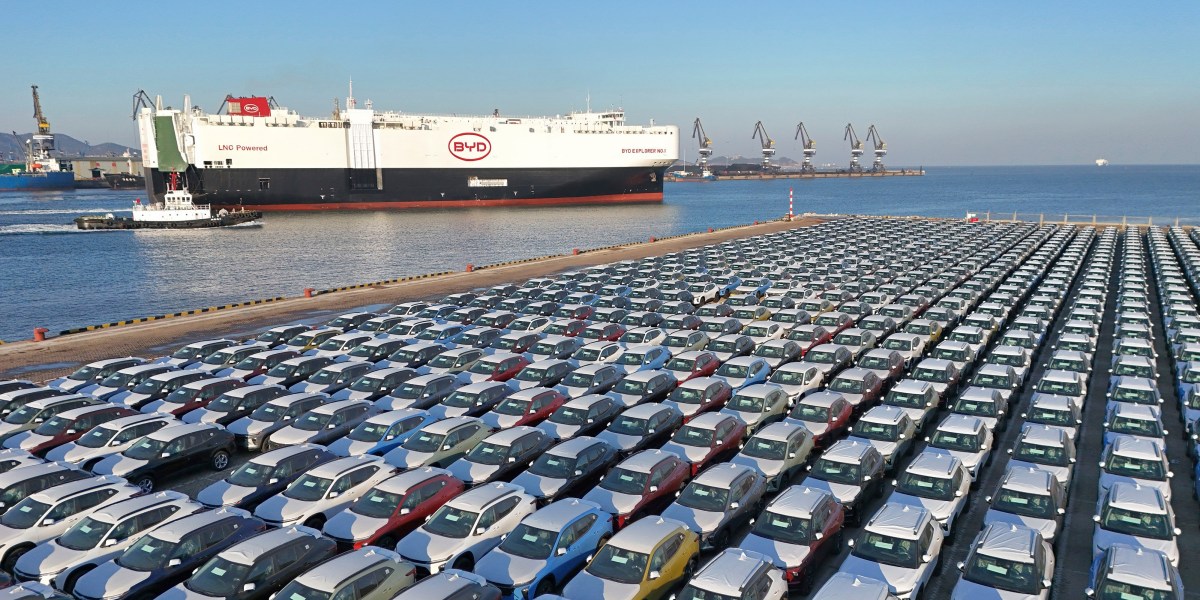
As we enter 2026, China’s logistics and supply chain market has evolved into a sophisticated ecosystem valued at over 350 trillion yuan, representing a 6.5% year-on-year expansion. For Central Asian markets—encompassing Kazakhstan, Uzbekistan, Kyrgyzstan, Tajikistan, and Turkmenistan—this evolution presents both unprecedented opportunities and complex regulatory challenges.
The Central Asian corridor has emerged as a critical pressure valve for China’s automotive industry. With domestic NEV (New Energy Vehicle) penetration reaching 59.4% of new passenger car sales and total vehicle exports hitting a record 7.1 million units in 2025, Chinese manufacturers are aggressively diversifying beyond saturated domestic markets. Central Asia, strategically positioned along the Belt and Road Initiative (BRI), has become the primary overland bridge for Chinese EVs entering European and Middle Eastern markets, while simultaneously representing a high-growth end-market in its own right.
The 2026 Market Reset
Three major developments are reshaping the China-Central Asia automotive corridor:
Product Value Upgrading: The era of low-cost ICE (Internal Combustion Engine) exports is ending. China now exports predominantly electric vehicles, renewable energy equipment, and advanced battery systems. For Central Asian importers, this means accessing cutting-edge EV technology at competitive price points, but requires sophisticated handling of high-voltage battery logistics and specialized technical infrastructure.
Multi-Regional Production Networks: Blended supply models are emerging, combining Chinese battery inputs with Southeast Asian assembly and European final customization. For Central Asian traders, this creates opportunities to position regional hubs (particularly Kazakhstan’s Khorgos Gateway and Uzbekistan’s Jizzakh Free Economic Zone) as value-add redistribution centers rather than mere transit points.
Regulatory Alignment Pressure: European sustainability regulations (CSRD, CBAM, and supply chain due diligence directives) are influencing logistics decisions at origin. Exporters now prioritize rail freight over road transport for carbon footprint reduction, while Central Asian importers must prepare for incoming ESG documentation requirements that will soon affect vehicle eligibility for re-export to EU markets.
Logistics Infrastructure Transformation
The “China Plus One” strategy has prompted Chinese logistics providers to establish robust networks across Central Asia. The China-Europe Railway Express (CRE), traversing Kazakhstan, now operates over 80 routes with EV-specific car carrier wagons. Meanwhile, cross-border e-commerce platforms have integrated with Central Asian customs systems, enabling pre-clearance of automotive shipments at Alashankou and Dostyk border crossings.
For B2B importers, this infrastructure evolution translates to reduced transit times—14-18 days via rail from Xi’an to Almaty versus 45-60 days via traditional sea routes—but requires navigation of complex multimodal handoffs and strict battery transport compliance under UN38.3 regulations.
2. Understanding China’s Strict EV Export Regulations
January 1, 2026, marked a regulatory inflection point. The Ministry of Commerce (MOFCOM) implemented mandatory export licensing for all NEV manufacturers and exporters, fundamentally altering the operational landscape for China car shipping to Central Asia.
The Export License Framework
Under the new framework, only accredited manufacturers and authorized dealers may apply for export licenses. This regulation specifically targets the “gray market” phenomenon where unauthorized traders exported new vehicles as “used” to circumvent homologation requirements, often leaving Central Asian buyers with outdated software and zero after-sales support.
Compliance Requirements for 2026:
| Requirement | Specification | Penalty for Non-Compliance |
|---|---|---|
| Manufacturer Accreditation | MOFCOM registration with annual production capacity >10,000 units | Export prohibition, ¥500,000-2,000,000 fine |
| Dealer Authorization | Signed distribution agreement with OEM or tier-1 export license holder | License revocation, blacklisting |
| Vehicle Traceability | Unique VIN registration in national export database | Customs detention, forced return |
| Battery Certification | UN38.3 test summary + MSDS + 9-class dangerous goods labeling | Criminal liability under transport safety laws |
| Software Compliance | Export-appropriate firmware (non-geofenced, multilingual) | Market ban in destination country |
| Financial Transparency | Verified export invoice matching factory gate price ±5% | Anti-dumping investigation trigger |
Impact on Foreign B2B Buyers
For Central Asian importers, these regulations create a bifurcated market:
-
Authorized Channel: Higher unit costs (15-20% premium) but guaranteed compliance, factory warranty, and technical support. Essential for commercial fleet operators and government tenders.
-
Parallel Import Risk: Unauthorized exports continue through “used car” loopholes in Kyrgyzstan and Armenia, but carry severe risks including:
- Software lockouts upon detection of unauthorized export
- Voided battery warranties (critical for EVs)
- Inability to register vehicles in Kazakhstan or Uzbekistan due to missing CCC certification copies
Critical Update: As of January 2026, Tesla, Volkswagen, and BMW manufacturing in China must also comply with these licensing requirements, ending the previous exemption for foreign-invested enterprises. This levels the playing field but reduces available export inventory for spot-market purchasing.
3. Sourcing Strategy: Direct Factory vs. Authorized Export Agents
Navigating the post-2026 regulatory environment requires a fundamental reassessment of sourcing relationships. The “direct from factory” model that dominated 2023-2024 is now legally restricted to licensed entities.
Direct Factory Engagement (Tier 1)
Advantages:
– Factory gate pricing (FOB Shanghai/Tianjin/Qingdao)
– Custom specification availability (winter packages for -30°C Central Asian climates)
– Direct technical training and documentation access
– Priority allocation during supply constraints
Requirements:
– Minimum order quantities (MOQ) typically 50-100 units for EVs
– Import license in destination country (Kazakhstan’s GOST-K or Uzbekistan’s GOST-UZ pre-certification)
– Letter of Credit (L/C) or 30% T/T deposit with factory acceptance
– Registered business entity with automotive import authorization in Central Asia
Authorized Export Agents (Tier 2)
For smaller importers or market entrants, authorized export agents provide essential regulatory bridging:
| Feature | Direct Factory | Authorized Agent |
|---|---|---|
| Minimum Order | 50-100 units | 1-10 units (consolidated) |
| Export License | Factory holds primary license | Agent holds secondary trading license |
| Pricing | Factory gate + logistics | +8-12% commission |
| Homologation Support | Basic CCC documentation | Full GOST conversion support |
| Payment Terms | Strict L/C or advance payment | Escrow options, flexible terms |
| After-Sales | Direct OEM warranty | Agent-mediated warranty |
| Risk Level | High (volume commitment) | Moderate (agent dependency) |
Case Study: Almaty Auto Group’s Pivot
In Q4 2025, Almaty Auto Group (Kazakhstan) attempted direct sourcing from a tier-2 BYD dealership in Shenzhen. The shipment of 30 Atto 3 units was detained at Khorgos border due to improper UN38.3 battery documentation and lack of export license verification. After six weeks of detention and ¥180,000 in demurrage fees, the importer switched to an authorized export agent (Electric Auto China) for subsequent orders, paying a 10% premium but achieving 100% customs clearance on the first attempt.
Red Flags in Supplier Selection:
- Unlicensed “Factory Representatives”: Individuals claiming direct factory access without MOFCOM export license numbers (verify at http://wms.mofcom.gov.cn)
- Price Anomalies: Quotes more than 15% below market indicate gray-market or refurbished battery packs
- Documentation Gaps: Reluctance to provide UN38.3 test summaries or CCC certificate copies pre-contract
- Payment Irregularities: Requests for payment to personal accounts or Hong Kong shell companies rather than factory RMB accounts
4. Financial Mechanics: Pricing and Landed Costs
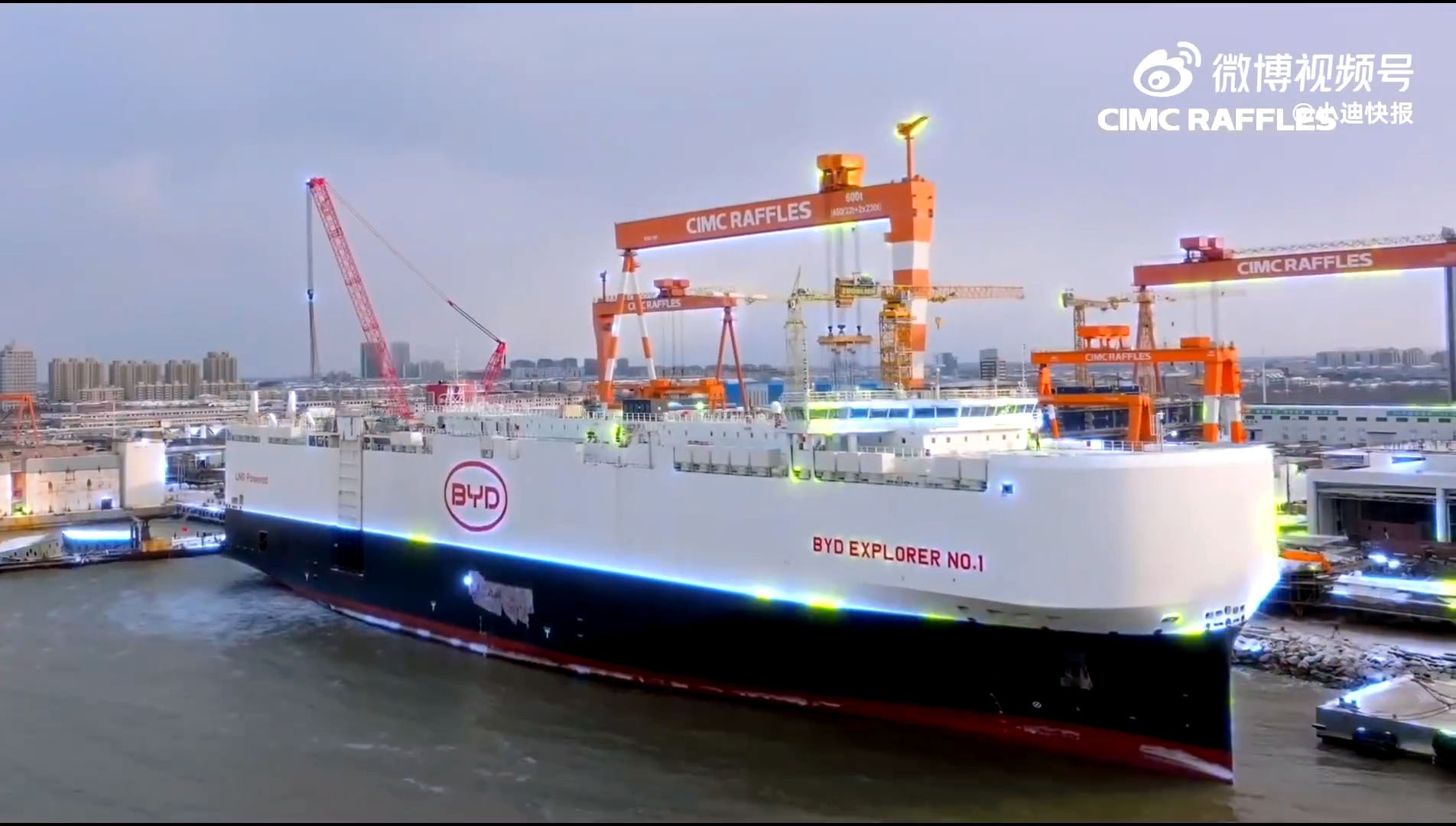
Understanding the true landed cost of China car shipping to Central Asia requires factoring in multi-modal logistics, battery compliance premiums, and the new 2026 regulatory fees.
Base Vehicle Pricing (FOB China, January 2026)
| Vehicle Class | Model Example | FOB Price (USD) | Export License Fee* |
|---|---|---|---|
| Compact EV | BYD Seagull | $9,800 | $450/unit |
| Mid-Size SUV | BYD Atto 3 | $18,500 | $450/unit |
| Premium Sedan | NIO ET5 | $32,000 | $450/unit |
| Commercial Van | Maxus EV30 | $22,000 | $450/unit |
| Luxury SUV | Li Auto L9 | $45,000 | $450/unit |
*New 2026 MOFCOM administrative fee for license processing and database registration
Logistics Cost Breakdown: Rail vs. Road vs. Sea-Rail
For Central Asian destinations, three primary corridors exist:
Corridor A: China-Kazakhstan Rail (Recommended for EVs)
– Route: Xi’an/Alashankou → Dostyk → Almaty/Astana
– Transit Time: 14-18 days
– Cost per Unit (40’HQ container fits 2-3 EVs): $3,200-$4,500
– Battery Compliance: Included (UN38.3 pre-certified rail wagons)
Corridor B: China-Kyrgyzstan Road (High Risk)
– Route: Kashgar → Irkeshtam → Bishkek
– Transit Time: 7-10 days
– Cost per Unit (Car carrier truck): $1,800-$2,400
– Battery Compliance: Requires special ADR permits, frequent delays
Corridor C: Sea-Rail via Iran (Emerging)
– Route: Shanghai → Bandar Abbas → Turkmenistan
– Transit Time: 35-45 days
– Cost per Unit: $2,800-$3,600
– Risk: Sanctions compliance complexity, currency volatility
Complete Landed Cost Calculation: Kazakhstan Import
Scenario: Import of 20 BYD Atto 3 units to Almaty
| Cost Component | Calculation | Total (USD) |
|---|---|---|
| Vehicle Cost | 20 units × $18,500 | $370,000 |
| Export License | 20 units × $450 | $9,000 |
| Rail Freight | 10 containers × $4,200 | $42,000 |
| Insurance (CIF) | 110% of (vehicle + freight) × 0.3% | $1,386 |
| Kazakhstan Customs Duty | 15% of CIF value | $63,358 |
| VAT (12%) | 12% of (CIF + Duty) | $55,409 |
| GOST-K Certification | Batch testing + documentation | $3,200 |
| Local Logistics | Almaty customs clearance + delivery | $2,800 |
| Financing Costs | 180-day L/C at 4.5% annual | $8,325 |
| TOTAL LANDED COST | $555,478 | |
| Cost per Unit | $27,774 |
Margin Analysis for Central Asian Distributors:
With retail prices in Almaty ranging $32,000-$35,000 for the Atto 3, importers realize 15-26% gross margins before local marketing and service infrastructure costs. However, currency hedging is essential—the Kazakh Tenge (KZT) experienced 12% volatility against the USD in 2025, potentially eroding margins without forward contracts.
5. Global Logistics: Ocean Freight & Battery Transport Compliance
The transportation of lithium-ion batteries (LIBs) for EVs is governed by the UN Model Regulations (UN38.3) and the International Maritime Dangerous Goods (IMDG) Code. For Central Asian routes, compliance is complicated by multimodal handoffs and varying enforcement standards.
UN38.3 Testing Requirements
All lithium batteries must undergo eight rigorous tests:
1. Altitude simulation
2. Thermal test
3. Vibration
4. Shock
5. External short circuit
6. Impact/Crush
7. Overcharge
8. Forced discharge
Documentation Package for Border Crossing:
| Document | Issuing Authority | Validity | Critical Notes |
|---|---|---|---|
| UN38.3 Test Summary | Certified testing laboratory (SGS, TÜV, etc.) | Per battery model | Must match actual battery chemistry (LFP vs. NCM) |
| MSDS (Material Safety Data Sheet) | Manufacturer | Per shipment | Section 14 must specify transport classification (UN3480/3481) |
| Dangerous Goods Declaration | Freight forwarder | Per shipment | 9-class label mandatory |
| Battery State of Charge (SoC) | Manufacturer | Per vehicle | Maximum 30% charge for transport (IATA/IMDG) |
| Thermal Runaway Propagation Test | Certified lab | Per battery pack | Required for rail transport through Kazakhstan since 2025 |
Rail-Specific Considerations
The China-Europe Railway Express (CRE) has implemented EV-specific protocols:
- Temperature Control: Winter temperatures in Kazakhstan (-30°C) can damage battery cells. Heated containers (reefer units) add $800-$1,200 per container but prevent capacity degradation.
- Securing Requirements: EVs must be blocked and braced using wheel chocks and lashings rated for 2G forces during rail shunting.
- Transshipment Points: At Dostyk/Alashankou, containers are transferred from Chinese standard gauge (1,435mm) to Kazakh broad gauge (1,520mm). This 6-hour process requires battery monitoring and fire suppression readiness.
Risk Mitigation:
- Insurance: Standard marine cargo insurance excludes battery thermal events. Secure specific “thermal runaway” coverage (premium: 0.8-1.2% of cargo value).
- Route Monitoring: GPS tracking with temperature logging is mandatory for warranty preservation. OEMs may void battery warranties if transport temperature logs show exposure below -20°C or above +45°C.
6. Localization & Homologation: Preparing Cars for Local Markets
Central Asian markets maintain distinct technical regulations derived from GOST standards (Russian origin) but increasingly incorporating EU UNECE regulations. Successful import requires pre-shipment preparation to avoid costly retrofits.
Kazakhstan (EAEU Member)
- GOST-K Certification: Mandatory for all vehicles. Requires:
- Emissions testing (Euro 5 minimum, Euro 6 preferred)
- Safety system verification (ABS, ESC, airbags)
- EMC (Electromagnetic Compatibility) testing for EVs
- Language Requirements: Dashboard and infotainment must support Russian and Kazakh languages. Software updates must be available via local servers (data sovereignty law 2024).
- Cold Climate Package: Factory-installed battery heaters and winter tires are essential for warranty validity in Astana/Nur-Sultan.
Uzbekistan
- GOST-UZ Certification: Similar to GOST-K but requires local representative office registration for warranty claims.
- Charging Standards: Uzbekistan uses CCS2 (European standard) for DC fast charging. Ensure imported EVs have CCS2 compatibility, not GB/T (Chinese standard).
- Import Quotas: As of 2026, Uzbekistan imposes a 50% customs duty on EVs exceeding $40,000 CIF value to protect emerging local production (BYD Uzbekistan factory).
Kyrgyzstan (EAEU Member but Flexible Enforcement)
- Gray Market Gateway: Many unauthorized Chinese EVs enter EAEU markets via Kyrgyzstan due to lower customs scrutiny. However, 2026 regulations require VIN verification at first registration, blocking this loophole.
- Right-Hand Drive Restrictions: Kyrgyzstan prohibits RHD vehicles manufactured after 2020. Ensure LHD configuration for all Central Asian markets.
Technical Adaptation Checklist:
Before shipping from China, verify:
– [ ] OBD port compatibility (Euro 5/6 protocols, not Chinese GB/T)
– [ ] Telematics system localization (Russian language, local SIM card slot)
– [ ] Charger adapter included (GB/T to CCS2 or Type 2)
– [ ] Winter battery thermal management activated
– [ ] Speedometer in km/h (not mph)
– [ ] Emergency call system (eCall) disabled or adapted to local 112 services
7. After-Sales Ecosystem: Securing Parts and Service Abroad
The Achilles’ heel of China car shipping to Central Asia has been after-sales support. With EVs requiring specialized diagnostic equipment and high-voltage safety training, establishing service infrastructure is non-negotiable.
Parts Supply Chain Architecture
Tier 1: Critical Components (Battery packs, motors, inverters)
– Lead time: 45-60 days from China
– Storage requirements: Climate-controlled warehouses (15-25°C)
– Inventory strategy: 90-day safety stock for high-failure items
Tier 2: Consumables (Brake pads, filters, 12V batteries)
– Local sourcing: Possible for non-EV-specific items
– Cross-reference: Maintain compatibility databases with European part numbers
Tier 3: Software (Firmware, maps, diagnostic tools)
– Over-the-air (OTA) updates require local server hosting
– Diagnostic tablets must be imported with Chinese-language support and local language patches
Service Network Development
Phase 1 (Months 0-6): Partner with existing multi-brand service centers in Almaty/Tashkent. Train 2-3 master technicians at OEM facilities in China (typically 4-week programs costing $8,000-$12,000 per technician).
Phase 2 (Months 6-12): Establish dedicated EV service bays with:
– Insulated tools (1000V rated)
– Battery lifting equipment
– Thermal imaging cameras for hotspot detection
– High-voltage personal protective equipment (PPE)
Phase 3 (Year 2+): Mobile service units for fleet customers, equipped with DC fast chargers and emergency battery swap capabilities.
Warranty Management:
Central Asian importers must establish escrow accounts or letters of credit to ensure warranty claim reimbursement from Chinese OEMs. Standard practice requires:
– 2% of vehicle purchase price held in reserve for warranty claims
– Digital warranty registration within 30 days of customer delivery
– Photo documentation of pre-delivery inspection (PDI) to dispute transport damage claims
8. Avoiding Scams: How to Audit a Chinese EV Supplier
The 2026 export licensing regime has unfortunately spawned sophisticated fraud schemes targeting Central Asian buyers. Vigilance is essential.
Verification Protocol:
Step 1: License Verification
– Request MOFCOM export license number (format: 2026-XXXX-XXXX)
– Verify online at Ministry of Commerce database
– Cross-check with China Association of Automobile Manufacturers (CAAM) membership directory
Step 2: Factory Audit (Virtual or Physical)
– Request live video tour showing VIN stamping station and battery assembly line
– Verify business license (营业执照) matches export contract signatory
– Check Alibaba/TMIC credibility ratings (minimum 3 years Gold Supplier status for trading companies)
Step 3: Documentation Pre-Check
– Demand sample UN38.3 certificate before payment
– Verify CCC certificate validity (check certificate number on CNCA website)
– Confirm software version is export-appropriate (not China-locked)
Common Fraud Scenarios:
| Scam Type | Warning Signs | Prevention |
|---|---|---|
| The Shell Company | No factory access, operates from serviced office | Physical audit or third-party verification (SGS, Bureau Veritas) |
| Battery Swap | Price 20%+ below market, vague battery specs | Pre-shipment inspection by independent surveyor |
| License Piggybacking | Claims to use another company’s export license | Verify license holder authorized sub-contracting in writing |
| Software Lock | Vehicles cheaper but “require activation” | Test drive with local SIM card before acceptance |
| Document Forgery | Perfect paperwork but rushed shipping | Verify document authenticity directly with issuing labs |
Financial Safeguards:
- Never pay more than 30% deposit before production confirmation
- Use escrow services (Alibaba Trade Assurance or Citibank escrow) for first transactions
- Insist on Sinosure (China Export Credit Insurance Corporation) coverage for credit terms
- Verify bank account details match registered company name exactly (watch for “similar” names)
9. Start Your Import Business with Electric Auto China
As Chief Export Consultant at Electric Auto China, I have guided over 200 Central Asian distributors through the transition to the 2026 regulatory framework. Our Shanghai-based operation holds tier-1 export licenses for BYD, NIO, XPeng, Li Auto, and 15 additional NEV manufacturers.
Our Compliance-First Approach:
Unlike gray-market operators, we ensure every vehicle shipped carries:
– Valid MOFCOM export license documentation
– Complete UN38.3 and MSDS battery certification
– Pre-configured export software (Russian/English/Kazakh language packs)
– GOST-K/GOST-UZ homologation support documentation
– Direct OEM warranty activation
Central Asia Specialized Services:
- Khorgos Pre-Positioning: We maintain a bonded warehouse at the Khorgos dry port, enabling 48-hour customs clearance for Kazakhstan-bound shipments.
- Currency Hedging: Partnerships with local Kazakh banks (Halyk Bank, Kaspi) provide Tenge/USD hedging instruments to protect your margins.
- Technical Training: Quarterly certification programs for your technicians at our Shanghai Technical Center.
- Spare Parts Hub: Dubai and Almaty-based parts depots with 48-hour delivery guarantees across Central Asia.
2026 Market Entry Package:
For new entrants to the Central Asian EV market, we offer:
– Minimum order quantities starting at 5 units (consolidated container options)
– Turnkey landed cost calculations with no hidden fees
– 90-day payment terms for qualified buyers (subject to Sinosure approval)
– Free homologation consulting for first shipment
Next Steps:
- Download our 2026 Central Asia EV Import Compliance Checklist (link below)
- Schedule a video factory tour with our licensed export team
- Request a customized landed cost quote for your specific market (Kazakhstan, Uzbekistan, Kyrgyzstan, or Tajikistan)
The China-Central Asia automotive corridor represents the most significant arbitrage opportunity in global auto trade today—but only for compliant, well-prepared operators. With Electric Auto China as your licensed export partner, you navigate the 2026 regulations with confidence, ensuring your investment is protected by proper documentation, genuine factory warranties, and sustainable supply chain practices.
Contact our B2B export division today to secure your allocation of 2026 model-year EVs before Q2 production slots fill.
Electric Auto China is a licensed MOFCOM export agent specializing in NEV distribution to Central Asian markets. All information in this guide reflects regulations current as of January 2026 and is subject to change based on bilateral trade agreements.
Unlock High-Margin EV Imports with Electric Auto China
As an elite automotive supply chain partner in Shanghai, we provide end-to-end, strictly compliant export solutions tailored for international dealerships, fleet managers, and wholesale distributors.
- 🛡️ 100% Legal & Compliant: Fully licensed exports ensuring smooth customs clearance at your destination.
- ⚙️ Complete Localization: Professional English/Arabic/Russian OS flashing and GB/T to CCS2 charging solutions.
- 🚢 Secure Logistics: Direct Ro-Ro and Containerized shipping with full UN38.3 battery certifications.
- 🔧 After-Sales Support: Reliable access to OEM diagnostic tools and steady spare parts supply.
Request a Detailed FOB/CIF Quote Today:
📧 B2B Sales Email: [email protected]
💬 Direct WhatsApp: +86 159 5127 6160