The Ultimate 2026 Importer’s Guide to China Car Shipping to Southeast Asia
1. The Macro-Economics of China Car Shipping to Southeast Asia in 2026
As we enter 2026, China’s logistics and supply chain market has evolved into a sophisticated ecosystem exceeding 350 trillion yuan in total value, representing a 6.5% year-on-year increase. For B2B importers targeting Southeast Asia, this year marks a critical inflection point—characterized by regulatory tightening, product value upgrading, and the maturation of multi-regional production networks.
The Southeast Asian automotive market is experiencing unprecedented electrification acceleration. Following China’s record vehicle exports of approximately 7.1 million units in 2025—where New Energy Vehicles (NEVs) accounted for over one-third of outbound volume—the region has emerged as the primary growth corridor for Chinese EV manufacturers. This shift is not merely opportunistic; it represents a structural reorientation of global automotive supply chains.
The “China Plus One” Strategic Imperative
The “China Plus One” strategy adopted by multinationals has paradoxically strengthened China’s position as the central node while diversifying geopolitical risk. Chinese logistics providers have established robust networks across Thailand, Indonesia, Vietnam, and the Philippines, creating integrated regional supply chains that blend Chinese inputs with Southeast Asian assembly and European final customization. This triangulated model reduces concentration risk while maintaining cost competitiveness.
Green Logistics as Competitive Differentiator
China’s dual carbon goals have transformed green logistics from concept to mandate. Electric vehicles now constitute over 35% of urban delivery fleets, while solar-powered warehouses and carbon-neutral shipping options have become standard offerings. For Southeast Asian importers, this sustainability focus is not merely regulatory compliance but a competitive differentiator—European sustainability regulations (carbon disclosure, packaging requirements, and supply chain due diligence) are increasingly influencing logistics decisions at origin.
Market Saturation Driving Export Excellence
With domestic NEV penetration reaching 59.4% of new passenger car sales and total market growth stagnating, Chinese manufacturers are aggressively expanding overseas where profit margins are often 15-20% higher. Geely’s quadrupled EV exports and entry into Vietnam, combined with BYD’s new Indonesian and Hungarian factories, illustrate the shift toward localized production supported by Chinese supply chains.
For importers, this means access to Tier-1 manufacturing capabilities previously reserved for domestic markets, provided they navigate the new regulatory landscape effectively.
2. Understanding China’s Strict EV Export Regulations
January 1, 2026, marked a seismic shift in China’s automotive export architecture. The Ministry of Commerce (MOFCOM) implemented mandatory export licensing for all electric vehicle manufacturers and exporters—a framework designed to eliminate irregular exports and restore sector profitability.
The Export License Framework
Under the new regulatory regime, only accredited manufacturers and authorized dealers may apply for export licenses. This measure extends regulatory consistency across the auto industry, mirroring long-standing restrictions on combustion engine and hybrid exports. Critically, this affects foreign giants manufacturing in China—including Tesla, Volkswagen, and BMW—which must now navigate additional compliance layers to supply global markets from their Chinese plants.
Eliminating the Gray Market
A primary driver behind this regulation is the eradication of unauthorized “used car” export channels. Previously, new vehicles were frequently sold as used through irregular export channels, delivering cars with outdated software, limited after-sales support, and non-compliant documentation. This practice undermined both the image of Chinese automakers and international buyer confidence.
Compliance Requirements for 2026
Importers must now verify that their Chinese partners possess:
- MOFCOM Export Accreditation: Valid license for EV export activities
- CCC Certification: China Compulsory Certificate for vehicle safety standards
- Battery Compliance Documentation: UN38.3 test reports and MSDS for lithium-ion batteries
- Software Export Licenses: For vehicles containing advanced driver-assistance systems (ADAS) and connected car technologies
- End-User Certificates: Documentation preventing diversion to sanctioned markets
Strategic Implications
Industry analysts project China could export up to 10 million electric cars annually within five years. However, the 2026 regulations create a bifurcated market: licensed exporters with full after-sales support networks versus gray-market operators facing severe penalties. For Southeast Asian importers, partnering with licensed entities is no longer optional—it is essential for warranty validity and regulatory compliance in destination markets.
3. Sourcing Strategy: Direct Factory vs. Authorized Export Agents
Navigating China’s EV ecosystem requires sophisticated sourcing strategies that balance cost optimization against compliance security. The post-2026 regulatory environment has fundamentally altered the risk-reward calculation of direct factory relationships versus authorized export agents.
Direct Factory Engagement
Tier-1 manufacturers—BYD, Geely, SAIC, NIO, and Xiaomi—now operate under strict export quotas managed through licensed channels. Direct factory purchasing offers:
- Price Advantages: 8-12% reduction compared to agent-mediated transactions
- Customization Options: Direct input on software localization, charging port configurations, and trim specifications
- Priority Allocation: Access to high-demand models (e.g., BYD Seal, Xiaomi SU7) before public allocation
However, direct relationships require substantial minimum order quantities (MOQs) typically starting at 50-100 units, extensive legal documentation, and established import licenses in destination countries.
Authorized Export Agents
Licensed export agents—such as Electric Auto China—serve as critical intermediaries for mid-scale importers (5-50 units monthly). These entities provide:
- Regulatory Shielding: Pre-verified MOFCOM compliance and complete documentation packages
- Consolidated Logistics: Multi-brand container sharing and optimized shipping schedules
- Financial Flexibility: Letter of Credit arrangements and escrow services mitigating payment risk
- After-Sales Bridging: Warranty activation and spare parts pre-positioning in Southeast Asian hubs
The Hybrid Approach: Multi-Regional Production Networks
The most sophisticated importers are adopting blended supply models—combining Chinese inputs with Southeast Asian assembly. For example, importing SKD (Semi-Knocked Down) kits from China for final assembly in Indonesia or Thailand leverages ASEAN-China Free Trade Area (ACFTA) tariff benefits while satisfying local content requirements for government incentives.
Decision Matrix
| Sourcing Model | MOQ | Unit Cost | Compliance Risk | Best For |
|---|---|---|---|---|
| Direct Factory | 100+ units | $18,500 (BYD Dolphin) | High (Self-managed) | National distributors, Fleet operators |
| Licensed Agent | 5-50 units | $20,200 (BYD Dolphin) | Low (Agent-guaranteed) | Regional dealers, Rental companies |
| SKD Assembly | 200+ kits | $16,800 (equivalent) | Medium (Split liability) | Government tenders, Local assembly plants |
4. Financial Mechanics: Pricing and Landed Costs
Understanding the true cost of China car shipping to Southeast Asia requires moving beyond factory gate prices to comprehensive landed cost calculations incorporating regulatory fees, logistics premiums, and currency hedging.
Pricing Structure Analysis
Chinese EV exports operate on three primary Incoterms:
- EXW (Ex Works): Factory gate price, maximum importer responsibility
- FOB (Free On Board): Includes inland transport to port and export clearance
- CIF (Cost, Insurance, Freight): Includes ocean freight and insurance to destination port
ASEAN-China FTA Tariff Advantages
Under ACFTA, fully assembled vehicles from China enter ASEAN markets at preferential rates:
– Thailand: 0% tariff (EVs with 40%+ local content qualify for additional BOI incentives)
– Indonesia: 0% import duty (but subject to 11% VAT and luxury goods tax)
– Vietnam: 5-10% tariff (reducing to 0% by 2028 under RCEP commitments)
– Philippines: 5% tariff (EVs exempt under EO 12 series)
Landed Cost Calculation Model
The following table illustrates the complete financial mechanics for shipping a 40-foot container (carrying 3 BYD Dolphin EVs) from Shanghai to Bangkok, Q1 2026:
| Cost Component | Calculation Basis | Amount (USD) | Notes |
|---|---|---|---|
| FOB Shanghai | $20,200 × 3 units | $60,600 | Licensed agent pricing, includes export license verification |
| Ocean Freight | RORO vessel, Shanghai-Laem Chabang | $1,800 | Green shipping premium included; $600/unit |
| Marine Insurance | 110% of CIF value × 0.15% | $280 | ICC-A coverage, battery fire risk included |
| THC (Terminal Handling) | Port of origin + destination | $450 | $150 per unit equivalent |
| Documentation | Export license, CO, Form E | $300 | ACFTA Form E for tariff preference |
| Customs Clearance | Bangkok agent fees | $600 | $200 per unit |
| Import Duty | 0% (ACFTA compliant) | $0 | Requires Form E and direct shipment proof |
| VAT (Thailand) | 7% of (CIF + Duty) | $4,424 | 7% on $63,200 CIF value |
| Battery Safety Inspection | UN38.3 verification at port | $150 | $50 per unit |
| Inland Delivery | Laem Chabang to Bangkok dealer | $300 | $100 per unit |
| TOTAL LANDED COST | $68,900 | $22,967 per unit |
Currency Risk Management
With RMB volatility against USD and regional currencies (THB, IDR, VND), importers should utilize:
– Forward Contracts: Lock exchange rates 90-180 days before shipment
– USD Invoicing: Request quotes in USD to avoid RMB appreciation risk
– Local Currency Hedging: For end-sales in local currency, utilize cross-currency swaps
Financing Structures
For orders exceeding $500,000, consider:
– Export Credit Insurance: Sinosure policies covering political and commercial risks
– Supply Chain Finance: Warehouse receipt financing using vehicles as collateral upon arrival
– Green Trade Finance: Preferential rates (0.5-1.5% below market) for carbon-neutral shipping routes
5. Global Logistics: Ocean Freight & Battery Transport Compliance
The logistics of China car shipping to Southeast Asia in 2026 is dominated by two critical factors: the classification of lithium-ion batteries as Class 9 dangerous goods and the industry’s rapid transition to carbon-neutral shipping lanes.
Battery Transport Regulations (UN38.3 & IMDG Code)
All EVs containing lithium-ion batteries require:
– UN38.3 Testing: Verification that cells withstand altitude simulation, thermal testing, vibration, shock, and short-circuit conditions
– IMDG Code Compliance: International Maritime Dangerous Goods classification
– State of Charge (SoC) Limitations: Batteries must ship at 30-50% charge maximum to reduce fire risk
– Emergency Response Guides: Specific documentation for crew handling during maritime incidents
Shipping Modalities: RORO vs. Container
| Method | Capacity | Cost/Unit | Transit Time | Best Application |
|---|---|---|---|---|
| RORO (Roll-on/Roll-off) | 5,000+ vehicles/vessel | $550-800 | 12-18 days | High-volume, standard vehicles |
| Container (40′ HC) | 3-4 EVs/container | $600-900 | 10-14 days | Mixed SKD kits, luxury vehicles |
| Flat Rack | 2-3 oversized units | $1,200+ | 14-21 days | Heavy trucks, modified chassis |
Green Logistics Implementation
With China’s 35% EV fleet mandate for urban delivery, the first-mile logistics (factory to port) now typically utilizes electric car carriers. For ocean freight, major carriers (COSCO, OOCL, Maersk) offer carbon-neutral shipping options utilizing:
– Biofuel Blends: B20-B30 marine biofuels reducing lifecycle emissions 15-25%
– Carbon Offsetting: Investment in ASEAN renewable energy projects
– Optimized Routing: AI-driven port rotation minimizing idle time
Critical Port Infrastructure
Origin Ports (China):
– Shanghai (Yangshan): Dedicated EV export terminal with 50,000+ vehicle capacity
– Ningbo-Zhoushan: Primary hub for Southeast Asian RORO services
– Shekou (Shenzhen): Specialized in high-value EVs and battery logistics
Destination Ports (Southeast Asia):
– Laem Chabang (Thailand): Largest automotive port in ASEAN, dedicated EV inspection facilities
– Tanjung Priok (Jakarta): Expanding capacity with new greenfield terminals for NEV imports
– Cai Mep (Vietnam): Deep-water port capable of handling largest RORO vessels
– Port Klang (Malaysia): Regional distribution hub with bonded warehousing
Transit Time Optimization
Direct RORO services from Ningbo to Laem Chabang now operate on 10-day transits, while Shanghai to Jakarta averages 14 days. Importers should book 4-6 weeks in advance during peak seasons (Q1 and Q3) when Chinese manufacturers push export volumes to balance domestic inventory.
6. Localization & Homologation: Preparing Cars for Local Markets
Successful China car shipping to Southeast Asia extends beyond physical logistics to comprehensive localization ensuring regulatory compliance and market acceptance. Each ASEAN market maintains distinct homologation requirements that must be addressed before shipment or immediately upon arrival.
ASEAN Harmonized Regulations
While ASEAN aims for regulatory harmonization under the ASEAN Mutual Recognition Arrangement (MRA), individual countries maintain specific requirements:
Thailand (TISI Standards):
– Type Approval: UN R94/R95 (frontal/side impact) compliance mandatory
– Charging Standards: CCS2 (Combined Charging System) Type 2 for DC fast charging
– Software Localization: Thai language interface for infotainment and dashboard
– Right-Hand Drive (RHD): Mandatory for public road use
Indonesia (SNI Certification):
– Local Content Requirements: 40% TKDN (Tingkat Kandungan Dalam Negeri) for import duty exemptions
– Tropical Climate Testing: Battery thermal management validation for 35°C+ ambient temperatures
– Religious Considerations: Compass/Qibla direction indicators for Muslim-majority market
Vietnam (VR Standards):
– Type Approval: Based on UN ECE regulations with local amendments
– Cybersecurity: Data localization requirements for connected vehicles
– Import Documentation: VIN verification against Interpol stolen vehicle database
Technical Adaptation Requirements
| Modification | Cost (USD) | Lead Time | Regulatory Driver |
|---|---|---|---|
| RHD Conversion | $800-1,200 | 3-5 days | Thailand, Indonesia, Malaysia, Brunei |
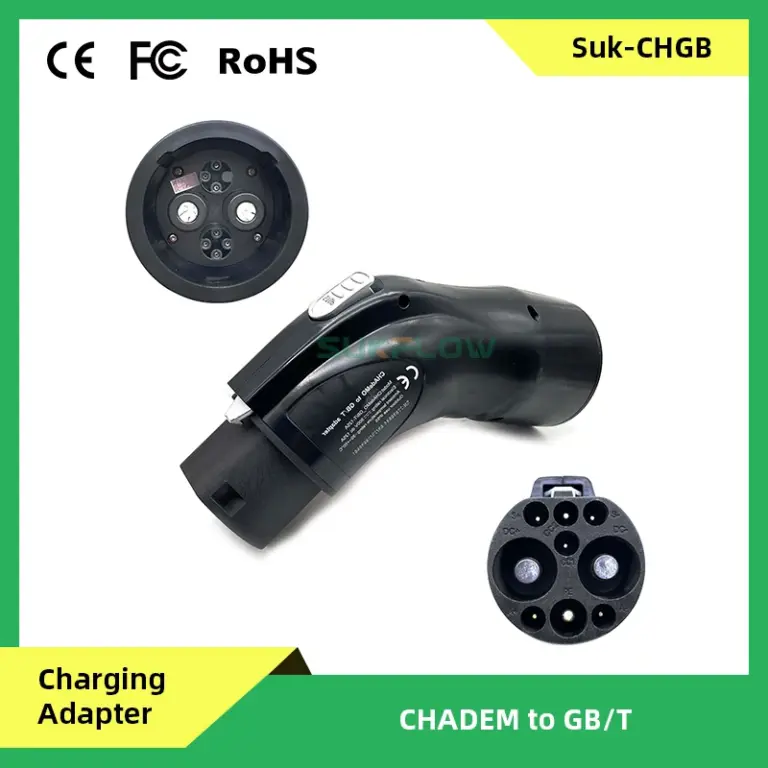
| Charging Port Retrofit | $300-500 | 1-2 days | CCS2 adapter or permanent installation |
| Software Localization | $2,000-4,000 | 2-3 weeks | Language, regulatory compliance, map data |
| Tropical Battery Calibration | $500-800 | 2-3 days | Thermal management optimization |
| Safety Sticker Application | $50-100 | Same day | Local language warnings, tire pressure specs |
The SKD Strategy for Deep Localization
For importers establishing local assembly, Semi-Knocked Down (SKD) kits allow:
– Duty Reduction: 0-5% vs. 30-40% for CBU (Completely Built Up) in some categories
– Local Employment: Meeting government requirements for dealership licenses
– Customization Flexibility: Local trim levels, paint colors, and feature packages
Electric Auto China provides pre-homologation consulting, ensuring vehicles arrive with pre-approved type certificates and necessary software patches, reducing port clearance time from 7-10 days to 48-72 hours.
7. After-Sales Ecosystem: Securing Parts and Service Abroad
The sustainability of China car shipping to Southeast Asia depends entirely on after-sales infrastructure. The 2026 export regulations specifically target the historical weakness of Chinese EVs abroad—patchy service networks and parts availability.
Warranty Architecture
Licensed exporters must now provide:
– International Warranty Cards: Valid across ASEAN service networks
– Battery Warranty: 8-year/160,000km coverage with local service centers
– Software Updates: OTA (Over-The-Air) capability with local server hosting for data sovereignty compliance
Spare Parts Logistics
Critical components require regional pre-positioning:
| Component | Stocking Strategy | Lead Time from China | Local Inventory Requirement |
|---|---|---|---|
| Battery Packs | Hub-and-spoke (Singapore/Bangkok) | 45-60 days | 30-day safety stock |
| Electric Motors | Regional distribution centers | 30-45 days | 15-day buffer |
| Infotainment Systems | Country-level stocking | 14-21 days | 7-day rapid replacement |
| Body Panels | Made-to-order + critical stock | 60-90 days | Front/rear bumpers only |
| Tires/Brakes | Local sourcing preferred | N/A | 30-day local inventory |
Technical Training Programs
Chinese manufacturers now mandate that licensed exporters provide:
– Level 1 Certification: Basic maintenance and diagnostics (40 hours)
– Level 2 Certification: Battery pack replacement and BMS programming (120 hours)
– Level 3 Certification: Motor and inverter repair (200 hours + factory training in China)
Digital Service Platforms
Modern Chinese EVs require continuous connectivity. Importers must establish:
– Local Data Centers: For vehicle telemetry and remote diagnostics (complying with data localization laws)
– Mobile Service Units: For markets with limited dealer density
– Battery Recycling Partnerships: Compliance with emerging ASEAN battery passport regulations
Case Study: Successful After-Sales Implementation
A Thai importer partnering with Electric Auto China established a regional parts hub in Bangkok’s Free Trade Zone, reducing average repair turnaround from 21 days to 4 days. By pre-positioning high-failure-rate components (door handles, infotainment screens, HVAC units) and utilizing daily air freight for critical items, they achieved 94% first-fix rates—exceeding European competitor benchmarks.
8. Avoiding Scams: How to Audit a Chinese EV Supplier
The 2026 regulatory crackdown has pushed many unlicensed operators into more sophisticated fraud schemes. For Southeast Asian importers, rigorous supplier auditing is essential to avoid receiving vehicles without valid warranties, incorrect specifications, or—worst case—total loss of funds.
Red Flag Identification
Immediate Disqualifiers:
– No MOFCOM License Number: Verify against MOFCOM’s public export license database
– Used-Car Export Claims: Any offer to export “zero-mileage used cars” is illegal post-2026
– Payment to Personal Accounts: All licensed exporters utilize corporate RMB or USD accounts
– Software Version Discrepancies: Vehicles with outdated firmware indicating long storage or gray-market sourcing
The Factory Audit Protocol
Before transferring deposits, conduct or commission:
- License Verification:
- Business License (营业执照) with “Automotive Export” scope
- MOFCOM Export License (汽车出口许可证)
-
ISO 9001 and IATF 16949 certifications
-
Facility Inspection:
- Production line observation (if manufacturer) or warehouse conditions (if trader)
- Battery storage facilities (must have temperature control and fire suppression)
-
Quality control stations
-
Financial Health Check:
- Credit reports from Dun & Bradstreet or Sinosure
- Bank reference letters
- Tax compliance certificates
Documentation Verification
| Document | Verification Method | Common Fraud Indicators |
|---|---|---|
| Export License | MOFCOM online portal | Photoshopped dates, mismatched company names |
| Vehicle VIN | Manufacturer database | Duplicate VINs, non-existent production dates |
| Battery UN38.3 | Third-party lab verification | Expired tests, mismatched cell suppliers |
| CCC Certificate | CNCA database | Scope doesn’t cover specific model variant |
| Form E (ACFTA) | Customs authority verification | Backdated issuance, incorrect HS codes |
Secure Payment Structures
Never utilize 100% T/T (Telegraphic Transfer) upfront. Standard compliant structures include:
– 30/70 Terms: 30% deposit upon contract signing, 70% against Bill of Lading (B/L) copy
– Letter of Credit (L/C): Irrevocable L/C at sight for orders >$500,000
– Escrow Services: Utilize platforms like Alibaba Trade Assurance or independent escrow agents
The Gray Market Trap
A common 2026 scam involves brokers purchasing domestic Chinese market vehicles (with GB/T charging ports, Mandarin software, and no export warranty) and attempting to export them as “parallel imports.” These vehicles:
– Lack international warranty coverage
– Cannot receive OTA updates
– Face homologation rejection in destination markets
– Carry risk of customs seizure due to improper export licensing
Always verify that Vehicle Identification Numbers (VINs) begin with export-designated sequences and that software builds include international English language packs and compatible charging protocols.
9. Start Your Import Business with Electric Auto China
As Chief Export Consultant at Electric Auto China, headquartered in Shanghai’s Lingang New Area, I have guided over 200 Southeast Asian distributors, fleet operators, and government procurement agencies through the complexities of China car shipping to Southeast Asia.
Our Compliance-First Approach
In the post-2026 regulatory environment, we provide:
– Guaranteed MOFCOM Compliance: Every vehicle shipped with verified export licenses and complete documentation chains
– Pre-Shipment Homologation: Vehicles prepared to destination market specifications before leaving Shanghai
– Financial Security: Letter of Credit facilitation and escrow services protecting your capital
– Green Logistics: Carbon-neutral shipping options with full emission disclosure for ESG reporting
End-to-End Service Architecture
| Phase | Service | Deliverable |
|---|---|---|
| Sourcing | Factory negotiation, specification lock | Signed purchase contracts, locked pricing |
| Compliance | Export licensing, homologation prep | Complete documentation package |
| Logistics | Battery-compliant shipping, insurance | B/L, cargo insurance certificates, tracking |
| Destination | Customs clearance, duty optimization | Cleared vehicles, duty payment receipts |
| After-Sales | Parts hub establishment, training | Operational service network, warranty activation |
2026 Market Entry Package
For new entrants to the Southeast Asian EV market, we offer:
– Pilot Program: 10-unit trial shipments with extended payment terms
– Market Intelligence: Monthly reports on pricing, new model launches, and regulatory changes
– Training Missions: Factory visits and technical training in Shanghai for your service teams
– Regional Support: Partnership with established ASEAN logistics providers for last-mile delivery and service
Strategic Partnership for Regional Growth
As Chinese manufacturers establish local factories in Indonesia, Thailand, and Vietnam through 2026-2027, Electric Auto China facilitates the transition from CBU (Complete Built Up) imports to SKD assembly partnerships. We bridge the gap between Chinese OEMs and ASEAN assembly partners, ensuring technology transfer compliance and supply chain continuity.
Contact Protocol
To initiate your China car shipping to Southeast Asia project:
1. Requirements Assessment: Submit your target volume, model preferences, and destination market
2. Compliance Check: We verify import license requirements and homologation needs for your jurisdiction
3. Proposal Development: Detailed landed cost analysis and logistics timeline within 72 hours
4. Factory Introduction: Direct video conferences with OEM export departments or physical factory tours
5. Contract Execution: Secure payment structures and shipping scheduling
The 2026 regulatory environment favors professional, compliant operators while eliminating gray-market risks. By partnering with Electric Auto China, you gain not merely a supplier, but a strategic ally navigating the most dynamic automotive supply chain transformation in history.
Ready to import? Contact our Shanghai headquarters today to secure your allocation of 2026 model-year EVs before Q2 production slots fill. The electrification of Southeast Asia awaits—ensure your business leads rather than follows this transformation.
Unlock High-Margin EV Imports with Electric Auto China
As an elite automotive supply chain partner in Shanghai, we provide end-to-end, strictly compliant export solutions tailored for international dealerships, fleet managers, and wholesale distributors.
- 🛡️ 100% Legal & Compliant: Fully licensed exports ensuring smooth customs clearance at your destination.
- ⚙️ Complete Localization: Professional English/Arabic/Russian OS flashing and GB/T to CCS2 charging solutions.
- 🚢 Secure Logistics: Direct Ro-Ro and Containerized shipping with full UN38.3 battery certifications.
- 🔧 After-Sales Support: Reliable access to OEM diagnostic tools and steady spare parts supply.
Request a Detailed FOB/CIF Quote Today:
📧 B2B Sales Email: [email protected]
💬 Direct WhatsApp: +86 159 5127 6160