The Ultimate 2026 Importer’s Guide to chinese electric car price
Executive Summary
As Chief Export Consultant at Electric Auto China, headquartered in Shanghai’s Lujiazui Financial District, I have witnessed the seismic transformation of China’s automotive export landscape. In 2026, the Middle Kingdom isn’t merely manufacturing electric vehicles—it is architecting the global EV supply chain. With total logistics value exceeding 350 trillion yuan and year-on-year growth of 6.5%, China has evolved from a production hub to a sophisticated export ecosystem governed by stringent sustainability mandates and multi-regional production networks.
For European, Southeast Asian, and Latin American B2B buyers, understanding chinese electric car price dynamics requires looking beyond factory gate figures. The 2026 market demands mastery of carbon disclosure protocols, UN38.3 battery transportation regulations, and blended supply models that combine Chinese inputs with regional assembly. This guide provides the strategic blueprint for navigating these complexities while capitalizing on China’s 40% manufacturing cost advantage over European facilities.
1. The Macro-Economics of chinese electric car price in 2026
The International Energy Agency’s January 2026 report confirms what industry insiders have observed: China leads global EV exports not merely through volume, but through vertical integration efficiency. The manufacturing cost gap for electric vehicles now favors Chinese production by nearly 40%, with battery cell prices averaging 30% lower than European equivalents and 20% below U.S. pricing.
Market Dynamics and Pricing Structures
In the first two months of 2026, China exported 377,000 battery electric vehicles (BEVs)—representing 100% year-on-year growth—alongside 206,000 plug-in hybrids (PHEVs) surging 120% higher than 2025 figures. This export explosion occurs against a backdrop of stagnating domestic sales, creating a buyer’s market for international importers.
Key Pricing Drivers:
- Component Integration: Deep vertical integration reduces dependency on external suppliers, stabilizing chinese electric car price volatility
- Segment Leadership: B-segment electric vehicles dominate with 506,000 units sold domestically in early 2026, establishing economies of scale that benefit export pricing
- Currency Optimization: With exchange rates hovering around 6.99 CNY to USD, European and American buyers maintain purchasing power advantages
The “China Plus One” Impact
Multi-regional production networks have emerged as the dominant 2026 strategy. Rather than shipping finished vehicles, Chinese manufacturers now export CKD (Completely Knocked Down) kits to Southeast Asian assembly hubs, reducing landed costs by $1,000–$3,000 per unit while mitigating geopolitical concentration risks. This blended model allows importers to benefit from Chinese component pricing (40% below European benchmarks) while achieving local customization that satisfies emerging regulatory alignment pressures.
2. Understanding China’s Strict EV Export Regulations
Compliance with China’s 2026 EV export framework is non-negotiable. The regulatory landscape has shifted from permissive expansion to quality-controlled, sustainability-focused oversight.
Mandatory Export Documentation
Every EV shipment leaving Chinese ports in 2026 requires:
- CCC Certification (China Compulsory Certificate) with export validity stamps
- UN38.3 Test Summary for lithium-ion battery transportation compliance
- Carbon Footprint Disclosure documenting Scope 3 emissions from production through port departure
- Supply Chain Due Diligence statements verifying ethical sourcing of cobalt, lithium, and nickel
- HS Code Classification: 8703.80 (BEVs) or 8703.60 (PHEVs) with precise motor capacity declarations
Green Logistics Mandates
China’s dual carbon goals have transformed logistics from operational consideration to regulatory mandate. Electric vehicles now constitute over 35% of urban delivery fleets, while solar-powered warehouses and carbon-neutral shipping options have become standard. For exporters, this means:
- Packaging Compliance: Biodegradable or recyclable packaging materials required for all automotive components
- Emission Reporting: Container shipping must include carbon intensity calculations under the EU’s Carbon Border Adjustment Mechanism (CBAM) alignment protocols
- Digital Traceability: Blockchain-based documentation tracking each vehicle’s manufacturing carbon footprint from cell production to final assembly
Critical Update: As of Q1 2026, the General Administration of Customs China (GACC) requires real-time API integration for export declarations, automatically cross-referencing battery specifications against the UN Manual of Tests and Criteria.
3. Sourcing Strategy: Direct Factory vs. Authorized Export Agents
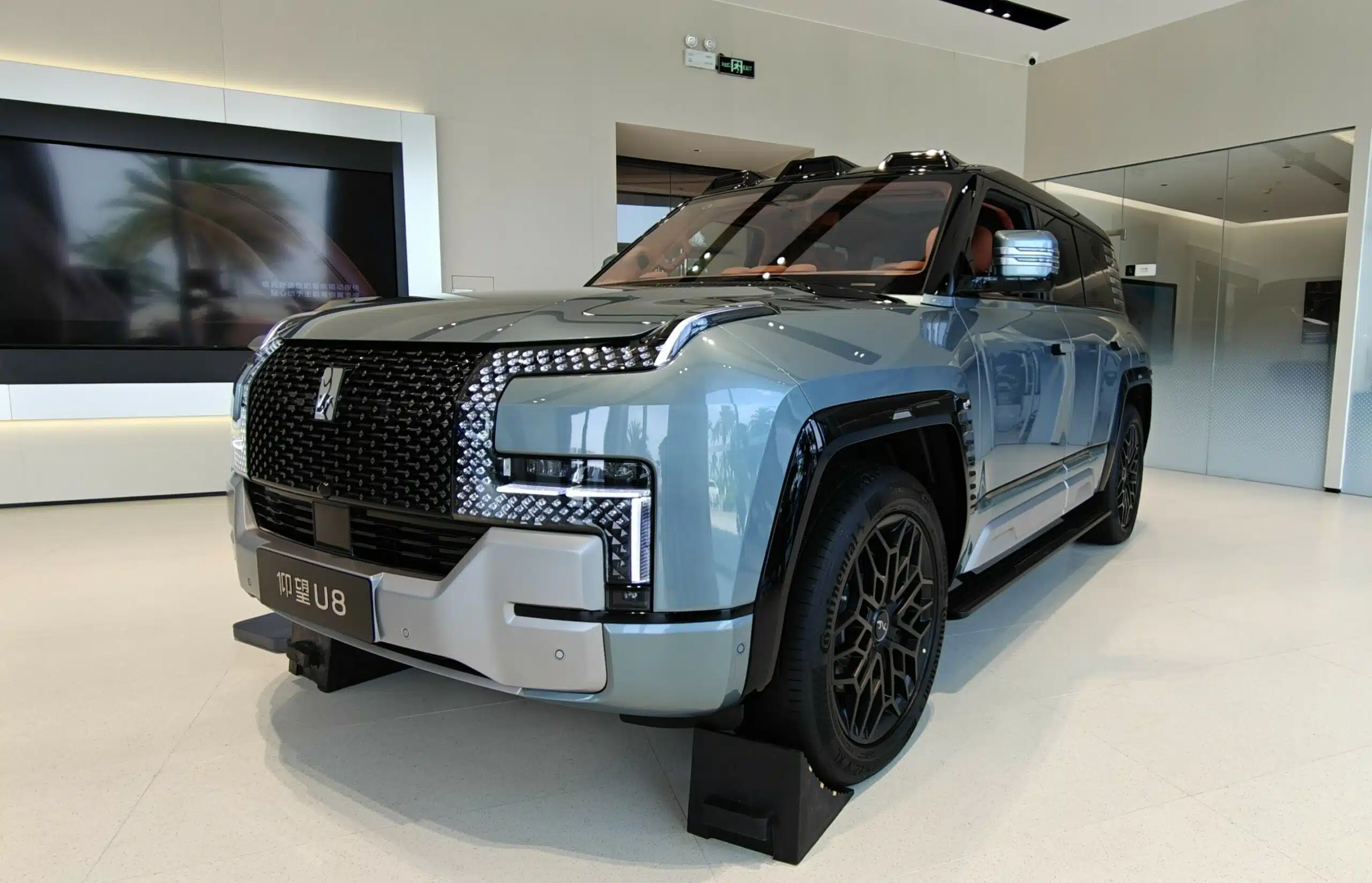
Choosing your procurement channel determines not only your chinese electric car price point but your regulatory risk exposure. The 2026 market offers two primary pathways:
Direct Factory Engagement (Tier 1 Manufacturers)
Best for: Volume buyers (100+ units annually), OEM partnerships, CKD assembly projects
Advantages:
– Factory-direct pricing eliminating intermediary margins (typically 8-12% savings)
– Customization access for homologation requirements (EU WLTP, US FMVSS, ASEAN standards)
– Priority allocation during supply constraints (Chery, BYD, and Tesla Shanghai prioritize direct contracts)
Challenges:
– Minimum Order Quantities (MOQs) usually 50+ units
– Extended payment terms requiring 30% T/T deposit, 70% L/C at sight
– Complex regulatory navigation requiring in-house compliance teams
Authorized Export Agents
Best for: SMB importers, first-time buyers, multi-brand portfolios
Advantages:
– Consolidated shipping reducing per-unit freight costs by 15-25%
– Pre-certified documentation packages (CCC, UN38.3, carbon disclosures)
– Flexible MOQs (as low as 5 units for B-segment vehicles)
– Multi-brand access allowing portfolio diversification (Xiaomi SU7, Leapmotor, NIO, XPeng)
Challenges:
– Premium pricing (5-8% above factory gate)
– Limited customization for specific market homologation
– Dependency on agent’s regulatory compliance standards
| Sourcing Model | Avg. Price per Unit (B-Segment) | MOQ | Compliance Risk | Best For |
|---|---|---|---|---|
| Direct Factory | $18,500 – $22,000 | 50 units | High (self-managed) | Large distributors |
| Authorized Agent | $20,000 – $24,500 | 5 units | Low (agent-managed) | Dealerships, startups |
| CKD Assembly | $12,000 – $15,000 (kit) | 200 kits | Medium | Regional manufacturers |
Case Study: A German import consortium reduced per-unit costs by 18% switching from agent-based purchasing to direct contracts with BYD for 150 units quarterly, though initial compliance setup costs exceeded €45,000.
4. Financial Mechanics: Pricing and Landed Costs
Understanding chinese electric car price requires dissecting the total landed cost (TLC) beyond the FOB (Free On Board) quotation. Below is the definitive 2026 cost calculation framework for a standard B-segment EV (e.g., BYD Dolphin, Xiaomi SU7 Standard) imported to European ports.
Base Pricing Tiers (Factory Gate, 2026)
| Vehicle Class | Chinese Domestic Price (CNY) | Export FOB Price (USD) | Battery Capacity | Range (WLTP) |
|---|---|---|---|---|
| A00 Mini | ¥65,000 – ¥85,000 | $11,200 – $14,800 | 30-40 kWh | 250-300 km |
| A Compact | ¥120,000 – ¥150,000 | $18,500 – $23,200 | 50-60 kWh | 400-450 km |
| B Mid-Size | ¥180,000 – ¥240,000 | $27,800 – $37,000 | 70-85 kWh | 500-600 km |
| C Luxury | ¥300,000+ | $46,500+ | 100+ kWh | 650+ km |
Complete Landed Cost Calculation (Example: B-Segment EV to Rotterdam)
| Cost Component | Calculation Basis | Amount (USD) | Notes |
|---|---|---|---|
| FOB Price | Factory gate + loading | $28,000 | Includes export documentation |
| Ocean Freight | $1,800 per 40HQ container (2 units) | $900 | Post-Red Sea routing via Cape of Good Hope |
| Insurance (CIF) | 0.3% of CIF value | $87 | Institute Cargo Clauses (A) |
| Import Duty | 10% (EU MFN rate for HS 8703.80) | $2,900 | Varies by trade agreement |
| VAT | 19% (Germany) on (CIF + Duty) | $5,868 | Recoverable for registered businesses |
| Homologation | EU Type Approval (WLTP testing) | $3,200 | One-time per model variant |
| Battery Transport Surcharge | UN38.3 compliance + dangerous goods | $450 | Mandatory for all Li-ion shipments |
| Carbon Border Adjustment | CBAM certificate purchase | $280 | Based on production emissions |
| Port Handling | THC + documentation fees | $340 | Rotterdam/ Hamburg standard |
| Financing | 180-day LC fees (1.5% annualized) | $210 | Letter of Credit processing |
| TOTAL LANDED COST | $42,235 | Per unit, ready for registration |
Critical Insight: While the FOB chinese electric car price appears 30-40% below European manufacturing equivalents, total cost of ownership converges toward 15-20% savings after homologation and logistics. However, for PHEV models, import duties in certain ASEAN markets drop to 0% under RCEP agreements, amplifying cost advantages.
5. Global Logistics: Ocean Freight & Battery Transport Compliance
The logistics of EV export have evolved beyond standard Ro-Ro (Roll-on/Roll-off) shipping. In 2026, battery safety regulations and green logistics mandates dominate routing decisions.
Specialized EV Shipping Protocols
Containerized vs. Ro-Ro:
- Ro-Ro Vessels: Preferred for finished vehicles, offering drive-on/drive-off efficiency. However, capacity constraints have increased rates by 35% since 2024.
- 40HQ Containerization: Emerging standard for CKD kits and smaller EV fleets. Requires specialized lashing and battery isolation protocols.
Battery Transport Compliance (UN38.3):
All lithium-ion batteries must demonstrate:
1. Altitude simulation (11.6 kPa pressure test)
2. Thermal cycling (-40°C to +75°C)
3. Vibration and shock resistance
4. External short circuit protection
5. Overcharge safeguards
6. Forced discharge containment
2026 Regulatory Update: The International Maritime Organization (IMO) now mandates that EV containers include thermal runaway detection systems and enhanced fire suppression for voyages exceeding 14 days. This adds $120-$180 per unit in safety compliance costs but reduces insurance premiums by 0.05%.
Multi-Regional Routing Strategies
Given geopolitical tensions and the “China Plus One” strategy, sophisticated importers now utilize blended routing:
- Primary Route: Shanghai/ Ningbo to Port of Rotterdam (28 days via Cape of Good Hope)
- Regional Hub Strategy: Shanghai to Port Klang (Malaysia) for ASEAN assembly, reducing final delivery times by 40-60%
- Rail-Sea Combination: Chengdu/ Xi’an to Duisburg via China-Europe Railway Express, then short-sea to UK/Scandinavia (total 18 days, 60% lower carbon footprint than pure ocean freight)
6. Localization & Homologation: Preparing Cars for Local Markets
Exporting Chinese EVs requires transforming “China-spec” vehicles into market-compliant products. The 2026 regulatory alignment pressure from Europe necessitates proactive homologation strategies.
Regional Compliance Matrix
| Market | Certification Body | Key Requirements | Cost per Model | Timeline |
|---|---|---|---|---|
| European Union | EU Type Approval (TÜV/SGS) | WLTP emissions, eCall emergency system, GDPR data compliance, cybersecurity (UN R155/R156) | €12,000 – €18,000 | 4-6 months |
| United States | EPA/ NHTSA | FMVSS 305 (battery safety), EPA labeling, OBD-II diagnostics | $25,000 – $40,000 | 6-9 months |
| ASEAN | Various (MIROS, etc.) | UNECE WP.29 adaptations, tropical climate testing | $8,000 – $12,000 | 2-3 months |
| Middle East | GSO/ ESMA | Extreme heat testing (50°C+), sand filtration | $6,000 – $9,000 | 2-3 months |
Software Localization
Modern Chinese EVs rely heavily on connected services requiring:
– OTA Update Infrastructure: Cloud servers must comply with local data sovereignty laws (EU GDPR, Russia data localization)
– Infotainment Language Packs: Full UI/UX translation including voice recognition training
– Charging Protocol Adaptation: CCS2 (Europe), CCS1 (North America), CHAdeMO (Japan) hardware swaps
Case Study: A Polish import consortium successfully localized Xiaomi SU7 models by pre-installing EU-specific charging ports and German-language AI assistants at the Shanghai port processing facility, reducing time-to-market by three weeks compared to post-arrival modifications.
7. After-Sales Ecosystem: Securing Parts and Service Abroad
The profitability of importing chinese electric car price competitive vehicles depends entirely on after-sales support. European sustainability regulations now require manufacturers to guarantee spare parts availability for 10 years.
Parts Supply Chain Architecture
Critical Components Inventory:
| Component | Replacement Frequency | Sourcing Strategy | Lead Time |
|---|---|---|---|
| Battery Packs | 8-10 years | Regional warehousing in Rotterdam/Dubai | 30 days |
| Electric Motors | 5-7 years | Factory-direct with air freight option | 14 days |
| Power Electronics | 3-5 years | Authorized distributor network | 7 days |
| Infotainment | As needed | Cloud-based with local server mirroring | Immediate (OTA) |
Technical Training & Diagnostic Tools
Chinese EV manufacturers in 2026 provide:
– Level 1 Training: Basic maintenance and safety (online, 40 hours)
– Level 2 Certification: High-voltage system repair (in-person Shanghai or regional hubs, 120 hours)
– Level 3 Engineering: Battery pack refurbishment and BMS programming (factory-only, 240 hours)
Diagnostic Equipment: Mandatory investment includes manufacturer-specific OBD scanners ($2,500-$5,000) and high-voltage insulation testers ($1,200).
Warranty Management
Standard export warranties cover:
– Vehicle: 3 years/100,000 km
– Battery: 8 years/160,000 km (capacity retention >70%)
– Powertrain: 5 years/unlimited km
Warranty claims require documentation through authorized service centers, with parts shipped from Chinese regional distribution centers (RDCs) established in 2025-2026 in Poland, UAE, and Thailand.
8. Avoiding Scams: How to Audit a Chinese EV Supplier
The surge in chinese electric car price competitiveness has attracted fraudulent actors. As Chief Export Consultant, I have identified systematic approaches to supplier verification.
Red Flag Indicators
- Pricing Anomalies: Quotes 30%+ below market rates for B-segment vehicles (current FOB floor is approximately $18,500 for viable BEVs)
- Documentation Gaps: Inability to provide real-time CCC certification verification via GACC API
- Payment Irregularities: Demands for 100% T/T upfront or payment to personal accounts (Hong Kong shell companies)
- Factory Absence: Refusal to allow third-party inspection agencies (SGS, Bureau Veritas) during production
Due Diligence Protocol
Phase 1: Documentation Verification
– Request Business License (营业执照) with QR code verification against National Enterprise Credit Information Publicity System
– Verify Export License (进出口权) status
– Cross-reference CCC certificates with CQC database
Phase 2: Financial Health Assessment
– Request audited financial statements (2024-2025)
– Verify registered capital (minimum RMB 10 million for EV exporters)
– Check litigation records via China Judgments Online
Phase 3: Physical Audit
– Engage third-party inspection for factory audit (ISO 9001, IATF 16949 certification)
– Verify production capacity (minimum 50,000 units annually for credible exporters)
– Inspect battery supply chain (CATL, BYD, or CALB partnerships mandatory)
Phase 4: Sample Transaction
– Place 5-unit trial order with 30/70 payment terms
– Inspect container loading via live video with GPS seal verification
– Verify VIN numbers match export documentation pre-shipment
Case Study: A Spanish distributor avoided a €2.4M loss by identifying that a “factory” in Shenzhen was merely a trading company without manufacturing license, discovered during the CCC certificate verification phase.
9. Start Your Import Business with Electric Auto China
As Shanghai’s premier B2B EV export consultancy, Electric Auto China bridges the gap between chinese electric car price advantages and international compliance requirements. Our 2026 service portfolio addresses every challenge outlined in this guide.
Our Compliance-First Export Solutions
Regulatory Navigation: Our in-house team manages the complete 2026 export documentation chain, including:
– Real-time GACC API integration for customs pre-clearance
– UN38.3 testing coordination through certified Shanghai laboratories
– Carbon footprint documentation aligned with EU CBAM requirements
– Homologation pre-certification for EU, ASEAN, and Middle Eastern markets
Financial Structuring: We facilitate:
– Escrow payment structures protecting both parties
– Currency hedging instruments (CNY/EUR/USD)
– Export credit insurance through Sinosure partnerships
– Landed cost financing up to 180 days
Logistics Management: Our network includes:
– Priority booking agreements with COSCO, MSC, and CMA CGM for EV-specific container allocation
– Battery-safe warehousing in Shanghai Yangshan and Ningbo Zhoushan ports
– Regional distribution centers in Poland (EU), UAE (MENA), and Thailand (ASEAN) for localized fulfillment
2026 Market Entry Programs
Starter Package (5-20 units): Ideal for dealership trials
– Authorized agent pricing with factory-direct documentation
– Pre-homologated EU-spec vehicles (WLTP certified)
– Basic spare parts kit (1% of vehicle value)
Enterprise Partnership (50+ units quarterly): For regional distributors
– Direct factory negotiation support
– CKD assembly consultation for local production
– Exclusive territory rights for emerging brands (Leapmotor, Zeekr, NIO)
Giga-Project Consultation: For industrial investors
– Battery supply chain integration (CATL, BYD Blade Battery)
– Charging infrastructure partnerships (Star Charge, TELD)
– Software localization and OTA platform licensing
Next Steps
The 2026 EV export window represents a finite opportunity before localization mandates fully mature. With Chinese domestic sales stagnating and export growth surging (100% YoY for BEVs), pricing remains favorable for qualified international buyers.
Contact our B2B export division to receive:
1. Real-time chinese electric car price sheets for Q1-Q2 2026 production slots
2. Factory audit reports for our verified manufacturing partners
3. Sample landed cost calculations for your specific port of entry
4. Regulatory roadmap for your target market
Electric Auto China
Lujiazui Financial District, Shanghai
Export Consultancy Division
Email: [email protected]
WeChat: EVExport2026
The future of automotive retail is electric, intelligent, and globally distributed. Ensure your business captures this transition with compliant, cost-effective Chinese EV supply chains.
Disclaimer: This guide reflects regulations and market conditions as of January 2026. Chinese EV export policies undergo quarterly revisions. Always verify current requirements with licensed customs brokers and legal counsel in your jurisdiction.
Unlock High-Margin EV Imports with Electric Auto China
As an elite automotive supply chain partner in Shanghai, we provide end-to-end, strictly compliant export solutions tailored for international dealerships, fleet managers, and wholesale distributors.
- 🛡️ 100% Legal & Compliant: Fully licensed exports ensuring smooth customs clearance at your destination.
- ⚙️ Complete Localization: Professional English/Arabic/Russian OS flashing and GB/T to CCS2 charging solutions.
- 🚢 Secure Logistics: Direct Ro-Ro and Containerized shipping with full UN38.3 battery certifications.
- 🔧 After-Sales Support: Reliable access to OEM diagnostic tools and steady spare parts supply.
Request a Detailed FOB/CIF Quote Today:
📧 B2B Sales Email: [email protected]
💬 Direct WhatsApp: +86 159 5127 6160