The Ultimate 2026 Importer’s Guide to Chinese electric car stocks
Executive Summary
As Chief Export Consultant at Electric Auto China, headquartered in Shanghai, I have witnessed the seismic shift in global automotive trade firsthand. China’s electric vehicle sector has evolved from a domestic manufacturing base into the world’s primary NEV (New Energy Vehicle) export engine. With 2025 closing at a record 34.4 million units—surpassing the 2017 peak by a decisive margin—and NEV shipments hitting 16.5 million units (representing 59.4% of domestic sales), the Middle Kingdom has cemented its position as the definitive sourcing hub for electric mobility.
However, 2026 introduces a new paradigm. The era of opportunistic, unregulated exports has ended. Effective January 1, 2026, China’s Ministry of Commerce mandates strict export licensing for all EV manufacturers and dealers, fundamentally restructuring how foreign B2B buyers access Chinese electric car stocks. This guide provides the strategic blueprint for navigating these regulations while capitalizing on product value upgrading, multi-regional production networks, and the geographic diversification of China’s export engine.
1. The Macro-Economics of Chinese electric car stocks in 2026
The New Baseline: Scale and Saturation
China’s automotive market has reset its operating baseline. Total vehicle sales rose 9.4% year-over-year to 34.4 million units, but the composition tells the critical story: ICE (Internal Combustion Engine) volumes contracted by 3.6% (-700,000 units), while NEV growth added 3.6 million units (+28.2% YoY). This divergence signals a permanent structural shift—China’s domestic market is approaching saturation, with NEV penetration exceeding critical mass.
For international buyers, this saturation creates a buyer’s market for premium inventory. Domestic pressure to reduce inventories—forecasted by the CPCA to intensify through 2026—means OEMs are increasingly prioritizing export channels to maintain production scale. With exports reaching 7.1 million units in 2025 and NEVs comprising over one-third of outbound volume, Chinese electric car stocks represent not merely vehicles, but strategic assets in a globally diversified supply chain.
Product Value Upgrading: Beyond Commodity Vehicles
The 2026 landscape is defined by product value upgrading. Chinese exports have transcended low-cost commoditization to encompass:
– Advanced LFP and NMC battery packs with integrated thermal management
– Renewable energy equipment synergies (solar-EV ecosystem compatibility)
– Smart cockpit electronics and ADAS hardware compliant with EU Cybersecurity standards
This evolution aligns with Europe’s industrial machinery and high-end component exports, creating complementary trade flows where Chinese EVs integrate with European automation systems and luxury supply chains.
Multi-Regional Production Networks
The “China Plus One” strategy has matured into blended supply models. Smart importers are now leveraging:
1. Chinese inputs: Battery cells, power electronics, and raw materials processing
2. Southeast Asian assembly: CKD (Completely Knocked Down) kits assembled in Thailand, Indonesia, or Vietnam to mitigate tariff exposure
3. European final customization: Software localization, luxury trim installation, and homologation compliance performed in EU-based facilities
This triangulated approach reduces geopolitical concentration risk while maintaining China’s cost and innovation advantages at the core.
2. Understanding China’s Strict EV Export Regulations
The Export License Framework (Effective January 1, 2026)
The most critical development for 2026 is the mandatory export licensing system administered by China’s Ministry of Commerce (MOFCOM). Under this framework:
| Requirement | Specification | Impact on Importers |
|---|---|---|
| Manufacturer Accreditation | Only MOFCOM-accredited OEMs and authorized dealers may apply for export licenses | Eliminates gray-market brokers; ensures traceability |
| Vehicle Classification | Strict differentiation between “new” and “used” vehicles | Prevents software-obsolete inventory flooding markets |
| Documentation | Complete supply chain due diligence records, carbon footprint disclosure | Aligns with EU CSRD and battery passport requirements |
| After-Sales Commitment | Proof of international service network or parts supply agreements | Protects against “dump and run” export practices |
Regulatory Alignment with European Standards
Chinese exporters now face regulatory alignment pressure from European sustainability mandates. The 2026 framework requires:
– Carbon disclosure documentation for battery production (cradle-to-gate emissions)
– Supply chain due diligence certificates verifying ethical mineral sourcing (lithium, cobalt, nickel)
– Packaging compliance with EU circular economy regulations
Foreign manufacturers operating in China—including Tesla Shanghai, BMW Brilliance, and VW Anhui—must comply with these licensing requirements when exporting from Chinese facilities, effectively harmonizing compliance standards across all export streams.
Combating Irregular Exports
The licensing regime specifically targets irregular export channels where new vehicles were previously misclassified as “used” to bypass regulations. This practice had resulted in international buyers receiving vehicles with:
– Outdated firmware incompatible with local networks
– Invalid warranty coverage
– Non-compliant charging hardware (CCS1 vs. CCS2 confusion)
The 2026 regulations restore sector profitability and brand integrity by ensuring only licensed, supported vehicles enter global markets.
3. Sourcing Strategy: Direct Factory vs. Authorized Export Agents
Direct Factory Relationships (Tier 1)
Best for: Volume purchasers (500+ units annually), established distributors with homologation capabilities
Advantages:
– First access to new model year allocations (critical for high-demand vehicles like Xiaomi SU7/YU7, which sold 410,000 units in 2025 with 2026 targets of 550,000)
– Custom specification rights (battery size, interior trim, software packages)
– Direct warranty backing from OEM
Requirements:
– MOFCOM export license verification (request Certificate of Export License validity)
– Proof of import country dealership authorization
– Letter of Credit (LC) capacity minimum $5M USD
Authorized Export Agents (Tier 2)
Best for: Emerging importers, specialized fleet operators, regional distributors
Advantages:
– Regulatory navigation: Agents handle MOFCOM documentation, carbon disclosure paperwork, and shipping logistics
– Consolidated shipping: Access to shared RoRo (Roll-on/Roll-off) vessel space, critical given 2026 container shortages
– Risk mitigation: Agents assume compliance liability during China-side export procedures
Verification Protocol:
1. Request MOFCOM Dealer Accreditation Number (must match Ministry database)
2. Verify physical office presence in Shanghai, Shenzhen, or Tianjin free trade zones
3. Confirm after-sales service agreements with OEMs (critical for warranty transfer)
Case Study: European Logistics Provider Strategy
A leading German logistics firm recently pivoted from pure transport to integrated sourcing partnerships. By establishing a Shanghai liaison office, they secured Tier 2 agent status for BYD, Leapmotor, and Geely. This allowed them to offer European clients “landed duty paid” (LDP) solutions, handling everything from factory gate to EU homologation—capitalizing on the trend toward supply chain regionalization while maintaining Chinese sourcing advantages.
4. Financial Mechanics: Pricing and Landed Costs
Understanding true landed costs requires factoring in the new 2026 compliance expenses and green logistics premiums. Below is the standard cost structure for a mid-size EV (e.g., BYD Seal, Tesla Model 3 equivalent) imported to the EU under 2026 regulations.
Complete Landed Cost Calculation (Per Unit)
| Cost Component | Amount (USD) | Notes |
|---|---|---|
| EXW Factory Price | $22,000 | Base vehicle, standard range battery |
| Export License Fee | $450 | New 2026 MOFCOM administrative cost |
| Carbon Disclosure Audit | $180 | Third-party verification for EU CSRD compliance |
| Domestic Transport (Factory-Port) | $320 | Electric truck haulage (35% of fleet now EV) |
| Port Handling & Documentation | $280 | Shanghai/Tianjin terminal fees |
| Ocean Freight (RoRo) | $1,850 | 40-day route to Rotterdam; green shipping premium included |
| Marine Insurance (110% CIF) | $265 | All-risks coverage including battery thermal incidents |
| Customs Duty (EU MFN 10%) | $2,500 | Based on CIF value + freight |
| Homologation (WVTA) | $1,200 | Whole Vehicle Type Approval, EU-specific |
| Local VAT (EU avg 20%) | $5,700 | Applied to total landed value |
| Software Localization | $350 | Language packs, regional map data |
| TOTAL LANDED COST | $34,095 | Ready for retail |
Currency Hedging Considerations
With RMB/USD volatility around 6.99 (current 2026 rates), importers should secure 6-month forward contracts when placing factory orders. Chinese OEMs increasingly accept Euro-denominated pricing for EU-bound shipments, reducing forex exposure for European buyers.
Financing Structures
Supply Chain Finance (SCF): Chinese banks now offer export credit facilities collateralized by the vehicles themselves, allowing importers to pay 30% deposit, 70% against Bill of Lading—preserving working capital for homologation and marketing expenses.
5. Global Logistics: Ocean Freight & Battery Transport Compliance
The Battery Logistics Challenge
Lithium-ion batteries (UN 3480/3481, Class 9 Dangerous Goods) dominate 2026 shipping concerns. Regulatory updates require:
UN 38.3 Testing Verification: Every battery pack must have valid UN 38.3 test summaries, valid for 12 months from manufacture date. 2026 regulations mandate digital battery passports accessible via QR code on shipping manifests.
State of Charge (SoC) Limits: International Maritime Organization (IMO) regulations restrict EV battery charge to 30-50% during ocean transit to thermal runaway risks. This requires factory-side discharge protocols, adding 2-3 days to pre-shipment preparation.
Shipping Modalities: RoRo vs. Container
| Method | Cost/Unit | Transit Time | Best For | 2026 Considerations |
|---|---|---|---|---|
| RoRo (Pure Car/Truck Carrier) | $1,800-2,200 | 28-35 days | High volume, standard vehicles | Limited capacity; book 8 weeks ahead |
| Containerized (R-Rack) | $2,400-3,100 | 35-42 days | Luxury vehicles, PHEVs with fuel residues | Requires dangerous goods declarations; solar-powered reefers available |
| Multi-Modal (Rail+Sea) | $2,800-3,500 | 22-28 days | Central Asia, Eastern Europe | New Silk Road routes via Kazakhstan; carbon-neutral options |
Green Logistics Integration
China’s dual carbon goals have transformed logistics from cost center to competitive differentiator. Solar-powered warehouses in Shanghai Yangshan Port now offer carbon-neutral storage, while 35% of urban delivery fleets serving export zones are electric. European importers can now secure carbon-neutral shipping certificates for Scope 3 emissions reporting, critical for EU Corporate Sustainability Reporting Directive (CSRD) compliance.
6. Localization & Homologation: Preparing Cars for Local Markets
Regulatory Homologation Zones
European Union (WVTA 2018/858):
– EMC Testing: Electromagnetic compatibility for ADAS systems
– Cybersecurity (UN R155/R156): Over-the-air (OTA) update security validation
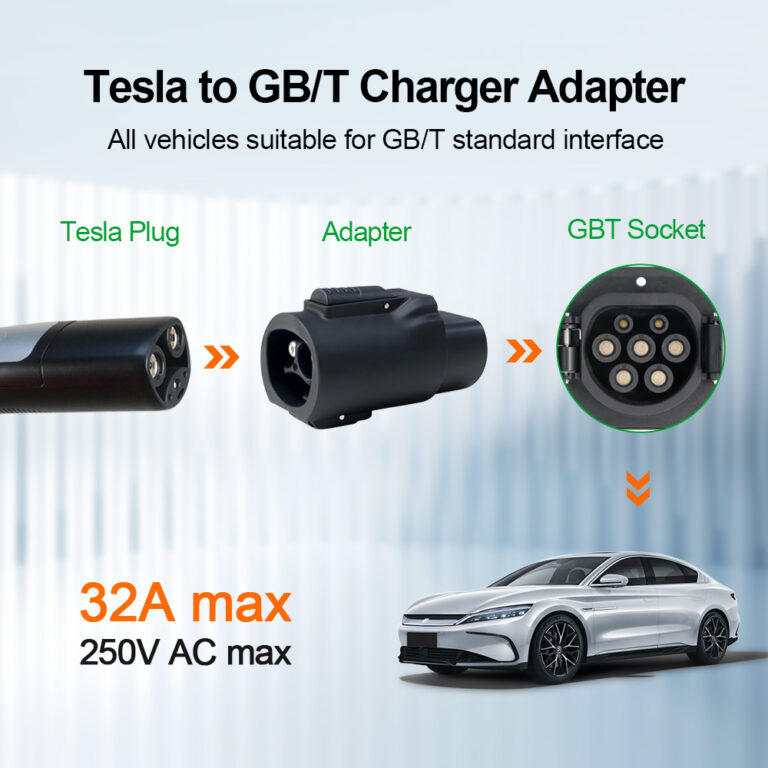
– Charging Standards: CCS2 Type 2 connector conversion (Chinese vehicles ship with GB/T standard)
– Speedometer: km/h primary display with mph secondary
Middle East (GCC Standards):
– Thermal Testing: 50°C+ ambient temperature validation for battery cooling
– Sand Ingress Protection: IP6K9K certification for desert conditions
Southeast Asia (ASEAN NCAP):
– Right-Hand Drive (RHD) Conversion: Essential for Indonesia, Thailand, Malaysia
– Humidity Resistance: Enhanced corrosion protection for tropical climates
Software Localization Critical Path
Chinese EVs rely heavily on connected services. 2026 importers must establish:
– OTA Update Servers: Localized or mirrored servers to bypass Chinese firewall latency
– App Store Integration: Replacement of Baidu/WeChat services with Google Automotive Services (GAS) or regional equivalents
– Telematics Roaming: eSIM agreements with local carriers (Vodafone, Deutsche Telekom, etc.)
Case Study: BYD’s Hungary Localization Hub
BYD’s new Hungarian manufacturing facility, ramping production in 2026, demonstrates the multi-regional production model. Vehicles are shipped as CKD kits from China, assembled in Hungary with EU labor, thereby qualifying for “Made in EU” status—bypassing the 10% EU import duty and satisfying local content requirements for government fleet tenders. This model reduces total landed cost by approximately $3,200 per unit for European buyers.
7. After-Sales Ecosystem: Securing Parts and Service Abroad
The Parts Inventory Imperative
Chinese EVs utilize proprietary components (BYD Blade Battery, CATL cell-to-pack architectures, Huawei drive motors). Importers must establish:
Critical Spare Parts Stock:
– High-voltage components: Battery management systems, onboard chargers (OBC), DC-DC converters
– Consumables: Specific brake pad compounds for regenerative braking systems, specialized coolants
– Software licenses: Diagnostic tool subscriptions (often cloud-based, requiring Chinese server access)
Recommended Initial Stock Investment: $150,000-$300,000 for a regional distribution hub serving 1,000 vehicles.
Warranty Logistics
Chinese OEMs typically offer 5-year/150,000km battery warranties. However, warranty service requires:
– Authorized Service Center certification (technician training in Shenzhen/Xi’an)
– Battery Recycling Agreements: Compliance with EU Battery Regulation (2023/1542) requiring end-of-life recycling plans
– Remote Diagnostics: VPN-secure connections to OEM servers for fault code interpretation
Training and Technical Support
Electric Auto China recommends the “3-2-1” training model:
– 3 weeks initial technician training in China (factory lines)
– 2 weeks local setup support (charging infrastructure, diagnostic tools)
– 1 week quarterly updates (OTA management, new model introductions)
8. Avoiding Scams: How to Audit a Chinese EV Supplier
The Gray Market Risk
With 2026 licensing requirements, unscrupulous brokers may attempt to sell “gray market” vehicles—units produced for domestic Chinese market (with Chinese software, no export warranty) misrepresented as export-compliant stock.
Red Flags:
– Pricing 15%+ below market average
– Inability to provide MOFCOM Export License number
– Requests for payment to personal accounts or Hong Kong shell companies
– “Used car” documentation for obviously new vehicles (odometer rollback schemes)
Due Diligence Checklist
Tier 1 Verification (Before Deposit):
1. Business License Verification: Check “Automobile Sales” scope on National Enterprise Credit Information Publicity System
2. Export License Validation: Cross-reference MOFCOM accreditation list (updated quarterly)
3. Factory Authorization Letter: Must be on OEM letterhead, with specific authorization for your market territory
4. Physical Audit: Video factory tour showing VIN plates being affixed (confirms production status)
Tier 2 Verification (Before Shipment):
1. Pre-Shipment Inspection (PSI): Third-party inspection (SGS, Bureau Veritas) verifying:
– Battery SoC and health status
– Software version (export vs. domestic)
– Physical damage and specification compliance
2. Document Authentication: Legalized Certificate of Origin, commercial invoices with exact HS codes (8703.80 for EVs)
3. Payment Escrow: Use of Alibaba Trade Assurance or letter of credit with “documents against payment” terms
Financial Fraud Prevention
Never accept “DDP” (Delivered Duty Paid) offers from unknown Chinese suppliers without verifying their ability to pay destination port duties. Common scam: Supplier ships goods, disappears, leaving importer with demurrage fees and customs penalties.
9. Start Your Import Business with Electric Auto China
Our 2026-Compliant Export Infrastructure
As Shanghai’s premier B2B EV export consultancy, Electric Auto China has secured Tier 1 Authorized Export Agent status with BYD, Geely, Leapmotor, Xiaomi Auto, and CATL-powered OEMs. Our services bridge the gap between China’s regulated 2026 export environment and your local market requirements.
Comprehensive Service Package:
| Service Module | Deliverable | Timeline |
|---|---|---|
| Regulatory Navigation | MOFCOM license application, carbon disclosure documentation, supply chain due diligence reports | 2-3 weeks |
| Sourcing & Procurement | Factory negotiation, specification customization, volume allocation securing | 4-8 weeks |
| Logistics Management | Green shipping coordination, battery compliance certification, multi-regional routing optimization | 3-6 weeks transit |
| Homologation Support | EU WVTA preparation, Middle East GCC certification, ASEAN type approval management | Parallel to shipping |
| After-Sales Setup | Parts inventory planning, technician training programs, OTA server localization | Post-arrival |
Strategic Partnership Opportunities
For European logistics providers and distributors, we offer white-label export solutions:
– Stock Holding: Shanghai bonded warehouse inventory for just-in-time delivery
– Financial Structuring: RMB/EUR/USD tri-currency settlement options
– Regionalization Support: CKD kit preparation for Southeast Asian or European assembly
The 2026 Market Window
With plug-in hybrid exports having tripled in 2025 and Geely alone expanding to 90 countries while establishing factories in Egypt and Indonesia, the infrastructure for global Chinese EV distribution has matured. The 2026 licensing regulations, while stringent, eliminate low-quality competition and protect legitimate importers’ margins.
Next Steps:
1. Schedule a Compliance Audit: Review your current supply chain against 2026 MOFCOM requirements
2. Secure Q2 2026 Allocations: High-demand models (Xiaomi YU7, BYD Sealion) require 90-day advance booking
3. Establish Regional Presence: Leverage our multi-regional production networks to optimize tariff exposure
Contact Electric Auto China’s Export Division to receive your customized 2026 Import Roadmap, including specific landed cost calculations for your target markets and regulatory jurisdiction.
The future of automotive distribution is electric, intelligent, and globally integrated. Ensure your business is positioned at the forefront of this transformation with compliant, profitable access to China’s electric car stocks.
About the Author: This guide was prepared by the Chief Export Consultant at Electric Auto China, Shanghai, leveraging 15 years of automotive supply chain expertise and direct partnerships with China’s leading NEV manufacturers. All regulatory references reflect MOFCOM and EU Commission directives effective January 2026.
Unlock High-Margin EV Imports with Electric Auto China
As an elite automotive supply chain partner in Shanghai, we provide end-to-end, strictly compliant export solutions tailored for international dealerships, fleet managers, and wholesale distributors.
- 🛡️ 100% Legal & Compliant: Fully licensed exports ensuring smooth customs clearance at your destination.
- ⚙️ Complete Localization: Professional English/Arabic/Russian OS flashing and GB/T to CCS2 charging solutions.
- 🚢 Secure Logistics: Direct Ro-Ro and Containerized shipping with full UN38.3 battery certifications.
- 🔧 After-Sales Support: Reliable access to OEM diagnostic tools and steady spare parts supply.
Request a Detailed FOB/CIF Quote Today:
📧 B2B Sales Email: [email protected]
💬 Direct WhatsApp: +86 159 5127 6160