The Ultimate 2026 Importer’s Guide to Commercial Electric Vehicle Export
1. The Macro-Economics of Commercial Electric Vehicle Export in 2026
As we enter 2026, China’s logistics and automotive sectors have converged into a formidable export engine, with total logistics value exceeding 350 trillion yuan and representing a year-on-year increase of approximately 6.5%. This growth is not merely statistical noise—it represents a fundamental restructuring of global automotive supply chains, with commercial electric vehicles (CEVs) at the epicenter.
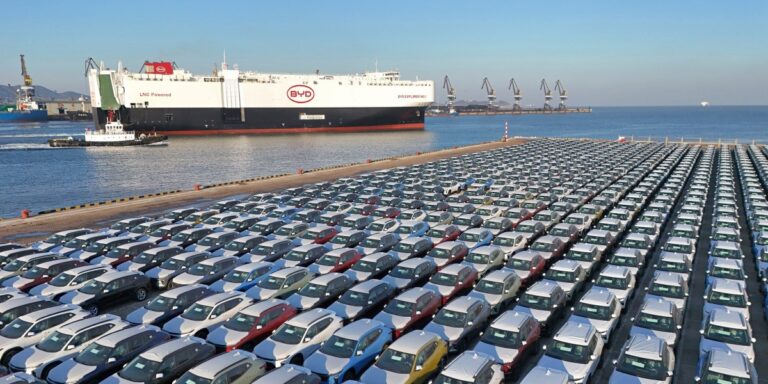
The shift is structural, not cyclical. China closed 2025 with record vehicle exports of approximately 7.1 million units, with new energy vehicles (NEVs) accounting for more than one-third of outbound volume. Crucially, commercial segments—including electric buses, delivery vans, and heavy-duty trucks—are driving the next wave of expansion as global fleet operators pivot to electrification to meet Scope 3 emissions targets.
The “Follow-the-Capital” Paradigm
The export dynamic has evolved beyond simple vehicle trading. As BYD, CATL, and other giants establish manufacturing footprints in Hungary, Thailand, and Brazil, logistics demand has shifted from point-to-point freight to complex, end-to-end supply chain solutions. For commercial EV importers, this creates a bifurcated sourcing strategy:
- Direct China Sourcing: Ideal for high-volume fleet orders (50+ units) where total landed costs remain 18-25% below localized European production, even accounting for EU’s 45% tariff regime on Chinese EVs.
- Hybrid Regional Sourcing: Utilizing Chinese SKD (Semi-Knocked Down) kits assembled in regional hubs to circumvent tariff barriers and satisfy local content requirements.
Green Logistics as Competitive Differentiator
With China’s dual carbon goals driving policy, electric vehicles now constitute over 35% of urban delivery fleets domestically, creating a robust ecosystem for commercial EV export readiness. Solar-powered warehouses and carbon-neutral shipping options have transitioned from marketing concepts to standard offerings. For B2B buyers, this translates to Scope 3 emissions reporting advantages—critical for EU-based fleet operators facing CSRD (Corporate Sustainability Reporting Directive) compliance.
The “China Plus One” strategy adopted by multinationals has paradoxically strengthened China’s export position. Rather than decoupling, supply chain regionalization has created integrated networks across Southeast Asia, with China maintaining its role as the central node for battery technology and commercial EV chassis production while diversifying final assembly risk.
2. Understanding China’s Strict EV Export Regulations
Navigating China’s 2026 EV export regulatory framework requires precision. The Ministry of Industry and Information Technology (MIIT) has implemented stringent oversight mechanisms to ensure export quality and prevent dumping of non-compliant vehicles that could damage China’s manufacturing reputation.
Mandatory Export Compliance Checklist (2026)
| Regulation | Requirement | Verification Method | Penalty for Non-Compliance |
|---|---|---|---|
| MIIT Production License | Manufacturer must hold valid NEV production qualification | MIIT public database query | Export prohibition, factory closure |
| CCC Certification | China Compulsory Certificate for vehicle type | CNAS-accredited testing | Cannot clear Chinese customs |
| Battery Traceability | Full lifecycle tracking from mining to export | National Battery Traceability Platform | Export license revocation |
| Cybersecurity Review | Data localization assessment for connected vehicles | CAC (Cyberspace Administration) audit | Mandatory software modification |
| Export License (Automatic) | Ministry of Commerce (MOFCOM) registration | Electronic filing system | Customs detention |
Critical 2026 Updates
The 2026 regulatory environment introduces three non-negotiable requirements for commercial EV exporters:
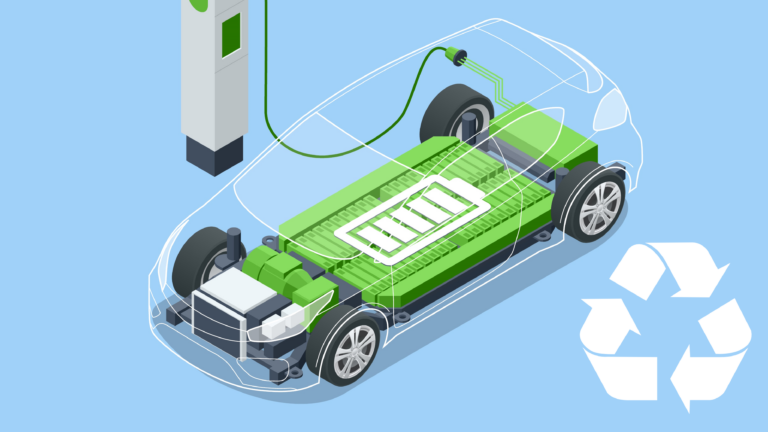
- Battery Recycling Commitments: Exporters must provide proof of take-back agreements with certified recycling facilities in destination markets, aligning with the EU Battery Regulation’s extended producer responsibility mandates.
- Software Localization Verification: For vehicles equipped with telematics, exporters must demonstrate that data collection complies with destination market privacy laws (GDPR for Europe, CCPA for California).
- Anti-Circumvention Declarations: Enhanced documentation requirements proving vehicles are not being transshipped through third countries to evade tariffs, including component origin certificates for batteries.
Dangerous Goods Classification
Commercial EVs containing lithium-ion batteries fall under UN3480 (Class 9 Dangerous Goods) when shipped by sea. The 2026 enforcement protocol requires:
– UN38.3 test summary reports for each battery variant
– State-of-Charge (SoC) not exceeding 30% for ocean freight
– Thermal runaway propagation testing documentation for battery packs exceeding 100Wh/kg
Failure to secure pre-shipment inspection certificates from CCIC (China Certification & Inspection Group) results in automatic port rejection at major exit points including Shanghai Yangshan, Ningbo Zhoushan, and Shenzhen Shekou.
3. Sourcing Strategy: Direct Factory vs. Authorized Export Agents
The choice between direct Original Equipment Manufacturer (OEM) relationships and authorized export agents represents the most critical strategic decision for commercial EV importers. This choice impacts warranty validity, pricing structures, and regulatory liability.
Comparative Analysis: Sourcing Models
| Criteria | Direct Factory (OEM) | Authorized Export Agent | Gray Market Broker |
|---|---|---|---|
| Minimum Order Quantity | 100+ units (CEV buses: 20+) | 1-50 units | No minimum |
| Pricing Structure | EXW factory (lowest base price) | FOB/CIF (marked up 8-15%) | Variable (often below market) |
| Warranty Validity | Full international warranty (5-8 years battery) | Transferable warranty with local service partner | No warranty/voided |
| Homologation Support | Limited (buyer responsibility) | Comprehensive (included in fee) | None |
| Payment Terms | 30% T/T advance, 70% L/C at sight | Escrow/secure payment options | 100% advance (high risk) |
| Regulatory Liability | Shared (buyer assumes import compliance) | Agent assumes export compliance | Buyer assumes all risk |
| After-Sales Parts Access | Direct from factory | Through agent network | Unavailable |
Case Study: German Fleet Operator Success
Scenario: A Munich-based logistics company required 25 electric delivery vans (3.5t GVW) for urban distribution.
Strategy: Engaged an authorized export agent rather than direct factory contact.
– Rationale: The agent handled EU WVTA (Whole Vehicle Type Approval) pre-certification, including software modifications for CCS2 charging compatibility and speedometer conversions to km/h with EU conformity markings.
– Outcome: Delivery timeline reduced from 8 months (direct OEM queue) to 12 weeks (agent’s allocated stock), with landed costs of €42,500 per unit versus €48,000 for comparable European-manufactured vehicles.
– Critical Success Factor: The agent established a local service partnership with a German commercial vehicle workshop chain, ensuring warranty claims could be processed domestically rather than requiring parts shipment from China.
The Direct Factory Advantage
For operators purchasing 100+ commercial EVs (e.g., electric bus fleets or heavy-duty truck deployments), direct OEM relationships become economically compelling. BYD, Yutong, and Foton offer dedicated export divisions providing:
– Custom chassis configurations (wheelbase modifications, battery capacity options)
– White-label manufacturing (OEM branding for the importer)
– Technical training programs for buyer’s maintenance teams in China (2-week intensive at manufacturing facility)
Red Flag: The “Factory Direct” Impostor
A common 2026 scam involves trading companies posing as factory representatives. Verify authenticity by:
1. Requesting the manufacturer’s MIIT license number and cross-referencing with the official MIIT database
2. Verifying the business registration scope includes “automobile manufacturing” (汽车制造) not merely “sales” (销售)
3. Conducting video factory tours showing the specific production line for your vehicle model, including VIN stamping stations
4. Financial Mechanics: Pricing and Landed Costs
Understanding the true cost of commercial EV acquisition requires moving beyond sticker prices to comprehensive landed cost modeling. The 2026 pricing environment reflects currency fluctuations, evolving tariff structures, and green logistics premiums.
Landed Cost Calculation Framework (Sample: Electric 12m Bus)
| Cost Component | Amount (USD) | Notes |
|---|---|---|
| EXW Factory Price | $285,000 | Base vehicle, 350kWh battery pack, standard trim |
| Export Documentation | $1,200 | CCC certification copy, VIN verification, origin certificates |
| Inland Transport | $800 | Factory to Shanghai Port (RoRo terminal) |
| Port Handling | $1,500 | Loading, lashing, dangerous goods declaration |
| Ocean Freight (RoRo) | $4,200 | Shanghai to Rotterdam, 28-day transit, Class 9 DG surcharge |
| Marine Insurance | $1,425 | 110% of CIF value, Institute Cargo Clauses (A) |
| Import Duty (EU) | $128,250 | 45% tariff on Chinese EVs (post-2024 anti-subsidy duties) |
| VAT (EU Destination) | $76,238 | 19% (Germany) on CIF + Duty value |
| Homologation/Type Approval | $8,500 | WVTA certification, local testing, documentation translation |
| Local Delivery | $2,100 | Port to dealer/fleet depot |
| TOTAL LANDED COST | $509,213 | Effective premium over EXW: 78.6% |
Currency Risk Management
The RMB/USD/EUR exchange rate volatility requires hedging strategies. In 2026, with China’s monetary policy diverging from Western central banks, importers face:
– Spot Payment Risk: 3-6 month production cycles expose buyers to currency swings
– Mitigation: Forward exchange contracts locking rates at order confirmation, or RMB-denominated pricing (increasingly accepted by major OEMs like BYD and SAIC)
VAT Rebate Optimization
China offers a 13% VAT rebate for exported vehicles. Authorized export agents typically pass 60-80% of this rebate to buyers through reduced pricing. Direct factory buyers must ensure the manufacturer applies for the rebate and reflects it in the EXW pricing, or establish their own trading entity in China to claim rebates directly—a complex process requiring significant capital commitment.
Financing Structures
For commercial fleet acquisitions exceeding $2 million:
– Chinese Export Credit: China Exim Bank offers competitive rates (2.8-3.5% APR) for Belt and Road Initiative countries, tied to using Chinese shipping and insurance services.
– Buyer’s Credit: European banks increasingly offer green asset financing for commercial EVs, with interest rate reductions (0.25-0.5%) for vehicles meeting specific carbon intensity thresholds verified by Chinese manufacturing data.
5. Global Logistics: Ocean Freight & Battery Transport Compliance
The logistics of commercial EV export have evolved from standard RoRo (Roll-on/Roll-off) shipping to sophisticated multimodal solutions incorporating the “hybrid model”: overseas warehouses + dedicated lines + local delivery.
Shipping Modalities Comparison
| Method | Suitability | Cost per Unit (12m Bus) | Transit Time | Battery SoC Limit |
|---|---|---|---|---|
| RoRo (Pure Car/Truck Carrier) | Best for drivable vehicles | $4,200 | 28-35 days | 30% maximum |
| Container (Flat Rack) | Damaged/non-operational units | $6,800 | 32-40 days | 30% maximum |
| High & Heavy (Breakbulk) | Oversized construction EVs | $8,500+ | 35-45 days | 25% maximum |
| Rail (China-Europe) | Urgent orders, mid-volume | $12,000 | 18-22 days | 20% maximum |
The 2026 Battery Transport Protocol
Lithium iron phosphate (LFP) batteries dominating Chinese commercial EVs require strict adherence to the IMDG Code (International Maritime Dangerous Goods):
1. UN38.3 Testing: Each battery model must have current test summaries (valid 12 months)
2. State of Charge: Strictly enforced at 30% or less for ocean freight; rail transport requires 20% or less
3. Temperature Monitoring: Premium shipping lines (Maersk, COSCO) offer refrigerated container options for high-value battery packs, maintaining 15-25°C ambient temperature to prevent thermal stress during Red Sea diversions.
The Hybrid Logistics Model
The winning formula for 2026 European distribution involves:
– Overseas Warehousing: Bonded warehouses in Rotterdam or Hamburg maintaining 50-200 unit inventory for immediate delivery
– Dedicated Lines: Charter vessels or block space agreements ensuring capacity during Q4 peak seasons (avoiding the 2025 container shortage recurrences)
– Local Delivery: White-glove delivery services including driver training, charging infrastructure verification, and initial registration assistance
Carbon-Neutral Shipping Options
With green logistics transitioning from concept to mandate, major Chinese logistics providers now offer carbon-neutral shipping using:
– Biofuel blends (B30-B100) for ocean freight
– Solar-powered port operations at Shanghai Yangshan and Ningbo Zhoushan
– Carbon offsetting through afforestation projects in Fujian Province
While adding $800-1,200 per unit, these options provide importers with verifiable Scope 3 emissions reductions for ESG reporting, often qualifying for green procurement preferences in EU public tenders.
Port Congestion Mitigation
Avoid Shanghai Port bottlenecks by utilizing alternative export gateways:
– Ningbo Zhoushan: Specialized in heavy commercial vehicles, 20% faster customs clearance for EVs
– Lianyungang: Primary rail-sea interchange for Central Asian and European rail routes
– Guangzhou Nansha: Preferred for Southeast Asian markets, offering direct connections to emerging EV markets in Vietnam and Thailand
6. Localization & Homologation: Preparing Cars for Local Markets
The biggest hurdle for Chinese commercial EVs is no longer crossing the ocean, but “landing” in regulatory compliance. The localization gap—differences in business pace, labor laws, and digital infrastructure—creates friction that requires proactive homologation strategies.
EU Market Compliance (WVTA)
The Whole Vehicle Type Approval process for commercial EVs entering the EU requires:
| Requirement | Chinese Standard | EU Requirement | Modification Cost |
|---|---|---|---|
| Charging Interface | GB/T 20234 | CCS2 (Combo) | $800-1,200 per vehicle |
| Software | Chinese servers | GDPR compliance, EU data residency | $15,000-25,000 (fleet-wide) |
| Speedometer | km/h (dual) | km/h primary, mph secondary | $200 per unit |
| Lighting | ECE R48 (partial) | Full ECE R48, R87 | $1,500 per vehicle |
| EMC | GB 34660 | ECE R10 Rev. 6 | Testing: $8,000 |
| Battery Safety | GB 38031 | UNECE R100 Rev. 3 | Certification: $12,000 |
Right-Hand Drive (RHD) Conversions
For UK, Australian, Japanese, and Southeast Asian markets, factory-level RHD production is preferable to aftermarket conversions. Major manufacturers like BYD and Dongfeng offer RHD variants with:
– Dashboard mirroring
– Steering rack repositioning
– Headlight beam pattern adjustments for left-side driving
Factory RHD adds $2,000-3,000 to unit costs versus $8,000-12,000 for aftermarket conversions, while maintaining warranty validity.
Software Localization
Connected commercial vehicles require:
– Telematics Platform Migration: Migrating from Chinese servers (Aliyun, Tencent Cloud) to AWS Frankfurt or Microsoft Azure EU for GDPR compliance
– Language Packages: Professional translation of HMI (Human-Machine Interface) beyond Google Translate—critical for safety warnings and diagnostic codes
– OTA Update Infrastructure: Establishing update servers in destination markets to avoid cross-border data transfer restrictions
Case Study: Failed Localization
A Polish importer purchased 15 electric trucks without verifying CCS2 compatibility. The vehicles arrived with GB/T charging ports incompatible with European infrastructure. Retrofitting required:
– Hardware replacement (charging inlets, wiring harnesses): $18,000
– Software recoding: $4,000
– 8-week delay in fleet deployment
– Lesson: Verify charging standard compliance at the factory gate, not the port of entry.
7. After-Sales Ecosystem: Securing Parts and Service Abroad
Commercial EV profitability depends on uptime. Without a robust after-sales ecosystem, battery degradation fears and maintenance complexity will erode operational savings.
Critical Spare Parts Inventory
Importers must establish regional parts hubs stocking:
| Component | Stocking Quantity (per 100 vehicles) | Lead Time from China | Shelf Life Considerations |
|---|---|---|---|
| Battery Modules | 2-3% of fleet capacity | 90-120 days | Requires climate-controlled storage (15-25°C) |
| Electric Motors | 1-2 units | 60 days | Indefinite, but bearing seals degrade |
| Inverters/Power Electronics | 3-5 units | 45 days | Static-sensitive, humidity-controlled |
| Charging Ports | 10-15 units | 30 days | High wear item |
| BMS Controllers | 5-8 units | 60 days | Software-locked to VIN |
Technical Training Requirements
Chinese OEMs increasingly require importers to certify local technicians through:
– Level 1 Maintenance: High-voltage safety, basic diagnostics (3-day course in China or regional training center)
– Level 2 Repair: Battery pack replacement, motor servicing (2-week intensive in China)
– Level 3 Engineering: BMS programming, thermal management system overhaul (factory training only)
Battery Recycling & Second Life
Under the EU Battery Regulation 2023/1542, commercial EV importers must:
– Register with national producer responsibility organizations
– Provide battery passports (digital records of chemistry, health status, origin)
– Finance end-of-life collection and recycling
– Guarantee 70% recycling efficiency for lithium and 95% for cobalt, nickel, and copper
Chinese manufacturers like CATL and BYD have established European recycling partnerships, but importers must verify these agreements cover their specific vehicle models and battery chemistries (LFP vs. NMC).
Warranty Bank Guarantees
To ensure warranty validity across borders, require manufacturers to establish:
– Warranty Reserve Accounts: Escrow accounts holding 3-5% of vehicle value to cover potential claims if the manufacturer exits the market
– Local Service Partners: Authorized workshops capable of warranty repairs without requiring vehicle return to China
– Remote Diagnostics: VPN-secure connections allowing Chinese engineering teams to troubleshoot foreign vehicles (subject to data compliance)
8. Avoiding Scams: How to Audit a Chinese EV Supplier
The surge in export demand has attracted fraudulent actors. Protect your investment through systematic verification.
The Four-Tier Verification Protocol
Tier 1: Documentation Authentication
– Business License: Verify via National Enterprise Credit Information Publicity System (国家企业信用信息公示系统). Scope must include “automobile manufacturing” not just trading.
– MIIT License: Cross-reference the manufacturer’s name with the official MIIT vehicle production qualification list. Each factory has a unique license number.
– Export License: Verify MOFCOM registration for auto-export trading rights.
Tier 2: Financial Health Assessment
– Request audited financial statements (Chinese GAAP or IFRS)
– Verify registered capital (manufacturers should have 100M+ RMB capital)
– Check for litigation records via China Judgments Online (裁判文书网)
Tier 3: Physical Factory Audit
– Production Line Verification: Confirm the specific assembly line for your vehicle model is operational, not a shell facility
– Quality Control: Review incoming inspection records for battery cells, motor dyno testing protocols, and water-ingress testing (IP67 verification)
– R&D Capability: Verify in-house engineering teams versus pure assembly operations—critical for OTA update support
Tier 4: Reference Checks
– Contact previous export customers (request bill of lading copies as proof)
– Verify after-sales service performance in existing markets
– Check with China Chamber of International Commerce (CCOIC) for member standing
Payment Security Structures
Never wire 100% advance payment. Secure structures include:
– 30/70 Split: 30% T/T advance, 70% against copy of B/L (Bill of Lading)
– Letter of Credit: Irrevocable L/C at sight through tier-1 banks (Bank of China, ICBC, HSBC)
– Escrow Services: Alibaba Trade Assurance or Sinosure (China Export & Credit Insurance Corporation) backed transactions
– Factory Acceptance Test (FAT): Withhold 10% payment until vehicles pass inspection at destination port by third-party surveyor (SGS, Bureau Veritas)
Common 2026 Fraud Patterns
- The Battery Swap: Delivering vehicles with lower-capacity batteries than specified (e.g., 280kWh instead of 350kWh). Mitigation: Witness battery pack installation during factory acceptance.
- The Software Lock: Vehicles shipped with “demo mode” software limiting speed/range until additional payment. Mitigation: Specify “full function software” in contract with penalty clauses.
- The Certificate Forgery: Fake CCC certificates or UN38.3 test reports. Mitigation: Verify certificate numbers directly with issuing bodies (CQC for CCC, independent labs for UN38.3).
9. Start Your Import Business with Electric Auto China
As Chief Export Consultant at Electric Auto China, headquartered in Shanghai’s Lingang New Area, I have guided fleet operators, distributors, and mobility startups across five continents through the complexities of commercial EV procurement.
Our 2026 service portfolio addresses every challenge outlined in this guide:
Compliance-First Sourcing
We maintain direct partnerships with MIIT-licensed manufacturers including BYD Commercial Vehicle, Foton Motor, and Yutong Bus, ensuring every vehicle meets 2026 export regulations including battery traceability and cybersecurity standards.
Financial Structuring
Our team facilitates China Exim Bank financing, VAT rebate optimization, and currency hedging strategies to reduce landed costs by 8-12% compared to standard import channels.
Logistics Integration
Through partnerships with COSCO Shipping and China-Europe Railway Express, we offer the “hybrid model”—overseas warehousing in Rotterdam and Dubai, dedicated charter lines for volume orders, and carbon-neutral shipping options compliant with EU CSRD requirements.
Localization Support
Our European technical team manages WVTA homologation, CCS2 charging conversions, and GDPR-compliant software localization, reducing time-to-market from 6 months to 6 weeks.
After-Sales Guarantee
We establish regional parts hubs, certify local technicians through our Shanghai training academy, and provide warranty bank guarantees backed by Sinosure.
Risk Mitigation
Every supplier in our network undergoes quarterly financial audits and factory inspections. We offer escrow payment structures and factory acceptance testing witnessed by SGS surveyors.
The commercial electric vehicle revolution is not coming—it is here. With China’s manufacturing capacity producing 70% of global EVs and export infrastructure maturing through green logistics and regionalized supply chains, 2026 represents an inflection point for fleet electrification.
However, success requires moving beyond transactional purchasing to strategic supply chain partnership. The complexity of battery logistics, evolving tariff regimes, and stringent homologation requirements demand expertise that transcends traditional auto trading.
Contact Electric Auto China today to schedule a comprehensive sourcing consultation. Our Shanghai-based team will provide detailed landed cost analyses for your specific fleet requirements, regulatory roadmaps for your target markets, and factory tour arrangements to verify manufacturing capabilities firsthand.
The future of commercial mobility is electric. Ensure your import strategy is built on compliance, transparency, and operational excellence.
Electric Auto China
Your Strategic Partner in Commercial EV Export
Shanghai Lingang New Area, Free Trade Zone
Email: [email protected]
Web: www.electricautochina.com
This guide is current as of January 2026 and reflects regulations subject to change. Consult legal counsel for binding compliance decisions.
Unlock High-Margin EV Imports with Electric Auto China
As an elite automotive supply chain partner in Shanghai, we provide end-to-end, strictly compliant export solutions tailored for international dealerships, fleet managers, and wholesale distributors.
- 🛡️ 100% Legal & Compliant: Fully licensed exports ensuring smooth customs clearance at your destination.
- ⚙️ Complete Localization: Professional English/Arabic/Russian OS flashing and GB/T to CCS2 charging solutions.
- 🚢 Secure Logistics: Direct Ro-Ro and Containerized shipping with full UN38.3 battery certifications.
- 🔧 After-Sales Support: Reliable access to OEM diagnostic tools and steady spare parts supply.
Request a Detailed FOB/CIF Quote Today:
📧 B2B Sales Email: [email protected]
💬 Direct WhatsApp: +86 159 5127 6160