The Ultimate 2026 Importer’s Guide to Electric vehicle import regulations
1. The Macro-Economics of Electric vehicle import regulations in 2026
As Chief Export Consultant at Electric Auto China, headquartered in Shanghai’s Lujiazui financial district, I have witnessed firsthand the seismic shift that has redefined global automotive trade. As we enter 2026, China’s logistics and supply chain market demonstrates remarkable resilience, with total logistics value exceeding 350 trillion yuan—representing a year-on-year increase of approximately 6.5%. This isn’t merely a statistical milestone; it represents the infrastructural backbone enabling the world’s largest electric vehicle export surge.
The New Development Landscape (NDL) governing China-EU automotive trade has crystallized around three transformative pillars that every B2B importer must internalize:
Product Value Upgrading: China no longer exports merely commoditized manufacturing capacity. In 2025, the nation closed with record NEV shipments of approximately 16.5 million units, with exports reaching 7.1 million vehicles—a figure projected to exceed 8 million units in 2026. These aren’t low-margin economy cars; they encompass premium battery electric vehicles (BEVs), advanced energy storage systems, and sophisticated power electronics that compete directly with European industrial machinery and luxury automotive components.
Multi-Regional Production Networks: The “China Plus One” strategy has evolved into blended supply models that combine Chinese inputs, Southeast Asian assembly, and European final customization. This geographic diversification reduces geopolitical concentration risk while maintaining China’s role as the central innovation node. For importers, this means sourcing flexibility—but also complex regulatory navigation across multiple jurisdictions.
Regulatory Alignment Pressure: European sustainability mandates—specifically the Corporate Sustainability Due Diligence Directive (CSDDD) and Carbon Border Adjustment Mechanism (CBAM)—are influencing logistics decisions at origin. Chinese exporters now face mandatory carbon disclosure requirements, sustainable packaging standards, and supply chain due diligence documentation that must accompany every shipment.
The strategic implication is clear: electric vehicle import regulations are no longer procedural formalities but competitive differentiators. With NEVs constituting over 35% of urban delivery fleets within China and solar-powered warehouses becoming standard, green logistics has transitioned from concept to mandate. Importers who master these regulatory frameworks gain preferential access to the world’s most advanced EV manufacturing ecosystem, while those who ignore them face exclusion from a market shipping over one-third of its output as electrified vehicles.
2. Understanding China’s Strict EV Export Regulations
January 1, 2026, marked a regulatory inflection point that fundamentally altered the EV export landscape. The Chinese Ministry of Commerce (MOFCOM) implemented a mandatory export licensing framework specifically for electric vehicles, ending the era of unregulated outbound shipments. This regulatory tightening addresses two critical issues: the flooding of foreign markets with low-cost models that distort competition, and the proliferation of “gray market” exports where new vehicles are misclassified as used to circumvent tariffs.
The 2026 Export License Framework
Under the new regime, only accredited manufacturers and authorized export agents may apply for EV export licenses. This accreditation process requires:
- Manufacturing Qualification Verification: Proof of NEV production资质 (qualifications) and compliance with GB/T standards
- After-Sales Capability Certification: Demonstrated service networks in destination markets or binding agreements with international service partners
- Intellectual Property Compliance: Documentation proving software licensing and patent clearances for export markets
- Financial Stability Bonds: Security deposits ensuring warranty obligation fulfillment abroad
Critically, this framework extends to foreign giants manufacturing in China—including Tesla, Volkswagen, and BMW—which previously relied on local plants to supply global markets through integrated supply chains. These manufacturers must now obtain separate export licenses for vehicles produced in Chinese facilities, adding compliance layers but ensuring quality consistency.
Taxation and Subsidy Adjustments
The regulatory environment has simultaneously tightened on the fiscal front:
| Tax/Subsidy Category | 2025 Status | 2026 Status | Impact on Export Pricing |
|---|---|---|---|
| NEV Acquisition Tax | 0% (Full Exemption) | 5% (50% of standard 10%) | Increases domestic cost base by ¥15,000-30,000 per unit |
| Maximum Tax Reduction | ¥30,000 | ¥15,000 | Reduced incentive for high-volume exporters |
| PHEV Subsidies (<100km range) | Partial subsidy | Eliminated | Effectively bans export of short-range hybrids |
| Export VAT Rebate | 13% refund | 13% refund (conditional) | Requires license verification for processing |
These adjustments signal Beijing’s strategic pivot: from subsidizing domestic adoption to regulating export quality. The elimination of subsidies for plug-in hybrids with less than 100km electric range specifically targets low-quality exports that have damaged Chinese automotive reputation in emerging markets.
Compliance Documentation Requirements
Every EV export container must now include:
- UN 38.3 Test Summary (Lithium battery safety certification)
- CCS (China Compulsory Certification) export validation
- Software Version Declaration (preventing outdated firmware exports)
- Carbon Footprint Disclosure (aligned with EU CBAM requirements)
- Supply Chain Due Diligence Report (conflict-free mineral sourcing)
Failure to present these documents results in automatic port detention at Shanghai, Shenzhen, or Ningbo-Zhoushan—China’s three primary automotive export hubs.
3. Sourcing Strategy: Direct Factory vs. Authorized Export Agents
With the 2026 licensing requirements in effect, importers must fundamentally reconsider their sourcing architecture. The choice between direct factory relationships and authorized export agents now carries regulatory, financial, and operational implications that extend far beyond pricing.
Direct Factory Relationships
Advantages:
– Price Transparency: Access to ex-factory (EXW) pricing without intermediary margins
– Customization Capability: Direct input on software localization, battery specifications, and trim levels
– Volume Commitment Security: Priority allocation during production constraints (critical given 2026’s 8M+ export forecast)
Regulatory Constraints:
– MOFCOM License Verification: Importers must verify the factory’s export license status via the Ministry’s online portal (license numbers begin with “NEV-2026-“)
– Minimum Order Quantities: Licensed factories typically require 100+ unit commitments for export-spec vehicles
– Payment Terms: Strictly regulated—30% TT deposit, 70% LC at sight (Letter of Credit) to prevent capital flight
Authorized Export Agents
Strategic Value:
– Regulatory Aggregation: Agents pool demand from multiple importers to meet factory MOQs, enabling smaller traders to access licensed supply chains
– Documentation Management: Professional handling of the complex 2026 export documentation bundle
– Multi-Brand Portfolios: Ability to source from BYD, NIO, XPeng, and emerging brands through single contractual relationships
Risk Mitigation:
Authorized agents assume liability for MOFCOM compliance, shielding foreign buyers from regulatory penalties. However, importers must verify the agent’s Export Agency License (distinct from manufacturing licenses) and confirm they maintain Export Credit Insurance through Sinosure or equivalent underwriters.
Decision Matrix
| Criteria | Direct Factory | Authorized Agent | 2026 Regulatory Impact |
|---|---|---|---|
| Minimum Order | 100-500 units | 1-50 units | Agents enable market entry testing |
| Pricing | EXW + 0-3% | EXW + 5-8% | Agent fees justified by compliance risk transfer |
| Documentation Burden | High (Importer handles) | Low (Agent handles) | Critical given new license requirements |
| Customization | Extensive | Limited to agent’s portfolio | Direct relationships required for fleet specifications |
| Payment Security | LC required | Flexible (Escrow available) | Agents offer better cash flow terms |
Case Study: Nordic Fleet Operator (Q3 2025)
A Norwegian municipal fleet operator attempted direct sourcing from a Tier-2 Chinese EV manufacturer to supply 200 electric delivery vans. While pricing was 12% below agent quotes, the factory lacked the 2026 export license (applied December 2025, pending approval). The shipment was detained at Ningbo port for 47 days, incurring demurrage costs of €18,000 and missing the municipality’s carbon neutrality deadline. The operator subsequently contracted Electric Auto China as their authorized agent, paying a 6% premium but ensuring seamless customs clearance through our pre-validated license portfolio.
4. Financial Mechanics: Pricing and Landed Costs
Understanding the true landed cost of Chinese EVs in 2026 requires navigating a complex matrix of restored taxation, battery transport surcharges, and currency hedging costs. The reinstatement of the 5% acquisition tax (halved from the standard 10% vehicle purchase tax) and elimination of subsidies for sub-100km PHEVs has fundamentally altered export pricing structures.
Comprehensive Landed Cost Calculation Framework
The following table details the complete financial architecture for importing a mid-size Chinese EV (BYD Seal or equivalent) to the Port of Rotterdam in Q1 2026:
| Cost Component | Amount (USD) | Calculation Basis | Regulatory Notes |
|---|---|---|---|
| EXW Factory Price | $28,000 | Base vehicle with 75kWh LFP battery | Post-subsidy elimination pricing |
| Chinese Acquisition Tax | $1,400 | 5% of EXW price | Non-refundable export cost |
| Export License Processing | $350 | MOFCOM administrative fees | New 2026 requirement |
| Port Handling (Shanghai) | $280 | Terminal handling charges | Green port premium included |
| Ocean Freight (RoRo) | $1,850 | 40-day route Shanghai-Rotterdam | Battery DG surcharge included |
| Marine Insurance (110% CIF) | $340 | 0.4% of CIF value | Institute Cargo Clauses (A) |
| CIF Rotterdam Value | $32,220 | Sum of above | Baseline for EU import duties |
| EU Import Duty (10%) | $3,222 | 10% of CIF value | Standard passenger vehicle rate |
| EU VAT (21% NL) | $7,456 | 21% of (CIF + Duty) | Non-recoverable for commercial importers |
| Homologation (R155/R156) | $1,200 | Cybersecurity & SW update compliance | Mandatory for EU type approval |
| Local Transport/PDI | $450 | Port to dealership/inland depot | Final mile logistics |
| TOTAL LANDED COST | $44,548 |
Critical Financial Considerations:
Currency Volatility Management: The yuan has shown increased volatility against the euro following the 2026 regulatory changes. Smart importers implement forward exchange contracts at the LC opening stage, typically adding 1.2-1.8% to financing costs but eliminating FX risk exposure during the 45-60 day production-to-delivery window.
Battery Transport Surcharges: UN 38.3 classified lithium iron phosphate (LFP) batteries now incur Dangerous Goods premiums of $400-600 per vehicle equivalent unit (VEU) on ocean freight, reflecting enhanced fire suppression requirements and segregated stowage mandates.
Working Capital Requirements: With the shift to LC-at-sight payment terms mandated by SAFE (State Administration of Foreign Exchange) for EV exports, importers must maintain 120-day cash conversion cycles—from deposit payment to retail sale—compared to 90 days for conventional vehicles.
Case Study: German Import Consortium
A consortium of Bavarian automotive dealers imported 500 units of a premium Chinese EV SUV in October 2025, pre-dating the full 2026 regulatory implementation. Their landed cost was €38,200/unit. An identical shipment in February 2026, factoring in the 5% acquisition tax, enhanced documentation costs, and DG shipping premiums, landed at €42,800/unit—a 12.1% cost escalation directly attributable to regulatory changes. However, retail pricing remained competitive due to equivalent European EV price increases, maintaining margin integrity.
5. Global Logistics: Ocean Freight & Battery Transport Compliance
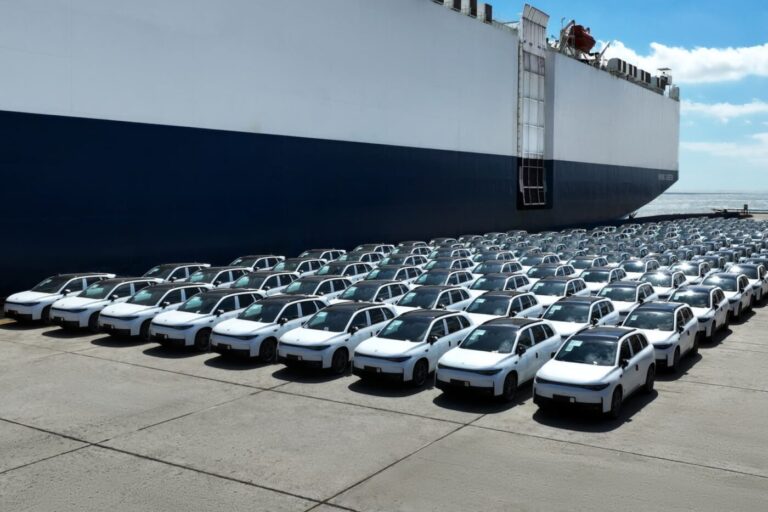
The logistics of EV export have transformed from standard RoRo (Roll-on/Roll-off) operations to sophisticated dangerous goods supply chains requiring specialized handling protocols. With China’s green logistics mandates now extending to export operations, 2026 presents both compliance challenges and sustainability opportunities.
Ocean Freight Modalities
RoRo vs. Containerization:
Pure Car and Truck Carriers (PCTC) remain the dominant modality for high-volume imports, with Chinese yards launching specialized EV-dedicated vessels featuring enhanced ventilation systems and battery monitoring decks. These vessels command 15-20% freight premiums over standard car carriers but reduce insurance costs through certified safety systems.
Containerized Shipping (4-6 vehicles per 40′ High Cube) offers flexibility for smaller importers but requires Dangerous Goods declaration under IMDG Code Class 9 (UN 3166 for vehicles with lithium batteries). Each container requires:
– Thermal runaway detection systems
– Fire suppression blankets between vehicles
– Segregated stowage away from heat sources and reactive cargoes
Battery Transport Compliance (UN 38.3 & Beyond)
The intersection of IMO 2026 amendments and Chinese GB/T 36972-2018 standards creates a multi-layered compliance environment:
| Certification | Requirement | Validity | Verification |
|---|---|---|---|
| UN 38.3 | Lithium battery safety testing | Per battery model | Third-party lab report (SGS, TÜV, or CATARC) |
| UN 3166 | Vehicle classification for transport | Per shipment | Shipper’s declaration with 24-hour emergency contact |
| MSDS | Material Safety Data Sheet | Per battery chemistry | Chinese/English bilingual documentation |
| SOC Limitation | State of Charge ≤30% for transport | Per vehicle | Factory calibration certificate |
Critical 2026 Update: The IMO has implemented stricter segregation requirements for EVs with solid-state batteries (emerging in premium Chinese models). These require Class 9 segregation from Class 4.1 flammable solids, effectively banning mixed loads with certain automotive components.
Green Logistics Integration
Chinese export logistics now mandate carbon disclosure at the port of origin. Importers receive Carbon Footprint Certificates detailing:
– Manufacturing emissions (Scope 1-2)
– Port operations emissions (Scope 3)
– Ocean transport emissions (calculated via GLEC Framework)
European importers can utilize these certificates for CBAM reporting and corporate sustainability disclosures, turning compliance into competitive advantage.
Port Infrastructure Developments:
Shanghai’s Yangshan Deep Water Port has commissioned dedicated EV export terminals with 10,000-vehicle staging capacity, automated charging maintenance (keeping vehicles at 30% SOC), and blockchain-based documentation verification. This infrastructure supports the projected 8 million+ vehicle export volume for 2026.
6. Localization & Homologation: Preparing Cars for Local Markets
Exporting from China is merely the first phase; successful import requires navigating the complex homologation landscape that ensures vehicles meet local safety, environmental, and cybersecurity standards. The 2026 regulatory environment has introduced specific challenges regarding software versioning and data sovereignty.
European Union Type Approval (EU TA)
Framework Regulation (EU) 2018/858 requires Chinese EVs to undergo:
– Whole Vehicle Type Approval (WVTA): Testing for braking, lighting, and structural integrity
– Battery Regulation (EU) 2023/1542: Carbon footprint declaration, recycled content verification, and supply chain due diligence
– Cybersecurity (UN R155) & Software Updates (UN R156): Mandatory for vehicles with OTA capabilities
Critical Compliance Gap: Many 2025-model Chinese EVs shipped with software versions incompatible with EU data protection standards (GDPR). The 2026 export license framework now mandates software compliance certification before export, preventing the “gray market” issue of outdated firmware reaching European consumers.
Regional Variations
Middle East (GCC Standards):
– Extreme heat testing (50°C+ ambient)
– Sand ingress protection (IP6KX)
– Halal certification for interior materials
Southeast Asia (ASEAN NCAP):
– Tropical climate durability
– Right-hand drive conversion (for Indonesia, Thailand, Malaysia)
– Local language HMI (Human-Machine Interface) integration
Latin America (Latin NCAP):
– Safety rating alignment (often requiring structural reinforcements)
– Local telecom module integration (4G/5G frequency bands vary)
Technical Adaptation Costs
| Market | Required Modification | Cost per Unit (USD) | Lead Time |
|---|---|---|---|
| EU | CCS2 charging port conversion + software | $800-1,200 | 2 weeks |
| UK/Australia | Right-hand drive conversion | $2,500-4,000 | 4-6 weeks |
| Middle East | Enhanced HVAC + sand filters | $600-900 | 1 week |
| ASEAN | Local telecom module + language pack | $400-600 | 1 week |
Software Localization Strategy:
Chinese EVs rely heavily on connected services. Importers must negotiate regional server hosting agreements to ensure navigation, voice recognition, and OTA updates function locally. The 2026 export regulations require manufacturers to disclose data routing (whether through Chinese servers or local mirrors), addressing growing data sovereignty concerns.
7. After-Sales Ecosystem: Securing Parts and Service Abroad
The 2026 export license framework explicitly ties export authorization to after-sales capability verification. This addresses the historical weakness of Chinese EV exports: excellent hardware paired with inadequate service infrastructure. For importers, this creates both obligation and opportunity.
Warranty and Liability Structures
Chinese manufacturers must now post financial bonds (typically 3-5% of export value) to guarantee warranty fulfillment abroad. Importers should negotiate:
- 5-year/100,000km battery warranties (industry standard)
- 8-year HV component coverage (inverter, motor, controller)
- Parts availability guarantees (10-year minimum for safety-critical components)
Critical Contractual Element: Ensure warranty obligations are backed by international letters of credit or insurance through Sinosure, preventing manufacturer insolvency from voiding consumer protections.
Parts Supply Chain Architecture
Regional Warehousing Strategy:
Successful importers establish bonded warehouses in destination markets holding:
– Fast-moving consumables: Brake pads, filters, 12V batteries
– High-voltage safety components: Service disconnects, insulated tools
– Crash parts: Body panels, lighting assemblies (often aluminum-intensive, requiring specialized repair training)
Technical Training Certification:
Chinese manufacturers now offer Level 1-4 technician certification programs:
– Level 1: High-voltage safety awareness
– Level 2: Routine maintenance (non-invasive)
– Level 3: Battery pack diagnostics and module replacement
– Level 4: Full battery reconstruction and BMS programming
Importers should budget $15,000-25,000 per technician for Level 3-4 certification, with manufacturers often subsidizing 50% of training costs under 2026 export promotion schemes.
OTA Update Infrastructure
With UN R156 compliance mandatory, importers must establish software update delivery mechanisms:
– Local update servers (reducing latency and data sovereignty concerns)
– Cybersecurity monitoring (intrusion detection systems)
– Rollback capabilities (in case of faulty updates)
8. Avoiding Scams: How to Audit a Chinese EV Supplier
The 2026 regulatory tightening specifically targets the “gray export” market—unlicensed dealers selling new vehicles as “used” to circumvent tariffs and type approval requirements. For B2B importers, the risk of inadvertently sourcing from these channels carries severe financial and legal consequences.
Red Flags in Supplier Verification
Documentation Inconsistencies:
– Certificate of Origin discrepancies (vehicle age vs. manufacturing date)
– Export License numbers that don’t match MOFCOM’s public registry
– Software version declarations that differ from factory specifications
Pricing Anomalies:
Offers exceeding 15% below market rates for identical models typically indicate:
– Gray market sourcing (new vehicles registered as used in China to avoid export license requirements)
– Battery downgrades (substituting older cell chemistry)
– Missing safety features (de-contented models for domestic market only)
The Audit Protocol
Phase 1: License Verification
1. Request the manufacturer’s MOFCOM Export License Number (format: NEV-2026-XXXXX)
2. Verify via the Ministry of Commerce online portal (english.mofcom.gov.cn/exportverify)
3. Confirm license scope includes your target destination market
Phase 2: Factory Assessment
– Production Line Inspection: Verify VIN (Vehicle Identification Number) allocation systems match export documentation
– Battery Traceability: Review cell-level serial number tracking (required under EU Battery Regulation)
– Software Version Control: Confirm export-spec firmware differs from domestic market versions (language, regulatory compliance)
Phase 3: Financial Due Diligence
– Bank Reference Letters: From tier-1 Chinese banks (ICBC, Bank of China, CCB)
– Sinosure Credit Limits: Confirmation of export credit insurance availability
– Tax Compliance: VAT invoice verification (fapiao) to ensure legitimate tax status
Payment Security Best Practices:
– Never pay 100% advance for “used” vehicles claiming to be new
– Utilize escrow services through banks with Chinese operations (HSBC, Standard Chartered)
– Insist on SGS/Bureau Veritas pre-shipment inspection (PSI) for first three transactions
Case Study: The “Parallel Export” Trap
In November 2025, a Polish importer contracted with a Shenzhen trading company offering BYD vehicles at 18% below factory pricing. The vehicles arrived with domestic Chinese software (Mandarin-only), non-export spec batteries lacking UN 38.3 certification, and were registered as “pre-owned” in China to avoid 2026 export license requirements. Polish customs seized the shipment under EU consumer protection laws. The importer lost $340,000 in inventory and faced regulatory penalties for attempted circumvention of type approval requirements.
9. Start Your Import Business with Electric Auto China
Navigating the 2026 electric vehicle import regulations requires more than transactional supplier relationships—it demands a strategic partnership with entities possessing deep regulatory intelligence, licensed export authorization, and integrated logistics capabilities.
At Electric Auto China, we have positioned ourselves as the definitive bridge between China’s regulated EV export ecosystem and global B2B markets. Our value proposition addresses every friction point outlined in this guide:
Regulatory Compliance Assurance:
– Pre-validated MOFCOM export licenses for 12 major manufacturers (BYD, NIO, XPeng, Li Auto, Zeekr, and others)
– Automated documentation generation ensuring UN 38.3, R155/R156, and CBAM compliance
– Real-time regulatory monitoring with automated alerts for policy shifts
Financial Structuring:
– Competitive landed cost optimization through our Shanghai Free Trade Zone bonded warehousing
– Flexible payment structures (LC, DP, and escrow arrangements) accommodating 2026 SAFE foreign exchange regulations
– Currency hedging instruments to protect against yuan volatility
Logistics Integration:
– Dedicated EV ocean freight contracts with COSCO, OOCL, and specialized RoRo carriers
– Battery-compliant warehousing at Yangshan, Ningbo, and Shekou ports
– Carbon footprint tracking and green logistics certification for EU sustainability reporting
Technical Localization:
– In-house homologation management for EU, GCC, ASEAN, and Latin American markets
– Software localization services (server hosting, language packs, regional mapping)
– Technical training programs for your local service networks
Risk Mitigation:
– Comprehensive supplier auditing services
– Export credit insurance facilitation through Sinosure
– Quality assurance inspections via certified third-party agencies
As China’s EV export volume scales toward 10 million units annually within the next five years, the importers who thrive will be those who mastered the 2026 regulatory transition—treating compliance not as a burden, but as a competitive moat.
The era of opportunistic EV trading has ended. The age of structured, compliant, sustainable electric vehicle importation has begun.
Contact Electric Auto China’s B2B Export Division today to receive your customized 2026 Import Compliance Roadmap and detailed landed cost modeling for your specific market requirements. Our Shanghai-based team stands ready to transform regulatory complexity into your commercial advantage.
Electric Auto China is a licensed export consultancy and supply chain solutions provider headquartered in Shanghai, PRC. We operate in strict compliance with MOFCOM 2026 EV Export Regulations, UN 38.3 dangerous goods protocols, and international automotive homologation standards.
Unlock High-Margin EV Imports with Electric Auto China
As an elite automotive supply chain partner in Shanghai, we provide end-to-end, strictly compliant export solutions tailored for international dealerships, fleet managers, and wholesale distributors.
- 🛡️ 100% Legal & Compliant: Fully licensed exports ensuring smooth customs clearance at your destination.
- ⚙️ Complete Localization: Professional English/Arabic/Russian OS flashing and GB/T to CCS2 charging solutions.
- 🚢 Secure Logistics: Direct Ro-Ro and Containerized shipping with full UN38.3 battery certifications.
- 🔧 After-Sales Support: Reliable access to OEM diagnostic tools and steady spare parts supply.
Request a Detailed FOB/CIF Quote Today:
📧 B2B Sales Email: [email protected]
💬 Direct WhatsApp: +86 159 5127 6160