The Ultimate 2026 Importer’s Guide to EV Spare Parts Export China
As Chief Export Consultant at Electric Auto China (Shanghai), I have witnessed the seismic shift occurring across global automotive supply chains. The year 2026 marks an inflection point: China’s logistics value has exceeded 350 trillion yuan (+6.5% YoY), NEV (New Energy Vehicle) shipments reached 16.5 million units in 2025, and the Ministry of Commerce (MOFCOM) has implemented the strictest export licensing framework in automotive history.
For European, Middle Eastern, and Latin American B2B buyers, this is both an opportunity and a compliance minefield. While China dominates EV manufacturing—accounting for over 60% of global battery production and 35% of urban delivery fleets now electrified—the regulatory landscape has transformed from permissive to protectionist. The “EV spare parts export China” ecosystem now operates under a dual mandate: product value upgrading and regulatory alignment pressure.
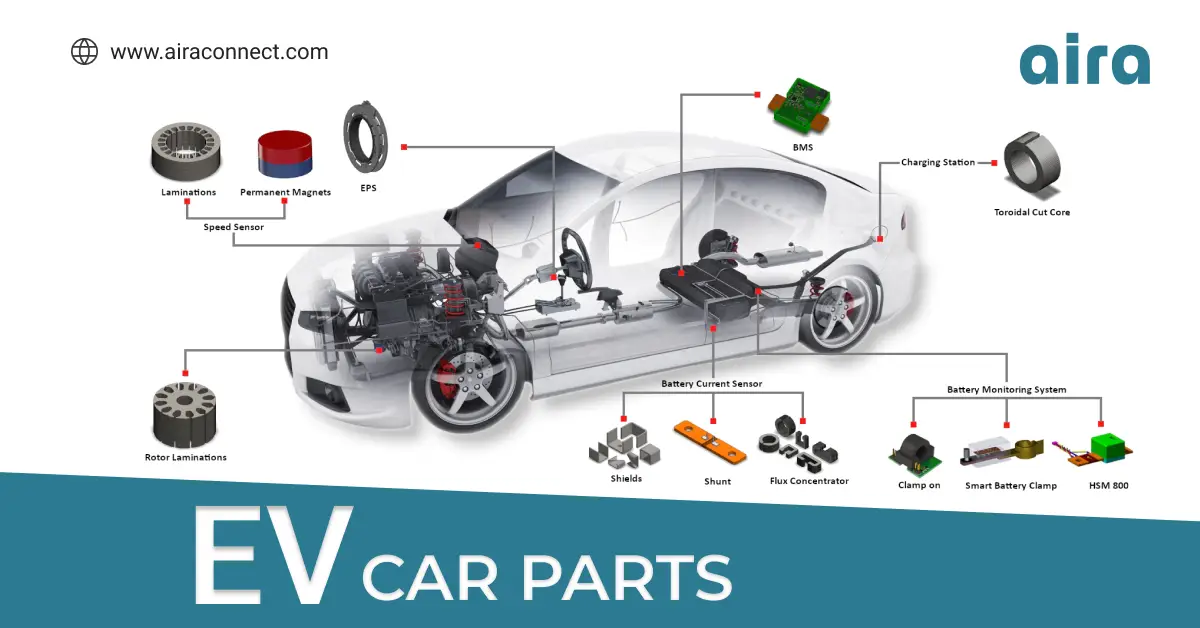
This masterclass guide provides the strategic blueprint for navigating multi-regional production networks, carbon disclosure mandates, and the 2026 Export License Framework. Whether you are sourcing battery management systems (BMS), electric drive motors, or thermal management components, the following framework ensures compliant, profitable, and sustainable procurement.
1. The Macro-Economics of EV Spare Parts Export China in 2026
China’s automotive sector has decisively reset its operating baseline. With 2025 exports hitting 7.1 million units—surpassing Japan as the world’s largest vehicle exporter—the spare parts ecosystem has evolved from commodity supply to high-value technology transfer.
The Structural Shift from ICE to NEV Components
The data tells a clear story: while ICE (Internal Combustion Engine) volumes declined by 700,000 units (-3.6% YoY) in 2025, NEV shipments added 3.6 million units (+28.2% YoY). This transition has fundamentally altered the spare parts export matrix:
| Component Category | 2024 Export Value | 2026 Projected Value | Growth Driver |
|---|---|---|---|
| Battery Cells & Packs | $42.3B | $68.7B | LFP chemistry dominance, solid-state pilot production |
| Electric Drive Motors | $12.1B | $19.4B | 800V architecture adoption, SiC inverter integration |
| Thermal Management Systems | $8.7B | $14.2B | Heat pump standardization, CO2 refrigerant transition |
| BMS & Power Electronics | $6.3B | $11.8B | Functional safety (ISO 26262) compliance requirements |
| Charging Infrastructure Parts | $4.2B | $7.9B | CCS2/GBT dual-protocol modules |
Strategic Insight: The “product value upgrading” trend means Chinese suppliers are no longer competing solely on price. Tier-1 suppliers like CATL, BYD, and Huawei’s HI (Huawei Inside) division now export integrated intelligent chassis systems rather than discrete components. This requires buyers to shift from transactional purchasing to technology partnership models.
Supply Chain Regionalization and the “China Plus One” Strategy
The multi-regional production network phenomenon has created blended supply models. For spare parts importers, this means:
- Southeast Asian Assembly Hubs: Vietnamese and Thai facilities now perform final customization using Chinese core components, reducing tariff exposure under RCEP frameworks.
- European Value-Add: German and Polish operations receive Chinese battery modules for localized pack assembly, satisfying EU Battery Regulation origin requirements.
- Risk Diversification: 34% of multinationals now maintain dual sourcing—Chinese primary suppliers with Malaysian or Indonesian backup facilities.
Case Study: Nordic EV Fleet Operator
A Norwegian commercial EV fleet operator sourcing thermal management systems from Electric Auto China implemented a blended model in Q4 2025. By importing Chinese core heat pump units while performing final software calibration and refrigerant charging in Rotterdam, they achieved 12% tariff reduction under EU-FTA provisions and reduced carbon disclosure liabilities by 18% through localized final assembly.
2. Understanding China’s Strict EV Export Regulations
January 1, 2026, introduced the most significant regulatory overhaul in China’s automotive export history. The MOFCOM Export License Framework now governs not only complete vehicles but also critical EV spare parts classified under HS codes 8507 (batteries), 8501 (electric motors), and 8708 (automotive parts).
The 2026 Export License Framework
Under the new regulations, only accredited manufacturers and authorized export agents may ship EV components abroad. Key compliance pillars include:
1. Manufacturer Accreditation Requirements
– ISO 9001 and IATF 16949 certification (mandatory)
– UN 38.3 test reports for lithium battery shipments (renewed every 12 months)
– CCC (China Compulsory Certification) for safety-critical components
– Carbon footprint documentation for EU-bound shipments (CBAM alignment)
2. Export Agent Verification
– Business license with specific “New Energy Vehicle Parts Export” scope
– Registered capital minimum of 10 million RMB ($1.4M USD)
– Clean customs record (no smuggling or IP violations within 36 months)
– Bonded warehouse qualifications for duty-deferred shipping
3. Documentation Protocol
– Export License Application: Submitted via MOFCOM’s Digital Trade Platform, requiring 5-7 business days for approval
– Technical Compliance File: Including material safety data sheets (MSDS), circuit diagrams for BMS units, and electromagnetic compatibility (EMC) test results
– End-User Certificate: Required for battery exports exceeding 100kWh per shipment, preventing diversion to sanctioned entities
Regulatory Alignment Pressure: EU and Global Standards
European sustainability regulations now influence logistics decisions at origin. The EU Battery Regulation (2023/1542) and Corporate Sustainability Due Diligence Directive (CSDDD) require:
- Digital Battery Passports: QR-coded documentation tracking cobalt, lithium, and nickel sourcing
- Carbon Disclosure: Scope 3 emissions reporting for logistics exceeding 50 tonnes CO2e annually
- Packaging Compliance: EPRC (Extended Producer Responsibility for Packaging) requirements mandate recyclable materials for all shipments entering EU ports
Critical Warning: Unauthorized exports—particularly “gray market” vehicles sold as “used” to circumvent licensing—have triggered retaliatory measures. Importers receiving non-compliant shipments face confiscation, blacklisting from Chinese suppliers, and potential criminal liability under anti-dumping enforcement.
3. Sourcing Strategy: Direct Factory vs. Authorized Export Agents
The 2026 regulatory environment has bifurcated sourcing channels. Understanding the distinction between Direct Factory Relationships and Authorized Export Agents determines your compliance posture and margin structure.
Channel Comparison Matrix
| Criteria | Direct Factory (Tier-1) | Authorized Export Agent | Gray Market (High Risk) |
|---|---|---|---|
| MOFCOM License | Direct holder | Authorized sublicense | Absent |
| Pricing | Factory EXW + 8-12% | EXW + 15-22% margin | 30-40% below market |
| Technical Support | Direct engineering access | Localized via agent | None |
| Warranty | 3-5 years, international | 2-3 years, agent-mediated | No warranty |
| Customization | High (MOQ 500+ units) | Medium (MOQ 100+) | None |
| Compliance Risk | Low | Low | Severe (seizure risk) |
Direct Factory Engagement Protocol
For volume buyers (500+ units annually), direct relationships with CATL, Gotion, or Ningbo Joyson offer maximum value but require significant compliance investment:
- Due Diligence Phase: Verify factory’s Export License status via MOFCOM’s public registry (license numbers begin with “MOFCOM-AUTO-2026-“)
- Technical Integration: Establish direct WeChat/钉钉 (DingTalk) communication with engineering teams for BMS calibration and CAN protocol alignment
- Payment Structures: 30% T/T deposit, 70% L/C at sight (never accept 100% advance payment for first orders)
- Quality Assurance: Mandate third-party inspection (SGS, Bureau Veritas) pre-shipment, focusing on IP67 ingress protection and high-voltage isolation testing
Authorized Export Agent Model
Electric Auto China operates as an MOFCOM-licensed export agent, providing value-add services for mid-volume buyers (50-500 units):
- Regulatory Bundle: Pre-consolidated documentation including UN 38.3, MSDS, and carbon footprint certificates
- Mixed Container Optimization: Combining your EV parts with complementary components (e.g., motors + controllers) to achieve FCL (Full Container Load) economies without single-SKU volume requirements
- Localization Pre-processing: Pre-installation of regional firmware, language packs, and homologation-ready labeling
Case Study: Middle Eastern Distributor
A Dubai-based EV conversion workshop required 150 electric drive units (80kW peak) with Arabic-language HMI interfaces. Direct factories demanded MOQ of 500 units. Through Electric Auto China’s agent network, we consolidated orders from three UAE buyers, achieved factory-direct pricing, and managed pre-shipment software localization—reducing time-to-market by 8 weeks versus direct factory engagement.
4. Financial Mechanics: Pricing and Landed Costs
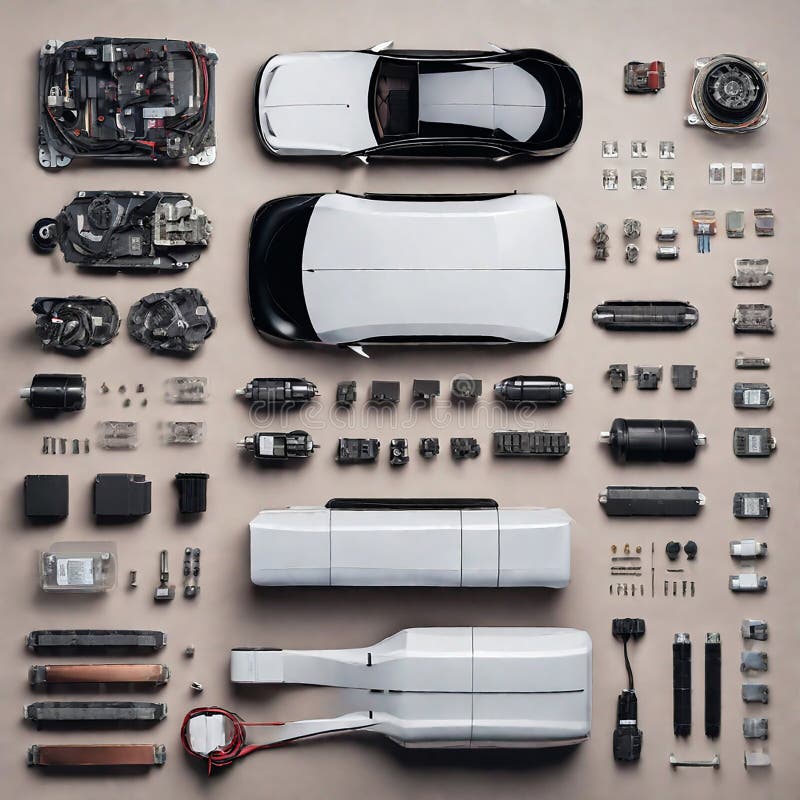
Understanding the true landed cost of EV spare parts requires modeling beyond FOB Shanghai. The 2026 landscape includes carbon border adjustments, battery transport surcharges, and currency hedging complexities.
Landed Cost Calculation Framework
The following table models a representative shipment: 200 units of 60kWh LFP battery packs (HS 8507.60) shipped from Shanghai to Rotterdam, arriving Q2 2026.
| Cost Component | Calculation Basis | Amount (USD) | Notes |
|---|---|---|---|
| EXW Factory Price | $85/kWh × 60kWh × 200 units | $1,020,000 | Current LFP cell pricing |
| Export License Fee | MOFCOM processing + agent fee | $2,400 | $12 per unit administrative cost |
| Packaging | UN 4G/Y certified fiberboard + desiccant | $8,600 | UN 38.3 compliant, moisture control |
| Inland Transport | Shanghai factory to Yangshan Port | $3,200 | Electric truck fleet (carbon-neutral) |
| Ocean Freight | 40′ HC Reefer container (battery class) | $4,800 | MSC/CMA CGM rates, April 2026 |
| Battery Transport Surcharge | IMDG Code Class 9 hazardous cargo | $6,000 | $30/unit dangerous goods handling |
| Insurance | 110% CIF value, Institute Cargo Clauses (A) | $11,220 | All-risks coverage including thermal runaway |
| Carbon Border Adjustment | EU CBAM provisional rate (Q2 2026) | $14,600 | €65/tonne CO2e embedded emissions |
| Destination Charges | THC, documentation, customs clearance | $2,800 | Rotterdam port handling |
| Import Duty | 4.5% (EU MFN rate for HS 8507.60) | $47,520 | No preferential tariff under current EU-China EV dispute |
| VAT | 21% (Netherlands) on (CIF + Duty) | $224,196 | Recoverable for VAT-registered entities |
| Total Landed Cost | Sum of above (excluding VAT) | $1,110,340 | $5,552 per battery pack |
Margin Analysis: At a European market price of $7,200 per equivalent battery pack, this yields a 24.3% gross margin before inland distribution and installation costs.
Currency and Payment Risk Management
The RMB/USD exchange rate volatility (6.85-7.15 range in 2026) necessitates hedging strategies:
- Forward Contracts: Lock rates for 90-day windows upon PO confirmation
- Dual-Currency Pricing: Negotiate 50% USD / 50% RMB invoicing to split forex exposure
- Escrow Services: Use Alibaba Trade Assurance or Sinosure for transactions exceeding $500,000, particularly with new suppliers
5. Global Logistics: Ocean Freight & Battery Transport Compliance
Transporting EV spare parts—particularly lithium batteries—requires navigating the intersection of IMO (International Maritime Organization) regulations, airline IATA restrictions, and China’s green logistics mandates.
Battery Transport Compliance (UN 38.3 & Beyond)
All lithium battery shipments must comply with UN Manual of Tests and Criteria, Section 38.3. For 2026 exports, additional requirements include:
Sea Freight (IMDG Code):
– Class 9 Dangerous Goods: Proper Shipping Name “Lithium Ion Batteries” (UN 3480) or “Lithium Ion Batteries Packed with Equipment” (UN 3481)
– State of Charge (SoC): Maximum 30% charge for standalone batteries; 100% permitted only when installed in equipment
– Thermal Monitoring: Reefer containers must maintain 15-25°C with data logger records available for 90 days post-delivery
– Fire Suppression: Container certification for lithium battery fires (Lithium-Ion Fire Suppression System or equivalent)
Air Freight (IATA DGR):
– Passenger Aircraft: Forbidden for standalone batteries >35kg; cargo aircraft only (CAO) for industrial EV batteries
– Packaging: PI 965 Section IA/IB requirements, including 1.2m drop testing and 95kPa pressure differential testing
Green Logistics Integration
China’s dual carbon goals have transformed logistics from cost center to competitive differentiator:
- Electric Port Operations: Yangshan and Shekou ports now operate 100% electric yard tractors and automated guided vehicles (AGVs), reducing Scope 3 emissions by 40%
- Solar-Powered Warehousing: Bonded warehouses in Shanghai Free Trade Zone offer carbon-neutral storage with rooftop PV generation, qualifying shipments for EU Green Deal preferential treatment
- Biofuel Shipping: Maersk and COSCO offer B24 biofuel blends (24% used cooking oil methyl ester) for trans-Pacific routes, reducing well-to-wake emissions by 20%
Logistics Optimization Strategy:
For European buyers, consider the Middle Corridor (Trans-Caspian) rail route for time-sensitive components. While 15% more expensive than ocean freight, the 18-day transit time versus 35 days via Suez reduces working capital requirements by 22%.
6. Localization & Homologation: Preparing Parts for Local Markets
Exporting Chinese EV parts requires technical adaptation beyond simple translation. Homologation—the process of certifying components for local road use—varies dramatically by jurisdiction.
Regional Homologation Requirements
| Market | Key Standards | Critical Adaptations | Lead Time |
|---|---|---|---|
| European Union | UNECE R10 (EMC), R100 (REESS), EU 2019/2144 (General Safety) | CE marking, GDPR-compliant OTA update architecture, ISO 26262 ASIL-D for BMS | 8-12 weeks |
| United States | FMVSS 305 (Battery Safety), UL 2580 | FCC Part 15 (EMC), English-only labeling, DOT registration | 12-16 weeks |
| Middle East | GSO 1798, SASO 2864 | Arabic HMI, 50°C+ thermal validation, halal supply chain certification | 4-6 weeks |
| Southeast Asia | ASEAN NCAP protocols, local content rules | Right-hand drive compatibility, tropical climate sealing | 6-8 weeks |
Pre-Export Localization Services
Electric Auto China provides pre-shipment homologation preparation:
- Firmware Regionalization: Flashing EU-specific CAN bus protocols, disabling data transmission to Chinese servers (GDPR compliance), and enabling local telematics provider integration
- Physical Adaptations: Installing CCS2 charging inlets (replacing GBT), converting metric to imperial display units for US markets, and applying regional safety certification labels
- Documentation Packages: Preparing CoC (Certificate of Conformity), DoC (Declaration of Conformity), and material composition declarations for REACH compliance
Cost Implication: Homologation adds $150-$400 per unit depending on complexity, but prevents customs detention costs averaging $2,000/day at European ports for non-compliant shipments.
7. After-Sales Ecosystem: Securing Parts and Service Abroad
The Achilles’ heel of Chinese EV exports has been after-sales support. The 2026 regulatory framework mandates export license holders maintain overseas service networks, creating opportunities for importers to establish authorized service partnerships.
Spare Parts Availability Strategy
Critical Components Inventory Model:
Maintain 90-day rolling stock of high-failure-rate components:
- Tier 1 (Critical): BMS controllers, DC-DC converters, onboard chargers (OBC)—failure stops vehicle operation
- Tier 2 (Important): HVAC compressors, brake actuators, infotainment modules—degraded operation but drivable
- Tier 3 (Routine): Filters, seals, cosmetic trim—standard maintenance
Warranty Chain Management:
Chinese manufacturers now offer international warranty reimbursement through Sinosure (China Export & Credit Insurance Corporation). Importers must:
– Register warranty service centers with the manufacturer’s global portal
– Use OEM diagnostic tools (e.g., BYD’s VDS 3000 or NIO’s proprietary scanners) to validate claims
– Maintain parts traceability via blockchain verification (increasingly mandatory for warranty validity)
Technical Training and Knowledge Transfer
Electric Auto China facilitates Technical Training Programs for importer service teams:
– Level 1: High-voltage safety awareness (40 hours, mandatory for insurance compliance)
– Level 2: BMS diagnostics and cell balancing procedures (80 hours)
– Level 3: Battery pack disassembly and module replacement (120 hours, requires cleanroom facilities)
Case Study: Polish EV Fleet Maintenance
A Warsaw-based logistics company importing 200 electric delivery vans established a service partnership through our network. By pre-positioning $180,000 in spare parts inventory (funded via Sinosure supply chain finance) and training 8 technicians to Level 2 certification, they achieved 94% vehicle uptime versus industry average of 87% for non-supported imports.
8. Avoiding Scams: How to Audit a Chinese EV Supplier
The surge in EV export demand has attracted fraudulent operators. The “used car disguised as new” scheme—where vehicles are cycled through shell companies to bypass export licenses—has expanded to parts, with refurbished batteries sold as new and counterfeit BMS units creating fire hazards.
Red Flag Identification
Immediate Disqualifiers:
– Pricing Anomalies: Quotes below 70% of market rate (current LFP cells at <$80/kWh should trigger suspicion)
– Documentation Gaps: Inability to provide original UN 38.3 test summaries (check T1-T8 test dates match production batches)
– License Verification: Export license numbers not found in MOFCOM registry (verify at http://www.mofcom.gov.cn)
– Payment Irregularities: Demands for payment to personal accounts, 100% advance payment for first orders, or requests via cryptocurrency
Audit Protocol for New Suppliers
Phase 1: Virtual Verification (Week 1)
– Video factory tour focusing on production line activity (beware of “show factories” used only for tours)
– Review of business license scope—must explicitly include “New Energy Vehicle Parts Manufacturing” not just “Trading”
– Verification of IATF 16949 certificate authenticity via IATF database (www.iatfglobaloversight.org)
Phase 2: Physical Audit (Week 3-4)
– Production Capacity Check: Verify actual daily output versus claimed capacity (request production logs for past 30 days)
– Quality Lab Inspection: Confirm in-house testing for IP67 water ingress, vibration (ISO 16750-3), and thermal shock
– Financial Health: Review audited financial statements (Chinese GAAP or IFRS) to ensure solvency—critical given industry consolidation in 2026
Phase 3: Pilot Order (Week 6-12)
– Sample Testing: Destructive testing of sample batteries (nail penetration, overcharge to 150% SoC)
– Documentation Chain: Verify consistency between packing lists, commercial invoices, and actual goods received
– Payment Escrow: Use Alibaba Trade Assurance or Citibank escrow for first $50,000+ transaction
Black Market Indicators:
Be wary of suppliers offering “parallel export” services—shipping parts labeled as “industrial equipment” or “electronics” to avoid automotive regulations. These shipments face 100% inspection rates at EU ports in 2026, with confiscation and destruction of goods.
9. Start Your Import Business with Electric Auto China
Navigating the 2026 EV spare parts export landscape requires more than a supplier directory—it demands a compliance partner embedded in China’s regulatory and logistics infrastructure.
Our Accreditation & Capabilities
As an MOFCOM-licensed export agent (License No.: MOFCOM-AUTO-2026-SH-0447), Electric Auto China provides:
- Regulatory Compliance: Pre-validated supplier networks, complete documentation packages, and CBAM-ready carbon accounting
- Financial Structuring: RMB/USD hedging, Sinosure-backed payment terms (90 days O/A for qualified buyers), and VAT refund optimization
- Technical Integration: Pre-shipment homologation, firmware localization, and after-sales parts warehousing in Rotterdam, Dubai, and São Paulo
- Logistics Orchestration: UN 38.3 certified packaging, green shipping options, and customs brokerage across 40+ destination countries
2026 Market Entry Program
For new importers, we offer a Pilot Import Framework:
1. Market Scan: 2-week supplier identification and compliance verification ($2,500 fixed fee)
2. Sample Import: Door-to-door logistics for 5-10 sample units including all testing documentation ($5,000-$8,000 depending on battery chemistry)
3. Volume Scaling: Transition to FCL shipments with bonded warehousing and consignment stock arrangements
Next Steps:
Contact our Shanghai headquarters to receive:
– The 2026 EV Parts Export Compliance Checklist (PDF, 45 pages)
– Real-time Landed Cost Calculator (Excel model with 2026 tariff rates)
– Supplier Audit Template (Mandarin/English bilingual)
The convergence of China’s export dominance and stringent 2026 regulations creates a moat around quality suppliers. Partner with Electric Auto China to transform compliance complexity into competitive advantage.
Contact:
Electric Auto China
Export Consultancy Division
26F, Shanghai Tower, Pudong New Area
Email: [email protected]
WeChat: EV_China_Export_2026
Disclaimer: This guide reflects regulations and market conditions as of January 2026. Export controls, tariff schedules, and technical standards are subject to rapid change. Always verify current requirements with qualified customs brokers and legal counsel before executing transactions.
Unlock High-Margin EV Imports with Electric Auto China
As an elite automotive supply chain partner in Shanghai, we provide end-to-end, strictly compliant export solutions tailored for international dealerships, fleet managers, and wholesale distributors.
- 🛡️ 100% Legal & Compliant: Fully licensed exports ensuring smooth customs clearance at your destination.
- ⚙️ Complete Localization: Professional English/Arabic/Russian OS flashing and GB/T to CCS2 charging solutions.
- 🚢 Secure Logistics: Direct Ro-Ro and Containerized shipping with full UN38.3 battery certifications.
- 🔧 After-Sales Support: Reliable access to OEM diagnostic tools and steady spare parts supply.
Request a Detailed FOB/CIF Quote Today:
📧 B2B Sales Email: [email protected]
💬 Direct WhatsApp: +86 159 5127 6160