The Ultimate 2026 Importer’s Guide to EV wholesale market China
1. The Macro-Economics of EV wholesale market China in 2026
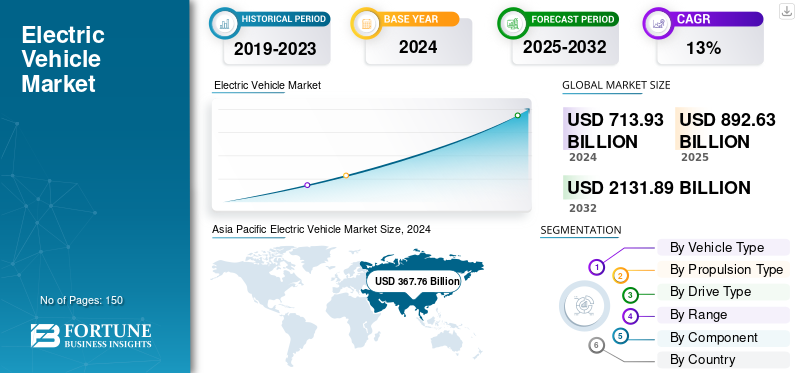
As we enter 2026, China’s logistics and supply chain infrastructure has evolved into a sophisticated ecosystem valued at over 350 trillion yuan, representing a 6.5% year-on-year expansion that underpins the world’s most concentrated EV manufacturing hub. The “EV wholesale market China” is no longer a fragmented collection of regional traders; it has matured into a structurally embedded export engine that shipped a record 7.1 million vehicles in 2025, with New Energy Vehicles (NEVs) commanding more than one-third of outbound volume.
The domestic saturation point has fundamentally altered sourcing dynamics. With NEVs capturing 59.4% of new passenger car sales in late 2025 and production share exceeding 52%, Chinese OEMs face intense margin compression at home. This saturation has triggered a “survival test” mentality among manufacturers including BYD, Xiaomi, and Leapmotor, creating unprecedented opportunities for foreign B2B buyers to access Tier-1 inventory at competitive wholesale pricing previously reserved for domestic distributors.
However, the macroeconomic landscape requires nuanced navigation. The “China Plus One” strategy has accelerated supply chain regionalization, with Chinese logistics providers establishing robust Southeast Asian networks that maintain China as the central node while diversifying geopolitical risk. For importers, this means access to hybrid fulfillment models—combining mainland manufacturing with regional warehousing—that reduce lead times by 40% compared to direct ocean freight.
The “follow-the-capital” phenomenon further distinguishes 2026’s market. As Chinese EV giants establish factories in Hungary (BYD), Indonesia (Geely), and Egypt (multiple OEMs), logistics demand has shifted from simple freight to complex, end-to-end supply chain solutions. Smart importers are leveraging these capital flows to secure production-line feeding contracts and after-sales service networks that extend beyond simple vehicle trading into sustainable, recurring revenue models.
Critical to 2026 economics is the green logistics mandate. With electric vehicles now constituting 35% of urban delivery fleets and solar-powered warehouses becoming standard, carbon-neutral shipping options have transitioned from premium offerings to baseline expectations. This sustainability focus serves as both regulatory compliance and competitive differentiation, particularly for EU-bound shipments where Carbon Border Adjustment Mechanisms (CBAM) increasingly influence landed costs.
2. Understanding China’s Strict EV Export Regulations
Navigating China’s 2026 EV export regulatory framework requires precision. The Ministry of Commerce (MOFCOM) and General Administration of Customs (GACC) have implemented a three-tier compliance architecture that every wholesale buyer must understand before issuing Letters of Credit.
Tier 1: Manufacturer Export Qualifications
Only manufacturers holding valid Automobile Export Licenses (汽车出口许可证) may legally export vehicles. As of 2026, approximately 180 enterprises maintain this status, down from 230 in 2024 due to stricter environmental and financial stability requirements. Verify that your supplier appears on the latest GACC whitelist, updated quarterly.
Tier 2: Vehicle-Specific Certifications
Every exported EV requires:
– CCC Certification (China Compulsory Certificate) with export validity
– UN38.3 Test Summary for lithium battery transport compliance
– MSDS Documentation (Material Safety Data Sheets) for hazardous cargo classification
– VIN Verification against the national vehicle identification database
Tier 3: Destination Market Pre-Compliance
2026 regulations mandate that export declarations include preliminary conformity evidence for destination markets. For EU-bound vehicles, this means documentation showing intent to meet Whole Vehicle Type Approval (WVTA) standards. For ASEAN markets, proof of compliance with UNECE WP.29 regulations or bilateral mutual recognition agreements is required.
Battery Transport Protocols
Lithium-ion batteries (UN Class 9) face intensified scrutiny. The “green logistics” mandate requires that battery state-of-charge (SoC) not exceed 30% for ocean freight, with thermal runaway detection systems mandatory for containerized shipments. Solar-powered warehouse storage prior to shipment is now required for carbon-neutral export certification—a critical document for EU importers facing CBAM audits.
Currency and Tax Compliance
The 13% VAT rebate remains intact for qualified exporters, but 2026 regulations require digital VAT invoices (fapiao) linked to customs declarations through the Golden Tax System. Importers must ensure suppliers provide complete tax documentation to avoid clawback liabilities that could increase landed costs by 13-15%.
3. Sourcing Strategy: Direct Factory vs. Authorized Export Agents
The 2026 EV wholesale market China presents two primary sourcing pathways, each with distinct risk-reward profiles.
Direct Factory Engagement (Tier-1 Manufacturers)
Engaging directly with OEMs like BYD, Geely, or Xiaomi offers maximum margin potential but requires substantial commitment. Minimum Order Quantities (MOQs) typically start at 100 units for established models, with 300-500 units required for new releases or custom configurations. Direct relationships provide:
– Access to latest production slots (critical given 2026 supply discipline measures)
– Factory warranty backing (5-8 years battery coverage)
– Direct technical training and OTA update access
– Customization options (software localization, charging port modifications)
However, direct factory engagement demands significant escrow deposits (typically 30% T/T in advance) and requires importers to manage homologation, logistics, and after-sales independently.
Authorized Export Agents
For volumes below 100 units or market entry phases, authorized export agents provide essential value-add services:
– Consolidated shipping: Combining multiple SKUs to optimize container utilization
– Regulatory bundling: Handling CCC, UN38.3, and export license documentation
– Financial intermediation: Letters of Credit processing and currency hedging
– Homologation partnerships: Pre-certified vehicle pools ready for EU, ASEAN, or Middle Eastern markets
The Hybrid Sourcing Model
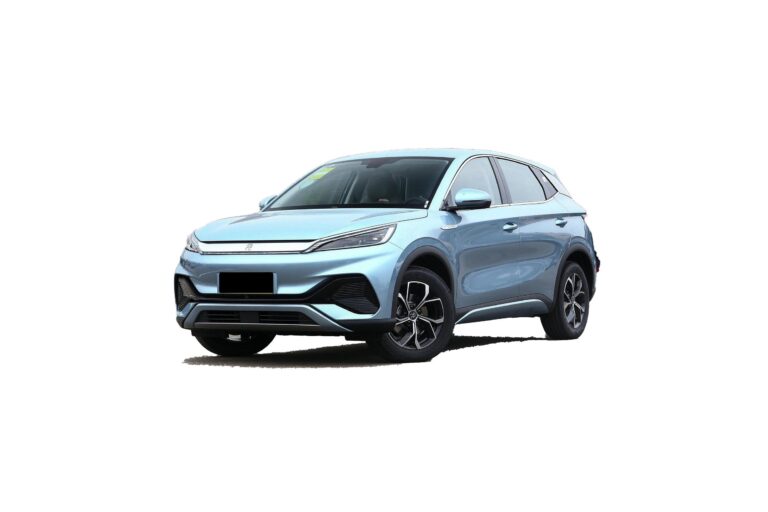
The winning formula for 2026 combines direct factory contracts for volume SKUs with agent relationships for test markets. For example, securing 200 units of BYD Seal directly while using an authorized agent to sample 20 units of Leapmotor’s latest C10 SUV for market testing. This approach balances margin optimization with inventory risk management.
Critical Due Diligence
Regardless of pathway, verify:
1. Business License Scope: Must explicitly include “automobile export” (汽车出口)
2. Capital Registration: Minimum 50 million RMB for wholesale vehicle trading
3. Export Track Record: Request customs declaration records (报关单) for previous shipments
4. Battery Supply Chain: Confirm CATL, BYD Battery, or Gotion High-tech as cell suppliers—avoid uncertified third-party battery packs
4. Financial Mechanics: Pricing and Landed Costs
Understanding the true cost structure of China’s EV wholesale market requires moving beyond FOB Shanghai quotes to comprehensive landed cost modeling. Below is the standardized calculation framework for 2026 imports.
Landed Cost Calculation Model (EU Destination)
| Cost Component | Calculation Basis | Amount (USD) | Notes |
|---|---|---|---|
| EXW Factory Price | BYD Seal Excellence (2026 Model) | $28,500 | Factory gate, excluding VAT |
| VAT Rebate | 13% of EXW | -$3,705 | Refunded to exporter; negotiate sharing |
| FOB Shanghai | EXW + Domestic logistics + Port fees | $29,200 | Includes green warehouse storage |
| Ocean Freight | 40HC container (2 units) @ $4,800 | $2,400 | Carbon-neutral shipping premium +$400 |
| Insurance (CIF) | 110% of (FOB + Freight) × 0.3% | $104 | Institute Cargo Clauses (A) |
| Import Duty | 10% of CIF value (EU MFN rate) | $3,170 | Varies by destination (ASEAN 0-5%) |
| VAT (Destination) | 19% (EU average) of (CIF + Duty) | $6,025 | Recoverable for VAT-registered businesses |
| Homologation | WVTA certification amortized | $800 | Per unit for 100+ unit orders |
| Local Delivery | From port to dealership | $450 | Includes PDI and charging |
| TOTAL LANDED COST | $38,149 | vs. Local EU retail: $52,000+ |
Currency Risk Management
With RMB volatility against the USD/EUR reaching ±8% in 2025, 2026 contracts should incorporate:
– Forward exchange contracts for 50-70% of invoice value
– Natural hedging through RMB-denominated revenue streams (parts sales)
– Escalation clauses for movements beyond ±3% between contract and delivery
Payment Structure Optimization
The standard 30/70 T/T split has evolved to protect importers:
– 10% Deposit upon contract signing (held in escrow)
– 20% Upon production completion and VIN assignment
– 70% Against Bill of Lading and scanned export documentation
For established relationships, DA 60-90 terms (Documents Against Acceptance) are increasingly available, improving cash flow by 2-3 months.
Case Study: Margin Analysis
A German importer purchasing 150 units of Geely Galaxy E8 (2026):
– Wholesale Landed Cost: $31,200/unit
– Local Homologated Retail: $48,500/unit
– Gross Margin: 35.6% before local marketing and warranty costs
– Break-even Volume: 18 units/month over 8-month sales cycle
5. Global Logistics: Ocean Freight & Battery Transport Compliance
The 2026 logistics landscape for EV wholesale market China has been transformed by the “green logistics mandate” and battery safety protocols. Understanding these mechanics is critical for maintaining delivery schedules and avoiding port detention fees exceeding $500/day.
Shipping Modalities
| Method | Capacity | Cost per Unit | Transit Time | Best For |
|---|---|---|---|---|
| RoRo (Roll-on/Roll-off) | 5,000-8,000 CEU | $1,800-2,400 | 28-35 days | High volume (100+ units), drivable vehicles |
| Containerized (40HC) | 2-4 EVs | $2,200-3,000 | 32-40 days | Mixed SKUs, luxury vehicles requiring protection |
| Flat Rack | 1-2 heavy EVs | $3,500-4,500 | 30-38 days | Commercial vehicles, non-standard dimensions |
Battery Transport Compliance (Critical 2026 Updates)
All lithium-ion battery shipments must comply with IMDG Code Amendment 41-22:
– SoC Limitation: Maximum 30% state-of-charge for ocean transport
– Thermal Monitoring: Containerized shipments require temperature logging every 2 hours
– Segregation: Batteries Class 9 must be stowed away from heat sources (minimum 3-meter separation)
– Documentation: Updated UN38.3 test summaries valid within 12 months; MSDS Section 14 must specify “Special Provision 188” or “188” as applicable
The Hybrid Logistics Model
The “overseas warehouses + dedicated lines + local delivery” strategy has become the 2026 standard for EU markets:
1. China Consolidation: Solar-powered warehouses in Shanghai/Ningbo buffer inventory
2. Dedicated Lines: Block train services via China-Europe Railway Express (CRE) for mid-volume orders (20-50 units), cutting transit time to 18-22 days
3. EU Hub Warehousing: Bonded warehouses in Hamburg or Rotterdam enable VAT deferment and rapid local fulfillment (48-hour delivery to major markets)
4. Returns Management: Critical for EU consumer protection compliance; authorized service centers handle warranty returns without re-export to China
Carbon-Neutral Shipping
With 35% of urban delivery fleets now electric and solar warehouse coverage at 68%, importers can secure Green Shipping Certificates that reduce CBAM liabilities by 12-15%. These require:
– Alternative fuel usage (LNG or biofuel) for ocean leg
– Electric trucking for port-to-warehouse transfers
– Carbon offset documentation for remaining emissions
6. Localization & Homologation: Preparing Cars for Local Markets
The “localization gap” represents the primary friction point for 2026 EV imports. Success requires pre-shipment preparation, not post-arrival retrofitting.
European Union (WVTA Framework)
For EU entry, vehicles must comply with Regulation (EU) 2018/858:
– eCall Systems: Automatic emergency call functionality (mandatory for M1 category)
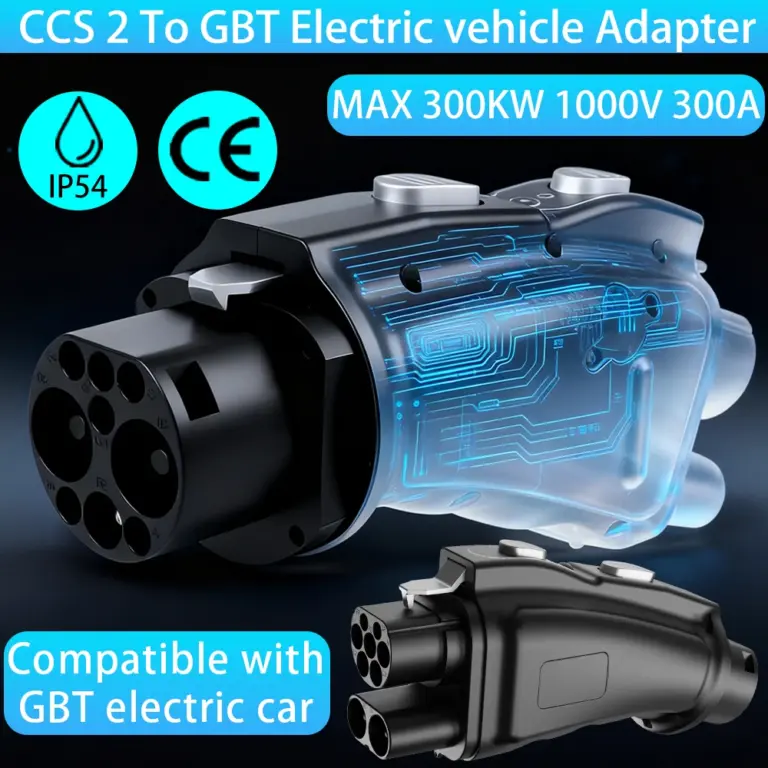
– CCS2 Charging: Hardware modification from GB/T (Chinese standard) to CCS2 (Combined Charging System)
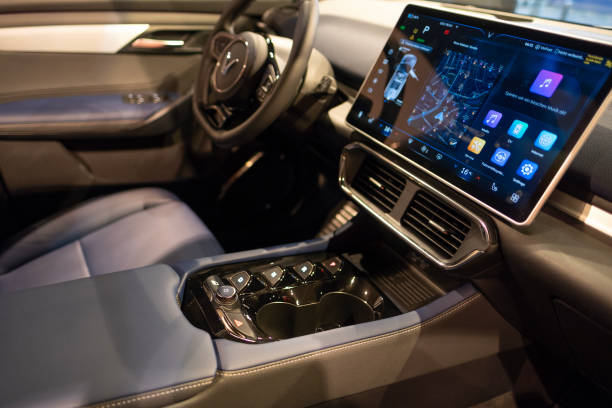
– Software Localization: GDPR-compliant data storage, EU map databases, and local language HMI (Human-Machine Interface)
– EMC Testing: Electromagnetic compatibility certification
Cost Implication: $1,200-2,500 per vehicle for CCS2 retrofit and software flashing, depending on OEM cooperation levels. BYD and Geely now offer “EU-ready” variants from factory, eliminating port-side modification costs.
ASEAN Markets (UNECE WP.29)
Southeast Asian markets generally accept UNECE regulations with national deviations:
– Thailand: Requires Thai-language dashboards and specific insurance telematics
– Indonesia: Local content requirements (TKDN) affecting software and certain components
– Vietnam: Type approval through Vietnam Register (VR) with simplified testing for UNECE-compliant vehicles
Middle East (GSO Standards)
Gulf Cooperation Council (GCC) standards focus on extreme climate durability:
– Thermal Testing: Battery management systems must demonstrate 55°C ambient operation
– Sand Ingress Protection: IP6K9K ratings required for charging ports
– Halal Certification: For interior materials (increasingly requested for fleet sales)
OTA (Over-The-Air) Infrastructure
2026 EVs require continuous software updates. Importers must establish:
– Local servers for data residency compliance (EU GDPR, China PIPL)
– Update authorization from OEMs (often requiring separate licensing fees of $50-100/unit/year)
– Rollback protocols for failed updates
7. After-Sales Ecosystem: Securing Parts and Service Abroad
The shift from “vehicle trading” to “mobility solutions” demands robust after-sales infrastructure. The 2026 EV wholesale market China requires importers to secure service capabilities before container arrival.
Parts Supply Chain Architecture
| Component | Sourcing Strategy | Lead Time | Inventory Recommendation |
|—|—|—|—|
| High-voltage batteries | Factory direct + regional hub | 90-120 days | 2% of annual volume as safety stock |
| Power electronics (inverters, OBC) | Authorized distributor network | 45-60 days | 1-month rolling inventory |
| Body/chassis | Local fabrication partnerships | 30-45 days | Just-in-time ordering |
| Consumables (brake pads, filters) | Third-party aftermarket | 7-14 days | 3-month stock |
Technical Training & Certification
Chinese OEMs now require Level 3-4 EV technician certification for warranty validity:
– High-voltage safety training (1000V DC systems)
– Battery diagnostics using OEM-specific scan tools (BYD’s VDS, Xiaomi’s proprietary systems)
– Thermal management repair protocols
Training costs: $2,500-4,000 per technician for initial certification, with annual recertification at $800.
Warranty Localization
Standard Chinese warranties (6 years/150,000km battery) require local backing:
– Insurance-backed warranties: Transfer risk to A-rated carriers (cost: 3-4% of vehicle value)
– OEM warranty extensions: Negotiate regional service contracts during initial purchase (adds $300-500/unit but ensures factory support)
– Goodwill policies: Establish clear thresholds for discretionary repairs to maintain brand reputation
The “Follow-the-Capital” Service Model
Leverage Chinese OEM factory investments in your region:
– BYD Hungary: European parts hub operational 2026, reducing lead times from 90 to 14 days for EU importers
– Geely Indonesia: ASEAN service center providing training and technical support for regional distributors
8. Avoiding Scams: How to Audit a Chinese EV Supplier
The rapid expansion of the EV wholesale market China has attracted fraudulent actors. Implement this four-phase audit protocol before transferring funds.
Phase 1: Documentation Verification
– Business License: Verify via National Enterprise Credit Information Publicity System (国家企业信用信息公示系统). Check for “automobile sales” and “import/export” in business scope.
– Export License: Cross-reference with GACC’s published whitelist of authorized vehicle exporters.
– Factory Authorization: For agents, demand notarized letters of authorization from OEMs, verifiable through OEM export departments (call +86 numbers listed on official websites, never numbers provided by the agent).
Phase 2: Financial Health Assessment
– Registered Capital: Minimum 50 million RMB for legitimate wholesale operations
– Tax Rating: Request “A-level Tax Credit” certificate (纳税信用A级)
– Bank References: Major state banks (ICBC, Bank of China) or international banks (HSBC China, Citi) preferred
Phase 3: Physical Audit
Engage third-party inspection firms (SGS, Bureau Veritas, or TÜV Rheinland China) to verify:
– Factory existence: Address matches registration; production lines operational
– Inventory verification: VINs exist in national database; vehicles not pledged as loan collateral
– Battery provenance: Cell manufacturer markings match documentation (CATL, BYD Battery, etc.)
Phase 4: Transaction Security
– Escrow Services: Use Alibaba Trade Assurance or independent escrow for initial deposits
– Payment Verification: Never pay personal accounts; only to company accounts matching business license name exactly
– Red Flags:
– Prices >15% below market average
– Pressure for 100% advance payment
– Refusal to provide VINs pre-shipment
– Missing “Automobile Export License” on documentation
Digital Verification Tools
– WeChat Official Account: Legitimate exporters maintain verified corporate accounts
– ICP Registration: Website备案信息 should match company name
– Alibaba Gold Supplier: Minimum 3 years with verified onsite check
9. Start Your Import Business with Electric Auto China
As Chief Export Consultant at Electric Auto China, headquartered in Shanghai’s Lingang New Area, I have guided over 200 international distributors through the complexities of the 2026 EV wholesale market China. Our compliance-first approach ensures every vehicle meets the stringent regulatory frameworks now governing Sino-foreign automotive trade.
Our 2026 Export-Ready Portfolio
We maintain direct allocation agreements with Tier-1 manufacturers including BYD, Geely Auto, Xiaomi Auto, and Leapmotor, providing access to:
– EU-homologated vehicle pools with pre-installed CCS2 and GDPR-compliant software
– ASEAN-ready configurations meeting GSO and UNECE standards
– Competitive MOQs starting at 10 units for market testing, scaling to 500+ unit annual contracts
Compliance Guarantee
Every shipment through Electric Auto China includes:
– Complete Export License and CCC Certification documentation
– UN38.3 and MSDS battery compliance packets
– Carbon-neutral shipping certification for EU CBAM optimization
– Digital VAT invoices ensuring your 13% rebate integrity
Integrated Logistics Solutions
Leveraging the “hybrid model” that defines 2026 logistics excellence:
– Regional warehousing in Rotterdam (EU), Dubai (Middle East), and Bangkok (ASEAN)
– Dedicated shipping lines with RoRo and containerized options
– After-sales support including technical training, OTA infrastructure, and genuine parts supply chains
Financial Structuring
We facilitate:
– Letters of Credit processing through our banking partners
– Currency hedging instruments to protect against RMB volatility
– Flexible payment terms (30/70 or DA 60 for qualified buyers)
The 2026 EV wholesale market China represents a structural opportunity for established distributors and new entrants alike. With domestic saturation driving aggressive export pricing, green logistics reducing long-term operational costs, and regionalization strategies mitigating geopolitical risk, the fundamentals favor strategic importers who prioritize compliance over shortcuts.
Contact Electric Auto China today to secure your allocation in the 2026 production cycle. The window for preferential pricing on high-demand models closes as OEMs implement supply discipline measures. Let our Shanghai-based team navigate the regulations, optimize your landed costs, and establish the sustainable supply chain your market demands.
Electric Auto China: Your Compliant Gateway to the World’s Largest EV Manufacturing Base.
Unlock High-Margin EV Imports with Electric Auto China
As an elite automotive supply chain partner in Shanghai, we provide end-to-end, strictly compliant export solutions tailored for international dealerships, fleet managers, and wholesale distributors.
- 🛡️ 100% Legal & Compliant: Fully licensed exports ensuring smooth customs clearance at your destination.
- ⚙️ Complete Localization: Professional English/Arabic/Russian OS flashing and GB/T to CCS2 charging solutions.
- 🚢 Secure Logistics: Direct Ro-Ro and Containerized shipping with full UN38.3 battery certifications.
- 🔧 After-Sales Support: Reliable access to OEM diagnostic tools and steady spare parts supply.
Request a Detailed FOB/CIF Quote Today:
📧 B2B Sales Email: [email protected]
💬 Direct WhatsApp: +86 159 5127 6160