The Ultimate 2026 Importer’s Guide to High-end Chinese Car Export
1. The Macro-Economics of High-end Chinese Car Export in 2026
China’s automotive landscape has undergone a fundamental structural reset. As we entered 2026, the industry operates on a decisively higher baseline—total vehicle shipments reached a record 34.4 million units in 2025 (up 9.4% year-over-year), crushing the previous 2017 peak. However, the composition of this growth reveals the critical shift toward high-value electrification: New Energy Vehicle (NEV) shipments surged by 3.6 million units (+28.2% YoY) to approximately 16.5 million units, while Internal Combustion Engine (ICE) volumes contracted by 700,000 units (-3.6%).
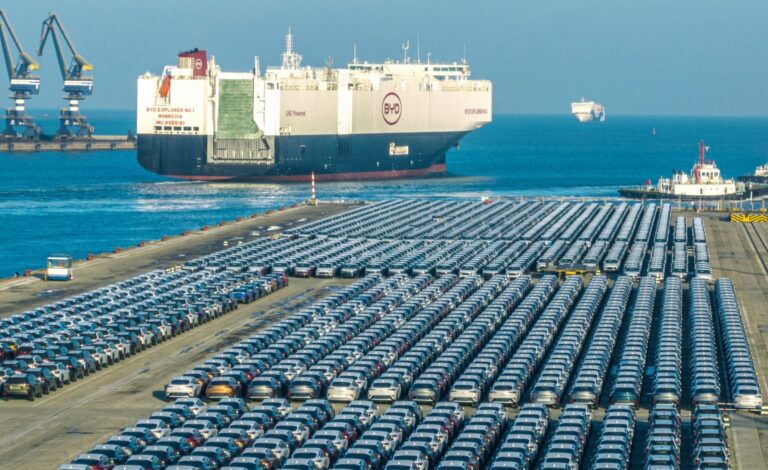
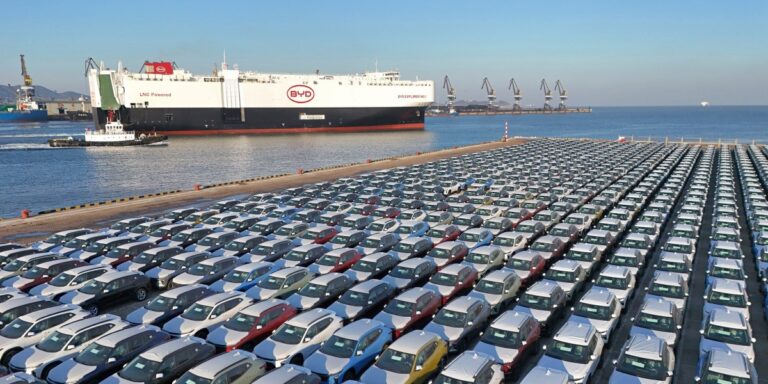
For international B2B buyers, the strategic inflection point lies in export diversification. China closed 2025 with record vehicle exports of 7.1 million units, with NEVs commanding over one-third of outbound volume. Industry analysts project this trajectory could reach 10 million annual exports by 2030, but with a crucial pivot: the market is transitioning from opportunistic volume dumping to product value upgrading.
The Premiumization Paradigm
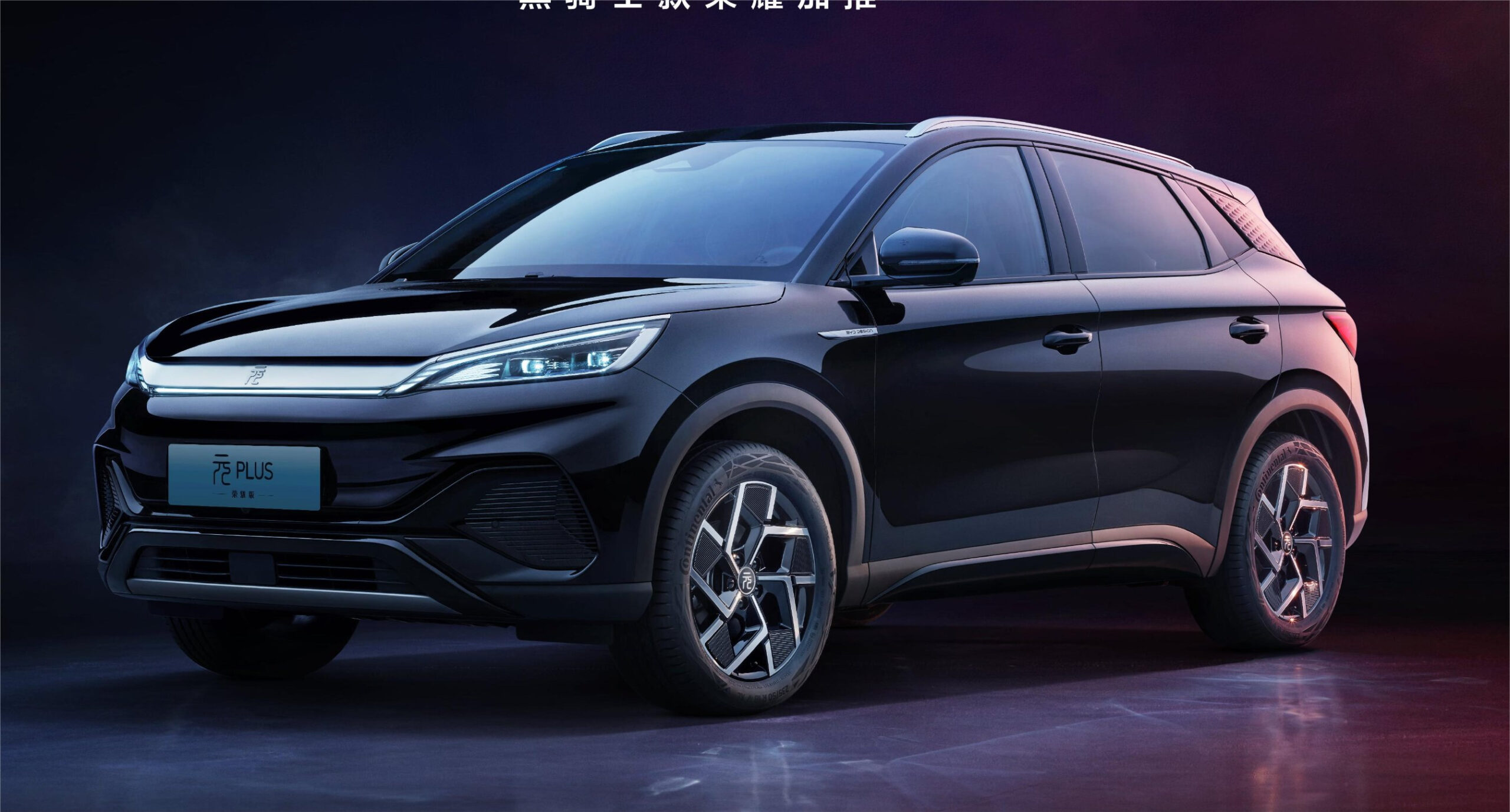
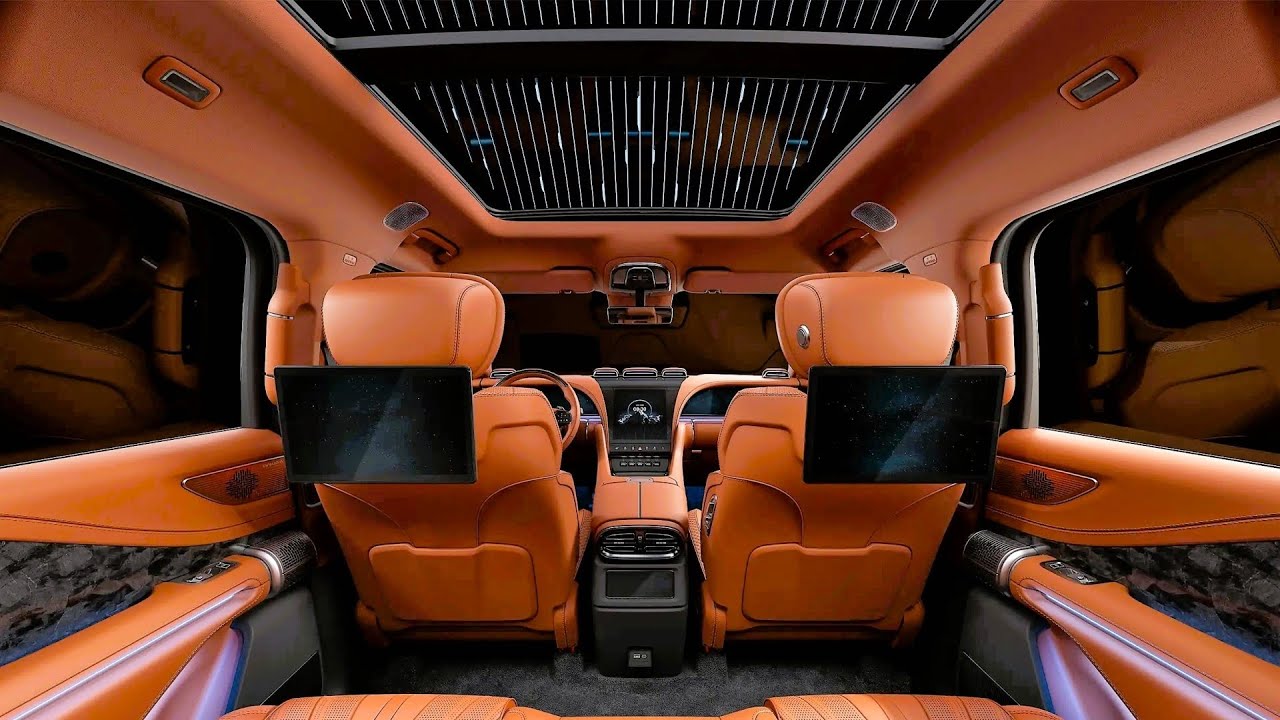
The “high-end” segment (vehicles priced above RMB 300,000 / approximately USD 42,000) now represents the fastest-growing export category. Chinese manufacturers—including BYD’s Denza and Yangwang brands, NIO’s ET series, Li Auto’s L9, and emerging luxury players—are targeting European, Middle Eastern, and Southeast Asian premium markets with vehicles featuring:
- Solid-state battery technology (150kWh+ capacity)
- Lidar-enabled autonomous driving (Level 2+ to Level 3)
- Silicon carbide (SiC) power electronics for 800V architectures
- Integrated chassis-body battery (CTC/CTB) platforms
Multi-Regional Production Networks
The 2026 supply chain architecture has evolved beyond “Made in China” to “Engineered in China, Assembled Regionally.” Blended supply models now combine:
– Chinese inputs: Battery cells, semiconductors, and advanced electronics (35% cost advantage)
– Southeast Asian assembly: CKD (Completely Knocked Down) operations in Thailand, Indonesia, and Vietnam to mitigate geopolitical concentration risk
– European final customization: Software localization, luxury trim fitting, and homologation compliance
This triangulated approach reduces tariff exposure and aligns with the EU’s Carbon Border Adjustment Mechanism (CBAM), while maintaining China’s role as the central innovation node.
Logistics Market Context
China’s logistics sector now exceeds 350 trillion yuan in total value (6.5% YoY growth), with green logistics transitioning from concept to mandate. Electric vehicles constitute over 35% of urban delivery fleets, and solar-powered warehouses have become standard for export-oriented facilities. For high-end vehicle exports, this translates to carbon-neutral shipping options and blockchain-tracked supply chain due diligence documentation—essential for European market entry.
2. Understanding China’s Strict EV Export Regulations
January 1, 2026, marked a regulatory watershed. The Ministry of Commerce (MOFCOM) implemented a mandatory export licensing framework for all electric vehicle exports, fundamentally restructuring market access.
The Export License Framework
Under the new regime, only accredited manufacturers and authorized dealers may apply for export licenses. This policy targets three critical issues:
-
Gray Market Elimination: Previous irregular export channels saw new vehicles fraudulently declared as “used” to circumvent destination market regulations, often delivering cars with outdated software and non-compliant safety systems.
-
Quality Control: Unlicensed exporters flooded markets with low-cost models lacking proper after-sales support, damaging brand equity for legitimate manufacturers.
-
Geopolitical Risk Management: The framework ensures export traceability and regulatory consistency, mirroring long-standing restrictions on combustion engine vehicle exports.
Compliance Requirements for B2B Importers
| Requirement | Specification | Verification Method |
|---|---|---|
| Manufacturer Accreditation | MOFCOM-issued export license | License number validation via MOFCOM database |
| Vehicle Identification | VIN registration in national export tracking system | Pre-shipment inspection by CCIC or equivalent |
| Battery Certification | UN38.3 test summary, MSDS, Class 9 dangerous goods declaration | Third-party lab certification (SGS, TÜV, etc.) |
| Software Version Control | Export-appropriate firmware with OTA capability verification | Factory audit and version hash confirmation |
| Supply Chain Due Diligence | Carbon footprint disclosure, conflict mineral statements | Blockchain-tracked documentation (increasingly standard) |
Impact on Foreign Manufacturers
The regulations equally affect foreign giants manufacturing in China—Tesla (Gigafactory Shanghai), Volkswagen (Anhui), BMW (Brilliance), and Mercedes-Benz (Beijing Benz). These entities must now secure specific export licenses for China-produced vehicles, even when shipping to their own global markets. This has created a bifurcated market: licensed “white channel” exports versus increasingly risky unauthorized channels.
Critical 2026 Update: The European Union’s Corporate Sustainability Due Diligence Directive (CSDDD) now requires importers to verify Chinese suppliers’ compliance with environmental and labor standards. Chinese export licenses now include preliminary sustainability attestations, streamlining EU import documentation.
3. Sourcing Strategy: Direct Factory vs. Authorized Export Agents
Navigating the post-2026 regulatory environment requires sophisticated sourcing strategies. B2B buyers must choose between direct manufacturer relationships and authorized export agents, each with distinct risk profiles.
Direct Factory Relationships (Tier 1)
Advantages:
– Pricing Transparency: Access to factory gate pricing (EXW terms)
– Customization: Direct input on specifications, battery configurations, and software localization
– Priority Allocation: Guaranteed production slots for high-demand models (e.g., BYD Seal, NIO ET5 Touring, Xiaomi SU7 Max)
Requirements:
– Minimum Order Quantities (MOQ): Typically 50-100 units for direct factory access
– Import License Verification: Buyers must confirm the manufacturer’s MOFCOM export license status
– Payment Structures: 30% T/T deposit, 70% L/C at sight or against B/L (increasingly strict due to fraud prevention)
Authorized Export Agents (Tier 2)
Advantages:
– Regulatory Buffer: Agents assume compliance liability and documentation burden
– Consolidation: Ability to mix SKUs and brands in single shipments
– Local Representation: Mandarin-speaking contract negotiation and dispute resolution
Verification Protocol:
1. License Cross-Reference: Verify the agent’s authorization letter against MOFCOM’s public registry
2. Financial Health Check: Review agent’s registered capital (minimum RMB 50 million recommended for high-end vehicle trading)
3. Reference Audit: Contact previous international clients for fulfillment verification
The Hybrid Model: Multi-Regional Sourcing
Sophisticated importers are adopting “China Plus One” sourcing strategies:
– Primary Supply: High-end EVs from licensed Chinese manufacturers (Shanghai, Hefei, Xi’an production hubs)
– Secondary Assembly: CKD kits shipped to ASEAN facilities for local assembly, reducing import tariffs by 15-25% in target markets
– European Finishing: Final software flashing and luxury customization in EU-based facilities to satisfy “substantial transformation” rules of origin
4. Financial Mechanics: Pricing and Landed Costs
Understanding the true cost of high-end Chinese EV imports requires moving beyond sticker prices to comprehensive landed cost modeling. The 2026 regulatory environment introduces new cost layers while efficiency gains in logistics offer offsets.
Pricing Structure Framework
| Cost Component | Calculation Basis | 2026 Market Rate (High-End EV) |
|---|---|---|
| EXW Factory Price | Manufacturer’s base price for export-spec vehicle | RMB 280,000-450,000 (USD 39,000-63,000) |
| Export License Fee | Administrative cost for MOFCOM compliance | RMB 2,000-5,000 per vehicle |
| Domestic Logistics | Factory to port (Shanghai/Ningbo/Shenzhen) | RMB 3,500-8,000 depending on distance |
| Port Handling & Documentation | Customs clearance, inspection, VIN registration | RMB 4,000-6,000 |
| Ocean Freight (RO-RO) | Per cubic meter or lane meter | USD 800-1,500/unit to Europe; USD 1,200-2,000 to Middle East |
| Ocean Freight (Container) | 40’HC container (2-4 vehicles) | USD 3,500-6,000 per container |
| Marine Insurance | 110% of CIF value, Institute Cargo Clauses (A) | 0.15-0.25% of insured value |
| Battery Dangerous Goods Surcharge | UN38.3 compliance, Class 9 handling | USD 300-500 per vehicle |
| Destination Port Charges | THC, handling, documentation | USD 400-800 |
| Import Duty | Varies by destination (EU: 10% + potential EV tariffs; GCC: 5%) | 5-35% of CIF value |
| VAT/GST | Destination market consumption tax | 15-25% depending on jurisdiction |
| Homologation & Compliance | Type approval, software updates, labeling | USD 2,500-8,000 per model variant |
Landed Cost Calculation Example: Premium EV Sedan to Germany (2026)
Scenario: Importing 50 units of high-end EV (Value: RMB 350,000/unit) via Hamburg Port
| Item | Calculation | Total (USD) |
|---|---|---|
| Vehicle Cost (EXW) | 50 × USD 48,500 | USD 2,425,000 |
| Export License & Documentation | 50 × USD 700 | USD 35,000 |
| Inland China Transport | 50 × USD 550 | USD 27,500 |
| Ocean Freight (RO-RO) | 50 × USD 1,200 | USD 60,000 |
| Battery Compliance Surcharge | 50 × USD 400 | USD 20,000 |
| Insurance (CIF + 10%) | 0.2% × (2,567,500) | USD 5,135 |
| CIF Value | Subtotal | USD 2,572,635 |
| EU Import Duty (10%) | 10% × CIF | USD 257,264 |
| EU EV Countervailing Duty (2026)* | Potential 15-20% if applicable | USD 385,895 |
| German VAT (19%) | 19% × (CIF + Duty) | USD 543,680 |
| Homologation (per batch) | USD 6,000 ÷ 50 | USD 120/unit |
| Technical Adaptation | CCS2 conversion, software | USD 800/unit |
| TOTAL LANDED COST | USD 3,759,594 | |
| Cost per Unit | USD 75,192 |
*Note: EU tariffs on Chinese EVs remain fluid in 2026; importers should secure binding tariff information (BTI) rulings before shipment.
Currency Risk Management
With RMB volatility against EUR and USD, sophisticated importers are utilizing:
– CNH Forward Contracts: Locking exchange rates 90-180 days ahead of delivery
– USD-Denominated Contracts: Many Tier 1 manufacturers now accept USD pricing to mitigate forex risk
– Escrow Structures: Third-party escrow releasing funds upon Bill of Lading presentation, protecting against non-delivery in the stricter 2026 compliance environment
5. Global Logistics: Ocean Freight & Battery Transport Compliance
The logistics of high-end EV exports have evolved beyond simple container shipping into specialized supply chain orchestration, particularly regarding lithium-ion battery transport and green logistics mandates.
Shipping Modalities: RO-RO vs. Container
Roll-on/Roll-off (RO-RO) remains the preferred method for finished high-end vehicles:
– Advantages: No container lifting damage risk, faster port turnaround, ability to transport charged batteries (up to 30% SOC)
– Key Routes: Shanghai-Zeebrugge (Belgium), Shanghai-Bremerhaven (Germany), Shenzhen-Jebel Ali (UAE)
– 2026 Capacity: New dedicated EV carriers entering service with enhanced fire suppression systems and battery isolation capabilities
Containerized Shipping (40′ High Cube):
– Loading: 2-3 sedans or 1-2 SUVs per container using specialized racking
– Battery Restrictions: UN38.3 compliance mandatory; SOC typically limited to 30% for ocean transport
– Cost Efficiency: Economical for mixed cargo or destinations with limited RO-RO service
Dangerous Goods Compliance (UN38.3)
Lithium-ion batteries classified as Class 9 Dangerous Goods require:
- UN38.3 Test Summary: Proof of passing crush, thermal, vibration, and altitude simulation tests
- MSDS (Material Safety Data Sheet): Section 14 detailing transport information
- Dangerous Goods Declaration: Shipper’s declaration for dangerous goods (DGD)
- Emergency Response Guide: Specific procedures for battery thermal runaway incidents
2026 Update: The International Maritime Organization (IMO) has implemented stricter segregation requirements for EVs on vessels. High-end EVs with batteries exceeding 100kWh now require placement in designated zones with enhanced fire detection and steel bulkhead separation.
Green Logistics Integration
European sustainability regulations (CSRD, CBAM) now require carbon disclosure for automotive imports. China’s logistics sector has responded:
- Carbon-Neutral Shipping: Maersk, COSCO, and CMA CGM offer biofuel-powered vessel options for China-Europe routes, adding approximately USD 150-300 per vehicle but providing Scope 3 emission reductions of 80%+
- Solar-Powered Warehousing: Export processing zones in Shanghai Lingang and Shenzhen Qianhai now operate 100% renewable-powered storage facilities, generating compliance documentation for EU importers
- Blockchain Traceability: End-to-end carbon footprint tracking from cell production to final delivery, essential for meeting EU supply chain due diligence requirements
Port Strategy & Congestion Management
With China’s export volume scaling toward 10 million units annually, port congestion mitigation is critical:
| Port | Specialization | 2026 Capacity | Best For |
|---|---|---|---|
| Shanghai (Yangshan) | RO-RO + Container | 2.5M vehicles/year | European routes, premium EVs |
| Ningbo-Zhoushan | Deep-water RO-RO | 1.8M vehicles/year | Large SUV/truck exports |
| Shenzhen (Yantian) | High-frequency Middle East | 1.2M vehicles/year | GCC markets, rapid turnaround |
| Guangzhou (Nansha) | PHEV specialist | 900K vehicles/year | Plug-in hybrid volumes |
6. Localization & Homologation: Preparing Cars for Local Markets
High-end Chinese EVs require sophisticated localization beyond simple translation. The 2026 regulatory landscape demands technical adaptation for safety, connectivity, and environmental compliance.
Type Approval & Homologation
European Union (Whole Vehicle Type Approval – WVTA):
– Framework: Regulation (EU) 2018/858 as amended
– Key Requirements:
– eCall automatic emergency call systems (EU-specific)
– CCS2 charging interface compatibility (adapters no longer sufficient for permanent import)
– GDPR-compliant data processing for telematics
– Euro NCAP alignment for ADAS features
GCC (Gulf Cooperation Council):
– GSO Standards: Conformity with Gulf Standardization Organization regulations for extreme heat operation (50°C+ ambient)
– Ramadan Calendar Integration: Infotainment systems respecting religious observances (optional but market-appropriate)
Southeast Asia (ASEAN):
– AC charging: Type 2 (Mennekes) or local variants
– Humidity Protection: IP67+ rating verification for tropical monsoon conditions
Software Localization
The “gray market” crackdown of 2026 specifically addressed software version mismatches. Legitimate high-end exports now require:
- OTA Infrastructure: Cloud servers located in destination regions to ensure update availability
- Navigation Maps: Localized HD maps (HERE Technologies, TomTom, or local providers)
- Voice Recognition: Native language support beyond Mandarin/English
- App Ecosystem: Integration with local streaming, parking, and charging apps
Critical Compliance Point: Vehicles must ship with export-appropriate firmware (not domestic Chinese versions). Domestic versions often lack:
– Google Automotive Services (Android Auto)
– Apple CarPlay (increasingly standard on export models)
– Regional emergency service numbers
Hardware Adaptations
| Component | Chinese Domestic Spec | Export Requirement | Cost Impact |
|---|---|---|---|
| Charging Port | GB/T (AC/DC) | CCS2 (EU) / CCS1 (NA) / CHAdeMO (Japan) | USD 300-800 conversion |
| Telematics Modem | China Mobile/Unicom | Local carrier compatibility (eSIM) | USD 150-400 |
| Headlights | GB 4599 (left-hand traffic optimized) | ECE R48 (right-hand drive alignment) | USD 200-600 |
| Speedometer | km/h primary | mph primary (UK/US markets) | Software update |
| ADAS Calibration | China road markings | Local lane marking recognition training | USD 500-1,200 |
7. After-Sales Ecosystem: Securing Parts and Service Abroad
The sustainability of high-end Chinese EV imports depends entirely on after-sales infrastructure. The 2026 regulatory framework explicitly ties export licenses to manufacturers’ commitment to international service networks.
Spare Parts Supply Chain Architecture
Critical Components Requiring Stocking:
– Battery Modules: While individual cells are rarely replaced, module-level replacement requires 4-6 week lead times from China
– Power Electronics: On-board chargers, DC-DC converters, and inverters (SiC-based components have limited third-party alternatives)
– ADAS Sensors: Lidar units,毫米波雷达 (mmWave radar), and camera modules (calibrated to vehicle VIN)
Inventory Strategy:
– Hub Model: Regional distribution centers in Rotterdam (EU), Dubai (Middle East), and Singapore (ASEAN) holding 90-day inventory of critical parts
– Direct-from-China: Non-critical trim and cosmetic parts shipped via air freight (3-5 days) for customer orders
Technical Training & Certification
Authorized importers must ensure local service centers obtain:
– High-Voltage Safety Certification: Level 3 and 4 electrical safety for battery service
– Diagnostic Tool Access: Manufacturer-specific OBD protocols and cloud-based diagnostic platforms
– OTA Update Management: Capability to push firmware updates and rollback procedures
Warranty Administration:
Cross-border warranty claims now require blockchain-verified service records. The 2026 standard mandates that export vehicles carry international warranty codes distinct from domestic Chinese warranties, ensuring coverage transferability.
Reverse Logistics: Battery End-of-Life
EU Battery Regulations (2023/1542) require importers to establish recycling pathways. High-end Chinese EV exporters must provide:
– Battery Passport: Digital documentation of cell chemistry, manufacturing date, and recycling value
– Take-back Agreements: Contracts with EU-approved battery recyclers (e.g., Redwood Materials, Umicore) for end-of-life processing
8. Avoiding Scams: How to Audit a Chinese EV Supplier
The 2026 export license implementation has reduced—but not eliminated—fraud risks. B2B buyers must conduct rigorous due diligence to avoid gray market vehicles, software-locked cars, and non-existent inventory schemes.
Red Flags in Supplier Verification
- License Verification Failure: Inability to provide current-year MOFCOM export license number (format: 2026-XXXX-XXXX)
- Pricing Anomalies: Quotes 15%+ below market rate for current models (indicates VAT fraud or used-car mislabeling)
- Software Version Evasion: Refusal to provide firmware version hash codes or OTA capability demonstrations
- Payment Irregularities: Demands for payment to personal accounts or Hong Kong entities unrelated to manufacturing
The Audit Checklist
Phase 1: Documentation Verification
– [ ] Export License validation via MOFCOM online portal
– [ ] Business License (营业执照) review: Scope must include “automobile export” (汽车出口)
– [ ] ISO 9001 and IATF 16949 certification verification
– [ ] CCC certificate (for domestic production) and relevant export conformity certificates
Phase 2: Physical Factory Audit
– [ ] Production line observation: Verify active manufacturing, not shell company
– [ ] Quality control stations: Battery testing, water ingress testing, ADAS calibration
– [ ] Inventory confirmation: VIN-specific vehicle identification, not “ghost” inventory
– [ ] R&D capability: Evidence of export-specific engineering (right-hand drive variants, export software)
Phase 3: Financial & Legal Due Diligence
– [ ] Registered capital verification (minimum RMB 100 million for vehicle manufacturing)
– [ ] Litigation check: Court records for contract disputes or IP infringement
– [ ] Bank reference letters from Tier 1 Chinese banks (ICBC, Bank of China, CMB)
Escrow & Payment Protection
Recommended Structure:
– 10%: Deposit to escrow upon contract signing
– 80%: Released to seller upon presentation of clean Bill of Lading and export license verification
– 10%: Retained for 30 days post-arrival to verify software functionality and cosmetic condition
Warning: Never accept “DDP” (Delivered Duty Paid) terms from unverified Chinese suppliers for high-value EVs. The 2026 regulations place customs liability on the exporter, but unlicensed operators often disappear before duty payment, leaving importers with seized cargo.
9. Start Your Import Business with Electric Auto China
Navigating the 2026 high-end Chinese EV export landscape requires more than transactional relationships—it demands strategic partnership with compliance-native operators. At Electric Auto China, headquartered in Shanghai’s Lingang New Area, we function as your integrated supply chain architect, ensuring every vehicle meets the stringent requirements of the post-2026 regulatory environment.
Our Compliance-First Approach
As Chief Export Consultants, we provide:
Regulatory Bridge Services
– License Verification: Direct MOFCOM database access confirming manufacturer accreditation status
– Documentation Orchestration: Complete export license applications, UN38.3 dangerous goods declarations, and EU CBAM carbon footprint reporting
– Homologation Management: End-to-end WVTA, GCC, and ASEAN type approval facilitation through certified technical services partners
Supply Chain Optimization
– Multi-Modal Logistics: RO-RO and containerized solutions with dedicated EV vessel partnerships, including carbon-neutral shipping options
– Regional Hub Strategy: CKD assembly coordination in Thailand and Vietnam for tariff optimization
– Currency Hedging: RMB/USD/EUR forward contract facilitation to lock pricing 180 days in advance
Risk Mitigation
– Factory Audit Execution: On-site technical verification of manufacturing capabilities and export-spec compliance
– Quality Assurance: Pre-shipment inspection (PSI) including software version verification, battery health checks, and cosmetic condition documentation
– After-Sales Infrastructure: Spare parts hub establishment in your target markets with technical training programs for local service centers
The Electric Auto China Advantage
In a market where unlicensed exports now carry criminal liability under Chinese law and European due diligence requirements demand supply chain transparency, our Shanghai-based team offers:
- Direct Factory Relationships: Authorized dealer status with BYD, NIO, Li Auto, XPeng, and premium luxury EV manufacturers
- White-Glove Logistics: White-glove handling for vehicles valued above USD 60,000, including climate-controlled storage and specialized battery transport protocols
- Software Integrity Guarantee: Verification that every vehicle ships with export-appropriate firmware, ensuring full OTA capability and local app compatibility in destination markets
Next Steps for B2B Buyers
- Market Entry Consultation: Schedule a technical briefing on 2026 compliance requirements for your specific target market (EU, GCC, ASEAN, or emerging markets)
- Sample Import Program: Initiate a pilot shipment of 5-10 units to validate homologation pathways and after-sales logistics
- Scale Partnership: Transition to volume contracts with locked pricing and dedicated production allocation
The era of opportunistic Chinese EV trading has ended. The future belongs to structured, compliant, and sustainable import operations. Contact Electric Auto China today to architect your high-end EV supply chain for the 2026 regulatory reality and beyond.
Electric Auto China | Shanghai Lingang Headquarters | Export License No. 2026-SH-EV-XXXX | ISO 9001 Certified Supply Chain Management
Unlock High-Margin EV Imports with Electric Auto China
As an elite automotive supply chain partner in Shanghai, we provide end-to-end, strictly compliant export solutions tailored for international dealerships, fleet managers, and wholesale distributors.
- 🛡️ 100% Legal & Compliant: Fully licensed exports ensuring smooth customs clearance at your destination.
- ⚙️ Complete Localization: Professional English/Arabic/Russian OS flashing and GB/T to CCS2 charging solutions.
- 🚢 Secure Logistics: Direct Ro-Ro and Containerized shipping with full UN38.3 battery certifications.
- 🔧 After-Sales Support: Reliable access to OEM diagnostic tools and steady spare parts supply.
Request a Detailed FOB/CIF Quote Today:
📧 B2B Sales Email: [email protected]
💬 Direct WhatsApp: +86 159 5127 6160