The Ultimate 2026 Importer’s Guide to Importing Cars from Shanghai Port
1. The Macro-Economics of Importing Cars from Shanghai Port in 2026
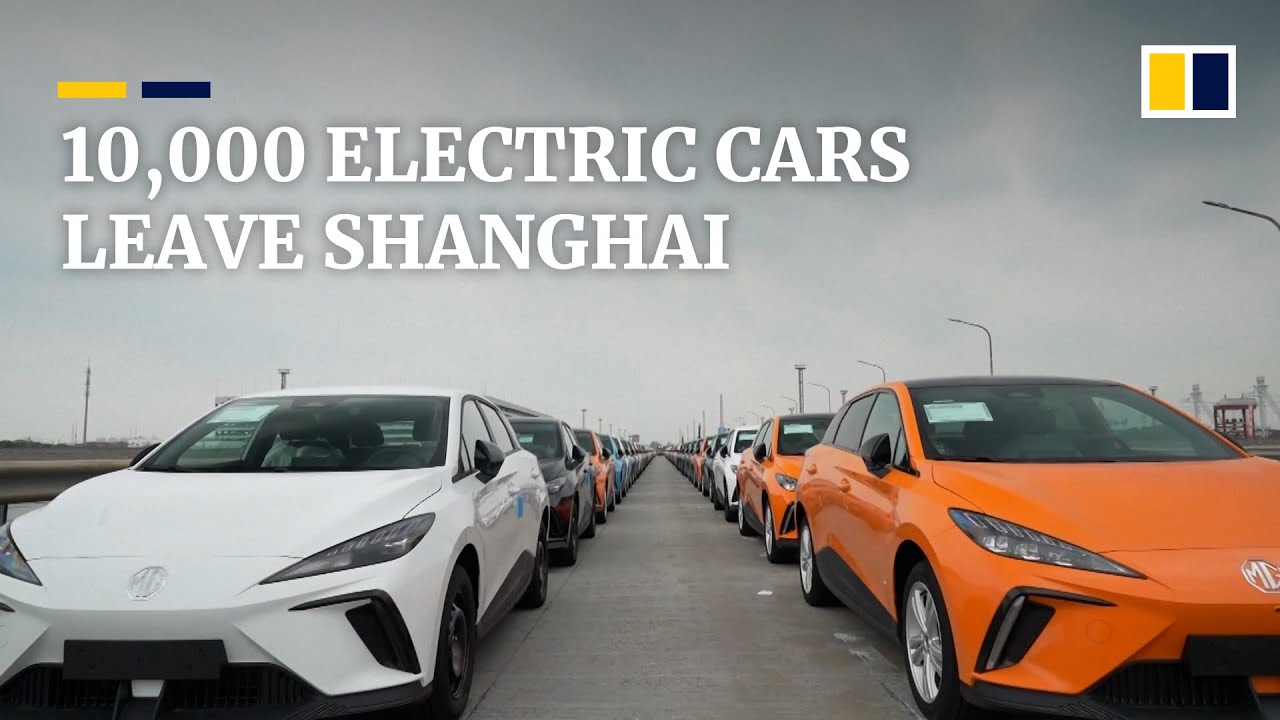
As we enter 2026, China’s automotive export ecosystem has fundamentally restructured around electrification and high-value manufacturing. With total vehicle exports projected to exceed 8 million units—up from the record 7.1 million shipped in 2025—Shanghai Port (encompassing both Yangshan Deep Water Port and Waigaoqiao) has cemented its position as the world’s most sophisticated EV export gateway. This isn’t merely a volume story; it’s a narrative of product value upgrading.
The data is unequivocal: New Energy Vehicles (NEVs) now constitute over 35% of total exports, with plug-in hybrid exports having tripled in 2025 alone. Shanghai’s automated terminals, particularly Yangshan Phase IV—the world’s largest automated container terminal—now handle specialized RORO (Roll-on/Roll-off) vessels and containerized EV shipments with integrated battery monitoring systems. For European, Middle Eastern, and Southeast Asian importers, this represents a strategic inflection point. The “China Plus One” strategy has evolved into multi-regional production networks, where Shanghai serves as the primary node for high-value EV components, with potential CKD (Completely Knocked Down) assembly in Vietnam, Thailand, or Hungary for final market access optimization.
However, the macroeconomic landscape carries friction. China’s domestic acquisition tax for NEVs has partially reinstated to 5% (50% of standard rate) as of January 1, 2026, capping subsidies at ¥15,000 per vehicle. While this primarily affects domestic consumption, it signals Beijing’s strategic pivot from subsidized volume to sustainable, quality-focused export growth. The Shanghai Free Trade Zone has responded by expanding bonded warehousing capacity by 40%, allowing importers to stage inventory and optimize cash flow against volatile currency markets.
Strategic Implication: Importers must view Shanghai not as a simple shipping point, but as a value-add logistics hub where pre-export modifications, software localization, and compliance documentation can be executed under bonded status, significantly reducing total landed costs.
2. Understanding China’s Strict EV Export Regulations
January 1, 2026, marked a regulatory watershed. The Ministry of Commerce (MOFCOM) implemented a mandatory Export License Framework for all NEV manufacturers and exporters—a measure designed to eliminate the “gray market” flooding that damaged Chinese automotive credibility in 2024-2025.
The Export License Framework
Under the new regime, only accredited manufacturers and authorized dealers may apply for export licenses. This directly addresses the systemic fraud where new vehicles were misclassified as “used” to bypass manufacturer export controls, resulting in vehicles with outdated software, voided warranties, and non-compliant safety standards reaching foreign markets.
Compliance Requirements for 2026:
– Manufacturer Accreditation: OEMs must demonstrate annual production capacity >10,000 units and hold valid CCC (China Compulsory Certification) for domestic sales before export eligibility.
– Dealer Authorization: Export agents must hold tier-1 authorization letters from manufacturers, verifiable through MOFCOM’s digital licensing portal.
– Technical Compliance: Vehicles must ship with the latest OTA (Over-The-Air) software updates installed, ensuring alignment with destination market cybersecurity standards (UN R155/R156).
– Documentation Integrity: Each vehicle requires a unique Export License Number (ELN) linked to its VIN, appearing on all customs declarations and bill of lading documents.
Impact on Foreign Brands: This framework equally affects foreign manufacturers producing in China (Tesla Shanghai, BMW Brilliance, VW Anhui). These entities must now route exports through licensed channels, eliminating parallel export opportunities that previously exploited cost arbitrage.
Critical Warning: Importers purchasing from unlicensed traders risk port detention at Shanghai Customs, with vehicles facing mandatory return-to-sender at the exporter’s expense. The 2026 regulations include strict liability provisions—foreign buyers can no longer claim ignorance of Chinese export controls.
3. Sourcing Strategy: Direct Factory vs. Authorized Export Agents
Navigating Shanghai’s export ecosystem requires choosing between three distinct sourcing models, each with distinct risk profiles and margin structures.
Model A: Direct OEM Relationships (Tier-1)
Best for: Volume buyers (>500 units annually), national distributors, fleet operators.
Advantages:
– Factory gate pricing (EXW Shanghai)
– Direct access to technical documentation for homologation
– Priority allocation during supply constraints (Xiaomi, BYD, and NIO currently have 12-16 week backlogs for export markets)
– Custom specification options (battery size, interior trim, software language packs)
Requirements:
– MOFCOM-registered import license in destination country
– Proof of service network capability (mandatory for EU and GCC markets)
– Letter of Credit (LC) or 30% advance payment, 70% against bill of lading
Model B: Authorized Export Agents (Tier-2)
Best for: Regional distributors, emerging market dealers (50-200 units annually).
Structure: These agents hold MOFCOM export licenses and maintain allocation agreements with multiple OEMs. They aggregate demand to meet manufacturer MOQs (Minimum Order Quantities).
Verification Protocol:
1. Request the agent’s Export License Certificate (出口许可证) and cross-reference with MOFCOM’s public registry.
2. Verify the Authorization Chain: Factory → National Sales Company → Export Agent. Any break in this chain invalidates warranty coverage.
3. Inspect the Shanghai Port Bonded Warehouse lease agreements—legitimate agents maintain physical presence in Yangshan or Waigaoqiao FTZ.
Model C: Blended Supply Networks (China + Southeast Asia)
Best for: Tariff mitigation (e.g., EU market entry avoiding 45% duties).
This emerging model leverages multi-regional production networks. High-value components (batteries, electric motors, ADAS systems) ship from Shanghai to assembly hubs in Thailand (for ASEAN-Australia markets) or Hungary (for EU markets), utilizing local content rules to achieve origin status.
Case Study: A German importer recently sourced BYD Blade Battery packs and e-platform 3.0 chassis from Shanghai, completed SKD (Semi-Knocked Down) assembly in Hungary, and achieved EU origin certification, reducing import duties from 45% to 10% under preferential trade agreements.
4. Financial Mechanics: Pricing and Landed Costs
Understanding true landed costs requires dissecting Shanghai Port’s 2026 pricing architecture, incorporating new regulatory fees and green logistics premiums.
Landed Cost Calculation Framework (Shanghai to EU Port)
| Cost Component | Amount (USD) | Notes |
|---|---|---|
| Vehicle EXW Price | $28,000 | Example: BYD Dolphin or equivalent compact EV |
| Export License Fee | $150 | New 2026 MOFCOM administrative fee |
| Domestic Logistics | $400 | Factory to Yangshan Port (electric truck fleet) |
| Port Handling & THC | $650 | Yangshan automated terminal fees |
| Export Customs Clearance | $300 | Including CIQ (Inspection & Quarantine) |
| Ocean Freight (2026 Rate) | $1,800 | 40ft container (2 vehicles) Shanghai-Rotterdam |
| Marine Insurance (110% CIF) | $320 | ICC-A coverage, including battery fire risk |
| Carbon Offset (EU MRV) | $85 | Mandatory EU ETS compliance contribution |
| CIF Total | $31,705 | Cost, Insurance, Freight |
| Destination Customs Duty | $14,267 | 45% EU tariff on Chinese EVs (2026 rate) |
| Destination VAT | $6,894 | 19% on (CIF + Duty) |
| Homologation & Type Approval | $2,500 | WVTA certification, software validation |
| Technical Modifications | $1,200 | CCS2 charging port conversion, OBD |
| Total Landed Cost | $56,566 | Per unit |
Currency Risk Management: With RMB volatility against the Euro (2026 forecast range: 7.0-7.4), importers should negotiate USD-denominated contracts or utilize forward exchange agreements (FECs) through Shanghai’s FTZ banking facilities. The Shanghai International Energy Exchange (INE) now offers RMB hedging instruments specifically for automotive exporters.
Financing Structures: For qualified B2B buyers, Shanghai-based banks (Bank of China, ICBC) offer Export Credit Facilities at 3.8-4.2% APR, secured by the bill of lading and destination market pre-sales contracts.
5. Global Logistics: Ocean Freight & Battery Transport Compliance
The logistics of exporting lithium-ion vehicles from Shanghai in 2026 operates under dual constraints: IMO dangerous goods regulations and China’s aggressive green logistics mandates.
Battery Transport Compliance (UN38.3 & IMO)
All EVs shipped from Shanghai must comply with:
– UN38.3 Testing: Verification that lithium cells withstand vibration, thermal, and impact tests. Shanghai Port now requires third-party verification from CNAS-accredited labs (e.g., SGS Shanghai, TÜV Rheinland China) before gate-in.
– State of Charge (SoC): Maximum 30% charge for ocean transport (IMDG Code Special Provision 188).
– Dangerous Goods Declaration: Class 9 UN3176 (Battery-Powered Vehicles). Misdeclaration results in immediate container quarantine and ¥50,000+ fines.
Shipping Modalities
RORO (Roll-on/Roll-off): Preferred for high-volume shipments (>100 units). Shanghai’s Nangang Port (automotive terminal) handles specialized RORO vessels with climate-controlled decks preventing battery thermal runaway. 2026 rates: $90-120 per cubic meter.
Containerized (R-Rack): Suitable for mixed cargo or low-volume premium vehicles. Specialized racking systems allow 3-4 vehicles per 40ft High Cube container. Critical: Containers must be ventilated and equipped with thermal monitoring devices transmitting data to the vessel’s bridge.
Green Logistics Integration: Shanghai Port Authority mandates that 50% of port trucking operations utilize electric or hydrogen fuel cell vehicles by 2026. This “green corridor” initiative reduces Scope 3 emissions for EU-bound cargo, supporting importers’ carbon disclosure requirements under the EU Corporate Sustainability Due Diligence Directive (CSDDD).
Transit Time Optimization: The new Shanghai-Europe Express Maritime Service (bi-weekly departures) guarantees 18-day transit to Rotterdam via the Northern Sea Route during ice-free months, reducing fuel consumption by 22% compared to Suez Canal routing.
6. Localization & Homologation: Preparing Cars for Local Markets
Shanghai’s FTZ now hosts Technical Service Providers (TSPs) offering pre-shipment homologation, transforming the port from a shipping point to a compliance hub.
Regional Homologation Requirements
European Union (WVTA):
– Software Compliance: UN R155 (Cybersecurity) and R156 (Software Updates) validation. Shanghai-based labs (CATARC Shanghai) can pre-certify systems before shipping.
– Charging Infrastructure: Conversion from GB/T to CCS2 charging ports (mandatory for EU sales). Shanghai workshops perform conversions under bonded status, avoiding Chinese VAT on modification parts.
– GDPR Compliance: Telematics systems must be wiped of Chinese server data and configured for EU cloud architecture.
GCC (Gulf Cooperation Council):
– Climate Testing: Validation of battery thermal management for 50°C+ ambient temperatures. Shanghai’s climatic test chambers simulate Gulf summer conditions.
– Arabic Localization: HMI (Human-Machine Interface) software updates with right-to-left text rendering.
Right-Hand Drive (RHD) Markets:
Shanghai facilities now offer steering conversion services for UK, Australian, Japanese, and Southeast Asian markets. This addresses the “China Plus One” strategy—producing LHD vehicles for domestic/continental markets, converting to RHD in Shanghai for Commonwealth markets.
Cost Efficiency: Performing homologation in Shanghai reduces time-to-market by 6-8 weeks compared to destination-country modifications, with cost savings of approximately $800-1,200 per unit on labor arbitrage.
7. After-Sales Ecosystem: Securing Parts and Service Abroad
The Achilles’ heel of Chinese EV imports has historically been after-sales support. The 2026 regulatory framework mandates that exporters demonstrate service network commitments before license issuance.
Strategic Parts Sourcing
Shanghai Parts Hub Model: Establish a bonded spare parts warehouse in Shanghai FTZ serving as the replenishment center for regional distribution centers (RDCs) abroad. This model supports:
– Critical Components: Battery modules, electric motors, BMS (Battery Management Systems)
– Fast-Moving Parts: Brake pads, filters, suspension components (often interchangeable with European models)
Technical Training: Authorized exporters must provide Level 3 diagnostic equipment and training for destination market technicians. BYD, NIO, and Xpeng now operate Shanghai Training Centers where foreign mechanics undergo 2-week certification programs on high-voltage safety and battery replacement protocols.
Warranty Management: The 2026 regulations require that exported vehicles carry international warranties honored by the OEM, not third-party insurers. Importers must verify that the Shanghai exporter has established warranty reimbursement agreements with the destination entity.
OTA Update Continuity: Ensure export contracts include lifetime software support guarantees. Vehicles must maintain connectivity to international servers (not PRC-restricted networks) for autonomous driving map updates and security patches.
8. Avoiding Scams: How to Audit a Chinese EV Supplier
The 2026 license framework has reduced—but not eliminated—fraudulent export schemes. Importers must conduct rigorous due diligence before transferring funds to Shanghai-based entities.
Red Flag Detection
The “Used Car” Scam: Fraudsters purchase vehicles domestically, register them (triggering title transfer), then export as “used” to bypass manufacturer export controls. These vehicles arrive with:
– Activated telematics accounts linked to Chinese identities
– Odometer discrepancies (delivery mileage vs. displayed)
– Voided manufacturer warranties
Verification Protocol:
1. VIN Pre-Check: Request the complete VIN list before payment. Verify through manufacturer export departments that vehicles are “export-spec” (未上牌/never registered).
2. License Verification: Cross-reference the exporter’s MOFCOM license number against the official database (https://licence.mofcom.gov.cn).
3. Factory Audit: For orders >$500,000, engage Shanghai CCPIT (China Council for the Promotion of International Trade) to conduct on-site verification of the exporter’s physical presence and authorization documents.
4. Escrow Structure: Utilize Shanghai Pudong Development Bank’s B2B Escrow Services—funds release only upon bill of lading verification and customs clearance confirmation.
Documentation Integrity: Insist on Original Factory Certificates of Origin (not copies) and CCC Certification copies matching the VIN-specific vehicle configuration.
9. Start Your Import Business with Electric Auto China
As Chief Export Consultant at Electric Auto China, headquartered in Shanghai’s Lujiazui Financial District, we operate at the intersection of regulatory compliance and commercial efficiency. Our 2026 service portfolio reflects the new normal of Chinese EV exports:
Compliance-First Sourcing: We maintain direct allocation agreements with MOFCOM-licensed manufacturers (BYD, Geely, Xpeng, NIO, and emerging brands like Xiaomi Auto), ensuring every vehicle carries valid export authorization and factory-backed warranties.
Shanghai Port Integration: Our bonded warehousing in Yangshan FTZ offers pre-export homologation services—CCS2 conversions, software localization, and EU/GCC compliance testing—reducing your destination-market costs and accelerating time-to-revenue.
Financial Structuring: Through partnerships with Shanghai’s FTZ banking consortium, we offer non-recourse export financing for qualified buyers, hedging currency exposure and optimizing cash flow against 90-day shipping cycles.
Green Logistics Certification: All shipments utilize our carbon-neutral shipping program, leveraging Yangshan’s solar-powered terminals and electric port logistics, ensuring compliance with EU carbon disclosure requirements and enhancing your ESG credentials.
The 2026 export environment demands expertise that transcends simple procurement. With export license verification, battery logistics compliance, and multi-regional supply chain optimization now mission-critical, partnering with a Shanghai-based entity possessing regulatory intimacy and port-level operational control is not optional—it is existential.
Contact our B2B Export Division to receive your customized Landed Cost Calculator for your specific market, and secure allocation in the Q2 2026 Shanghai Port shipping schedule before capacity constraints tighten further.
Electric Auto China: Your Gateway to Compliant, Profitable EV Imports from Shanghai.
Unlock High-Margin EV Imports with Electric Auto China
As an elite automotive supply chain partner in Shanghai, we provide end-to-end, strictly compliant export solutions tailored for international dealerships, fleet managers, and wholesale distributors.
- 🛡️ 100% Legal & Compliant: Fully licensed exports ensuring smooth customs clearance at your destination.
- ⚙️ Complete Localization: Professional English/Arabic/Russian OS flashing and GB/T to CCS2 charging solutions.
- 🚢 Secure Logistics: Direct Ro-Ro and Containerized shipping with full UN38.3 battery certifications.
- 🔧 After-Sales Support: Reliable access to OEM diagnostic tools and steady spare parts supply.
Request a Detailed FOB/CIF Quote Today:
📧 B2B Sales Email: [email protected]
💬 Direct WhatsApp: +86 159 5127 6160