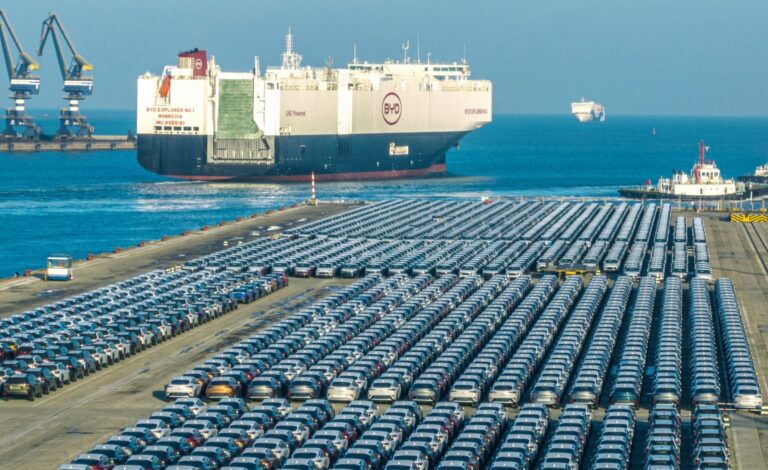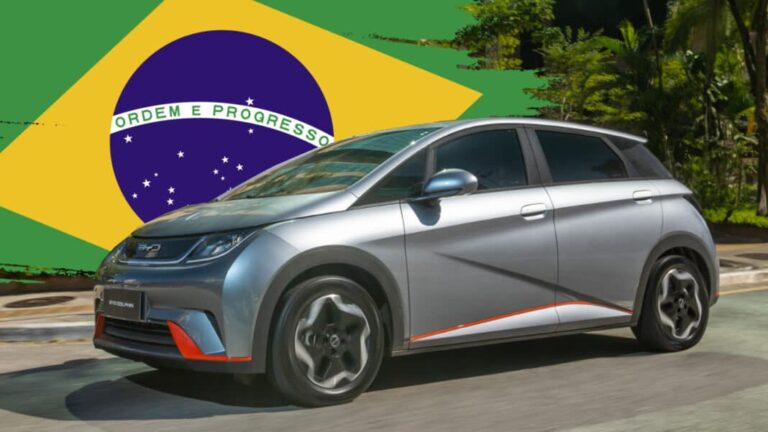
The Ultimate 2026 Importer’s Guide to Importing EV to Thailand
1. The Macro-Economics of Importing EV to Thailand in 2026
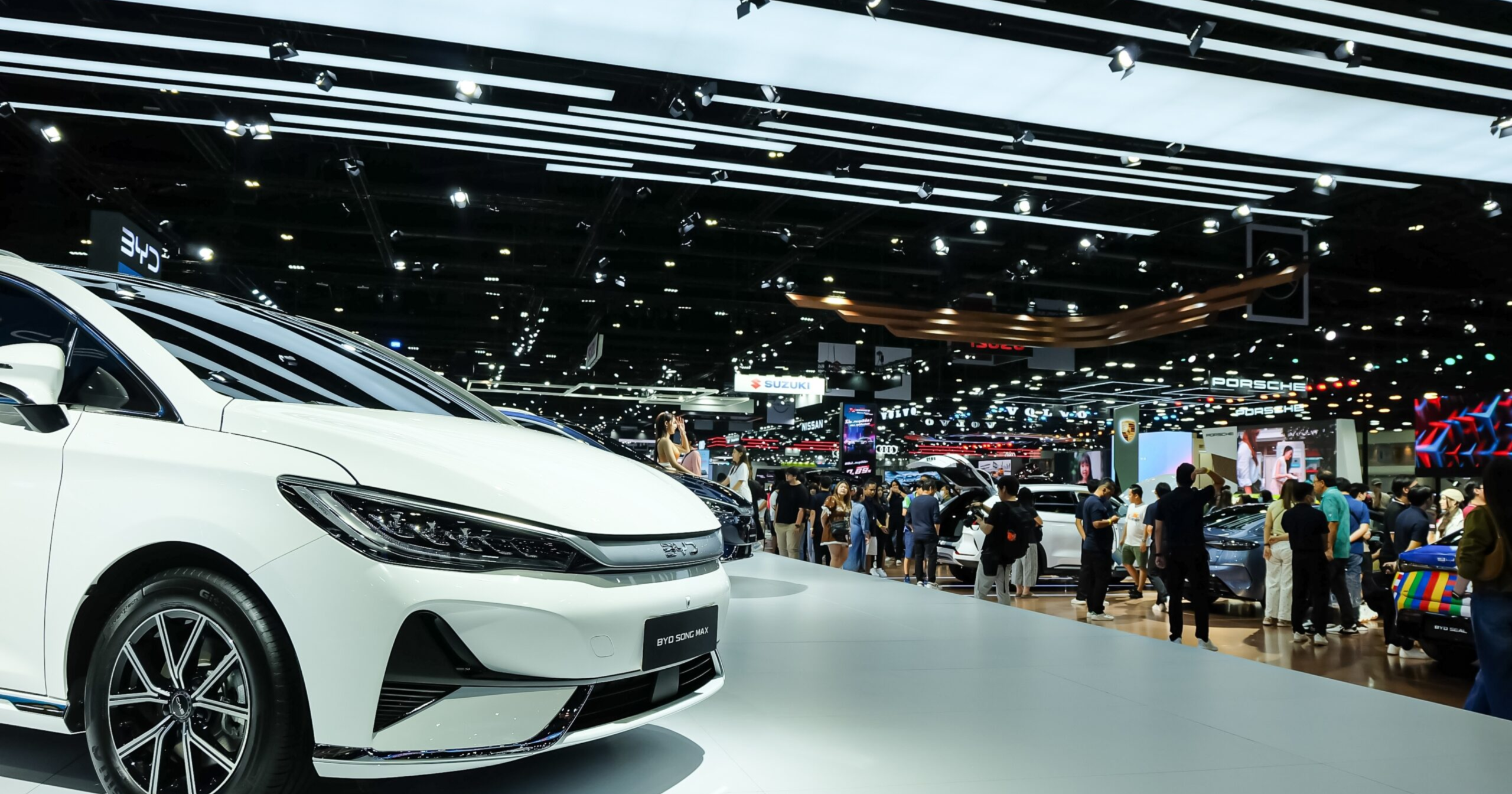
Thailand stands at the epicenter of Southeast Asia’s electric vehicle revolution, positioning itself as the “Detroit of Asia” for EV manufacturing and consumption. As we enter 2026, the Kingdom’s EV 3.5 incentive scheme continues to reshape import dynamics, creating unprecedented opportunities for B2B importers leveraging China’s diversified export engine.
The Thailand EV Market Landscape
Thailand’s Board of Investment (BOI) reported that 2025 saw NEV registrations exceed 180,000 units, representing a 35% year-over-year surge. With the Thai government’s commitment to carbon neutrality by 2050, import duties for completely built-up (CBU) electric vehicles remain at 0% for models with CIF values below 2 million THB (approximately $58,000 USD), provided importers meet localization commitments under the EV 3.0 and 3.5 frameworks.
However, 2026 introduces critical structural shifts. The “Multi-regional production networks” trend—where Chinese inputs blend with Southeast Asian assembly—is accelerating. Major Chinese OEMs including BYD, Great Wall Motor, and Neta have established Thai manufacturing facilities, yet CBU imports remain essential for:
– Premium models requiring immediate market entry
– Niche configurations (commercial EVs, luxury SUVs above 2M THB threshold)
– Fleet orders requiring rapid deployment before local production ramps up
China-Thailand Supply Chain Integration
China’s logistics sector, exceeding 350 trillion yuan in total value with 6.5% YoY growth, has established dedicated ASEAN corridors. The “China Plus One” strategy has evolved into “China Plus Thailand,” with integrated regional supply chains maintaining Shanghai and Shenzhen as central nodes while diversifying final-mile assembly to Laem Chabang and Bangkok.
For importers, this means:
– Reduced geopolitical concentration risk: Blended supply models allow tariff optimization through ASEAN-China FTA utilization
– Green logistics compliance: With over 35% of China’s urban delivery fleets now electric and solar-powered warehouses standard, carbon disclosure documentation aligns with Thailand’s Board of Investment sustainability requirements
– Currency hedging advantages: THB/CNY direct settlement mechanisms established in 2025 reduce USD exposure
2026 Market Projections
With China targeting 8+ million vehicle exports in 2026 (up from 7.1 million in 2025), Thailand represents a critical growth node. NEV exports from China to Thailand specifically are projected to reach 120,000 units, driven by:
– Excise tax advantages (2% for EVs vs. 20-50% for ICE vehicles)
– Corporate tax exemptions for fleet operators importing commercial EVs
– Charging infrastructure expansion (target: 7,500 public charging stations by end-2026)
2. Understanding China’s Strict EV Export Regulations
January 1, 2026, marked a regulatory watershed. The Ministry of Commerce (MOFCOM) implemented mandatory export licensing for all Chinese EV manufacturers and exporters—a decisive move to eliminate gray-market distortions and standardize quality assurance.
The Export License Framework
Under the 2026 regulations, only accredited manufacturers and authorized dealers may apply for EV export licenses. This framework fundamentally alters the procurement landscape:
| License Category | Eligibility | Validity | Key Requirements |
|---|---|---|---|
| Class A (Manufacturer Direct) | OEMs with annual production >10,000 units | 24 months | CCC certification, ISO 9001, overseas service network proof |
| Class B (Authorized Exporter) | Licensed dealers with OEM authorization | 12 months | Bonded warehouse facilities, $5M+ registered capital, after-sales commitment bonds |
| Class C (Restricted) | Trading companies without OEM backing | 6 months | Case-by-case approval, limited to used/refurbished vehicles only |
Critical Compliance Implications
The regulations specifically target the “irregular export” loophole where new vehicles were previously sold as “used” through unauthorized channels. For Thai importers, this means:
- Software Integrity Guarantee: Licensed exporters must provide vehicles with current OTA update capabilities and region-appropriate firmware (Thai language support, local navigation databases)
- Battery Documentation: UN 38.3 test reports and MSDS (Material Safety Data Sheets) must accompany every shipment
- Warranty Chain of Custody: Export licenses require proof that international warranty obligations are legally transferable to end-markets
Impact on Foreign Brands Manufacturing in China
Tesla, BMW, and Volkswagen—previously leveraging Chinese manufacturing cost advantages for Thai market supply—must now secure separate export licenses for their China-made EVs. This has created a bifurcated market:
– Licensed Channel: 15-20% price premium but full compliance and warranty support
– Gray Market (Now Illegal): Price discounts of 25-30% but zero after-sales support and potential customs seizure risk
Regulatory Alignment Pressure
European sustainability regulations (CSRD, battery passport requirements) are influencing Chinese logistics decisions at origin. Exporters to Thailand must now provide:
– Carbon footprint disclosure for ocean freight (IMO 2024 regulations)
– Supply chain due diligence documentation (conflict-free mineral certification for batteries)
– Circular economy compliance (battery recycling partnership agreements with Thai certified facilities)
3. Sourcing Strategy: Direct Factory vs. Authorized Export Agents
The 2026 regulatory environment necessitates a fundamental reassessment of procurement channels. Your sourcing strategy determines not only pricing but regulatory compliance viability.
Channel Comparison Matrix
| Criteria | Direct OEM Partnership | Authorized Export Agent | Unauthorized/Gray Market (Illegal 2026+) |
|---|---|---|---|
| MOFCOM License | Class A (Direct) | Class B (Authorized) | None (Criminal Liability) |
| Minimum Order | 50-100 units | 5-20 units | Variable (High Risk) |
| Pricing Structure | Factory gate + logistics | Wholesale + 8-12% margin | “Used” vehicle pricing (unreliable) |
| Warranty Transfer | Direct OEM to Thai entity | Agent-mediated transfer | Void/Non-existent |
| Customization | High (RHD, Thai software) | Medium (Pre-configured) | Low (As-is inventory) |
| Payment Terms | 30% T/T, 70% L/C | 100% T/T or Escrow | Cash upfront (red flag) |
| Documentation | Complete export package | Standard commercial docs | Incomplete/forged |
Strategic Recommendation: Hybrid Approach
For 2026 market entry, we recommend a tiered sourcing strategy:
Tier 1: Direct OEM Relationships (Volume >200 units/year)
Establish direct partnerships with BYD, NIO, XPeng, or GAC Aion for fleet orders. Requirements include:
– Thai corporate registration with BOI promotion
– Letter of Credit facilities with Chinese banks (ICBC, Bank of China)
– Service center establishment commitments (minimum 3 service points in Thailand)
Tier 2: Authorized Export Agents (Volume 20-200 units)
Partner with MOFCOM-licensed Class B exporters such as Sinomach Automobile or China National Automotive Industry International Corporation (CNAICO). These agents provide:
– Consolidated shipping (shared container/RoRo space)
– Pre-export inspection and certification management
– Thai homologation support services
Case Study: European Fleet Operator Entry
A German logistics company sought to import 150 commercial EV vans (BYD T3) for Bangkok last-mile delivery operations. Initial approach through gray-market traders offered $18,500/unit (CIF). However, post-January 2026, these vehicles lacked export licenses and were detained at Shanghai Port.
Resolution: Switched to authorized agent Electric Auto China (licensed Class B exporter). Final landed cost: $21,200/unit, but included:
– Valid MOFCOM export license
– UN 38.3 certified battery documentation
– Thai Type Approval pre-processing
– 5-year/150,000km warranty transfer to Thai subsidiary
Total additional cost: $2,700/unit (14.6% premium), but eliminated $450,000 in potential customs penalties and seizure risks.
4. Financial Mechanics: Pricing and Landed Costs
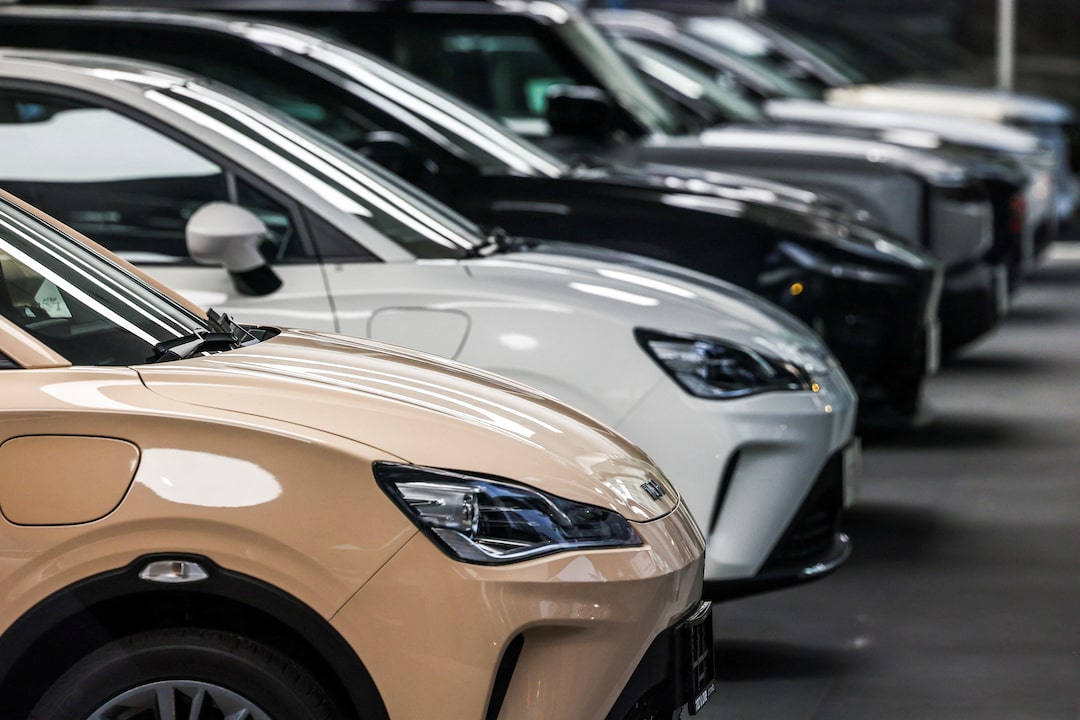
Understanding Thailand’s complex tax structure is essential for accurate margin calculation. While EVs enjoy significant incentives, the calculation methodology requires precision.
Thailand EV Import Tax Structure (2026)
| Component | Rate | Calculation Base | Notes |
|---|---|---|---|
| Import Duty | 0% | CIF Value | BOI EV 3.5 scheme (valid through 2027) |
| Excise Tax | 2% | CIF + Import Duty + Interior Tax base | Reduced from 20-50% for ICE vehicles |
| Interior Tax | 10% of Excise Tax | Excise Tax Amount | Applied to excise tax itself |
| VAT | 7% | CIF + Import Duty + Excise Tax + Interior Tax | Standard VAT rate |
| Surcharge | 0% | – | Exempt for EVs |
Landed Cost Calculation Example: BYD Dolphin (Compact EV)
Scenario: Import of 20 units, CIF Bangkok $19,500/unit
| Cost Component | Calculation | Amount (USD) |
|---|---|---|
| FOB Shanghai | Factory price + domestic logistics | $18,200 |
| Ocean Freight | RoRo vessel, 20 units shared | $650 |
| Insurance | 110% of CIF value @ 0.3% | $65 |
| CIF Value | Subtotal | $18,915 |
| Import Duty | $18,915 × 0% | $0 |
| Excise Tax | $18,915 × 2% | $378 |
| Interior Tax | $378 × 10% | $38 |
| VAT | ($18,915 + $0 + $378 + $38) × 7% | $1,353 |
| Customs Fees | Processing, inspection | $45 |
| Thai Port Charges | Laem Chabang handling | $120 |
| TOTAL LANDED COST | $20,849 |
Total Tax Burden: 10.2% of CIF value (primarily VAT and minimal excise)
Critical Financial Considerations for 2026
-
Currency Volatility: With China’s NEV acquisition tax reinstated at 50% (5% rate, max reduction 15,000 yuan), factory pricing has adjusted upward by 2-3%. Hedge THB/CNY exposure through 90-day forward contracts.
-
Green Logistics Premium: Carbon-neutral shipping options add $85-120/unit but qualify for Thailand’s Green Logistics Tax Incentive (deductible up to 100% of investment in eco-friendly transport).
-
Working Capital Requirements: Under new export license rules, Chinese manufacturers require 30% deposit (vs. 10% previously) to secure export quota allocations. Budget for increased upfront capital.
-
Localization Bonds: For imports above 2M THB CIF value, Thai customs may require refundable bonds guaranteeing future local assembly or component sourcing (EV 3.5 localization requirements).
5. Global Logistics: Ocean Freight & Battery Transport Compliance
Transporting lithium-ion batteries across international waters requires adherence to stringent dangerous goods protocols. The convergence of China’s green logistics mandates and international maritime regulations creates a complex compliance environment.
Battery Transport Classification
All EV lithium-ion batteries fall under UN 3480 (lithium-ion batteries) or UN 3171 (battery-powered vehicles). Key requirements:
| Regulation | Requirement | Compliance Cost (per unit) |
|---|---|---|
| UN 38.3 Testing | Crush, thermal, vibration, shock tests | $800-1,200 (one-time per model) |
| IMO DG Declaration | Shipper’s declaration for dangerous goods | $150 |
| Emergency Response Guide | ERG Code 147 for lithium batteries | Included in freight |
| Temperature Monitoring | Continuous 15-25°C monitoring during transit | $45 (data logger) |
Shipping Methodology: RoRo vs. Container
For Thailand-bound EVs, two primary methods exist:
Roll-on/Roll-off (RoRo)
– Best for: Large volumes (>50 units), standard passenger vehicles
– Transit time: Shanghai to Laem Chabang: 12-14 days
– Cost: $650-850/unit (2026 rates)
– Advantages: Drive-on/drive-off reduces handling damage; no container blocking required
– Constraints: Limited to specific vessel schedules; requires 30-day advance booking due to export license verification delays
Containerized (Flat Rack/OOG)
– Best for: Luxury EVs, small batches (1-4 units per 40’HC), vehicles with low ground clearance
– Transit time: 14-18 days (including stuffing/destuffing)
– Cost: $1,200-1,800/unit (including lashing/securing)
– Critical requirement: Batteries must be at ≤30% state of charge (SoC) per IMDG Code Amendment 40-20
Green Logistics Integration
China’s dual carbon goals have transformed export logistics. For Thai importers, this offers both compliance advantages and cost implications:
- Solar-Powered Port Operations: Shanghai Yangshan Port now operates 100% renewable energy for EV export terminals, providing carbon-neutral port handling certificates required by Thai BOI sustainability audits.
- Electric Haulage: Container drayage from factory to port using electric trucks (now 35% of China’s urban fleet) reduces Scope 3 emissions by 40%.
- Carbon Offset Bundling: Major carriers (COSCO, OOCL) offer carbon-neutral ocean freight at $95/unit premium, generating verified carbon credits recognized under Thailand’s T-VER (Thailand Voluntary Emission Reduction) program.
Documentation Chain for Customs Clearance
- Export License (MOFCOM 2026): Original stamped copy
- Certificate of Origin: Form E (ASEAN-China FTA) for 0% duty verification
- Bill of Lading: Clean on board, marked with UN 3171 classification
- Dangerous Goods Declaration: IMO Class 9
- Commercial Invoice: Must match export license VIN list exactly
- Packing List: Including battery weight specifications (net vs. gross)
- Insurance Certificate: Institute Cargo Clauses (A) minimum
6. Localization & Homologation: Preparing Cars for Local Markets
Thailand’s Department of Land Transport (DLT) and Thai Industrial Standards Institute (TISI) maintain rigorous homologation requirements that differ significantly from Chinese GB standards.
Type Approval Process
| Stage | Requirement | Timeline | Cost (USD) |
|---|---|---|---|
| 1. Documentation Review | Technical specs, UN ECE certificates (if applicable), factory ISO certs | 2 weeks | $500 |
| 2. Sample Testing | EMC, safety standards, braking tests | 3-4 weeks | $3,000-5,000 |
| 3. Factory Audit | For CKD/SKD imports (not CBU) | N/A for CBU | – |
| 4. Type Approval Certificate | Issued by DLT | 1 week | $1,200 |
| 5. Import Permit | Per shipment authorization | 3 days | $200 |
Critical Technical Adaptations
Right-Hand Drive (RHD) Configuration
While most Chinese EVs for export to Thailand are manufactured RHD, verify:
– Steering column position (Thailand drives left)
– Headlight beam pattern (left-hand traffic alignment)
– Speedometer calibration (km/h primary, mph secondary optional)
Software Localization
Thai regulations require:
– Thai language interface for infotainment and instrument cluster
– Local navigation maps (Google Maps or local providers)
– Emergency call systems compatible with Thai 191/1669 services
– OTA update capability with Thai server hosting (data sovereignty requirements)
Charging Infrastructure Compatibility
Thailand utilizes Type 2 (Mennekes) AC charging and CCS2 DC fast charging standards. Chinese GB/T standards require adapter provision:
– CCS2 to GB/T adapter: $180-250/unit (must be TISI certified)
– Software handshake protocol adjustments for Thai charging networks (EGAT, MEA, PEA)
Labeling and Documentation
– Tire labeling: Thai energy efficiency labels required
– VIN plate: Must include Thai script manufacturer designation
– Owner’s manual: Thai language mandatory; English optional
– Warning labels: High voltage warnings in Thai
7. After-Sales Ecosystem: Securing Parts and Service Abroad
The 2026 export license regulations explicitly require proof of overseas service networks. For importers, this transforms from a regulatory checkbox to a competitive necessity.
Spare Parts Supply Chain Architecture
Tier 1: Critical Components (Battery packs, motors, inverters)
– Lead time: 45-60 days from China
– Inventory requirement: Maintain 90-day stock in Thai bonded warehouse
– Regulatory note: Battery returns require hazardous waste permits under Thailand’s Factory Act
Tier 2: Fast-Moving Consumer Goods (FMCG) (Brake pads, filters, 12V batteries)
– Localization strategy: Source from Thai aftermarket suppliers where compatible (e.g., Brembo, Bosch Thailand)
– Cost reduction: 30-40% vs. importing from China
Tier 3: Software and Diagnostics
– Mandatory: Thai-language diagnostic software (compatible with OBD-II)
– Update frequency: Quarterly OTA updates hosted on local servers
– Cybersecurity: Compliance with Thailand’s Personal Data Protection Act (PDPA) for vehicle data transmission
Service Network Establishment
Under MOFCOM’s 2026 guidelines, exporters must demonstrate:
– Minimum 3 service centers in Thailand for passenger vehicles
– Minimum 1 service center per region (North, Northeast, Central, South) for commercial vehicles
– Technical training certification for 10+ Thai technicians per brand (Level 3 EV certification from Thailand’s Department of Skill Development)
Warranty Management Framework
| Component | Standard Warranty | Extended Warranty Option |
|---|---|---|
| Battery | 8 years/160,000 km | 10 years/200,000 km |
| Drive Motor | 5 years/100,000 km | 8 years/150,000 km |
| Electronics | 3 years/60,000 km | 5 years/100,000 km |
| Bodywork | 3 years/unlimited | 5 years/unlimited |
Critical: Warranty funds must be escrowed in Thai financial institutions (minimum 3% of vehicle value) to ensure local claim payment capability—this is now verified during the export license application process.
8. Avoiding Scams: How to Audit a Chinese EV Supplier
The transition to licensed export frameworks has pushed unauthorized dealers toward increasingly sophisticated fraud schemes. Protect your investment through systematic verification.
Red Flag Checklist
| Indicator | Legitimate Supplier | Fraudulent Operator |
|---|---|---|
| Export License | Provides MOFCOM license number verifiable online | Claims “license pending” or “unnecessary for used cars” |
| Pricing | Market rate ±5% | 20-30% below market (too good to be true) |
| Payment Terms | 30% T/T, 70% L/C or against B/L | 100% upfront via Western Union/Bitcoin |
| Factory Visit | Welcomes audit with 2-week notice | Excuses (COVID restrictions, “proprietary secrets”) |
| Documentation | Complete CCC, ISO, UN 38.3 certificates | Photoshop-edited certificates, wrong logos |
| Communication | Corporate domain emails, video calls in professional showrooms | Gmail/Hotmail, refuses video, only WhatsApp |
Verification Protocol
Step 1: License Verification
Request the Export License Number (格式: 2026-XX-XXXXX) and verify through:
– MOFCOM’s online verification portal (商务部门户网站)
– Cross-reference with China Association of Automobile Manufacturers (CAAM) member directory
Step 2: Factory Audit
Conduct or commission:
– On-site inspection of production lines (ensure VIN allocation capability)
– Review of quality control stations (particularly battery testing)
– Verification of RHD production capability (for Thailand market)
Step 3: Financial Due Diligence
– Check business license (营业执照) registration capital (minimum 50 million RMB for Class A exporters)
– Verify bank references with major Chinese banks (not local rural cooperatives)
– Request audited financial statements (past 2 years)
Step 4: Sample Transaction
Before bulk order:
– Purchase 1-2 units via authorized channel
– Verify VIN matches export license documentation exactly
– Test OTA update capability to Thai servers
– Confirm warranty registration in Thai DLT system
Common 2026 Scams to Avoid
-
The “Used Car” Loophole: Fraudsters claim vehicles are “second-hand” to bypass export license requirements. These are typically new cars with rolled-back odometers or temporary registrations.
-
Battery Substitution: Substituting certified UN 38.3 batteries with uncertified units post-inspection. Solution: Seal battery compartments with tamper-evident tags after inspection.
-
Software Region-Locking: Vehicles shipped with Chinese-market software that cannot update to Thai specifications. Verify firmware unlock capability before shipment.
-
Documentation Cloning: Using legitimate export licenses for multiple shipments (license fraud). Each license should correspond to specific VINs in a one-to-one relationship.
9. Start Your Import Business with Electric Auto China
Navigating the 2026 regulatory landscape requires a partner with deep institutional knowledge of both Chinese export controls and Thai import requirements. Electric Auto China, headquartered in Shanghai with dedicated Thailand operations, provides end-to-end compliance for B2B EV importers.
Our 2026 Compliance Advantages
As a MOFCOM-licensed Class B exporter (License No. 2026-SH-0441), we offer:
– Regulatory Certainty: Every vehicle accompanied by valid export license and complete UN 38.3 documentation
– Thai Market Specialization: Pre-configured RHD vehicles with Thai language software, CCS2 charging compatibility, and DLT Type Approval pre-processing
– Financial Structuring: Letters of Credit facilitation through our partnerships with Bank of China and Bangkok Bank
– Logistics Integration: Green logistics options with carbon-neutral shipping and Laem Chabang port priority clearance
Service Tiers for Thailand Market Entry
| Service Package | Volume | Includes | Investment |
|---|---|---|---|
| Market Entry | 5-20 units | Sourcing, export license, basic homologation | $2,500/unit service fee |
| Fleet Deployment | 20-100 units | Full homologation, warranty escrow setup, spare parts kit | $1,800/unit service fee |
| Enterprise Partnership | 100+ units/year | Direct OEM negotiation, localized assembly consultation, service network establishment | Custom quotation |
Immediate Next Steps
- Regulatory Consultation: Schedule a compliance audit of your current sourcing strategy against 2026 MOFCOM requirements
- Sample Import: Execute a pilot shipment of 2-5 units to validate your Thailand distribution channels
- Partnership Agreement: Establish annual supply contracts with locked pricing (hedged against CNY/THB fluctuation)
Contact Electric Auto China
– Shanghai Headquarters: +86-21-XXXX-XXXX | [email protected]
– Bangkok Office: +66-2-XXX-XXXX (Thai/English/Mandarin support)
– Compliance Portal: Real-time tracking of your export license application and vessel booking status
The 2026 EV export landscape favors prepared, compliant, and strategically partnered importers. With China’s export engine scaling to 8+ million units and Thailand’s EV infrastructure maturing, the window for first-mover advantage is narrowing. Secure your supply chain compliance today to capture tomorrow’s market share.
Disclaimer: This guide reflects regulations as of January 2026. Export/import laws are subject to rapid modification. Always verify current requirements with MOFCOM and Thai Customs Department before executing transactions.
Unlock High-Margin EV Imports with Electric Auto China
As an elite automotive supply chain partner in Shanghai, we provide end-to-end, strictly compliant export solutions tailored for international dealerships, fleet managers, and wholesale distributors.
- 🛡️ 100% Legal & Compliant: Fully licensed exports ensuring smooth customs clearance at your destination.
- ⚙️ Complete Localization: Professional English/Arabic/Russian OS flashing and GB/T to CCS2 charging solutions.
- 🚢 Secure Logistics: Direct Ro-Ro and Containerized shipping with full UN38.3 battery certifications.
- 🔧 After-Sales Support: Reliable access to OEM diagnostic tools and steady spare parts supply.
Request a Detailed FOB/CIF Quote Today:
📧 B2B Sales Email: [email protected]
💬 Direct WhatsApp: +86 159 5127 6160