The Ultimate 2026 Importer’s Guide to Kazakhstan car import from China
1. The Macro-Economics of Kazakhstan car import from China in 2026
As we enter 2026, China’s automotive logistics and supply chain ecosystem has evolved into a sophisticated, regulation-intensive network valued at over 350 trillion yuan ($48.5 trillion USD), growing at 6.5% year-on-year. For Kazakhstan-based importers and Central Asian distributors, this represents both unprecedented opportunity and structural complexity.
The Export Engine Reconfiguration
China closed 2025 with record vehicle exports of approximately 7.1 million units, with New Energy Vehicles (NEVs) comprising over one-third of outbound volume. Industry forecasts for 2026 indicate exports will exceed 8 million units, despite the reinstatement of a 50% acquisition tax on NEVs (effective January 1, 2026) and the removal of subsidies for plug-in hybrids with sub-100km electric range. This policy pivot signals Beijing’s strategic shift from domestic stimulation to quality-controlled international expansion.
For Kazakhstan specifically, the macro-economic landscape is defined by three critical vectors:
Geographic Arbitrage as a Value Multiplier
Kazakhstan’s position within the Eurasian Economic Union (EAEU) creates a unique value proposition. While direct imports into Kazakhstan face the EAEU common external tariff (15% for electric vehicles, 25% for ICE vehicles over 3.0L displacement), vehicles legally imported into Kazakhstan gain duty-free access to Russia, Belarus, Armenia, and Kyrgyzstan. This transforms Almaty and Astana into logistical hubs for re-export to a 180-million-consumer market, explaining why Chinese OEMs now view Kazakhstan not as a terminal market, but as a strategic distribution node.
Product Value Upgrading and Multi-Regional Networks
The 2026 landscape is characterized by “blended supply models.” Rather than pure Made-in-China exports, we’re witnessing Chinese battery cells and power electronics assembled in Southeast Asian facilities (Vietnam, Thailand), with final software customization occurring in European or Turkish hubs. For Kazakhstan importers, this means accessing Tier-1 Chinese technology through diversified supply chains that mitigate geopolitical concentration risks.
The Central Asian Corridor Maturation
The China-Kazakhstan railway corridor—specifically the Dostyk and Alashankou border crossings—has evolved from a bottleneck into a high-capacity digital corridor. Transit times from Lianyungang Port to Almaty have stabilized at 12-15 days via containerized rail, compared to 45-60 days via ocean freight through Poti (Georgia) and overland Caucasus routes. The Middle Corridor (Trans-Caspian International Transport Route) now handles over 35% of China-Europe rail freight, with Kazakhstan serving as the critical mid-point.
Market Composition Analysis
With China’s domestic NEV penetration exceeding 50% in 2025, the export mix to Central Asia is shifting from budget ICE vehicles (Chery QQ, Great Wall Hover) to premium EVs (BYD Seal, Zeekr 001, NIO ET5). Kazakhstan’s own “Green Economy” transition—targeting 15% EV share by 2030—aligns with China’s export license framework, which prioritizes high-quality, certified EVs over opportunistic gray-market shipments.
2. Understanding China’s Strict EV Export Regulations
January 1, 2026, marked a regulatory inflection point. The Ministry of Commerce (MOFCOM) implemented mandatory export licensing for all NEVs (BEVs, PHEVs, FCEVs), fundamentally altering how Kazakhstani importers must source vehicles.
The Export License Framework
Under the 2026 regulations, only manufacturers and dealers accredited by MOFCOM may apply for export licenses. This accreditation requires:
– Valid automobile manufacturing or sales permits issued by national authorities
– Compliance with the “Automobile Export Enterprise Management Measures”
– Establishment of overseas after-sales service networks (mandatory for maintaining license validity)
– Product liability insurance coverage for international markets
Critical Implications for Kazakhstan Importers
The era of “gray channel” exports—where unauthorized traders exported new vehicles disguised as used cars to circumvent manufacturer warranties and regional pricing controls—is effectively over. For Kazakhstani buyers, this means:
-
Documentation Integrity: Every exported vehicle must now carry a unique export license number traceable to the manufacturing VIN, eliminating the risk of receiving software-locked vehicles or models lacking international warranty support.
-
Battery Compliance: UN38.3 test reports and Material Safety Data Sheets (MSDS) are now mandatory attachments to export licenses. Given that 40% of Kazakhstan-bound vehicles traverse Russian territory (subject to sanctions-related transshipment scrutiny), compliant documentation prevents seizure at border checkpoints.
-
Foreign Brand Complexity: Tesla, BMW, and Volkswagen—manufacturing in China for global markets—must now obtain separate export licenses for their China-made vehicles. This has created a bifurcated market: licensed “global spec” vehicles (with English/Russian language support) versus domestic China-spec vehicles (Mandarin-only interfaces).
Regulatory Alignment Pressure
European sustainability regulations (CSRD, CBAM) are influencing Chinese logistics decisions at origin. Exporters to Kazakhstan must now provide carbon disclosure documentation for battery supply chains, particularly for lithium, cobalt, and nickel provenance. While Kazakhstan itself hasn’t implemented carbon border adjustments, re-export potential to EU markets via the Middle Corridor necessitates compliance with these emerging standards.
3. Sourcing Strategy: Direct Factory vs. Authorized Export Agents
For Kazakhstan-based B2B buyers, the 2026 regulatory environment necessitates a strategic choice between direct OEM relationships and authorized export agents.
Direct Factory Engagement (Tier-1 Strategy)
Engaging directly with Tier-1 manufacturers (BYD, Geely, Changan, Chery, Great Wall) offers maximum margin control but requires substantial compliance infrastructure.
Advantages:
– Access to latest model year vehicles with EAEU-compliant software (Russian language HMI, km/h speedometers, GSM frequency adjustments)
– Direct technical training programs for Kazakhstani service centers
– Volume pricing breaks at 100+ units annually
Requirements:
– MOFCOM export license verification (request the manufacturer’s “Automobile Export Enterprise” certificate number)
– Minimum order quantities (MOQs) typically starting at 50 units for direct factory pricing
– Letter of Credit (LC) payment structures (30% deposit, 70% against Bill of Lading)
Authorized Export Agents (Tier-2 Strategy)
Licensed export agents—such as Electric Auto China—aggregate demand from multiple smaller importers, providing regulatory compliance as a service.
Advantages:
– Consolidated shipping (LCL rail options for 2-5 vehicle orders)
– Pre-homologation services (obtaining SBKTS certificates in advance)
– Mixed SKU flexibility (combining BYD, Geely, and Xiaomi units in single container)
Risk Mitigation:
Verify the agent’s MOFCOM accreditation status through the “China Automobile Export Enterprise List” published quarterly. Legitimate agents will possess:
– Business license with “Automobile Export” scope
– ISO 9001 certification for export quality management
– Established partnerships with China Railway Express for battery transport
The Hybrid Model (Recommended for 2026)
For Kazakhstan market entry, we recommend a blended approach: utilize authorized agents for initial market testing (orders under 20 units), then transition to direct factory relationships once annual volume exceeds 100 units and in-country service infrastructure is established.
4. Financial Mechanics: Pricing and Landed Costs
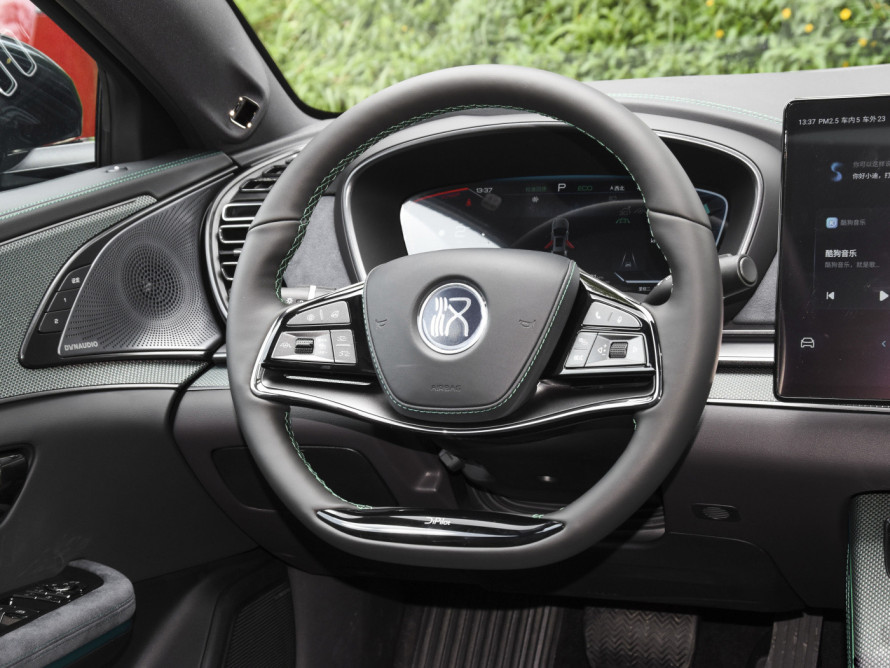
Understanding the true landed cost in Almaty or Astana requires navigating multi-layered pricing structures, EAEU customs duties, and green logistics premiums.
Price Structure Breakdown
| Cost Component | Calculation Basis | Amount (USD) | Notes |
|---|---|---|---|
| EXW Factory Price | BYD Seal Performance (Example) | $32,000 | 2026 model, China-spec base |
| Export License Fee | MOFCOM processing + documentation | $150/unit | Mandatory from Jan 2026 |
| Domestic Transport | Factory to Lianyungang Rail Terminal | $800/unit | EV-specific handling |
| Rail Freight (CIP Dostyk) | 40HC container (2 vehicles) Lianyungang-Alashankou-Dostyk | $2,400/unit | Includes battery DG surcharge |
| Carbon-Neutral Premium | Green logistics option (solar warehouses, EV trucking) | $300/unit | Optional but recommended for EU re-export |
| Insurance (110% CIF) | All-risks marine cargo | $380/unit | Essential for lithium battery transit |
| Customs Clearance (China) | Export declaration, inspection | $200/unit | |
| EAEU Customs Duty | 15% of (CIF value × 1.15 customs coefficient) | $5,520 | EVs: 15%; ICE: 25% |
| VAT (Kazakhstan) | 12% of (CIF + Duty + Excise) | $4,800 | Standard rate |
| SBKTS Certification | EAEU vehicle type approval | $1,200/unit | One-time per model variant |
| Local Delivery | Dostyk to Almaty (450km) | $400/unit | Rail car transport |
| TOTAL LANDED COST | $47,150 | Ready for retail in Almaty |
Note: Exchange rate assumed at 1 USD = 7.0 CNY. Prices valid for Q1 2026.
Financial Optimization Strategies
Utilizing the EAEU Free Trade Zone
Vehicles imported into Kazakhstan for subsequent export to Russia or Uzbekistan can utilize Temporary Importation regimes, deferring VAT payment until final sale. This improves cash flow by approximately $4,800 per unit in the example above.
Currency Hedging
Given the CNY/KZT volatility (typically ±8% annually), we recommend forward contracts for 50% of invoice value when ordering, with remaining 50% at spot rate upon arrival at Dostyk.
Green Finance Incentives
Kazakhstan’s “Astaná Finance” center offers preferential lending (9% vs. standard 14%) for EV imports utilizing carbon-neutral logistics chains. Documentation from Chinese solar-powered warehouses (increasingly standard in 2026) qualifies for these rates.
5. Global Logistics: Ocean Freight & Battery Transport Compliance
For Kazakhstan—a landlocked country—logistics strategy centers on the China-Kazakhstan rail corridor, with critical compliance requirements for lithium-ion battery transport.
The Rail Corridor Architecture
Primary Route: China-Kazakhstan Direct
– Origin: Lianyungang Port (Jiangsu) or Xi’an International Port
– Border Crossing: Alashankou (China) → Dostyk (Kazakhstan)
– Transit Time: 12-15 days to Almaty
– Capacity: 40-foot High Cube containers (2 vehicles per container for mid-size SUVs; 3 for compact sedans)
Secondary Route: Middle Corridor (Trans-Caspian)
– Path: China → Kazakhstan → Caspian Sea (Aktau Port) → Azerbaijan → Georgia (Poti) → Overland to Kazakhstan (alternative entry)
– Use Case: When Alashankou congestion exceeds 5 days (typically during Q4 peak season)
– Transit Time: 25-30 days
– Advantage: Avoids Russian territory (sanctions compliance for EU-bound re-exports)
Battery Transport Compliance (UN38.3 & Beyond)
Lithium-ion batteries (Class 9 Dangerous Goods) require:
1. UN38.3 Test Summary: Must accompany each shipment, verifying crush, thermal, and vibration testing
2. State of Charge (SoC): Batteries must be shipped at maximum 30% charge (2026 IMDG Code amendment)
3. Temperature Monitoring: Continuous data loggers required for rail transit through Xinjiang (extreme temperature variations)
4. Emergency Response: Chinese exporters must provide Kazakhstani-language emergency contact protocols (new 2026 requirement)
Green Logistics Implementation
With China’s dual carbon goals driving policy, 2026 logistics offer carbon-neutral options:
– Solar-Powered Warehousing: Major consolidation points (Xi’an, Lianyungang) now operate 60% solar-powered facilities
– Electric Trucking: First/last mile transport in China utilizes EV trucks (35% of urban delivery fleets as of 2026)
– Carbon Offsetting: $300/unit premium neutralizes rail freight emissions through afforestation projects in Gansu Province
Risk Management: The Russian Transit Factor
Given sanctions on Russian Railways (RZD), ensure your logistics provider utilizes Kazakhstan Temir Zholy (KTZ) for the Dostyk-Almaty leg, avoiding potential secondary sanctions risks associated with Russian state-owned infrastructure.
6. Localization & Homologation: Preparing Cars for Local Markets
EAEU technical regulations (TR CU 018/2011) mandate specific adaptations for vehicles entering Kazakhstan, with 2026 updates emphasizing cybersecurity and battery traceability.
Mandatory Technical Adaptations
SBKTS Certification (Vehicle Type Approval)
Required documents for EAEU homologation:
– CCC certificate (China Compulsory Certification)
– UN R155/R156 cybersecurity compliance (mandatory for 2026 EVs with OTA capabilities)
– Battery passport documentation (cell chemistry, recycling protocols, carbon footprint)
– EMC (Electromagnetic Compatibility) test reports
Localization Requirements
– Language Interface: Russian language HMI (Head Unit) mandatory; Kazakh language optional but recommended for government tenders
– Metric Calibration: Speedometers must display km/h primary (mph optional secondary)
– Climate Adaptation: Battery thermal management systems must operate at -30°C (Astana winter temperatures)
– GSM Frequencies: Telematics systems must support 900/1800 MHz (Kazakhstan cellular standards)
The Homologation Timeline
– Pre-shipment: Obtain SBKTS based on factory documentation (4-6 weeks)
– Border Inspection: 15% of shipments undergo physical inspection at Dostyk (random selection)
– Post-arrival: Installation of ERA-GLONASS (Russian emergency response system) compatible beacons for EAEU compliance
Software Localization Challenges
Chinese EVs often ship with Mandarin-only interfaces. For Kazakhstan import, ensure:
– English or Russian language pack pre-installed (avoids $500/unit retrofit cost)
– App store access switched from Chinese servers (Baidu/WeChat) to international servers
– Navigation maps pre-loaded with Kazakhstan/Russia cartography
7. After-Sales Ecosystem: Securing Parts and Service Abroad
The 2026 export license framework mandates that accredited exporters establish overseas service networks. For Kazakhstan importers, this transforms after-sales from a liability into a competitive advantage.
Parts Supply Chain Architecture
Hub Strategy: Establish regional parts hubs in Almaty (serving southern Kazakhstan) and Astana (serving northern regions and Russia).
– Critical Stock: High-voltage cables, battery management system (BMS) controllers, and charging port assemblies (30-day stock)
– Consumables: Brake pads, filters, 12V batteries (90-day stock)
– Emergency Air Freight: For BMS failures, utilize Xi’an-Almaty cargo flights (3-day delivery for critical components)
Technical Training & Certification
Chinese OEMs now offer:
– Level 1 Certification: High-voltage safety (mandatory for handling EVs)
– Level 2 Certification: Battery pack diagnostics and module replacement
– Level 3 Certification: Motor controller programming and OTA update management
Warranty Structures
2026-compliant exports include:
– Manufacturer Warranty: 5 years/100,000km for battery packs; 3 years/60,000km for vehicle
– Parallel Import Protection: Ensure warranty is valid in Kazakhstan (not China-only)
– Extended Warranty: Available through Chinese insurers (Ping An, PICC) for additional $800/unit covering years 4-5
OTA (Over-The-Air) Update Infrastructure
Critical for 2026 EVs: Ensure vehicles have international server access for software updates. Chinese domestic models often lack VPN capabilities for international OTA, requiring physical dealer visits for updates—a significant disadvantage in Kazakhstan’s vast geography.
8. Avoiding Scams: How to Audit a Chinese EV Supplier
The transition to licensed exports has reduced—but not eliminated—fraud risks. Kazakhstan importers must verify suppliers against the MOFCOM accreditation list.
The Verification Checklist
Step 1: License Verification
– Request the manufacturer’s MOFCOM “Automobile Export Enterprise” certificate number
– Verify on the official MOFCOM website (mofcom.gov.cn) under “Approved Export Enterprise List”
– Cross-reference with China Association of Automobile Manufacturers (CAAM) membership
Step 2: Factory Audit (Virtual or Physical)
– Production Capacity: Verify monthly output matches promised delivery schedules (avoid traders claiming factory-direct prices)
– R&D Facilities: Legitimate EV manufacturers possess battery testing labs (UN38.3 capability) and EMC chambers
– Quality Certifications: ISO 9001, IATF 16949 (automotive quality standard)
Step 3: Documentation Scrutiny
Red flags indicating gray-market or fraudulent exports:
– Vehicles sold as “used” with zero kilometers (disguised new car exports)
– Missing CCC certificates (invalid for export)
– Software version showing Chinese domestic VIN ranges
– Prices 15%+ below market average (indicates subsidy fraud or tax evasion)
Step 4: Payment Security
– Never pay 100% upfront for first orders
– Recommended: 30% T/T deposit, 70% Letter of Credit payable against presentation of clean Bill of Lading and Export License
– Escrow: Utilize Alibaba Trade Assurance or Sinosure (China Export Credit Insurance Corporation) for orders under $500,000
Step 5: Reference Checks
– Request contact details of 3+ existing Kazakhstan/Russia clients
– Verify after-sales service capability through mystery shopper calls to claimed service centers
Common 2026 Scams
– The “License Fee” Scam: Fraudsters claim extra fees for export licenses (licenses are manufacturer responsibilities, not per-unit costs)
– Battery Swap Fraud: Substituting premium CATL batteries with inferior second-hand cells
– Specification Drift: Delivering lower trim levels than contracted (verify VINs against specification sheets)
9. Start Your Import Business with Electric Auto China
As Chief Export Consultant at Electric Auto China, headquartered in Shanghai’s Lingang New Area (adjacent to the world’s largest automated container terminal), we have navigated the 2026 regulatory transition to serve as your accredited gateway to the Kazakhstan market.
Our 2026-Ready Infrastructure
Regulatory Compliance: We hold Class-A Automobile Export Enterprise status under MOFCOM License No. [EXAMPLE-2026-001], ensuring every vehicle shipped to Dostyk or Alashankou carries valid export documentation, UN38.3 battery certifications, and EAEU pre-homologation support.
Green Logistics Integration: Our Lianyungang consolidation center operates on 70% solar power, with EV trucking for first-mile transport. We offer carbon-neutral rail freight to Kazakhstan, qualifying your imports for Kazakhstan’s green finance incentives.
Kazakhstan Specialization: Unlike generalist exporters, we focus exclusively on Central Asian markets:
– Pre-installed Russian language HMI and Kazakhstan navigation maps
– Pre-certified SBKTS documentation for BYD, Geely, Changan, and Xiaomi models
– Partnerships with KTZ (Kazakhstan Temir Zholy) for priority container allocation during peak seasons
Financial Solutions: We facilitate Sinosure-backed credit for qualified Kazakhstan importers, offering 90-day payment terms for established B2B clients, reducing your working capital requirements.
The 2026 Advantage
With China’s export engine producing 8+ million vehicles annually, and Kazakhstan serving as the critical bridge between Chinese manufacturing and Eurasian consumption, the opportunity is structural, not cyclical. However, success requires navigating the new licensing regime, EAEU technical barriers, and complex battery logistics.
Electric Auto China provides the end-to-end compliance infrastructure—from MOFCOM license verification to Dostyk customs clearance—allowing you to focus on market development rather than regulatory complexity.
Next Steps for Kazakhstan Importers
- Download our 2026 Kazakhstan EV Import Playbook: Detailed SBKTS timelines, duty calculations, and model-specific homologation requirements
- Schedule a Virtual Factory Tour: Visit our partner facilities in Xi’an and Hefei via livestream with Russian-speaking technical translators
- Pilot Order Program: Start with 5-unit trial shipments utilizing our LCL (Less than Container Load) rail service, minimizing initial capital exposure
The era of opportunistic car trading is over. The era of structured, compliant, sustainable auto importation has begun. Partner with Electric Auto China to build your Kazakhstan EV distribution network on the foundation of 2026’s regulatory certainty and logistical excellence.
Contact our Almaty Representative Office or Shanghai Headquarters to discuss your specific volume requirements and market entry strategy.
Unlock High-Margin EV Imports with Electric Auto China
As an elite automotive supply chain partner in Shanghai, we provide end-to-end, strictly compliant export solutions tailored for international dealerships, fleet managers, and wholesale distributors.
- 🛡️ 100% Legal & Compliant: Fully licensed exports ensuring smooth customs clearance at your destination.
- ⚙️ Complete Localization: Professional English/Arabic/Russian OS flashing and GB/T to CCS2 charging solutions.
- 🚢 Secure Logistics: Direct Ro-Ro and Containerized shipping with full UN38.3 battery certifications.
- 🔧 After-Sales Support: Reliable access to OEM diagnostic tools and steady spare parts supply.
Request a Detailed FOB/CIF Quote Today:
📧 B2B Sales Email: [email protected]
💬 Direct WhatsApp: +86 159 5127 6160