The Ultimate 2026 Importer’s Guide to Low MOQ Car Export China
1. The Macro-Economics of Low MOQ Car Export China in 2026
As we enter 2026, China’s automotive export landscape has undergone a fundamental structural transformation. With total logistics value exceeding 350 trillion yuan (representing 6.5% year-on-year growth) and record vehicle exports reaching 7.1 million units in 2025, China has decisively shifted from being the “world’s factory” for combustion engines to the global epicenter of electric vehicle (EV) manufacturing. However, for small and medium-sized importers (SMEs), the most significant development is the formalization of Low Minimum Order Quantity (MOQ) pathways—enabling entry-level B2B buyers to access China’s EV supply chain with orders as small as 3-5 units rather than the traditional 50-100 unit container loads.
The macro-economic drivers behind this shift are multifaceted. First, product value upgrading has redefined export portfolios. China now dominates global shipments of battery electric vehicles (BEVs), renewable energy equipment, and advanced electronics, with NEV (New Energy Vehicle) shipments hitting 16.5 million units in 2025—a 28.2% year-on-year increase. This volume has created production overcapacity in certain segments, compelling manufacturers to accept smaller batch orders to maintain utilization rates.
Second, multi-regional production networks have fragmented the traditional export model. The “China Plus One” strategy has evolved into blended supply models where Chinese inputs undergo Southeast Asian assembly and European final customization. For low MOQ importers, this means access to modular vehicle kits (CKD/SKD) that can be assembled locally, reducing upfront capital requirements while circumventing certain tariff barriers.
Third, regulatory alignment pressure from European sustainability mandates (CSRD, CBAM, and supply chain due diligence directives) has forced Chinese exporters to professionalize their documentation and compliance frameworks. Paradoxically, this has benefited small importers: standardized compliance packages now accompany even low-volume shipments, reducing the legal complexity previously associated with small-scale imports.
The IEA’s January 2026 report confirms that global automotive supply chains face fundamental restructuring. With China accounting for over 60% of global EV manufacturing capacity and plug-in hybrid exports having tripled in 2025, the export engine is no longer concentrated or opportunistic. It has become geographically diversified and structurally embedded. For the low MOQ importer, this translates to unprecedented access to tier-1 manufacturing capabilities without the historical barrier of massive volume commitments.
However, 2026 introduces a critical inflection point: the Ministry of Commerce’s new export licensing framework, effective January 1, 2026. While this regulation aims to prevent market flooding and irregular exports (such as new vehicles misclassified as “used”), it simultaneously creates a bifurcated market. Accredited exporters—those licensed to handle low MOQ orders—now operate within a regulated ecosystem that offers greater security for foreign buyers, albeit with stricter documentation requirements.
2. Understanding China’s Strict EV Export Regulations
The regulatory landscape for low MOQ car export China has transformed from a gray-market Wild West to a structured, license-based system. As of January 1, 2026, all Chinese manufacturers and exporters of electric vehicles must hold an official export license issued by the Ministry of Commerce (MOFCOM). This framework fundamentally alters how small importers engage with the market.
The Export License Framework
Under the 2026 regulations, only accredited manufacturers and authorized export agents may apply for vehicle export licenses. This accreditation process involves:
- Manufacturing Qualification Verification: Exporters must prove production capacity, quality control systems (ISO 9001/IATF 16949), and environmental compliance certifications.
- After-Sales Capability Proof: Demonstration of overseas service networks or partnerships for technical support and spare parts supply.
- Financial Stability Requirements: Registered capital thresholds and export credit insurance mandates to prevent fly-by-night operations.
- Software Compliance Documentation: Verification that vehicle operating systems, telematics, and battery management systems meet destination market cybersecurity standards.
Critically, these rules apply equally to foreign giants manufacturing in China (Tesla, BMW, Volkswagen) and domestic champions (BYD, NIO, XPeng). For the low MOQ importer, this means due diligence is non-negotiable. Unlicensed exporters offering “too good to be true” pricing for small batches are operating illegally and pose existential risks to your business.
The “Used Car” Loophole Closure
A significant driver behind the 2026 regulations was the prevalence of irregular export channels where new vehicles were sold as “used” to circumvent type-approval requirements. These vehicles often arrived with outdated software, incompatible charging standards, and zero after-sales support. The new framework mandates VIN-level traceability and export declaration alignment with manufacturing dates, effectively closing this loophole.
For legitimate low MOQ importers, this regulatory tightening is advantageous. Licensed exporters must now provide:
– Complete Homologation Documentation: UN ECE certificates, EMC test reports, and battery UN 38.3 test summaries
– Software Version Control: Guaranteed OTA update capability and cybersecurity certifications (UN R155/R156)
– Warranty Escrow Accounts: Financial guarantees honoring 3-5 year battery and drivetrain warranties internationally
Sustainability Compliance Integration
European sustainability regulations have extraterritorially influenced Chinese export procedures. The Corporate Sustainability Reporting Directive (CSRD) and Carbon Border Adjustment Mechanism (CBAM) now require:
– Carbon Footprint Declarations: Battery passport data showing lifecycle emissions from mining to manufacturing
– Packaging Compliance: EU-aligned recyclable packaging mandates for spare parts shipments
– Supply Chain Due Diligence: Conflict mineral reporting and forced labor audits for cobalt, lithium, and rare earth sourcing
Low MOQ importers must verify that their Chinese partners provide this documentation even for single-unit shipments, as European customs increasingly require these declarations at the point of entry.
3. Sourcing Strategy: Direct Factory vs. Authorized Export Agents
For the low MOQ importer, the fundamental strategic decision lies in choosing between direct factory engagement and authorized export agents. Each pathway offers distinct advantages, cost structures, and risk profiles.
Direct Factory Engagement (MOQ: 3-10 Units)
Leading Chinese EV manufacturers have responded to market conditions by lowering MOQs for certified international distributors. Brands such as BYD, Geely, and Leapmotor now offer “pilot batch” programs specifically designed for new market entrants.
Advantages:
– Price Optimization: Elimination of intermediary margins (typically 8-15%)
– Customization Access: Direct input on software localization, color schemes, and feature packages
– Relationship Capital: Building direct ties with manufacturing decision-makers for future volume scaling
Challenges:
– Regulatory Burden: Factories require buyers to handle export licenses, shipping logistics, and destination homologation independently
– Payment Terms: Strict TT payment structures (30% deposit, 70% before shipment) with limited credit options
– Language Barriers: Technical negotiations require Mandarin proficiency or expensive technical interpreters
Best For: Importers with existing automotive import experience, established homologation partners, and capital reserves to manage cash-flow gaps.
Authorized Export Agents (MOQ: 1-3 Units)
Licensed export agents—such as Electric Auto China—serve as regulated intermediaries aggregating demand from multiple small importers to meet factory MOQs while providing comprehensive compliance services.
Advantages:
– Regulatory Compliance: Agents hold the required MOFCOM export licenses and manage all documentation, including export permits, customs declarations, and international shipping insurance
– Consolidated Logistics: Groupage shipping (LCL – Less than Container Load) for single units or small batches, reducing per-unit freight costs from $2,500 to $800-$1,200
– Financial Risk Mitigation: Escrow payment structures and inspection services (SGS/Bureau Veritas) before final payment release
– After-Sales Integration: Pre-negotiated service partnerships in destination markets
Challenges:
– Premium Pricing: 5-12% markup over factory gate prices to cover compliance and service costs
– Limited Customization: Standardized specifications based on agent inventory or pre-negotiated factory batches
Best For: First-time importers, dealerships testing new brands, and companies prioritizing regulatory compliance over marginal cost savings.
The Hybrid Model: CKD/SKD for Ultra-Low MOQ
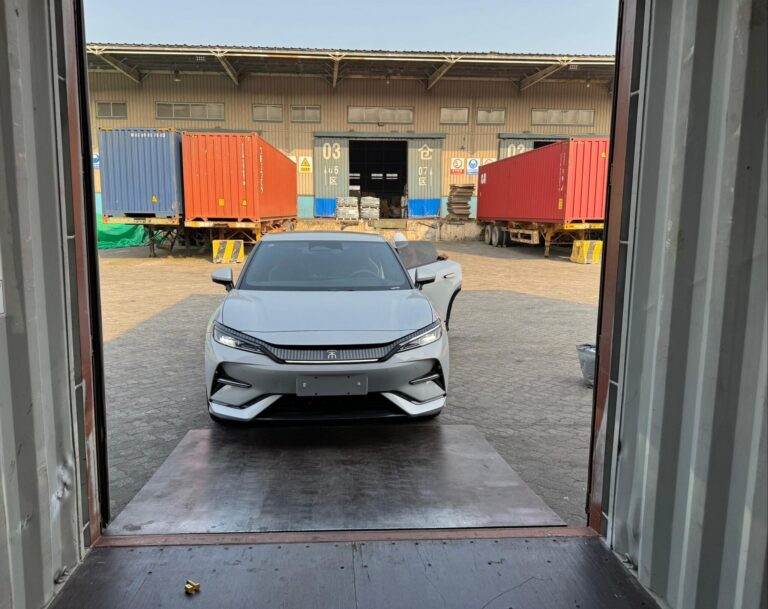
For importers seeking MOQs below 3 units, the Complete Knock Down (CKD) or Semi-Knock Down (SKD) model offers an alternative. Under this structure, vehicles are shipped as components (batteries separated, wheels detached, bumpers unmounted) to reduce shipping volume and tariff classifications.
| Sourcing Model | MOQ Range | Unit Cost Impact | Regulatory Complexity | Best Use Case |
|---|---|---|---|---|
| Direct Factory | 3-10 units | Base price (0% markup) | High (Self-managed) | Experienced distributors |
| Authorized Agent | 1-3 units | +5-12% premium | Low (Full service) | New market entrants |
| CKD/SKD Hybrid | 1-5 units | -15% shipping cost, +8% assembly | Medium (Technical) | Markets with local assembly capabilities |
4. Financial Mechanics: Pricing and Landed Costs
Understanding the true landed cost of low MOQ EV imports requires granular analysis beyond the FOB (Free On Board) price. The following table provides a detailed cost breakdown for a representative 2026 low MOQ import scenario: 3 units of a compact EV (Category A0) destined for the European Union.
Base Vehicle Economics (Per Unit)
| Cost Component | Amount (USD) | Notes |
|---|---|---|
| Factory Gate Price | $12,500 | BYD Seagull or equivalent A0 segment |
| Export License Fee | $150 | MOFCOM documentation and VIN registration |
| Pre-Shipment Inspection | $200 | SGS 53-point vehicle inspection |
| Domestic Logistics | $180 | Factory to Shanghai Port (via electric truck fleet) |
| Export Packaging | $120 | Moisture barriers, wheel chocks, battery isolation |
| FOB Shanghai | $13,150 | Subtotal before international freight |
International Logistics & Compliance
| Cost Component | Amount (USD) | Notes |
|---|---|---|
| Ocean Freight (LCL) | $1,100 | Shared container (3 vehicles) – Shanghai to Rotterdam |
| Marine Insurance (110% CIF) | $285 | All-risks coverage including battery fire clauses |
| Battery Transport Compliance | $400 | UN 38.3 documentation, MSDS, dangerous goods handling |
| EU Customs Duties (10%) | $1,485 | Based on CIF value ($14,935) |
| VAT (Destination Country) | $3,250 | Variable: 19-27% depending on EU member state |
| Homologation (Type Approval) | $2,800 | eCall system retrofit, software EU compliance, CoC |
| Port Handling & THC | $450 | Terminal handling charges at destination |
| Final Delivery | $600 | Inland transport to dealership/warehouse |
Total Landed Cost Analysis
| Metric | Calculation | Result |
|---|---|---|
| Total Per Unit Landed Cost | Sum of all above | $22,620 |
| Low MOQ Premium | vs. 50-unit container load | +$1,800/unit (LCL vs. FCL efficiency) |
| Break-Even Retail Price | 25% dealer margin | $30,160 |
| Market Competitiveness | vs. Local EU EVs | 35-40% price advantage |
Financial Risk Mitigation Strategies
For low MOQ importers, currency fluctuation and payment security represent primary risks. Recommended financial instruments include:
-
Documentary Letters of Credit (L/C): While expensive (0.5-1.5% of transaction value), L/Cs ensure payment only upon presentation of compliant shipping documents—critical for first-time factory relationships.
-
Currency Hedging: Forward contracts for CNY/EUR or CNY/USD pairs, locking exchange rates for 90-180 days to protect against RMB appreciation (currently trending toward 6.65 against the USD in 2026 projections).
-
Export Credit Insurance: China Export & Credit Insurance Corporation (Sinosure) policies covering political and commercial risks, typically costing 0.3-0.8% of invoice value.
-
Battery Depreciation Reserves: Given rapid EV technology cycles, importers should reserve 3-5% of landed cost for potential mid-cycle software updates or battery management system upgrades required for market competitiveness.
5. Global Logistics: Ocean Freight & Battery Transport Compliance
The logistics of low MOQ EV exports have been revolutionized by green logistics mandates and battery safety protocols. With China’s dual carbon goals driving policy, electric vehicles now constitute over 35% of urban delivery fleets, while solar-powered warehouses and carbon-neutral shipping options have become standard offerings.
Ocean Freight Evolution for 2026
The traditional challenge of low MOQ shipping—paying for full container (FCL) capacity while only utilizing 10-15% of volume—has been solved through specialized EV consolidation services. Major carriers (Maersk, COSCO, MSC) now operate dedicated EV lanes with:
- LCL (Less than Container Load) EV Services: Shared container spaces with fire suppression systems, temperature monitoring, and segregation from hazardous materials
- Roll-on/Roll-off (RoRo) Alternatives: For orders of 3+ units, RoRo remains cost-effective ($800-$1,200/unit) but requires vehicles to be drivable and registered
- Battery-Specific Containerization: 40-foot High Cube containers modified with thermal runaway detection, nitrogen inerting systems, and Class 9 dangerous goods segregation
UN 38.3 and IMDG Code Compliance
Lithium-ion batteries (UN 3480/3481) face stringent international transport regulations. For low MOQ shipments, compliance requires:
Documentation Package:
– UN 38.3 Test Summary (battery cell and pack level)
– Material Safety Data Sheet (MSDS) in destination language
– Shipper’s Declaration for Dangerous Goods
– Emergency Response Guidebook (ERG) procedures
Packaging Standards:
– Batteries must be shipped at 30-50% state of charge (SOC)
– Terminals protected against short circuits
– Cushioning materials meeting PI 965 Section IB requirements
– Outer packaging marked with Class 9 lithium battery labels and “Cargo Aircraft Only” restrictions (if applicable)
Critical 2026 Update: The International Maritime Organization (IMO) has amended the IMDG Code to require battery thermal runaway propagation testing for all EV shipments. Low MOQ importers must verify that their Chinese suppliers provide updated UN 38.3 test reports including propagation test data (Section 38.3.4.6), not just the basic cell-level tests.
Multi-Regional Logistics Optimization
Leveraging the “China Plus One” supply chain regionalization, smart importers are utilizing Southeast Asian transshipment hubs to optimize costs and mitigate geopolitical risks:
| Route | Transit Time | Cost per Unit (3 EVs) | Strategic Advantage |
|---|---|---|---|
| Shanghai → Rotterdam (Direct) | 28-32 days | $1,100 | Fastest EU access |
| Shanghai → Port Klang (Malaysia) → EU | 35-40 days | $950 | ASEAN assembly integration |
| Shenzhen → Piraeus (Greece) → CEE | 32-36 days | $1,050 | Belt & Road rail connection |
| Ningbo → Dubai Jebel Ali → Africa | 22-25 days | $800 | Hub for African markets |
6. Localization & Homologation: Preparing Cars for Local Markets
Low MOQ imports fail when importers underestimate homologation complexity. Unlike bulk importers who amortize type-approval costs across hundreds of units, small importers must achieve compliance efficiently for minimal volumes.
European Union Requirements (2026 Standards)
Mandatory Systems:
– eCall (Emergency Call): Automatic accident notification systems must be installed and activated for EU type approval (Regulation (EU) 2015/758)
– Intelligent Speed Assistance (ISA): Camera and GPS-based speed limit recognition (UN R151)
– Cybersecurity Management Systems: UN R155/R156 compliance certificates for software updates and security monitoring
– Battery Passport: Digital documentation of battery chemistry, carbon footprint, and recycling pathways (EU Battery Regulation 2023/1542)
Cost Optimization for Low MOQ:
Rather than individual type approval (costing €20,000-€50,000 per variant), importers should seek:
– Small Series Approval: EU framework allowing up to 1,500 vehicles annually with reduced testing requirements
– Mutual Recognition: Utilizing approvals from Switzerland, Norway, or Turkey as pathways into the EU market
– Software Localization: Ensuring Chinese EVs support European navigation systems, language packs, and 4G/5G frequency bands before shipment (retrofitting in Europe costs 3x more)
Emerging Market Adaptations
For Middle Eastern, African, and Southeast Asian markets (where low MOQ exports are growing fastest), focus on:
- Climate Adaptation: Enhanced cooling systems for desert environments (Gulf Cooperation Council standards) or tropical humidity protection
- Fuel Compatibility: Plug-in hybrids (PHEVs) require local fuel quality assessment—Chinese PHEV exports tripled in 2025, but fuel incompatibility causes warranty disputes
- Charging Infrastructure Alignment: CCS2 (Europe), CHAdeMO (Japan/legacy), or GB/T (China standard) connector compatibility assessment
7. After-Sales Ecosystem: Securing Parts and Service Abroad
The Achilles’ heel of low MOQ EV importing has historically been after-sales support. A 2025 study revealed that 34% of independent EV importers failed due to inability to source battery replacements or conduct software updates. The 2026 regulatory framework addresses this through mandatory service commitments.
Warranty Escrow Mechanisms
Licensed exporters must now maintain warranty escrow accounts or international insurance bonds to honor:
– Battery Capacity Guarantees: 70-80% state of health (SoH) retention at 8 years/160,000km
– Drivetrain Coverage: 5-year/unlimited mileage warranties on motors and inverters
– Software Support: Guaranteed OTA update availability for minimum 10 years
For low MOQ importers, verify that your supplier provides:
– International Warranty Cards: Recognized by service networks in your country
– Technical Service Bulletins (TSBs): English-language repair documentation
– Diagnostic Tool Access: OBD scanners and proprietary software licenses for troubleshooting
Spare Parts Logistics
Establish critical spare parts inventory at destination before selling the first vehicle:
| Component | Lead Time from China | Recommended Stock Level |
|---|---|---|
| Headlights/Taillights | 45-60 days | 2 sets per 10 vehicles sold |
| Brake Pads (Regenerative + Friction) | 30 days | 4 sets per 10 vehicles |
| Battery Modules | 90-120 days | 1 replacement pack per 20 vehicles |
| Touchscreens/ECUs | 60 days | 1 unit per 15 vehicles |
| Charging Cables | 30 days | 3 units per 10 vehicles |
Regional Parts Hubs: Leverage Dubai (Middle East/Africa), Rotterdam (Europe), and Singapore (Southeast Asia) as bonded warehousing locations to reduce lead times from 60 days to 7 days for critical components.
Technical Training Partnerships
Negotiate factory technical training as part of your low MOQ purchase agreement. Leading manufacturers now offer:
– Virtual Reality Training: VR modules for service technicians on high-voltage system safety
– Flying Doctor Programs: Chinese engineers dispatched for major warranty claims or fleet commissioning
– Local Certification Support: Assistance training local technicians to achieve EV high-voltage safety certifications
8. Avoiding Scams: How to Audit a Chinese EV Supplier
The 2026 export license framework has reduced—but not eliminated—fraud risks. Unlicensed brokers continue targeting low MOQ buyers with attractive pricing and false promises. Implement this 4-Layer Verification Protocol before transferring funds.
Layer 1: License Verification
Required Documents:
– Export License (Export Permit): Issued by MOFCOM with specific vehicle categories listed
– CCC Certificate (China Compulsory Certification): For vehicles manufactured for domestic sale (indicates factory legitimacy)
– Business License: Check registration capital (should exceed 10 million RMB for manufacturers, 5 million RMB for traders) and business scope includes “automobile export”
Verification Channels:
– National Enterprise Credit Information Publicity System (http://www.gsxt.gov.cn)
– MOFCOM Export License Query Portal (2026 new feature)
– Chamber of Commerce membership verification
Layer 2: Factory Audit (Virtual or Physical)
For low MOQ orders, a virtual factory audit via video call is acceptable if conducted properly:
Red Flags:
– Refusal to show production lines during working hours
– Inability to display specific VIN numbers of vehicles promised for your order
– Presence of only trading company staff, no engineering personnel
– Requests for payment to personal accounts or Hong Kong shell companies
Green Flags:
– ISO 9001 and IATF 16949 certifications displayed in reception
– Active production of left-hand drive (LHD) vehicles for your market
– Battery assembly lines visible (not just final vehicle assembly)
– Export packing area with vehicle lifting equipment and battery isolation procedures
Layer 3: Reference Checks
Demand three recent export references in your target region. Contact these references to verify:
– Actual delivery timelines vs. promises
– Condition of vehicles upon arrival (battery charge state, software functionality)
– Resolution of any warranty claims
– Responsiveness to technical support requests
Layer 4: Transaction Security
Never:
– Pay 100% upfront for low MOQ orders
– Use Western Union, MoneyGram, or cryptocurrency for vehicle payments
– Accept “used car” classifications for new vehicles to “save on taxes”
Always:
– Use escrow services (Alibaba Trade Assurance, Sinosure escrow) for first transactions
– Conduct pre-shipment inspection (PSI) by SGS, Bureau Veritas, or TÜV
– Verify that the bank account name matches the export license holder exactly
9. Start Your Import Business with Electric Auto China
As Chief Export Consultant at Electric Auto China, headquartered in Shanghai’s Lingang New Area (adjacent to the world’s largest automated container terminal), I have guided over 200 international distributors through the transition to China’s regulated 2026 export environment.
Our Low MOQ Export Program is specifically engineered for emerging distributors, rental fleet operators, and corporate procurement managers seeking to enter the EV market without committing to container-load quantities.
Our 2026 Compliance-First Approach
Licensed Export Operations: Electric Auto China holds Class A automotive export licenses under MOFCOM’s 2026 framework, with specific authorization for NEVs, PHEVs, and hydrogen fuel cell vehicles. We manage the entire regulatory stack—from VIN registration and export permits to destination homologation consulting.
Consolidated Logistics: Through partnerships with COSCO’s Green Shipping Initiative and dedicated EV LCL services, we offer single-unit shipping options at competitive rates, utilizing solar-powered warehousing and carbon-neutral shipping lanes where available.
Financial Structuring: We facilitate Sinosure-backed payment plans, allowing qualified buyers to secure vehicles with 30% deposits and 70% against shipping documents (D/P terms), reducing working capital requirements for low MOQ orders.
The Electric Auto China Low MOQ Process
-
Market Analysis: We assess your local regulations, charging infrastructure, and competitive landscape to recommend suitable models (A00 city cars, A0 compacts, or B-segment SUVs)
-
Pilot Order Configuration: Select from pre-homologated vehicle specifications with EU, GCC, or ASEAN compliance packages, minimizing your certification costs
-
Compliance Documentation: We prepare UN 38.3 battery reports, export licenses, and origin certificates, ensuring smooth customs clearance
-
Logistics Execution: Choose between LCL ocean freight, RoRo, or air freight (for urgent single units) with full cargo insurance and real-time tracking
-
After-Sales Activation: We establish spare parts consignment stock in your region and train your technical team on high-voltage safety and diagnostic procedures
2026 Market Entry Package
For qualified B2B buyers, we currently offer:
– MOQ as low as 1 unit for market testing (with scaled pricing for 3, 5, and 10+ units)
– Homologation support for EU Small Series Approval or GCC conformity
– Battery warranty escrow through international insurance partners
– White-label software customization for fleet management integration
The Chinese EV export market in 2026 rewards the prepared and penalizes the impulsive. With export licenses now mandatory, regulatory compliance has become a competitive moat rather than a bureaucratic hurdle. By partnering with accredited exporters, leveraging LCL logistics innovations, and building after-sales infrastructure before your first sale, low MOQ importers can capture unprecedented margins in the global transition to electric mobility.
Contact our B2B export team today to receive your customized landed cost calculation and regulatory roadmap for your specific market. The future of automotive distribution is electric, efficient, and accessible—even for the smallest players.
Electric Auto China
Chief Export Consultant
Shanghai Lingang International Automotive Export Zone
[email protected] | www.electricautochina.com
Unlock High-Margin EV Imports with Electric Auto China
As an elite automotive supply chain partner in Shanghai, we provide end-to-end, strictly compliant export solutions tailored for international dealerships, fleet managers, and wholesale distributors.
- 🛡️ 100% Legal & Compliant: Fully licensed exports ensuring smooth customs clearance at your destination.
- ⚙️ Complete Localization: Professional English/Arabic/Russian OS flashing and GB/T to CCS2 charging solutions.
- 🚢 Secure Logistics: Direct Ro-Ro and Containerized shipping with full UN38.3 battery certifications.
- 🔧 After-Sales Support: Reliable access to OEM diagnostic tools and steady spare parts supply.
Request a Detailed FOB/CIF Quote Today:
📧 B2B Sales Email: [email protected]
💬 Direct WhatsApp: +86 159 5127 6160