The Ultimate 2026 Importer’s Guide to Parallel Export China Cars
1. The Macro-Economics of Parallel Export China Cars in 2026
China’s automotive landscape has undergone a fundamental paradigm shift. Closing 2025 with record vehicle exports of approximately 7.1 million units, China has decisively transitioned from a domestic consumption market to a dual-engine growth model where exports serve as a structural pillar rather than a cyclical outlet. For B2B importers understanding the “parallel export” ecosystem—defined as the unauthorized distribution of new vehicles through non-brand-controlled channels—this transformation presents both unprecedented opportunities and complex regulatory navigations.
The domestic market baseline has reset to 34.4 million units annually, with New Energy Vehicles (NEVs) contributing 16.5 million shipments and representing the marginal growth engine at +28.2% year-over-year. Critically, NEVs now constitute over one-third of outbound export volume, signaling that China’s export engine is no longer Internal Combustion Engine (ICE)-led by default.
The Parallel Export Phenomenon
Parallel export channels emerged organically as Chinese manufacturers sought to circumvent domestic overcapacity while foreign buyers capitalized on arbitrage pricing. However, this ecosystem has operated in a regulatory gray zone, with vehicles frequently misclassified as “used” to bypass manufacturer export controls, resulting in software version mismatches, voided warranties, and fragmented after-sales support.
As we enter 2026, three macro forces are reshaping this landscape:
Product Value Upgrading: The export basket has shifted from low-margin commodity vehicles to high-value intelligent EVs, renewable energy equipment, and advanced battery systems. European importers now source not just vehicles, but integrated mobility solutions requiring sophisticated supply chain management.
Multi-Regional Production Networks: The “China Plus One” strategy has evolved into blended supply models. Chinese components undergo Southeast Asian assembly with European final customization, reducing geopolitical concentration risk while maintaining cost competitiveness. This regionalization requires importers to understand complex origin-certification protocols.
Geographic Diversification: Export growth is no longer concentrated in Europe. 2026 sees accelerated penetration into the Middle East (GCC markets), South America (Mercosur), Africa, and CIS regions, each with distinct homologation and payment-risk profiles.
2. Understanding China’s Strict EV Export Regulations
Effective January 1, 2026, China’s Ministry of Commerce (MOFCOM) implemented the Export License Framework for New Energy Vehicles, fundamentally altering the parallel export landscape. This regulatory overhaul aims to eliminate irregular export practices while establishing China as a premium automotive exporter.
The 2026 Licensing Mandate
Under the new framework, only accredited manufacturers and authorized export agents may apply for EV export licenses. Key provisions include:
| Regulatory Component | Requirement | Compliance Impact |
|---|---|---|
| Manufacturer Accreditation | OEMs must demonstrate R&D investment >3% revenue and hold valid production qualifications | Eliminates “shell company” exporters |
| Dealer Authorization | Export agents require OEM distribution agreements or MOFCOM-issued trading licenses | Parallel traders must formalize relationships |
| Vehicle Traceability | Digital VIN tracking from production to export port mandatory | Prevents “used car” misclassification |
| Software Compliance | Export models must run international version OS (not domestic China-specific builds) | Resolves connectivity/app compatibility issues |
| Carbon Disclosure | Scope 3 emissions documentation required for EU-bound shipments | Aligns with European sustainability regulations |
Implications for Foreign Buyers
The regulation extends to foreign giants manufacturing in China—Tesla, Volkswagen, BMW, and Mercedes-Benz—which previously utilized local plants for global supply. These entities must now obtain specific export licenses for China-produced inventory, creating temporary supply bottlenecks as compliance systems activate.
For parallel exporters, the “gray market” model faces extinction. The practice of purchasing domestic inventory and re-exporting as “used” vehicles (to bypass manufacturer pricing controls) now triggers license violations, customs seizures, and blacklisting of offending traders.
Critical Compliance Note: European importers must now verify that Chinese suppliers provide Supply Chain Due Diligence (SCDD) documentation aligned with the Corporate Sustainability Due Diligence Directive (CSDDD), including carbon footprint disclosures for battery production and packaging waste management protocols.
3. Sourcing Strategy: Direct Factory vs. Authorized Export Agents
Navigating post-2026 sourcing requires understanding three distinct channel architectures, each with distinct risk-return profiles.
Channel Architecture Analysis
| Sourcing Model | Unit Economics | Compliance Burden | Risk Profile | Best For |
|---|---|---|---|---|
| Direct OEM Export | Lowest EXW pricing (Manufacturer -15%) | High (Importer handles licensing) | Medium | Volume dealers (>500 units/year) with in-country China presence |
| Authorized Export Agent | +8-12% premium over EXW | Low (Agent holds licenses) | Low | Mid-size distributors seeking compliance certainty |
| Parallel Trader (Legacy) | +3-5% over EXW (disappearing) | Extreme (No license = seizure risk) | Critical | Not recommended post-2026 |
Direct Factory Relationships
Establishing direct OEM relationships requires:
- Export License Co-Application: Foreign importers must partner with Chinese manufacturers to secure end-user certificates, preventing diversion to sanctioned markets.
- Volume Commitments: Major OEMs (BYD, Geely, SAIC, NIO) require minimum annual commitments of 300-500 units for direct export pricing.
- Specification Lock: Factory orders require 90-120 day lead times with locked specifications—challenging in rapidly evolving battery technology markets.
Authorized Export Agents
Licensed agents such as Electric Auto China provide value through:
- Regulatory Arbitrage Management: Handling MOFCOM license applications, customs classifications, and dangerous goods documentation for battery transport.
- Consolidated Logistics: Combining multiple OEM products into single RoRo shipments, reducing per-unit freight costs by 18-25%.
- Financial Intermediation: Offering RMB/USD/EUR hedging instruments to protect against currency volatility (critical given RMB fluctuation ranges of ±4.2% in 2025).
Strategic Recommendation: For 2026 market entry, utilize authorized agents for initial shipments (50-100 units) to establish compliance protocols, then transition to hybrid direct/agent models as volume scales.
4. Financial Mechanics: Pricing and Landed Costs
Understanding true landed costs requires modeling beyond simple FOB pricing. The 2026 regulatory environment introduces new cost layers that impact unit economics.
Landed Cost Calculation Framework
The following table models costs for a BYD Seal (Mid-size EV, CIF Value $28,000) imported to the European Union versus Middle East (UAE):
| Cost Component | EU Destination (Germany) | Middle East (UAE) | Notes |
|---|---|---|---|
| EXW Factory Price | $28,000 | $28,000 | Base vehicle, China spec |
| Export License Fee | $400 | $400 | MOFCOM processing & accreditation |
| Domestic Transport | $350 | $350 | Factory to port (Shanghai/Tianjin) |
| Ocean Freight (RoRo) | $1,800 | $1,200 | EU: Longer route + emission surcharges |
| Insurance (110% CIF) | $330 | $310 | Marine cargo + battery hazard premium |
| Customs Duty | $0 (subject to EU investigation) | $0 | EU: Potential 20-45% tariffs under investigation; UAE: 0% |
| VAT/Import Tax | 19% ($5,890) | 5% ($1,513) | EU: 19% Germany; UAE: 5% VAT |
| Homologation (WVTA) | $4,500 | $800 | EU: Full type approval; UAE: GCC conformity |
| Software Localization | $600 | $200 | EU: GDPR compliance, language packs |
| Battery Transport UN38.3 | $450 | $450 | Dangerous goods certification |
| Carbon Disclosure Doc | $300 | $0 | EU: CSDDD compliance documentation |
| TOTAL LANDED COST | $41,620 | $33,223 | EU Premium: 25.2% |
Financial Risk Management
Currency Hedging: With RMB volatility against the Euro reaching 6.8-7.2 ranges in 2025, importers should utilize forward contracts for orders >$500,000. Authorized agents typically offer 90-day hedging at 1.8-2.4% premium.
Payment Structures: Post-2026, avoid 100% prepayment to unknown parallel traders. Recommended structure:
– 30% Deposit upon contract/ license verification
– 70% against Bill of Lading (BL) and export license confirmation
Financing Instruments: Chinese state banks (Bank of China, ICBC) now offer Export Credit Facilities for licensed EV exports, providing 120-day payment terms at 3.8-4.2% APR—significantly below European commercial rates.
5. Global Logistics: Ocean Freight & Battery Transport Compliance
The logistics of EV export have evolved from standard RoRo operations to complex dangerous goods management, requiring specialized handling of lithium-ion batteries under UN38.3 and Class 9 hazardous materials protocols.
Battery Transport Regulations
All EV batteries must comply with:
- UN38.3 Testing: Mandatory for all lithium cells >100Wh. Includes altitude simulation, thermal testing, vibration, shock, and short-circuit protocols.
- State of Charge (SOC) Limitations: International Maritime Organization (IMO) regulations mandate batteries shipped at 30-50% SOC—never fully charged or fully discharged.
- Packaging Standards: UN-certified packaging with shock indicators and tilt sensors for containerized shipments.
Shipping Modalities Comparison
| Method | Cost per Unit | Transit Time | Battery Compliance | Best Use Case |
|---|---|---|---|---|
| RoRo (Roll-on/Roll-off) | $1,200-2,000 | 25-35 days | Standard (UN38.3 docs required) | High-volume, established routes |
| Container (SOC) | $1,800-2,800 | 30-40 days | Enhanced DG handling | Low-volume, mixed cargo |
| Rail (China-Europe) | $3,500-4,500 | 18-22 days | Limited capacity, strict SOC | Urgent EU deliveries, premium vehicles |
Green Logistics Mandate: China’s dual carbon goals now require 35% of port logistics fleets to be electric, with solar-powered warehousing becoming standard. European importers should verify that logistics partners provide carbon-neutral shipping options and emission disclosure documentation to satisfy EU Corporate Sustainability Reporting Directive (CSRD) requirements.
Multi-Regional Consolidation: Advanced logistics providers now offer Southeast Asian pre-assembly services, where Chinese CKD (Completely Knocked Down) kits undergo local assembly in Thailand or Vietnam, qualifying for preferential ASEAN-EU trade tariffs while reducing China-concentration risk.
6. Localization & Homologation: Preparing Cars for Local Markets
Parallel export vehicles historically faced critical localization failures—Chinese-specific software, incompatible charging standards, and lack of language support. Post-2026 compliance mandates require pre-export localization.
Regional Homologation Requirements
| Market | Certification | Key Technical Requirements | Cost/Unit |
|---|---|---|---|
| European Union | WVTA (Whole Vehicle Type Approval) | Euro 6e emissions, UN R155/R156 cybersecurity, ISA (Intelligent Speed Assist), eCall | $4,000-6,000 |
| United Kingdom | GB Type Approval | RHD conversion, UKCA marking, separate from EU approval post-Brexit | $3,500-5,500 |
| GCC (Gulf) | GCC Conformity | Extreme heat testing (50°C+), sand filtration, Arabic HMI | $800-1,500 |
| Australia | ADR (Australian Design Rules) | RHD, ANCAP safety, local charger compliance | $2,500-4,000 |
| CIS/EAEU | EAC Certification | Cold climate testing (-40°C), Cyrillic localization | $1,200-2,000 |
Software Localization Critical Path
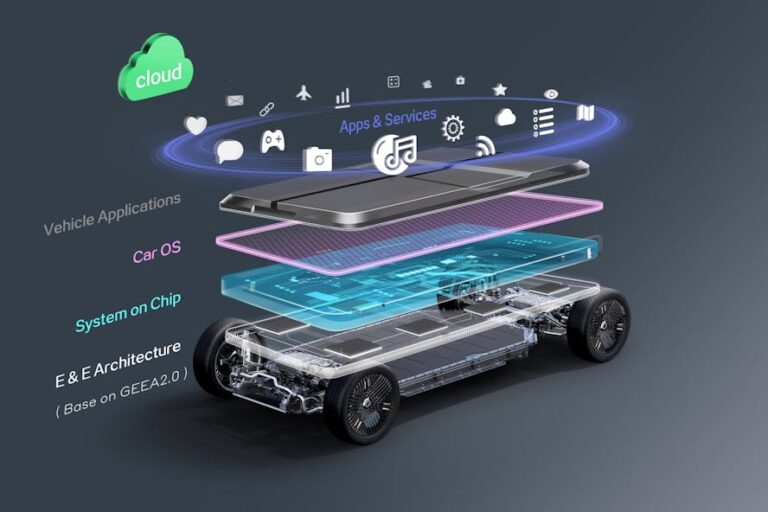
Chinese domestic vehicles run software ecosystems (DiLink, HiCar, NIO OS China) incompatible with international markets. Export-compliant vehicles require:
- GMS (Google Mobile Services) integration for markets outside China
- Privacy Compliance: GDPR (EU) or PDPL (Middle East) data handling protocols
- OTA Infrastructure: Migration from Chinese servers to international AWS/Azure hosting
- Navigation: Removal of Baidu Maps, integration of Google Maps/Apple CarPlay/Waze
Warning: Parallel-exported vehicles lacking official export licenses frequently retain Chinese software builds, resulting in “bricked” connectivity features and inability to receive security updates upon arrival.
7. After-Sales Ecosystem: Securing Parts and Service Abroad
The Achilles’ heel of parallel export has been after-sales support. Importers of unauthorized vehicles frequently discover that:
- Battery warranties (typically 8-year/160,000 km) are voided for parallel exports
- Diagnostic software requires Chinese IP addresses or OEM credentials unavailable to foreign independents
- Spare parts catalogs use domestic part numbers incompatible with international ordering systems
Building Sustainable After-Sales Networks
Parts Supply Strategy:
1. CKD Import Authorization: Establish contracts for Completely Knocked Down kits (batteries, motors, controllers) to bypass OEM restrictions on complete vehicle parts exports.
2. Regional Warehousing: Maintain 90-day fast-moving parts inventory (brake pads, filters, sensors) in bonded warehouses at destination ports.
3. Battery Second-Life Partnerships: Partner with Chinese battery recyclers (CATL, BYD subsidiaries) for warranty replacement logistics.
Technical Enablement:
– Scan Tool Licensing: Negotiate access to OEM diagnostic equipment (BYD VDS, NIO diagnostic tablets) through authorized agent relationships.
– Training Certification: Send local technicians to Shenzhen/Shanghai for factory training on high-voltage systems—critical for insurance liability in most jurisdictions.
– Remote Support: Establish WeChat/Teams channels with Chinese technical teams for real-time troubleshooting.
Warranty Structuring: For parallel exports, importers must self-insure warranties or partner with third-party automotive warranty providers (e.g., Assurant, AmTrust) to offer 3-year/60,000 km coverage, adding $800-1,200 per unit to landed costs but enabling competitive retail positioning.
8. Avoiding Scams: How to Audit a Chinese EV Supplier
The transition to licensed export frameworks has stranded numerous illegitimate operators seeking to liquidate pre-2026 inventory through fraudulent schemes. Importers must conduct rigorous due diligence.
Red Flag Identification
| Warning Sign | Verification Method | Risk Level |
|---|---|---|
| “Used” vehicle classification on new cars | Check manufacturing date vs. registration date; should be <6 months and first registration in destination country | Critical |
| Software version mismatch | Verify build number matches international export spec, not domestic China build | High |
| Price 20%+ below market | Cross-reference with authorized agent pricing; unsustainable pricing indicates license issues | High |
| Payment to personal accounts | Verify business license (营业执照) matches receiving account; reject personal Alipay/WeChat payments | Critical |
| Missing UN38.3 documentation | Request test summaries from certified labs (SGS, TÜV, CQC); fake certificates common | High |
Supplier Audit Protocol
Phase 1: Documentation Verification
– Business License (营业执照): Verify via National Enterprise Credit Information Publicity System
– Export License (出口许可证): Cross-check with MOFCOM database (new 2026 requirement)
– ISO 9001/IATF 16949: Automotive quality management certification
Phase 2: Physical Audit
– Factory inspection for manufacturing presence (beware trading companies posing as manufacturers)
– Sample vehicle inspection: Check VIN consistency, software build, charging port standards (CCS2 vs GB/T)
– Reference checks: Contact previous export clients in your target market
Phase 3: Transaction Structure
– Escrow Services: Use Alibaba Trade Assurance or Citibank escrow for initial transactions
– Inspection Clauses: Mandate third-party inspection (SGS, Bureau Veritas) before final payment
– License Verification: Confirm export license covers specific vehicle VINs, not just general company authorization
Case Study: The “Software-Locked” BYD Batch
In Q3 2025, a German importer purchased 50 BYD vehicles through a Shenzhen trading company at 18% below market rate. Upon arrival, vehicles functioned mechanically but locked the owner out of infotainment and climate control systems after 30 days—triggered by geofencing detecting non-China location without export software authorization. Recovery cost: €2,400 per unit for software reflashing and hardware module replacement.
9. Start Your Import Business with Electric Auto China
Navigating the 2026 regulatory landscape requires a compliance-first approach. Electric Auto China, headquartered in Shanghai with bonded warehouse facilities in Tianjin and Shenzhen, provides end-to-end export solutions strictly adhering to China’s new EV export licensing framework.
Our 2026-Compliant Service Architecture
Regulatory Compliance:
– MOFCOM Export License management for all NEV categories (BEV, PHEV, FCEV)
– CSDDD documentation and carbon footprint disclosure for EU-bound shipments
– UN38.3 dangerous goods certification and green logistics coordination
Sourcing Excellence:
– Authorized distribution agreements with BYD, NIO, XPeng, Li Auto, and Geely
– Direct factory pricing without parallel export risks
– Specification customization for target markets (LHD/RHD, charging standards, software localization)
Financial & Logistics Solutions:
– Competitive landed cost modeling with transparent fee structures
– RMB/EUR/USD hedging instruments
– Multi-modal logistics (RoRo, Container, Rail) with carbon-neutral options
– Regional consolidation hubs in Thailand and Vietnam for “China Plus One” supply chain strategies
After-Sales Enablement:
– Technical documentation translation and homologation support
– Spare parts supply chain establishment
– Diagnostic tool provisioning and technician training programs
Next Steps for Importers
- Market Assessment: Contact our team for a customized landed cost analysis for your specific market (EU, GCC, ASEAN, CIS)
- Sample Order: Initiate a 5-10 unit pilot shipment to validate compliance and localization protocols
- Scale Partnership: Transition to volume contracts with favorable payment terms and exclusive territory considerations
The era of opportunistic parallel export is concluding. Success in 2026 requires sophisticated understanding of Chinese regulatory frameworks, green logistics mandates, and multi-regional supply chain architectures. Partner with Electric Auto China to navigate this evolution with compliance certainty and competitive positioning.
Contact our Export Consultancy Division:
Shanghai Headquarters: [Contact Information]
European Liaison Office: [Contact Information]
Middle East Development Center: [Contact Information]
Electric Auto China: Your Compliant Gateway to the World’s Largest EV Manufacturing Ecosystem
Unlock High-Margin EV Imports with Electric Auto China
As an elite automotive supply chain partner in Shanghai, we provide end-to-end, strictly compliant export solutions tailored for international dealerships, fleet managers, and wholesale distributors.
- 🛡️ 100% Legal & Compliant: Fully licensed exports ensuring smooth customs clearance at your destination.
- ⚙️ Complete Localization: Professional English/Arabic/Russian OS flashing and GB/T to CCS2 charging solutions.
- 🚢 Secure Logistics: Direct Ro-Ro and Containerized shipping with full UN38.3 battery certifications.
- 🔧 After-Sales Support: Reliable access to OEM diagnostic tools and steady spare parts supply.
Request a Detailed FOB/CIF Quote Today:
📧 B2B Sales Email: [email protected]
💬 Direct WhatsApp: +86 159 5127 6160