The Ultimate 2026 Importer’s Guide to parallel export electric cars china
1. The Macro-Economics of parallel export electric cars china in 2026
As we enter 2026, China’s logistics and supply chain market demonstrates remarkable resilience, with total logistics value exceeding 350 trillion yuan and representing a year-on-year increase of approximately 6.5%. However, beneath this aggregate growth lies a fundamental restructuring of the automotive export landscape—one that presents both unprecedented opportunities and complex regulatory hurdles for international B2B buyers.
The domestic Chinese auto market faces stagnation, with the China Passenger Car Association (CPCA) forecasting flat sales growth for 2026, potentially marking the worst year since the 2020 pandemic disruption. Yet paradoxically, this domestic saturation has catalyzed an export explosion. In the first two months of 2026 alone, China exported 1.352 million vehicles, marking a staggering 48.4% year-on-year jump. Within this surge, electrification dominates: 377,000 battery electric vehicles (BEVs) and 206,000 plug-in hybrid vehicles (PHEVs) were exported, representing year-on-year growth of roughly 100% and 120%, respectively.
The economic logic driving this shift is irrefutable. According to the International Energy Agency (IEA), producing EVs in China costs significantly less than in advanced economies, with lower component costs accounting for nearly 40% of the manufacturing cost gap. Average battery cell prices remain 30% lower than in Europe and 20% lower than in the United States, creating arbitrage opportunities that savvy importers can leverage—provided they navigate the evolving regulatory framework correctly.
Segment Dynamics: The B-segment electric vehicle has emerged as the sweet spot for parallel export, posting domestic sales of 506,000 units in January-February 2026 (up 9.4% year-on-year), while smaller A00-A segment models decline. This shift toward larger, higher-margin vehicles aligns with European and Middle Eastern import preferences, making 2026 the optimal entry point for B2B traders targeting these categories.
Supply Chain Regionalization: The “China Plus One” strategy has matured into multi-regional production networks. Chinese logistics providers now maintain robust networks across Southeast Asia, creating integrated regional supply chains that reduce geopolitical concentration risk. For parallel exporters, this means access to blended supply models—combining Chinese inputs, Southeast Asian assembly, and European final customization—that offer 40-60% reductions in delivery time compared to traditional direct shipping.
2. Understanding China’s Strict EV Export Regulations
The era of unregulated gray-market vehicle exports has ended. China’s 2026 EV export regulations now mandate strict compliance frameworks that distinguish between authorized manufacturer exports and licensed parallel export operations (平行出口). As Chief Export Consultant at Electric Auto China, I must emphasize: non-compliance results in immediate license revocation, port detention, and blacklisting from Chinese customs systems.
The Regulatory Framework
MIIT Registration Requirements: All vehicles intended for parallel export must now be registered with the Ministry of Industry and Information Technology (MIIT) under the “Parallel Export Enterprise Qualification” scheme. Exporters must demonstrate:
– Valid business licenses with specific EV export scope
– Annual export volume commitments (minimum 500 units for Tier 2 cities, 1,000+ for Tier 1)
– Technical service capabilities in destination markets
– Product liability insurance coverage exceeding 10 million RMB per incident
Documentation Mandates: Every parallel-exported EV requires:
1. CCC Certificate (China Compulsory Certification) with export VIN registration
2. UN38.3 Test Report for lithium battery transport compliance
3. MSDS Documentation (Material Safety Data Sheets) for hazardous materials classification
4. Carbon Footprint Disclosure (increasingly required for EU destinations under CBAM and supply chain due diligence directives)
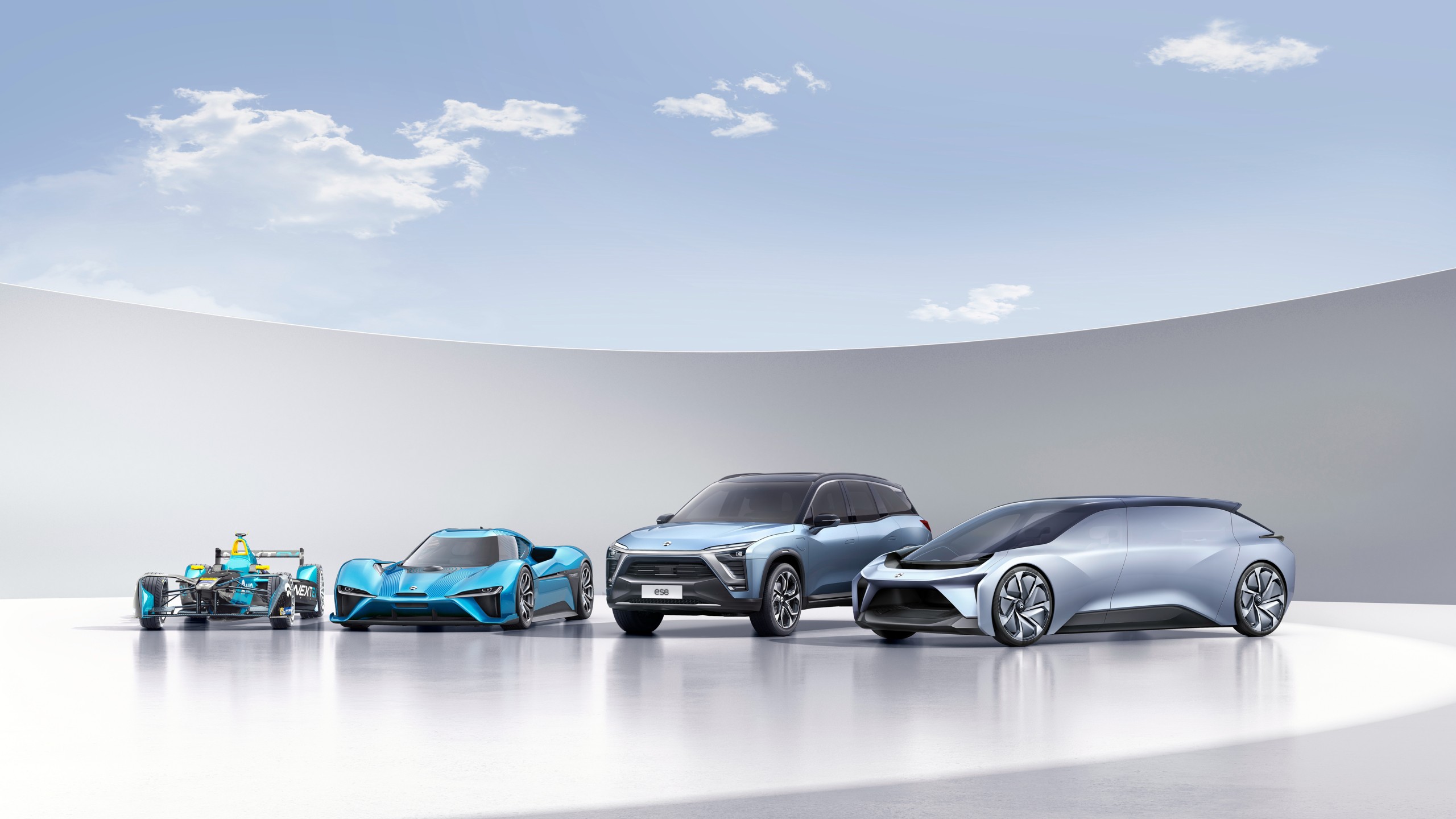
Anti-Gray-Market Measures: Manufacturers like Tesla, BYD, and NIO have implemented geofencing and software locks to prevent unauthorized exports. Parallel exporters must now secure Manufacturer Authorization Letters (MAL) or operate through officially designated export channels that provide technical unlock codes and warranty transferability documentation.
European Regulatory Alignment: The EU’s Corporate Sustainability Due Diligence Directive (CSDDD) and Battery Regulation (2023/1542) now influence logistics decisions at origin. Exporters must provide:
– Supply chain emission footprints (Scope 3 data)
– Battery passport documentation tracing raw material origins
– Packaging compliance with EU sustainability standards
3. Sourcing Strategy: Direct Factory vs. Authorized Export Agents
The parallel export landscape bifurcates into two primary sourcing models, each with distinct risk profiles and margin potentials.
Model Comparison Matrix
| Criteria | Direct Factory Partnership | Authorized Export Agent (平行出口资质企业) |
|---|---|---|
| Minimum Order | 100+ units (single SKU) | 1-10 units (mixed SKUs possible) |
| Pricing Structure | Factory EXW + 8-12% export markup | Wholesale + 3-5% service fee |
| Documentation Support | Basic CCC/VIN only | Full homologation support, MAL procurement |
| Warranty Status | Often voided for export markets | Transferable international warranty (limited) |
| Payment Terms | 30% T/T deposit, 70% before loading | Letter of Credit available, escrow options |
| Regulatory Risk | High (manufacturer may block VINs) | Low (licensed, bonded operations) |
| Best For | Volume dealers, fleet operators | Boutique importers, test markets |
Strategic Recommendation
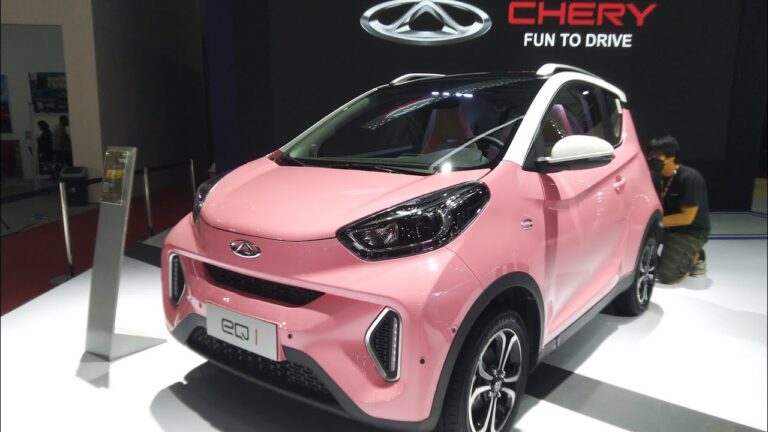
For 2026 market entry, Authorized Export Agents represent the compliant path to parallel export. These entities—of which Electric Auto China is a licensed operator—maintain direct agreements with manufacturers like Chery (which led February 2026 exports with 124,000 units, up 44.1% YoY) and Tesla (fastest growth at 20,000 units, 4x YoY increase).
Case Study: The Xiaomi SU7 Export Operation
In Q4 2025, a German import consortium attempted direct factory sourcing of 200 Xiaomi SU7 sedans. Despite initial cost savings of €1,200 per unit, the shipment was detained at Shanghai Port due to missing MIIT export authorization. The vehicles remained in bonded storage for 47 days, incurring demurrage costs of €18,000 and forcing renegotiation through authorized channels. Final landed cost exceeded the authorized agent route by 14%.
4. Financial Mechanics: Pricing and Landed Costs
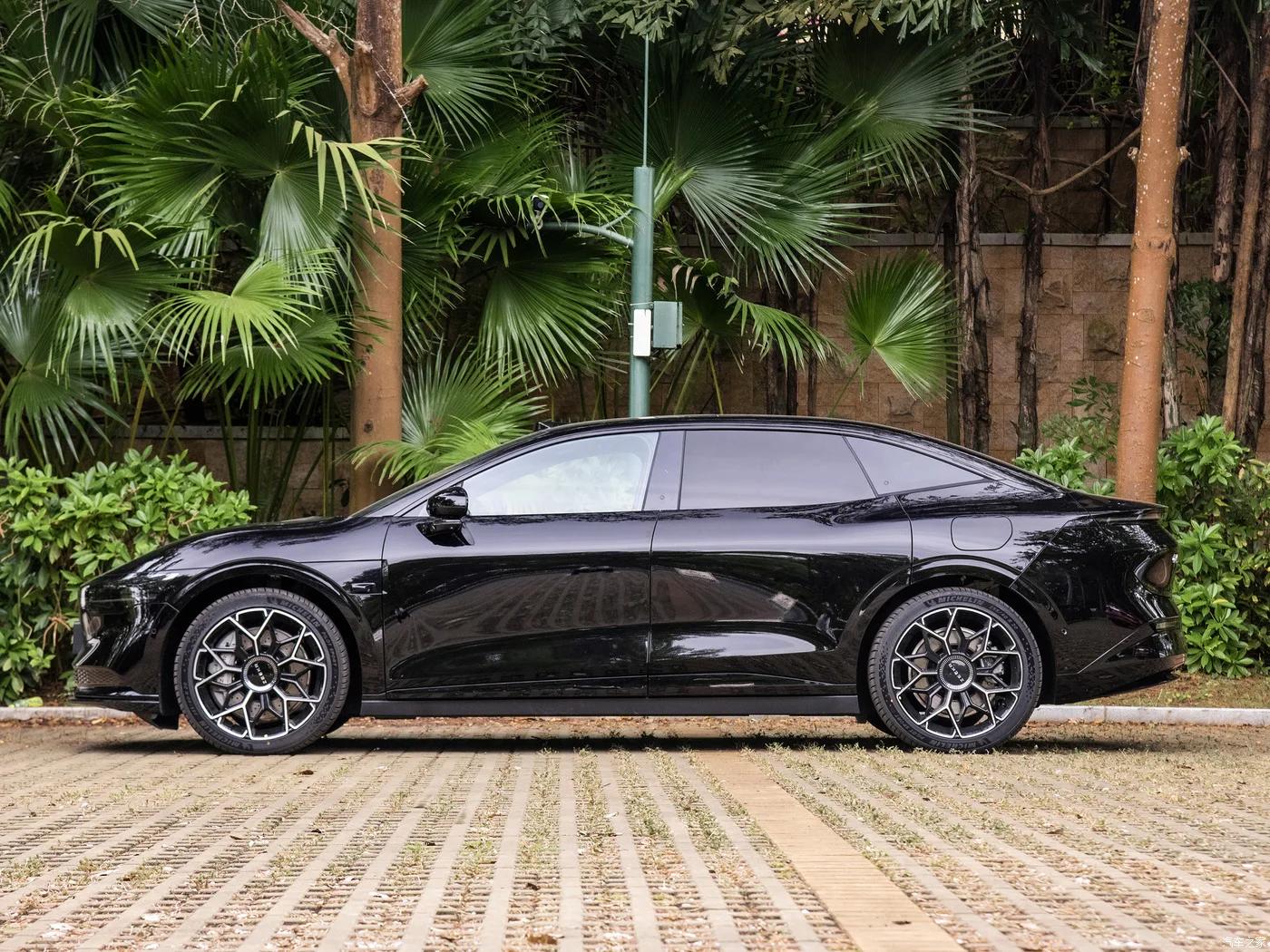
Understanding the true cost of parallel export requires moving beyond sticker prices to comprehensive landed cost modeling. The following calculations reflect Q1 2026 market conditions for B-segment EVs (the dominant export category at 506,000 units sold domestically in Jan-Feb 2026).
Landed Cost Calculation Framework
| Cost Component | BYD Seal (Performance) | Tesla Model 3 (RWD) | Xiaomi SU7 (Max) |
|---|---|---|---|
| Domestic Wholesale (EXW) | ¥209,800 ($29,970) | ¥235,900 ($33,700) | ¥299,900 ($42,850) |
| Export License & Documentation | $450 | $680 | $520 |
| Port Handling (Shanghai) | $280 | $280 | $280 |
| Ocean Freight (RoRo, Shanghai-Rotterdam) | $1,850 | $1,850 | $1,950* |
| Marine Insurance (110% CIF) | $320 | $360 | $450 |
| Destination THC & Handling | $340 | $340 | $340 |
| Customs Duty (EU: 10%) | $3,350 | $3,730 | $4,535 |
| VAT (EU: 19-21%) | $7,035 | $7,840 | $9,530 |
| Homologation & Compliance | $1,200 | $800 | $1,400 |
| Total Landed Cost | $35,755 | $39,580 | $51,855 |
| vs. Official EU Price | -31% | -28% | -22% |
*Larger dimensional weight due to battery pack specifications
Currency Risk Management
With RMB volatility against the Euro and USD intensifying in 2026, importers must implement hedging strategies:
– Forward Contracts: Lock exchange rates at 30/60/90 days upon deposit
– USD Intermediary: Many parallel exporters now price in USD to mitigate RMB fluctuation risks
– Payment Structure: Negotiate 30/70 T/T splits with the 70% balance payable upon Bill of Lading (B/L) presentation rather than pre-shipment
Margin Analysis
The arbitrage opportunity remains substantial despite regulatory compliance costs. A German importer purchasing 50 BYD Seal units through parallel export channels realizes an approximate €18,000-€22,000 per unit margin after homologation and local certification—sufficient to undercut official EU pricing by 15-20% while maintaining healthy profitability.
5. Global Logistics: Ocean Freight & Battery Transport Compliance
The transition to green logistics has moved from concept to mandate in China. With the dual carbon goals driving policy, electric vehicles now constitute over 35% of urban delivery fleets, while solar-powered warehouses and carbon-neutral shipping options have become standard offerings. For parallel exporters, this sustainability focus is not merely regulatory compliance but a competitive differentiator.
Battery Transport Regulations (UN3480)
Lithium-ion batteries classified as Class 9 dangerous goods require strict adherence to the IMDG Code (International Maritime Dangerous Goods):
Container Loading Requirements:
– State of Charge (SoC): Maximum 30% for ocean transport (UN38.3 Section 38.3.2.1)
– Segregation: EVs must be stowed away from heat sources and incompatible dangerous goods
– Fire Suppression: Container vessels must carry specialized lithium battery fire suppression systems (F-500 or equivalent)
– Documentation: Shipper’s Declaration for Dangerous Goods must accompany every B/L
RoRo vs. Containerization:
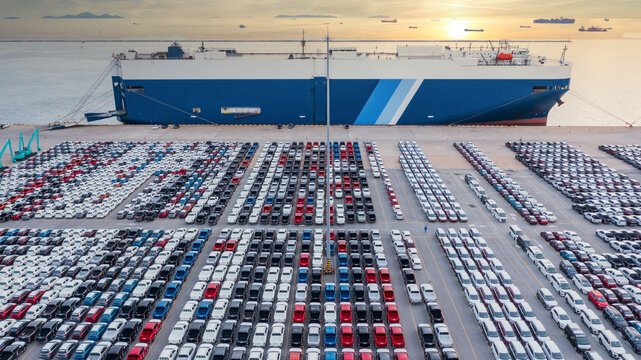
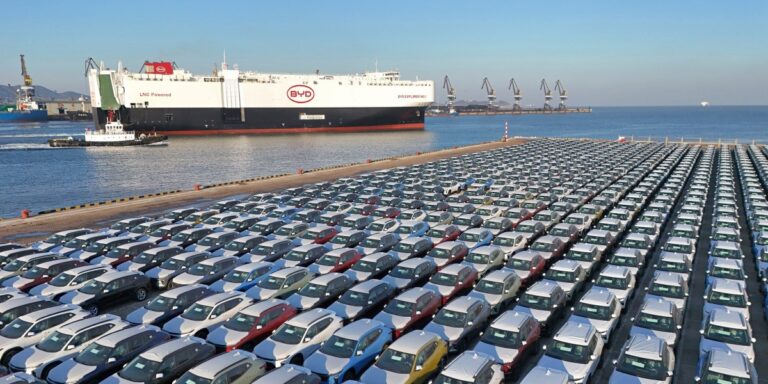
– RoRo (Roll-on/Roll-off): Preferred for parallel exports; vehicles driven onto specialized Pure Car and Truck Carriers (PCTCs). Cost: $1,800-$2,200/unit to Europe. Lower damage risk, faster port turnaround.
– Container (R-Rack): Required for destinations without RoRo infrastructure. Vehicles secured on specialized racking systems. Cost: $2,500-$3,100/unit. Higher insurance premiums due to lashing complexity.
2026 Freight Market Dynamics
Ocean freight rates have stabilized following the 2024-2025 volatility, but regionalization pressures persist:
– Shanghai-Rotterdam: $1,850-$2,100 per vehicle (RoRo)
– Shanghai-Dubai (Jebel Ali): $890-$1,100 per vehicle (primary hub for Middle East parallel distribution)
– Shanghai-Singapore: $450-$600 per vehicle (transshipment hub for ASEAN localization)
Carbon-Neutral Options: Major carriers (COSCO, OOCL) now offer carbon-offset shipping at a premium of $85-$120 per vehicle, including blockchain-verified emission documentation required for EU corporate sustainability reporting.
6. Localization & Homologation: Preparing Cars for Local Markets
Parallel export success hinges on technical localization. Unlike authorized dealer imports, parallel exported vehicles require aftermarket adaptation to meet local regulations—a process that adds $800-$3,000 per unit but remains economically viable given the base cost advantages.
Regional Homologation Requirements
| Market | Key Requirements | Cost/Unit | Timeline |
|---|---|---|---|
| European Union (Whole Vehicle Type Approval) | e-mark compliance, UNECE R10 (EMC), R100 (REESS), software GDPR compliance | €1,200-€2,800 | 4-6 weeks |
| GCC (Gulf Cooperation Council) | GSO standards, desert climate testing, Arabic language HMI | $800-€1,500 | 2-3 weeks |
| ASEAN (Thailand, Vietnam, Indonesia) | Local type approval, right-hand drive conversion (if applicable), tropical battery calibration | $600-$1,200 | 3-4 weeks |
| Russia/CIS | EAC certification, winterization package, GLONASS integration | $900-$1,800 | 3-5 weeks |
Technical Localization Checklist
Software & Connectivity:
– Language Packs: Installation of local language interfaces (critical for infotainment and safety systems)
– Navigation: Conversion from Baidu/AutoNavi to Google Maps, HERE, or local providers
– Telematics: Replacement of China-specific eSIMs with local carrier agreements or physical SIM slots
Physical Modifications:
– Charging Ports: CCS2 (Europe), CHAdeMO (Japan), or Type 2 adapter integration
– Lighting: Headlamp alignment for left-hand traffic (UK, Australia, India)
– Speedometers: Conversion from km/h to mph (UK/US markets)
Case Study: Tesla Model 3 Parallel Export to Poland
A Warsaw-based importer purchased 75 Tesla Model 3 RWD units through Electric Auto China’s parallel export channel. Despite Tesla’s official presence in Poland, the parallel route offered 24% cost savings. Localization required:
1. Software unlock for Supercharger network access in EU (Tesla proprietary protocol)
2. Registration document translation and notarization
3. Installation of EU-mandated emergency call (eCall) systems (aftermarket integration: €340/unit)
Total localization cost: €1,180 per unit. Total savings vs. official channel: €8,900 per unit. ROI realization: 3.2 months.
7. After-Sales Ecosystem: Securing Parts and Service Abroad
The Achilles’ heel of parallel export has historically been after-sales support. However, 2026 market maturity has spawned sophisticated ecosystem solutions that mitigate warranty and service risks.
Warranty Strategies
Manufacturer Warranty Transfer: Some brands (notably Chery, MG, and certain BYD models) now offer transferable international warranties for parallel exported vehicles, provided:
– Export occurs through licensed parallel export enterprises
– Vehicle undergoes pre-export inspection at manufacturer-certified facilities
– Buyer registers vehicle within 60 days of export within destination market
Third-Party Warranty Programs: For brands with strict territorial warranty restrictions (Tesla, NIO, Xpeng), specialized insurers like Munich Re and Ping An now offer Parallel Export Mechanical Breakdown Insurance covering:
– Battery pack degradation (below 70% SoH within 5 years)
– Drive train components
– High-voltage system failures
Premium: 2.8-4.5% of vehicle value annually
Parts Supply Chain
Critical Components Inventory: Successful parallel exporters maintain bonded warehouses in destination markets containing:
– High-voltage cables and connectors
– Battery management system (BMS) controllers
– Infotainment screens (prone to language/compatibility issues)
– Charging port assemblies
Technical Documentation: Chinese EVs require specialized diagnostic equipment. Electric Auto China provides:
– Translated service manuals (English, Arabic, Russian, Spanish)
– OBD diagnostic software compatible with international scan tools
– Technical training webinars for local service centers
Battery Recycling Compliance: EU Battery Regulation mandates end-of-life processing. Parallel exporters must establish reverse logistics agreements with local recycling facilities or face import restrictions.
8. Avoiding Scams: How to Audit a Chinese EV Supplier
The explosive growth of parallel export has attracted fraudulent operators. In 2025, the China Association of Automobile Manufacturers (CAAM) reported $240 million in export-related fraud, primarily involving non-existent inventory and falsified documentation.
Red Flag Detection
Financial Red Flags:
– Demands for 100% payment upfront via cryptocurrency or informal transfer methods
– Pricing significantly below market (below EXW factory price indicates potential VIN cloning or accident vehicles)
– Refusal to provide VAT invoices (fapiao) or business license verification
Operational Red Flags:
– No physical presence at listed address (use verified video calls showing current newspaper dates)
– Inability to provide real-time VIN status checks (critical: verify vehicle isn’t flagged for domestic sale restrictions)
– Lack of export license documentation (request MIIT registration certificate number)
Due Diligence Protocol
Phase 1: Document Verification
– Verify CCC certificate authenticity via CNCA (Certification and Accreditation Administration) database
– Cross-reference UN38.3 test reports with testing laboratory (SGS, TÜV, or CQC)
– Confirm business license scope includes “automobile export” (汽车出口)
Phase 2: Factory/ Warehouse Audit
– Conduct physical inspection or engage third-party inspection services (SGS, Bureau Veritas, or CCIC)
– Verify vehicle storage conditions (indoor, climate-controlled for EV batteries)
– Review export history: Request customs declaration forms (报关单) from previous shipments
Phase 3: Transaction Security
– Utilize Alibaba Trade Assurance or independent escrow services for initial transactions
– Insist on Sinosure (China Export & Credit Insurance Corporation) coverage for transactions exceeding $100,000
– Engage local legal counsel for contract review (Chinese language contracts governed by Chinese law)
Case Study: The “Ghost Shipment” of 2025
A Dubai-based dealer wired $450,000 to a Shenzhen-based “exporter” offering Tesla Model Y units at 35% below market rate. The supplier provided forged B/L documents and disappeared. Recovery required 14 months of litigation in Shenzhen Intermediate People’s Court. Prevention: Always verify the supplier’s AEO (Authorized Economic Operator) status with Chinese Customs—genuine parallel exporters maintain this certification.
9. Start Your Import Business with Electric Auto China
As a licensed parallel export enterprise headquartered in Shanghai, Electric Auto China bridges the gap between China’s EV manufacturing dominance and global B2B import compliance. Our 2026 operations reflect the industry’s evolution toward regulated parallel export—combining the cost advantages of independent sourcing with the regulatory certainty of authorized channels.
Our Compliance Infrastructure
- MIIT Export License: Full authorization for BEV and PHEV parallel export operations
- Battery Logistics Certification: IATA/IMDG certified handling for UN3480 dangerous goods
- Carbon Documentation: Automated Scope 3 emission reporting for EU regulatory compliance
- Multi-Regional Hub: Warehousing in Shanghai, Dubai, and Rotterdam for localized distribution
Service Portfolio
For Fleet Operators:
– Volume procurement (50+ units) with customized homologation packages
– White-label software localization (branded infotainment skins)
– Extended warranty programs underwritten by international insurers
For Boutique Importers:
– Mixed SKU consolidation (5-20 units across multiple brands: BYD, Xiaomi, NIO, Zeekr)
– Drop-shipping to end customers with full documentation support
– After-sales parts consignment stocking
Strategic Consulting:
– Market entry feasibility studies
– Regulatory alignment audits (EU Battery Regulation, GCC standards)
– Supply chain optimization (China Plus One strategies)
2026 Market Entry Offer
Electric Auto China currently offers qualified B2B buyers:
– Pilot Program: First container (4-6 units) with deferred payment terms (50% deposit, 50% against B/L)
– Homologation Support: Complimentary EU type approval consultation for orders exceeding 20 units
– Carbon-Neutral Shipping: Complimentary upgrade to carbon-offset ocean freight for Q2 2026 shipments
Contact our Export Division:
– Email: [email protected]
– WeChat: EVExport2026
– Office: 28th Floor, Shanghai International Automotive City Tower, Jiading District, Shanghai
The parallel export of electric vehicles from China in 2026 represents not a regulatory gray zone, but a structured, compliant pathway to accessing the world’s most cost-competitive EV manufacturing. Success requires abandoning the informal practices of 2023-2024 in favor of licensed operations, rigorous documentation, and strategic localization partnerships. Electric Auto China stands ready to navigate this complexity on your behalf, transforming China’s EV production surplus into your market opportunity.
This guide reflects regulations and market conditions as of March 2026. Always consult with qualified legal counsel and customs brokers regarding specific import requirements for your jurisdiction.
Unlock High-Margin EV Imports with Electric Auto China
As an elite automotive supply chain partner in Shanghai, we provide end-to-end, strictly compliant export solutions tailored for international dealerships, fleet managers, and wholesale distributors.
- 🛡️ 100% Legal & Compliant: Fully licensed exports ensuring smooth customs clearance at your destination.
- ⚙️ Complete Localization: Professional English/Arabic/Russian OS flashing and GB/T to CCS2 charging solutions.
- 🚢 Secure Logistics: Direct Ro-Ro and Containerized shipping with full UN38.3 battery certifications.
- 🔧 After-Sales Support: Reliable access to OEM diagnostic tools and steady spare parts supply.
Request a Detailed FOB/CIF Quote Today:
📧 B2B Sales Email: [email protected]
💬 Direct WhatsApp: +86 159 5127 6160