The Ultimate 2026 Importer’s Guide to Professional car exporter Shanghai
1. The Macro-Economics of Professional car exporter Shanghai in 2026
As we enter 2026, China’s logistics and supply chain infrastructure has evolved into a sophisticated ecosystem valued at over 350 trillion yuan, representing a resilient 6.5% year-on-year expansion. For international B2B buyers, understanding this macro-economic landscape is critical when selecting a Professional car exporter Shanghai as your gateway to the world’s largest electric vehicle manufacturing hub.
The seismic shift in 2025 established new baselines: domestic vehicle shipments reached a record 34.4 million units (up 9.4% YoY), decisively surpassing the 2017 peak. However, the narrative driving global trade is electrification. New Energy Vehicle (NEV) shipments surged by 3.6 million units (+28.2% YoY) to approximately 16.5 million units, while Internal Combustion Engine (ICE) volumes contracted by 700,000 units (-3.6%). This inversion signals a permanent structural change—China’s export engine is no longer ICE-led by default.
Export volumes closed 2025 at an unprecedented 7.1 million units, with NEVs commanding over one-third of outbound volume. Critically, this growth is geographically diversified and policy-aware, moving beyond opportunistic dumping to structurally embedded supply chains. The “China Plus One” strategy has catalyzed multi-regional production networks, blending Chinese inputs with Southeast Asian assembly and European final customization, reducing geopolitical concentration risk while maintaining Shanghai as the central coordination node.
For European and global importers, three Non-Linear Developments (NDL) reshape sourcing strategies:
Product Value Upgrading: China now exports premium electric vehicles, renewable energy equipment, and advanced battery systems rather than commoditized goods. This requires sophisticated logistics partners capable of handling high-value, technology-intensive cargo with specialized warehousing and transport protocols.
Regulatory Alignment Pressure: European sustainability regulations—specifically the Carbon Border Adjustment Mechanism (CBAM), battery passports, and supply chain due diligence directives—now influence logistics decisions at origin. A Professional car exporter Shanghai must provide carbon disclosure documentation, ethical sourcing certificates, and compliant packaging solutions as standard offerings, not optional add-ons.
Green Logistics Mandate: China’s dual carbon goals have transitioned from concept to mandate. Electric vehicles now constitute over 35% of urban delivery fleets, while solar-powered warehouses and carbon-neutral shipping options have become competitive differentiators. Your supply chain partner must demonstrate measurable emission reductions to align with EU and global ESG requirements.
2. Understanding China’s Strict EV Export Regulations
Effective January 1, 2026, the Ministry of Commerce (MOFCOM) implemented the most significant regulatory overhaul in China’s automotive export history. All manufacturers and exporters of electric vehicles must now hold official export licenses, fundamentally altering how international buyers engage with Chinese suppliers.
The Export License Framework
Under the 2026 framework, only accredited manufacturers and authorized dealers may apply for export licenses. This regulation targets the “gray market” phenomenon where unauthorized exporters sold new vehicles as “used” through irregular channels, delivering cars with outdated software, limited after-sales support, and non-compliant documentation. These practices damaged brand reputations and created legal liabilities for unsuspecting international buyers.
Key Compliance Requirements:
– Manufacturer Accreditation: OEMs must demonstrate production capacity, quality control systems, and R&D capabilities to obtain export permits.
– Dealer Authorization: Export agents must hold specific EV export licenses separate from traditional automotive trading rights.
– Documentation Integrity: Each vehicle requires a unique export certificate, battery compliance reports (UN 38.3), and software version declarations.
– Destination Market Alignment: Exporters must verify homologation readiness for target markets (EU Type Approval, GCC certification, etc.) before shipment.
This regulatory tightening affects foreign giants manufacturing in China—Tesla, Volkswagen, and BMW—who must now route exports through licensed channels rather than informal trading networks. For importers, this eliminates the pricing temptation of gray-market suppliers but guarantees supply chain integrity, warranty validity, and software update continuity.
Strategic Implication: Partnering with an unlicensed exporter in 2026 exposes your business to shipment seizures, port denials, and total loss of investment. Verification of MOFCOM export licenses is now non-negotiable due diligence.
3. Sourcing Strategy: Direct Factory vs. Authorized Export Agents
International buyers face a critical strategic decision: engage directly with OEMs (BYD, Geely, Xiaomi, Leapmotor) or partner with authorized export agents like Electric Auto China. Each pathway offers distinct advantages and constraints under the 2026 regulatory environment.
Direct Factory Engagement
Advantages:
– Pricing Transparency: Factory EXW (Ex Works) pricing eliminates intermediary margins.
– Customization: Direct access to engineering teams for fleet-specific configurations (battery sizes, interior specifications, software skins).
– Volume Incentives: Manufacturers prioritize buyers committing to 500+ unit annual volumes with preferential allocation during supply constraints.
Constraints:
– High MOQs: Major OEMs typically require minimum orders of 100-300 units for export markets.
– Regulatory Burden: Buyers assume full responsibility for export licensing, homologation, and compliance documentation.
– Payment Terms: Factories demand 100% T/T (Telegraphic Transfer) payment or confirmed Letters of Credit before production release, creating significant cash flow pressure.
Authorized Export Agents (Professional car exporter Shanghai)
Advantages:
– Regulatory Compliance: Licensed agents maintain current MOFCOM export permits, handling all documentation, customs clearance, and compliance verification.
– Consolidation: Combine multiple SKUs (BYD Seal, Xiaomi SU7, Leapmotor C10) into single shipments, achieving container optimization for buyers requiring 20-50 unit lots.
– Financial Flexibility: Established exporters offer escrow services, payment upon inspection, and trade finance facilitation.
– After-Sales Integration: Agents coordinate warranty administration, spare parts warehousing, and technical training—services OEMs rarely provide directly to small/mid-size importers.
Constraints:
– Margin Addition: 3-8% service fee over factory pricing.
– Configuration Limits: Highly bespoke modifications may require direct factory negotiation.
2026 Recommendation: Given the licensing complexity and the crackdown on unauthorized exports, authorized agents represent the lower-risk pathway for 90% of international buyers, particularly those importing fewer than 200 units annually.
4. Financial Mechanics: Pricing and Landed Costs

Understanding the true landed cost of Chinese EVs requires navigating multi-layered pricing structures, tariff regimes, and currency fluctuations. Below is a comprehensive cost breakdown for a typical mid-size EV (e.g., BYD Seal or equivalent) exported from Shanghai to European ports in 2026.
Base Pricing Structure (Per Unit)
| Cost Component | Amount (USD) | Notes |
|---|---|---|
| Factory EXW Price | $22,000 | Base vehicle, standard configuration |
| Export License & Documentation | $450 | MOFCOM compliance, certificate of origin |
| Shanghai Port Handling (FOB) | $800 | Terminal handling, loading, customs export clearance |
| Ocean Freight (RoRo) | $1,200 | Shanghai to Rotterdam/Antwerp, 40-day transit |
| Marine Insurance (110% CIF) | $270 | All-risks coverage during transit |
| CIF Value | $24,720 | Sum of above components |
| EU Import Duty (10%) | $2,472 | Based on CIF value |
| EU Countervailing Duty (17.4%) | $4,301 | Anti-subsidy duty on Chinese EVs |
| EU Additional Tariff (varies) | $3,500-$8,000 | Brand-specific adjustments (BYD: 17%, Tesla: 7.8%, etc.) |
| VAT (Destination Country) | $6,500-$7,200 | 19-22% depending on EU member state |
| Homologation & Type Approval | $1,800 | EU certification, software localization |
| Destination Port Charges | $650 | Unloading, customs clearance, agency fees |
| Inland Transport to Dealer | $400 | Final delivery to distribution center |
| TOTAL LANDED COST | $39,343-$44,043 | Ready for retail sale |
Critical Financial Considerations
Currency Hedging: With RMB/USD volatility averaging 4.2% annually, importers should secure forward exchange contracts for 50-70% of order value upon deposit payment.
VAT Rebate Recovery: Chinese exporters receive 13% VAT rebates upon export. Reputable Professional car exporter Shanghai partners transparently pass through 60-80% of these savings, effectively reducing your EXW base price by $1,500-$2,000 per unit.
Tariff Engineering: Utilizing multi-regional production networks (Thai or Hungarian assembly for EU-bound vehicles) can eliminate the 17.4% countervailing duty. Discuss CKD (Completely Knocked Down) or SKD (Semi-Knocked Down) strategies with your logistics partner to optimize duty exposure.
Payment Structure Best Practice:
– 30% Deposit upon contract signing and license verification
– 40% Upon production completion and pre-shipment inspection
– 30% Against Bill of Lading and export documentation
5. Global Logistics: Ocean Freight & Battery Transport Compliance
Transporting lithium-ion batteries requires adherence to stringent international dangerous goods regulations. As a Professional car exporter Shanghai, Electric Auto China maintains IMO 2024 compliance and IMDG Code certification for handling Class 9 dangerous cargo.
Transport Modalities
Roll-on/Roll-off (RoRo):
– Advantages: Vehicles driven onto specialized vessels, minimal handling damage risk, cost-effective for high-volume shipments (500+ units).
– Battery Compliance: Vehicles must comply with UN 38.3 testing standards, with State of Charge (SoC) limited to 30-50% for transport.
Containerized Shipping (SOC – Shipper Owned Containers):
– Advantages: Enhanced security, ability to mix EVs with spare parts, reduced port congestion exposure.
– Requirements: DG (Dangerous Goods) containers with proper ventilation, thermal monitoring systems, and fire suppression capabilities. Each container limited to 2-4 EVs depending on battery capacity.
Multi-Regional Routing:
Leveraging the “China Plus One” network, sophisticated exporters now offer blended routing:
– Route A: Shanghai to Bangkok (feeder vessel) → Mediterranean via Suez (mainline) → EU final destination. Reduces EU port congestion premiums by 15%.
– Route B: Shanghai to Piraeus (COSCO hub) → Rail to Central Europe. Cuts transit time to 28 days but adds $400/unit in intermodal costs.
Green Logistics Integration
Leading Shanghai exporters now provide carbon-neutral shipping options through:
– Biofuel bunkering (B24 marine fuel) reducing Scope 3 emissions by 20%
– Solar-powered consolidation warehouses in Lingang Free Trade Zone
– Electric trucking from factory to port (35% of fleet electrified as of 2026)
Documentation Package:
– Material Safety Data Sheet (MSDS) for lithium batteries
– UN 38.3 Test Summary Reports
– Dangerous Goods Declaration (DGD)
– Shipper’s Declaration for Dangerous Goods
6. Localization & Homologation: Preparing Cars for Local Markets
Exporting from Shanghai is merely the first phase; successful market entry requires comprehensive homologation and localization. A Professional car exporter Shanghai must provide pre-export technical consultation to avoid costly port-of-entry rejections.
Regional Homologation Requirements
European Union (EU 2026 Standards):
– Type Approval: Whole Vehicle Type Approval (WVTA) under Regulation (EU) 2018/858
– Battery Passport: Digital documentation of battery chemistry, carbon footprint, and recycling pathways (mandatory under EU Battery Regulation 2023/1542)
– Software Localization: Over-the-Air (OTA) update servers must be EU-compliant; infotainment systems require GDPR-compliant data handling
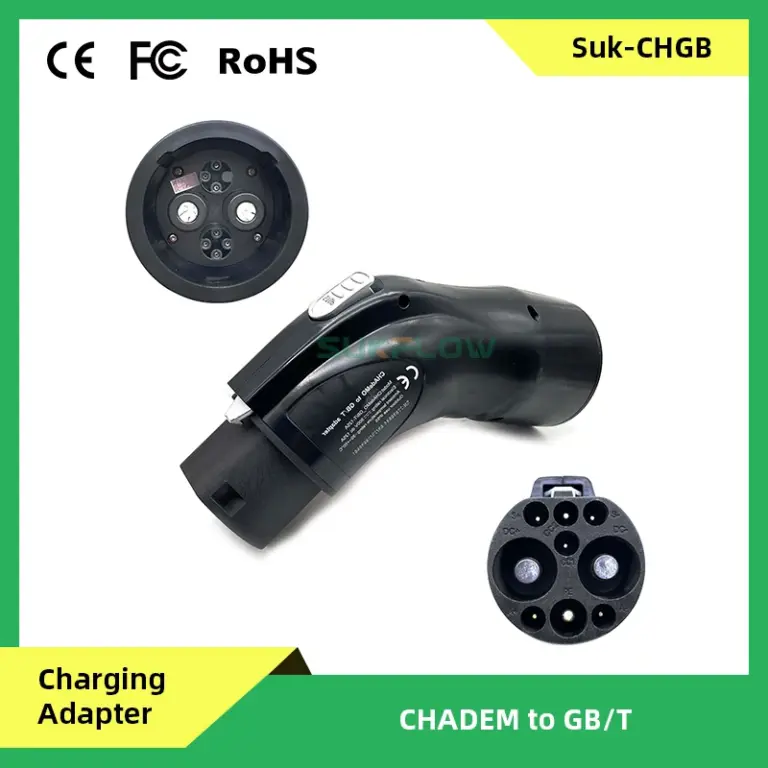
– Charging Standards: Conversion from GB/T to CCS2 charging protocols or provision of dual-standard compatibility
– Cybersecurity: UN R155 and R156 compliance for software updates and cybersecurity management systems
GCC (Gulf Cooperation Council):
– GSO conformity certificates for extreme heat operation (50°C+ ambient testing)
– Arabic language interface requirements
– Halal certification for interior materials (where applicable)
ASEAN Markets:
– Local content verification for tariff advantages under RCEP agreements
– Right-hand drive conversion capabilities (for Indonesia, Thailand, Australia)
Technical Localization Services
Premium export agents coordinate:
– Software Re-flashing: Pre-shipment installation of market-specific firmware to avoid “bricked” vehicles upon arrival
– Charging Adapter Inclusion: CCS2/Type 2 adapter kits (cost: $80-$120 per unit when bulk-ordered)
– Owner’s Manual Localization: Translation and regulatory compliance verification
– VIN Registration: Pre-registration in destination markets to expedite customs clearance
Cost Benchmark: Full EU homologation and localization adds $1,800-$2,500 per vehicle but prevents $15,000+ retrofits or impoundment risks.
7. After-Sales Ecosystem: Securing Parts and Service Abroad
The 2026 regulatory environment emphasizes sustainable product lifecycles. Importers must demonstrate spare parts availability and service capability to maintain export licenses and satisfy destination market consumer protection laws.
Parts Supply Chain Architecture
VIN-Specific Spare Parts Warehousing:
Unlike generic aftermarket parts, EVs require VIN-specific components (battery management systems, proprietary sensors). Professional exporters establish:
– Regional Parts Hubs: Bonded warehouses in Rotterdam (EU), Dubai (GCC), and São Paulo (LATAM) stocking critical 500+ SKU inventories
– Digital Twin Inventory: Real-time tracking of parts compatibility with shipped vehicle configurations
– Emergency Air Freight: 48-hour critical parts delivery for warranty claims
Technical Support Framework
Level 1: Digital diagnostic tools and remote technical support (multilingual)
Level 2: Training certification for local technicians at Shanghai manufacturing facilities (2-week intensive programs)
Level 3: Flying engineer support for complex battery or powertrain issues
Warranty Administration:
Authorized exporters act as warranty administrators, processing claims against Chinese OEMs and managing local reimbursement to dealers. This eliminates the “warranty void” risk associated with gray-market imports.
Battery Lifecycle Management:
End-of-life battery recycling agreements must be established per EU Battery Regulation requirements. Exporters should provide recycling pathway documentation and deposit management systems (where legally required).
8. Avoiding Scams: How to Audit a Chinese EV Supplier
The 2026 licensing requirements have pushed unscrupulous operators into more sophisticated fraud schemes. Protect your investment through rigorous due diligence.
The License Verification Protocol
- MOFCOM Export License Check: Request the official license number and verify against the Ministry of Commerce public registry. Licenses are specific to vehicle categories—ensure “New Energy Vehicles” is explicitly listed.
- Factory Audit: Conduct virtual or physical factory inspections focusing on:
- Production line capabilities (not just assembly)
- Quality control stations (IP67 testing for batteries, water ingress testing)
- Software update infrastructure (OTA server capabilities)
- Financial Verification: Request audited financial statements; avoid entities with <2 years export history or registered capital below 10 million RMB.
- Reference Checks: Contact three active importers in your target region who have received shipments within the last 6 months.
Red Flag Indicators
- Pricing 15%+ below market: Indicates potential “used car disguised as new” scam or missing compliance documentation
- Pressure for 100% upfront payment: Legitimate exporters accept escrow or Letter of Credit arrangements
- Vague battery specifications: Inability to provide UN 38.3 test summaries or cell manufacturer certificates
- No physical office in Shanghai: Virtual offices or residential addresses suggest shell companies
- Reluctance to provide export license: Immediate disqualification under 2026 regulations
Secure Transaction Structure
Utilize Shanghai Free Trade Zone escrow services where payment releases only upon:
– Successful pre-shipment inspection by third-party (SGS, Bureau Veritas)
– Customs export clearance confirmation
– Bill of Lading verification
9. Start Your Import Business with Electric Auto China
As Chief Export Consultant at Electric Auto China, headquartered in Shanghai’s Lingang New Area, we represent the evolution of the Professional car exporter Shanghai—a fully licensed, compliance-first partner for the regulated 2026 environment.
Our Compliance Guarantee
- MOFCOM Licensed: Full export authorization for NEVs, PHEVs, and commercial electric vehicles
- Regulatory Alignment: Pre-export homologation consultation for EU, GCC, ASEAN, and LATAM markets
- Documentation Integrity: Complete export packages including Battery Passports, carbon footprint declarations, and software compliance certificates
End-to-End Solutions
Sourcing: Direct relationships with BYD, Geely, Xiaomi, Leapmotor, and 15+ certified OEMs. Consolidated purchasing for multi-brand fleets.
Logistics: DG-certified operations, green shipping options, and multi-regional routing optimization through our Southeast Asian hub network.
Financial: Competitive landed cost calculations, VAT rebate sharing, and trade finance facilitation through Shanghai FTZ banking partners.
After-Sales: European parts warehousing in Rotterdam, technical training programs, and warranty administration services.
2026 Market Entry Package
For qualified B2B buyers, we offer:
– Pilot Program: 20-unit trial shipments with escrow payment protection
– Market Analysis: Destination-specific homologation roadmaps and tariff optimization strategies
– White-Label Support: OEM-agnostic import and distribution support for emerging EV brands
The era of opportunistic, unregulated Chinese EV exports has ended. The future belongs to structured, compliant, and sustainable supply chains. As your Professional car exporter Shanghai, Electric Auto China bridges the gap between China’s 16.5 million unit NEV production capacity and your market’s electrification demands.
Contact our B2B Export Division today to secure your licensed supply chain partnership and navigate the 2026 regulatory landscape with confidence. The electric revolution is accelerating—ensure your business is powered by legitimate, compliant, and professional sourcing channels.
Unlock High-Margin EV Imports with Electric Auto China
As an elite automotive supply chain partner in Shanghai, we provide end-to-end, strictly compliant export solutions tailored for international dealerships, fleet managers, and wholesale distributors.
- 🛡️ 100% Legal & Compliant: Fully licensed exports ensuring smooth customs clearance at your destination.
- ⚙️ Complete Localization: Professional English/Arabic/Russian OS flashing and GB/T to CCS2 charging solutions.
- 🚢 Secure Logistics: Direct Ro-Ro and Containerized shipping with full UN38.3 battery certifications.
- 🔧 After-Sales Support: Reliable access to OEM diagnostic tools and steady spare parts supply.
Request a Detailed FOB/CIF Quote Today:
📧 B2B Sales Email: [email protected]
💬 Direct WhatsApp: +86 159 5127 6160