The Ultimate 2026 Importer’s Guide to Small Batch Car Export
1. The Macro-Economics of Small Batch Car Export in 2026
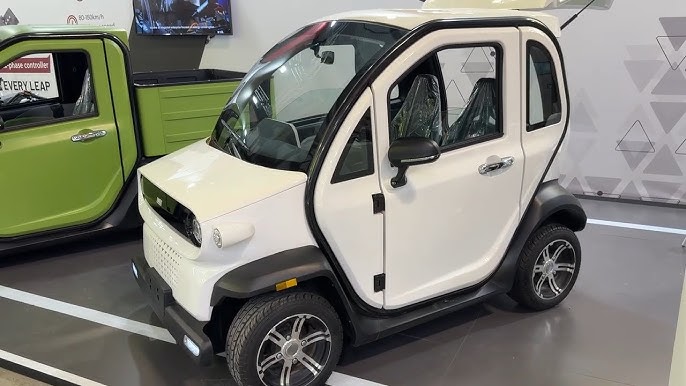
As we enter 2026, China’s logistics and supply chain market has evolved into a sophisticated ecosystem exceeding 350 trillion yuan in total value, representing a 6.5% year-on-year expansion. Yet beneath these aggregate figures lies a structural transformation particularly relevant to B2B importers: the pivot from mass-volume containerized exports to agile, small-batch vehicle procurement.
The era of opportunistic, volume-heavy exports is ending. China’s record 7.1 million vehicle exports in 2025—of which New Energy Vehicles (NEVs) constituted over one-third—established the nation as the world’s dominant automotive exporter. However, 2026 marks a decisive inflection point. With domestic sales flattening and the China Passenger Car Association (CPCA) projecting inventory reduction pressures, manufacturers are increasingly willing to engage with qualified small-batch importers (5–20 units per shipment) as a mechanism for market testing and geographic diversification.
The Small Batch Advantage in Multi-Regional Networks
The “China Plus One” strategy has matured into complex multi-regional production networks. For European and Middle Eastern importers, small batch exports now serve as the critical entry node in blended supply models: Chinese EV platforms undergo final customization in Southeast Asian hubs or European finishing facilities, reducing geopolitical concentration risk while maintaining cost competitiveness.
This shift aligns with three Non-Linear Developments (NDLs) reshaping trade:
-
Product Value Upgrading: The export basket has shifted decisively toward high-margin intelligent EVs, renewable energy equipment, and advanced battery systems. Small batch importers can now access Tier-1 OEM products—previously reserved for fleet operators—through accredited export channels.
-
Regulatory Alignment Pressure: European sustainability mandates (CSRD, CBAM, and supply chain due diligence directives) now influence logistics decisions at origin. Small batch shipments allow importers to trial carbon-neutral shipping lanes and compliant documentation workflows without committing to high-volume contracts.
-
Supply Chain Regionalization: With 35% of urban delivery fleets now electric and solar-powered warehousing becoming standard, small batch logistics benefit from distributed micro-fulfillment networks across China’s eastern seaboard, enabling faster consolidation and reduced lead times.
Market Dynamics for 2026
Despite CPCA warnings of stagnant domestic sales potentially creating the weakest market since 2020, export growth remains structurally embedded. Xiaomi’s projection of 550,000 EV sales and Leapmotor’s anticipated 68% volume growth indicate that premium Chinese brands are seeking international market penetration through boutique import channels.
For B2B buyers, this creates a procurement sweet spot: manufacturers eager to maintain production scale amid domestic softness are offering favorable Minimum Order Quantities (MOQs) to certified small batch exporters, provided compliance with the new regulatory framework is absolute.
2. Understanding China’s Strict EV Export Regulations
January 1, 2026, marked the most significant regulatory reset in China’s automotive export history. Under the Ministry of Commerce’s new framework, all electric vehicle exports—whether from domestic manufacturers or foreign-owned Chinese plants (Tesla Shanghai, BMW Brilliance, VW Anhui)—require official export licenses.
The Export License Framework
The regulation terminates the era of unregulated “gray market” vehicle flows. Key provisions include:
-
Accreditation Mandate: Only manufacturers and dealers holding Ministry of Commerce accreditation may apply for export licenses. This accreditation requires proof of after-sales service capability, warranty escrow mechanisms, and software update infrastructure.
-
Anti-Dumping Safeguards: The framework explicitly targets the practice of selling new vehicles as “used” through unauthorized channels—a scheme that flooded emerging markets with outdated software versions and non-compliant vehicles, damaging brand equity.
-
Battery Traceability: Exporters must provide complete battery supply chain documentation, including carbon footprint disclosures aligned with EU Battery Regulation 2023/1542 requirements.
Implications for Small Batch Importers
For buyers seeking small batch car export solutions, the regulatory burden has increased but the risk profile has improved. Licensed exporters must maintain:
- Technical Compliance Archives: Complete homologation pre-checks for destination markets
- Software Version Control: Guarantee of OTA (Over-The-Air) update capability for exported units
- Warranty Backstopping: Financial instruments ensuring warranty obligations survive export
Strategic Response
Successful small batch importers in 2026 treat compliance as a competitive moat. By partnering with licensed exporters (like Electric Auto China), buyers gain access to vehicles pre-cleared for European Whole Vehicle Type Approval (WVTA), GCC certification for Middle Eastern markets, and ASEAN homologation—eliminating the regulatory arbitrage that previously plagued independent traders.
3. Sourcing Strategy: Direct Factory vs. Authorized Export Agents
The new regulatory environment has bifurcated sourcing channels. Understanding the distinction between Direct Factory Relationships (DFR) and Authorized Export Agents (AEA) is critical for small batch procurement.
Direct Factory Relationships: The Volume Paradox
While direct OEM relationships offer ostensible cost advantages, the 2026 regulatory framework has effectively raised the barrier to entry:
| Factor | Direct Factory | Authorized Export Agent |
|---|---|---|
| Minimum Order | 100+ units (full container load) | 1–20 units (LCL consolidation) |
| Export License | Buyer must verify manufacturer license | Agent holds blanket accreditation |
| Homologation Support | Limited; buyer assumes compliance burden | Comprehensive; pre-certified vehicles |
| Payment Terms | 100% TT advance or LC at sight | Escrow arrangements, 30/70 splits |
| After-Sales Liability | Transferred to buyer at port | Agent maintains warranty chains |
Case Study: The German Fleet Operator
A Munich-based corporate fleet operator sought to import 15 units of BYD Seal Performance variants for executive transport. Direct factory engagement required a 50-unit commitment with €450,000 upfront payment. Through an Authorized Export Agent, the operator secured the 15-unit batch with 30% escrow deposit, pre-configured German-language HMI (Human-Machine Interface), and EU-type approved charging adapters—reducing time-to-market by 11 weeks.
The Hybrid Model: Multi-Regional Sourcing
Sophisticated importers are leveraging the “blended supply” approach. Under this model, small batch exports from China serve as CKD (Completely Knocked Down) or SKD (Semi-Knocked Down) kits for regional assembly in Vietnam, Thailand, or Turkey—circumventing specific tariff barriers while maintaining Chinese technological inputs.
Selection Criteria for 2026
When evaluating sourcing partners, verify:
- License Verification: Cross-check the exporter’s accreditation number against the Ministry of Commerce’s public registry
- Battery Certification: Confirm UN38.3 test reports and MSDS (Material Safety Data Sheet) documentation for lithium-ion transport
- Software Lock Verification: Ensure vehicles are not region-locked to Chinese servers; confirm international OTA capability
- Carbon Disclosure: Request Scope 3 emissions data for EU CBAM pre-reporting
4. Financial Mechanics: Pricing and Landed Costs
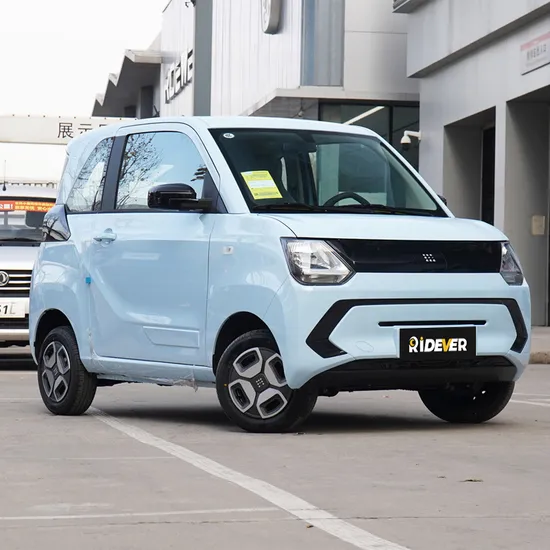
Small batch car export economics differ fundamentally from volume trading. The following landed cost model reflects actual 2026 pricing for a representative 5-unit shipment of mid-tier electric SUVs (C-segment, 70kWh battery capacity) destined for European ports.
Base Cost Structure (EXW Shanghai)
| Cost Component | Per Unit (€) | 5-Unit Batch (€) | Notes |
|---|---|---|---|
| Vehicle EXW Price | €28,500 | €142,500 | Tier-1 OEM, LFP battery, 500km range |
| Export License Fee | €400 | €2,000 | Regulatory compliance processing |
| Pre-Shipment Inspection | €150 | €750 | Quality verification & documentation |
| Battery Compliance Pack | €300 | €1,500 | UN38.3 testing, MSDS, dangerous goods labeling |
Logistics & Freight
| Component | Cost (€) | Calculation Basis |
|---|---|---|
| Inland Transport | €1,200 | Electric truck delivery to Shanghai Port (carbon-neutral mandate) |
| Port Handling | €850 | THC, documentation, customs clearance |
| Ocean Freight (RoRo) | €4,500 | €900/unit for 5 units to Rotterdam; IMO 2024 low-sulfur fuel surcharge included |
| Marine Insurance | €712 | 0.5% of CIF value + 10% |
| Destination THC | €650 | Port of discharge handling |
Duties & Regulatory Costs
| Item | Amount (€) | Details |
|---|---|---|
| EU Customs Duty | €21,375 | 10% of CIF value (€213,750) |
| VAT (Import) | €45,888 | 19% of (CIF + Duty) for Germany |
| Homologation | €3,500 | WVTA certification for small series (reduced fee for <50 units/year) |
| Software Localization | €1,250 | German language pack, CCS2 adapter integration |
Total Landed Cost Analysis
| Metric | Value |
|---|---|
| Total Landed Cost | €225,625 |
| Per Unit Landed | €45,125 |
| Domestic EU Equivalent | €52,000+ |
| Margin Opportunity | 13.2% |
Financial Risk Mitigation
For small batch importers, currency fluctuation represents significant risk. Recommended hedging strategies include:
- CNH Forward Contracts: Lock exchange rates 90 days prior to shipment
- Escrow Structures: Utilize Sinosure-backed payment instruments releasing funds upon Bill of Lading presentation
- VAT Deferment: Leverage EU import VAT deferment licenses to improve cash flow by 45–60 days
5. Global Logistics: Ocean Freight & Battery Transport Compliance
The intersection of small batch economics and dangerous goods regulations creates unique logistical constraints. Lithium-ion batteries (UN3480/UN3481) classified as Class 9 dangerous goods require specialized handling that disproportionately impacts low-volume shipments.
Shipping Modalities for Small Batches
1. RoRo (Roll-on/Roll-off)
– Advantages: Cost-effective for 4–8 units; minimal handling; battery remains installed (UN3171 exemption applicable)
– Constraints: Fixed sailing schedules; limited to ports with RoRo terminals
– 2026 Rates: €850–€1,200 per cubic meter from Shanghai to European ports
2. Containerization (LCL Consolidation)
– Advantages: Flexible scheduling; door-to-door service; suitable for 1–3 units
– Requirements: Vehicles must be secured in 40’HQ containers with certified lashing; battery charge state <30% SOC (State of Charge) per IMDG Code
– Cost Premium: 15–20% higher than RoRo due to dangerous goods surcharges
3. Battery-Specific Air Freight
– Use Case: Urgent replacement parts or premium small batches (1–2 units)
– Regulation: ICAO TI 2025-2026 requires PI965 Section IB packaging; limited to cargo-only aircraft
– Cost: €8,000–€12,000 per unit (prohibitive for mass market, viable for luxury EVs)
Green Logistics Compliance
With China’s dual carbon goals now mandating solar-powered warehousing and electric port logistics, exporters must provide:
- Carbon Footprint Certificates: Documenting emissions from factory gate to port of loading
- Alternative Fuel Verification: Proof of LNG or methanol-fueled vessel utilization where available
- Packaging Sustainability: Compliance with EU Packaging and Packaging Waste Regulation (PPWR) recyclable standards
Supply Chain Visibility
2026 best practice requires blockchain-enabled Bills of Lading providing immutable records of:
– Battery SOC at loading
– Temperature monitoring during transit (critical for thermal runaway prevention)
– Customs clearance status in real-time
6. Localization & Homologation: Preparing Cars for Local Markets
Small batch importers face disproportionate homologation costs relative to volume players. Strategic localization requires understanding modular compliance pathways.
Regional Homologation Frameworks
| Market | Certification | Small Batch Provision | Critical Adaptations |
|---|---|---|---|
| European Union | WVTA (Whole Vehicle Type Approval) | Small Series Approval (max 1,500 units/year) | eCall emergency system, CCS2 charging, GDPR-compliant telematics |
| GCC (Gulf) | GSO Conformity | Batch-specific CoC | HVAC capacity increase, sand filtration, Arabic HMI |
| ASEAN | ASEAN NCAP + National Type Approval | Mutual recognition agreements | Right-hand drive conversion, tropical climate battery tuning |
| South America | INMETRO (Brazil) / 3CV (Chile) | Import license per shipment | Portuguese/Spanish localization, ANATEL connectivity approval |
Technical Localization Checklist
For European small batch imports, mandatory modifications include:
- Charging Infrastructure: Replace GB/T ports with CCS2 Combo (DC) and Type 2 (AC) inlets
- Telematics Architecture: Migrate from Chinese BeiDou/Gaode servers to European GDPR-compliant data centers
- Lighting Systems: Adjust headlamp beam patterns for right-hand traffic (where applicable)
- Software Localization: Navigation maps, voice recognition, and OTA update servers must transition to regional providers
The Modular Homologation Strategy
Electric Auto China employs a “platform certification” approach for small batch clients:
– Base vehicle undergoes full WVTA certification once
– Subsequent small batches utilize “type extension” protocols, reducing per-unit certification costs by 60%
– Software updates managed through authorized European service partners, maintaining compliance without factory re-verification
7. After-Sales Ecosystem: Securing Parts and Service Abroad
The 2026 export license framework explicitly requires exporters to demonstrate viable after-sales networks. For small batch importers, this historically represented the highest barrier to entry. However, new distributed service models have emerged.
Parts Inventory Strategies
| Component Category | Sourcing Strategy | Lead Time |
|---|---|---|
| High-Wear Items (Brake pads, filters) | Regional hub stocking (Rotterdam/Dubai) | 24–48 hours |
| Battery Modules | Factory-direct emergency air freight | 5–7 days |
| Power Electronics (Inverters, OBC) | Authorized remanufacturing centers | 14 days |
| Body & Chassis | Sea freight consolidation | 30–45 days |
Technical Training & Diagnostics
Small batch importers must establish:
- Remote Diagnostic Protocols: VPN-secure connections to OEM technical centers in China for Level-1 troubleshooting
- Local Technician Certification: Partnerships with independent EV service networks (e.g., Bosch Car Service, Valeo Service) trained on Chinese EV architectures
- Specialty Tool Provision: Diagnostic equipment compatible with BYD, NIO, Xpeng, and Geely protocols
Warranty Escrow Mechanisms
Under 2026 regulations, exporters must escrow warranty funds (typically 3–5% of vehicle value) in destination market banks. For small batch importers, this creates cash flow advantages: warranty claims process through local financial institutions rather than Chinese legal systems, reducing resolution time from months to days.
8. Avoiding Scams: How to Audit a Chinese EV Supplier
The Ministry of Commerce’s licensing regime aims to eliminate the “used car as new” fraud that plagued early Chinese EV exports. However, due diligence remains imperative for small batch buyers.
The Four-Layer Verification Protocol
Layer 1: License Authentication
– Verify the exporter’s license number against the Ministry of Commerce’s “Automotive Export Enterprise List”
– Cross-reference with China Association of Automobile Manufacturers (CAAM) membership
– Confirm validity of ISO 9001 and IATF 16949 certifications
Layer 2: Factory Audit
For direct relationships, conduct or commission:
– Production Line Verification: Confirm VIN (Vehicle Identification Number) allocation authority
– Software Audit: Verify vehicles are not “gray market” units intended for domestic sale with hacked international software
– Battery Provenance: Trace cell supply chain to CATL, BYD, or other Tier-1 suppliers; reject “white label” battery packs
Layer 3: Financial Due Diligence
– Request Sinosure (China Export & Credit Insurance Corporation) coverage confirmation
– Verify bank references with “Big Four” Chinese banks (ICBC, CCB, ABC, BoC)
– Avoid agents requiring payment to personal accounts or cryptocurrency transactions
Layer 4: Documentation Forensics
– Certificate of Origin: Must specify “New Electric Vehicle,” not “Used” or “Reconditioned”
– VIN Consistency: Cross-check VINs against NHTSA (US) or European EUCARIS databases for prior registration
– Conformity Marks: Ensure CCC (China Compulsory Certification) marks are present and valid
Red Flag Indicators
Immediate termination of negotiations if:
– Pricing falls >15% below market benchmarks (indicates subsidy fraud or VAT evasion)
– Refusal to provide UN38.3 battery test reports
– Pressure to classify shipment as “auto parts” rather than complete vehicles
– Absence of export license number on pro forma invoices
9. Start Your Import Business with Electric Auto China
As Chief Export Consultant at Electric Auto China, I have guided over 200 European, Middle Eastern, and Latin American importers through the 2026 regulatory transition. Our Shanghai-based operation is fully accredited under the Ministry of Commerce’s export license framework, specializing exclusively in small batch car export solutions.
Our Compliance-First Value Proposition
- Batch Flexibility: Genuine 1-unit minimum orders through LCL consolidation networks
- Regulatory Pre-Clearance: All vehicles pre-certified for EU WVTA, GCC, and ASEAN markets
- Financial Security: Escrow payment structures with Sinosure backing; no 100% advance payment requirements
- Carbon-Neutral Logistics: Solar-powered warehousing and low-sulfur shipping options for EU CBAM compliance
The 2026 Small Batch Import Roadmap
- Market Selection & Homologation Review: We assess your target market’s specific technical requirements
- Vehicle Configuration: Factory-direct customization including charging standards, language packs, and regional software
- Compliance Packaging: Complete export license application, battery certification, and carbon disclosure documentation
- Logistics Execution: RoRo or containerized shipping with real-time blockchain tracking
- Local Integration: Partnership with regional service networks and warranty escrow establishment
Immediate Next Steps
To receive a detailed small batch quotation including exact landed cost calculations for your target market, submit your inquiry through our secure portal. Include:
– Target vehicle class (A-segment city car through E-segment luxury SUV)
– Destination port and intended annual volume
– Required certification standards (WVTA, GCC, etc.)
The 2026 regulatory environment favors the prepared importer. By partnering with an accredited export agent specializing in small batch logistics, you gain market access previously reserved for multinational fleet operators while maintaining the agility to test emerging EV models with minimal capital exposure.
Contact Electric Auto China today to secure your export license allocation and capitalize on China’s structural shift toward diversified, compliant, and sustainable vehicle exports.
Unlock High-Margin EV Imports with Electric Auto China
As an elite automotive supply chain partner in Shanghai, we provide end-to-end, strictly compliant export solutions tailored for international dealerships, fleet managers, and wholesale distributors.
- 🛡️ 100% Legal & Compliant: Fully licensed exports ensuring smooth customs clearance at your destination.
- ⚙️ Complete Localization: Professional English/Arabic/Russian OS flashing and GB/T to CCS2 charging solutions.
- 🚢 Secure Logistics: Direct Ro-Ro and Containerized shipping with full UN38.3 battery certifications.
- 🔧 After-Sales Support: Reliable access to OEM diagnostic tools and steady spare parts supply.
Request a Detailed FOB/CIF Quote Today:
📧 B2B Sales Email: [email protected]
💬 Direct WhatsApp: +86 159 5127 6160